
Cetaceans of All Sizes

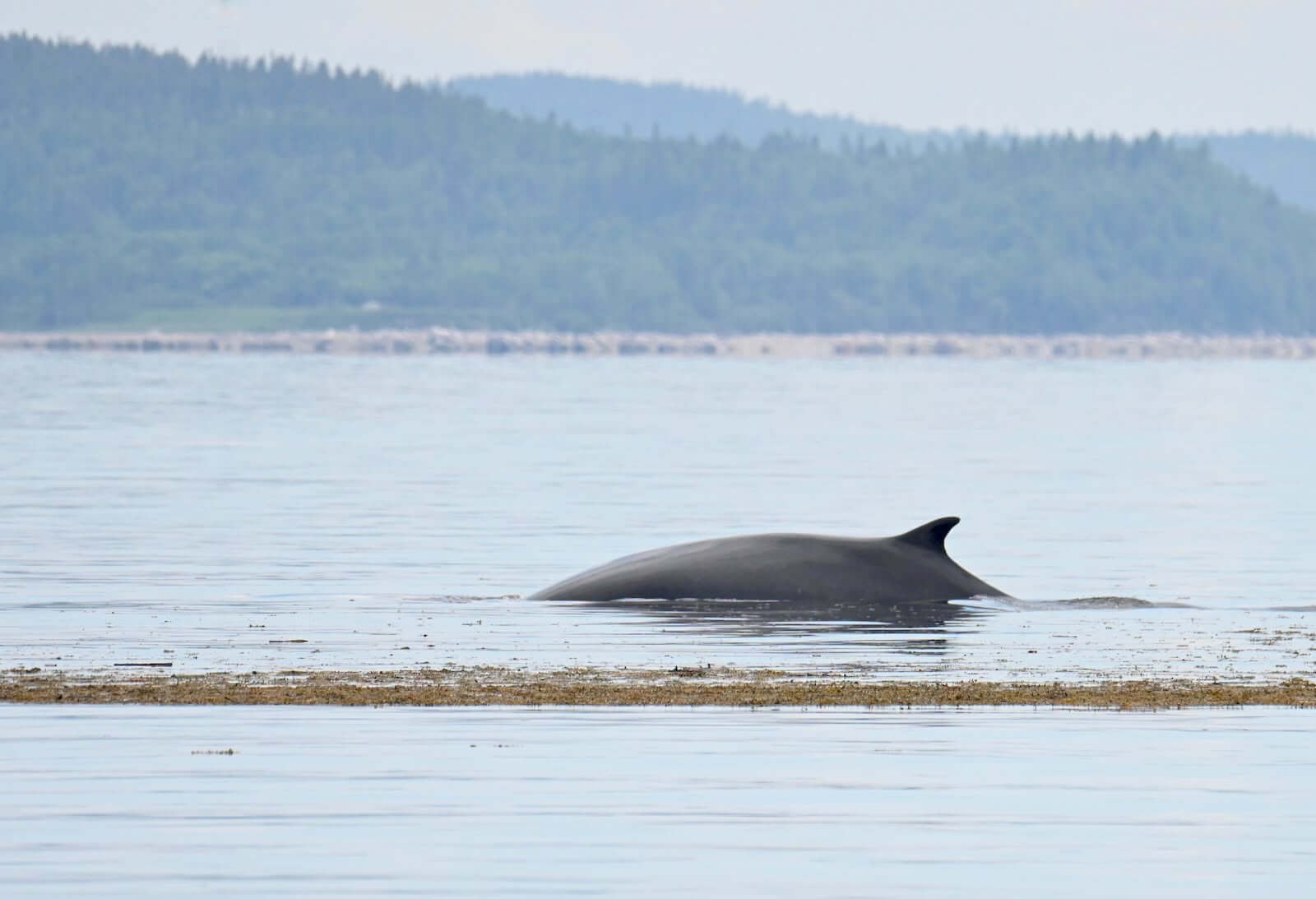
Large rorquals remain plentiful in the St. Lawrence River, and the list of identified individuals is growing by the day. Alongside these imposing giants, harbour porpoises and belugas continue to frequent the estuary. In the gulf, small cetaceans such as belugas have also been sharing the waters with their larger cousins, including humpbacks, much to the delight of resident observers.
A popular archipelago
An impressive diversity of seabirds was reported from the Mingan Islands: common eiders, common loons, razorbills, black guillemots, and Atlantic puffins. “Two minke whales and a single harbour porpoise were spotted off Île du Havre and, a little farther out, three more minke whales,” explains an observer on the water when it comes time to provide a detailed breakdown of marine mammal sightings in the area. She also mentions the presence of two unidentified seals.
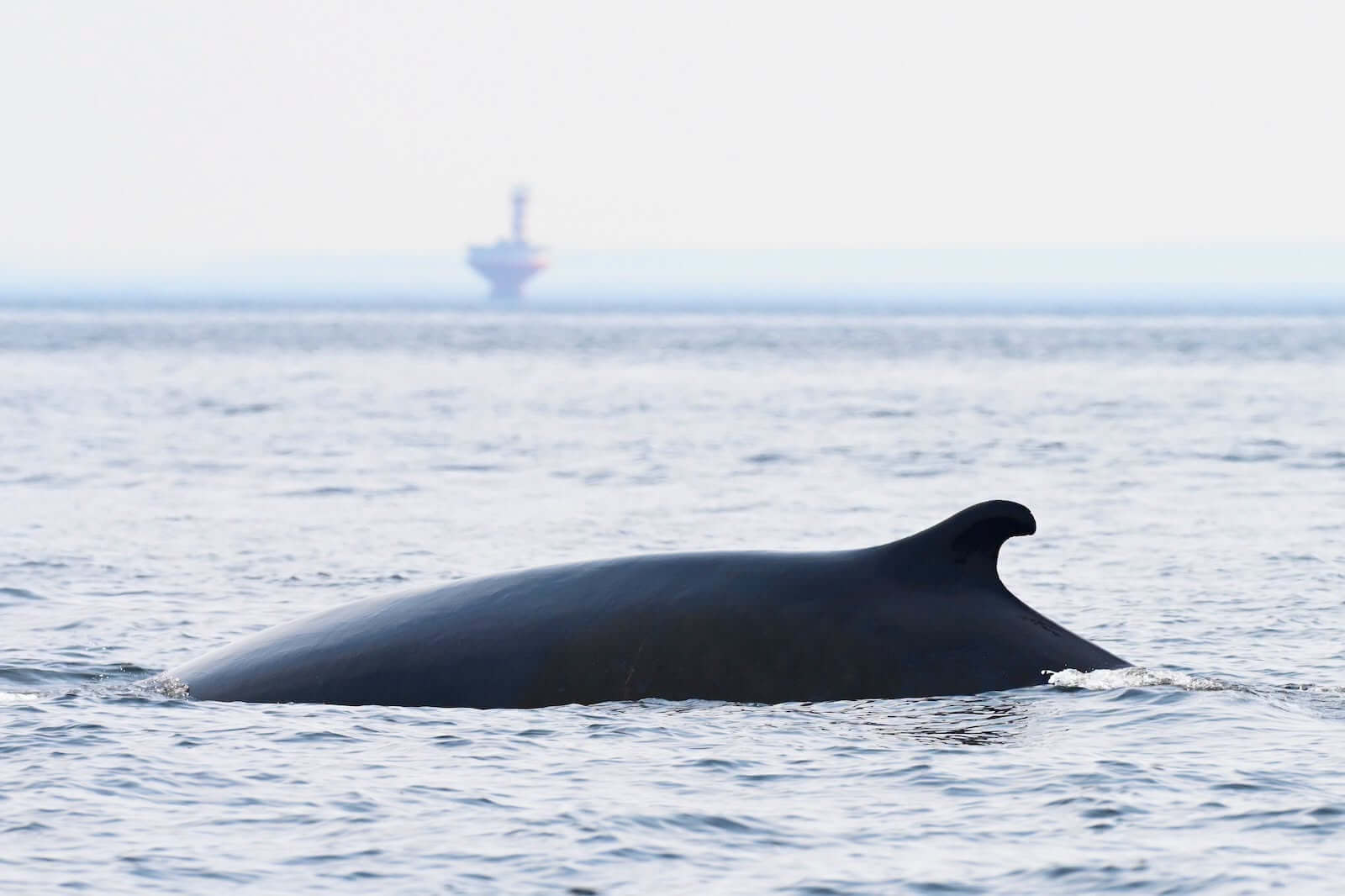
Sept-Îles has been abuzz with the presence of fin whales, reports the Sept-Îles Education and Research Centre (CERSI). “It’s crazy here! 20 fin whales, at least 15 minke whales, 4 humpbacks,” rattles off one of the co-founders and researcher for the organization. Around a hundred belugas were also passing through the area. The Mingan Island Cetacean Study (MICS) also reports significant numbers of marine mammals during its recent outings, including several North Atlantic right whales. These individuals have been identified and include the female Lobster (#3232) and the male Manta (#1507), born in 2002 and 1985, respectively, according to the North Atlantic Right Whale Catalog.
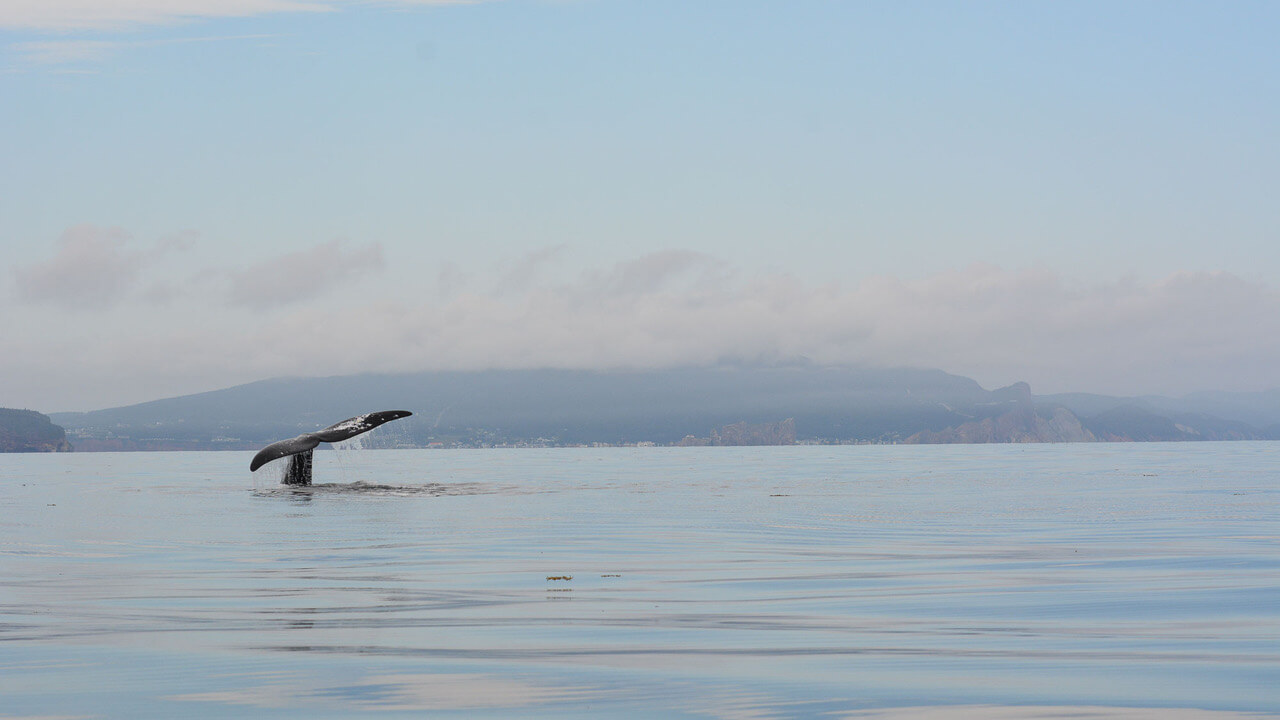
MICS notes that the presence of this species in the Mingan area seems earlier than usual. Is their presence as early as June—not to mention that of the young individual that ventured all the way to Tadoussac last week—linked to an abundance of food? Scientists are keeping a close eye on the situation to better understand what dictates their movements, knowing that North Atlantic right whales feed primarily on copepods, the abundance and distribution of which fluctuate with changes in the climate.
In Baie-Comeau, belugas are the talk of the town! Several individuals have been observed in this area just about every week since this past spring. Harbour porpoises and minke whales have also been sighted opposite Baie des Anglais.
Abundance of marine life in Gaspésie
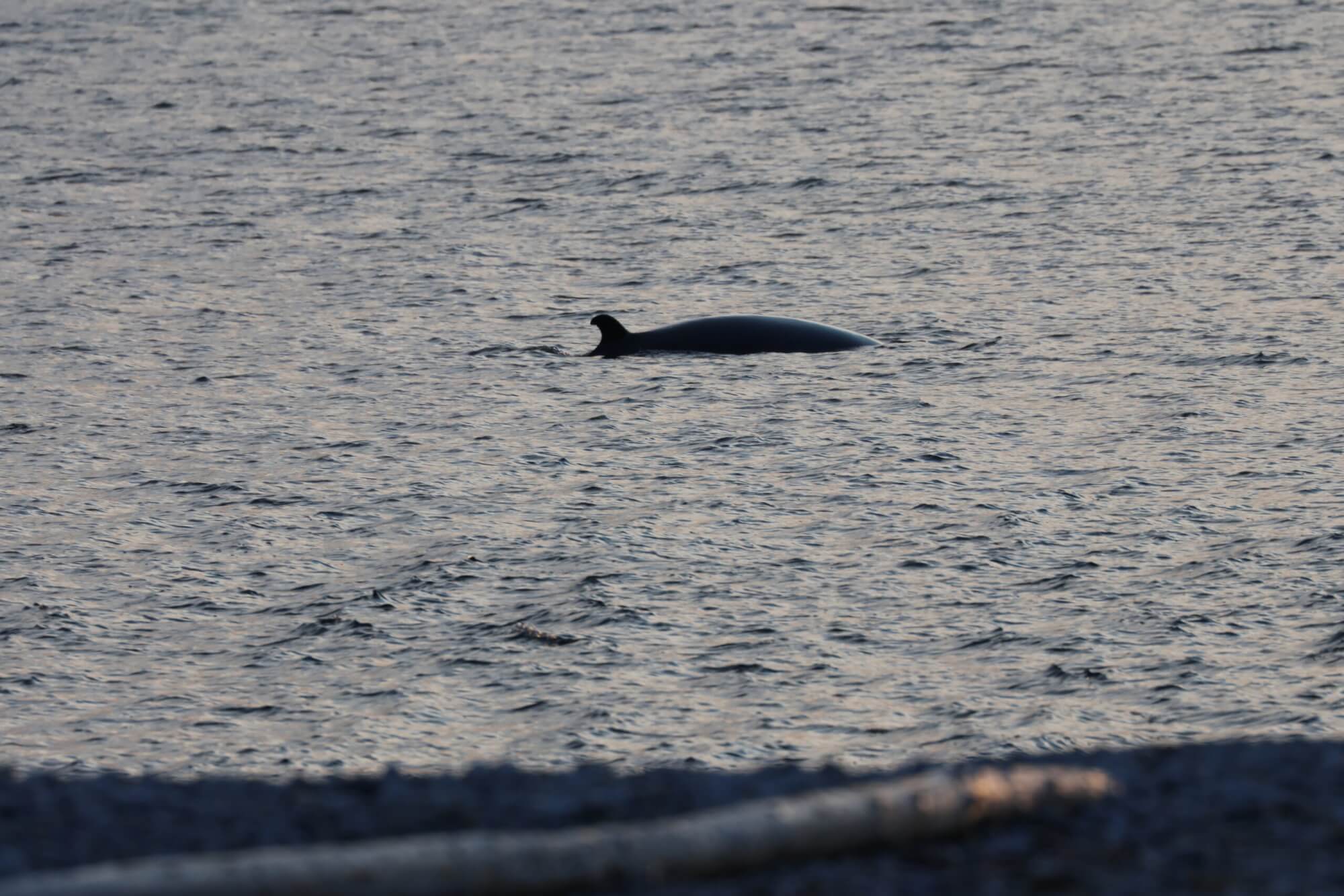
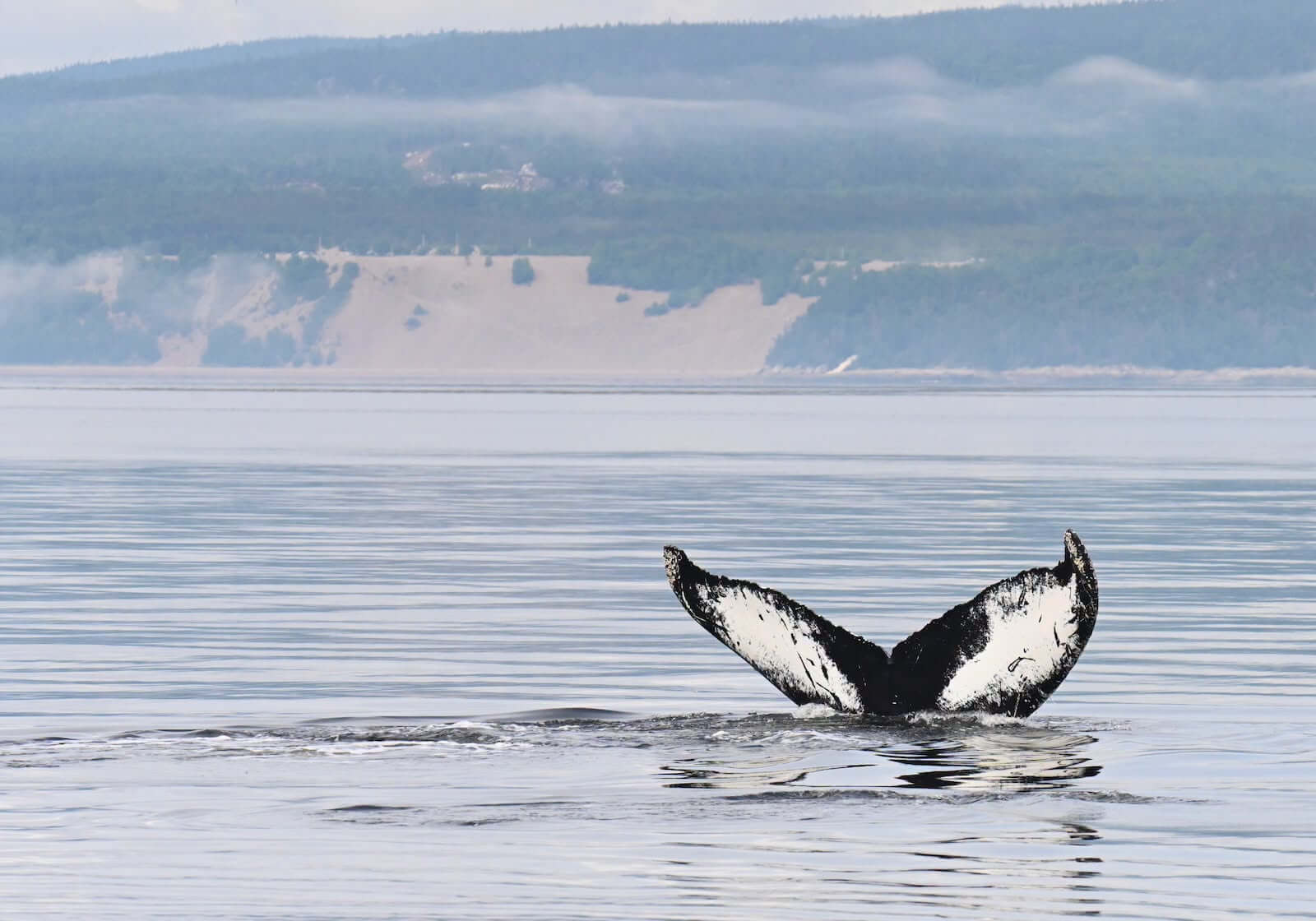
Admiring two humpbacks while tending the garden? That’s the setting in which a resident of Cap-aux-Os made her observations last Saturday. She also saw a minke whale near Grande-Grave: “It seemed to be actively hunting; it was truly beautiful to watch!” In Gaspé Bay, fin whales and humpbacks have been observed regularly in recent days, including Splinter (H638). A solitary beluga was reported in Percé, while harbour porpoises and minke whales continue to delight visitors to the region. In Gros-Morne, a naturalist noted the presence of a minke whale feeding on a school of mackerel. “Seals, gannets, and whales were all gathering there,” she adds.
Several seals were reported from Anse aux Cousins. A few rather unusual sightings were also pointed out by a passionate observer: a mass lobster stranding (in French) at Cap-des-Rosiers and the presence of basking sharks in Grande-Rivière. Measuring no less than 10 metres long, this shark is the second largest fish in the world.
Belugas and fin whales here and there
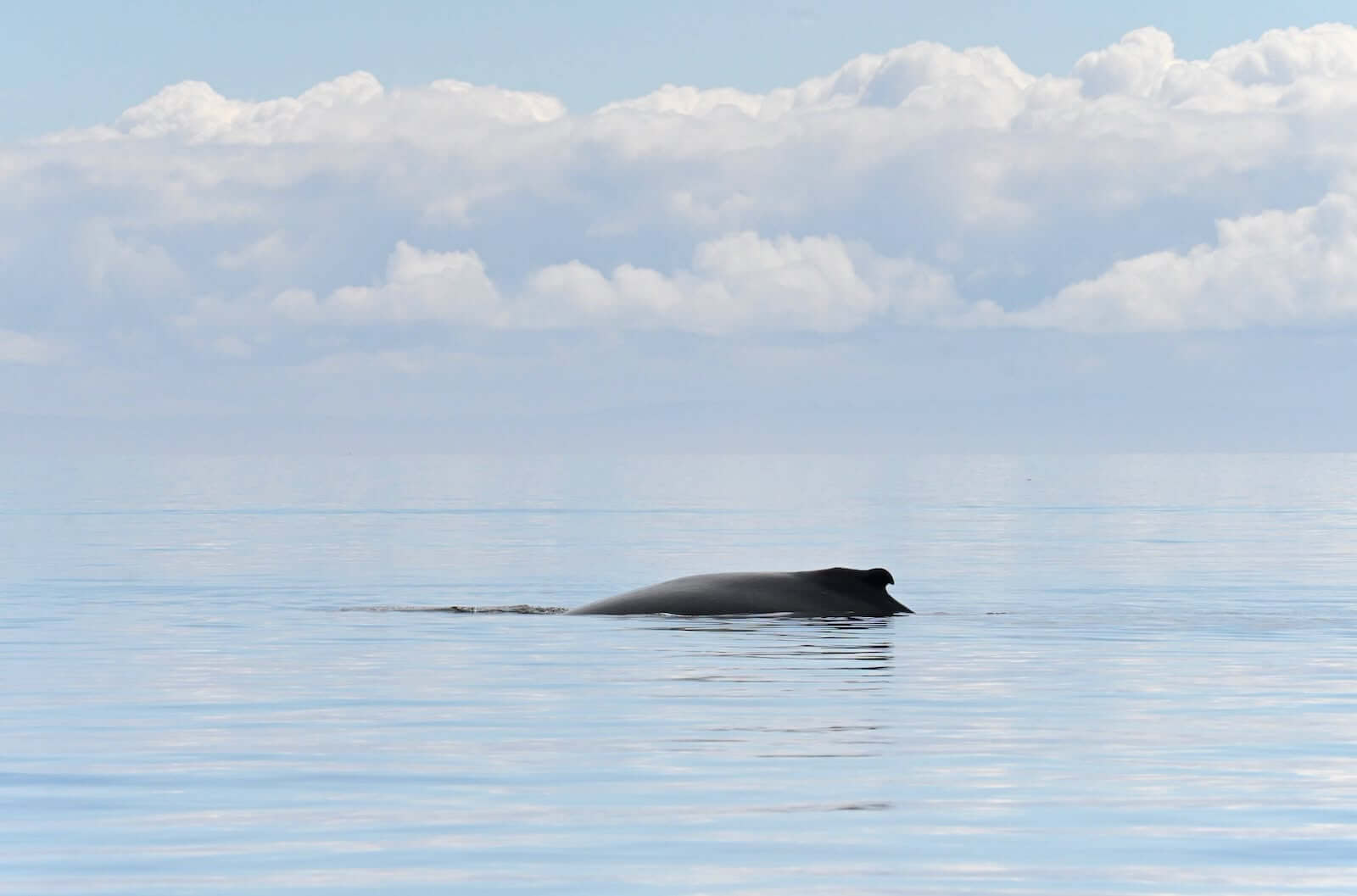
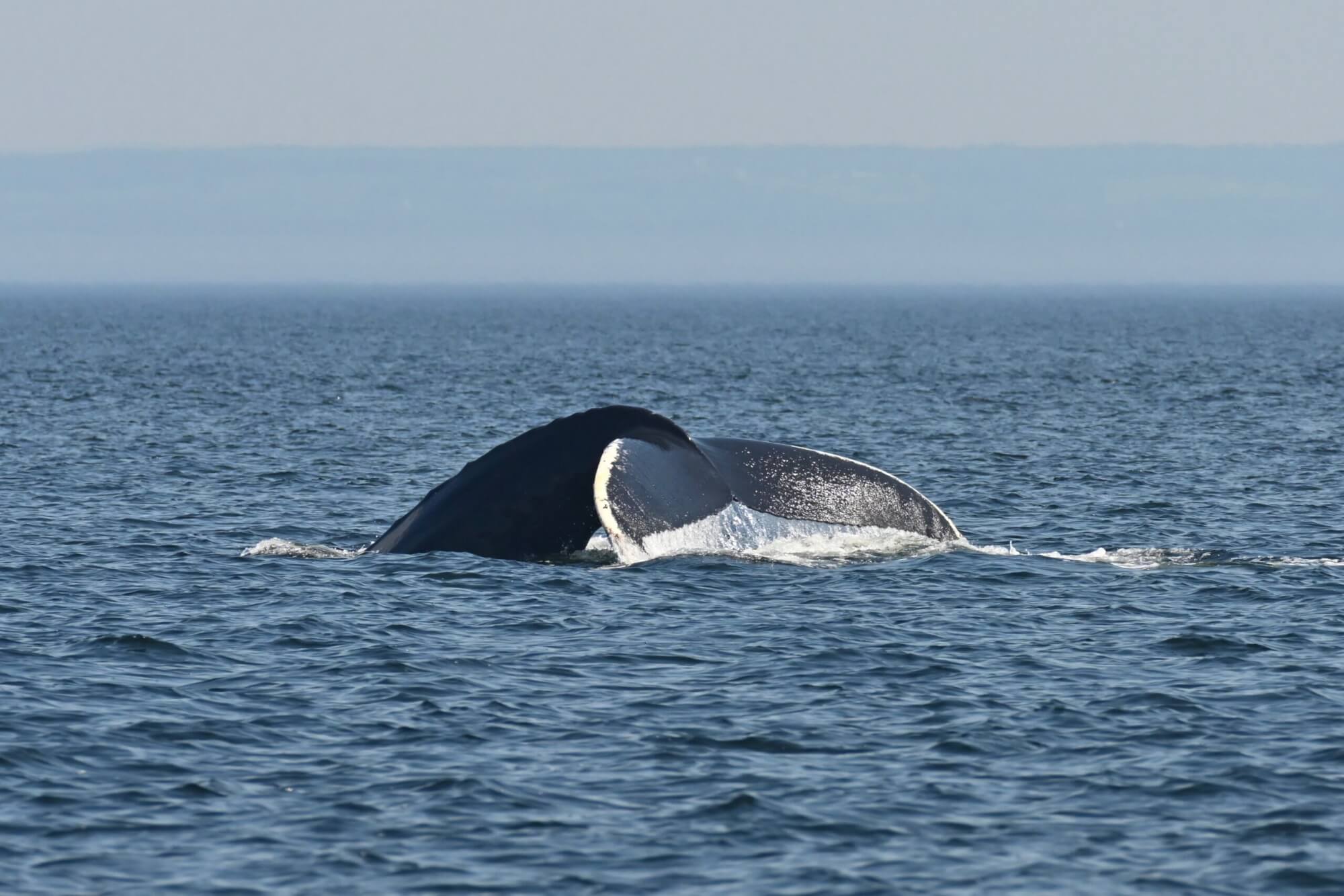
“Tons of action and diversity off Tadoussac. Three lingering humpbacks (Gaspar, Yvon and Éline), numerous minke whales (more new arrivals), and two fin whales (Ti-Croche and a new one!),” exclaims a naturalist and wildlife photographer. A blue whale, identified by the GREMM research team as B093 was swimming off the coast of Les Escoumins on June 30. This male has been known to GREMM since at least 1990 and is recognizable by its dorsal fin, which curves to the left. That same day, humpback whale H943 also ventured into the Saguenay–St. Lawrence Marine Park. Minke whales were spotted from Cap de Bon-Désir and Anse-aux-Perroquets.
Back in Tadoussac after a long absence, an avid observer shared her breathtaking beluga sighting: “A few females with juveniles (small grey individuals) approached from Pointe de l’Islet. […] There were at least ten of them and they were rather scattered.” Four or five belugas were also observed near Saint-Irénée, in Charlevoix.
On several occasions since the beginning of summer, captains and naturalists navigating the Saguenay–St. Lawrence Marine Park have reported seeing whale excrement… which was red! The colour of whale poop is a function of what the animals have eaten most recently. In fact, it is krill that gives whale feces this pinkish hue, a sign that this food source seems to be present in the estuary.
Where are the whales this week? Sightings map
These data were reported by our network of observers. They give an idea of the presence of whales and in no way represent the actual distribution of whales in the St. Lawrence. Just for fun!
Click on the whale or seal icons to discover the species, the number of individuals, additional information or photos of the sighting. To enlarge the map, click on the icon in the top right-hand corner. The map works well on Chrome and Firefox, but not so well on Safari.
To display the list of sightings, click on the icon in the top left-hand corner.
Thanks to all our collaborators!
Special thanks go out to all our observers who share their love for marine mammals with us.
Your encounters with cetaceans and pinnipeds are always a pleasure to read and discover. On the water or from shore, it is your eyes that give life to this column.
- Croisières Baie de Gaspé
- Marie-Andrée Charlebois
- Nathalie Cliche
- Thalia Cohen Bacry
- Guylaine Côté
- Laeticia Desbordes
- Daniel Dorais
- Hélène Guitton
- Jade-Audrey Lavergne
- Diane Ostiguy
- Sandrine Papias
- Pascal Pitre
- Renaud Pintiaux
- René Roy
- Guillaume Savard
- Ophélie Turgeon
- Marielle Vanasse
And to all the others!
Additionally, we would like to acknowledge the following teams that also share their sightings:
Centre d’éducation et de recherche de Sept-Îles (CERSI)
Station de recherche des Îles Mingan (MICS)
Réseau d’observation des mammifères marins (ROMM)
Réseau québécois d’urgences pour les mammifères marins (RQUMM)
Groupe de recherche et d’éducation sur les mammifères marins (GREMM)
Mériscope
Would you also like to share your observations? Have you seen any marine mammals in the St. Lawrence? Whether it’s a spout offshore or just a couple of seals, drop us a line and send your photos to [email protected]!

Odélie Brouillette
Odélie Brouillette joined the GREMM team as a writer and naturalist in 2022, and has been a project manager in scientific communication since 2023. With a background in biology, she loves learning and sharing with others what's most important to her. She has always been fascinated by marine environments and whales, and hopes to contribute to their protection through awareness-raising and popularization.
Recommended articles
Wrapping Up the Season with Some Thanksgiving Weekend Action!
This year’s Thanksgiving weekend was alive with the activity of whales, seals, and birds! Marine mammals are still lingering in…
Between Bronze and Anthracite
Yellow-orange hues reaching toward the sky blend with the smooth, dark swirls emerging from the waves. Even if the strong…
Waters Stirred by Blowing Whales
The shores of the St. Lawrence are ablaze with orange and golden foliage. These multicoloured hues are reflected in the…