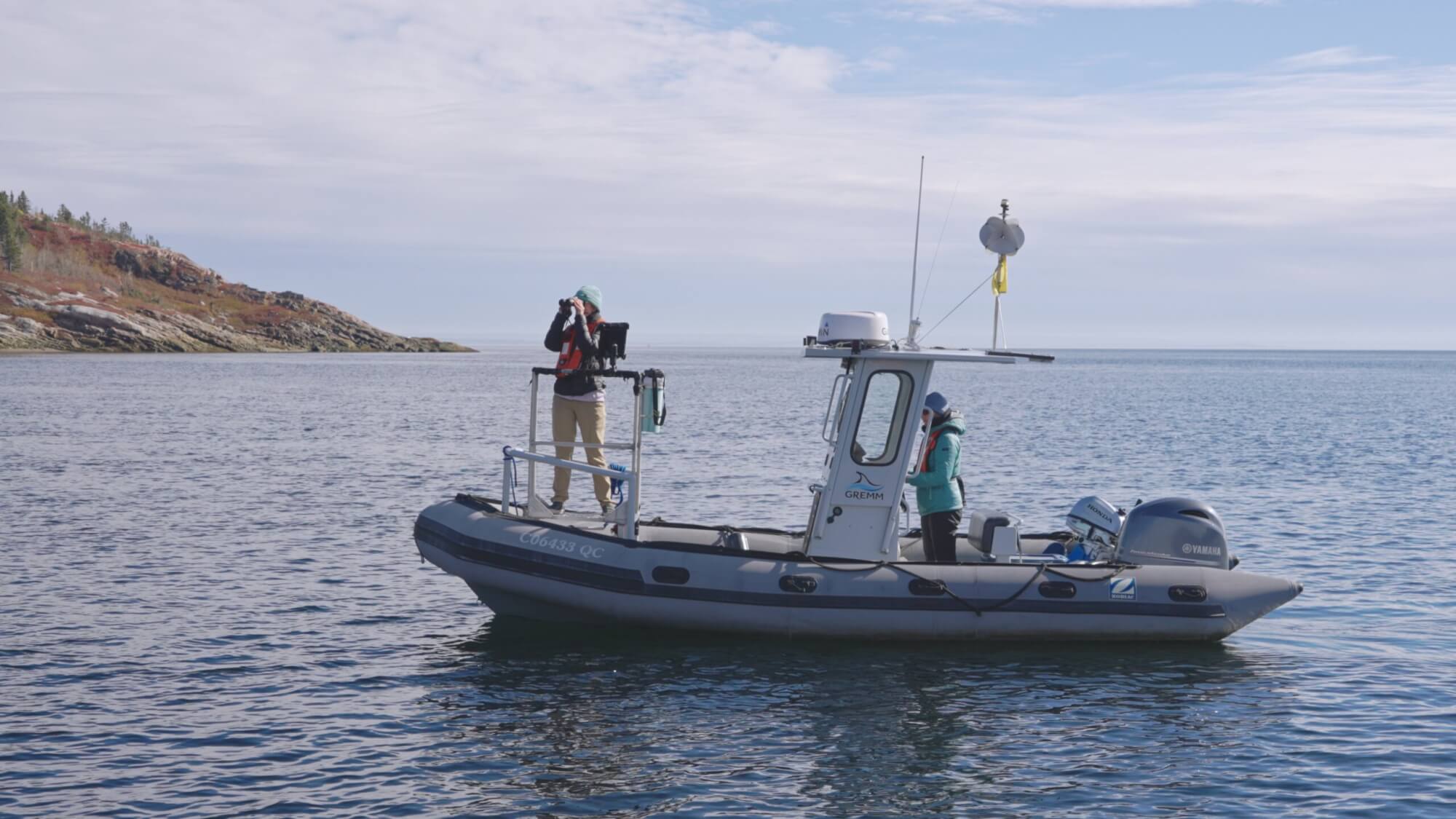
Research - and Science- oriented Careers
The field is vast… incredibly vast! Likewise, the areas of specialization are many: ecotoxicology, environment, cellular and molecular biology, genetics, and oceanography, just to name a few.
Different paths
For the next stage of your academic journey, ask yourself: What exactly do I want to do? If working in the field appeals to you, but you don’t necessarily want to perform statistical analyses or manage teams and projects, a college (Cégep) diploma or a bachelor’s degree might suffice.
If you would rather lead a team, specialize in a specific area, solve biological riddles, analyze and interpret data, and share your acquired knowledge in written scientific publications, then graduate studies would be more your path!
If you find yourself torn between the two—i.e. wanting to specialize but reluctant to commit yourself to a master’s program—know that there are also specialized graduate diplomas (DESS). If you’re drawn to a specific field and you feel you’re still lacking certain skills after earning your bachelor’s, but a master’s is too much of a commitment for you, there might be a DESS at a university somewhere with your name on it! Depending on the path you choose, your acquired skills could be used to create, plan, or implement research projects and scientific studies. Projects focus more on methodology and data collection, unlike studies, which also encompass the production of results.