
Cetaceans that Light Up the Waters

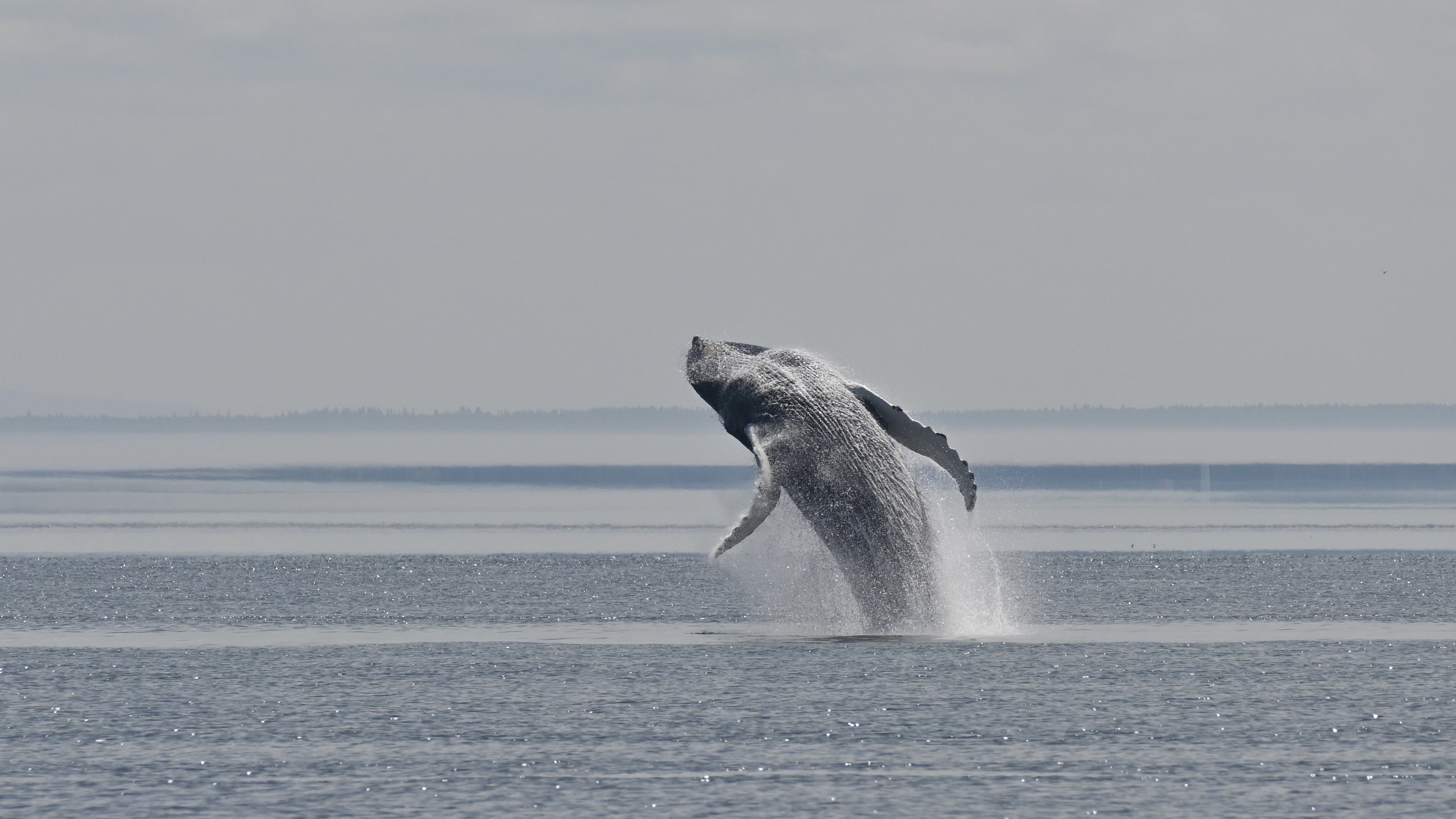
Weeks of overcast weather have given way to sunny days, pink skies, and a St. Lawrence River whose colour shifts between cobalt blue and silver depending on the time of day. Impressive herds of belugas punctuate the Estuary in white and grey, a humpback whale visits the mouth of the Saguenay Fjord, and the Gulf of St. Lawrence teems with marine life, with a group of killer whales (in French) making an incursion into the Basse-Côte-Nord region, not far from Mecatina Island, while blue, fin, humpback, and North Atlantic right whales have all been present between Sept-Îles and Minganie!
Scores of cetaceans in the Estuary
A few belugas have been observed in Saint-Irénée almost every day, while large gatherings have been reported from the Saguenay–St. Lawrence Marine Park. A naturalist stationed in Pointe-Noire even had the privilege of seeing two calves this year!
What distinguishes a calf—a beluga less than one year old—from a bleuvet (article in French) or a small grey individual? After its first year, the calf moults and loses its café au lait colour, becoming darker and taking on a bluish-grey hue. Around the age of three, the juvenile begins to grow lighter in colour and turns grey. Melanin production gradually ceases after a few years, causing belugas to become increasingly pale year after year until they reach sexual maturity. A newborn will also have “fetal folds,” temporary creases that resemble rolls of fat.

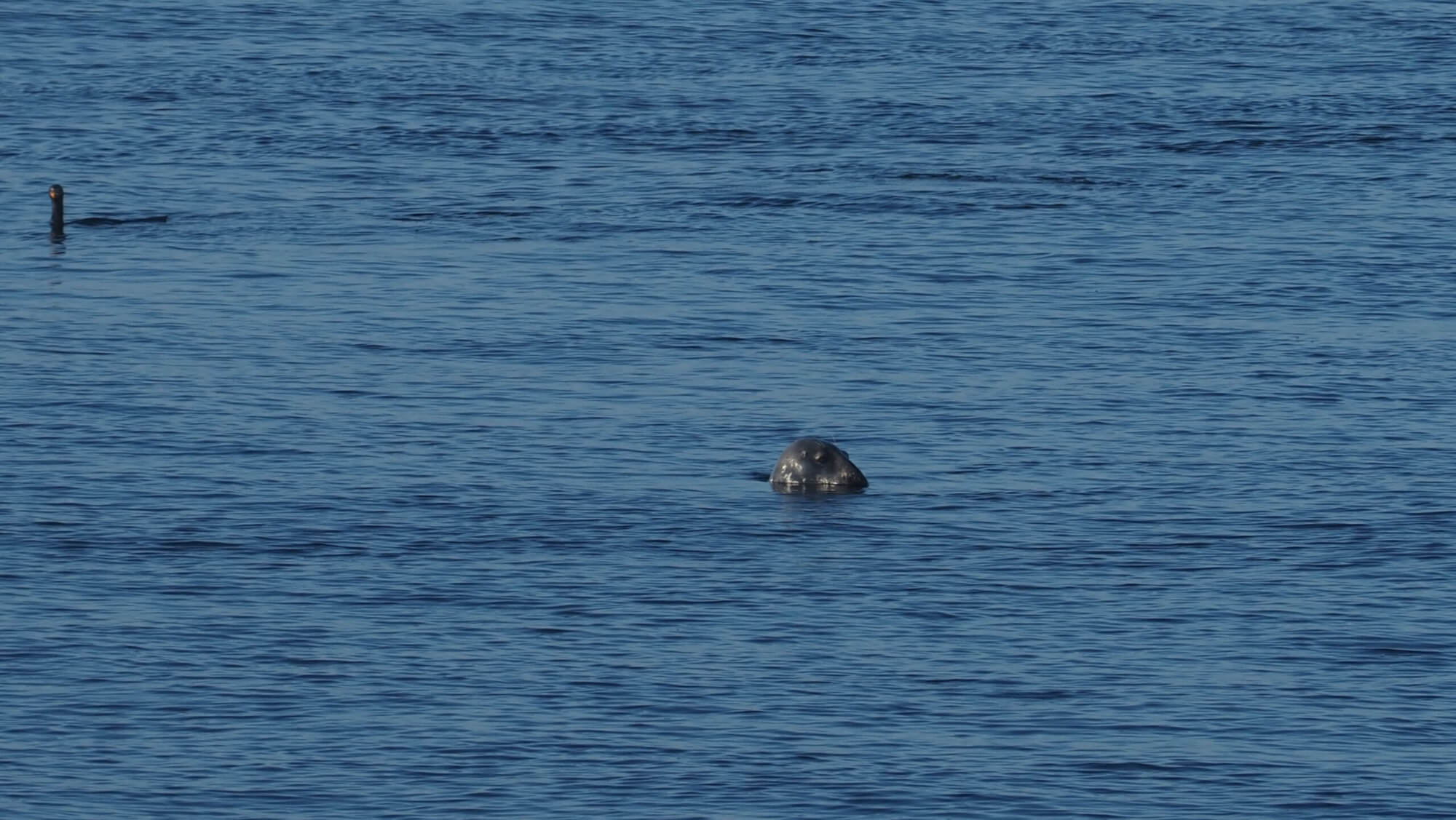
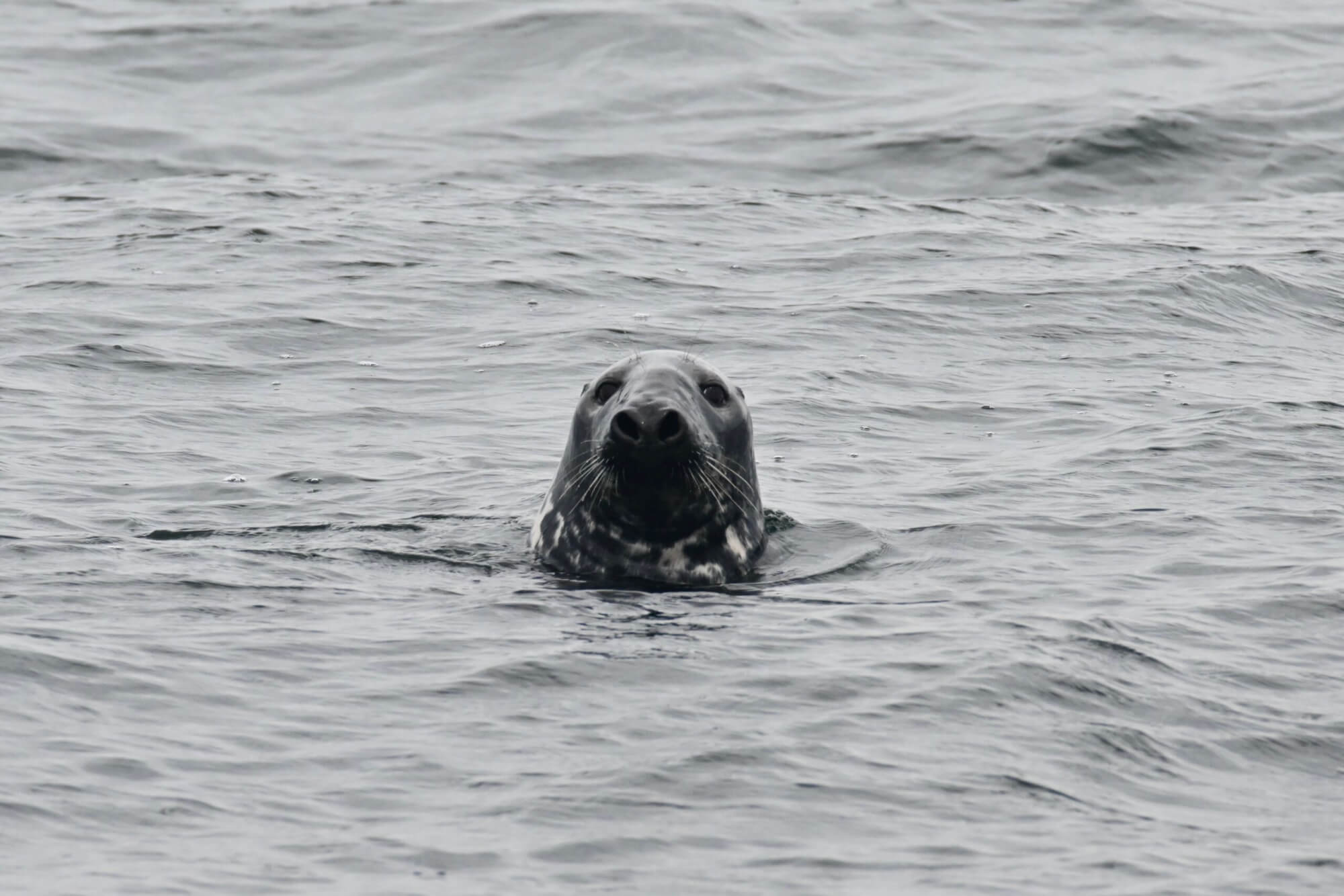
Harbour porpoises, which had been rather discreet in the Estuary these past few weeks, are increasingly being reported all along the coast. One observer saw several individuals porpoising from the shores of Les Escoumins and even witnessed a breach while the occasional grey seal poked its head above the surface nearby.
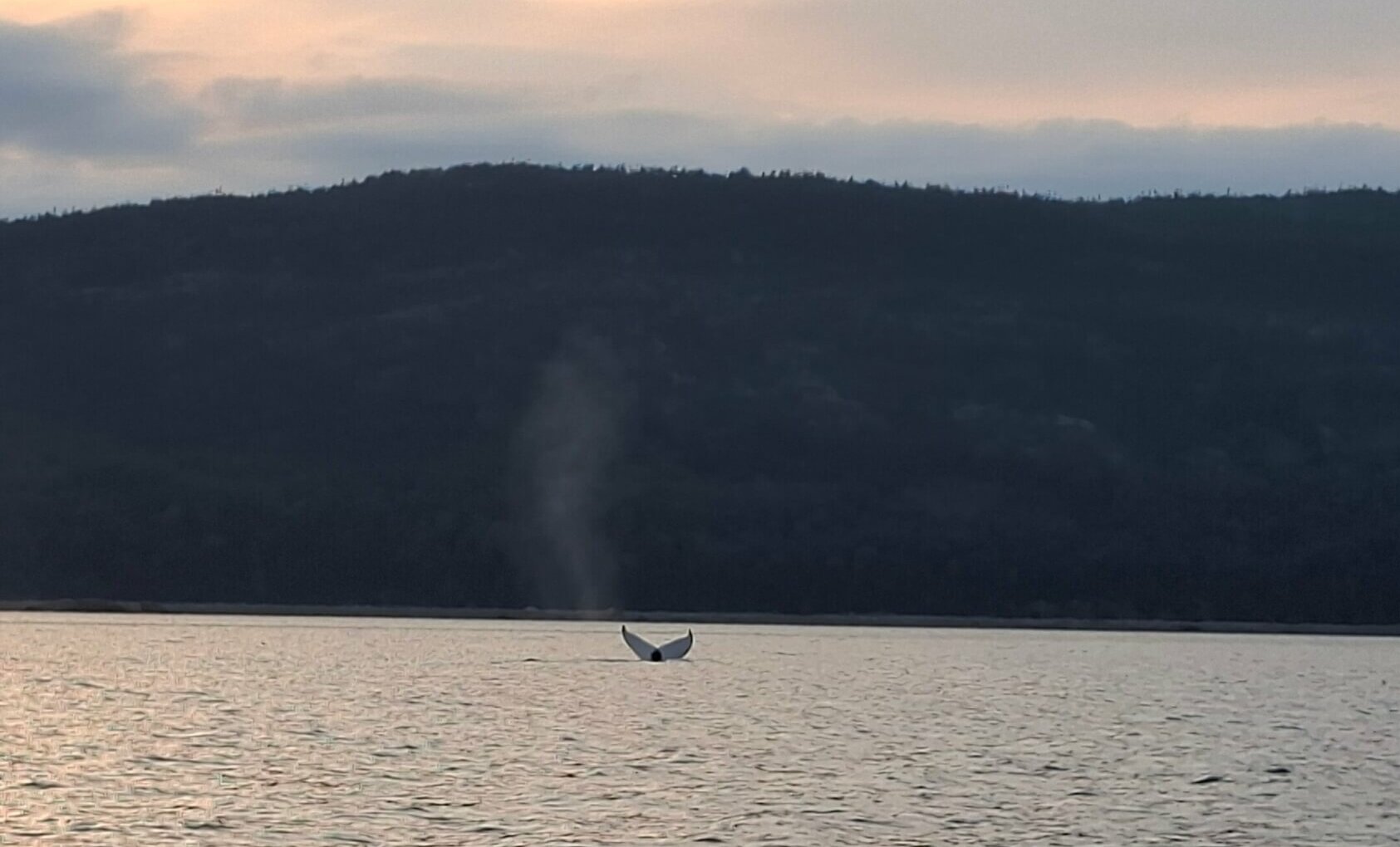
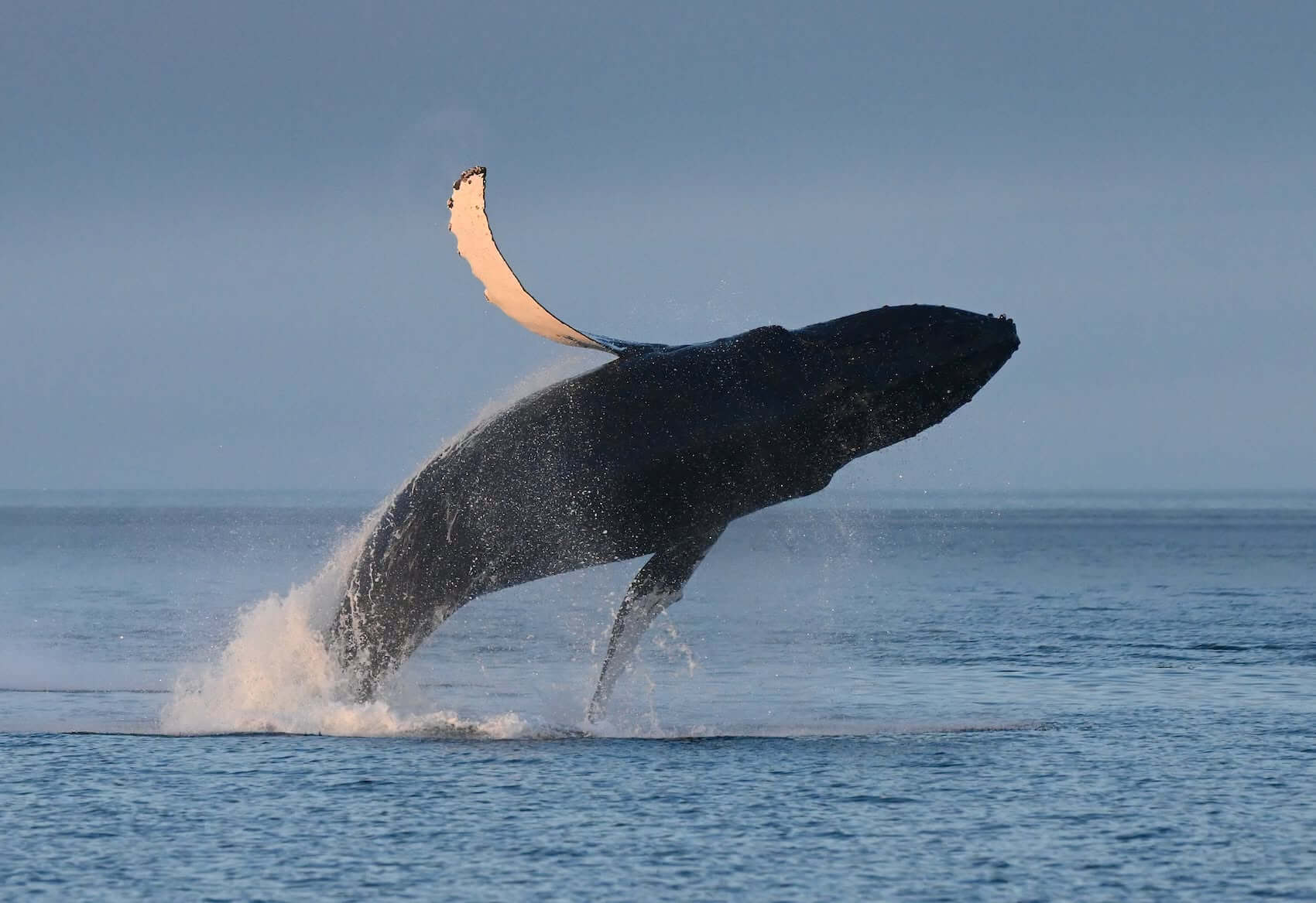
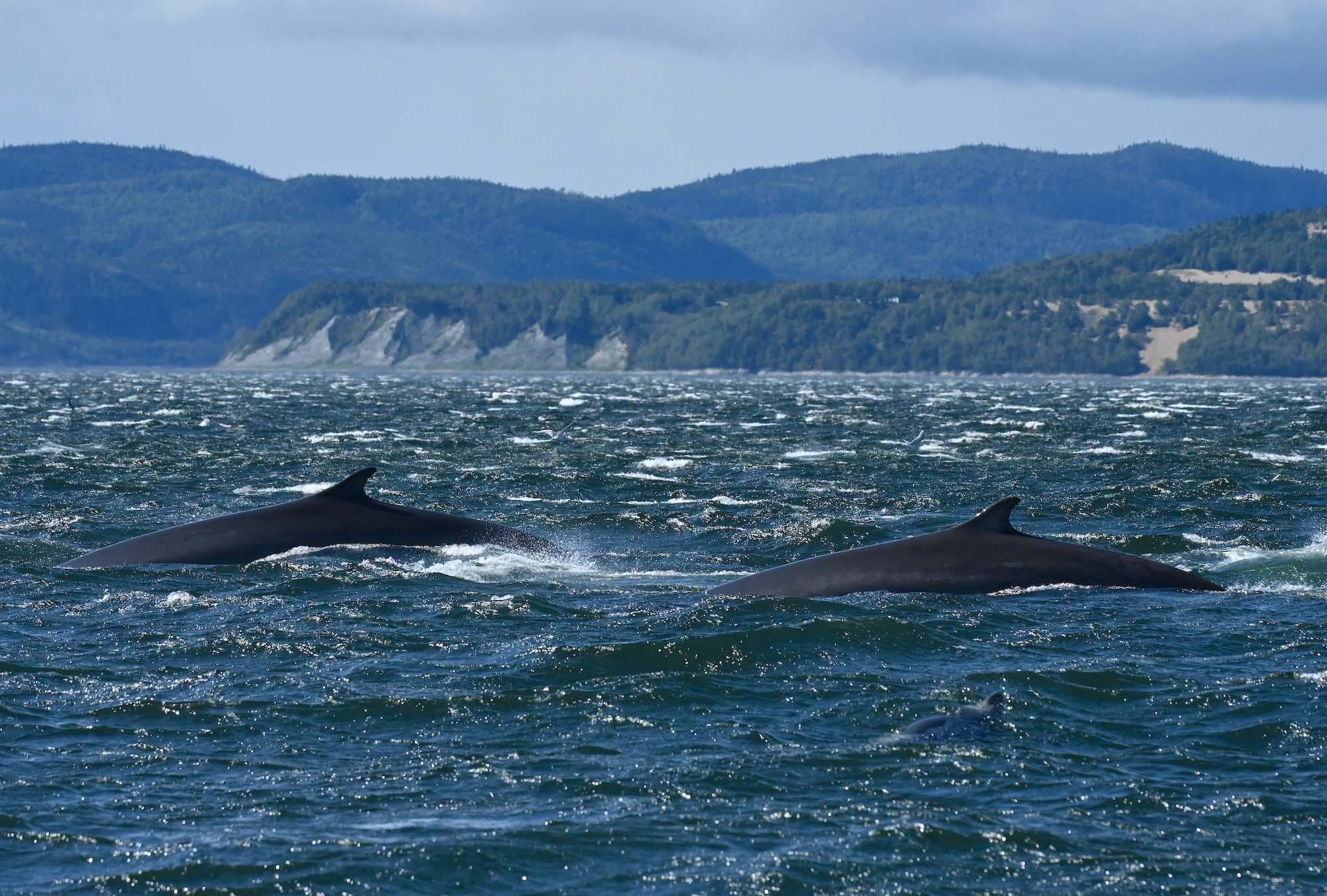
A regular visitor to the area also observed several larger creatures: From Les Bergeronnes, she reports “Four fin whales, two minke whales on the move, a group of four or five belugas, and porpoises (I saw two, but there may have been more).” Not far from there, off Cap de Bon-Désir, a captain reported the “aerial acrobatics” of two humpbacks, including H943, that “performed a long series of breaches and pectoral fin slaps!”
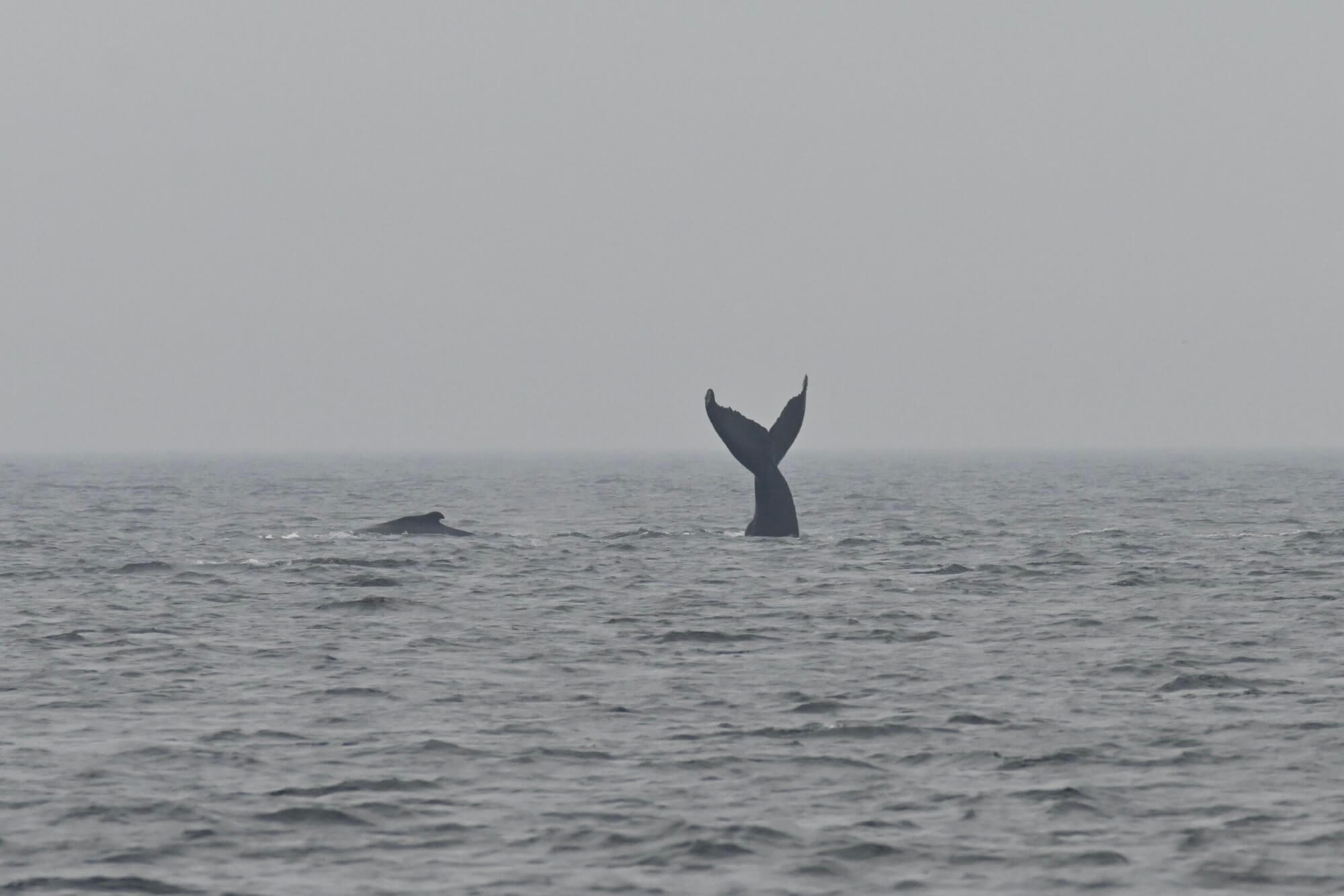
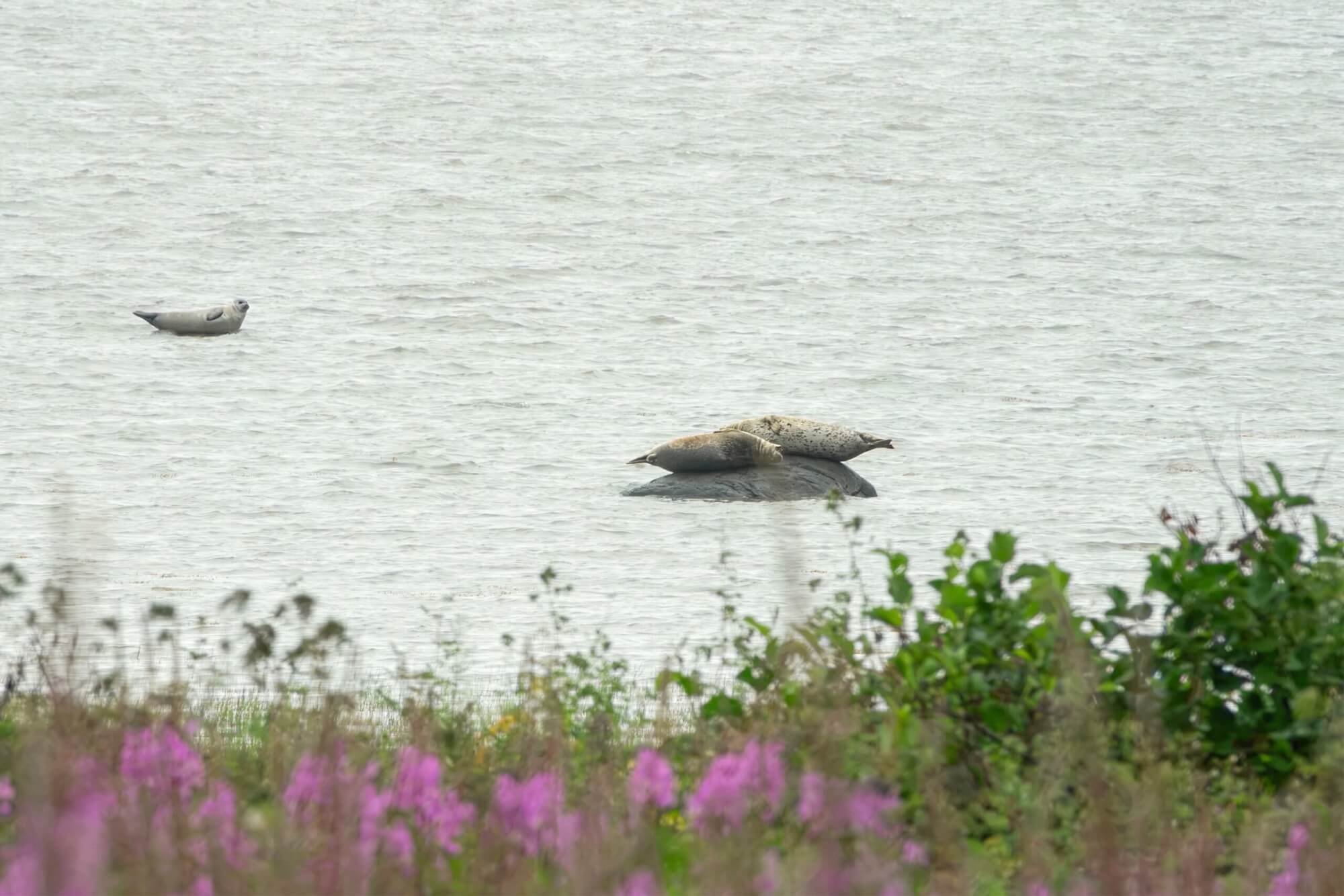
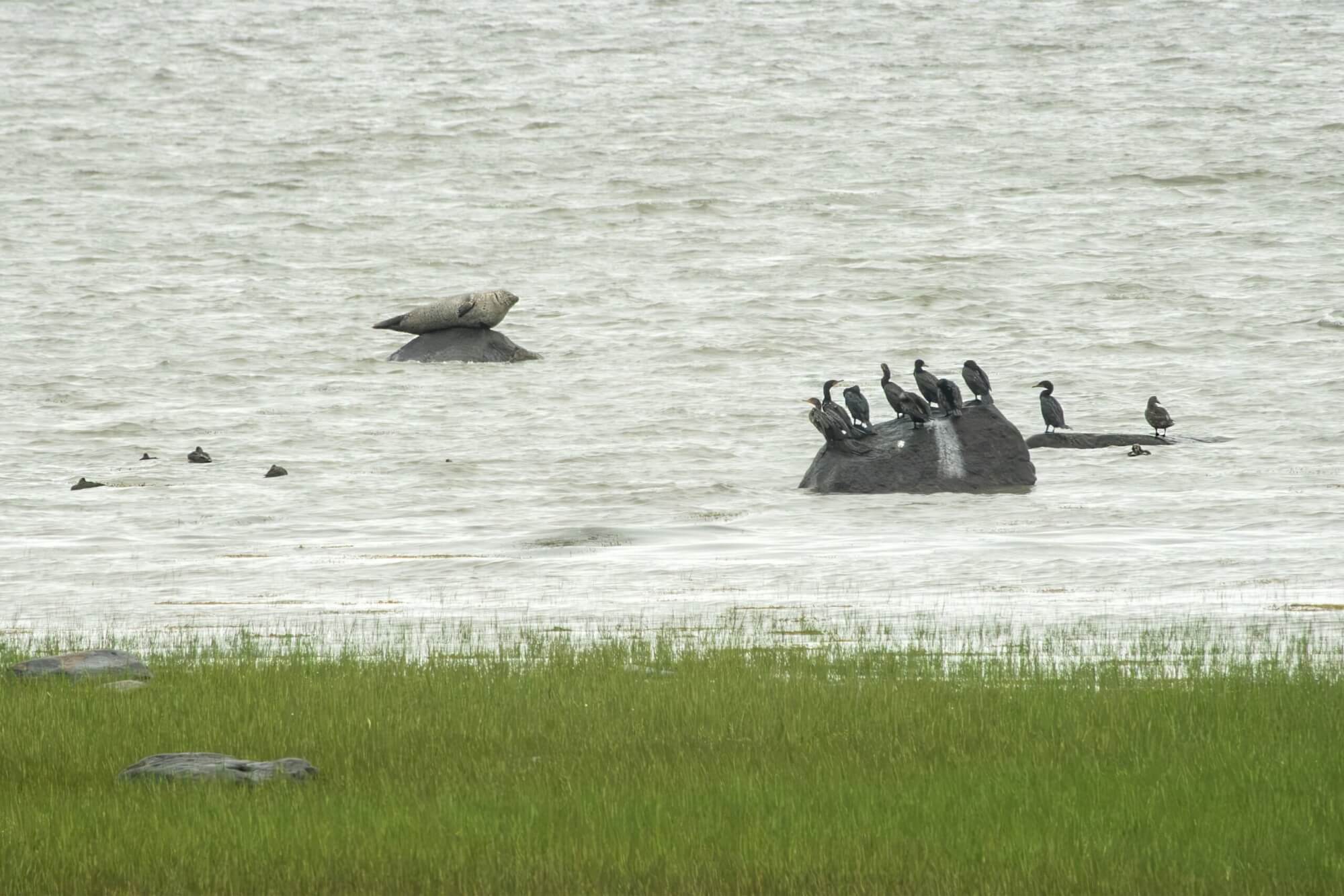
One sharp-eyed observer reported harbour porpoises, seals, and more minke whales than at the start of the season feeding along the shores between Franquelin and Baie-Comeau. There were also two humpbacks, one of which “breached about thirty times off Franquelin,” he shares. A little farther down the coast, near Sept-Îles, a woman from Gallix enthusiastically describes seeing “at least twenty harbour seals on August 3, resting on the nearshore rocks of Bay of Sept-Îles.” Did you know that if you’re really observant, you can photo-identify seals by their spots and other markings on their fur? This technique is complex because their coat changes after each moult, which takes place every year between July and mid-September!


Marine mammals aplenty in the Gulf
Minke whales, grey and harbour seals, and harbour porpoises zig and zag between the islands of the Mingan Archipelago. Farther offshore, the Mingan Island Cetacean Study (MICS) team identified two or three fin whales, four humpbacks—including Paloma (H692), who has been in Gaspésie waters in recent weeks—and seven North Atlantic right whales, including Koala (R3940) and Prickly Pear (R4310). The Sept-Îles Research and Education Centre (CERSI) tallied seven blue whales, eight fin whales, and five humpbacks!
Belugas making a splash on the south shore
Harbour porpoises, minke whales, and even a blue whale were spotted between Rivière-au-Renard and Percé. On the South Shore, a Côte-Nord resident visiting Bic National Park was taken aback by over a dozen harbour seals sprawled on the rocks. Some of them were in a banana-like posture (in French), while others were trying to haul themselves onto the few remaining rocks still accessible in the rising tide. “We could hear them howling… or should I say barking? Four of them seemed to be squabbling over the same rock, and one of them ended up in the water!” she chuckles.
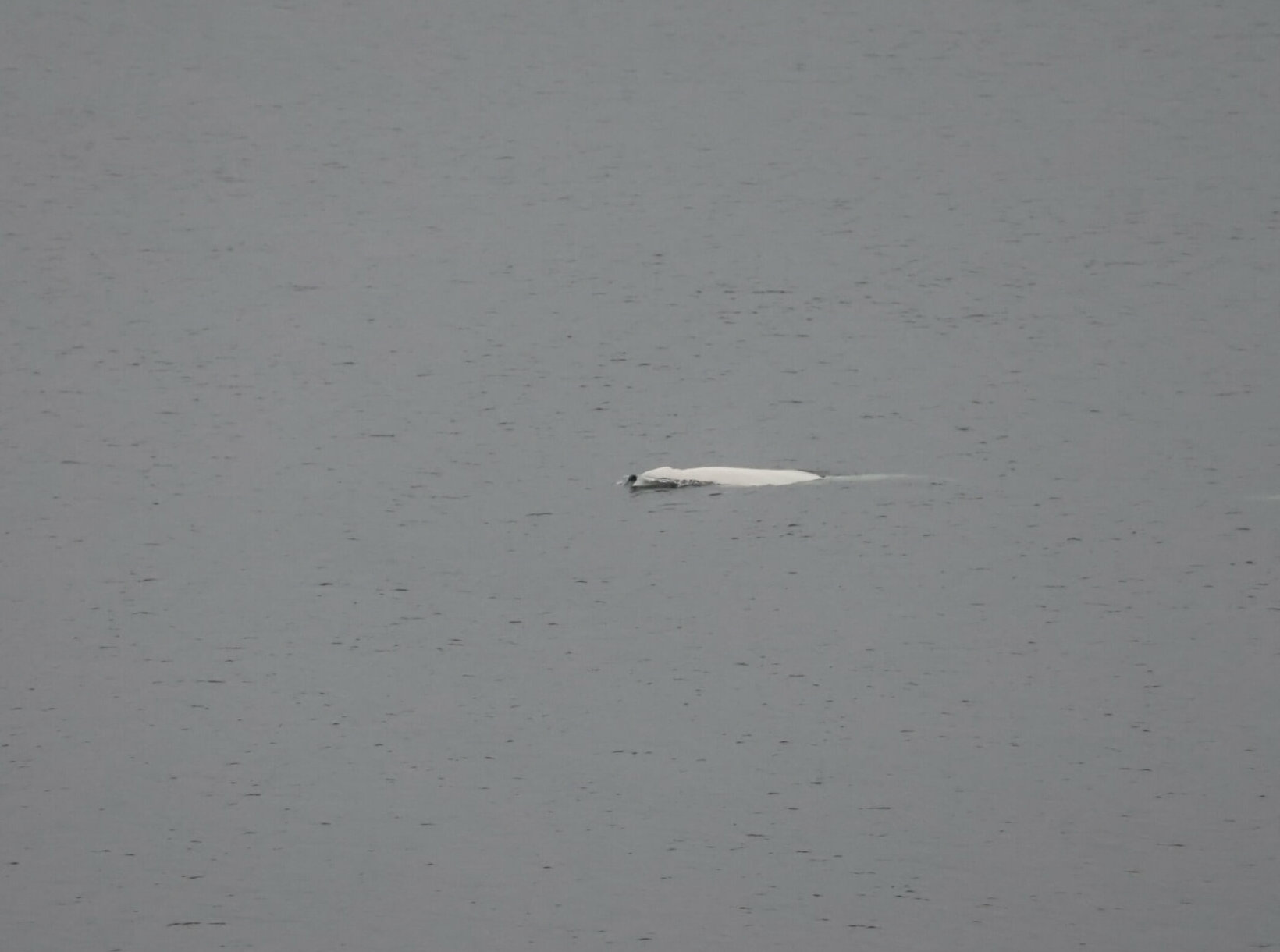
Belugas were making waves off Cap-aux-Os! A seasoned observer reported initially thinking that she was looking at “whitecaps in the middle of the bay. Upon closer inspection, there were two belugas,” she said. “We spotted them again in the Park at L’Anse-aux-Amérindiens, much closer to shore. We could even see them through the clear water; it was awesome!” Every year people say it’s unusual to see belugas in Gaspé Bay, but maybe it will eventually become the new norm? Indeed, environmental changes in the St. Lawrence might explain the increase in such sightings (article in French).
Avian scenery
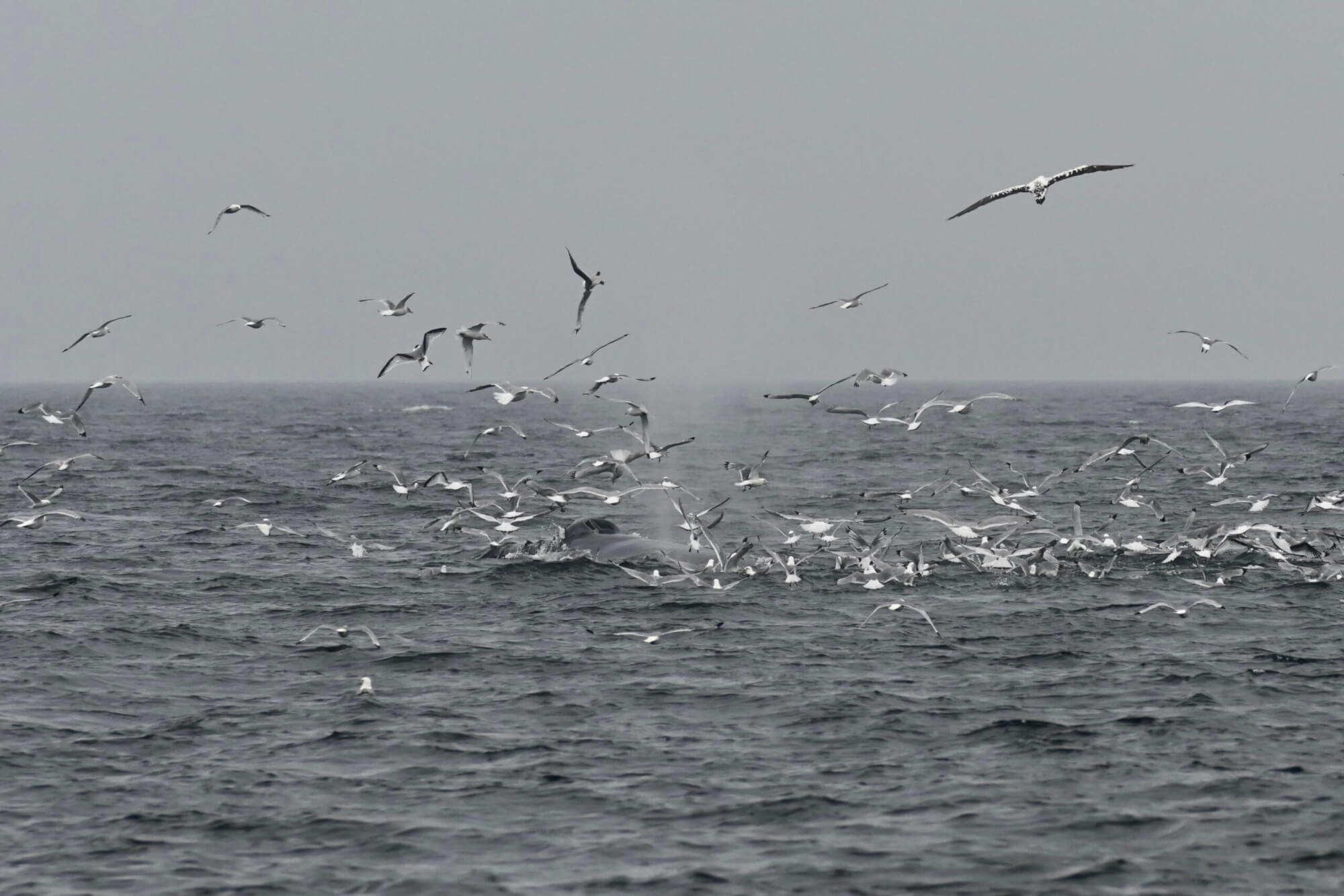
Seabirds of varying hues dot the seascapes, including razorbills, terns, kittiwakes, cormorants, and gulls, but the most impressive birds in the Estuary and especially the Gulf have been northern gannets. One passionate Gaspé resident describes the “completely insane spectacles” put on by these sulids at the cove known as Anse aux Cousins and Cap Bon-Ami, all under the watchful gaze of the resident grey and harbour seals. In the Estuary, the humpback whale H859 (Yvon) was being followed by about a hundred birds, explains a local captain and naturalist. He describes how “they would wait at the surface and as soon as the whale surfaced, they would rush in from every direction and start scrambling for food.” Most of the birds were gulls, but I noticed a few gannets in the midst of the feeding frensy!”


Where are the whales this week? Sightings map
These data were reported by our network of observers. They give an idea of the presence of whales and in no way represent the actual distribution of whales in the St. Lawrence. Just for fun!
Click on the whale or seal icons to discover the species, the number of individuals, additional information or photos of the sighting. To enlarge the map, click on the icon in the top right-hand corner. The map works well on Chrome and Firefox, but not so well on Safari.
To display the list of sightings, click on the icon in the top left-hand corner.
Thanks to all our collaborators!
Special thanks go out to all our observers who share their love for marine mammals with us.
Your encounters with cetaceans and pinnipeds are always a pleasure to read and discover. On the water or from shore, it is your eyes that give life to this column.
Kim Bourque
Marie-Andrée Charlebois
Nathalie Cliche
Thalia Cohen Bacry
Laetitia Desbordes
Sarah Filbotte
Hélène Guitton
Stéphanie Houde
Guylaine Marchand
Diane Ostiguy
Sandrine Papias
Renaud Pintiaux
Pascal Pitre
René Roy
Elsie et Sébastien Rivière-Moureu
Guillaume Savard
Andréanne Sylvain
Marielle Vanasse
Gabriela Vincent-Parada
And to all the others!
Additionally, we would like to acknowledge the following teams that also share their sightings:
Centre d’éducation et de recherche de Sept-Îles (CERSI)
Station de recherche des Îles Mingan (MICS)
Réseau d’observation des mammifères marins (ROMM)
Réseau québécois d’urgences pour les mammifères marins (RQUMM)
Groupe de recherche et d’éducation sur les mammifères marins (GREMM)
Mériscope
Would you also like to share your observations? Have you seen any marine mammals in the St. Lawrence? Whether it’s a spout offshore or just a couple of seals, drop us a line and send your photos to [email protected]!

Thalia Cohen Bacry
Thalia Cohen Bacry is a science writer for the GREMM, having previously worked as a naturalist in 2023. A UBC graduate, she completed a master's degree in international studies at the Université Laval and is continuing her learning in several fields, including geography, political science and animal behavior. Passionate about environmental protection, she grew up in Savoie, surrounded by lakes and mountains, before immigrating to Canada and discovering even bigger and wilder spaces. Intrepid, curious and persevering, she loves to learn, observe and analyze in order to raise awareness about protecting our oceans.
Recommended articles
Waters Stirred by Blowing Whales
The shores of the St. Lawrence are ablaze with orange and golden foliage. These multicoloured hues are reflected in the…
Côte-Nord: Prime Location for Autumn Whale Watching
Across Quebec, fall has truly arrived, as evidenced by the turning leaves and the arrival of certain marine mammal species…
Strong Winds, Big Whales
Despite the strong winds, fog, and plummeting air temperatures, marine animals of all kinds continue to roam the St. Lawrence.…