
A Week of Unique Sightings

As I write these lines, my hands are still trembling with excitement. Along with several other lucky individuals, we just witnessed a truly extraordinary sighting while standing on the rocks near the Marine Mammal Interpretation Centre in Tadoussac: a North Atlantic right whale! And that wasn’t the only unusual sighting this week: There were reports of a humpback whale exhibiting an unusual feeding behaviour, a group of about fifteen minke whales, and even the presence of killer whales in the Basse-Côte-Nord region.
“Right whale!”
These were the words that echoed across the fjord before the dark back and callosities (the thick layers of white skin on its head) of a North Atlantic right whale re-emerged from the waters of the mouth of the Saguenay Fjord. At the same time, several belugas, a minke whale, and a harbour seal were swimming nearby. Typically, North Atlantic right whales are more commonly observed in the Gulf of St. Lawrence. However, this is not the first time an individual of this species has made an incursion this far upstream. In 2022, a young individual even made it as far as Anse à la Boule in the Saguenay Fjord. With approximately 384 individuals remaining, this species is critically endangered.
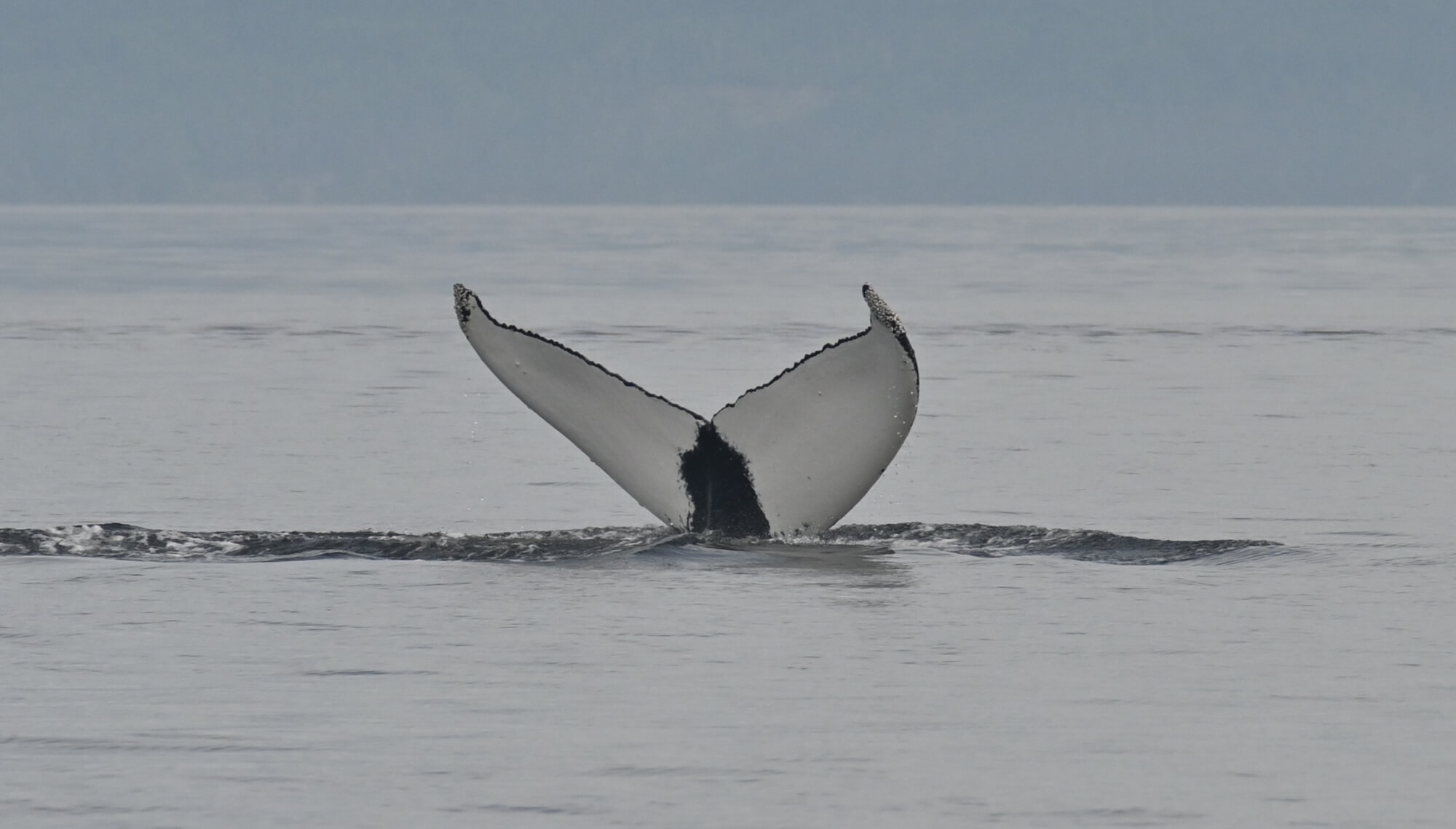
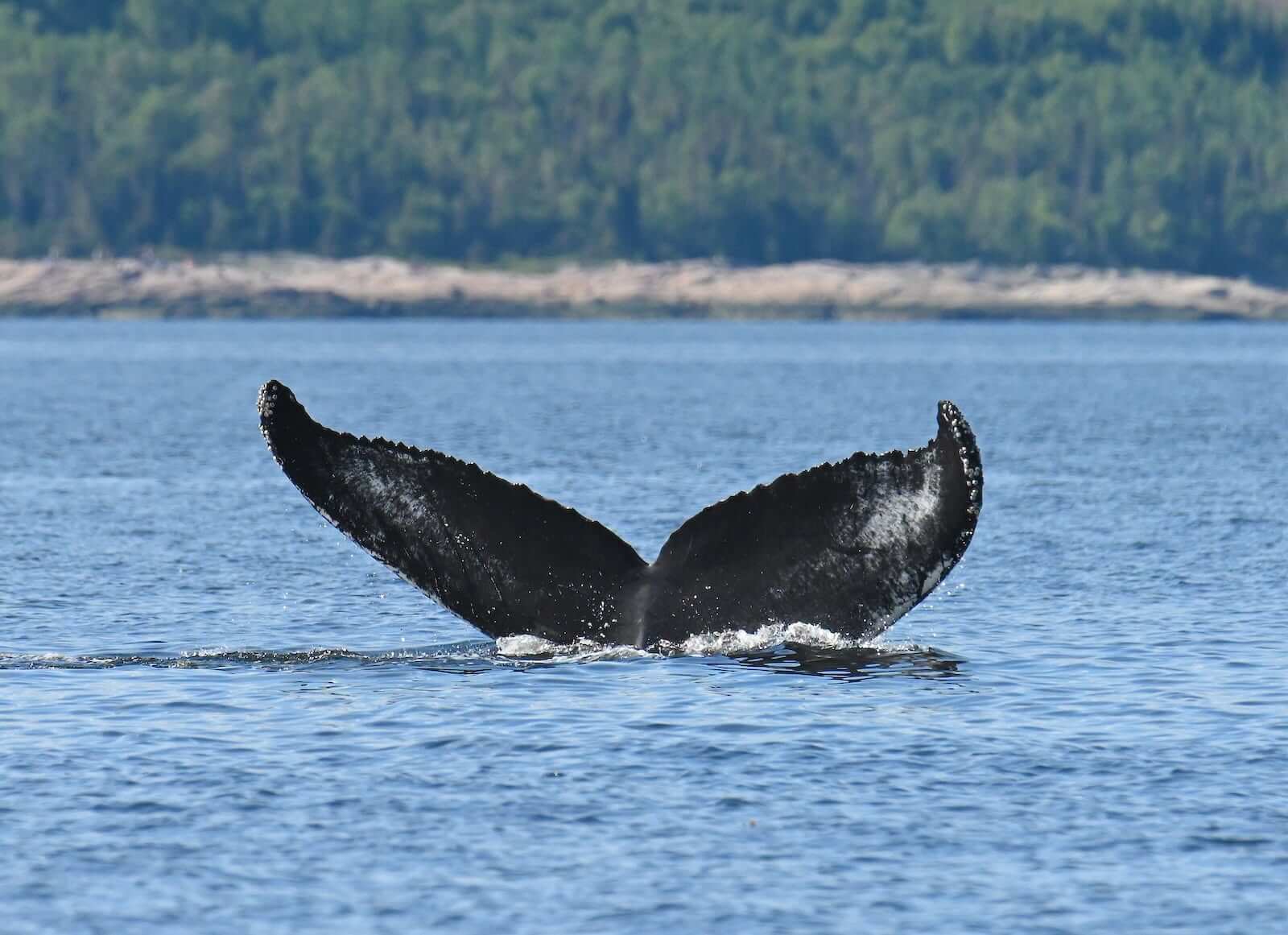
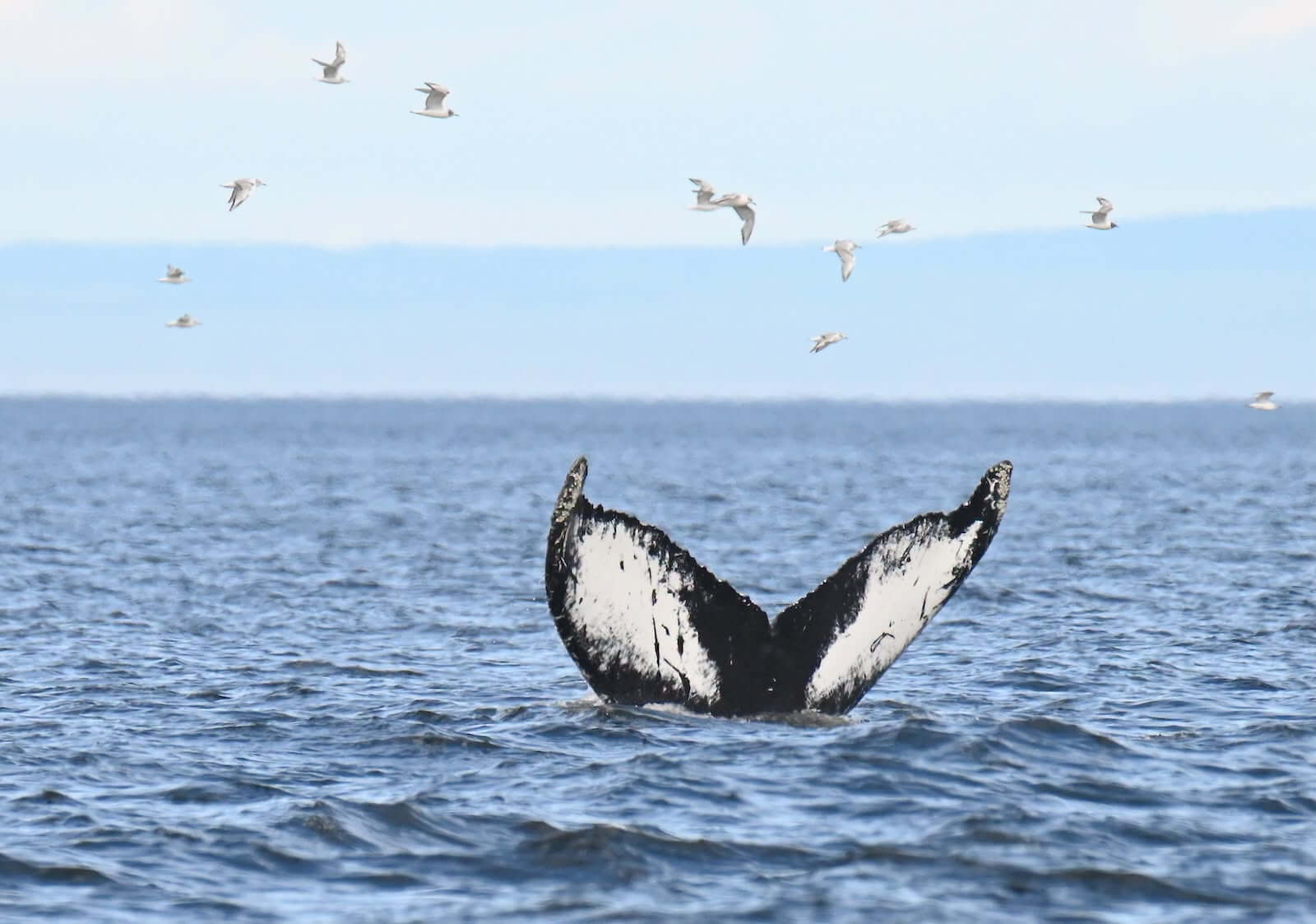
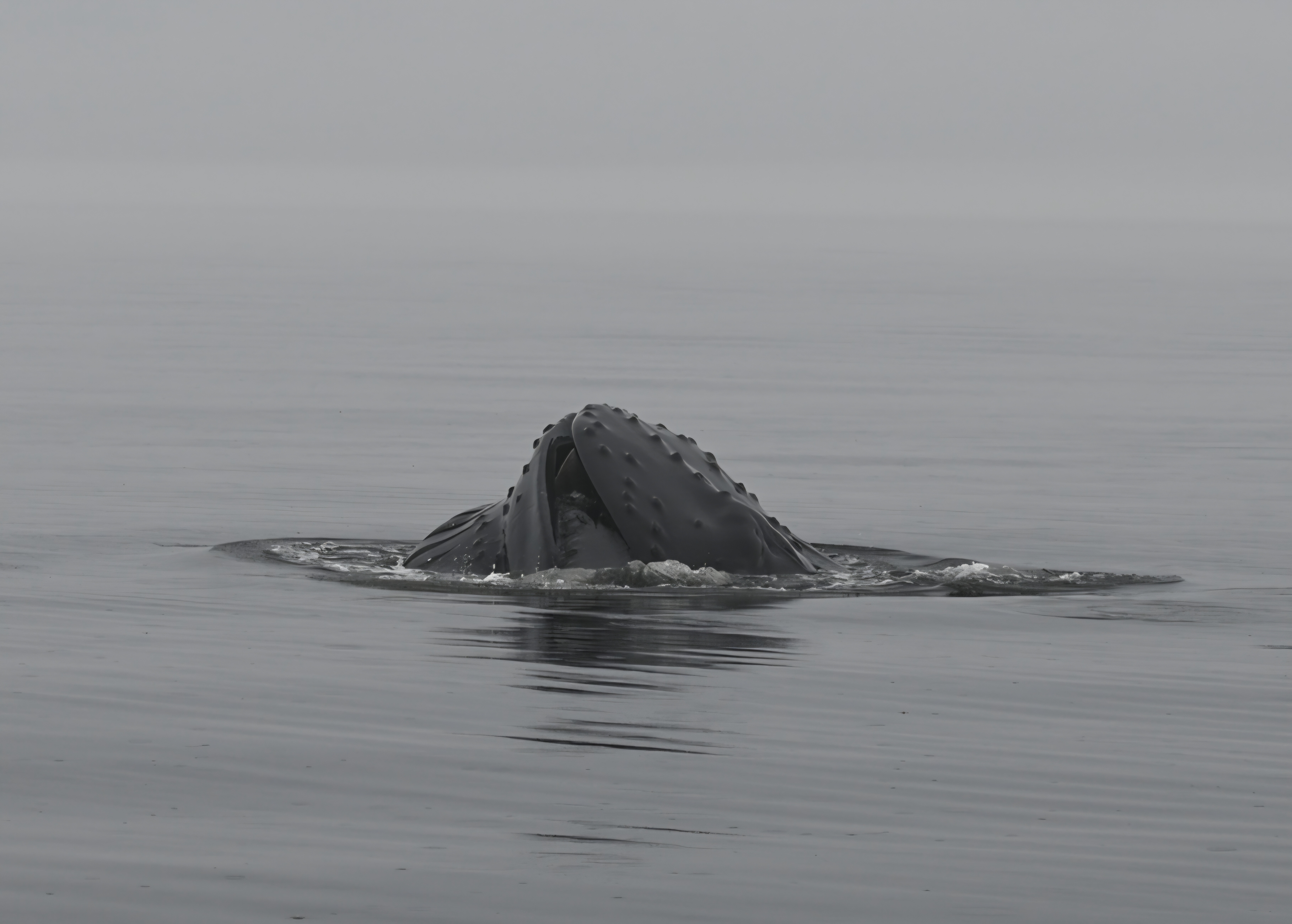
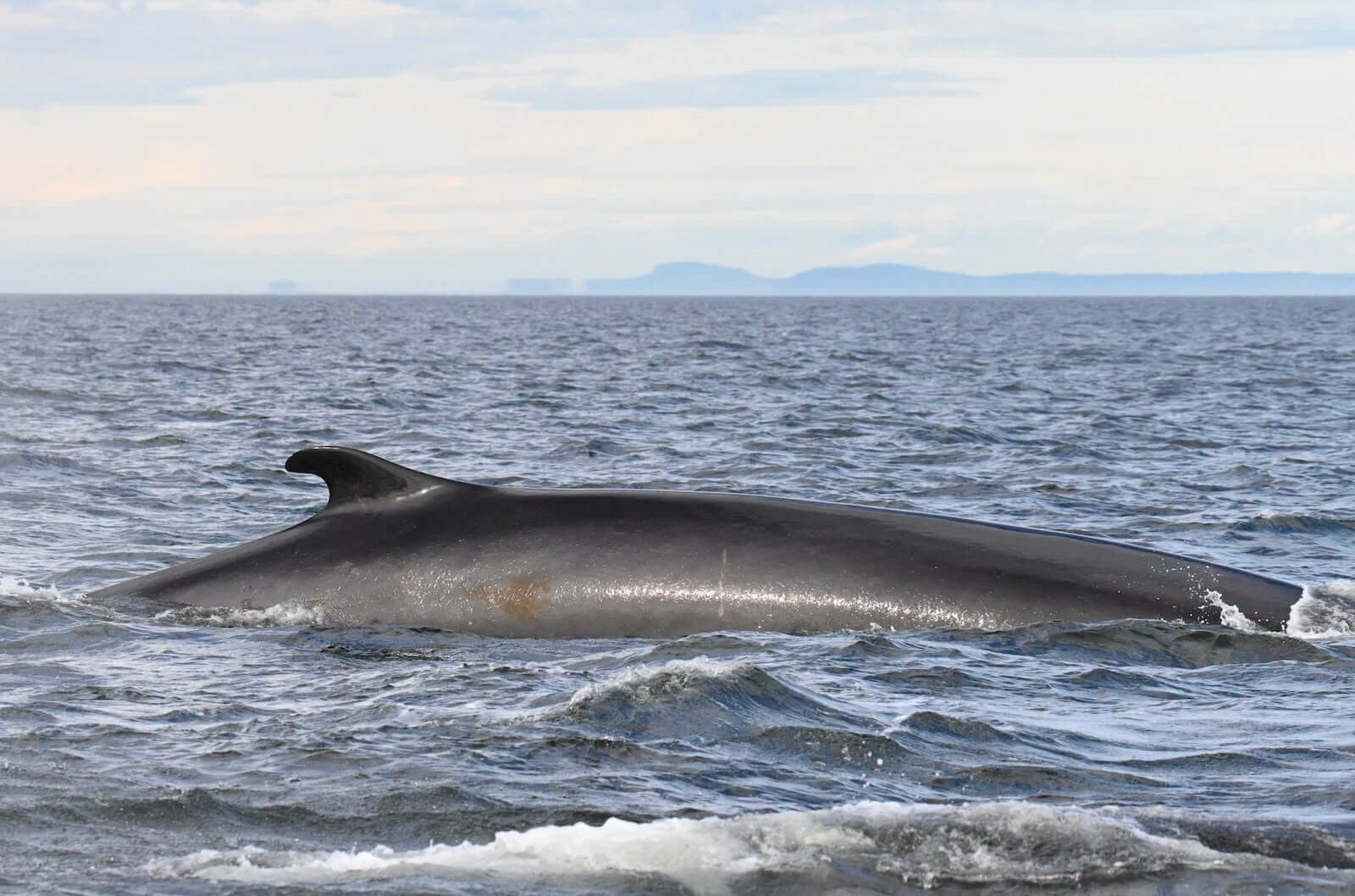
A few kilometres farther down river, humpbacks Gaspar, H859 a.k.a. Yvon as well as H929 a.k.a. Éline were spotted. As for fin whales, Ti-Croche, Piton, Kashkan and Bp2829 have been turning heads in the Saguenay–St. Lawrence Marine Park. Humpback whale H859 was also observed forming a bubble net to trap its prey—a feeding technique rarely seen in the region! These air bubbles are thought to be produced from their blowhole (article in French).
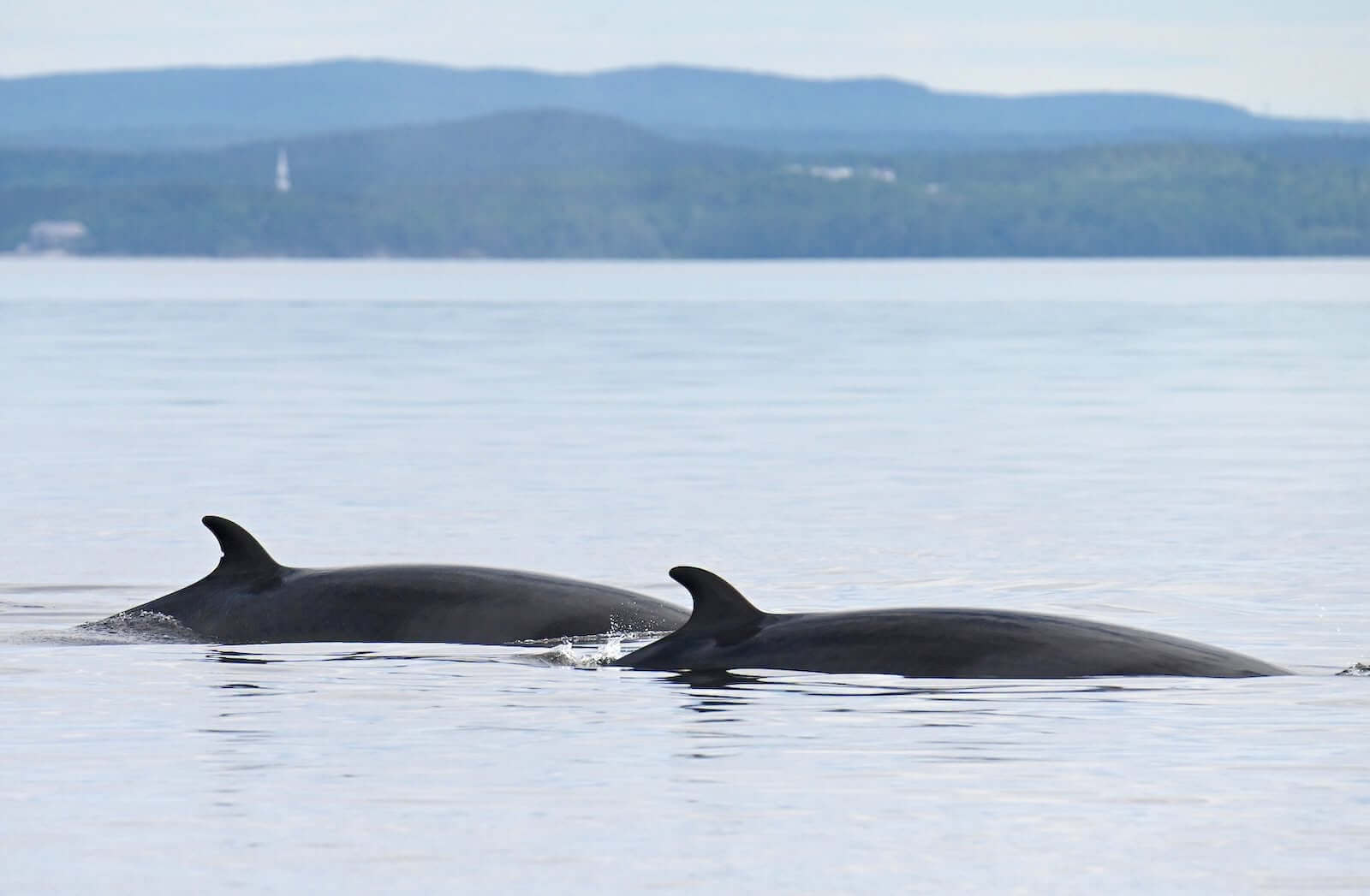
A surprising sighting of about fifteen minke whales in the same patch of water was made off the Tadoussac dunes by a naturalist and wildlife photographer. Within this gathering, two groups of four individuals appeared to be feeding. Rather solitary by nature, minke whales are rarely seen in groups. Associations do sometimes form, but generally only for a few breathing cycles.
Spouts in the Gaspé Peninsula
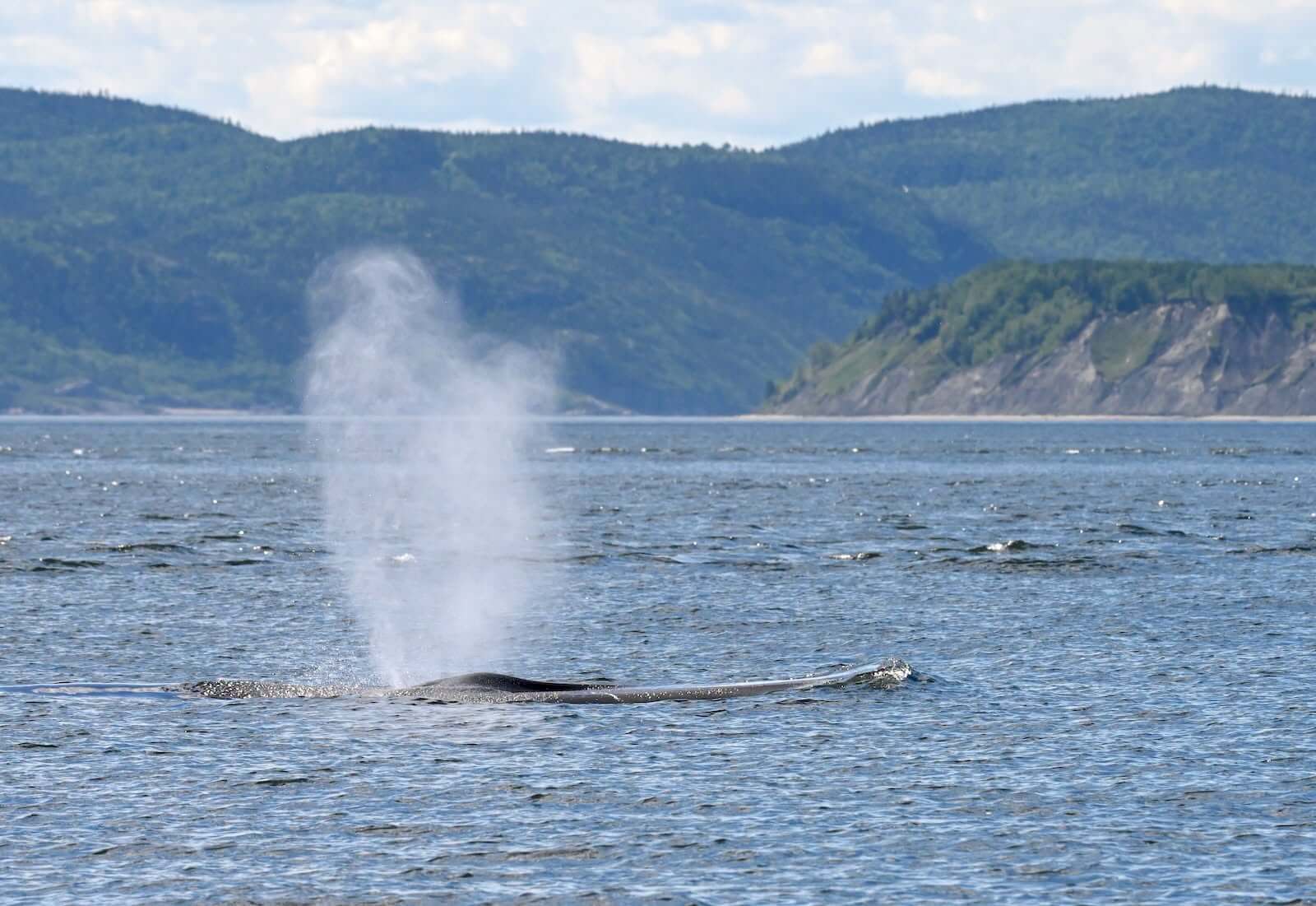
While three large blows were spotted off Cloridorme, they actually belonged to several humpbacks and fin whales that had been surfacing in Gaspé Bay in recent days. A resident of Cap-aux-Os remarks, “On Sunday evening […], we saw several minke whales and a large distant spout.” Harbour porpoises were also spotted, not to mention several minke whales. A minke whale was seen near Grande-Vallée, while about thirty resting seals were howling on Île Plate. Seals are sometimes nicknamed loups marins by French speakers because of the similarity of their vocalizations to those of wolves!
Killer whales near La Tabatière
“It’s 5 p.m. on June 19, 2026. We’re on our way back, having just left Saint-Augustin and heading toward La Tabatière. […] I’m going about my business when a passenger walks up to me. ‘There’s a black fish following the boat. Could there be a big fish around here?’ I head toward the starboard side, not very optimistic given the rough waves. And then, 20 metres away, a huge black dorsal fin appears! Killer whale!” exclaims a naturalist working on the Bella Desgagnés, a vessel that supplies the Lower North Shore. It turns out there were two killer whales swimming nearby. “I still get shiver with excitement just thinking about it. I was just lucky to be in the right place at the right time!” she adds.
Passing through the Mingan Archipelago, a sailor details her trip list, which includes observations of numerous minke whales, grey seals, and harbour porpoises. Seabirds are also present, as are small jellyfish in the water! The Mingan Island Cetacean Study (MICS) spotted six North Atlantic right whales during its outing on June 21, some of which are very familiar to their team.
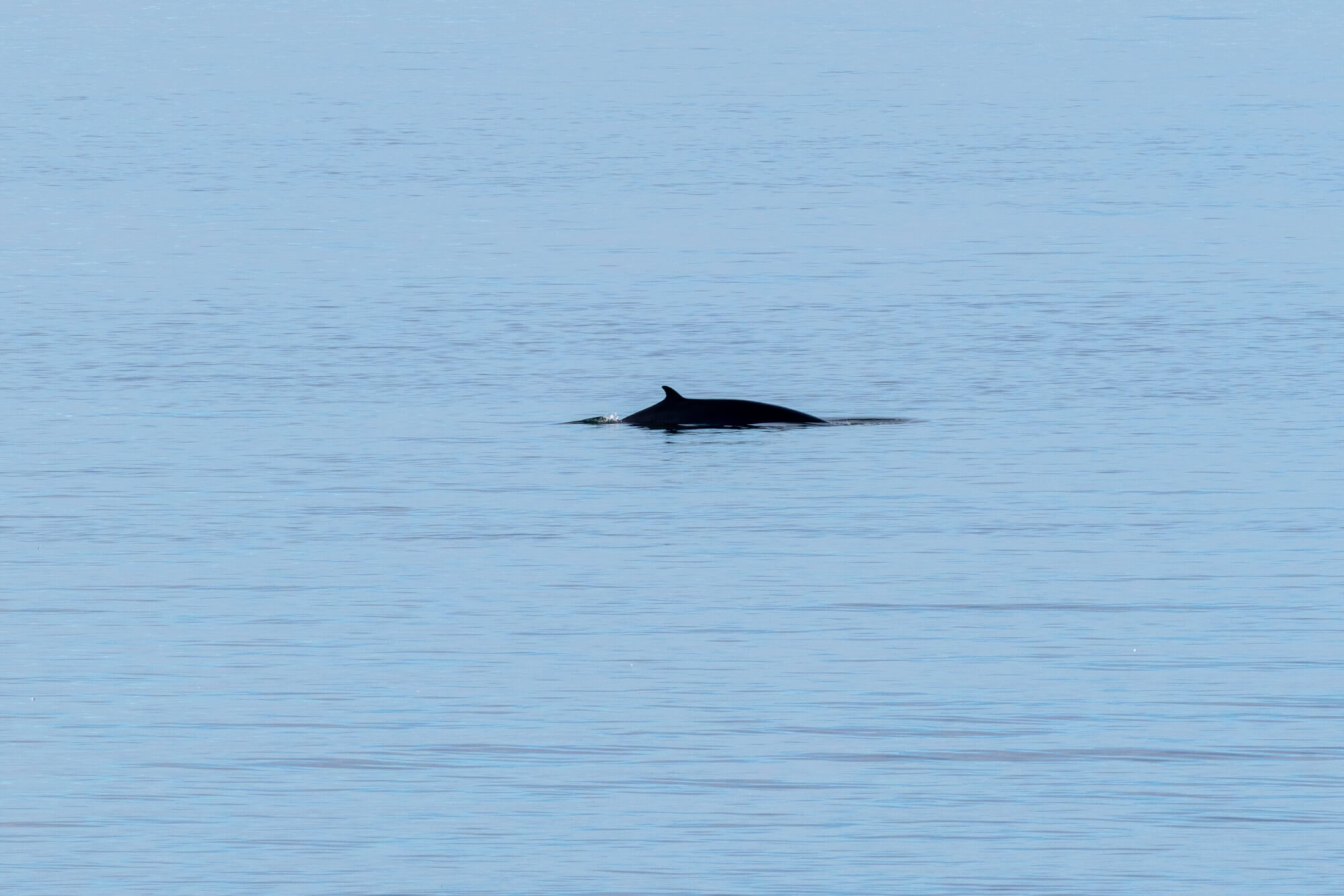
Near Franquelin, minke whales and harbour porpoises have been reported. One observer writes that he saw two tail flukes break the surface. Humpbacks? Stay tuned! Near Sept-Îles, a fin whale was spotted, as were harbour porpoises and minke whales.
Where are the whales this week? Sightings map
These data were reported by our network of observers. They give an idea of the presence of whales and in no way represent the actual distribution of whales in the St. Lawrence. Just for fun!
Click on the whale or seal icons to discover the species, the number of individuals, additional information or photos of the sighting. To enlarge the map, click on the icon in the top right-hand corner. The map works well on Chrome and Firefox, but not so well on Safari.
To display the list of sightings, click on the icon in the top left-hand corner.
Thanks to all our collaborators!
Special thanks go out to all our observers who share their love for marine mammals with us.
Your encounters with cetaceans and pinnipeds are always a pleasure to read and discover. On the water or from shore, it is your eyes that give life to this column.
- Croisières Baie de Gaspé
- André Bujold
- Laeticia Desbordes
- Diane Ostiguy
- Sandrine Papias
- Pascal Pitre
- Renaud Pintiaux
- JC Rochette
- Guillaume Savard
- Marielle Vanasse
And to all the others!
Additionally, we would like to acknowledge the following teams that also share their sightings:
Centre d’éducation et de recherche de Sept-Îles (CERSI)
Station de recherche des Îles Mingan (MICS)
Réseau d’observation des mammifères marins (ROMM)
Réseau québécois d’urgences pour les mammifères marins (RQUMM)
Groupe de recherche et d’éducation sur les mammifères marins (GREMM)
Mériscope
Would you also like to share your observations? Have you seen any marine mammals in the St. Lawrence? Whether it’s a spout offshore or just a couple of seals, drop us a line and send your photos to [email protected]!

Odélie Brouillette
Odélie Brouillette joined the GREMM team as a writer and naturalist in 2022, and has been a project manager in scientific communication since 2023. With a background in biology, she loves learning and sharing with others what's most important to her. She has always been fascinated by marine environments and whales, and hopes to contribute to their protection through awareness-raising and popularization.
Recommended articles
Waters Stirred by Blowing Whales
The shores of the St. Lawrence are ablaze with orange and golden foliage. These multicoloured hues are reflected in the…
Côte-Nord: Prime Location for Autumn Whale Watching
Across Quebec, fall has truly arrived, as evidenced by the turning leaves and the arrival of certain marine mammal species…
Strong Winds, Big Whales
Despite the strong winds, fog, and plummeting air temperatures, marine animals of all kinds continue to roam the St. Lawrence.…