
Humpbacks in the Estuary and Gulf

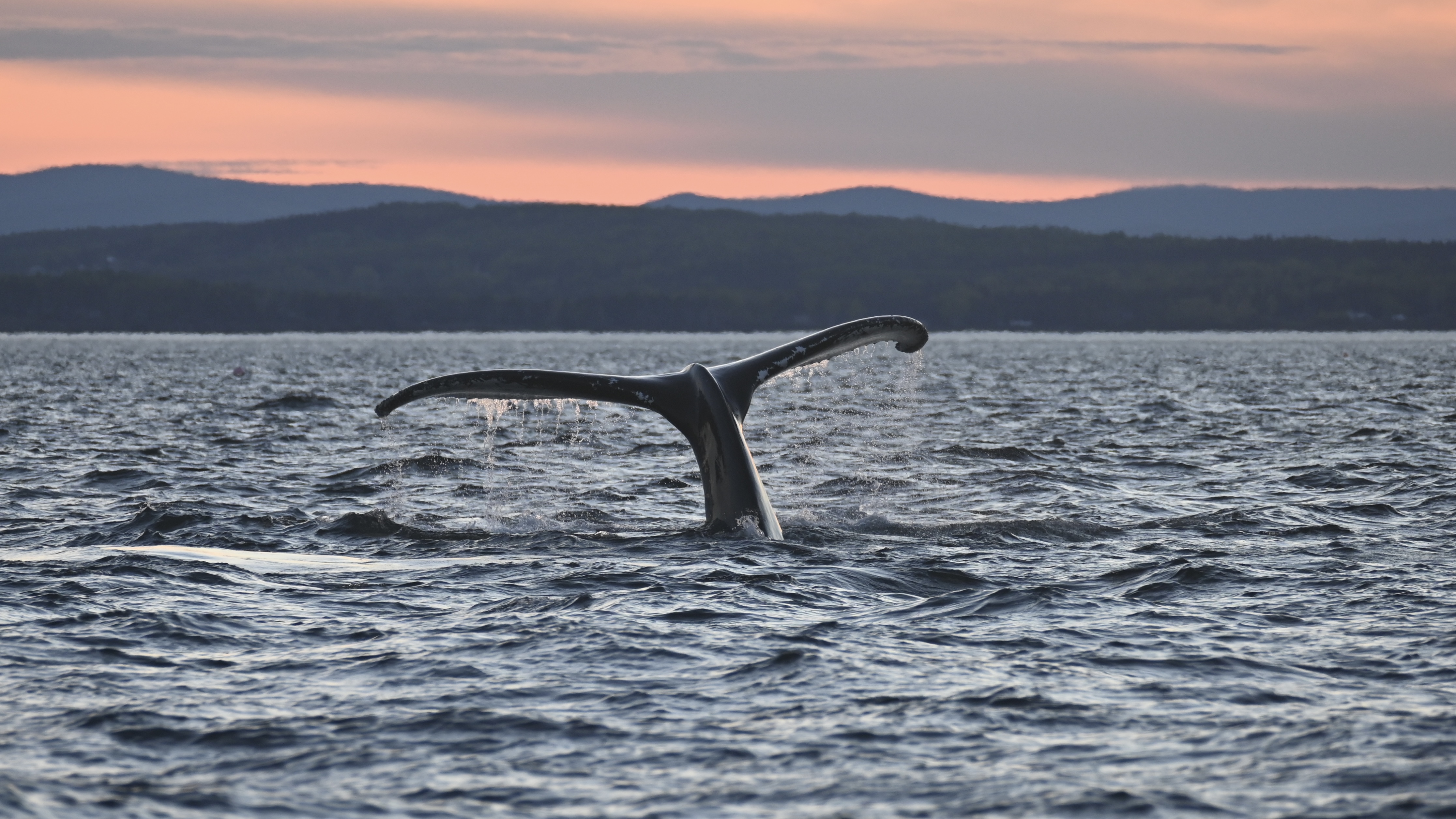
Without a doubt, the main focus of attention these past few days has been humpbacks, primarily in Gaspé Bay, but also off the coast of Godbout. A few individuals have even been identified thanks to the scientific community and the keen eyes of several enthusiasts. Harbour seals have been increasingly present both in the water and on land. Minke whales, fin whales, and belugas have also been reported. With the mild temps and sunny days, it’s safe to say that whale-watching season is truly underway!
Photo-identification and nicknames
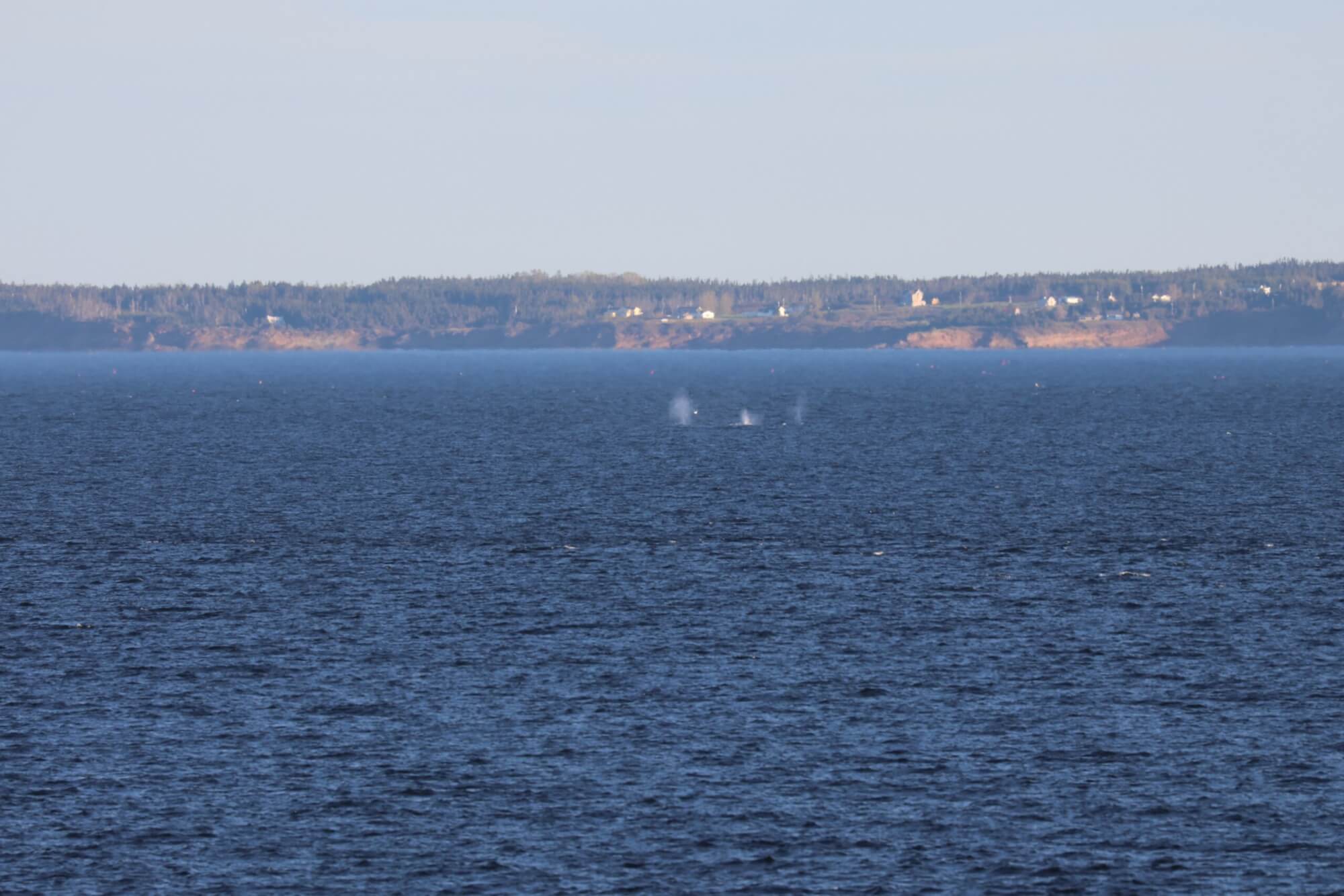
At least five humpbacks have been swimming around Forillon National Park in recent days. One resident of Cap-aux-Os remarks, “We were lucky enough to see five humpbacks that appeared to be feeding together quite actively!” I was even able to identify Dog Ear with my binoculars thanks to her very distinctive tail fluke.
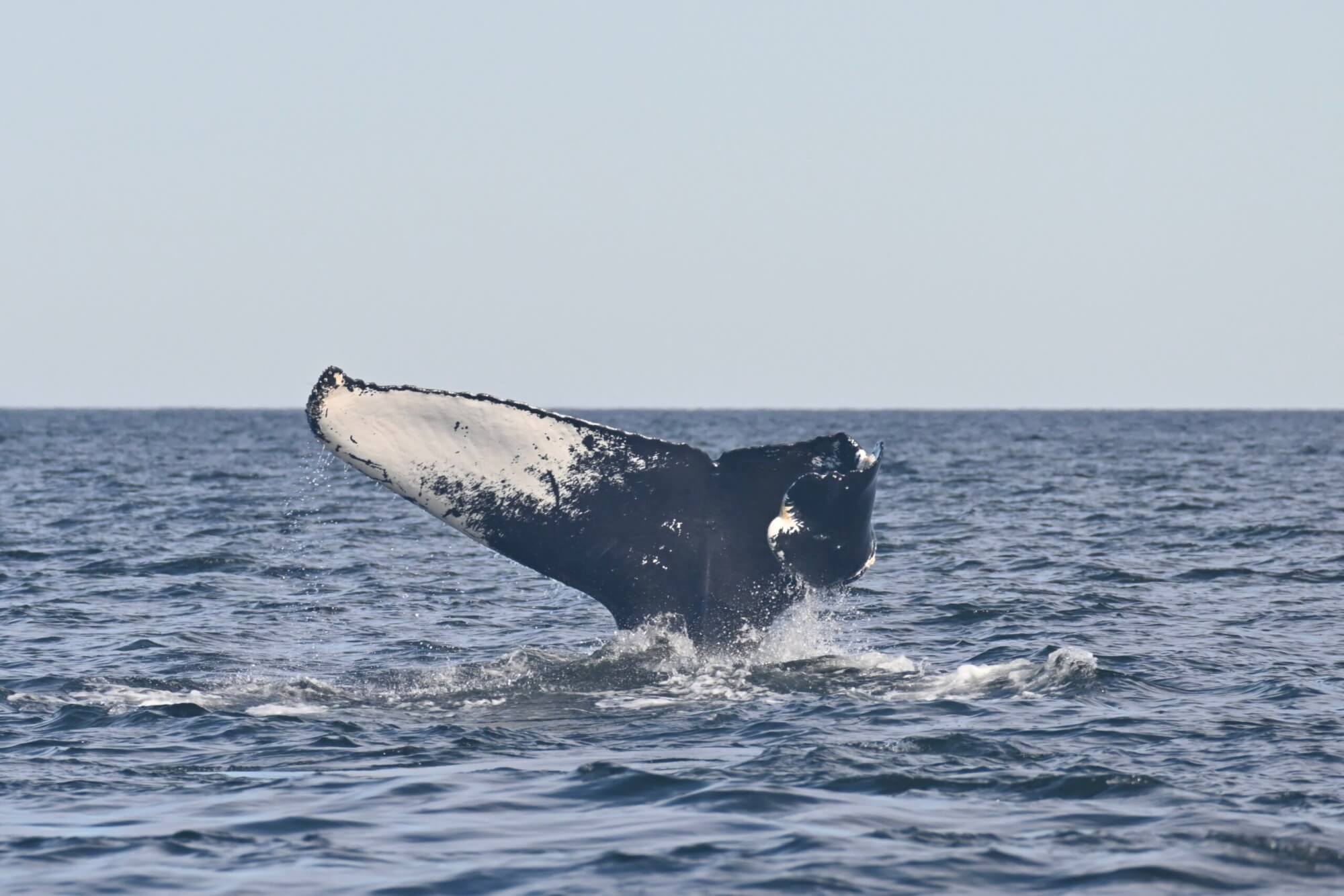
The humpback whale Dog Ear (H141) does indeed have a unique tail fluke: Her right lobe is curved and looks like a chunk has been taken out of it!
Other humpbacks were also identified thanks to excellent teamwork and data-sharing, notably by the Mingan Island Cetacean Study (MICS) and the Group for Research and Education on Marine Mammals (GREMM). ID’d individuals include H704 (Pompon), H683 (Koussouf), and H692 (Paloma). A single beluga and two minke whales were also swimming nearby.
Cetaceans and a pinniped
“In Godbout, we had a humpback whale for a few hours. It was a bit far away, but I still managed to take a couple photos. Then it left and headed upriver,” shares one local resident. Could it be the same individual observed a few days later in the same area? A video also reveals that this time it was H929, also known by its nickname “Éline”! First observed in the St. Lawrence in 2020, Éline has been identified every year since. Its age and sex are still unknown, however. Additional observations or a biopsy could help solve these riddles. “Minke whales, porpoises, belugas, grey seals,” rattles off an enthusiast posted in Franquelin.
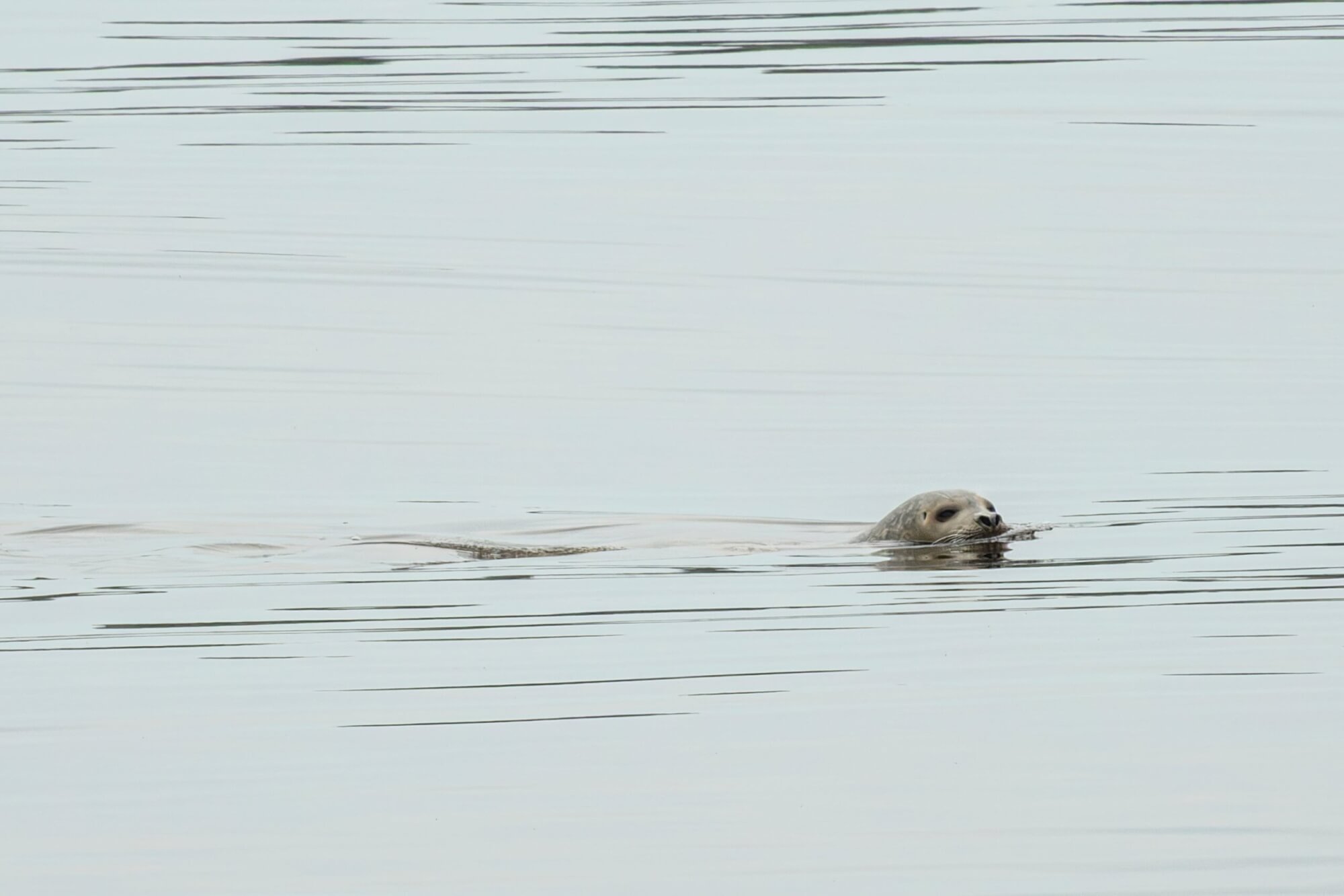
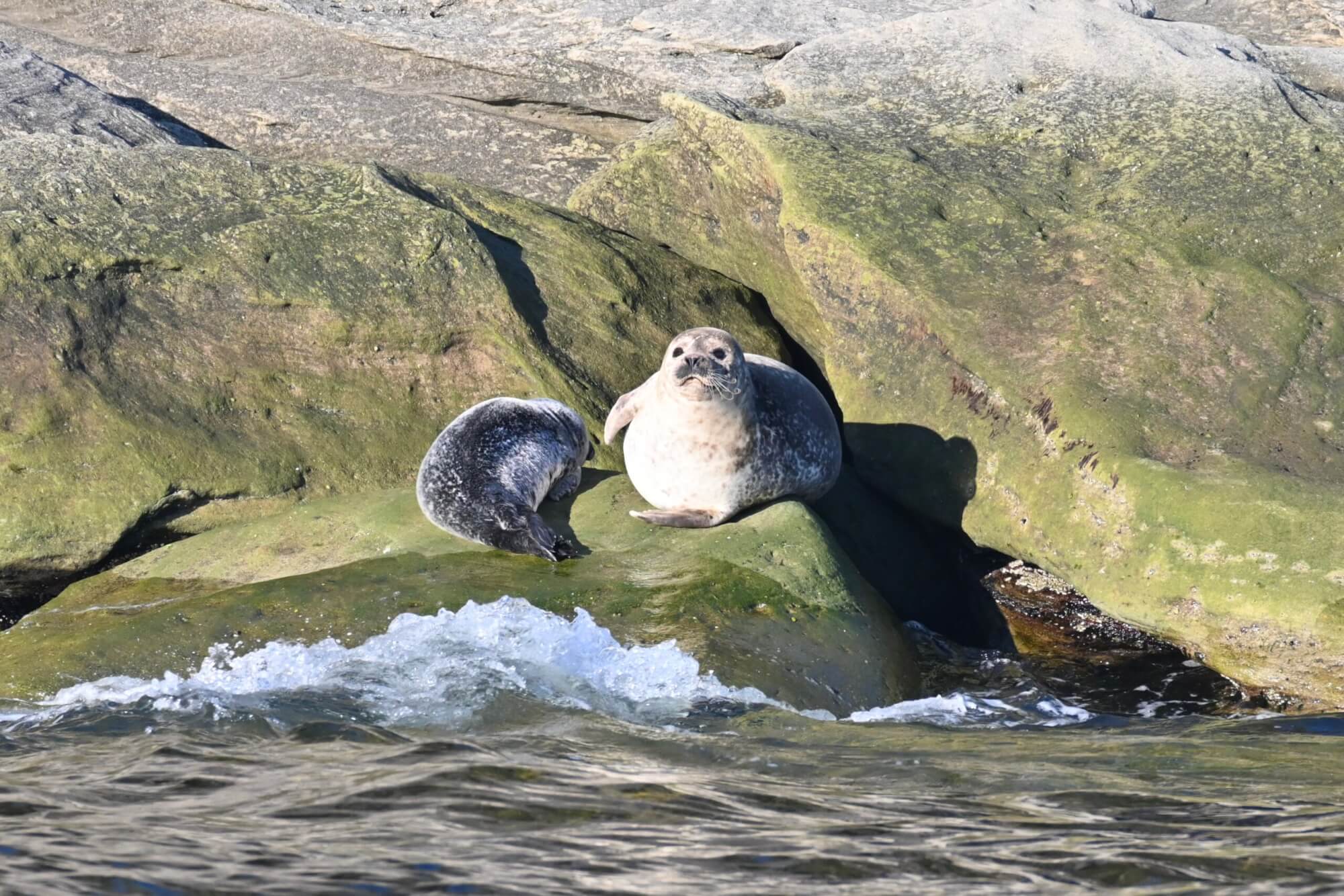
In Gallix, an observer reports: “This morning, I spotted a harbour seal’s head sticking up at the mouth of the Sainte-Marguerite River.” A photo confirms that it is indeed a harbour seal. Their heads are round and dog-like, whereas those of grey seals are much more massive and resemble that of a horse.
This is the time of year that harbour seals give birth to their pups on shore. So don’t be surprised if you see their little ones on the riverbanks! Despite their cute and cuddly appearance and the fact that they are alone, you should never approach them. Their mothers are usually nearby and they are needed to nurse their pups during their first weeks of life with rich milk that helps build up their offspring’s immune systems.
Black dorsals and white backs
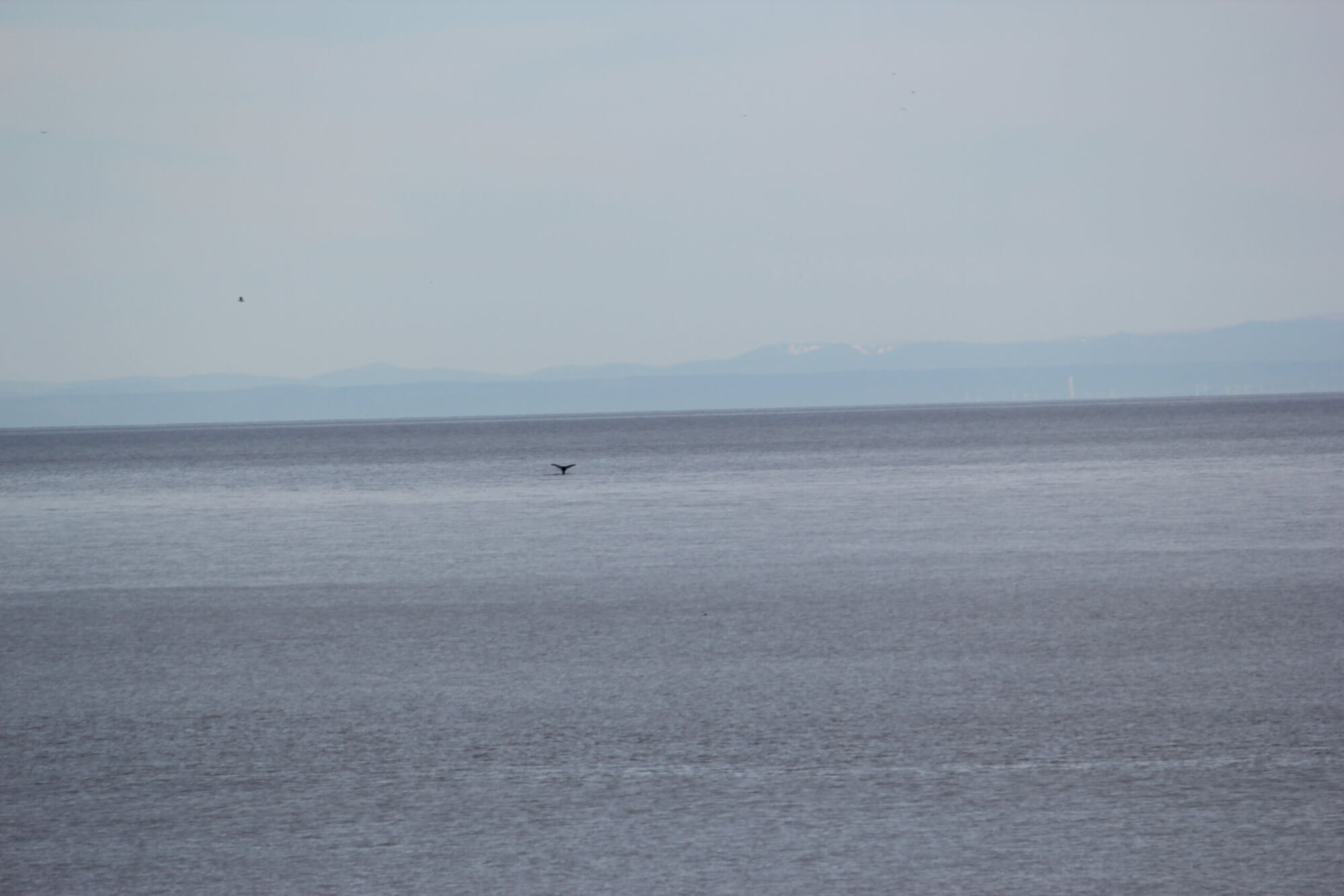
The Saguenay–St. Lawrence Marine Park has been teeming with small marine mammals, from harbour seals to minke whales, fin whales, and belugas.
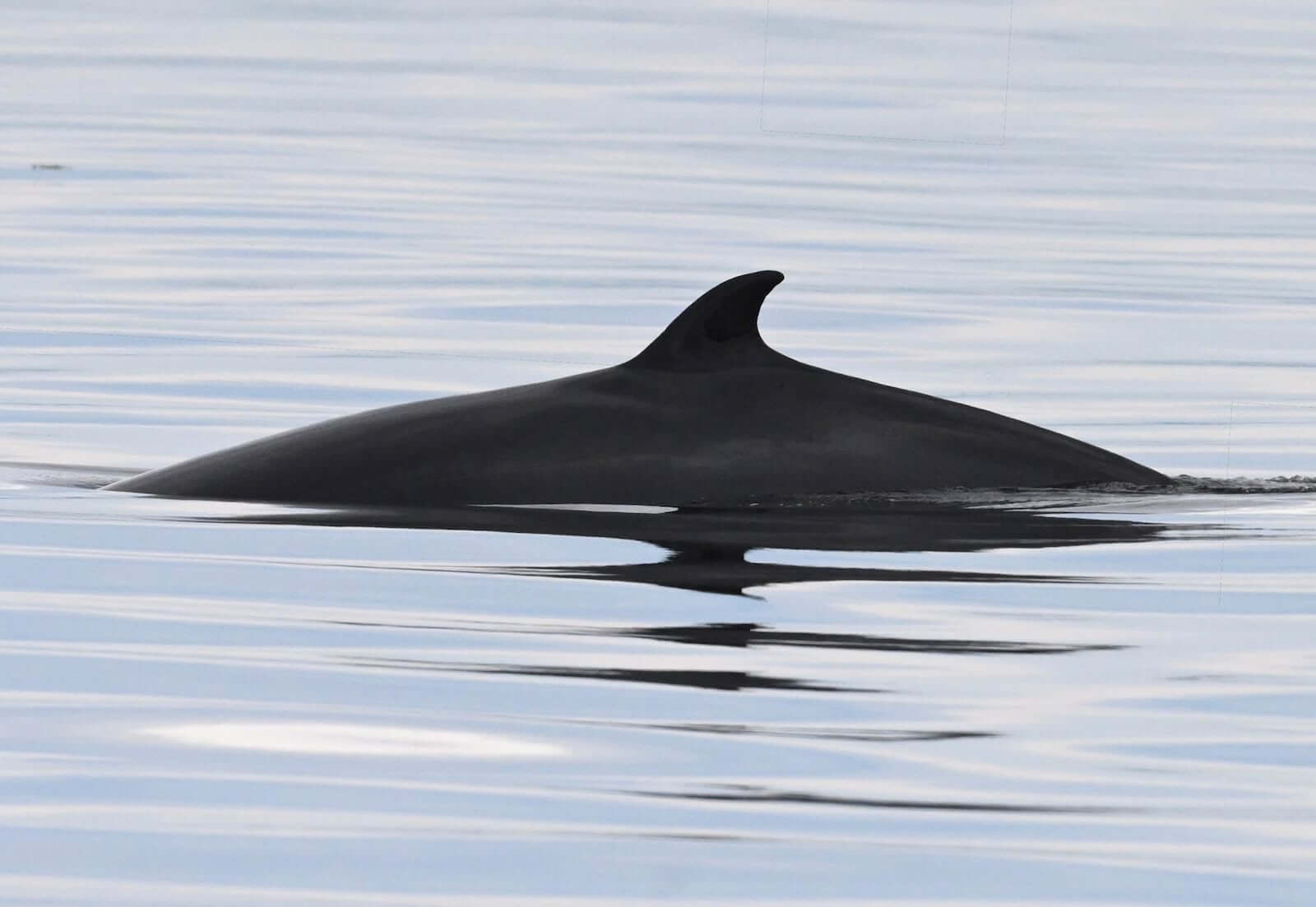
A naturalist and wildlife photographer is quick to point out that one of the fin whale has been identified: “The fin whale Ti-Croche,” one of the biggest ‘stars’ in our sector, hadn’t been seen for about a week.” In the days that followed, several minke whales with their distinctive dorsal fins were photographed. As with other cetacean species, minke whales can be distinguished from one another by the shape of their dorsal fin and the markings on their flanks.
Opposite the Marine Mammal Interpretation Centre, in Tadoussac, a minke whale was observed feeding close to shore on June 11. At the same time, several belugas were swimming in the mouth of the Saguenay River, leaving passing visitors oohing and aahing. Belugas were also spotted from Cap-aux-Oies, while harbour seals have been seen basking on the rocks or in the water at several locations from Tadoussac to Les Escoumins.
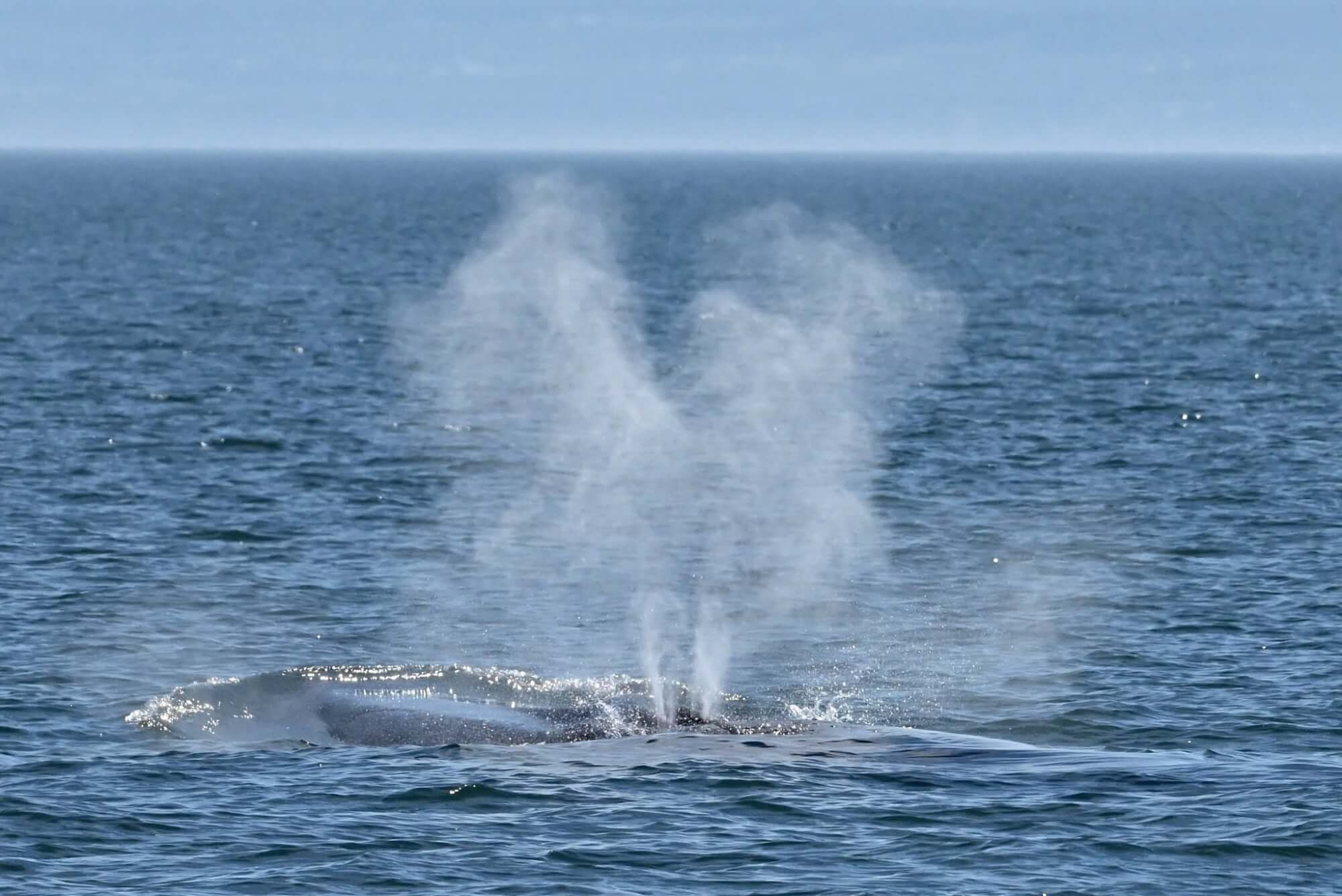
Thanks to all our collaborators!
Special thanks go out to all our observers who share their love for marine mammals with us.
Your encounters with cetaceans and pinnipeds are always a pleasure to read and discover. On the water or from shore, it is your eyes that give life to this column.
- Nathalie Cliche
- Laetitia Desbordes
- Hélène Lahaie
- Jade-Audrey Lavergne
- Diane Ostiguy
- Sandrine Papias
- Renaud Pintiaux
- Pascal Pitre
- Guillaume Savard
- Andréanne Sylvain
- Marielle Vanasse
- J. Varin
And to all the others!
Additionally, we would like to acknowledge the following teams that also share their sightings:
Centre d’éducation et de recherche de Sept-Îles (CERSI)
Station de recherche des Îles Mingan (MICS)
Réseau d’observation des mammifères marins (ROMM)
Réseau québécois d’urgences pour les mammifères marins (RQUMM)
Groupe de recherche et d’éducation sur les mammifères marins (GREMM)
Mériscope
Would you also like to share your observations? Have you seen any marine mammals in the St. Lawrence? Whether it’s a spout offshore or just a couple of seals, drop us a line and send your photos to [email protected]!

Odélie Brouillette
Odélie Brouillette joined the GREMM team as a writer and naturalist in 2022, and has been a project manager in scientific communication since 2023. With a background in biology, she loves learning and sharing with others what's most important to her. She has always been fascinated by marine environments and whales, and hopes to contribute to their protection through awareness-raising and popularization.
Recommended articles
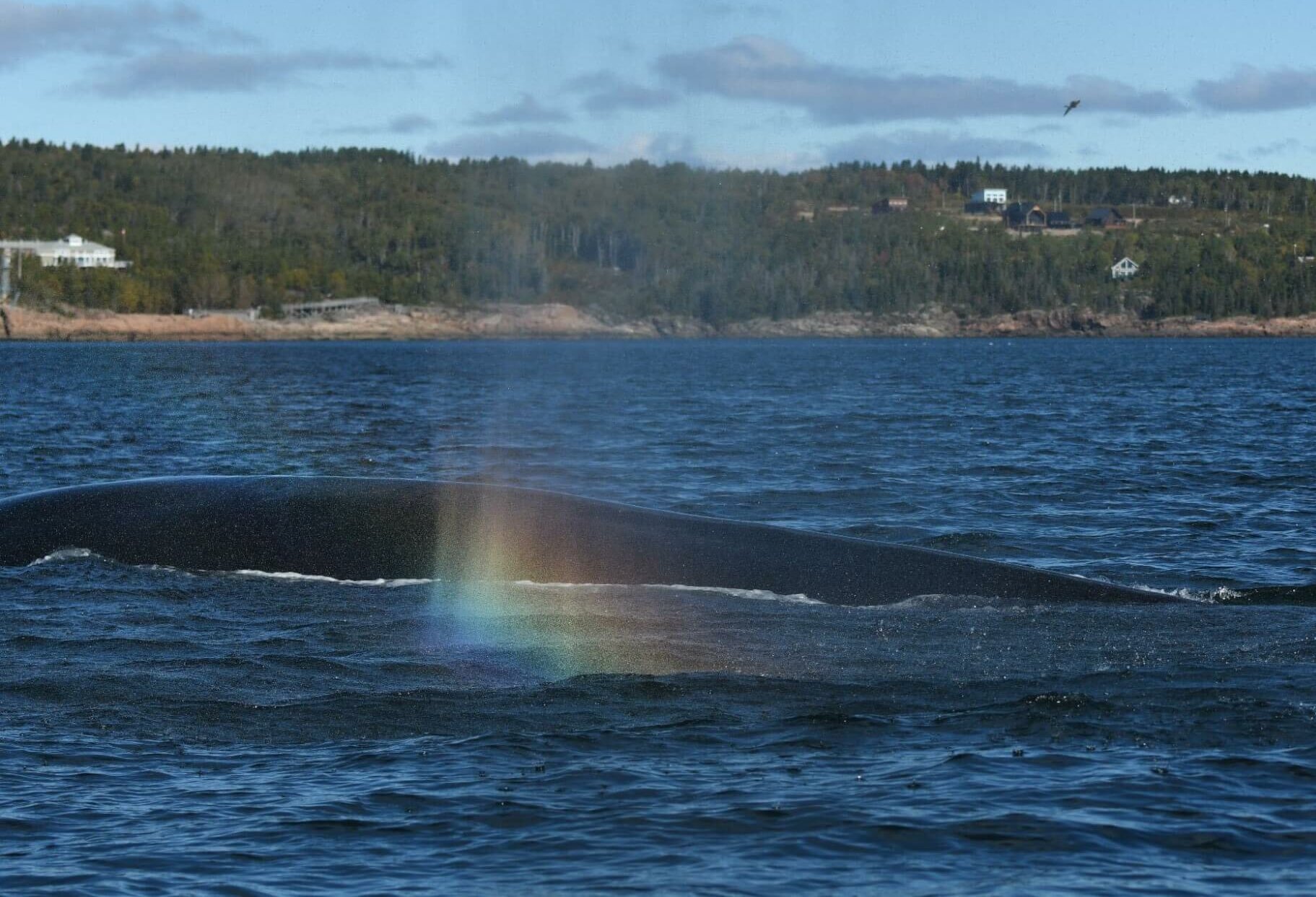
Waters Stirred by Blowing Whales
The shores of the St. Lawrence are ablaze with orange and golden foliage. These multicoloured hues are reflected in the…
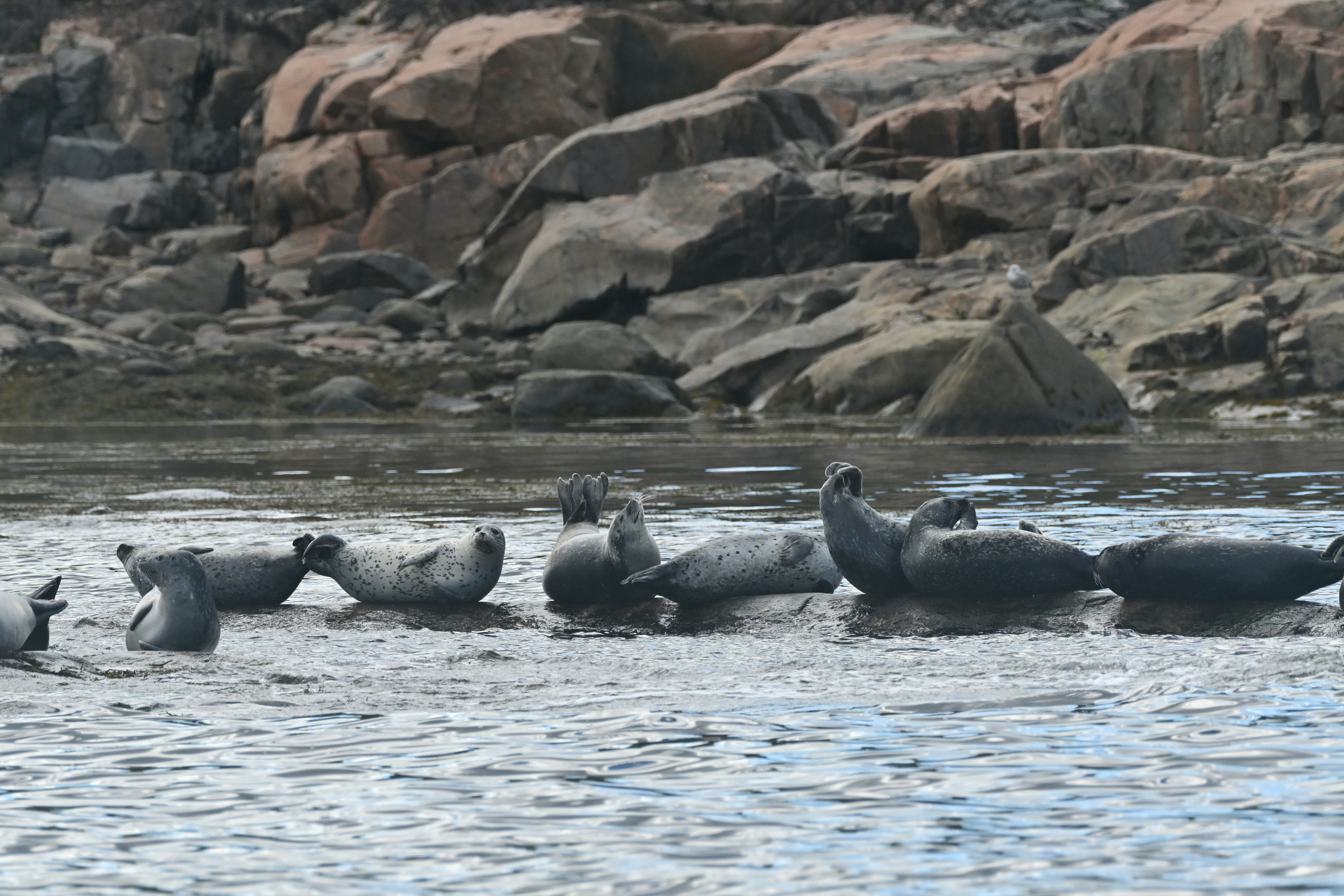
Côte-Nord: Prime Location for Autumn Whale Watching
Across Quebec, fall has truly arrived, as evidenced by the turning leaves and the arrival of certain marine mammal species…
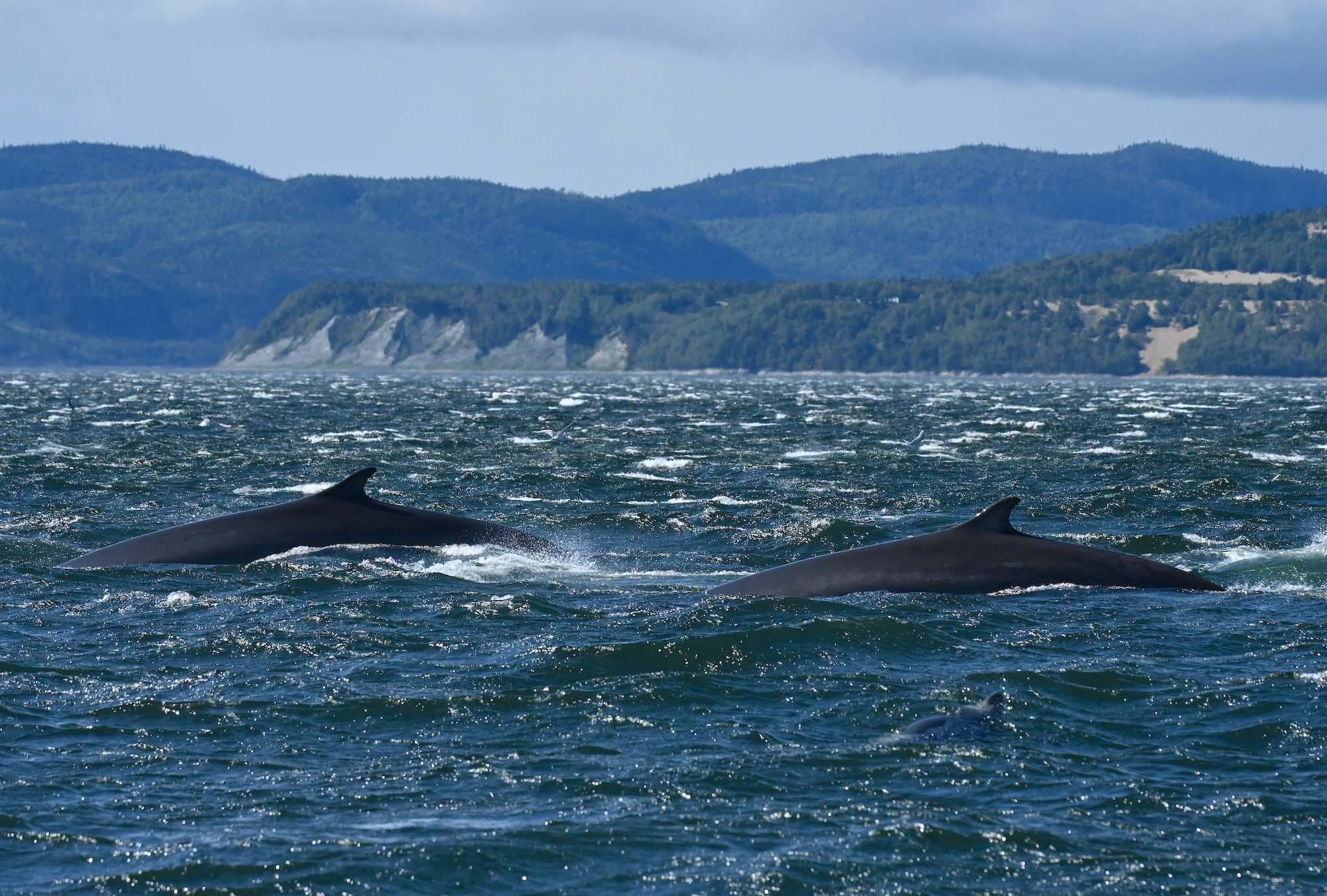
Strong Winds, Big Whales
Despite the strong winds, fog, and plummeting air temperatures, marine animals of all kinds continue to roam the St. Lawrence.…