
Belugas and Minkes Across the Waves

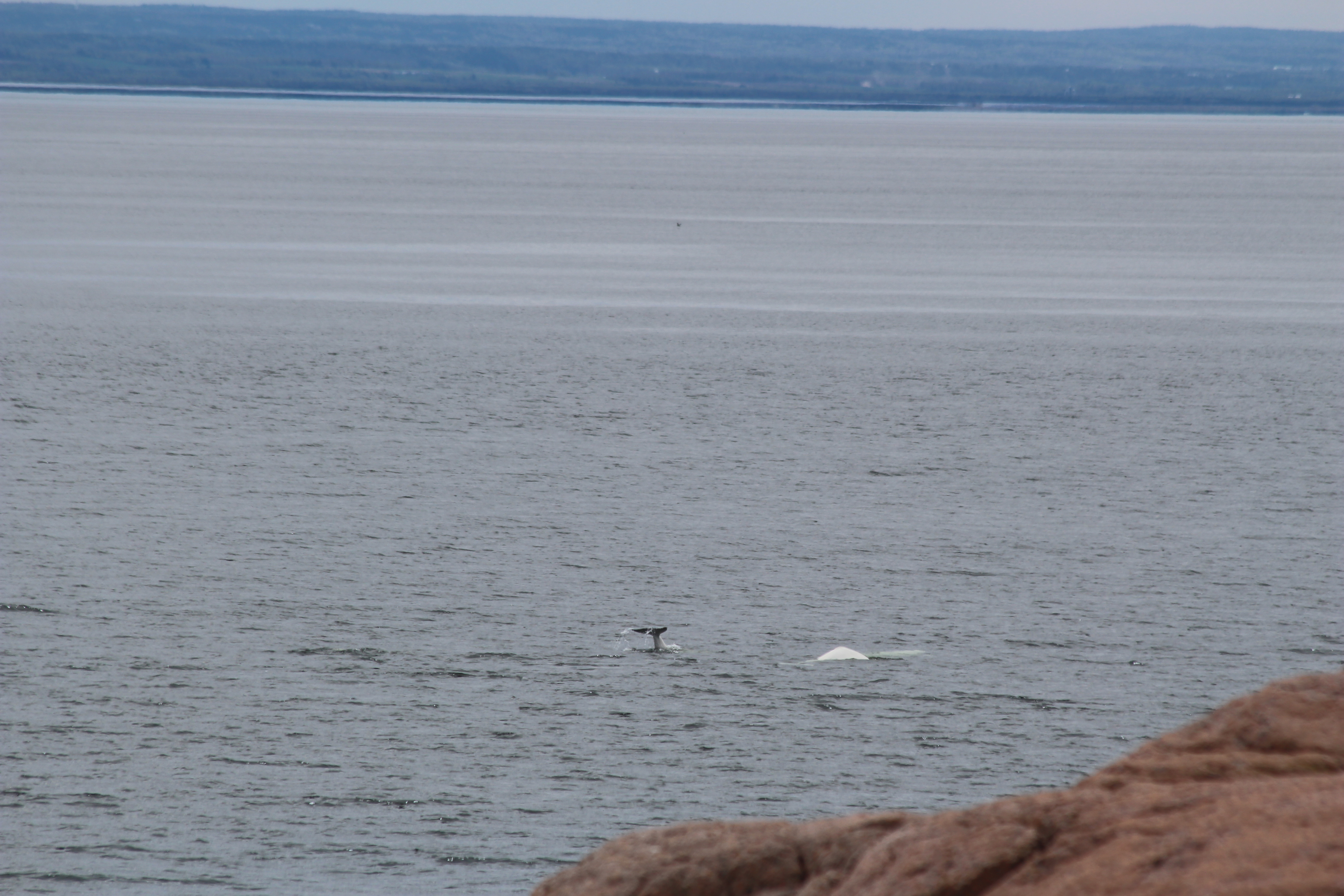
“Glassy sea.” Definition: extremely calm waters with no waves.
The perfect conditions for marine mammal watching! But as soon as the wind picks up, spouts and fins disappear from sight. In recent days, alternating calm and turbulent waters have made spotting whales and seals difficult for some observers. Nevertheless, seals, belugas, minke whales, and a few blows have brought sparks of joy to locals.
Minke whales in the spotlight!
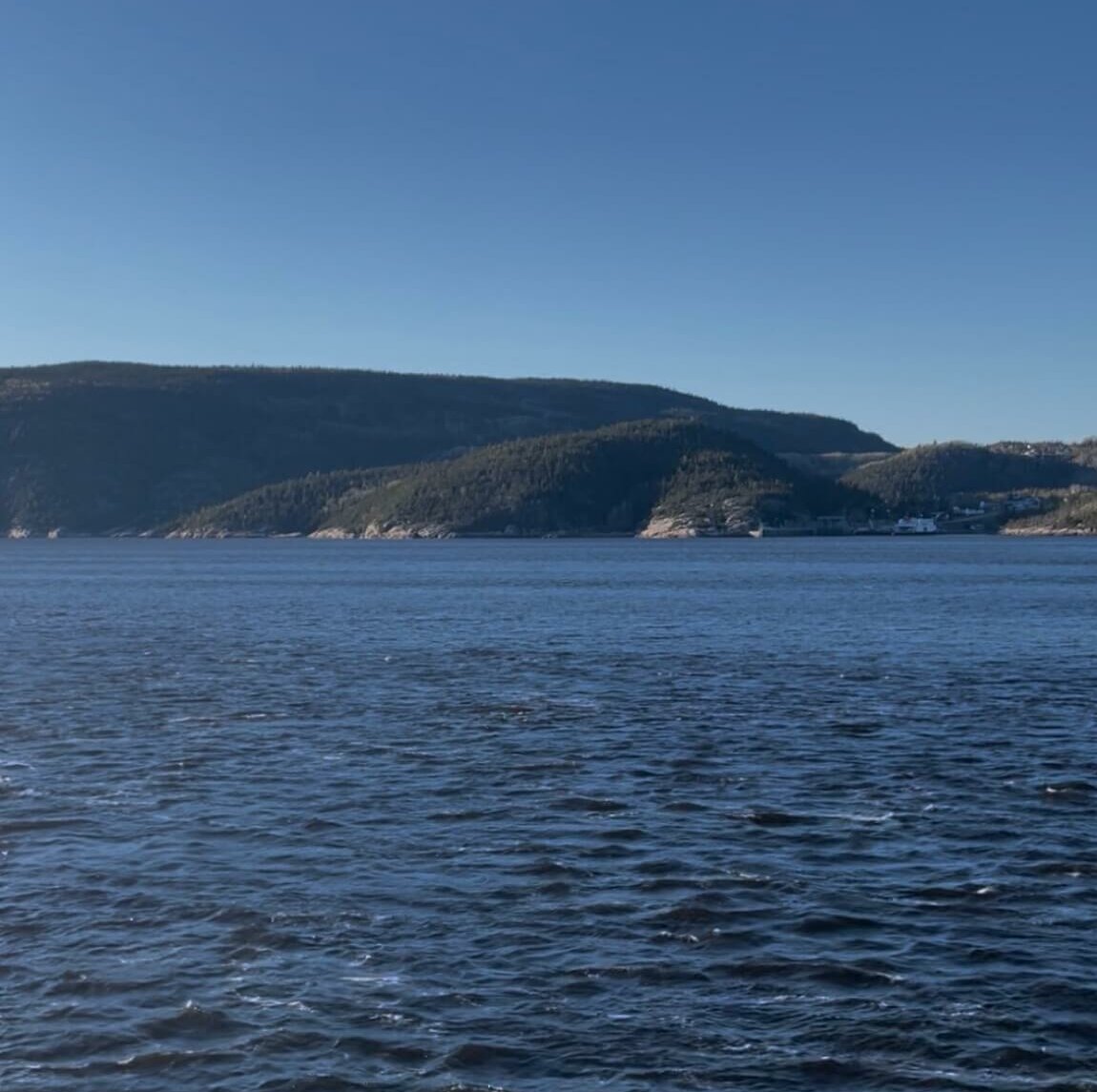
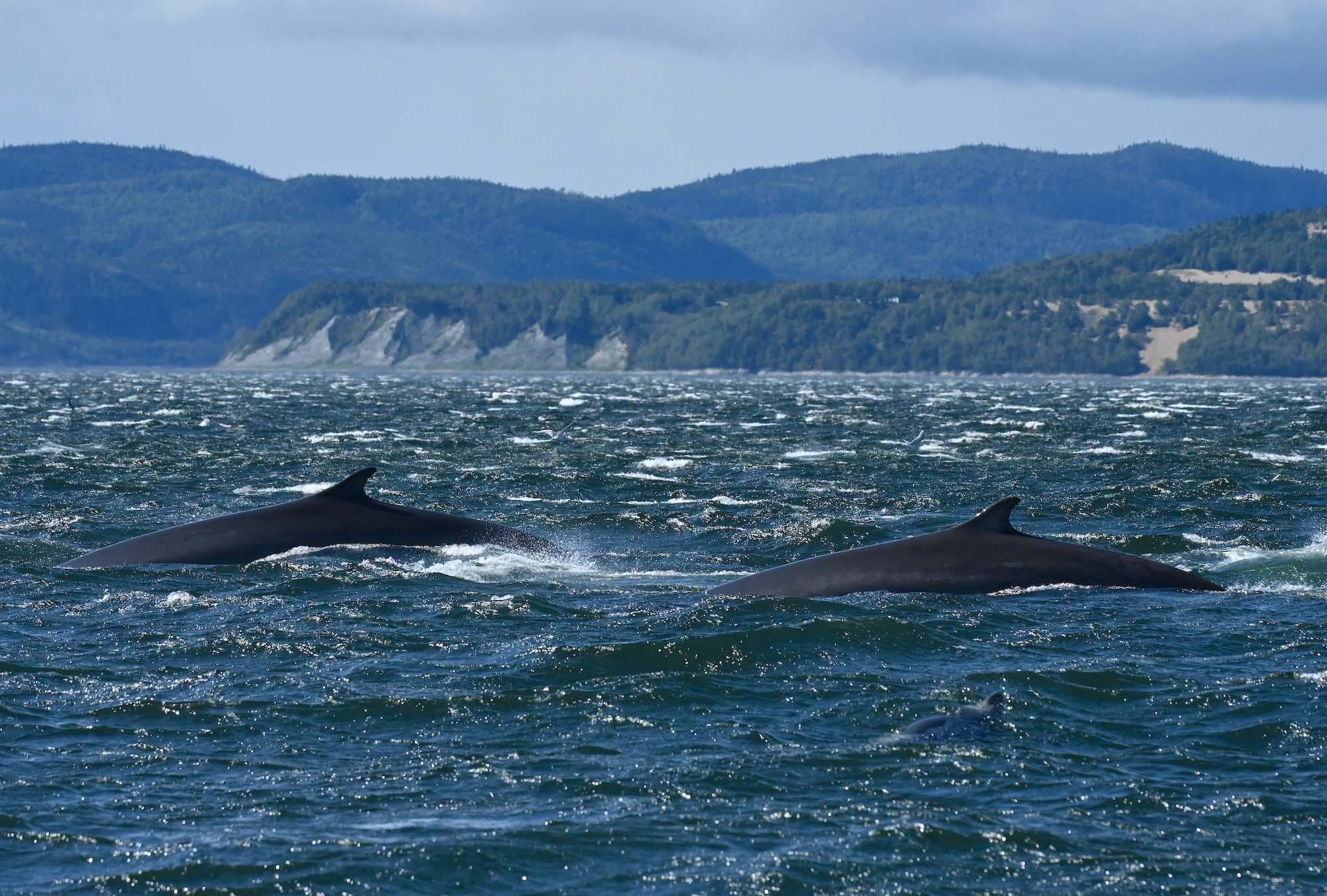
First off Pointe de la Croix in Les Escoumins from the Les Escoumins–Trois-Pistoles ferry dock, and then not far from the Tadoussac dunes, many folks in the Saguenay–St. Lawrence Marine Park area have been dazzled by minke whales.
On Sunday, May 17, while sitting in the line of vehicles for the ferry between Baie-Sainte-Catherine and Tadoussac, I heard some gasps of astonishment coming from the car behind me. Glancing in my rearview mirror, I saw fingers pointing toward the fjord and big smiles on everyone’s faces in the family. Following the direction of their gestures, I saw the source of their exclamations: a minke whale! The smallest of the rorquals was braving the turbulence to come up for air between the waves.
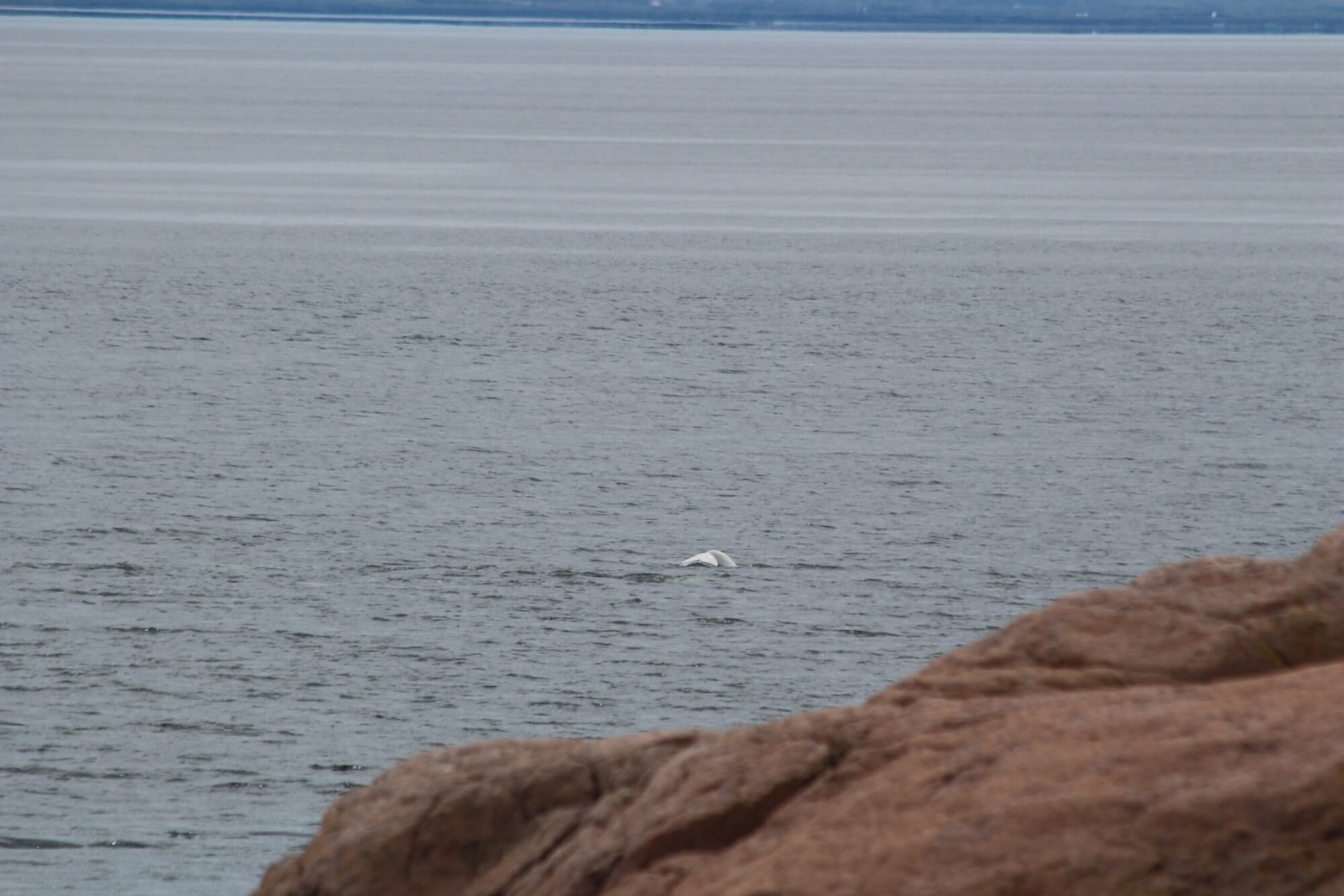
Belugas have been spotted near Cap de Bon-Désir as well as in Charlevoix: “I saw them! I saw them! I saw them! exclaims one enthusiastic observer, referring to the 8 or 10 belugas she spotted from shore in Saint-Irénée. The mouth of the Saguenay was also the scene of several passing belugas on May 20: “They sparkled in the sun like giant sequins,” describes one naturalist.
The Saguenay River originates in Lac Saint-Jean and flows into the St. Lawrence. Where the salt water of the St. Lawrence meets the fresh water of the fjord is a unique area known as the confluence zone. Due to their different densities, the fresh water and the salt water do not mix, which creates a front that ebbs and flows with the tide. At high tide, the waters of the St. Lawrence push the waters of the Saguenay into the fjord, and vice versa when the tide goes out! These changes have an impact on the distribution of fish and plankton, as well as the behaviour of the whales that feed on them.
Pinnipeds, fish, and porpoises
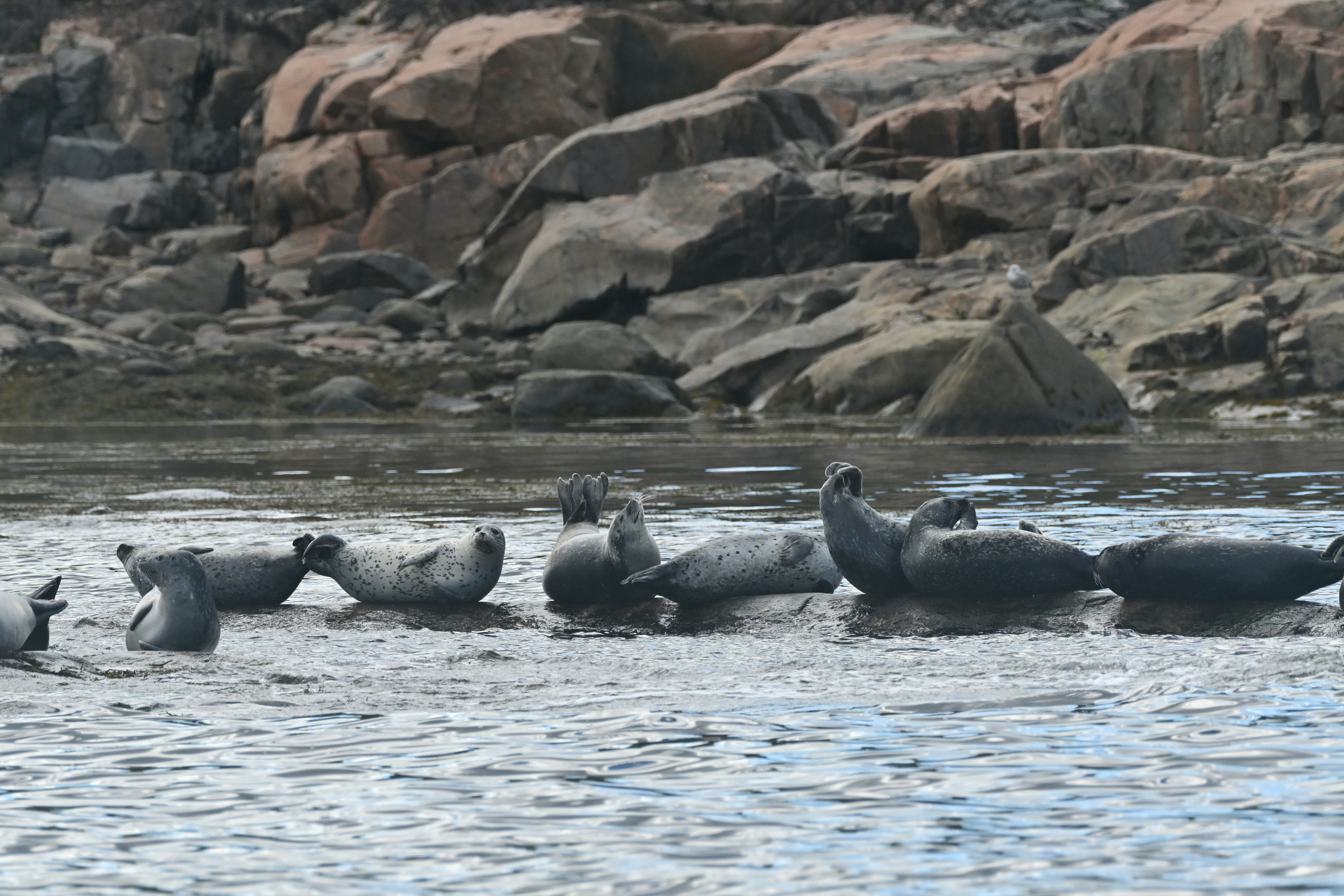
On an outing in the Mingan Archipelago, a seasoned observer reported what she saw on May 15: two harbour seals, two grey seals, as well as dozens of seabirds, including common eiders, black guillemots, and double-crested cormorants.
Farther west, near Gallix, reports indicate that capelin have begun “rolling.” A small schooling fish, capelin generally measure between 13 and 25 centimetres long. They are said to “roll” because, between May and June, they wash up en masse to deposit their eggs on the beaches. A number of species of marine mammals feed on this fish, such as the humpback whale and the beluga.
“I saw my first harbour porpoises (about ten of them). I think they’re early this year, as I usually don’t see them until June or July,” adds a resident of Franquelin. Harbour porpoises generally frequent the St. Lawrence from late June to late September. Is their presence in May linked to food availability? Harbour porpoises feed on herring, mackerel, and capelin, just to name a few! Belugas and minke whales have also been reported in the area.
Grey, white… and black!
“We saw several belugas at Cap-des-Rosiers,” notes an observer from Gaspésie. “Nothing but harbour seals,” says a resident from the same region. In Gaspé Bay, a humpback whale was spotted, showing its tail flukes each time it dove. However, the photos taken do not permit a definitive identification of the individual.
Not far from there, two humpback whales were spotted near the western tip of Anticosti Island. Photos of the tail of one of the whales posted on social media are reminiscent of the markings and colour of the well-known humpback Gaspar (H626). To be continued!
Thanks to all our collaborators!
Special thanks go out to all our observers who share their love for marine mammals with us.
Your encounters with cetaceans and pinnipeds are always a pleasure to read and discover. On the water or from shore, it is your eyes that give life to this column.
- Marie-Andrée Charlebois
- Thalia Cohen Bacry
- Guylaine Côté
- Laetitia Desbordes
- André Desmarais
- Hélène Guitton
- Jade-Audrey Lavergne
- Virginie Lecourt
- Diane Ostiguy
- Sandrine Papias
- Renaud Pintiaux
- Pascal Pitre
- Andréanne Sylvain
- Ophélie Turgeon
- Marielle Vanasse
And to all the others!
Additionally, we would like to acknowledge the following teams that also share their sightings:
Centre d’éducation et de recherche de Sept-Îles (CERSI)
Station de recherche des Îles Mingan (MICS)
Réseau d’observation des mammifères marins (ROMM)
Réseau québécois d’urgences pour les mammifères marins (RQUMM)
Groupe de recherche et d’éducation sur les mammifères marins (GREMM)
Mériscope
Would you also like to share your observations? Have you seen any marine mammals in the St. Lawrence? Whether it’s a spout offshore or just a couple of seals, drop us a line and send your photos to [email protected]!

Odélie Brouillette
Odélie Brouillette joined the GREMM team as a writer and naturalist in 2022, and has been a project manager in scientific communication since 2023. With a background in biology, she loves learning and sharing with others what's most important to her. She has always been fascinated by marine environments and whales, and hopes to contribute to their protection through awareness-raising and popularization.
Recommended articles
Waters Stirred by Blowing Whales
The shores of the St. Lawrence are ablaze with orange and golden foliage. These multicoloured hues are reflected in the…
Côte-Nord: Prime Location for Autumn Whale Watching
Across Quebec, fall has truly arrived, as evidenced by the turning leaves and the arrival of certain marine mammal species…
Strong Winds, Big Whales
Despite the strong winds, fog, and plummeting air temperatures, marine animals of all kinds continue to roam the St. Lawrence.…