
Humpback Photographed in Gaspé Peninsula

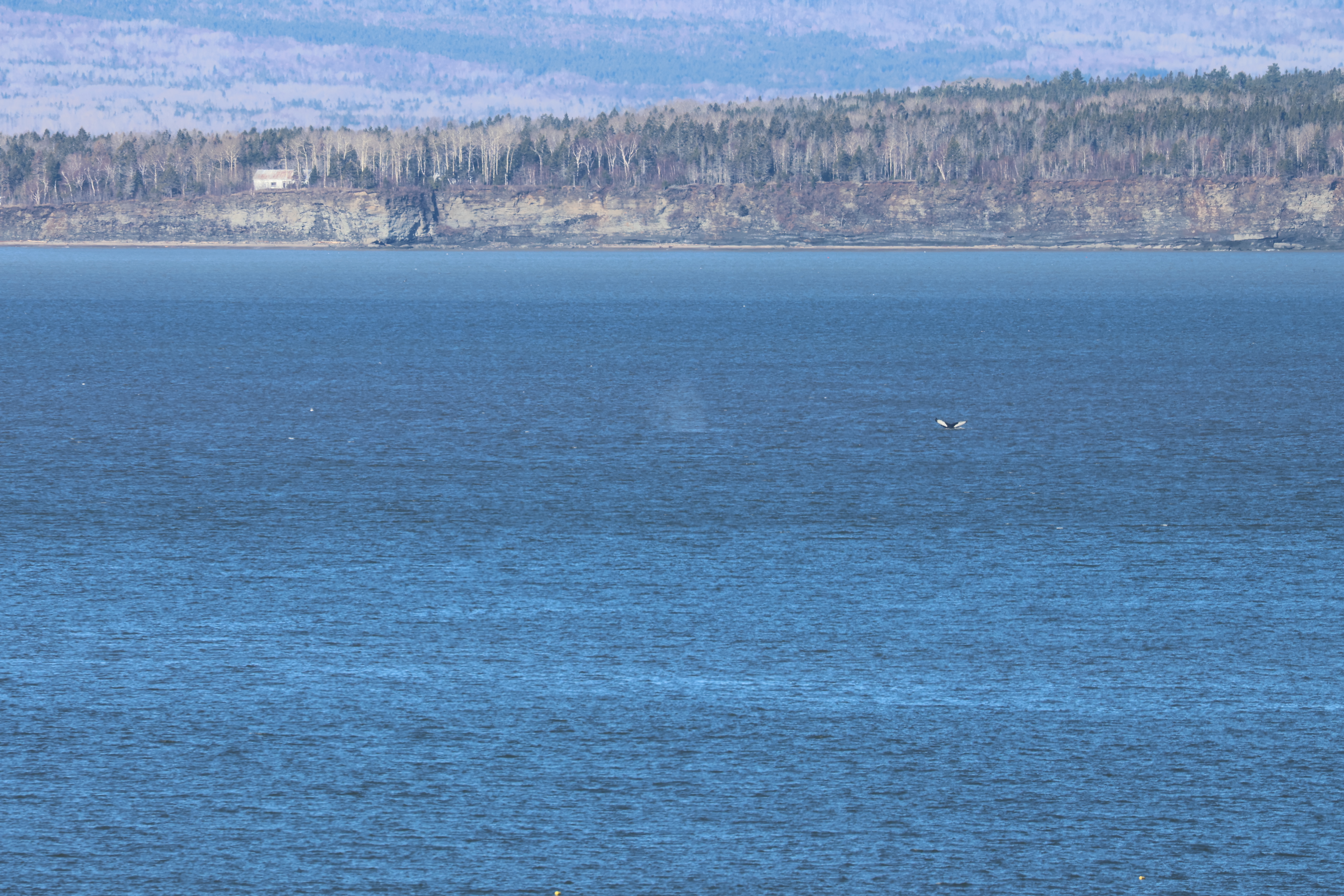
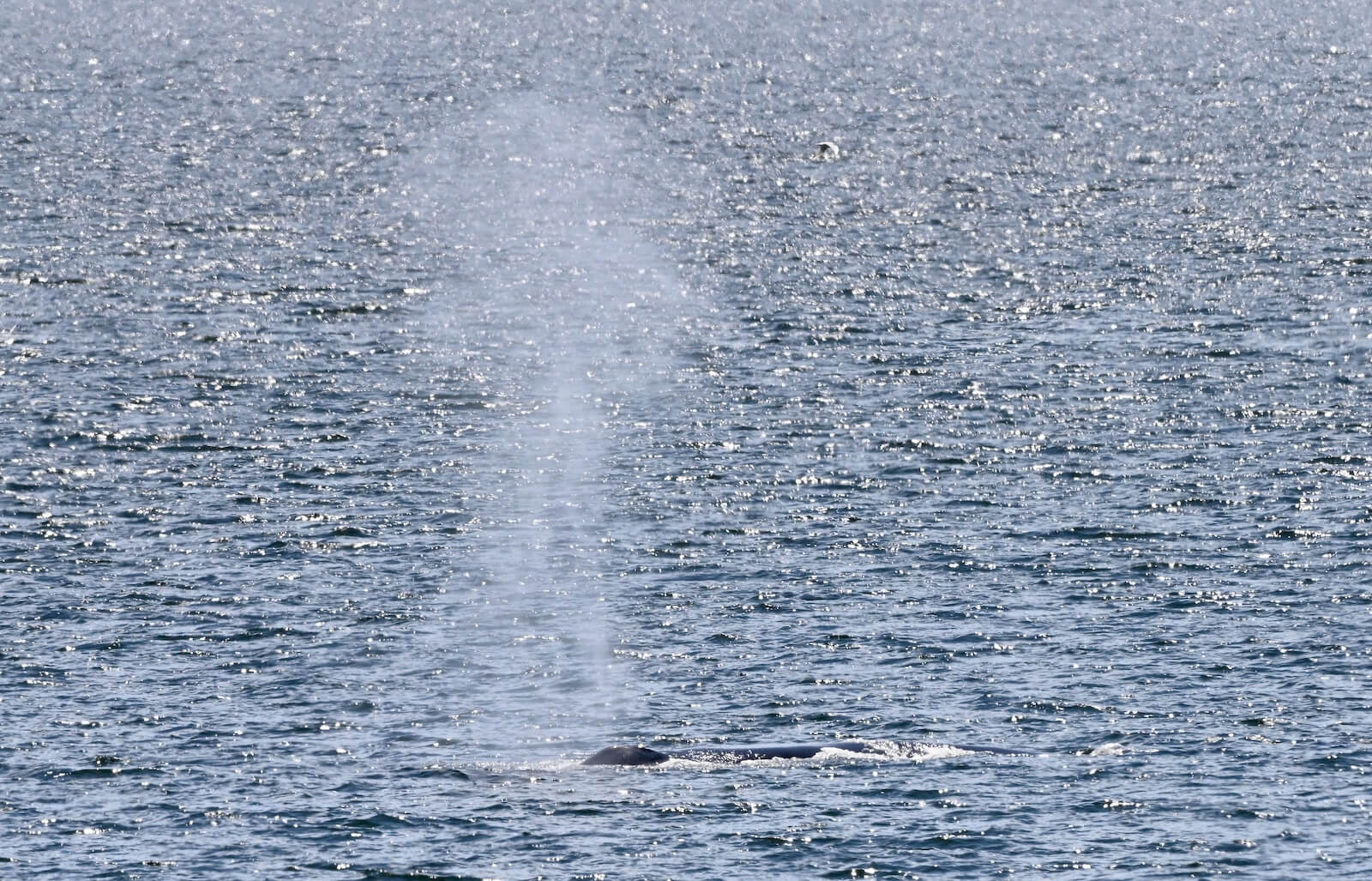
A diving humpback whale was photographed from the shores of Cap-aux-Os. Community members patrolling the waters of the Saguenay–St. Lawrence Marine Park have been delighted to see seals, belugas, and minke whales, not to mention the column-shaped blows of fin and blue whales. Additionally, sightings of minke, beluga, and fin whales have been reported near Baie-Comeau. Things are certainly starting to heat up in the St. Lawrence!
Mystery whale in Gaspé Bay
“This morning from Cap-aux-Os, I spotted a humpback whale in Gaspé Bay. It was moving quite fast; perhaps it was just exploring and I was lucky enough to capture it with my camera at the right moment. The photo was taken from shore, so it’s obviously quite far away, but it almost looks like we might be able to identify it!” exclaims the lucky local resident who photographed the whale on May 12. Unfortunately, the angle and distance of the photo are not conducive to making an ID. Is this individual known to scientists?
By analyzing the markings and colour pattern of a humpback’s tail fluke, individuals can be distinguished from one another. Some show more white than black, while others bear scars that testify to the eventful lives and threats these whales face.
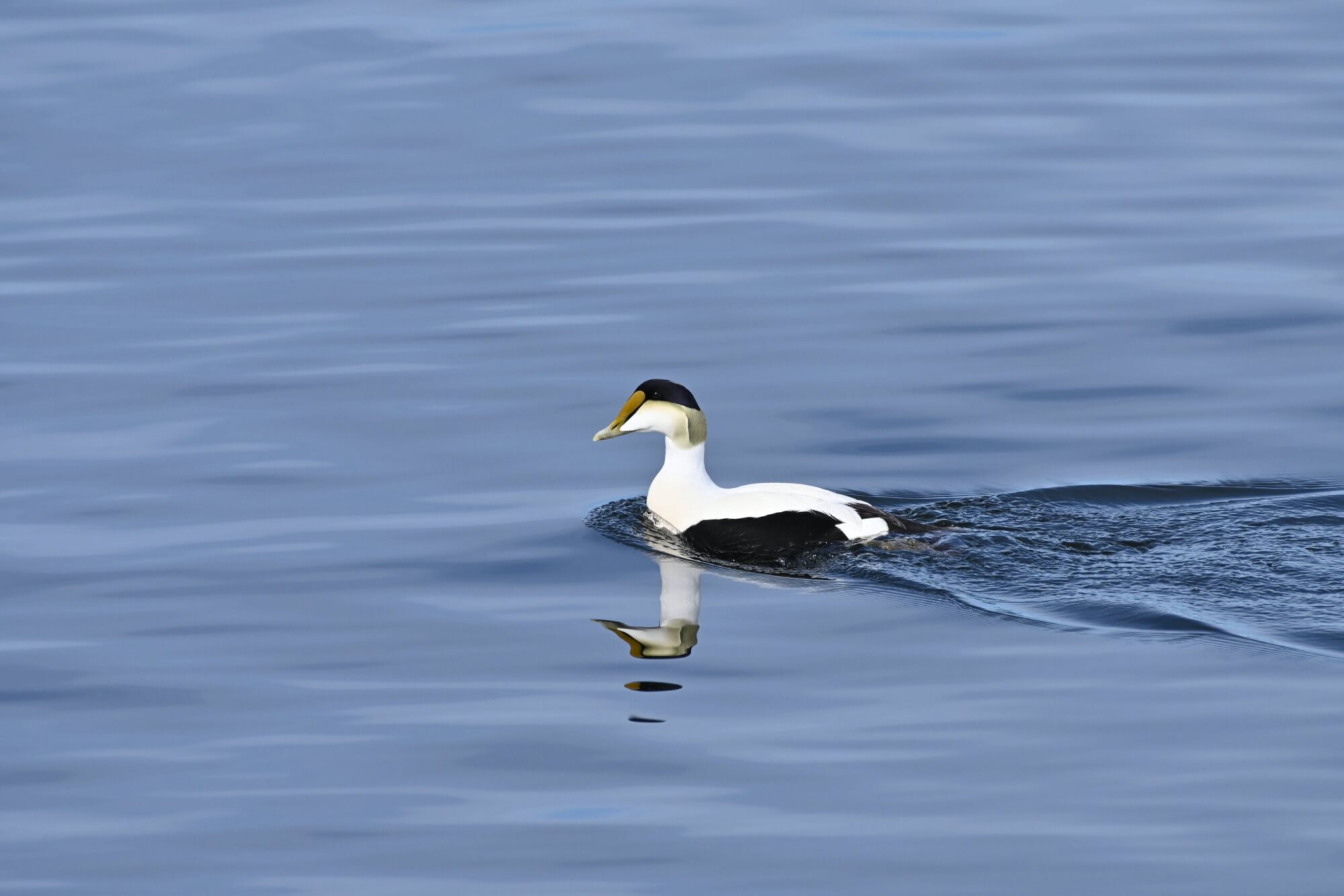
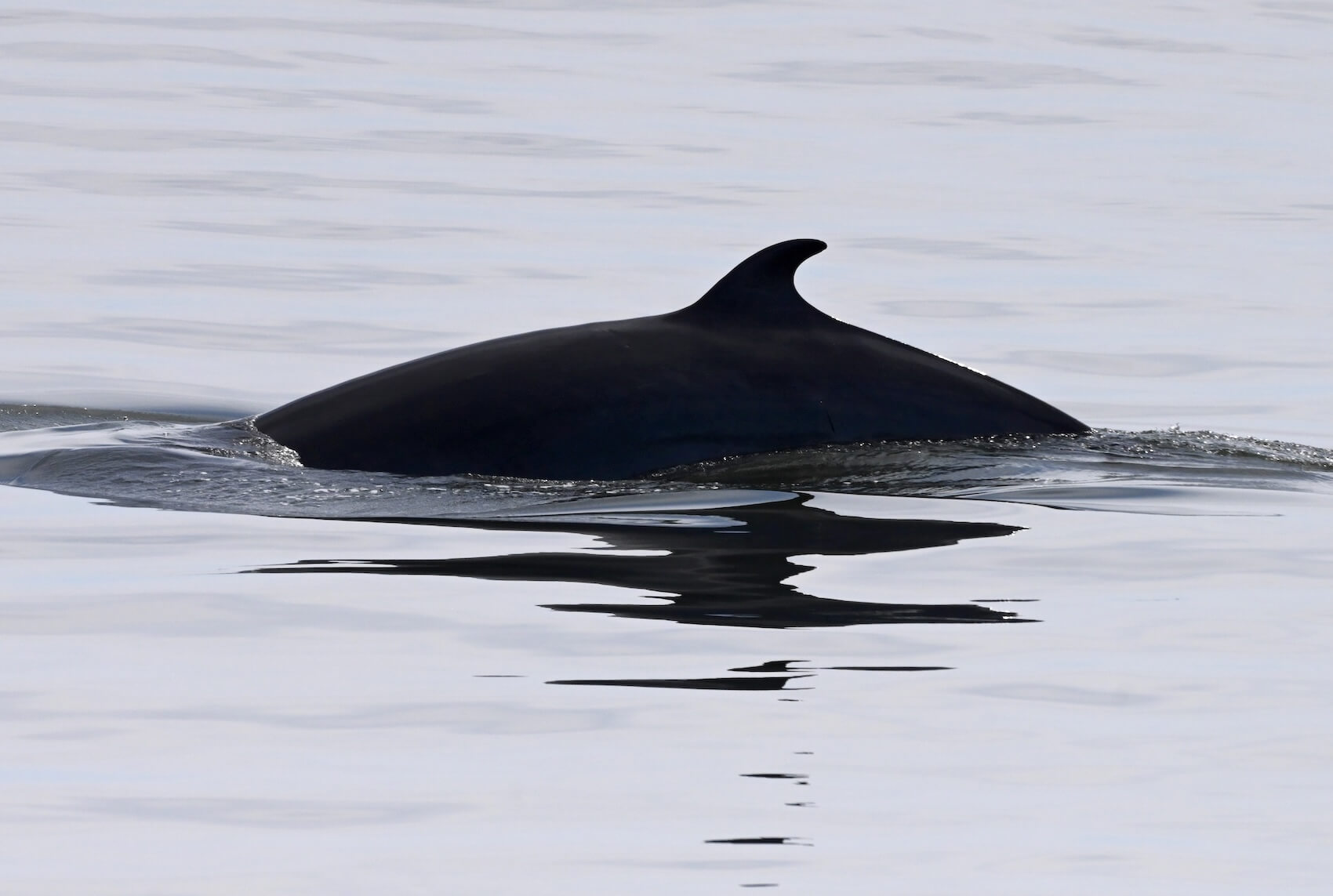
With the approach of warmer, longer days, research teams up and down the St. Lawrence have been working tirelessly to prepare for the season. Whether from shore or aboard research vessels, they’ll soon be scanning the waters to capture images of different whale species and collect valuable data in order to better understand, protect and co-exist with them.
Whales beyond the waves
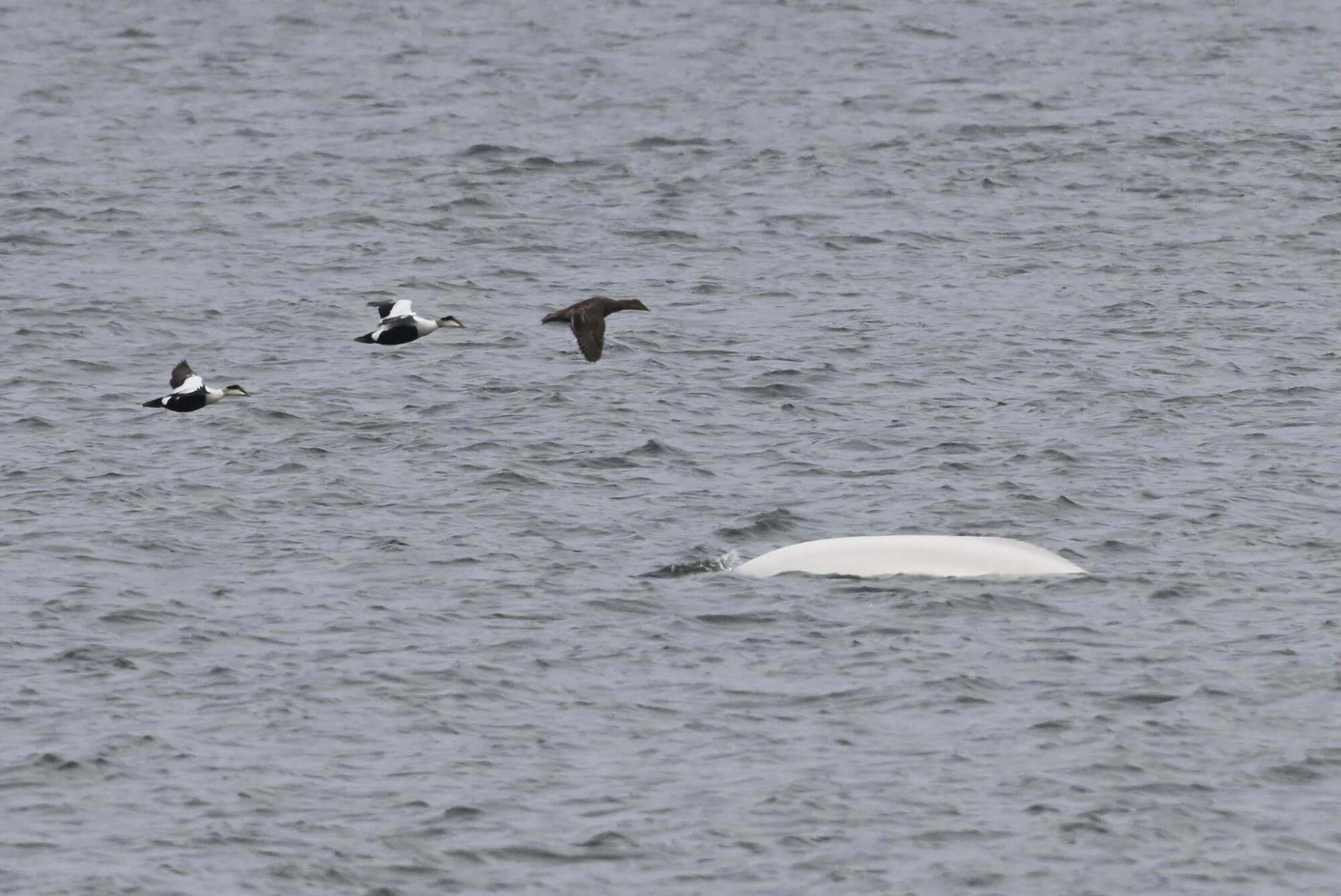
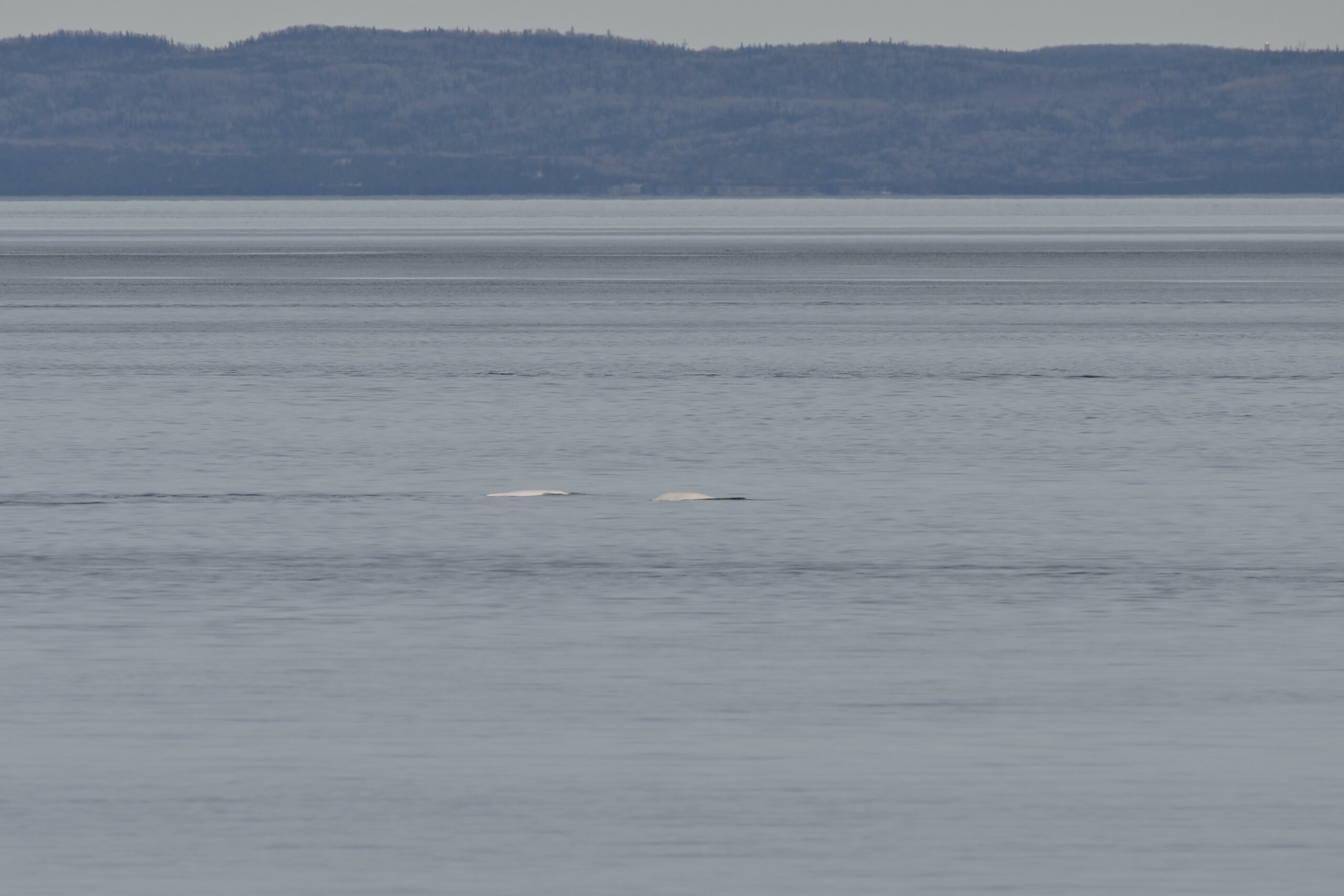
From Cap-aux-Oies to Les Escoumins, the white backs of belugas have been bringing smiles to observers’ faces over the past few days. “A great gift for Mother’s Day,” remarks one excited mom. “Simply awesome,” adds another observer. Fin and blue whales have also been present between Tadoussac and Les Escoumins, as have several minke whales. One observer shares what she saw last Saturday: “Two column-shaped blows from Cap de Bon-Désir, well offshore toward Les Escoumins. We even saw surface feeding and dark dorsal fins. “We’re pretty sure they were both fin whales.”
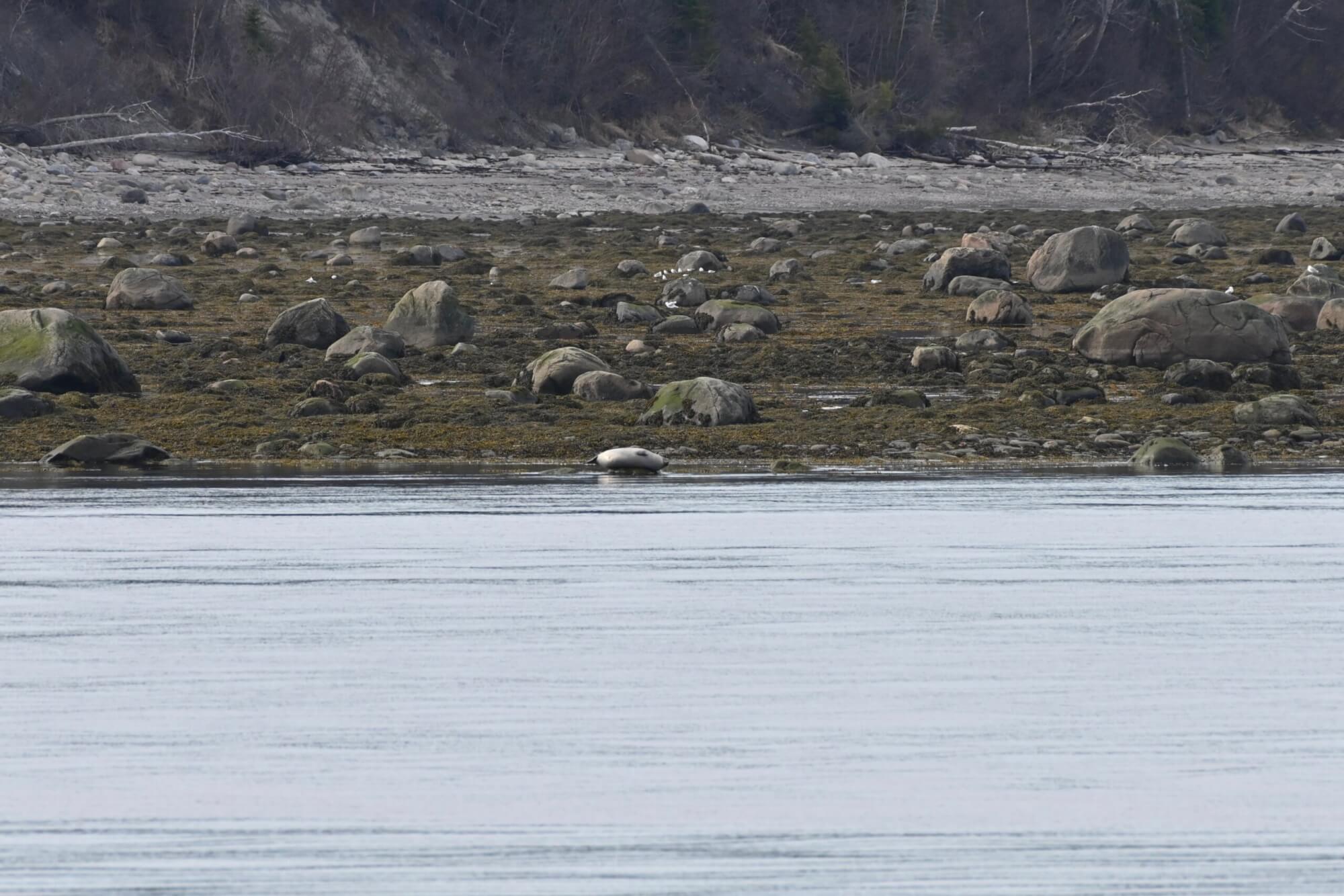
“Last Saturday, after several hours of stiff winds, nothing to report but a lone harbour seal at Les Escoumins!” “It was hard to track between the waves, but it was hilarious to watch it struggling so hard to stay afloat amidst the swirling currents!” exclaimed a naturalist who had braved the fierce Côte-Nord weather. Adult and juvenile belugas were also present in the area that same day.
More rorquals!
“I saw a minke whale yesterday and two blowing fin whales. They were spotted in Godbout,” shares one enthusiast. A few belugas have also been observed near Franquelin, where they seem to have been lingering the past few weeks.
Since the start of May, whales have made a big return to the St. Lawrence! The 200 km long St. Lawrence River is divided into three sections: the fluvial sector, the estuary, and the gulf. Under normal circumstances, marine mammals are not found in the fluvial sector, where there are no tides and the water is not salty. The estuary begins at Lac Saint-Pierre and ends at Pointe-des-Monts. The estuary’s highly saline (though much less so than the ocean) waters near Tadoussac support a wide variety of marine mammal species. The gulf widens and forms and inland sea that opens into the Atlantic via the Cabot Strait, (south of the island of Newfoundland) and the Strait of Belle Isle (north of Newfoundland).
Thanks to all our collaborators!
Special thanks go out to all our observers who share their love for marine mammals with us.
Your encounters with cetaceans and pinnipeds are always a pleasure to read and discover. On the water or from shore, it is your eyes that give life to this column.
- Marie-Andrée Charlebois
- Nathalie Cliche
- Thalia Cohen Bacry
- Laetitia Desbordes
- Benjamin Gagné
- Hélène Guitton
- Hélène Lahaie
- Diane Ostiguy
- Sandrine Papias
- Renaud Pintiaux
- Pascal Pitre
- Guillaume Savard
- Andréanne Sylvain
- Marielle Vanasse
And to all the others!
Additionally, we would like to acknowledge the following teams that also share their sightings:
Centre d’éducation et de recherche de Sept-Îles (CERSI)
Station de recherche des Îles Mingan (MICS)
Réseau d’observation des mammifères marins (ROMM)
Réseau québécois d’urgences pour les mammifères marins (RQUMM)
Groupe de recherche et d’éducation sur les mammifères marins (GREMM)
Mériscope
Would you also like to share your observations? Have you seen any marine mammals in the St. Lawrence? Whether it’s a spout offshore or just a couple of seals, drop us a line and send your photos to [email protected]!

Odélie Brouillette
Odélie Brouillette joined the GREMM team as a writer and naturalist in 2022, and has been a project manager in scientific communication since 2023. With a background in biology, she loves learning and sharing with others what's most important to her. She has always been fascinated by marine environments and whales, and hopes to contribute to their protection through awareness-raising and popularization.
Recommended articles
Between Bronze and Anthracite
Yellow-orange hues reaching toward the sky blend with the smooth, dark swirls emerging from the waves. Even if the strong…
Waters Stirred by Blowing Whales
The shores of the St. Lawrence are ablaze with orange and golden foliage. These multicoloured hues are reflected in the…
Côte-Nord: Prime Location for Autumn Whale Watching
Across Quebec, fall has truly arrived, as evidenced by the turning leaves and the arrival of certain marine mammal species…