
Spouts and Fins Here and There

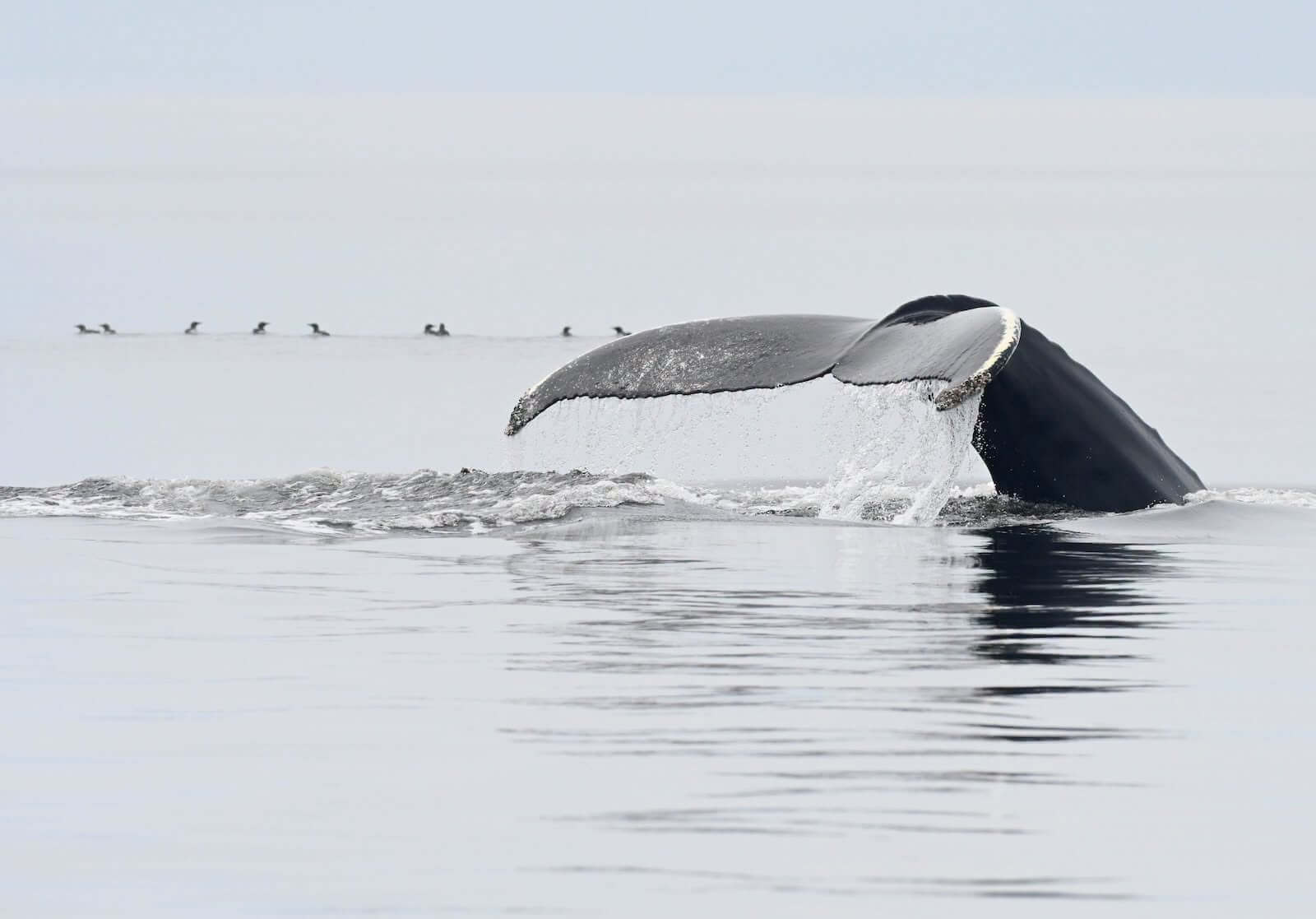
In these early days of July, several species of both baleen and toothed whales have been seen from one end of the St. Lawrence to the other. Seals are also a regional highlight, with their presence being noted and appreciated by many. A known beluga was identified in the estuary, while basking sharks were spotted in the gulf.
Rorquals and belugas in Gaspésie
In the waters around the Gaspé Peninsula, belugas have been reported just about everywhere. “I observed good numbers of belugas opposite our home in Sainte-Marthe,” says one observer. “On the afternoon of Sunday, July 5, we saw at least 30 belugas […] vis-à-vis the Cap-Chat lighthouse,” reports another enthusiast.
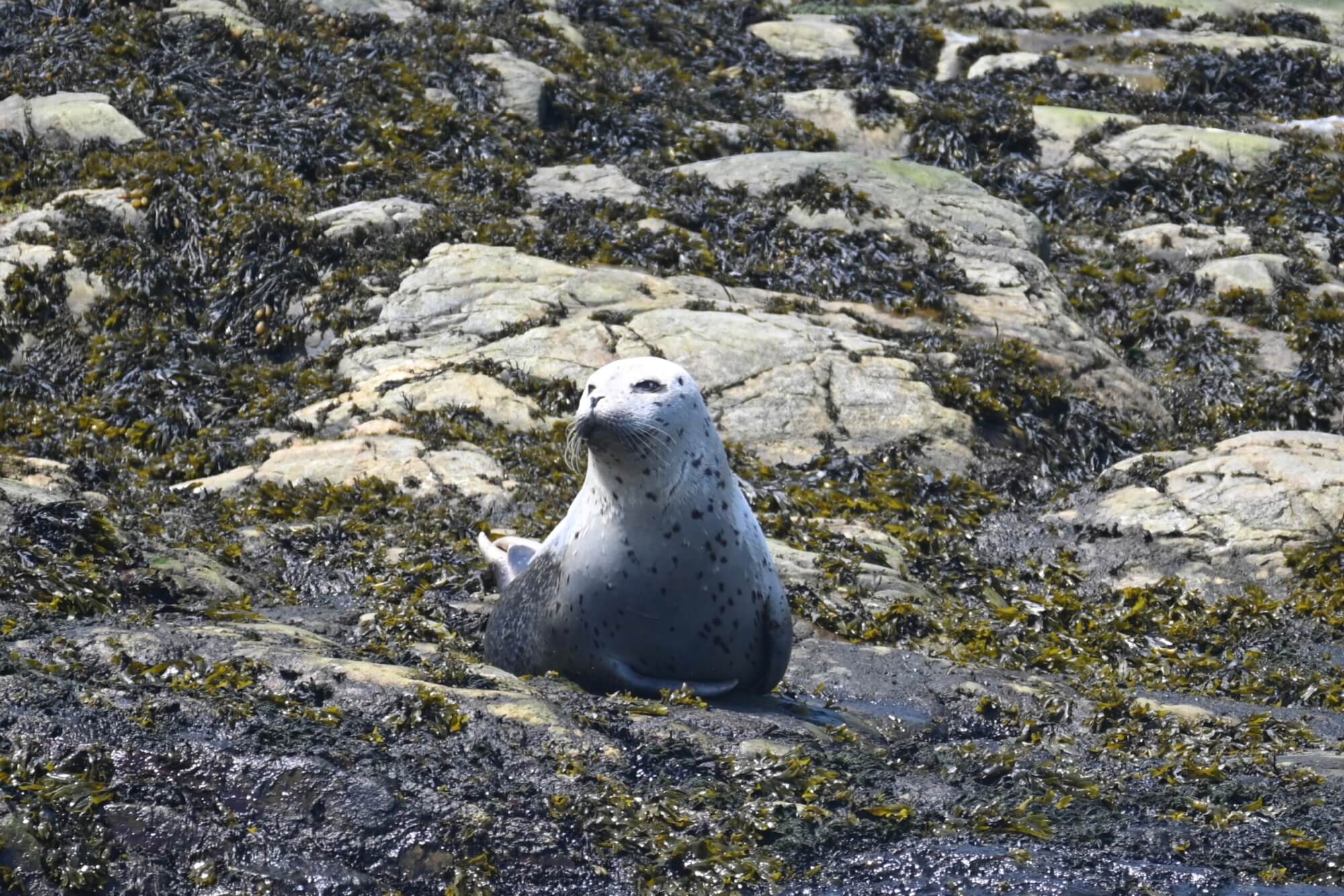
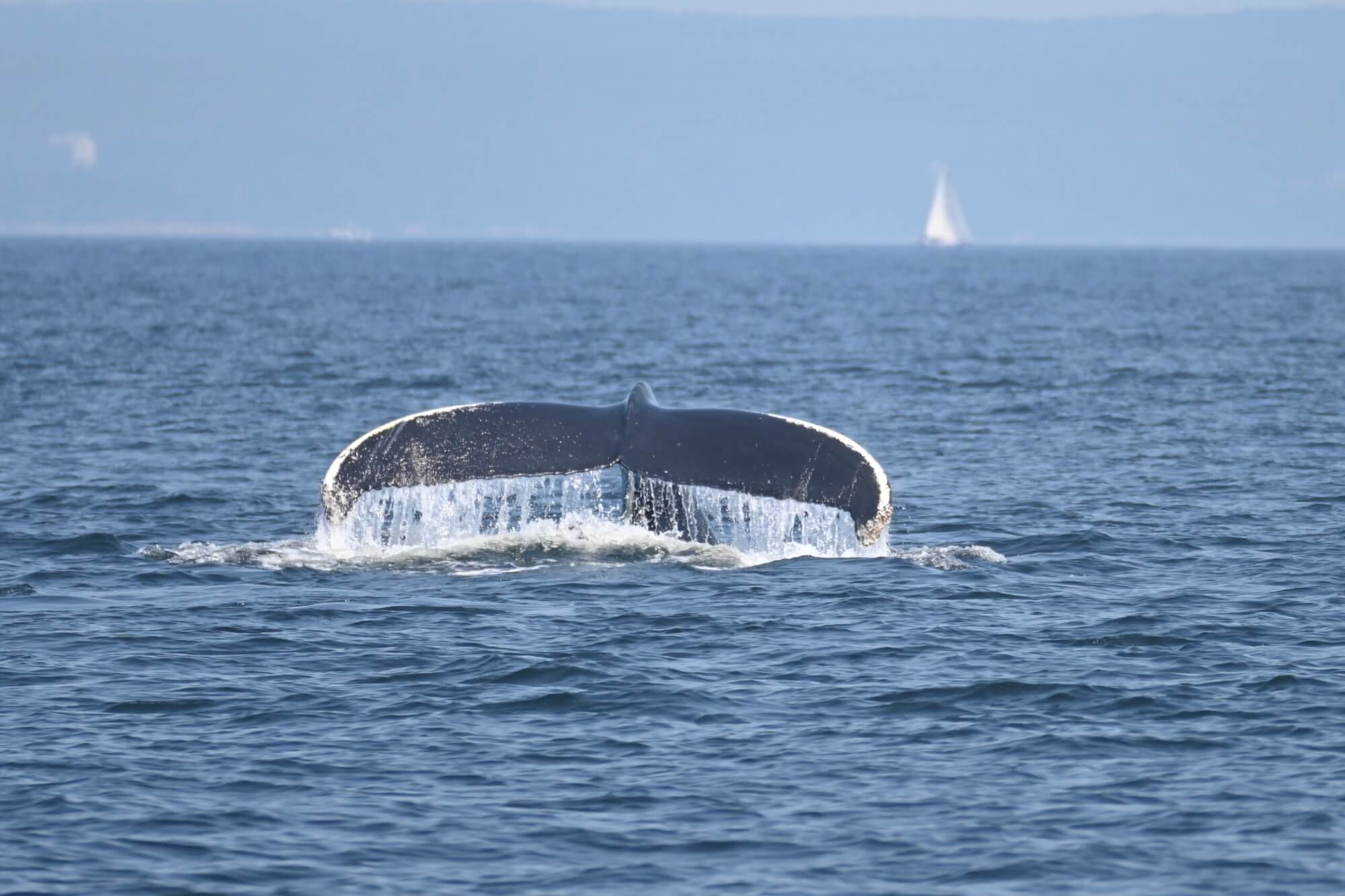
A few humpbacks were identified between Cap Gaspé and Grande-Grave, including Splinter and Paloma, two individuals that the Mingan Island Cetacean Study (MICS) knows well. Minke whales as well as harbour porpoises and a basking shark were also spotted. As for pinnipeds, a few harbour seals have brought joy to local residents, whether it was at the cove known at Anse aux Cousins, at the docks in Grande-Grave or in the Gaspé marina.
Krill in Franquelin
“As the tide was going back out, I could see that the water was clouded with particles… until I realized that I’d never seen so many krill!!! exclaims an enthusiastic resident of Franquelin. In addition to this sighting, she managed to tally multiple groups of harbour porpoises as well as two harbour seals and three minke whales.
Krill are tiny crustaceans consumed by many species of cetaceans, including the blue whale. Moreover, the largest individuals of this species can devour up to 16 tonnes of krill per day. This means that blue whales eat almost three times more than previously believed! It should be noted that migratory whales like the blue whale do not feed year-round. In winter, for example, they fast while heading south toward more temperate areas for breeding and calving.
Despite this presence of krill, an observer from Baie-Comeau sounds a little concerned, “Not many minke whales and porpoises; not many large rorquals. […] This time of the year, we’ve always had around fifteen minke whales in Baie-Comeau.”
On another note, unfavourable weather conditions put a damper on MICS observations near Longue-Pointe-de-Mingan. The crew was limited to a single trip out to sea, during which they were able to observe two North Atlantic right whales.
Plenty of whales and seals in the estuary
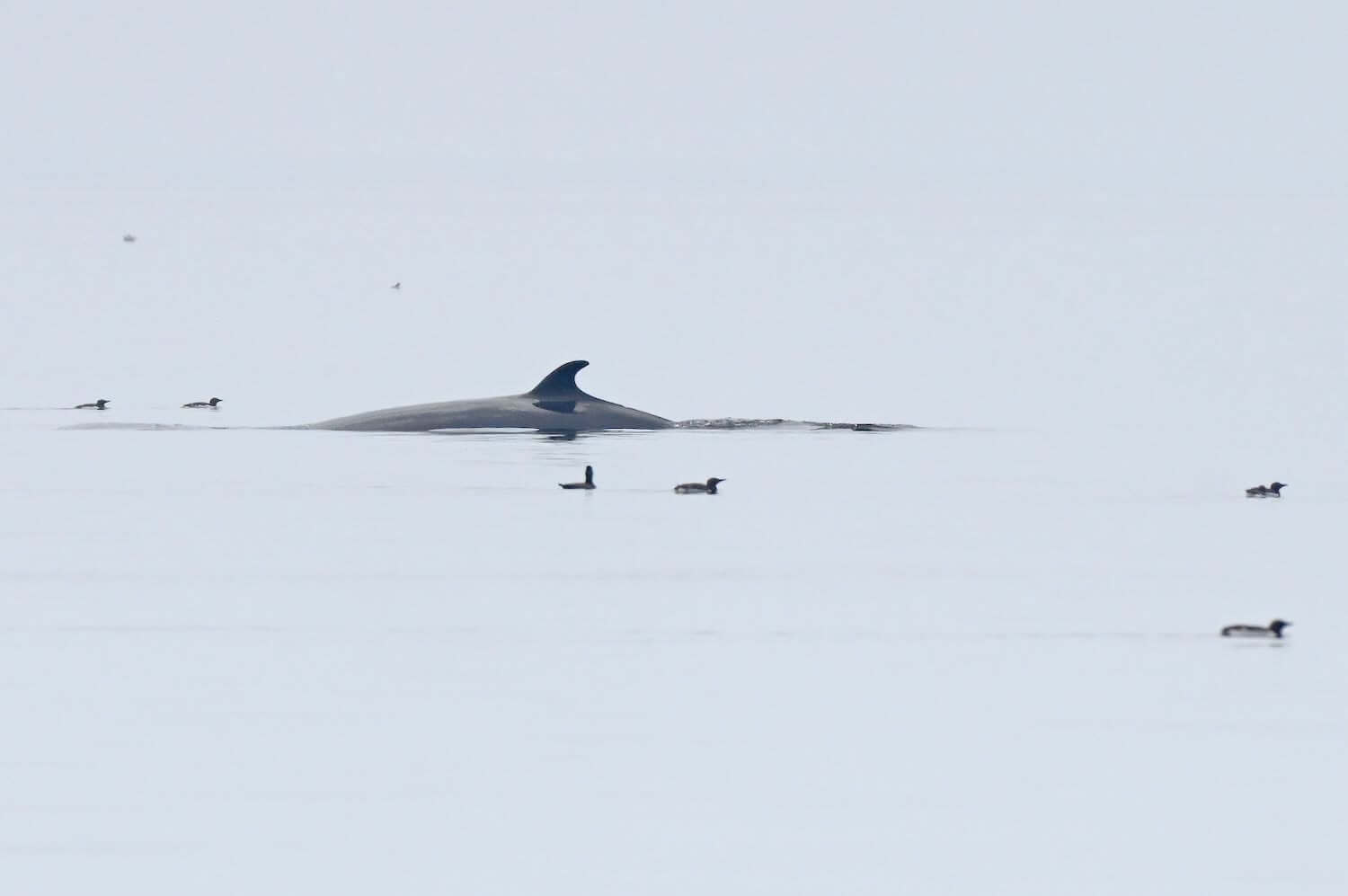
Harbour porpoises and minke whales have been present, as have belugas—the latter off the coast of Saint-Irénée and Tadoussac. One of the individuals photographed in the estuary by the team from the Group for Research and Education on Marine Mammals (GREMM) was identified as DL2503, a beluga that has been known since 2006.
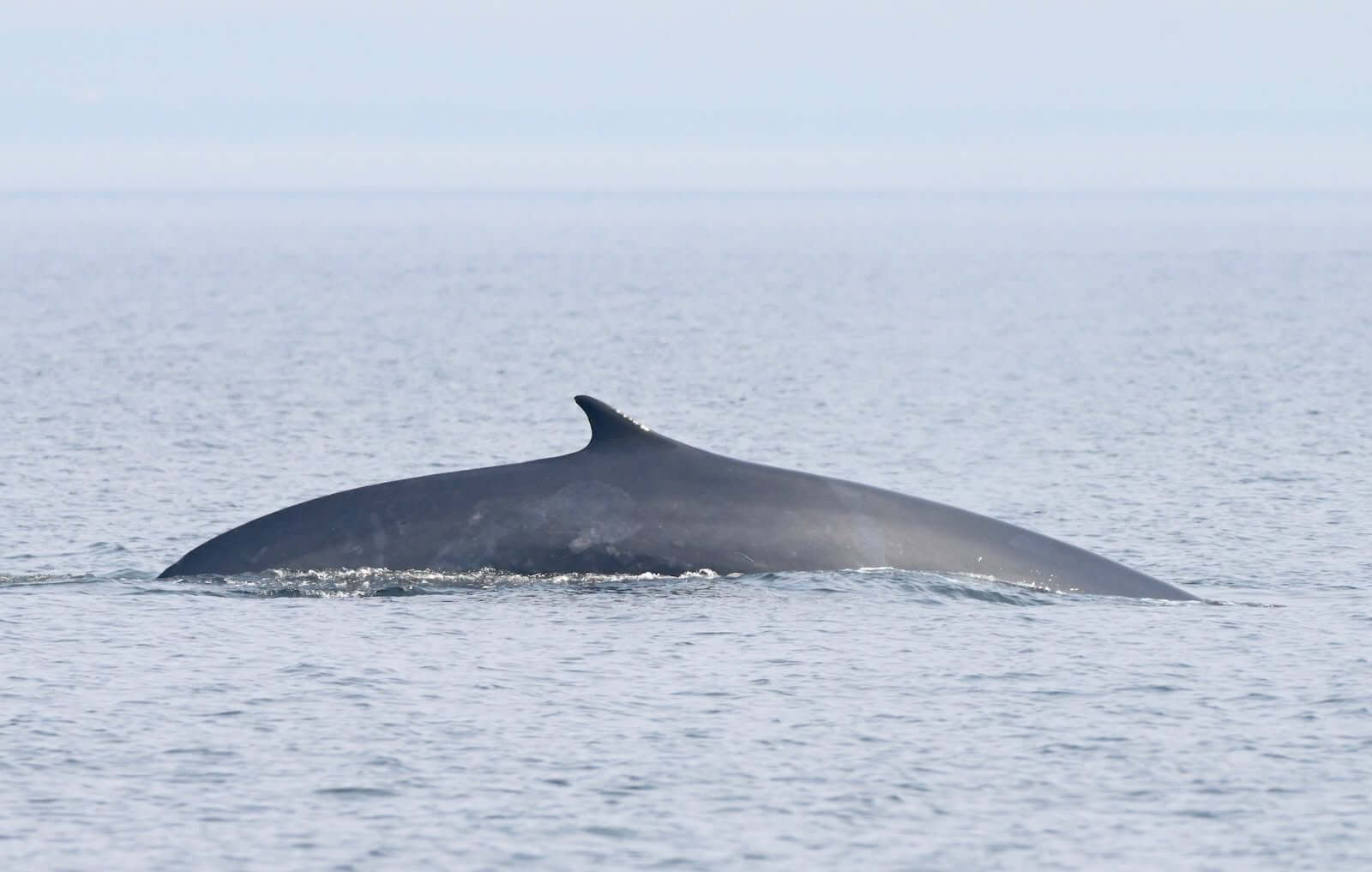
From the shores of Les Escoumins, an enthusiast remarks, “My friend who was with me started saying something along the lines of “You mean to tell me that we can see whales here. If we see a whale, I…” Before he could even finish his thought, a fin whale surfaced to breathe about a hundred metres in front of our eyes.” Indeed, several fin whales have been swimming in the area, including Ti-Croche (Bp955), Bp2761 and Kashkan (Bp918).
“Six fin whales, four humpbacks, and a blue whale, the vast majority of which were feeding at or near the surface,” shares a naturalist and wildlife photographer regarding the sightings he made between Tadoussac and Les Escoumins. Shortly thereafter, two other blue whales made an appearance in the area: Pleiades (B197) and Chameau (B103), two females that have been documented by MICS and GREMM scientists since 1988 and 1991, respectively.
Small whiskered marine mammals have also been drawing attention at a few locations across the Saguenay–St. Lawrence Marine Park: harbour seals! Every animal has a unique pattern of spots that—with a bit of patience and a keen eye—can be used to tell one individual from the next.
Where are the whales this week? Sightings map
These data were reported by our network of observers. They give an idea of the presence of whales and in no way represent the actual distribution of whales in the St. Lawrence. Just for fun!
Click on the whale or seal icons to discover the species, the number of individuals, additional information or photos of the sighting. To enlarge the map, click on the icon in the top right-hand corner. The map works well on Chrome and Firefox, but not so well on Safari.
To display the list of sightings, click on the icon in the top left-hand corner.
Thanks to all our collaborators!
Special thanks go out to all our observers who share their love for marine mammals with us.
Your encounters with cetaceans and pinnipeds are always a pleasure to read and discover. On the water or from shore, it is your eyes that give life to this column.
Croisières Baie de Gaspé
- Maxime Esther Bouchard
- André Bujold
- Marie-Andrée Charlebois
- Anne Cloutier
- Thalia Cohen Bacry
- Camille Degache
- Laeticia Desbordes
- Hélène Guitton
- Louise Lapierre
- Diane Ostiguy
- Sandrine Papias
- Pascal Pitre
- Renaud Pintiaux
- Marie-Josée Roy
- Guillaume Savard
- Andréanne Sylvain
- Marielle Vanasse
And to all the others!
Additionally, we would like to acknowledge the following teams that also share their sightings:
Centre d’éducation et de recherche de Sept-Îles (CERSI)
Station de recherche des Îles Mingan (MICS)
Réseau d’observation des mammifères marins (ROMM)
Réseau québécois d’urgences pour les mammifères marins (RQUMM)
Groupe de recherche et d’éducation sur les mammifères marins (GREMM)
Mériscope
Would you also like to share your observations? Have you seen any marine mammals in the St. Lawrence? Whether it’s a spout offshore or just a couple of seals, drop us a line and send your photos to [email protected]!
Recommended articles
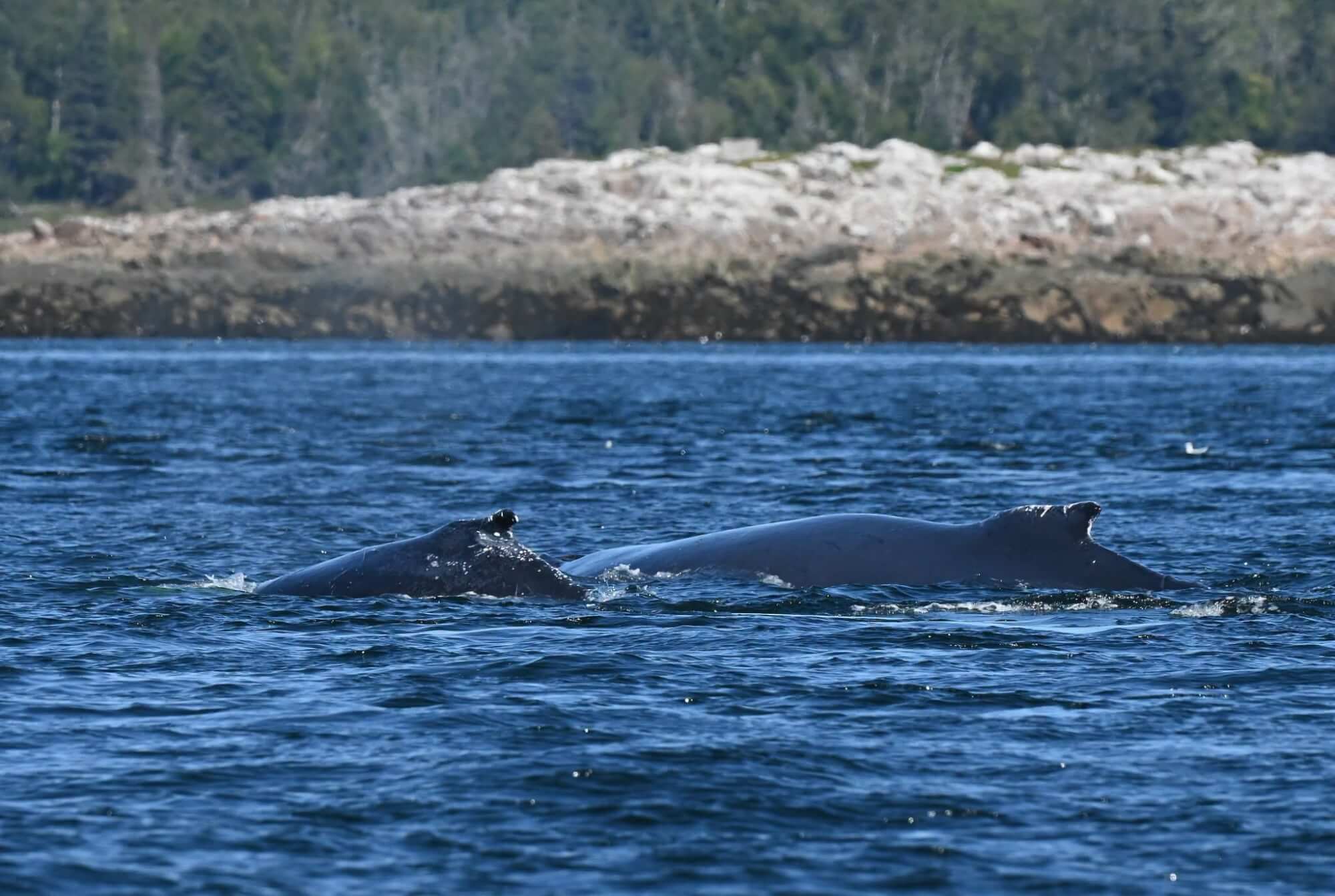
Mama Whales and Their Calves Roam the St. Lawrence
It would hardly be an exaggeration to say that the St. Lawrence has been teeming with life these past few…
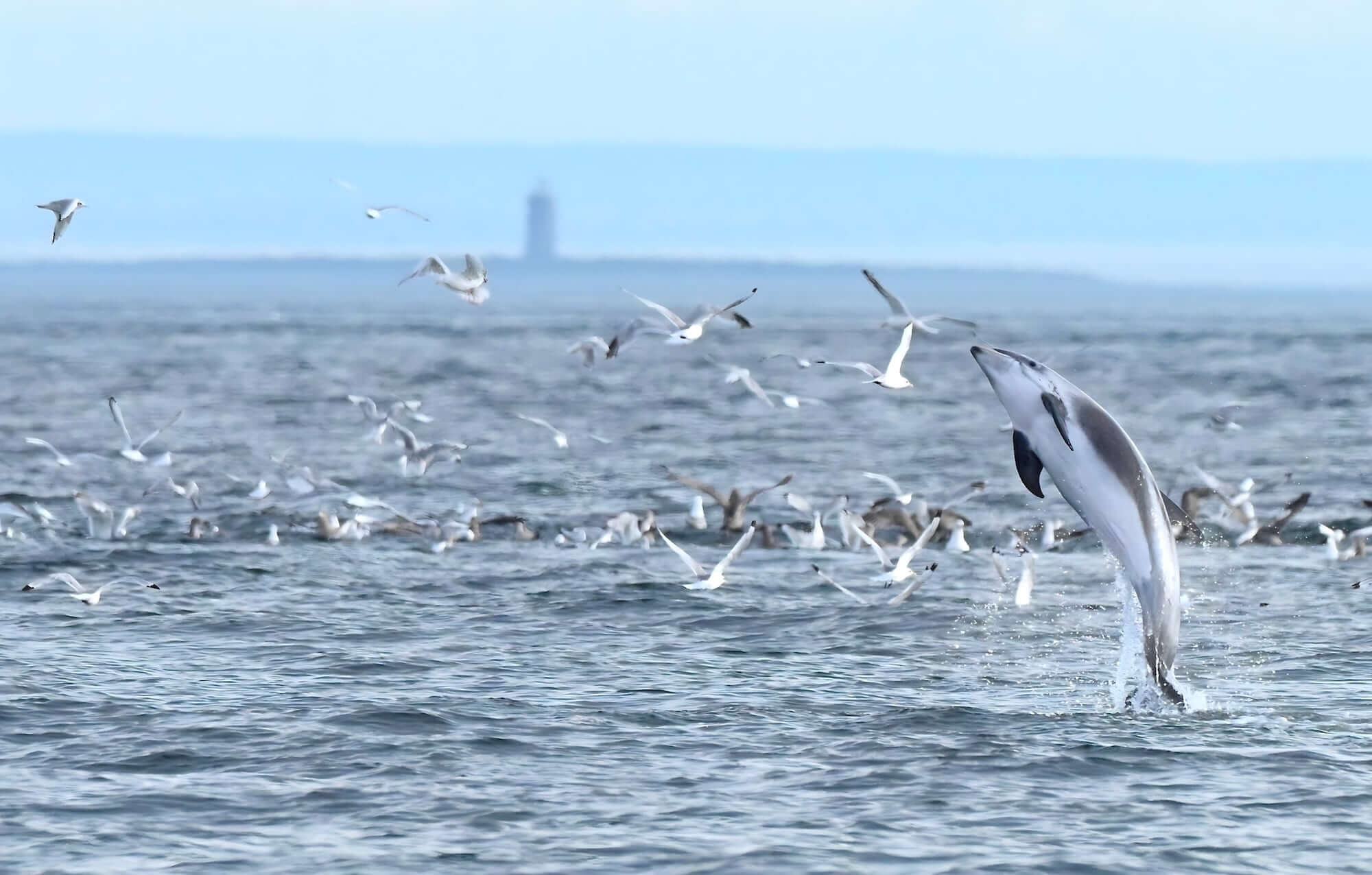
Chance Encounters in the Estuary
The undisputed stars this past week were white-beaked dolphins, which reminds us of the importance of being in the right…
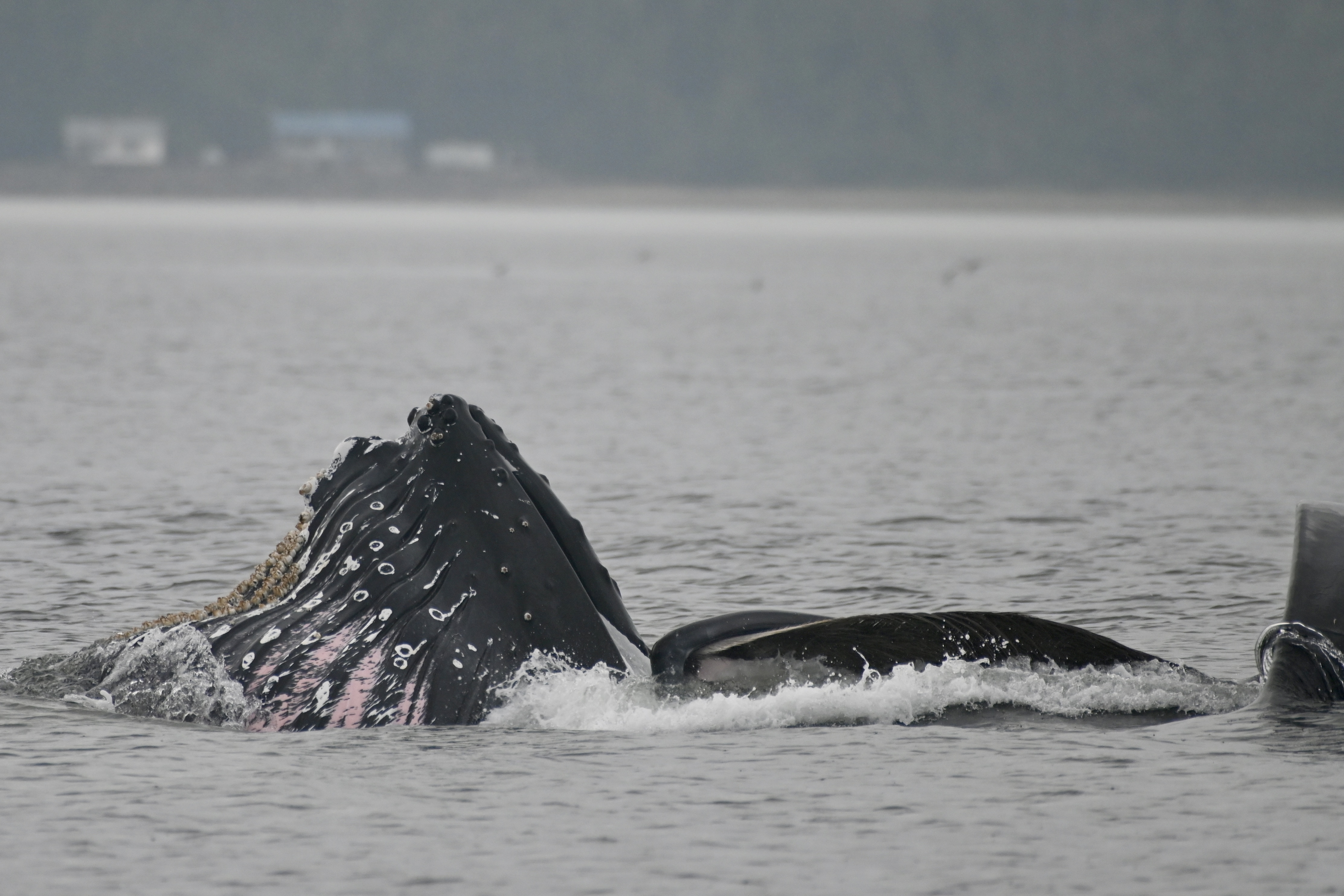
Feeding Scenes, Chevrons and Pigmentation Patterns
As new arrivals continue to show up across the St. Lawrence, visitors flock to admire the landscapes and wildlife, while…