
Mama Whales and Their Calves Roam the St. Lawrence

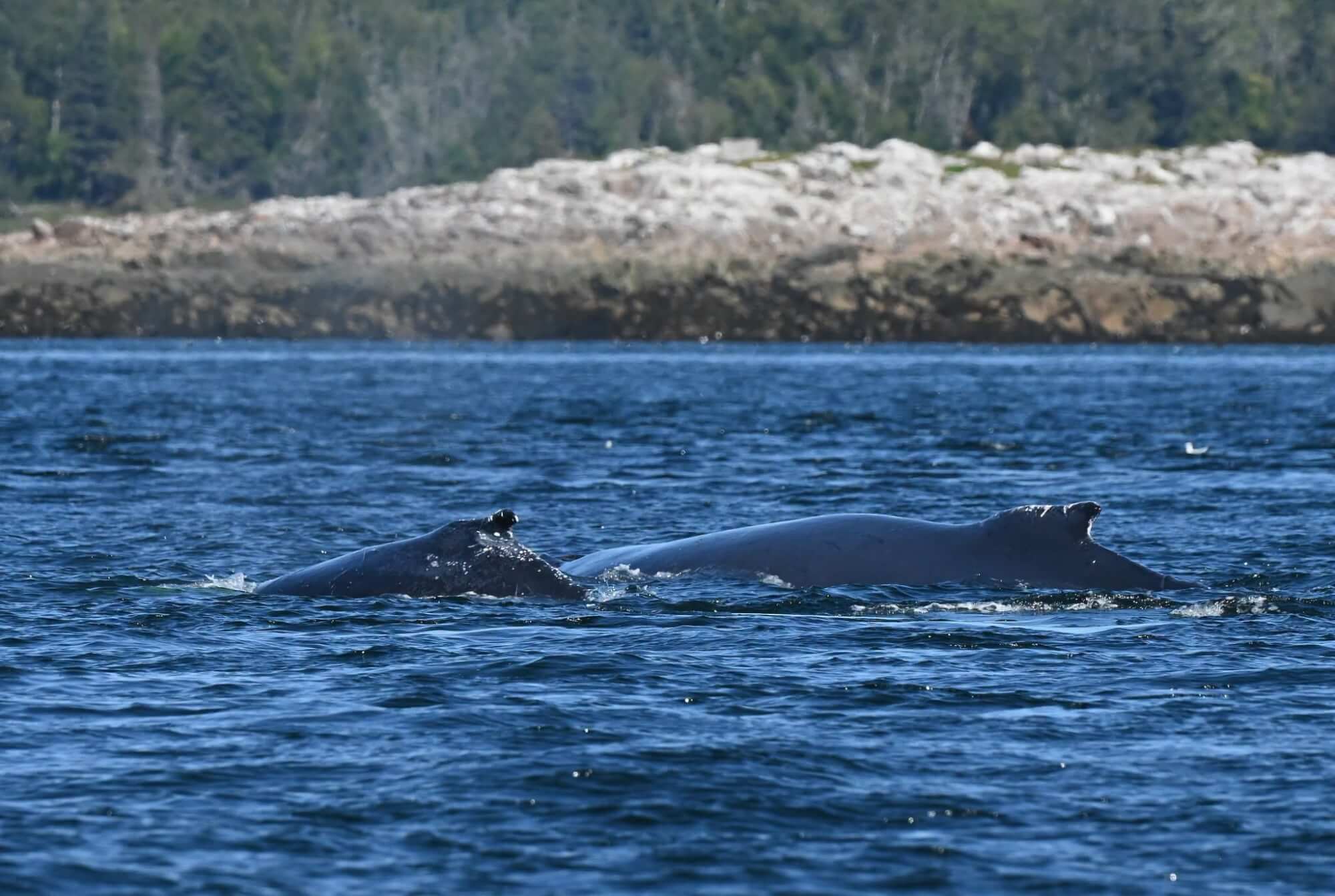
It would hardly be an exaggeration to say that the St. Lawrence has been teeming with life these past few days! In addition to the usual cetaceans, white-beaked and Atlantic white-sided dolphins continue to be seen, while groups of grey and harbour seals have been spotted at several locations. Furthermore, mother-calf pairs of humpbacks have been photographed on both sides of the Estuary and in the Gulf, each sighting serving as a reminder of the beauty and fragility of these baleen whales.
Seals and towering blows
The Mingan Archipelago was the site of about ten harbour seals, several minke whales, and a solitary harbour porpoise. One traveller shares, “I saw a rather dark seal ‘porpoising,’ or at least leaping out of the water while swimming incredibly fast.” I couldn’t identify the species, but I did see a grey seal in the same area a few minutes later.”
Looking west, the Sept-Îles Education and Research Centre (CERSI) tallied five fin whales and about ten humpbacks, including H731 (Lazy Zhu) and her calf! Not far from Pointe-des-Monts, another mother-calf duo was photographed by a collaborator from the Mingan Island Cetacean Study (MICS). This time it was H144 (Cédille) and her calf. He adds: “They were being escorted by the male H676 rather than a female, which doesn’t seem typical to me. Perhaps this means that Cédille is already starting to choose the father for her ninth calf?” “Reproduction in humpbacks that frequent the St. Lawrence generally occurs between January and February in more temperate southern waters. However, a 2021 study shows that, in Canadian waters, males begin singing as early as September. These lengthy serenades, which vary from one year to the next, are intended to attract females, as well as to establish dominance over other males.
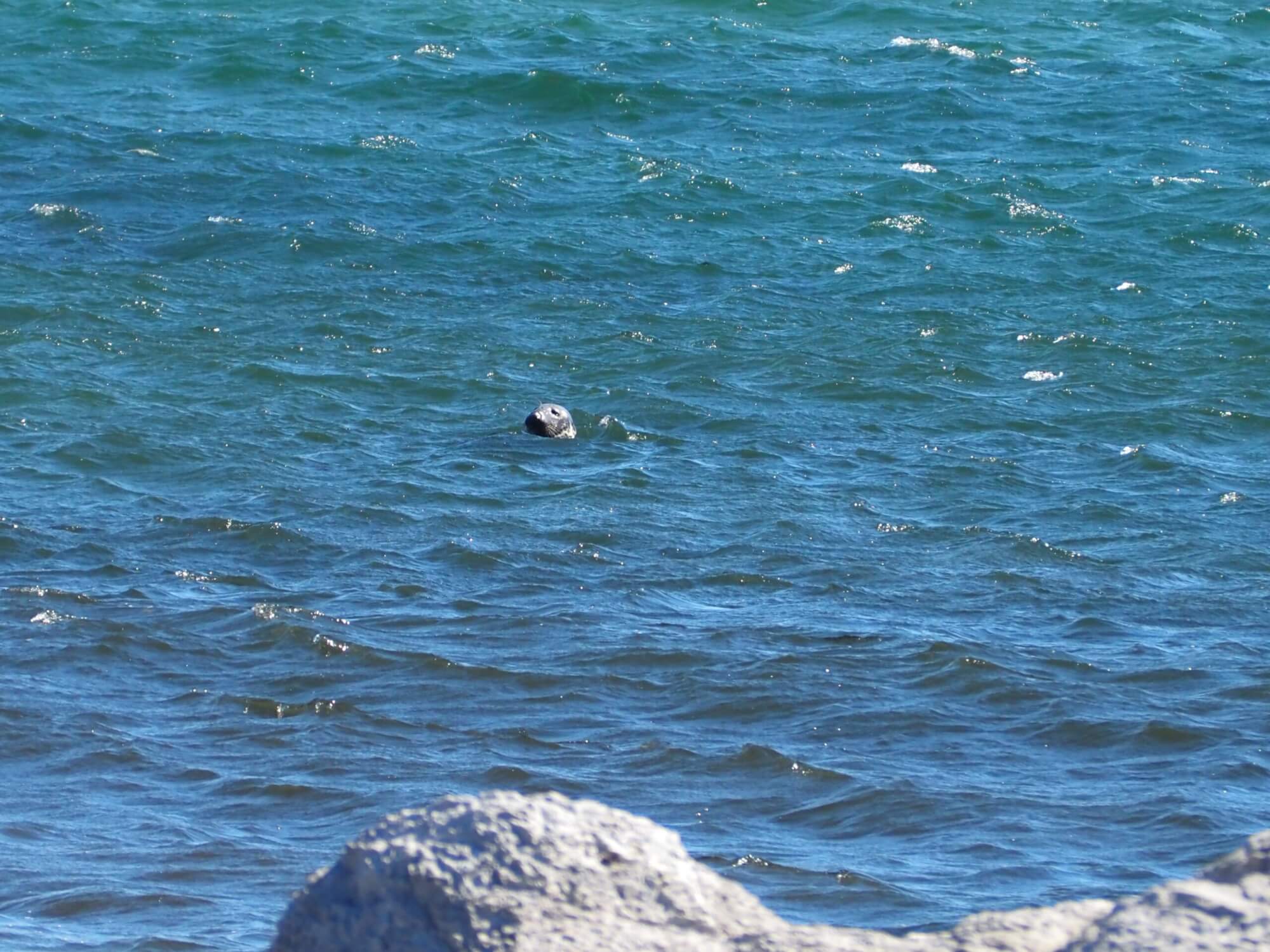
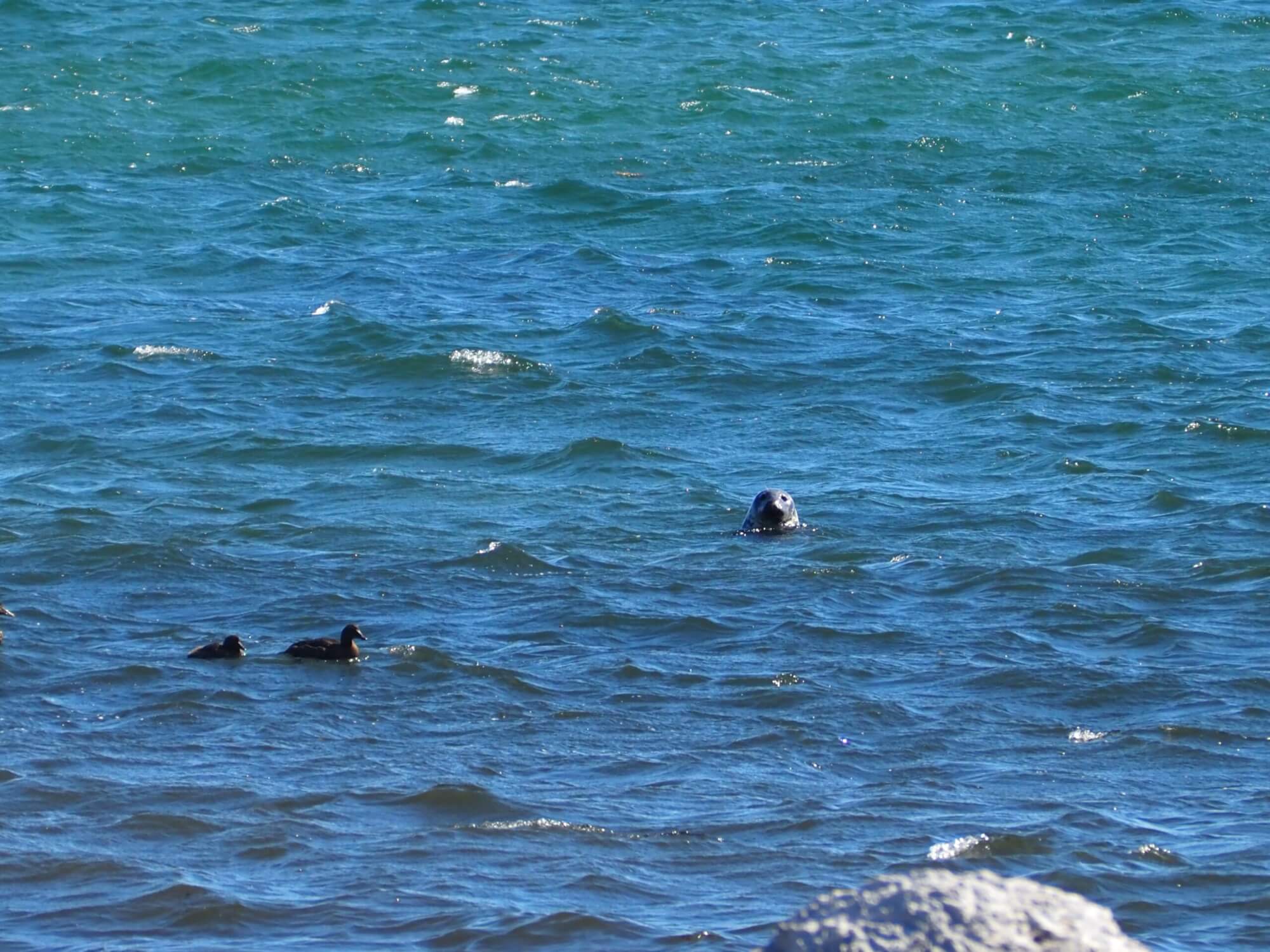
Roughly sixty grey seals were observed by an enthusiast between Baie-Comeau and Pointe-à-la-Croix: “I particularly enjoy observing the behaviour of the older individuals that stay on the sidelines, away from the herd, as if they’re overseeing the safe passage of the group!” A regular observer notes the presence of three or four humpbacks in the area, as well as minke whales and harbour porpoises. Near Godbout, humpback whales H859 (a.k.a. “Yvon”) and H929 (a.k.a. “Éline”) were identified.
Two breaches, dolphins, and seals
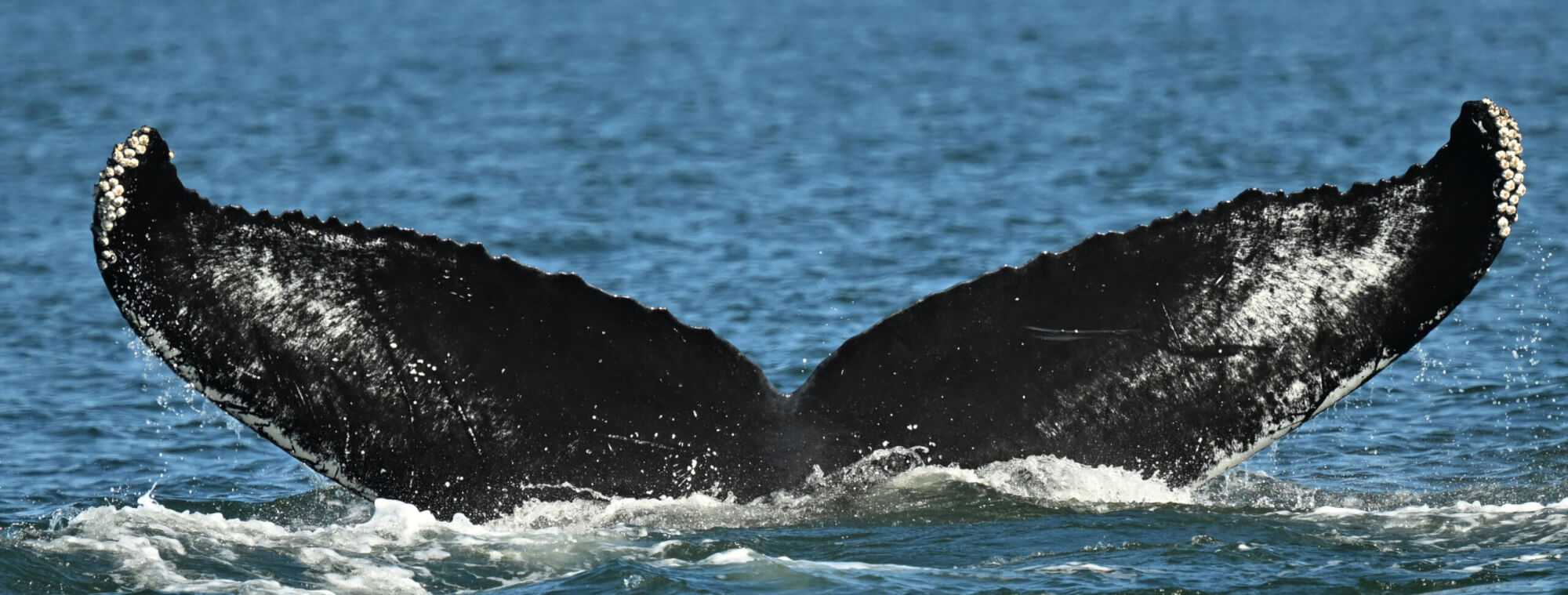
In addition to two male blue whales that are well known to MICS (Mingan Island Cetacean Study)—identified as B476 and B505—a fin whale was observed near Matane. Making a stir in Gaspé Bay were white-sided dolphins, identified by the yellow blaze across their flanks. Harbour porpoises and minke whales were also observed in the bay, as were two fin whales. Two humpbacks were seen breaching near Gaspé, moments that became cherished memories for those who were present. According to the Vigie Marine citizen science map, a group of about twenty belugas was identified off Mont-Louis. Near L’Anse-aux-Cousins, an observer noted the “usual” presence of harbour seals on the rocks not far from her home.
Despite the fact that this week was quieter in terms of sightings, whale-watching season in the St. Lawrence is far from over! Most species can be observed in Quebec waters until October, and sometimes even into November or December—provided they can find enough to eat and the ice cover doesn’t preclude them from surfacing to breathe!
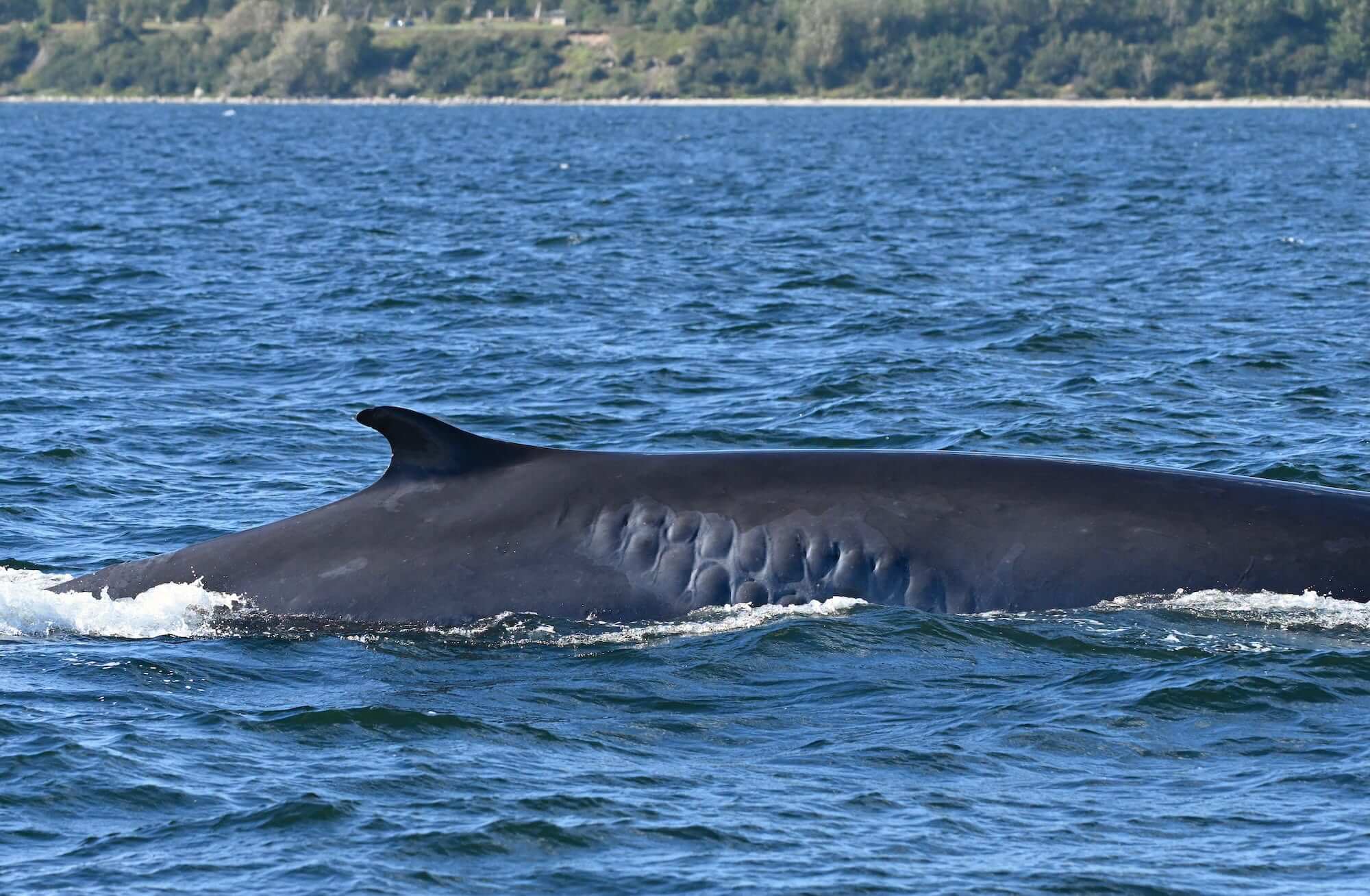
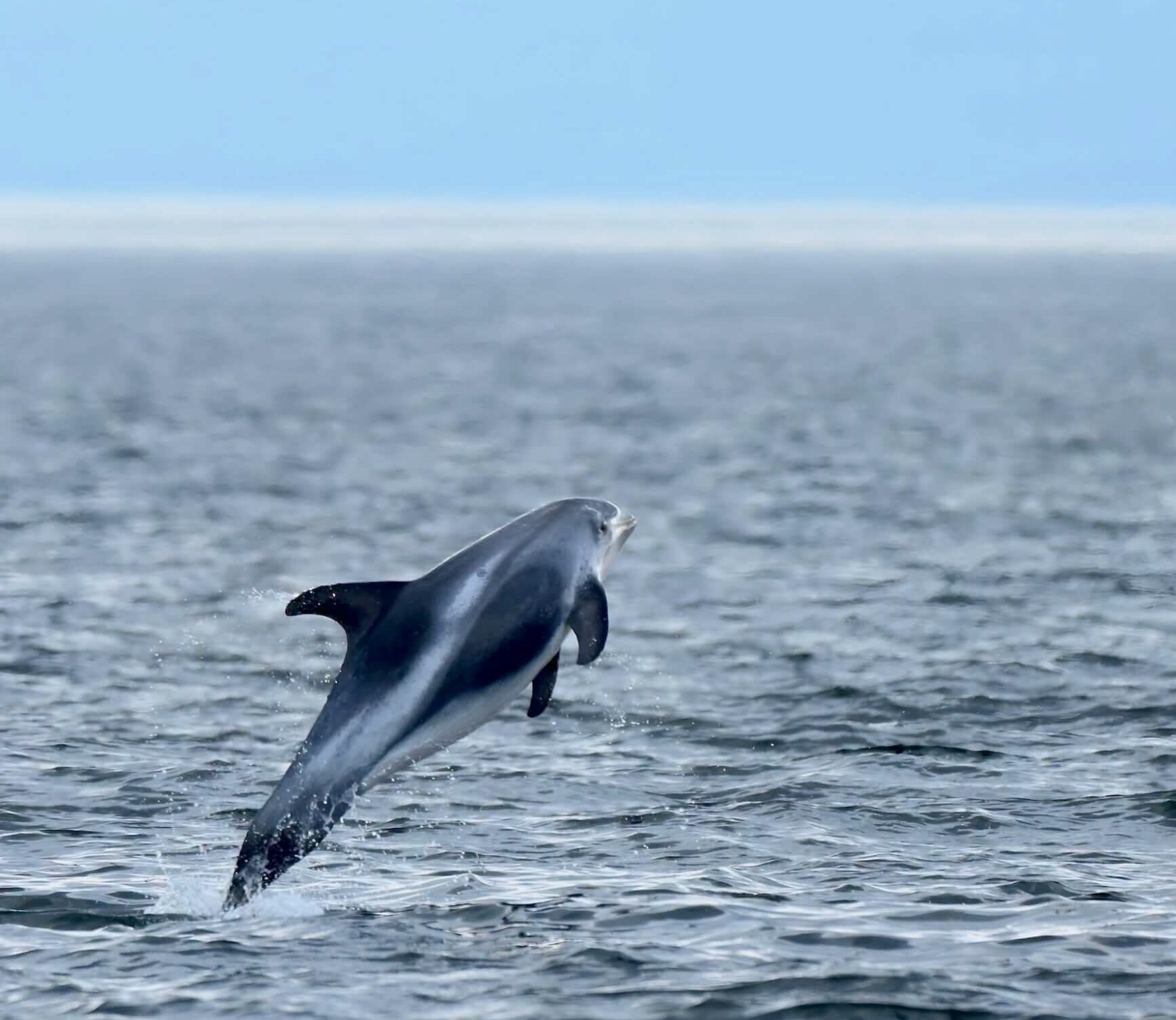
Playful dolphins
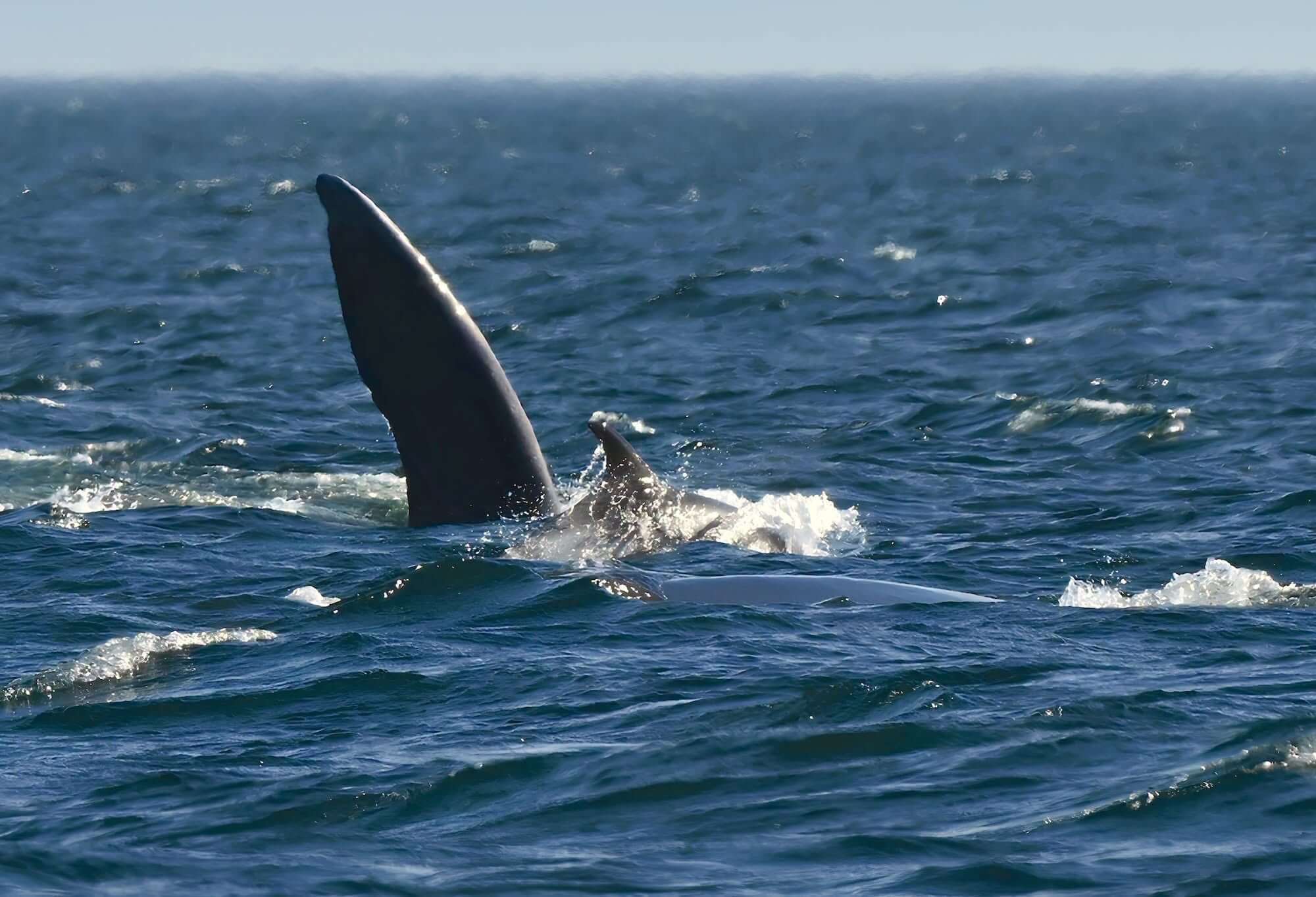
Since August 25, the presence of white-beaked dolphins has been reported in the Saguenay-St. Lawrence Marine Park on a daily basis. This time, it’s not their aerial behaviour that’s raising eyebrows, but rather their interactions with the larger cetaceans. A naturalist and wildlife photographer writes: “It seems these dolphins can never resist the urge to get close, say hello, or pester (depending on your interpretation!) the large rorquals in the area.” First with fin whales, but also with the humpback whale H944 (a.k.a. “Katana”). Observers even heard trumpeting—a very loud exhalation from the whale’s blowhole. Was it a warning for the dolphins to clear out?
A new mother-calf pair has been added to this week’s list of humpback sightings. In addition to the female H875, which was spotted in the Marine Park last week with her calf, also reported this time was H590 (Piranha), accompanied by a very small individual. During her stay in the Estuary in 2021, she also had a calf in tow!
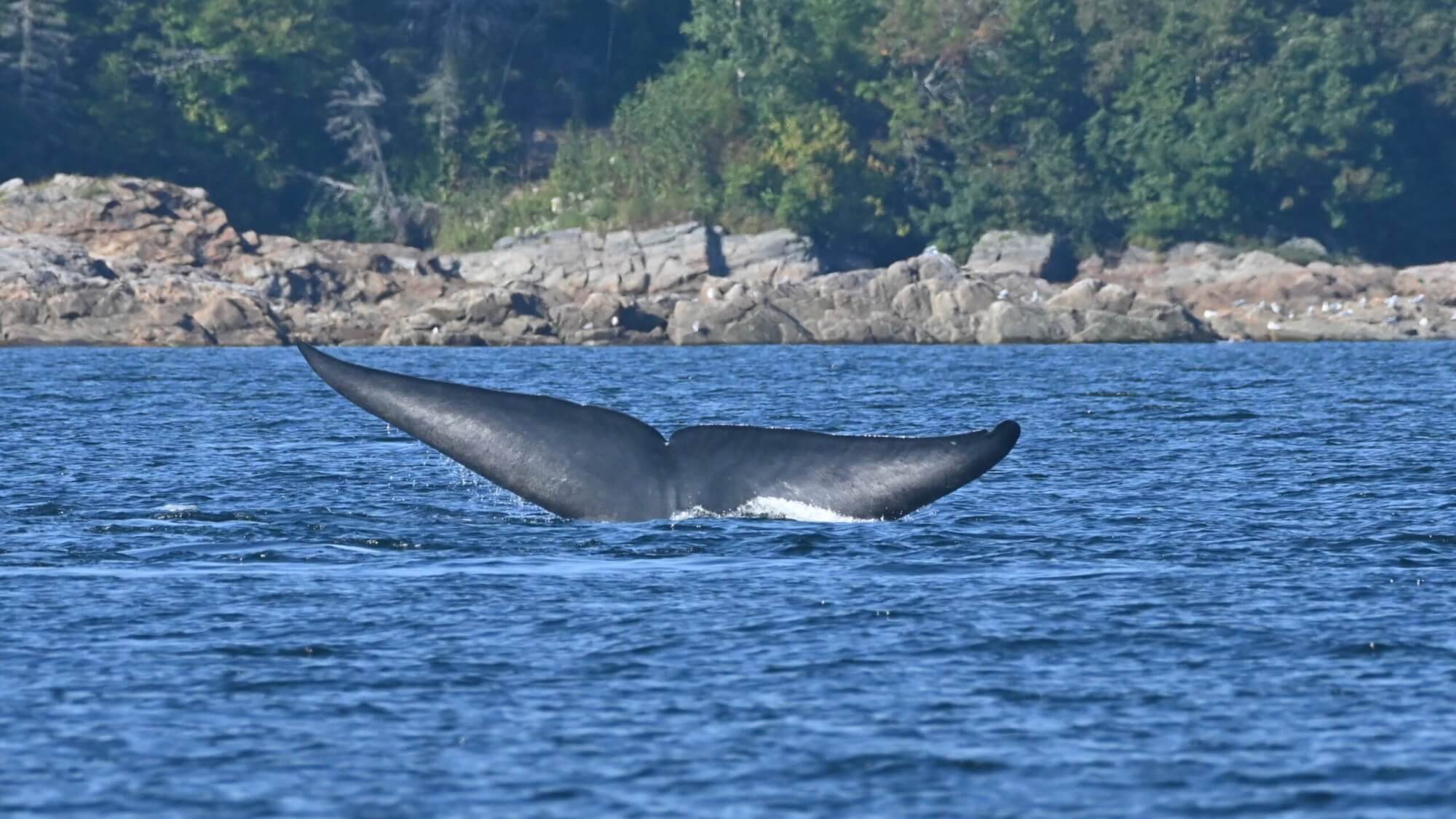
The fin whale Zipper (Bp097) made an appearance toward the end of August. Her companions also continue to frequent the area around Les Bergeronnes, with more than a dozen different individuals having been photo-identified in recent days and weeks. “Last Tuesday, I observed [the blue whale] Jaw-Breaker swimming with the same blue whale for several hours. This individual showed its tail fluke when it dove,” pointed out a naturalist near Les Escoumins. Was it B093, B369, or Chameau (B103)? During its outing on August 27, the Mériscope research team observed about ten minke whales as well as numerous grey seals. Belugas are still very present, especially in front of Tadoussac’s CIMM museum, but also off the coast of Saint-Irénée. Minke whales were also swimming not far from this village in the Charlevoix region.
Where are the whales this week? Sightings map
These data were reported by our network of observers. They give an idea of the presence of whales and in no way represent the actual distribution of whales in the St. Lawrence. Just for fun!
Click on the whale or seal icons to discover the species, the number of individuals, additional information or photos of the sighting. To enlarge the map, click on the icon in the top right-hand corner. The map works well on Chrome and Firefox, but not so well on Safari.
To display the list of sightings, click on the icon in the top left-hand corner.
Thanks to all our collaborators!
Special thanks go out to all our observers who share their love for marine mammals with us.
Your encounters with cetaceans and pinnipeds are always a pleasure to read and discover. On the water or from shore, it is your eyes that give life to this column.
- Croisières Baie de Gaspé
- Marie-Andrée Charlebois
- Thalia Cohen Bacry
- Guylaine Côté
- Camille Degache
- Laetitia Desbordes
- Diane Ostiguy
- Sandrine Papias
- Renaud Pintiaux
- Pascal Pitre
- René Roy
- Guillaume Savard
- Andréanne Sylvain
- Marielle Vanasse
And to all the others!
Additionally, we would like to acknowledge the following teams that also share their sightings:
Sept-Îles Research and Education Centre (CERSI)
Group for Research and Education on Marine Mammals (GREMM)
Marine Mammal Observation Network (MMON)
Quebec Marine Mammal Emergency Response Network (QMMERN)
Mingan Island Cetacean Study (MICS)
Mériscope
Would you also like to share your observations? Have you seen any marine mammals in the St. Lawrence? Whether it’s a spout offshore or just a couple of seals, drop us a line and send your photos to [email protected]!

Odélie Brouillette
Odélie Brouillette joined the GREMM team as a writer and naturalist in 2022, and has been a project manager in scientific communication since 2023. With a background in biology, she loves learning and sharing with others what's most important to her. She has always been fascinated by marine environments and whales, and hopes to contribute to their protection through awareness-raising and popularization.
Recommended articles
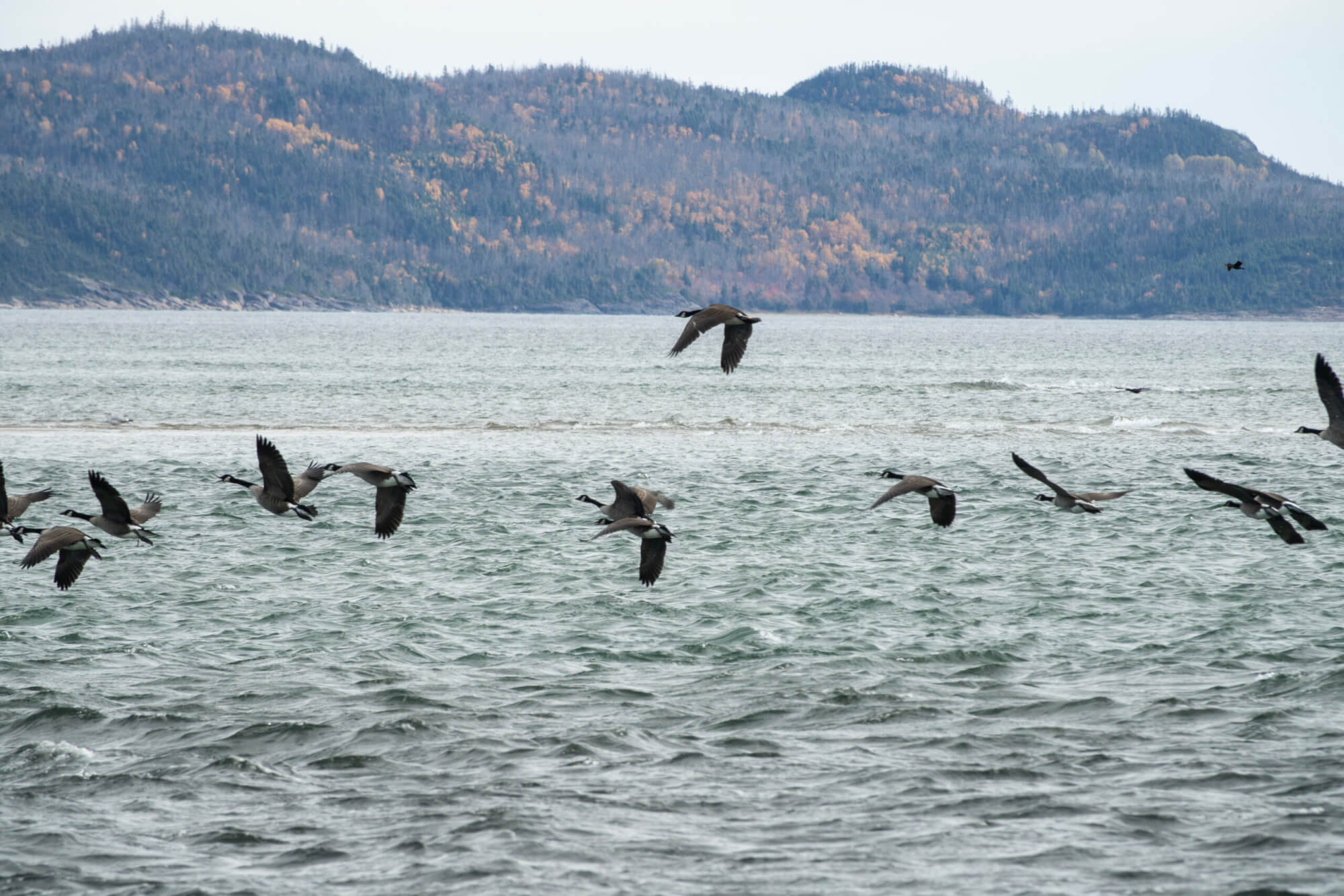
Wrapping Up the Season with Some Thanksgiving Weekend Action!
This year’s Thanksgiving weekend was alive with the activity of whales, seals, and birds! Marine mammals are still lingering in…
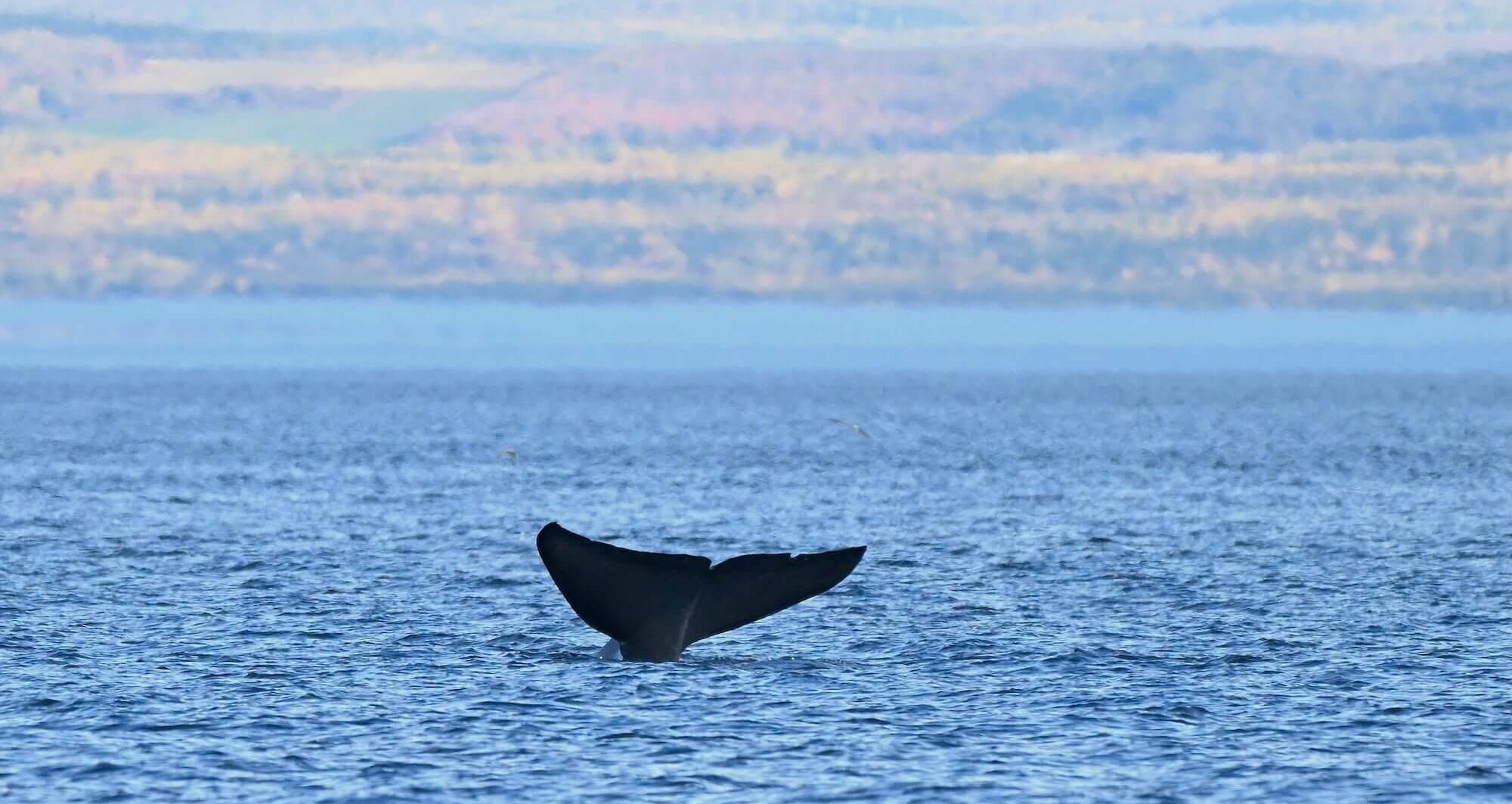
Between Bronze and Anthracite
Yellow-orange hues reaching toward the sky blend with the smooth, dark swirls emerging from the waves. Even if the strong…
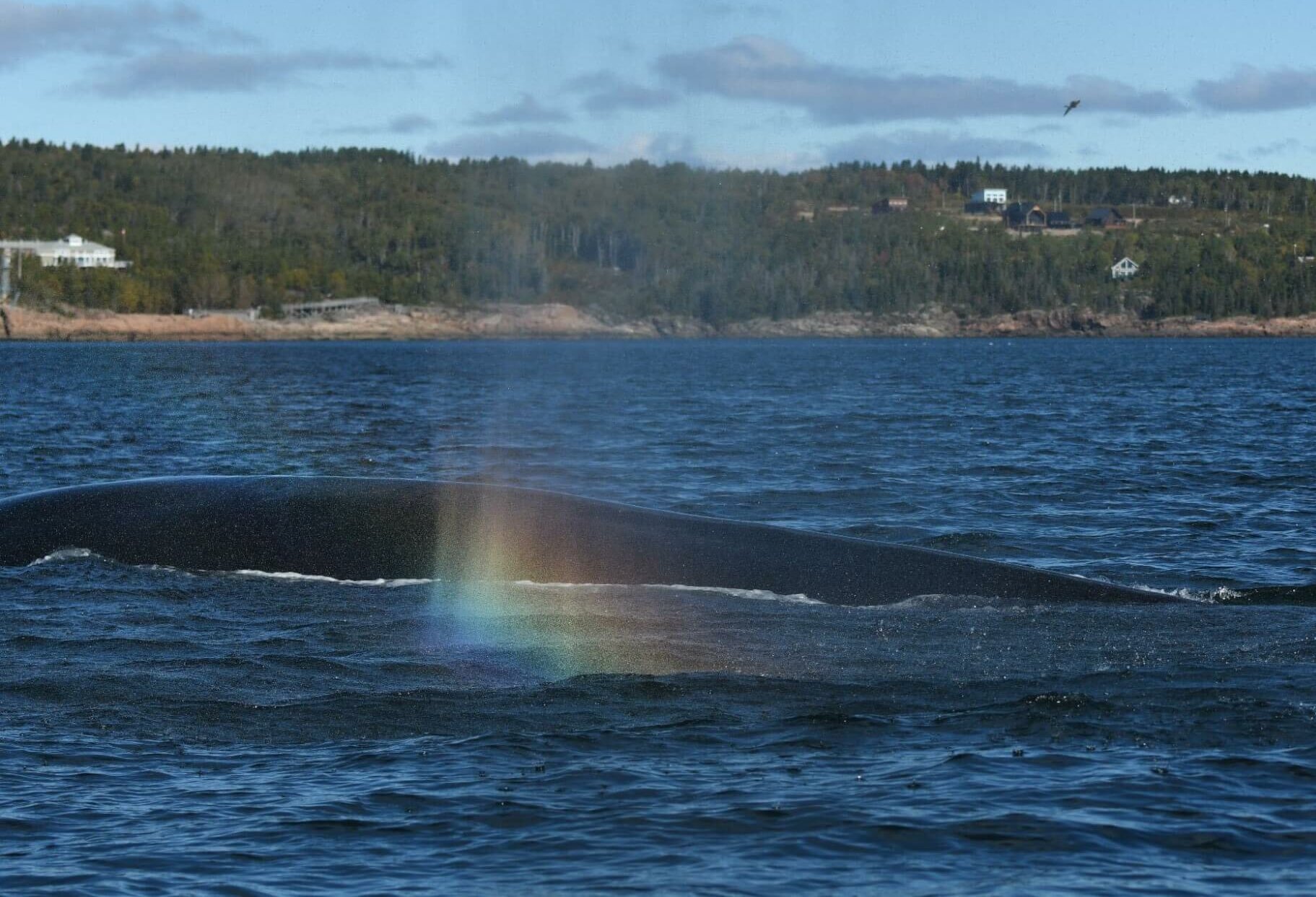
Waters Stirred by Blowing Whales
The shores of the St. Lawrence are ablaze with orange and golden foliage. These multicoloured hues are reflected in the…