
Wrapping Up the Season with Some Thanksgiving Weekend Action!

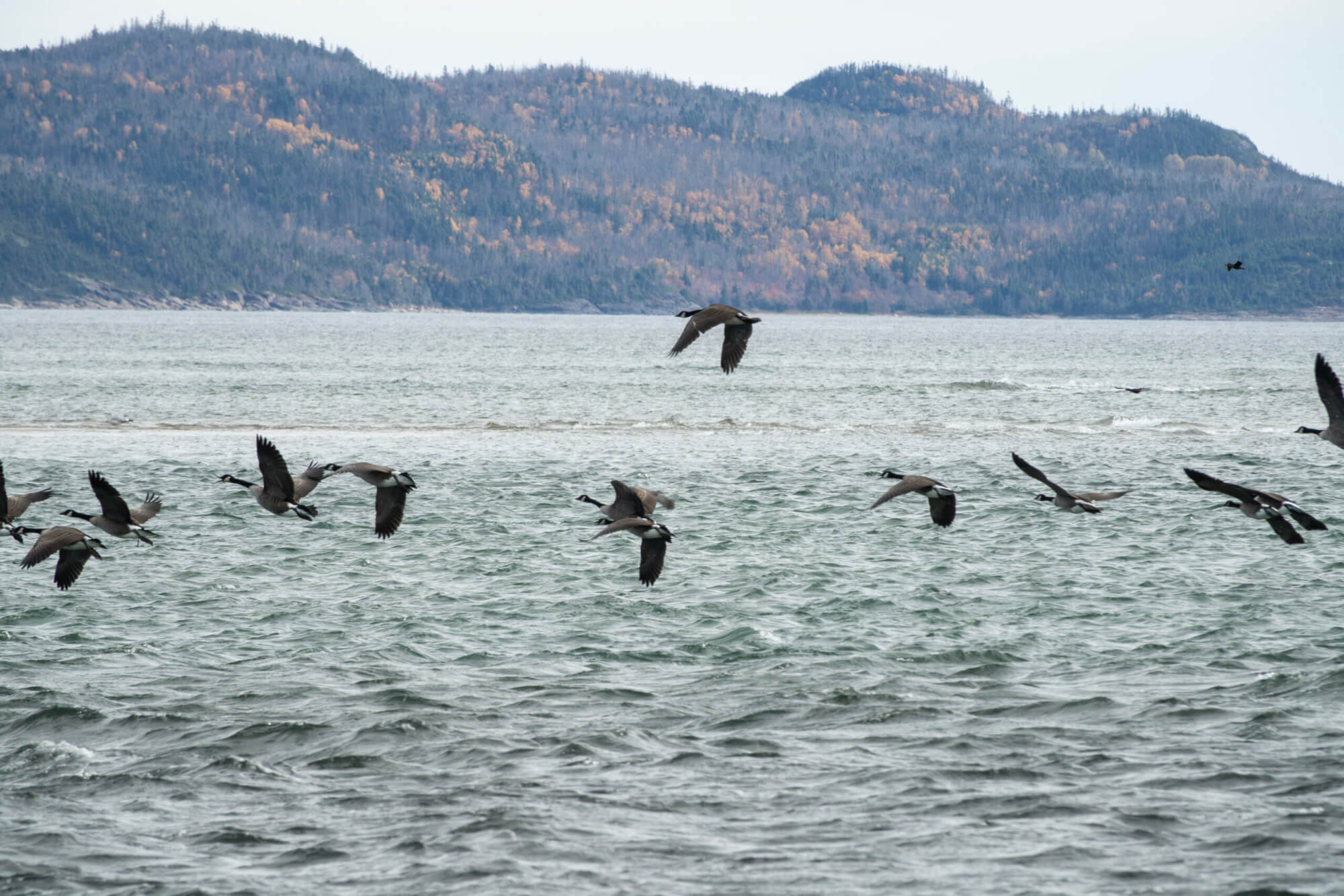
This year’s Thanksgiving weekend was alive with the activity of whales, seals, and birds! Marine mammals are still lingering in the cold waters of the Estuary and the Gulf, despite shifting temperatures and migration that is right around the corner. Blows and fins are spotted here, pinnipeds and splashes photographed there, not to mention plenty of birds on both sides of the St. Lawrence. Observers have had some exciting stories to share this week.
Gaspésie
“Minke whales in Gaspé Bay during a hike along the trail leading to the tip of the peninsula. […] About thirty grey seals in the St. Jean River near the Haldimand Beach rail bridge, plus the ever-present harbour seals at L’Anse-aux-Cousins,” shares a local walker. Meanwhile, another observer reports witnessing the blows of unidentified whales in Gaspé Bay. Could they be the same minke whales spotted earlier?
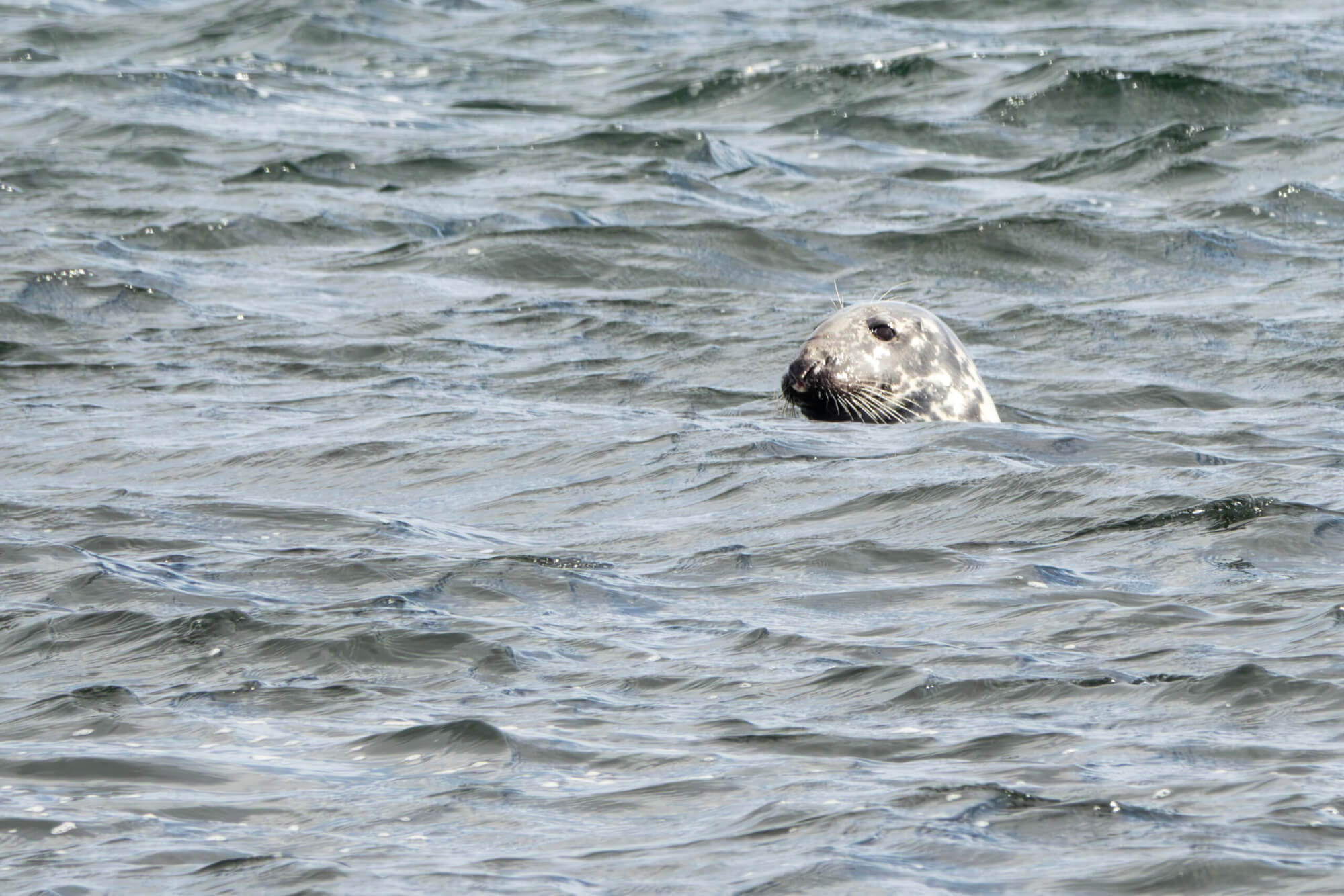
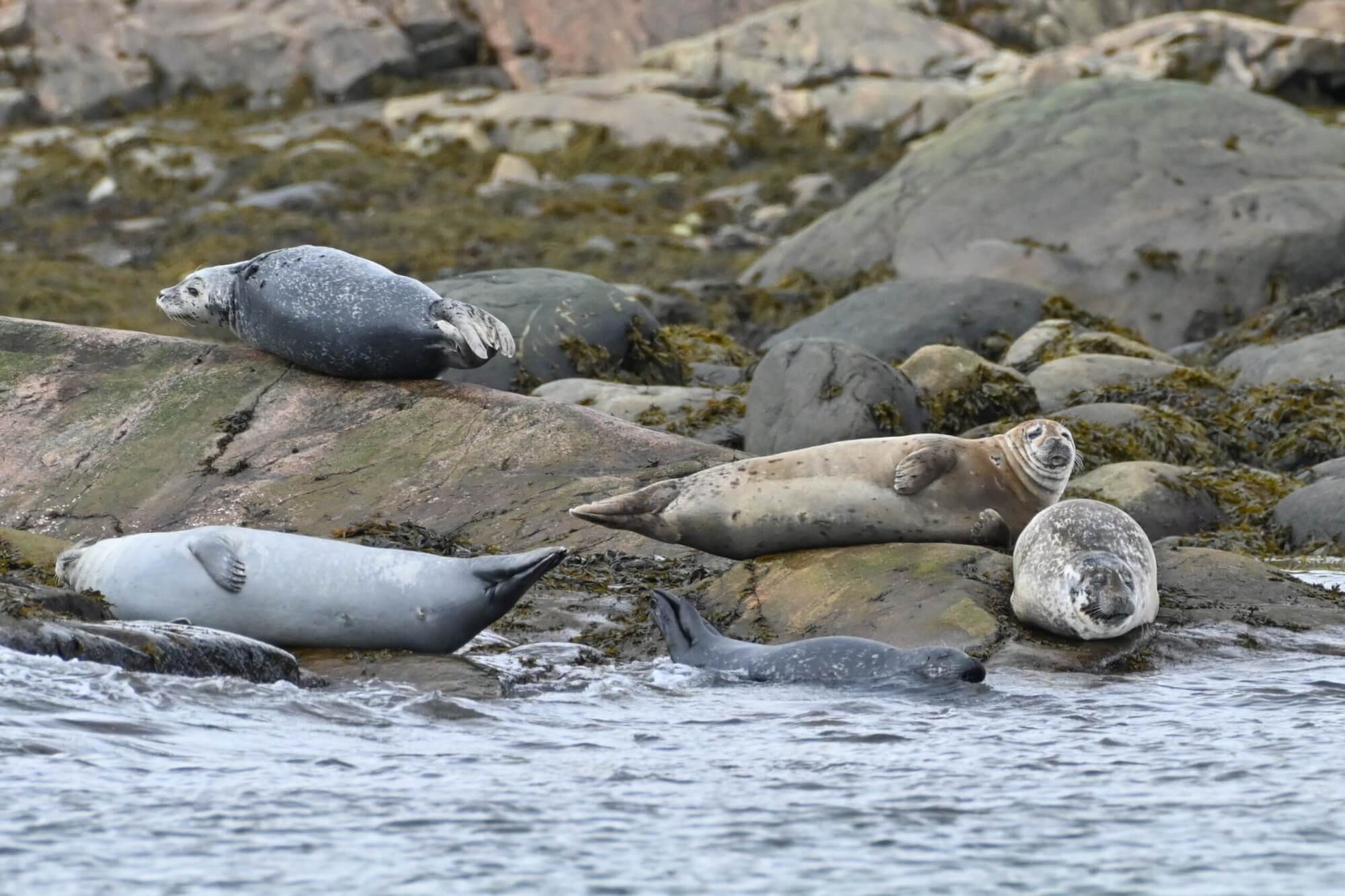
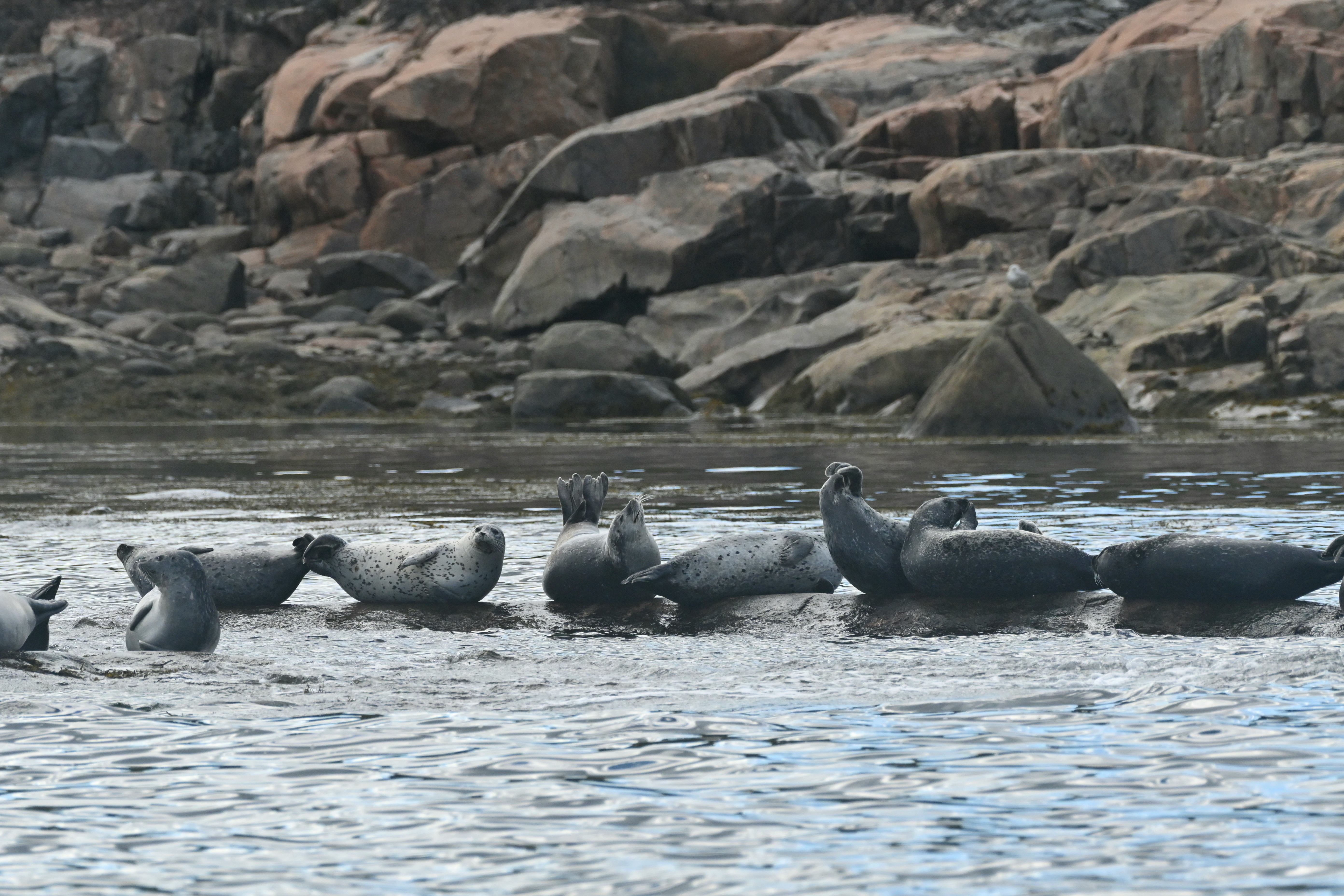
A local resident posted on the shore at Sainte-Anne-des-Monts describes her sightings: “They’re not whales, but they are beautiful and highly flexible marine mammals!” Seals are often spotted on the rocks in their so-called “banana” pose. This position allows them to keep their extremities out of the water and retain body heat more efficiently!
The road and whales as far as the eye can see
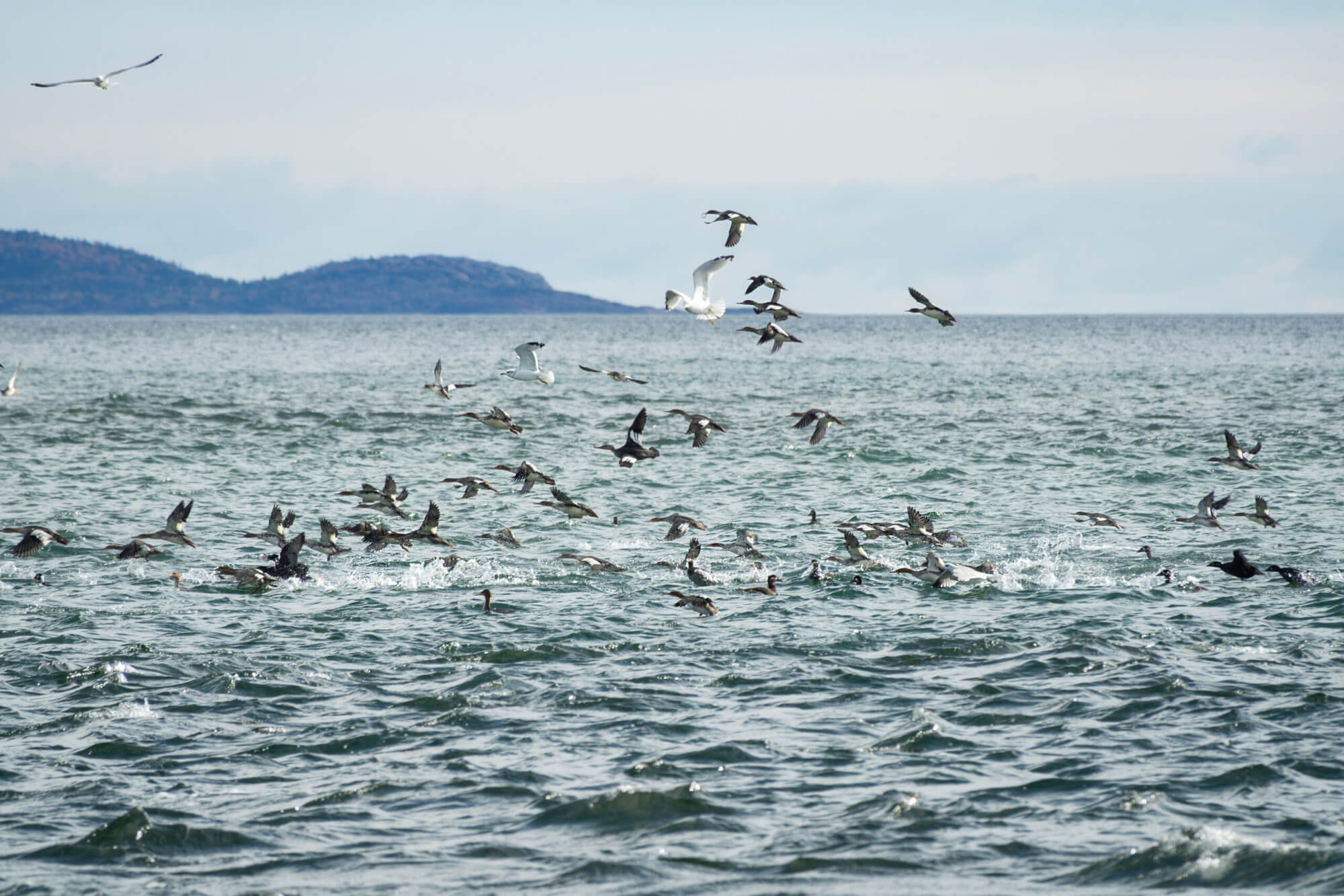
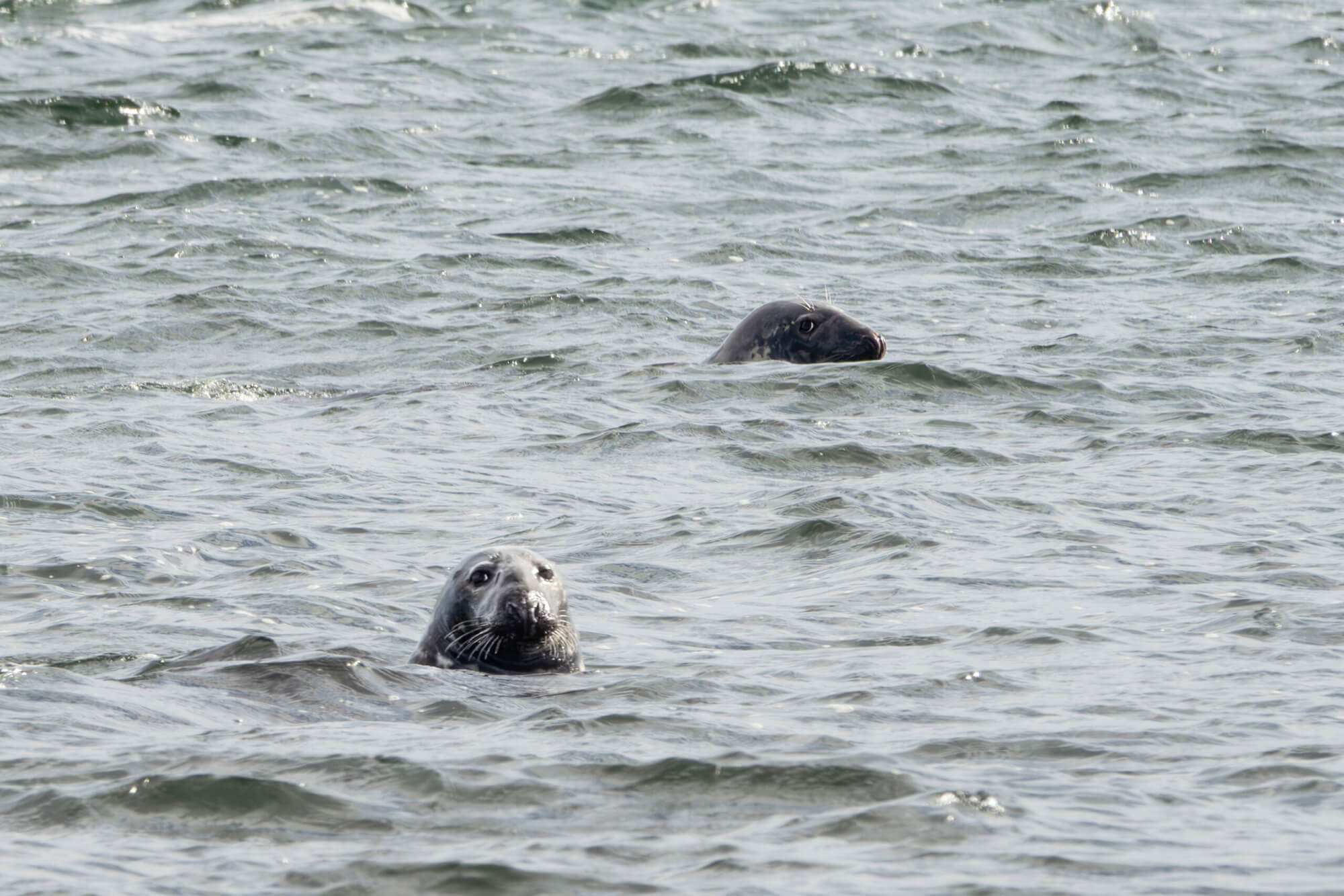
As you travel the road toward the Gulf, there is no shortage of sightings! “This week, I saw minke whales and a humpback breaching off the coast of Franquelin,” shares one of the locals. “A harbour seal is back on ‘its’ rock in the middle of the Manicouagan River, resting there until it’s ultimately dislodged by the rising tide,” describes a seasoned observer. At least eight grey seals were spotted at the mouth of the Sainte-Marguerite River in Gallix by one enthusiast, who also noted the impressive diversity of seabirds in the area, including double-crested cormorants, surf scoters, red-breasted mergansers, and Canada geese, just to name a few.
The Mingan Island Cetacean Study (MICS) managed to get out on the water on October 13, despite the rather rough weather of late: “We observed three humpbacks in the Sept-Îles area, including a mother-calf pair. At first, the calf was playfully rolling 360 degrees, ‘standing’ on its head, and occasionally even turning onto its back.” What was the reason for all this? Young whales are often seen performing all sorts of acrobatics—whether to develop their motor skills or simply to play! A local teacher shares an observation: “Two humpbacks have been off Val-Marguerite near Sept-Îles the past two days; one of them even breached this morning.” Were these the same individuals spotted by MICS?
Awaiting the first snowflakes
“It’s the end of the season for most of the whale-watching cruises, but there are still marine mammals around. And even after the large whales have left, we’ll still have the harbour seals here in Les Escoumins,” writes a passionate naturalist who will be staying on dry land for the next few months. Indeed, even though boats are starting to be parked in the dry dock for the winter, a few whales and seals can still be found in the St. Lawrence. In fact, harbour seals can be spotted there year-round! In the coming months, they will be joined by harp seals, which also use this area for pupping, moulting, and breeding.
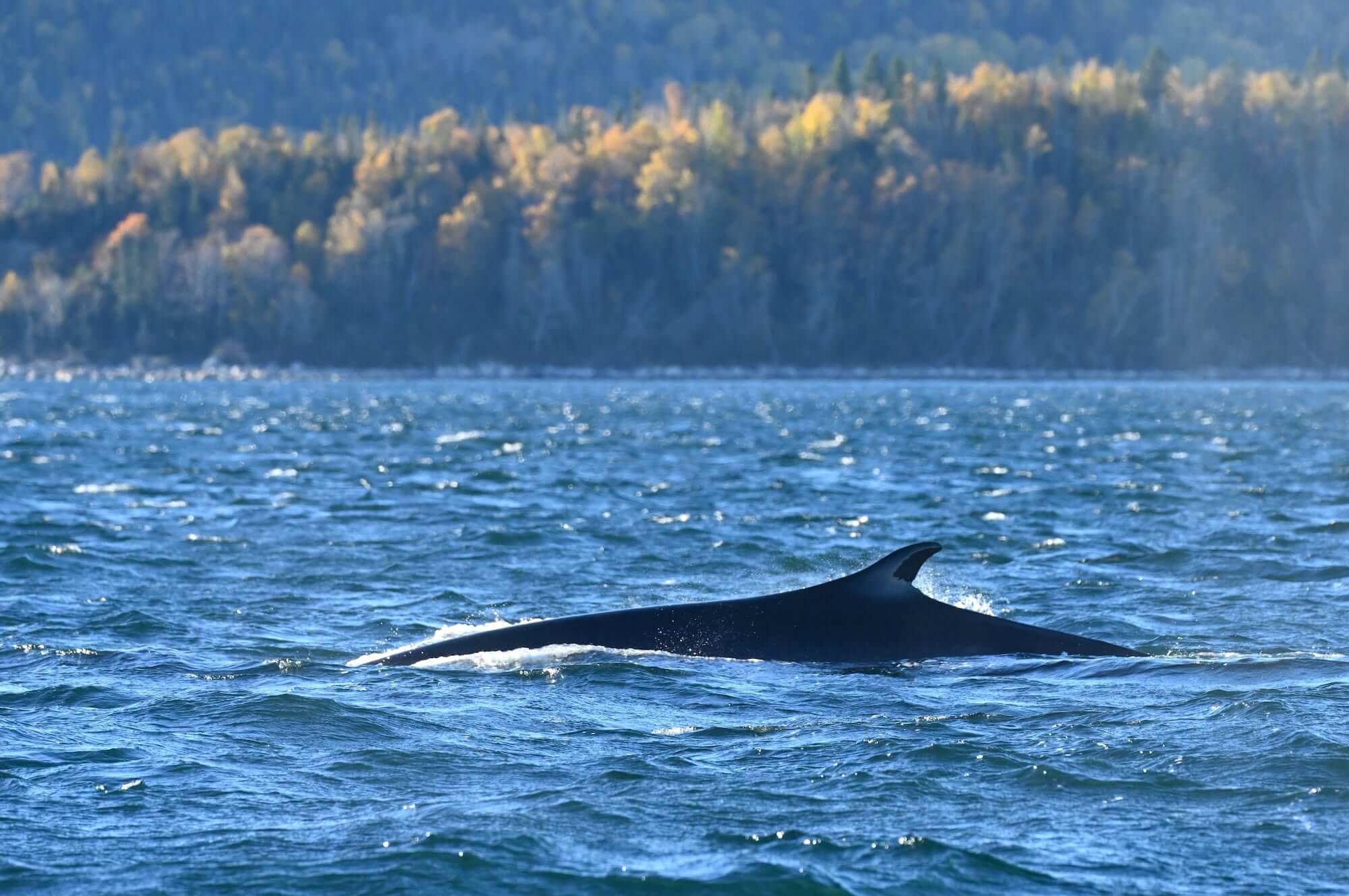
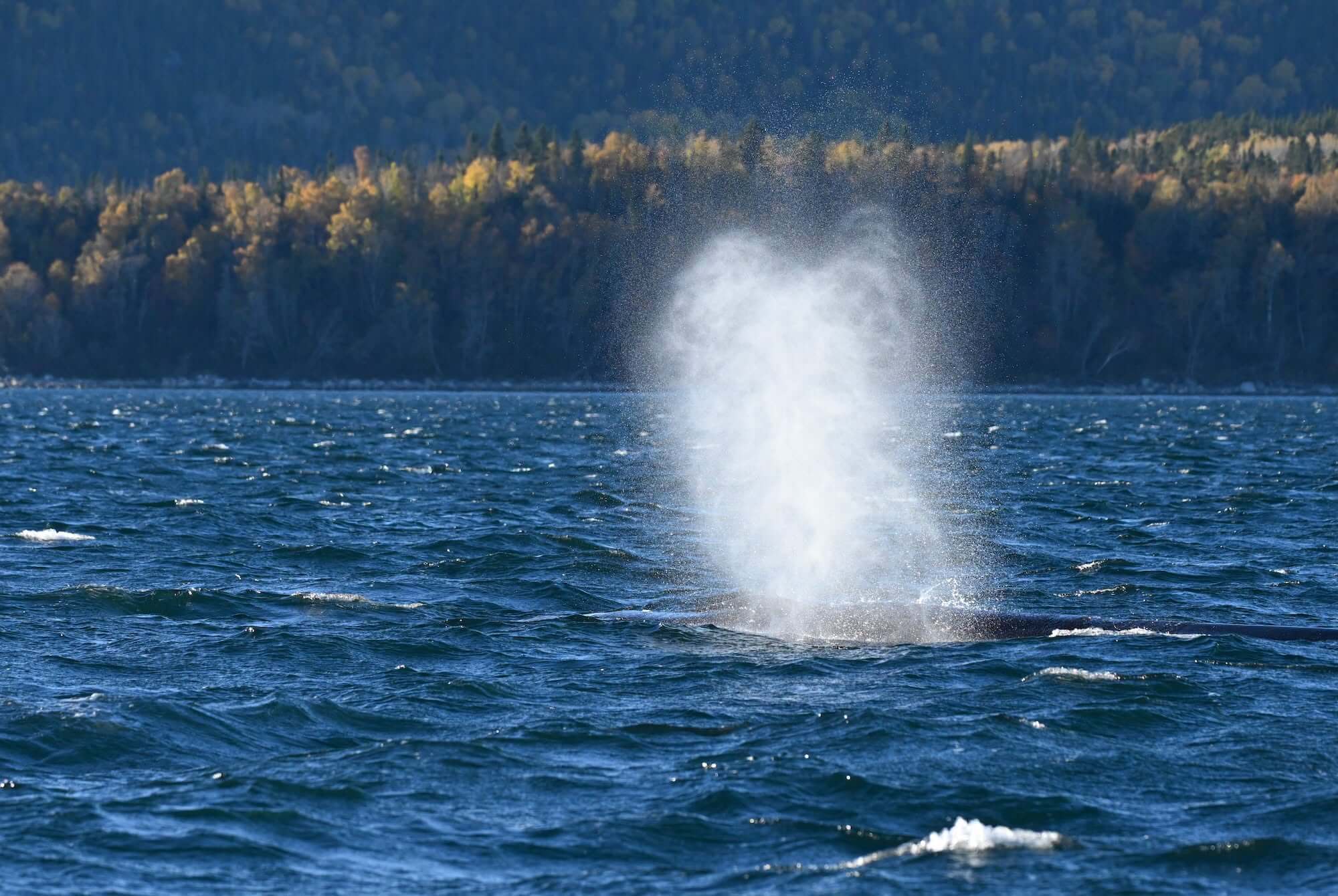
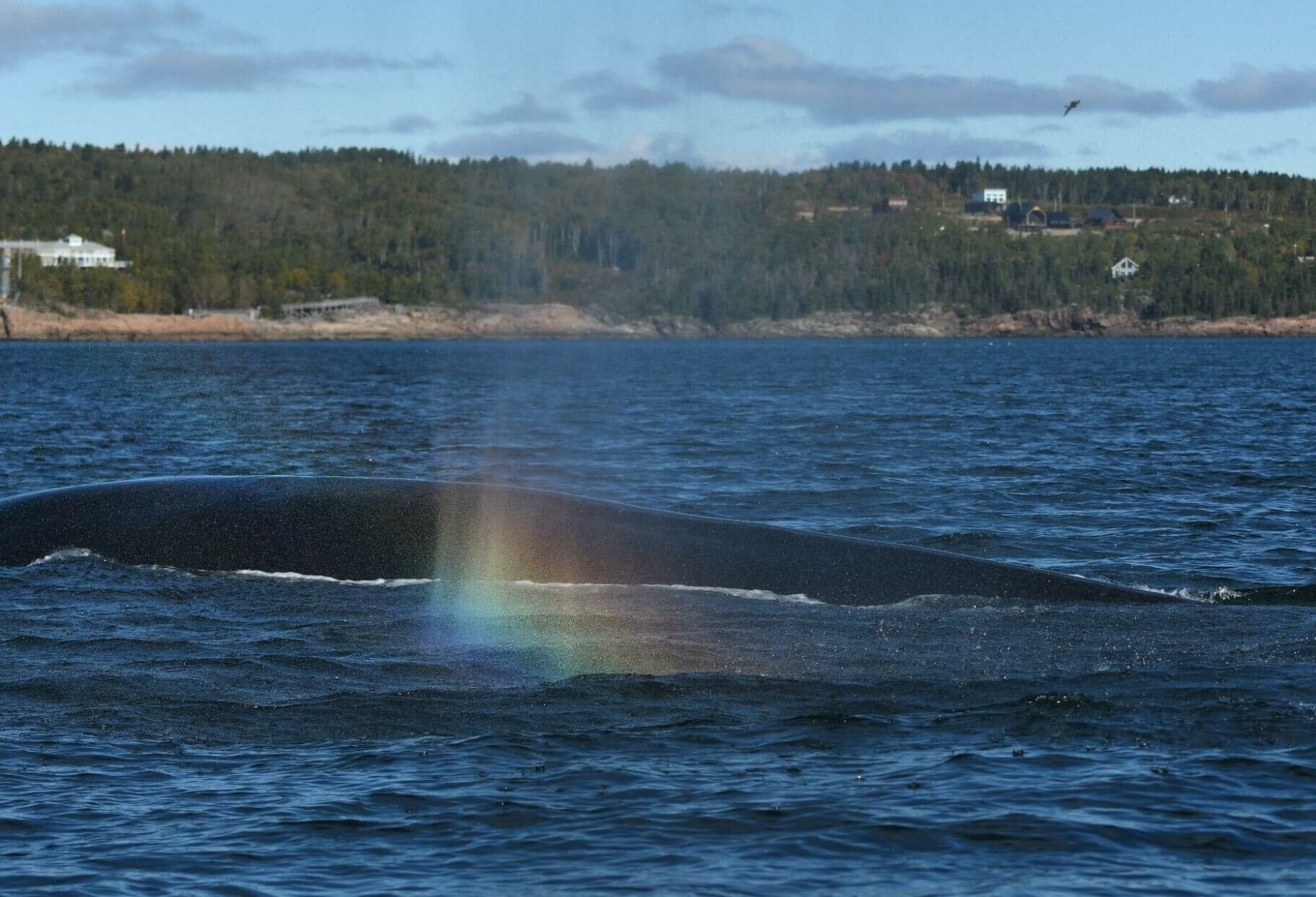
“The humpback Katana was spotted again today,” reports another naturalist and wildlife photographer. He also notes the steady presence of fin whales off Tadoussac in recent days, their diffuse blows mingling with the colours of the autumn landscapes. Among them are Ti-Croche and Zipper. “I saw belugas on Saturday and Sunday—not a lot, just two or three both afternoons,” reports a resident of Saint-Irénée.
Earlier today, a colleague of mine came to see me and blurts out: “There’s a minke whale in front of the CIMM!” Although they’re less conspicuous than they were earlier in the month, their black backs and hooked dorsal fins can still be seen from the shore along the mouth of the Saguenay River! Gazing out at the choppy waters of the fjord, I managed to catch a glimpse of a lone individual. Was it foraging for food? The day before, the white backs of belugas were spotted by other enthusiastic members of GREMM’s team. Although the research vessels have now left the chilly waters of the Saguenay–St. Lawrence Marine Park for the winter, the painstaking work of processing this year’s data will soon begin! Meanwhile, CIMM will continue to welcome visitors until November 1.
Where are the whales this week? Sightings map
These data were reported by our network of observers. They give an idea of the presence of whales and in no way represent the actual distribution of whales in the St. Lawrence. Just for fun!
Click on the whale or seal icons to discover the species, the number of individuals, additional information or photos of the sighting. To enlarge the map, click on the icon in the top right-hand corner. The map works well on Chrome and Firefox, but not so well on Safari.
To display the list of sightings, click on the icon in the top left-hand corner.
Thanks to all our collaborators!
Special thanks go out to all our observers who share their love for marine mammals with us.
Your encounters with cetaceans and pinnipeds are always a pleasure to read and discover. On the water or from shore, it is your eyes that give life to this column.
- Marie-Andrée Charlebois
- Camille Degache
- Laetitia Desbordes
- Jade-Audrey Lavergne
- Audrey Leblanc
- Diane Ostiguy
- Stéphane Pagès
- Renaud Pintiaux
- Pascal Pitre
- Jean Rheault
- Simone Richard
- Guillaume Savard
- Andréanne Sylvain
- Marielle Vanasse
And to all the others!
Additionally, we would like to acknowledge the following teams that also share their sightings:
Sept-Îles Research and Education Centre (CERSI)
Group for Research and Education on Marine Mammals (GREMM)
Marine Mammal Observation Network (MMON)
Quebec Marine Mammal Emergency Response Network (QMMERN)
Mingan Island Cetacean Study (MICS)
Mériscope
Would you also like to share your observations? Have you seen any marine mammals in the St. Lawrence? Whether it’s a spout offshore or just a couple of seals, drop us a line and send your photos to [email protected]!

Odélie Brouillette
Odélie Brouillette joined the GREMM team as a writer and naturalist in 2022, and has been a project manager in scientific communication since 2023. With a background in biology, she loves learning and sharing with others what's most important to her. She has always been fascinated by marine environments and whales, and hopes to contribute to their protection through awareness-raising and popularization.
Recommended articles
Between Bronze and Anthracite
Yellow-orange hues reaching toward the sky blend with the smooth, dark swirls emerging from the waves. Even if the strong…
Waters Stirred by Blowing Whales
The shores of the St. Lawrence are ablaze with orange and golden foliage. These multicoloured hues are reflected in the…
Côte-Nord: Prime Location for Autumn Whale Watching
Across Quebec, fall has truly arrived, as evidenced by the turning leaves and the arrival of certain marine mammal species…