
Feasting Cetaceans in the St. Lawrence

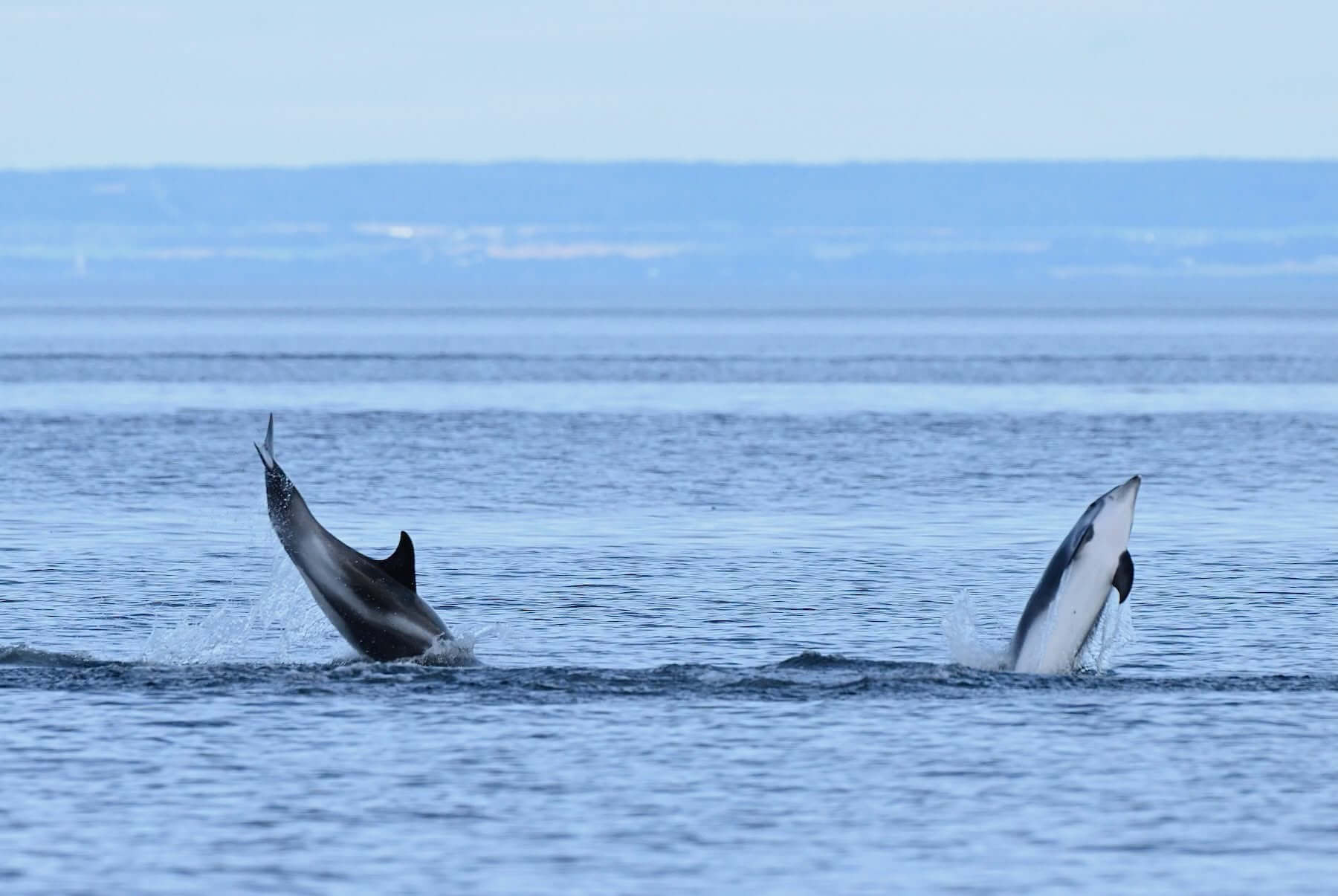
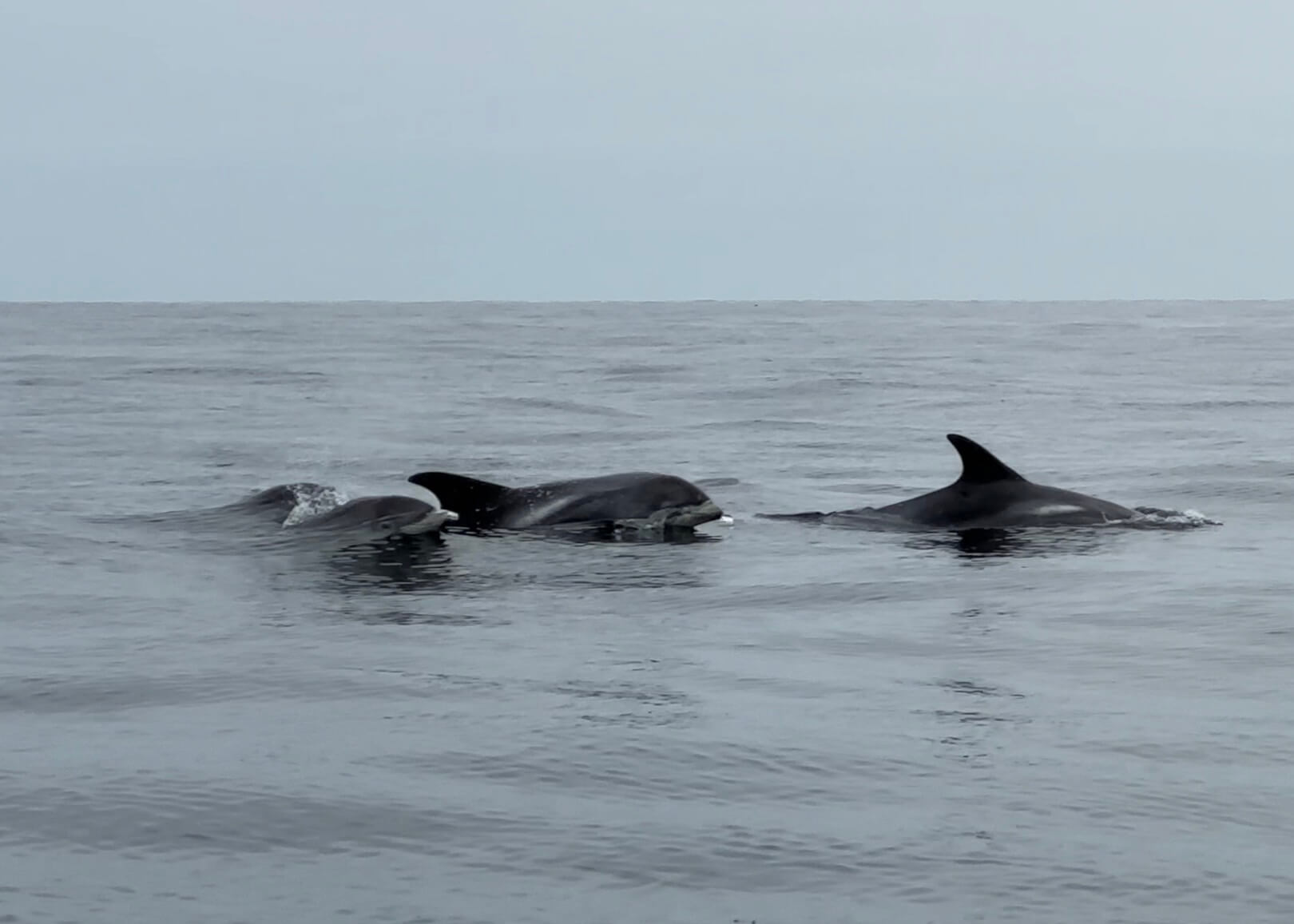
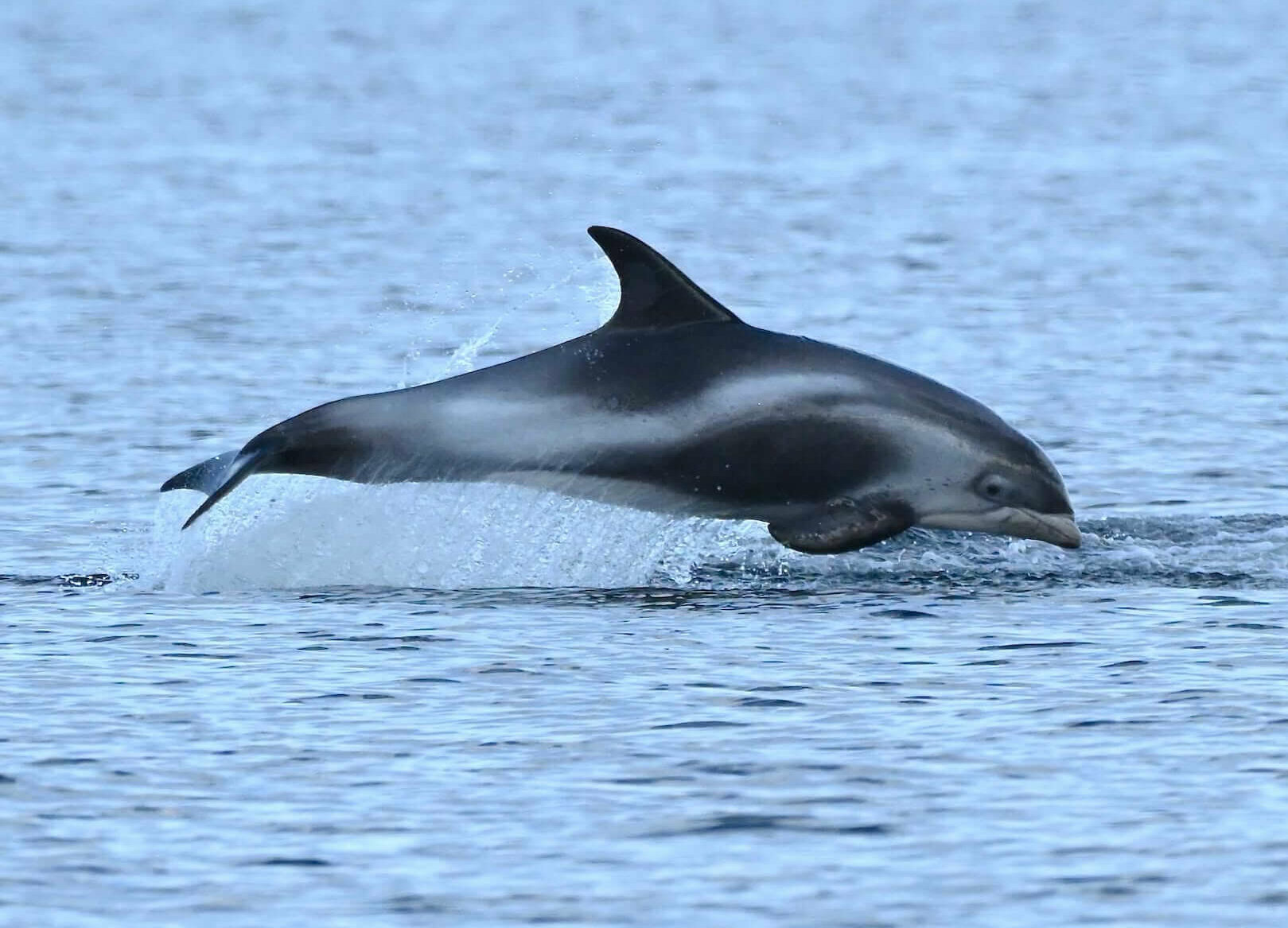
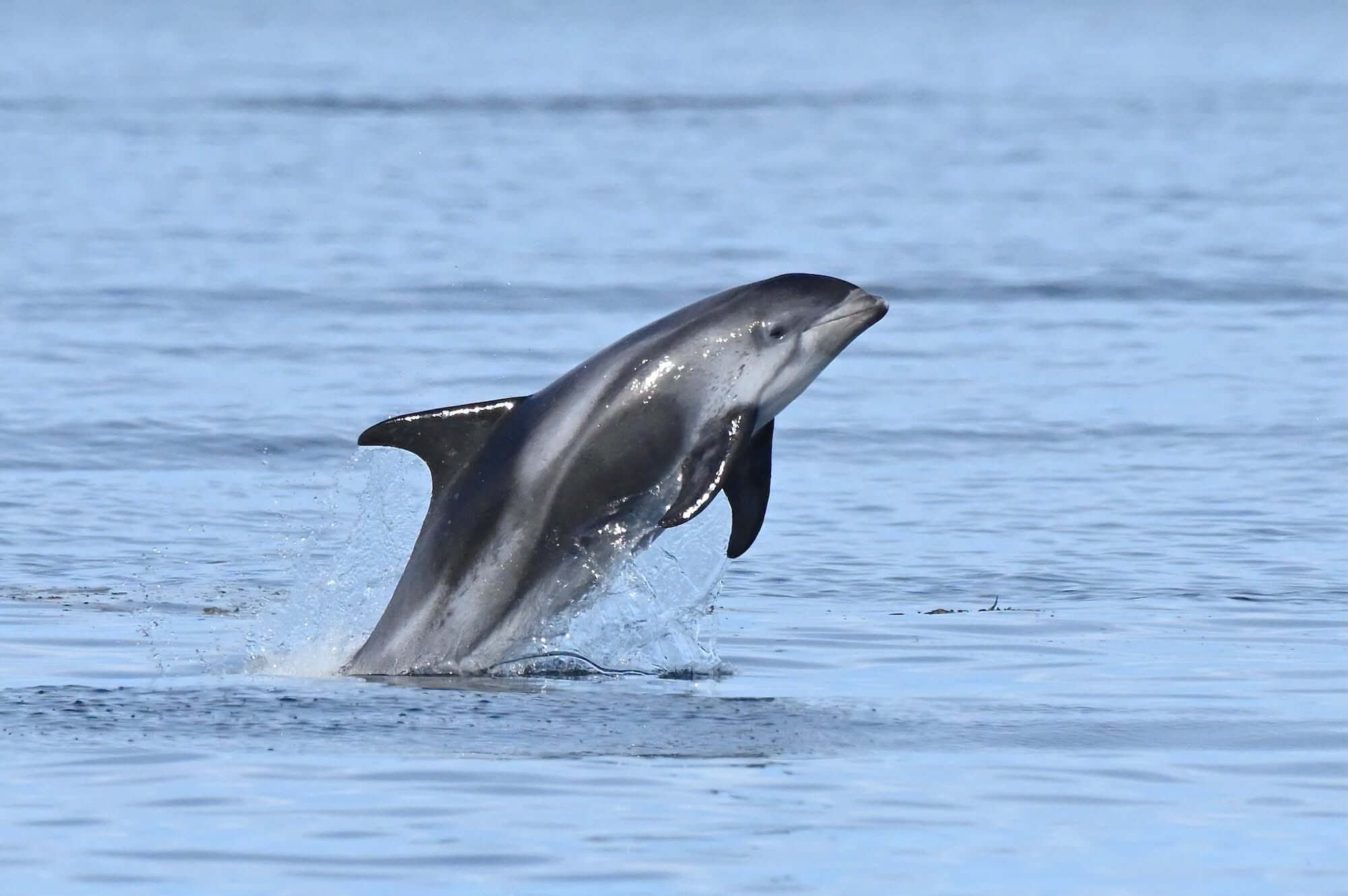
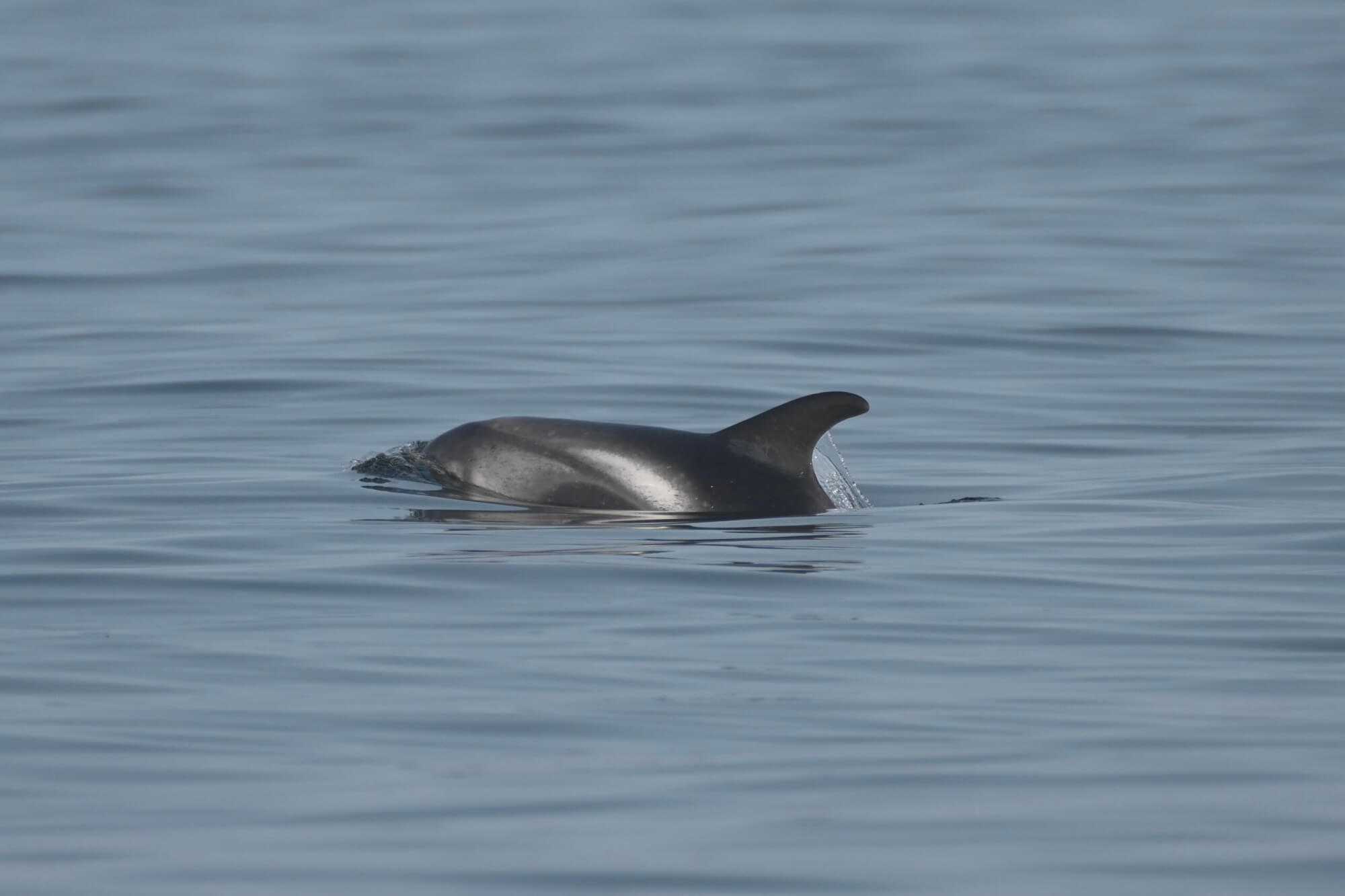
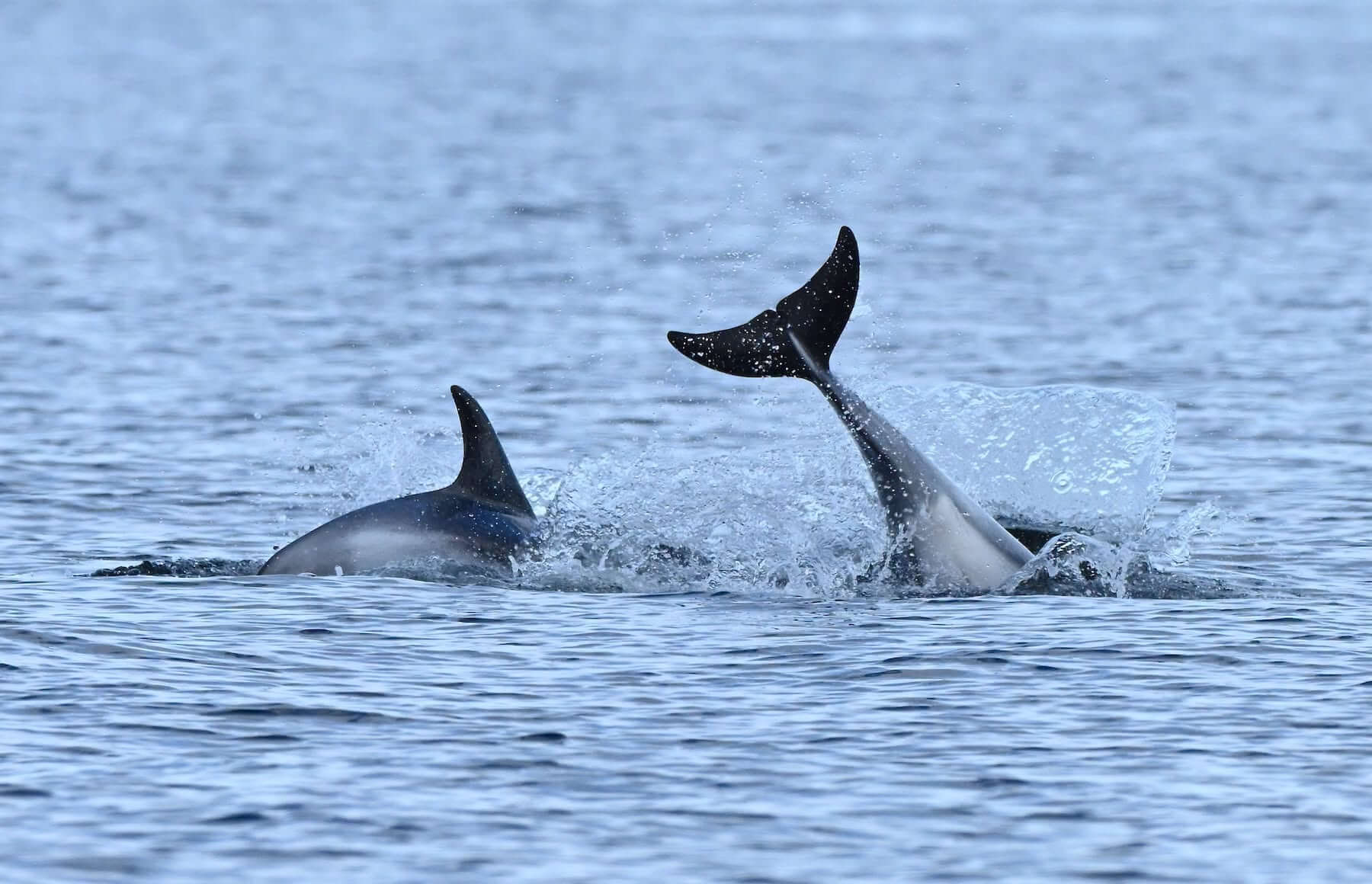
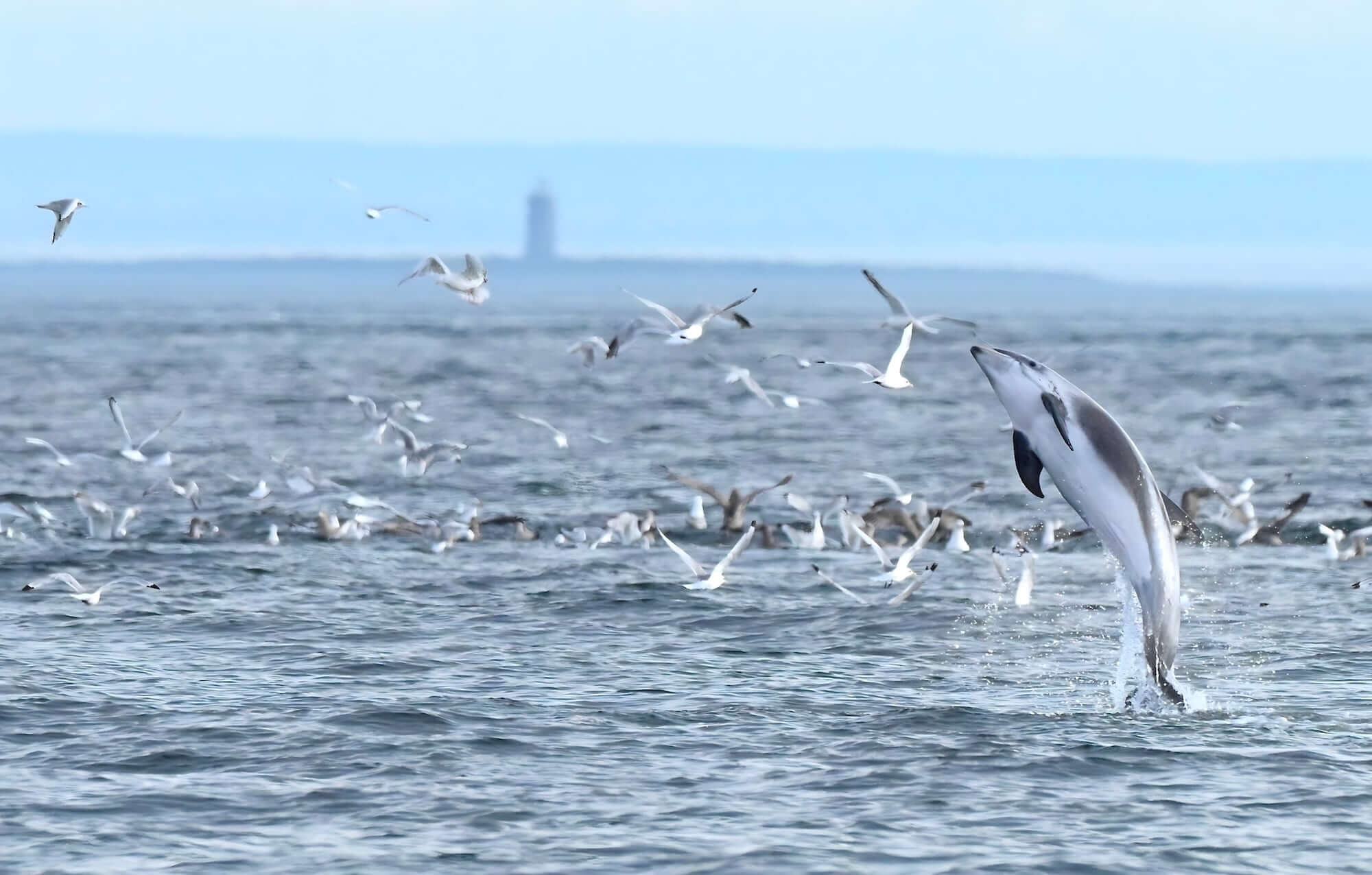
Large rorquals are still pouring into the St. Lawrence Estuary, particularly between Les Escoumins and Longue-Rive. A flurry of activity has been reported among several marine mammals, which appear to be taking advantage of abundant food resources to fill their bellies before the eventual arrival of leaner times. Exuberant white-beaked dolphins continue to turn heads, putting on a spectacular show with their leaps and other acrobatics.
Comings and goings in Franquelin
In fact, these lively cetaceans were spotted off the coast of Franquelin as recently as September 9; one of them even has a conspicuous notch in its dorsal fin. In the waters around Baie-Comeau and Franquelin, sharp-eyed observers have reported three or four humpbacks are seen coming and going between Godbout and Baie-Comeau, small groups of harbour porpoises, “cute little harbour seals,” as well as solitary grey seals and minke whales.
Return of right whales in Minganie
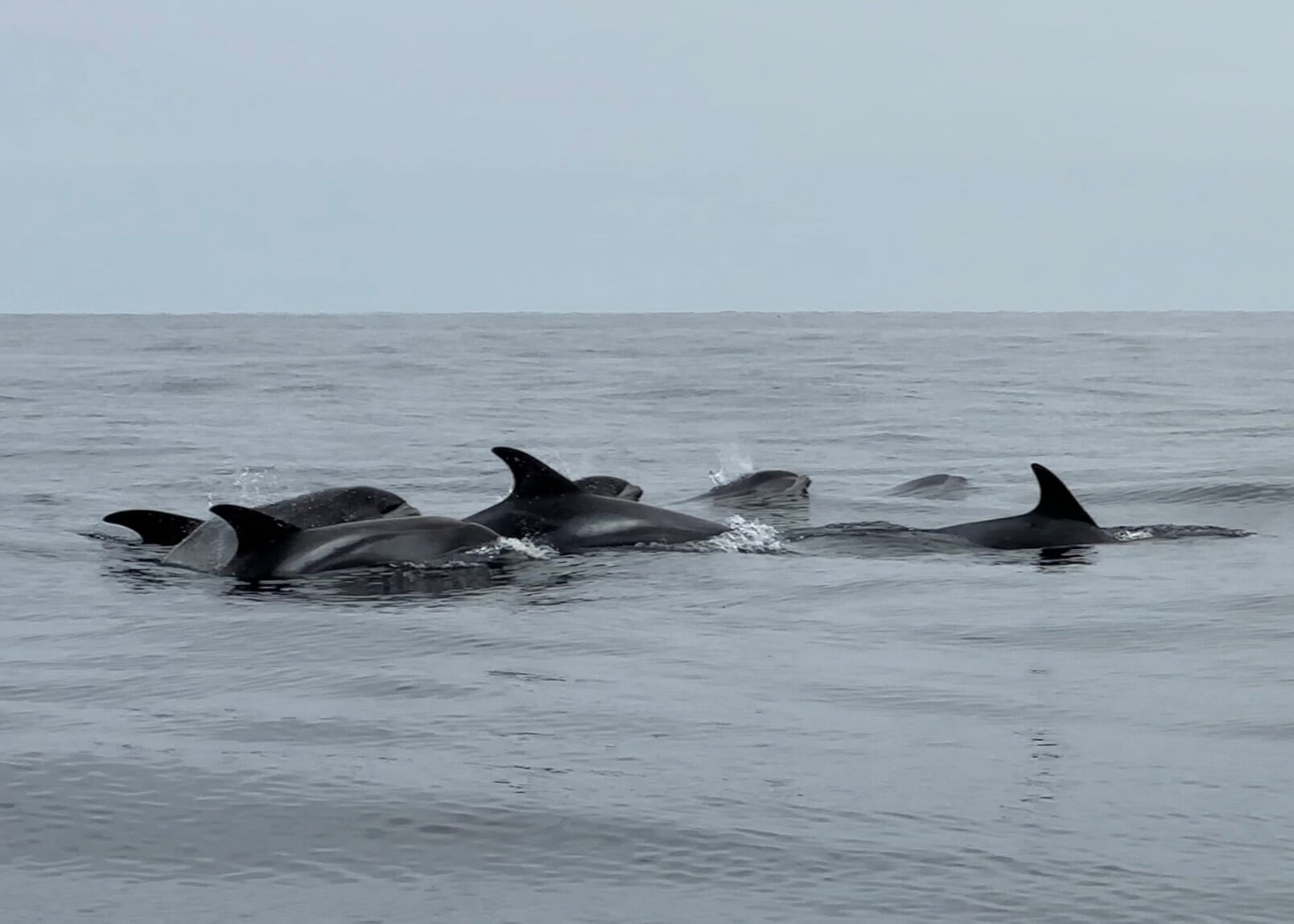
“Right whales are back this week!” reports an observer from the Mingan Island Cetacean Study (MICS). After a few weeks’ absence, the team spotted four North Atlantic right whales—Ellipsis, #3960, Dyad, and Calamari—on September 2, and another four in the Mingan sector on September 6: Lobster, Fenway, Tally, and #4720. Five fin whales were also seen, including Midget (285) and Curly (F002). The latter was actually “feeding in the same spot as about ten minkes.” A basking shark was also prowling the area. Several blue whales—including the female B260 who was without her calf—and four humpbacks were also spotted by biologists near Sept-Îles this week.
“Rock sausages” in the Gaspé
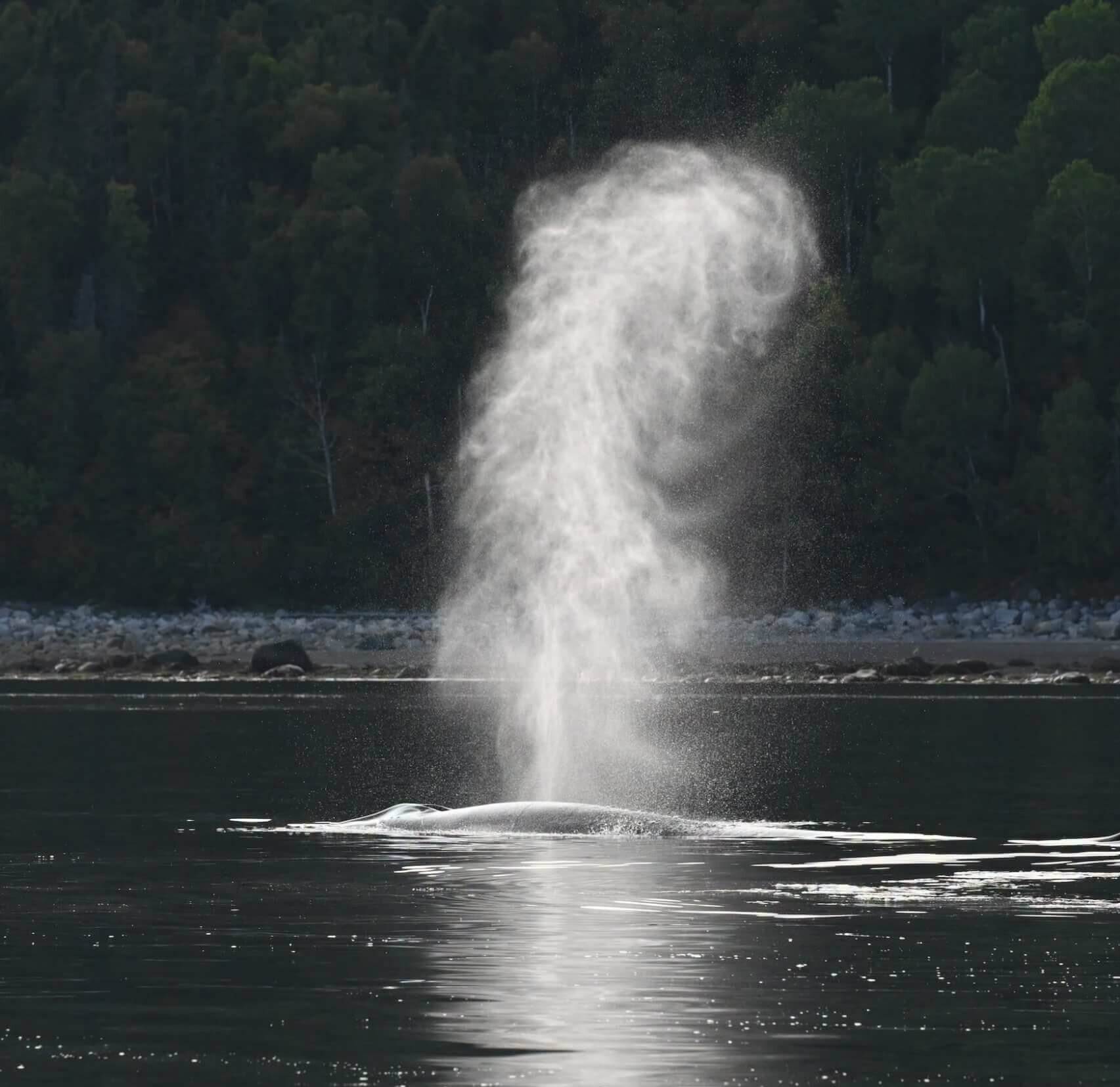
In Cap-Gaspé, the wind whipping across the water made it hard to spot blows or dorsal fins. “Aside from a few grey seals that I saw and heard, I didn’t come across any whales,” reports one observer, noting the “characteristic howls” of these large pinnipeds. She adds: “It’s always amusing to see people who don’t know that grey seals can make such sounds; they wonder what kind of animal it could be and even look a bit concerned.”
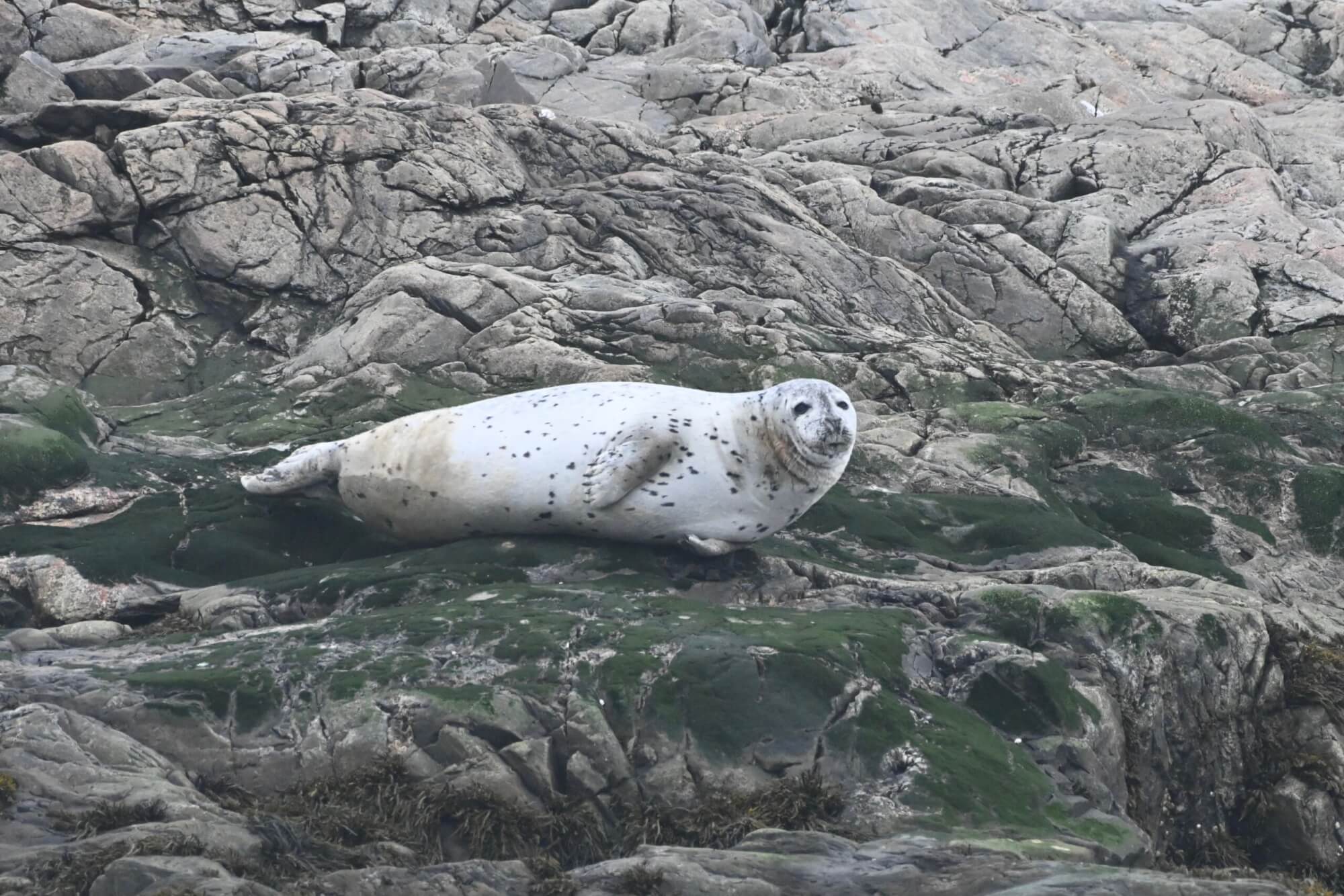
In Quebec, these mysterious howls can be heard for kilometres around, which explains why French speakers sometimes call grey seals loups marins (“sea wolves”), though in some regions this term is used for harbour seals. On Canada’s West Coast, harbour seals are referred to in the local jargon as “rock sausages” in allusion to the way they stretch out on the rocks for hours, while the Dutch nickname the species zeehondje: little sea dog.
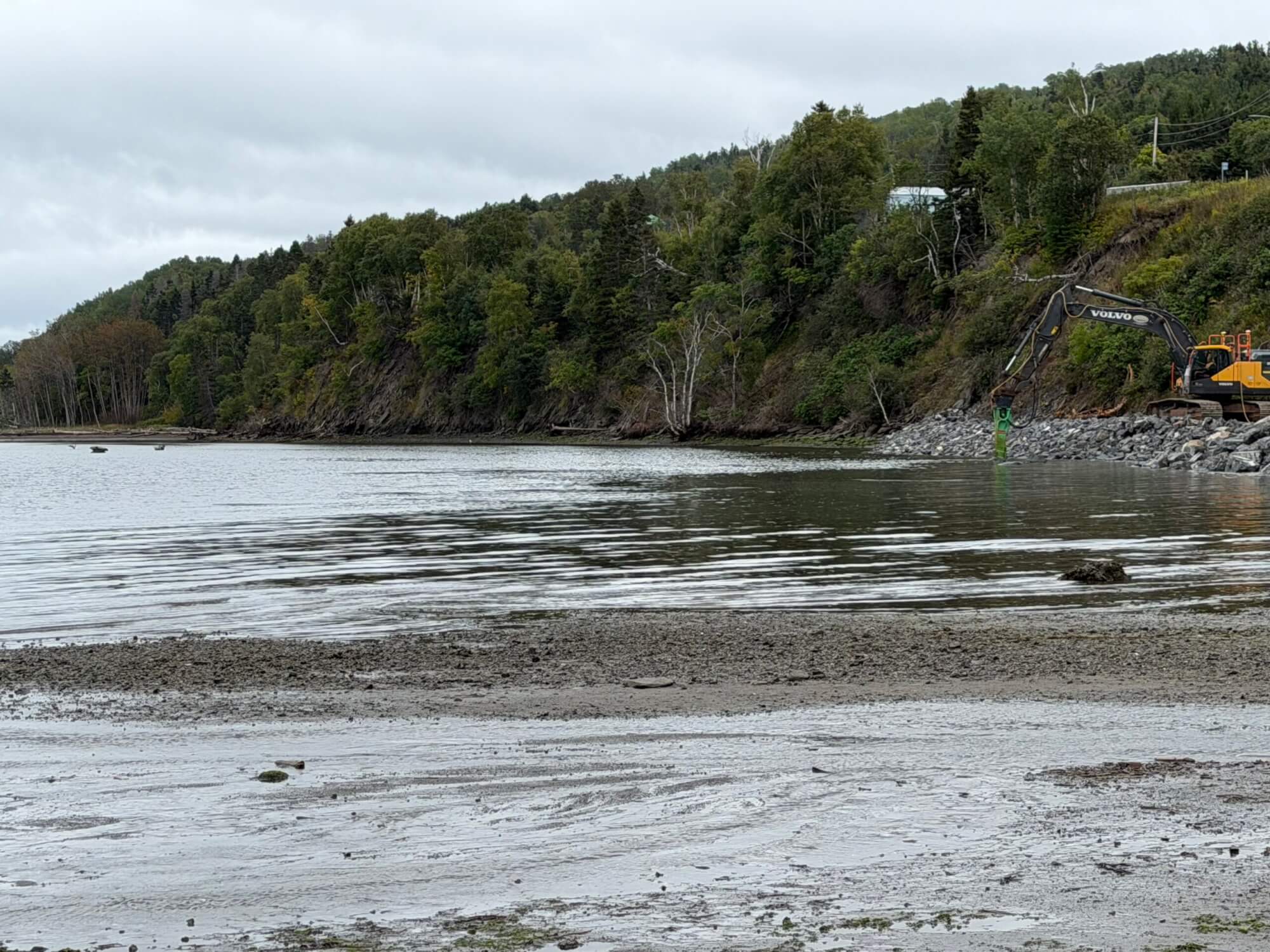
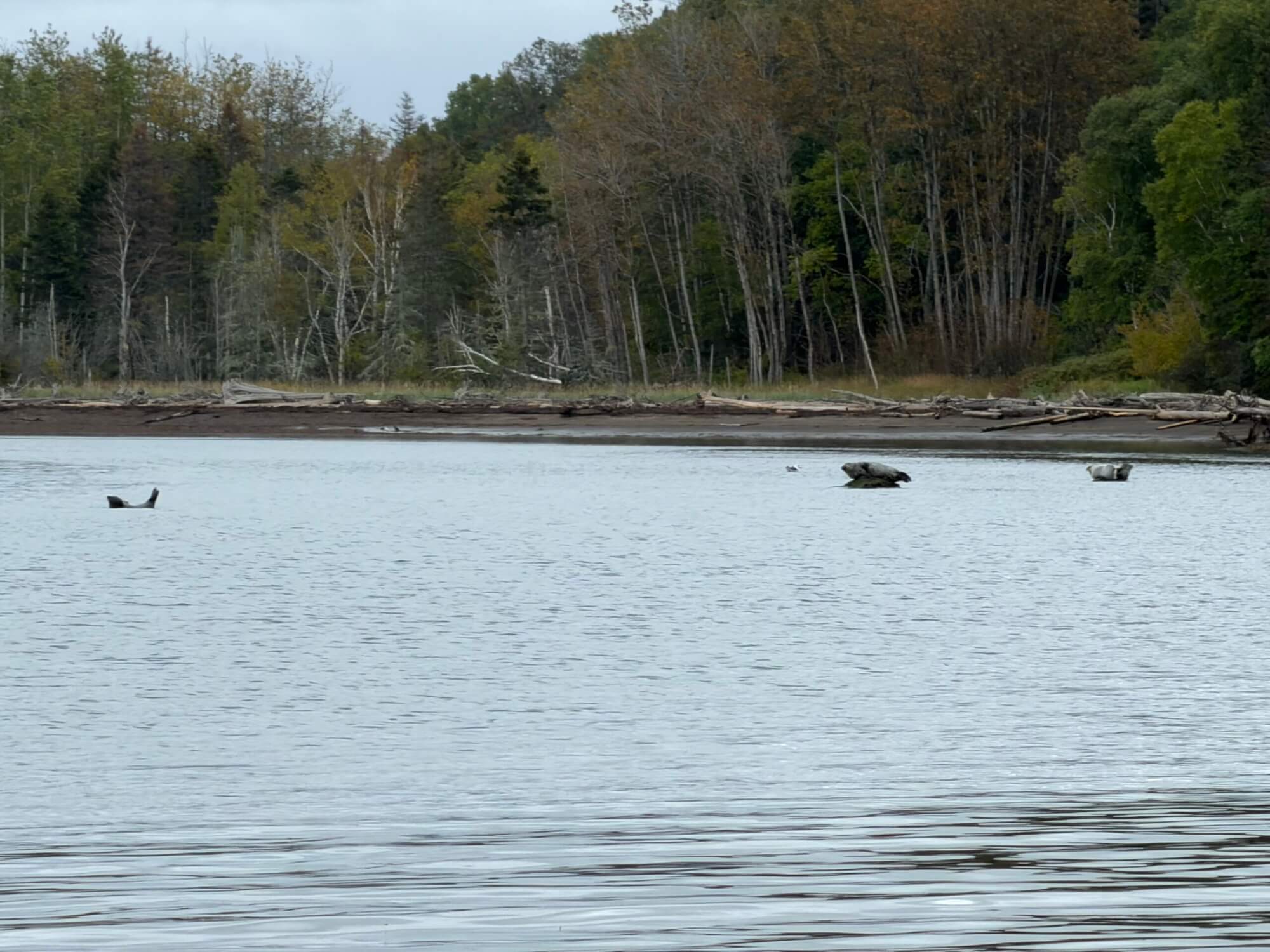
In L’Anse-aux-Cousins, these “sea dogs” are “supervising the construction work,” remarks an enthusiastic local. The pinnipeds don’t miss a chance to haul themselves onto the rocks, though they keep a close eye on the noisy backhoes on shore.
Rich diversity on the Upper North Shore
Cetaceans and pinnipeds have been feasting in the Saguenay–St. Lawrence Marine Park. Among the sightings that have become almost routine—yet remain extraordinary—a resident of Les Escoumins reports seeing a blue whale right “from the water’s edge [in front of her house] for over three hours […]! “This evening we also saw minke whales (including one that leaped right out of the water!), grey seals, a beluga, and fin whales.”
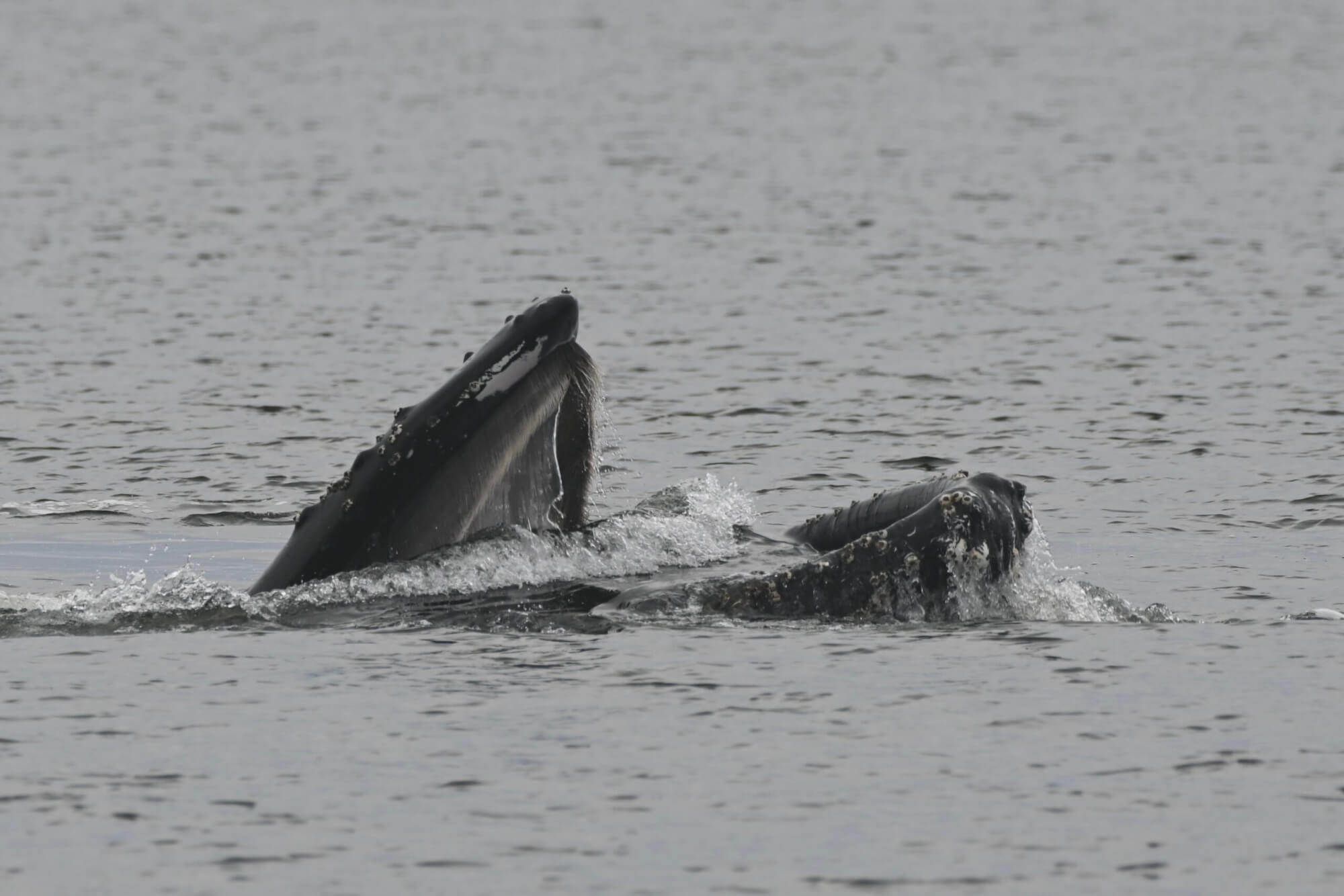
The sightings were as diverse as the behaviours exhibited by the marine mammals observed: repeated breaches, surface feeding, pectoral fin slapping, porpoising harbour porpoises on the hunt, a harbour seal leaping out of the water like a dolphin, and more. It was a true marine frenzy!
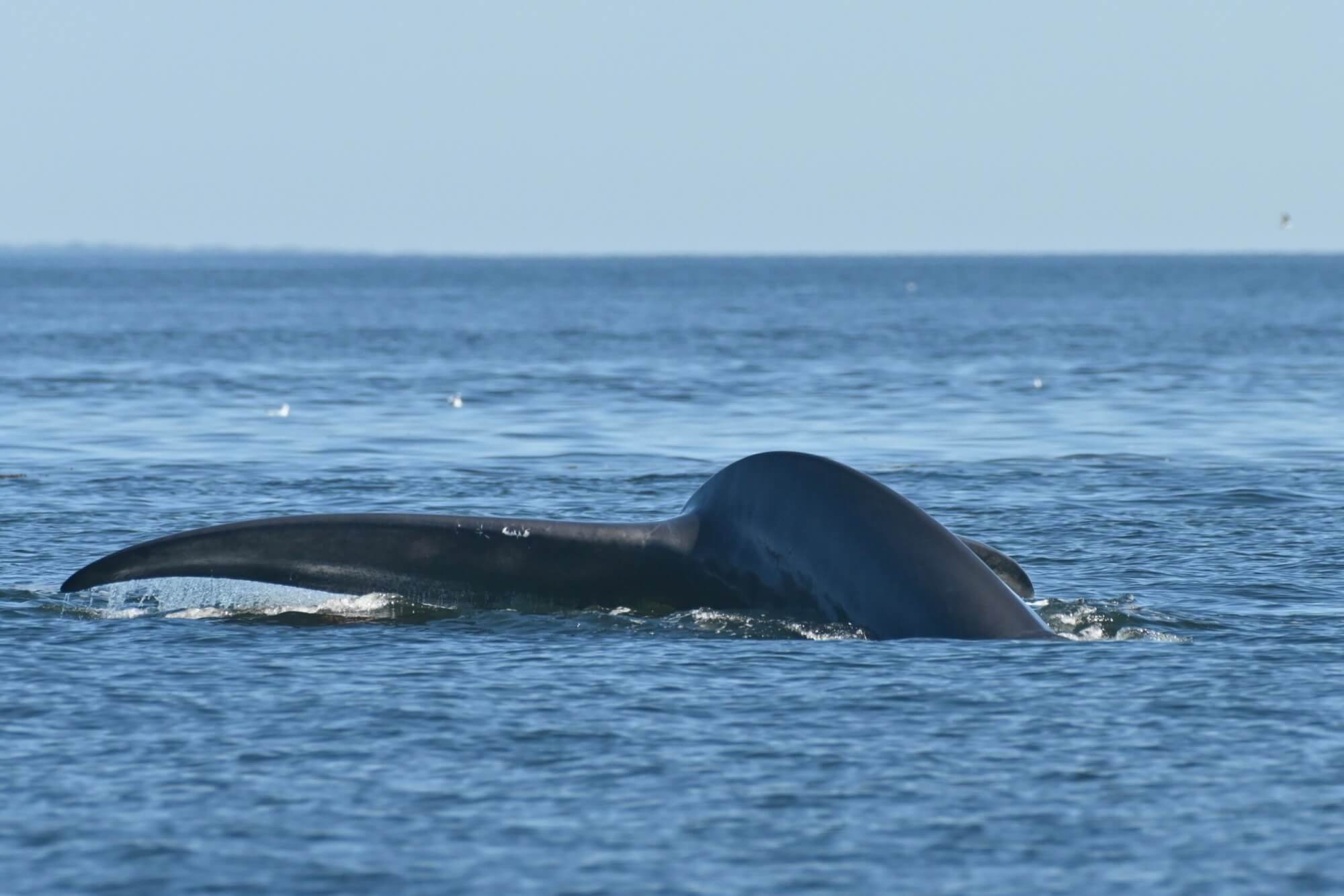
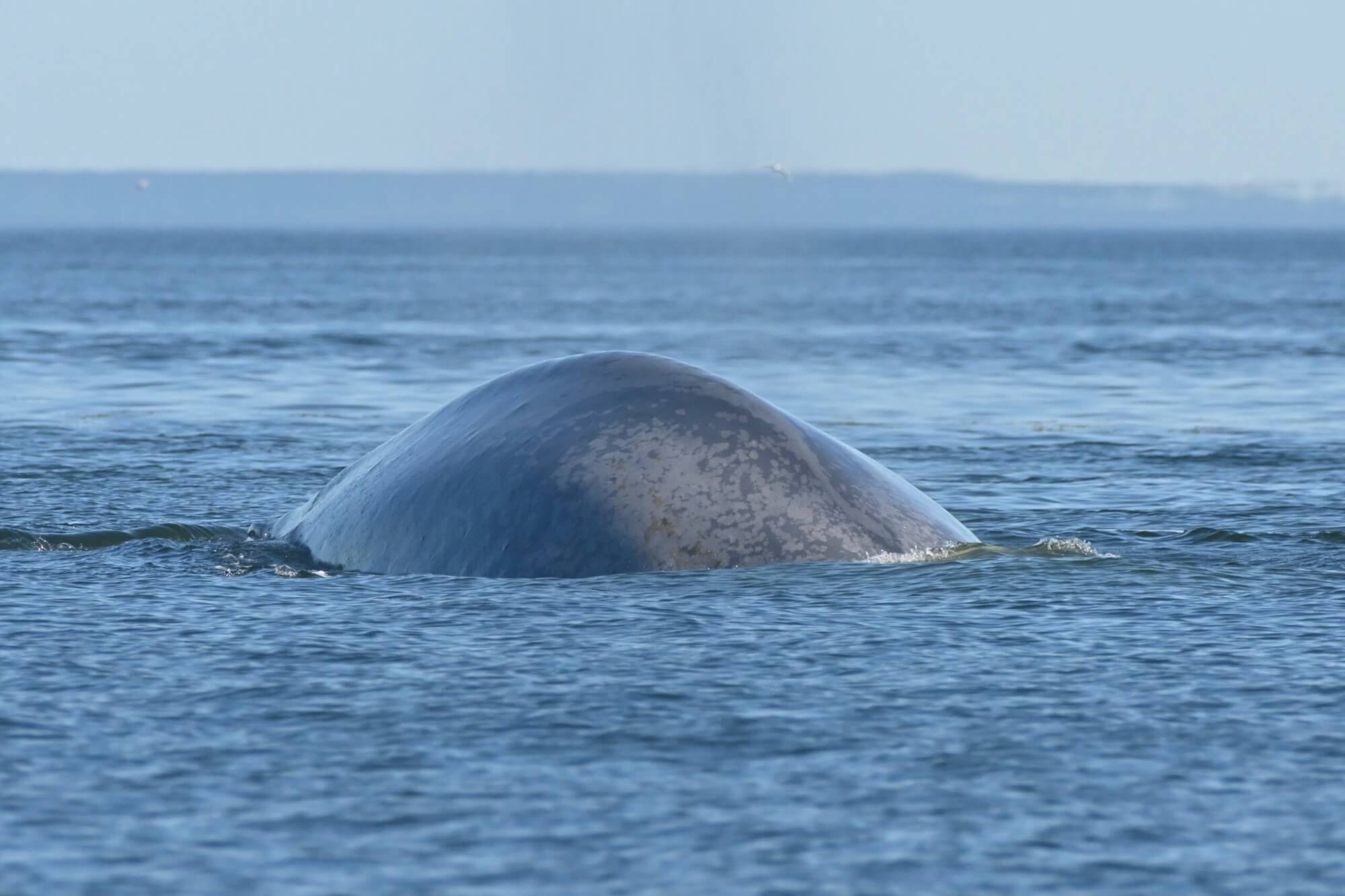
Two intrepid runners managed to spot the back of a blue whale from Les Escoumins. It was so long and massive that one of women initially mistook it for a boat. Generally reaching lengths of up to 27 metres, blue whales reveal only 10% of their body surface when they come up to breathe. However, compared to other rorquals, this species exposes more of its shoulders and blowhole area when it surfaces. At least four other giants were swimming in the area, including B246 (Jaw-Breaker) and B197 (Pleiades).
Mériscope reports having tallied 53 harbour porpoises, 22 belugas, and 30 grey seals during a single outing between Cap de Granite and Les Escoumins—in addition to four minke whales (including Ba266 a.k.a. “Jaseur”), two humpbacks, two fin whales, and a blue whale!
Calf nearby
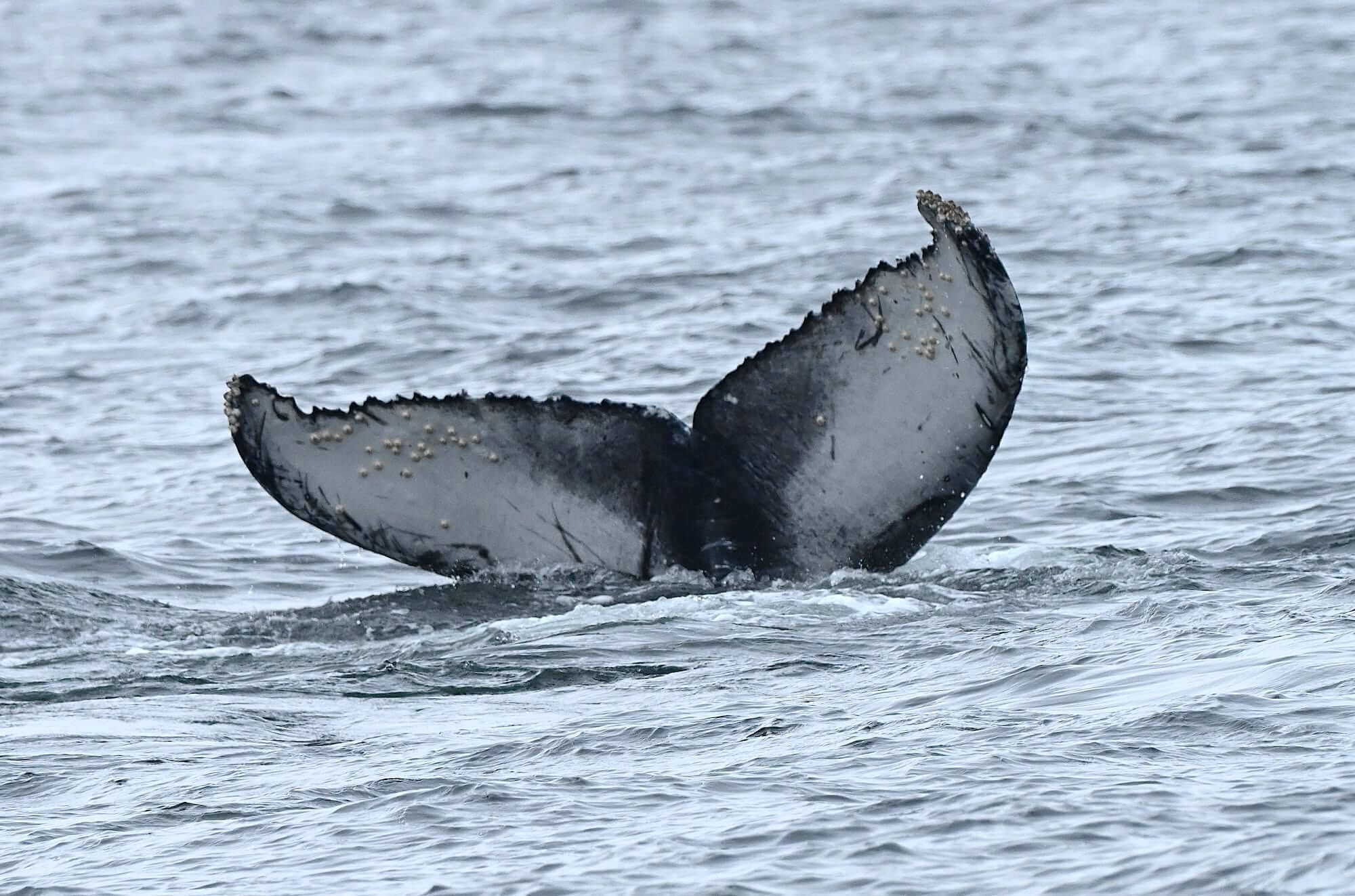
Not far from Baie des Anémones, the calf of humpback whale H590 (a.k.a. Piranha) was seen breaching “like crazy,” according to a North Shore resident. The calf is likely still nursing, as humpback calves can stay with their mothers for up to two years. A 2024 study notes that humpback calves produce low-frequency sounds while they’re nursing, including burps, barks, and snorts.
In Canada, marine mammal regulations prohibit observers from positioning themselves between a mother and her calf. Furthermore, a distance of 200 metres must be maintained from cetacean mother-calf pairs. It is essential to give the calf plenty of space to nurse and communicate with its mother until it is ultimately weaned and leaves her side. That 200-metre distance is equivalent to two football fields or 15 school buses!
White-beaked dolphins' vivaciousness

Do I know you?
A resident of Les Escoumins also recognized a harbour seal nicknamed “Oscar” on the shore, which is always faithful to its post in front of the same house: “I don’t see him every day, but he always winds up coming back. It’s worth noting that harbour seals are known to leave their haul-out sites for days at a time to hunt.” Seals can be recognized using photo-identification techniques based on the unique markings on their coats!
Où sont les baleines cette semaine? La carte des observations
Ces données ont été rapportées par notre réseau d’observatrices et observateurs. Elles donnent une idée de la présence des baleines et ne représentent pas du tout la répartition réelle des baleines dans le Saint-Laurent. À utiliser pour le plaisir!
Cliquez sur les icônes de baleine ou de phoque pour découvrir l’espèce, le nombre d’individus, des informations supplémentaires ou des photos de l’observation. Pour agrandir la carte, cliquez sur l’icône du coin supérieur droit. La carte fonctionne bien sur Chrome et Firefox, mais pas aussi bien sur Safari.
Pour faire apparaitre la liste des observations, cliquez sur l’icône du coin supérieur gauche.
Thanks to all our collaborators!
Special thanks go out to all our observers who share their love for marine mammals with us.
Your encounters with cetaceans and pinnipeds are always a pleasure to read and discover. On the water or from shore, it is your eyes that give life to this column.
- Béatrice Beaupré
- Odélie Brouillette
- Thalia Cohen Bacry
- Camille Desgaches
- Cédric Gascon
- Élorie Giguère
- Hélène Guitton
- Sara Gira Sol
- Andrea Mugny
- Jade-Audrey Lavergne
- Diane Ostiguy
- Sandrine Papias
- Karina Pegiel
- Renaud Pintiaux
- Pascal Pitre
- Guillaume Savard
- Andréanne Sylvain
- Marielle Vanasse
And to all the others!
Additionally, we would like to acknowledge the following teams that also share their sightings:
Sept-Îles Research and Education Centre (CERSI)
Group for Research and Education on Marine Mammals (GREMM)
Marine Mammal Observation Network (MMON)
Quebec Marine Mammal Emergency Response Network (QMMERN)
Mingan Island Cetacean Study (MICS)
Mériscope
Would you also like to share your observations? Have you seen any marine mammals in the St. Lawrence? Whether it’s a spout offshore or just a couple of seals, drop us a line and send your photos to [email protected]!
Recommended articles
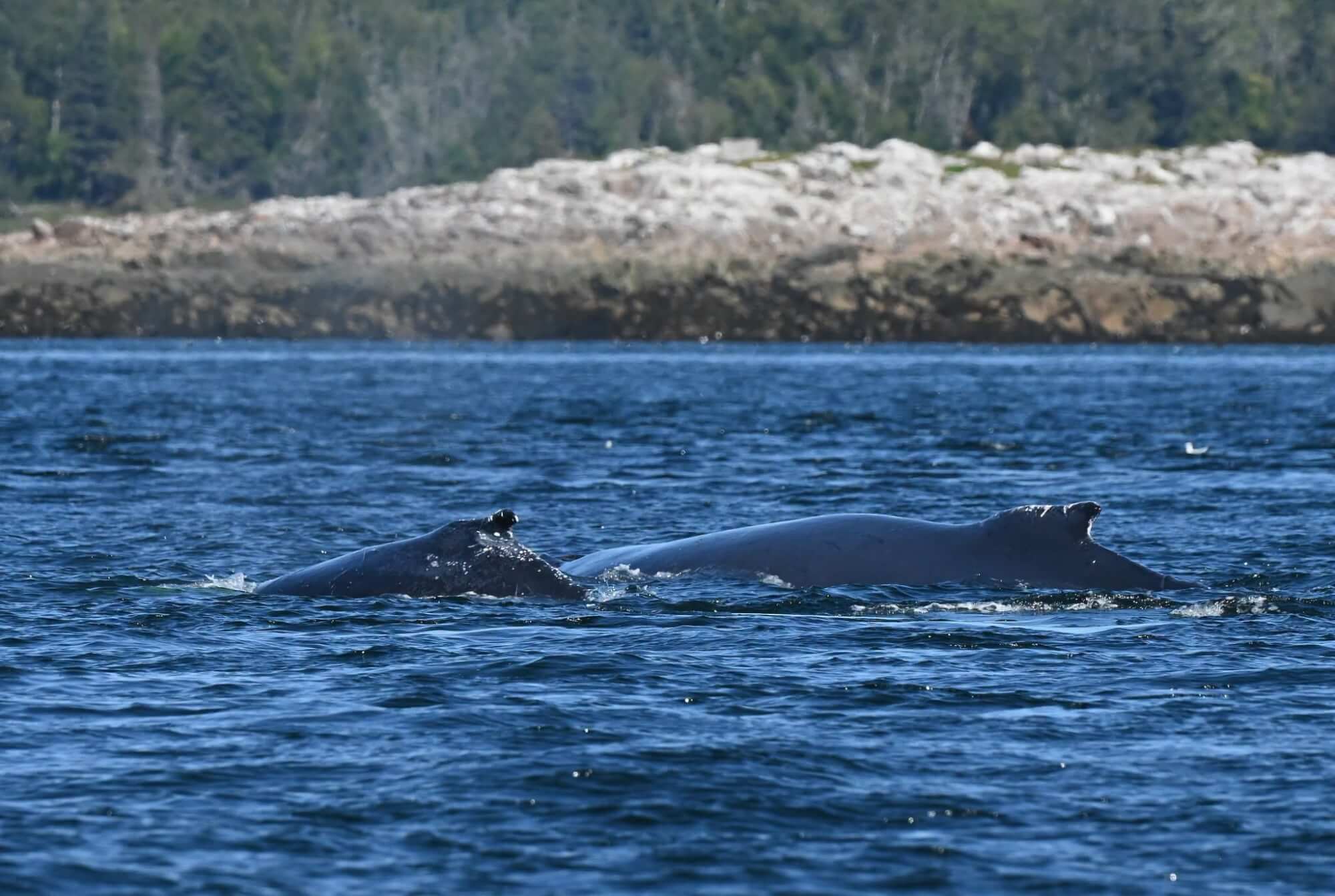
Mama Whales and Their Calves Roam the St. Lawrence
It would hardly be an exaggeration to say that the St. Lawrence has been teeming with life these past few…
Chance Encounters in the Estuary
The undisputed stars this past week were white-beaked dolphins, which reminds us of the importance of being in the right…
Feeding Scenes, Chevrons and Pigmentation Patterns
As new arrivals continue to show up across the St. Lawrence, visitors flock to admire the landscapes and wildlife, while…