
Porpoising and Disproportionate Blows

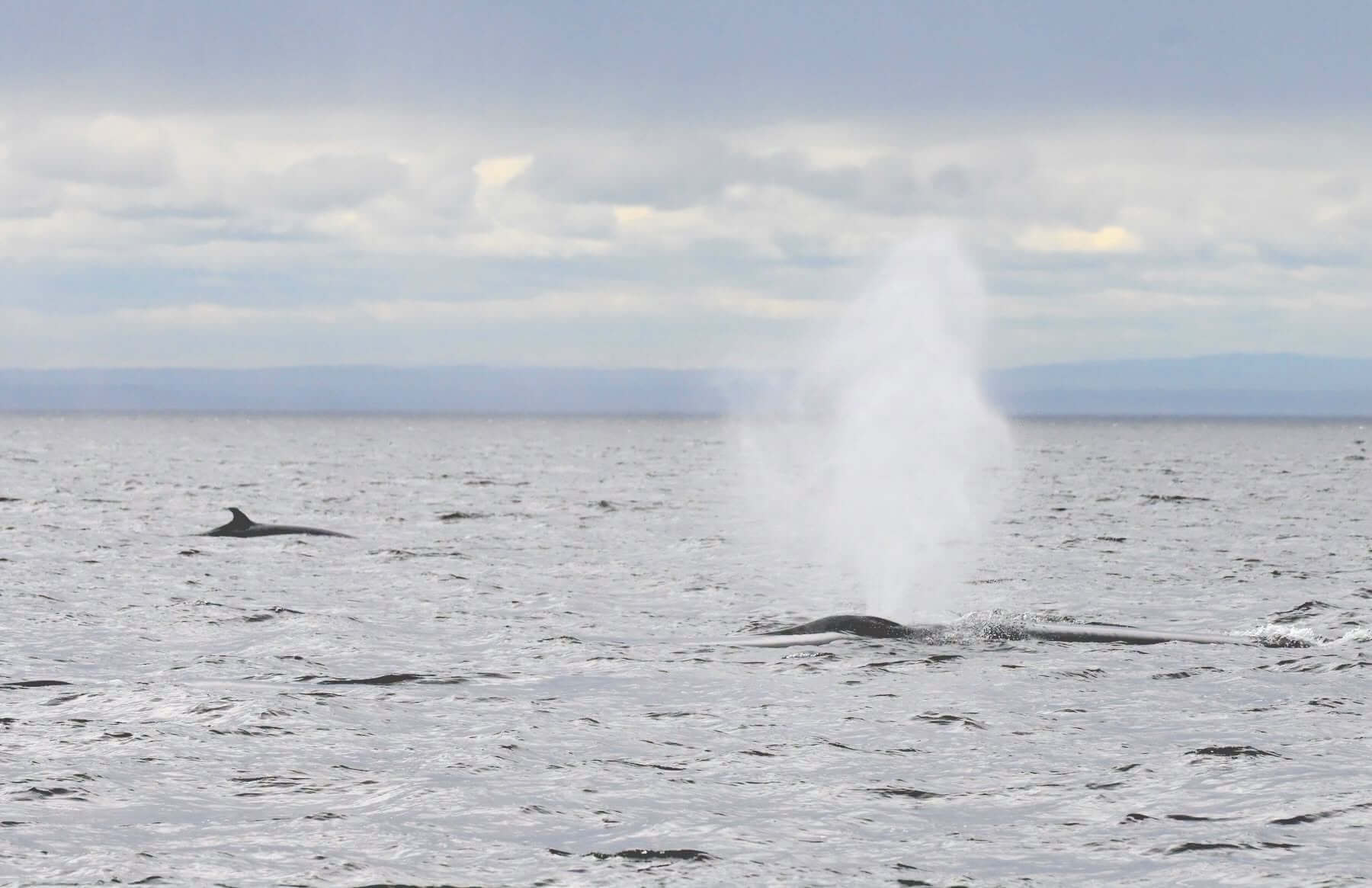
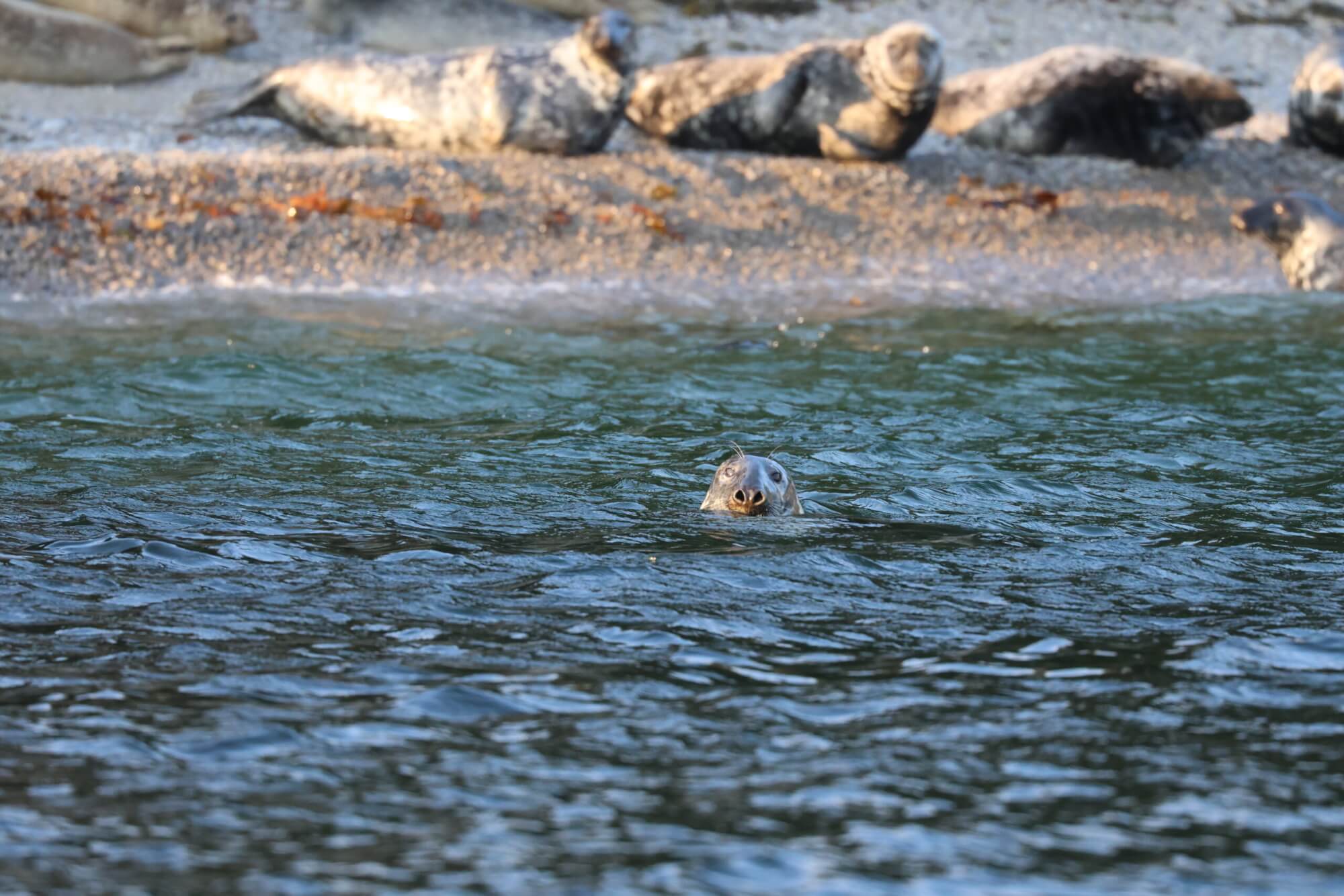
Atlantic white-sided dolphins made their first appearance of the season in the Gaspé Peninsula, while the black backs of large groups of harbour porpoises were also observed at numerous locations. Blue, fin, minke and humpback whales continue to frequent the St. Lawrence from the Gulf to the Estuary, not to mention the curious heads of grey and harbour seals poking above the water surface or resting on shore and the harbour porpoises stealthily porpoising in the waves.
First dolphins of the season
Off the coast of Grande-Grave, Atlantic white-sided dolphins were observed on the morning of July 25. Recognizable by their sickle-shaped dorsal fin, these dolphins generally show up in the Gulf in the spring or fall. Their presence off the Gaspé Peninsula is also well documented in the summer and autumn. On the surface, these individuals can be seen in small, compact formations swimming at top speeds of 25 to 45 km/h!
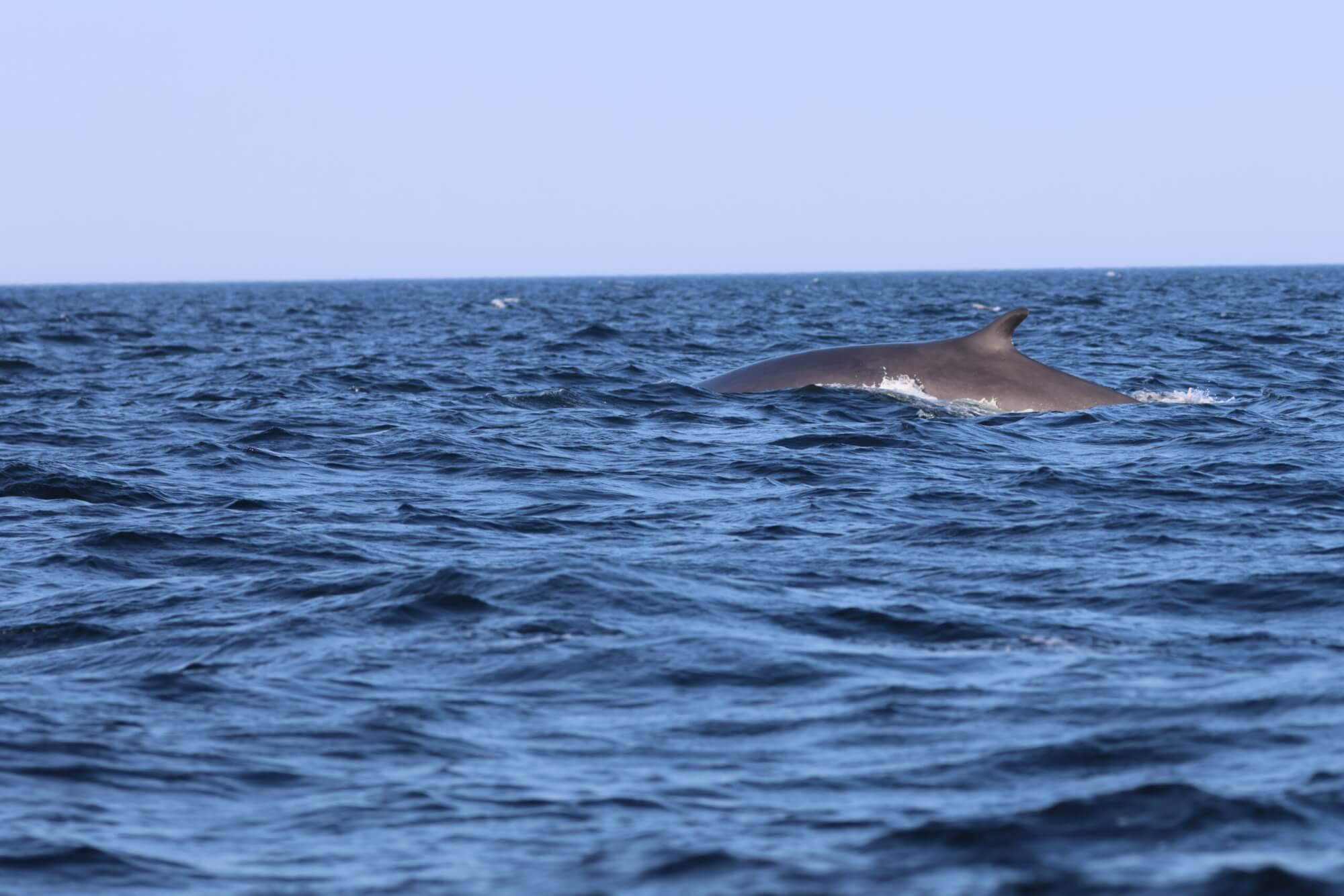
That same day near Cap-à-la-Baleine, an amateur cetologist spotted four blue whales and two fin whales through the mist. Another whale enthusiast based in Cap-aux-Os also observed these two species in the same sector: “It’s not every day you get to see the two largest whales at the same time,” she points out. A few humpbacks were also swimming nearby, as was a minke whale.
Harbour seals were spotted near Cap-des-Rosiers.
According to one observer, a basking shark was observed about a kilometre off the coast of Rivière-à-Claude. Great white sharks were also reported from several locations in the Gulf of St. Lawrence and off the Gaspé Peninsula. The uptick in sightings could be attributable to a rebound in the species’ numbers or simply better record keeping, according to the St. Lawrence Shark Observatory in an article published by Radio-Canada.
Porpoises in the spotlight
“Porpoise sightings are on the upswing,” notes a boater from Baie-Comeau. “Solitary grey seals are still present in increasing numbers, plus a number of smaller individuals have been observed,” she adds. Two fin whales were spotted near Franquelin, while minke whales and belugas were seen off the coast of Baie-Comeau.
“In the large bay near Sept-Îles at low tide around 9 a.m., at least fifteen seals—probably harbour, but really too far away to be sure—were resting all over the place,” mentions a resident of Gallix. Nearly 200 harbour porpoises were also spotted in the same area by the Sept-Îles Education and Research Centre (CERSI). Four blue whales and five fin whales complete the picture.
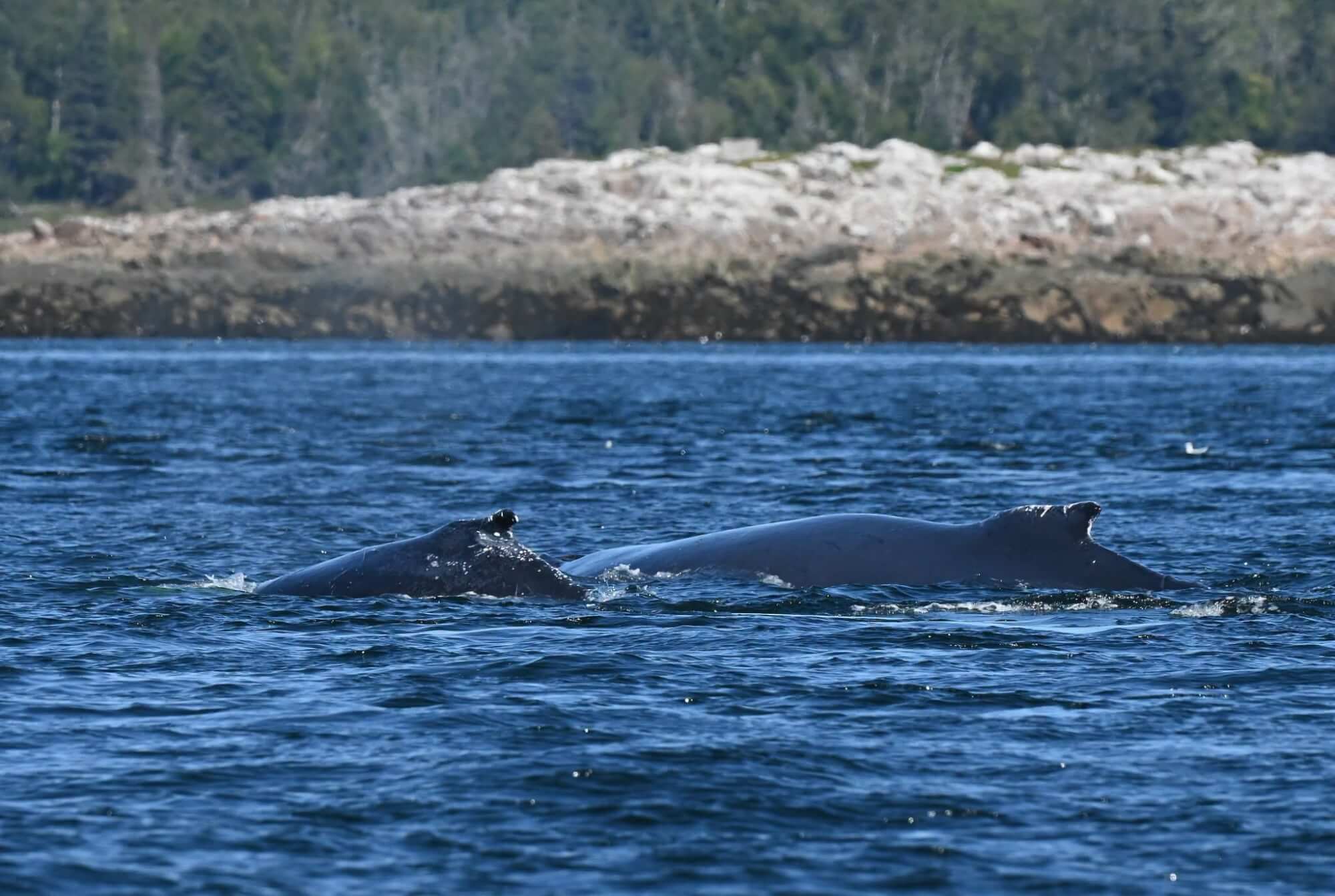
The Mingan Island Cetacean Study (MICS) reports the presence of two mother-calf pairs of humpbacks. The new mothers are Hunter (H461) and Lazy Zhu (H731), who were first documented in 2001 and 2008, respectively. Humpback whale calves are born between January and March, and are nursed for 5 to 10 months. A young whale may stay with its mother for up to a year, or sometimes even two! This is the longest-lasting maternal bond in any species of baleen whale.
Rorquals on the horizon
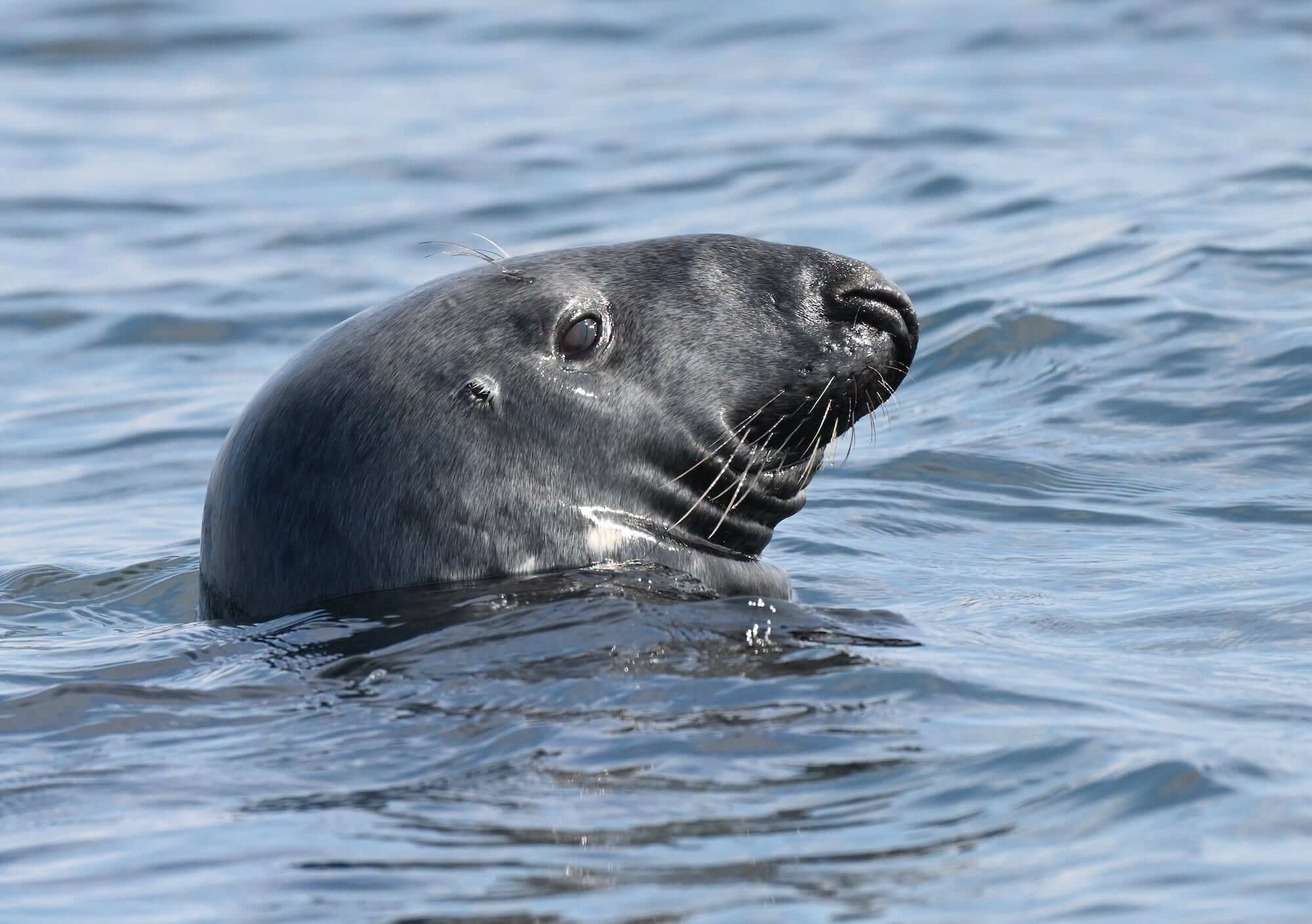
“We were impressed by the size and calmness of the animal,” exclaim a couple of dazzled first-time visitors to Tadoussac in reference to a minke whale at the mouth of the Saguenay Fjord. Also spotted in the minutes that followed were a female beluga with her grey calf, as well as a grey seal and a harbour seal.
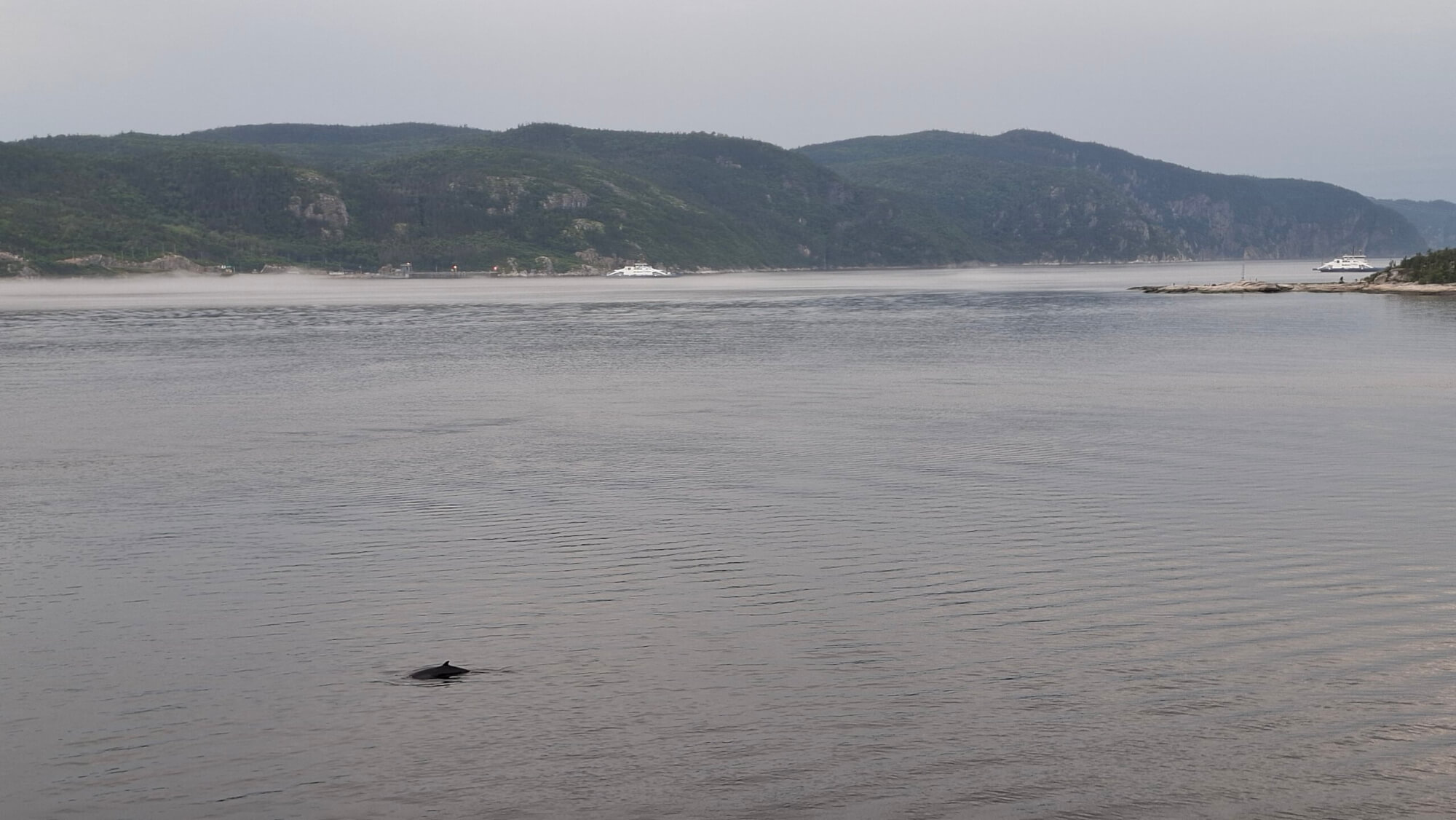
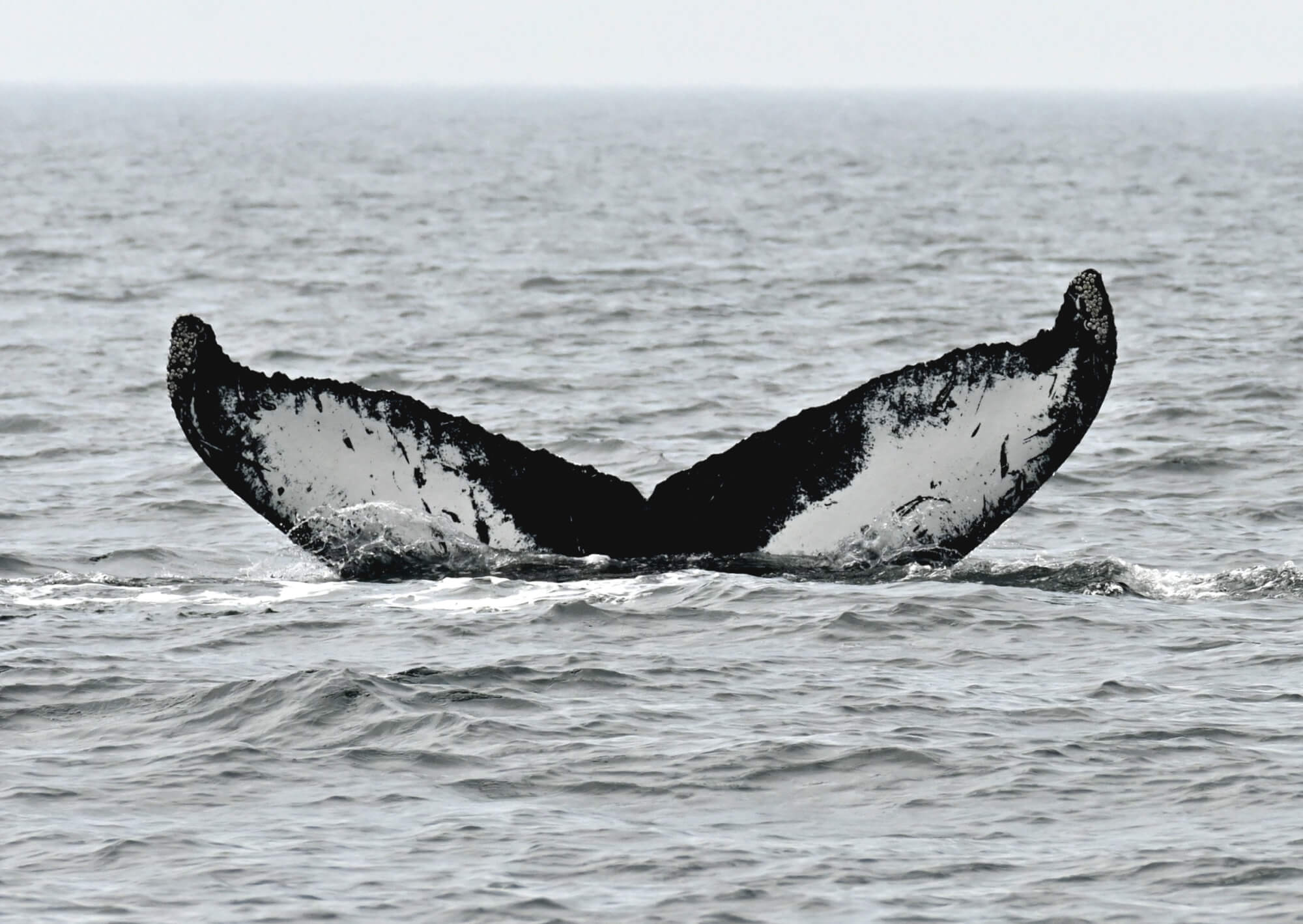
A naturalist and wildlife photographer remarks, “Beautiful days on the River come and go, but no two days are ever the same.” Which individuals will be observed today? Humpback whales Katana (H944) and Gaspar (H626)? Or perhaps a group of seven fin whales, including Orion (Bp017)? For one marine mammal enthusiast, it’s the return of humpback whale H929 (a.k.a. Éline) to the Marine Park that has captured her attention: “Despite the distance, I could see quite a bit of white under its tail and thought it might be Gaspar. Later, when I saw the dorsal fin, I realized it clearly wasn’t Gaspar, but rather Éline.” Last week, Éline was seen off the coast of Baie-Comeau. She certainly covered a lot of ground in such a short time!
As for the world’s largest animal, at least four individuals were spotted between Les Bergeronnes and Tadoussac: the female blue whale Chameau (B103), B489, and the female B260 with her calf. As for smaller cetaceans, about ten minke whales and a hundred belugas were reported in the Estuary. Harbour porpoises have also been stealing the show. A local even spotted a mother with her calf, as well as a fin whale, a humpback, and belugas. “What could possibly top that?” she concludes.
Where are the whales this week? Sightings map
These data were reported by our network of observers. They give an idea of the presence of whales and in no way represent the actual distribution of whales in the St. Lawrence. Just for fun!
Click on the whale or seal icons to discover the species, the number of individuals, additional information or photos of the sighting. To enlarge the map, click on the icon in the top right-hand corner. The map works well on Chrome and Firefox, but not so well on Safari.
To display the list of sightings, click on the icon in the top left-hand corner.
Thanks to all our collaborators!
Special thanks go out to all our observers who share their love for marine mammals with us.
Your encounters with cetaceans and pinnipeds are always a pleasure to read and discover. On the water or from shore, it is your eyes that give life to this column.
- Croisières Baie de Gaspé
- Odélie Brouillette
- Marie-Andrée Charlebois
- Thalia Cohen Bacry
- Sophie Dalbec
- Laetitia Desbordes
- Diane Ostiguy
- Sandrine Papias
- Renaud Pintiaux
- Pascal Pitre
- Sébastien et Elsie Rivière-Moureu
- René Roy
- Guillaume Savard
- Andréanne Sylvain
- Marielle Vanasse
And to all the others!
Additionally, we would like to acknowledge the following teams that also share their sightings:
Centre d’éducation et de recherche de Sept-Îles (CERSI)
Station de recherche des Îles Mingan (MICS)
Réseau d’observation des mammifères marins (ROMM)
Réseau québécois d’urgences pour les mammifères marins (RQUMM)
Groupe de recherche et d’éducation sur les mammifères marins (GREMM)
Mériscope
Would you also like to share your observations? Have you seen any marine mammals in the St. Lawrence? Whether it’s a spout offshore or just a couple of seals, drop us a line and send your photos to [email protected]!

Odélie Brouillette
Odélie Brouillette joined the GREMM team as a writer and naturalist in 2022, and has been a project manager in scientific communication since 2023. With a background in biology, she loves learning and sharing with others what's most important to her. She has always been fascinated by marine environments and whales, and hopes to contribute to their protection through awareness-raising and popularization.
Recommended articles
Côte-Nord: Prime Location for Autumn Whale Watching
Across Quebec, fall has truly arrived, as evidenced by the turning leaves and the arrival of certain marine mammal species…
Strong Winds, Big Whales
Despite the strong winds, fog, and plummeting air temperatures, marine animals of all kinds continue to roam the St. Lawrence.…
Mama Whales and Their Calves Roam the St. Lawrence
It would hardly be an exaggeration to say that the St. Lawrence has been teeming with life these past few…