
Shimmering Blows and Colourful Flanks

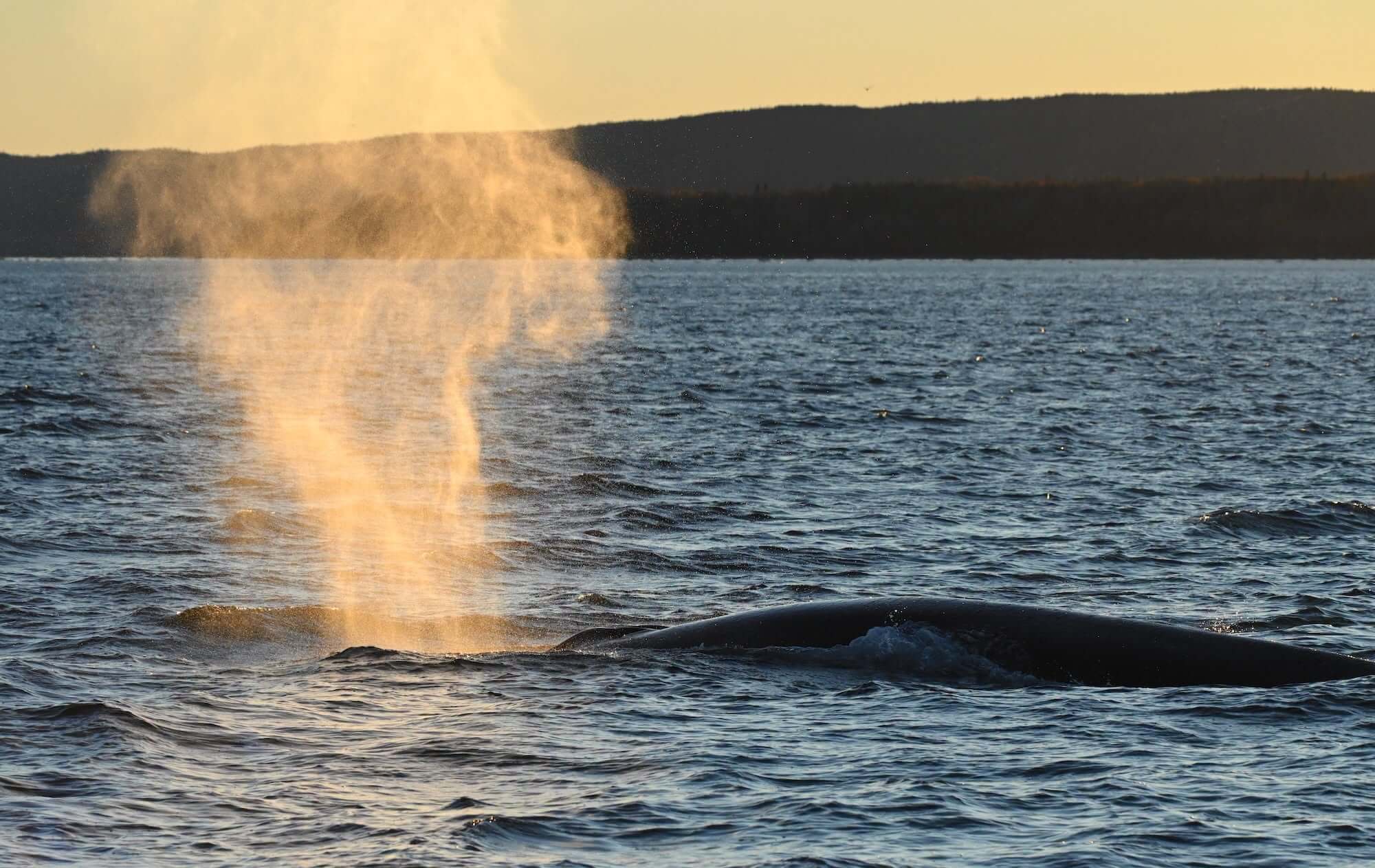
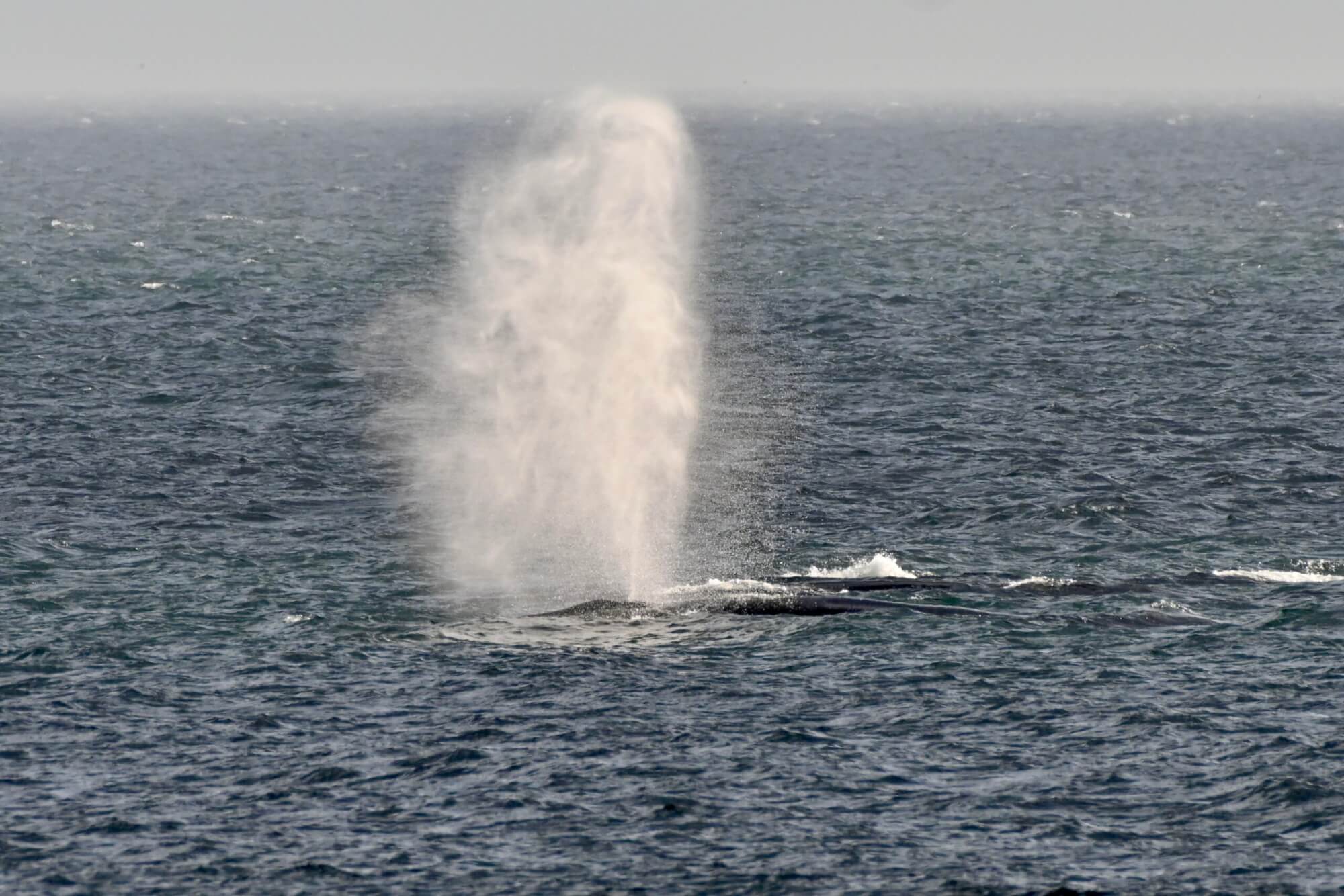
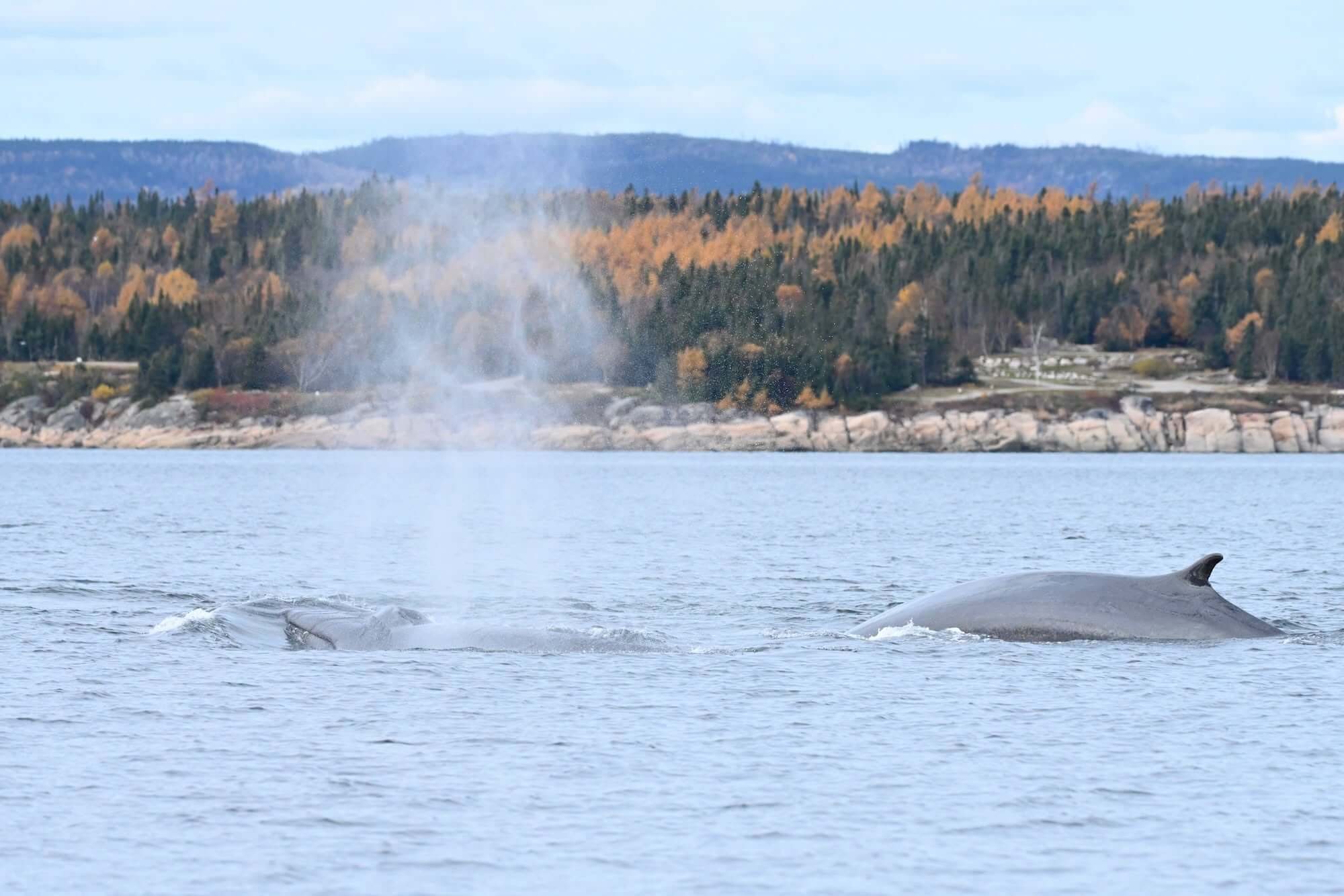
In the soft October light and lingering morning chill, I spot a plume of mist rising beyond the bay in Les Escoumins. A few seconds pass, and the plume of condensation forms again. Finally, a dark back and a small dorsal fin emerge. Fin whale! This week, these giants are sharing the waters with white-beaked dolphins, minke whales, and belugas—not to mention humpback whales and seals along the shore. Even though November is right around the corner, the St. Lawrence is still teeming with life!
Seal stories
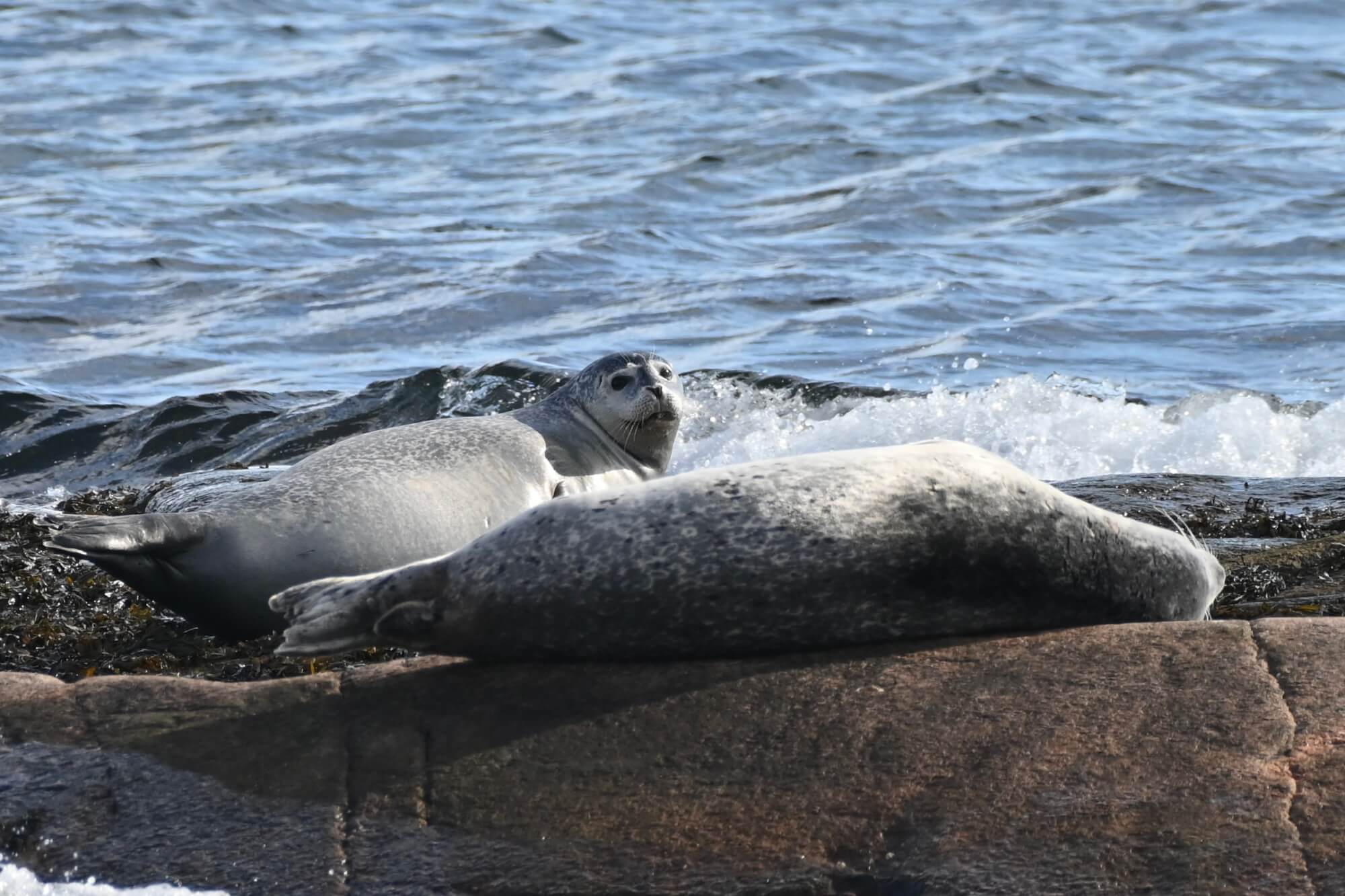
“Faithful to its favourite rock, a harbour seal spent part of the week there—showing up on Saturday, Sunday, Tuesday, and again today! Although I often see it jump back into the water, I’d love to catch the moment it first hauls out!” shares a resident of Baie-Comeau. How do seals manage to climb onto shore and get around on dry land?Gin whale’
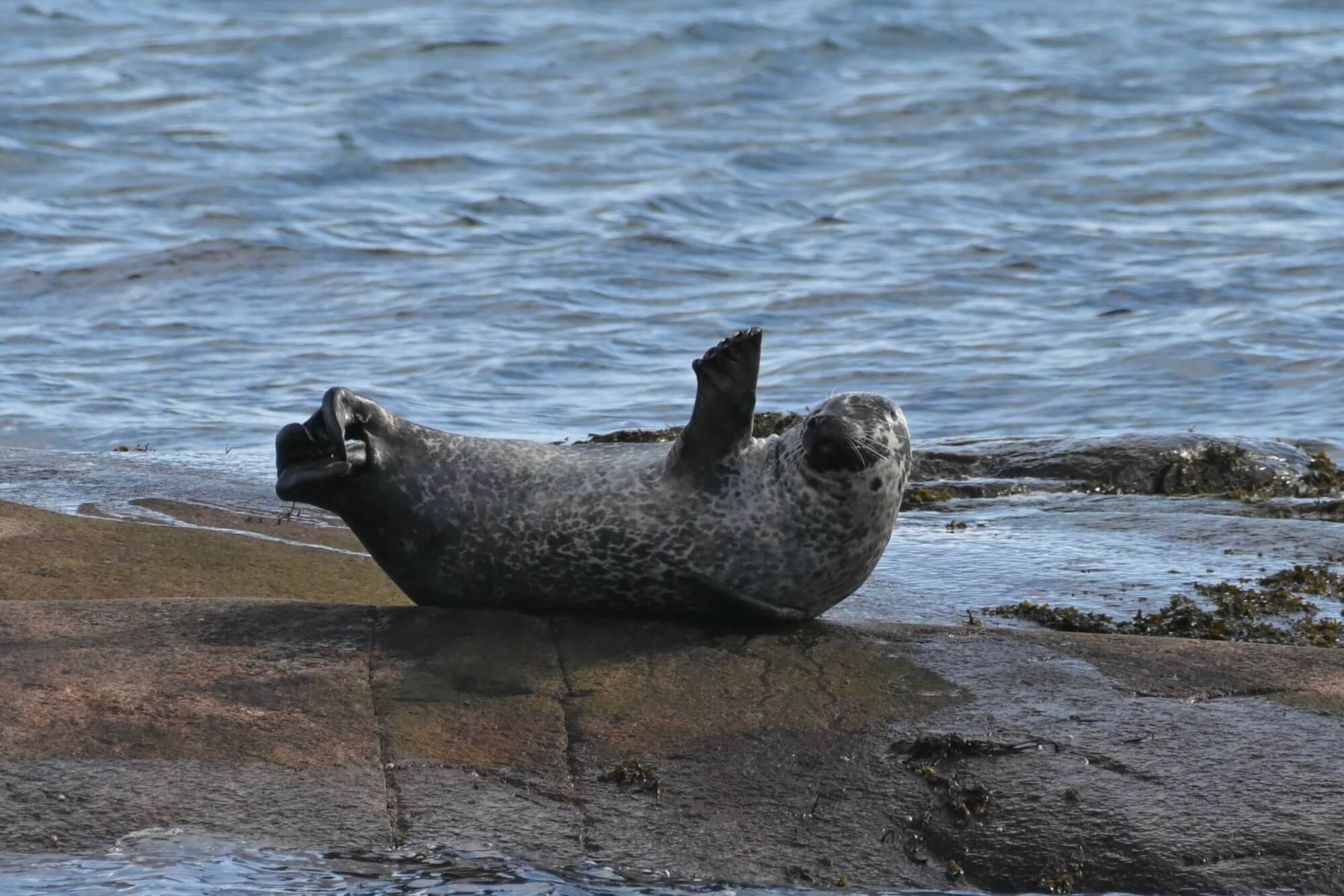
While they’re far more agile in the water, seals occasionally need to come ashore, for example to rest or to give birth to their pups. To move about, they crawl on their bellies by undulating their whole body. Unlike sea lions—which, over the course of evolution, have retained the ability to move on land using all four of their limbs—seals cannot, due to the small size of their front and hind flippers. That’s why they look so clumsy when they’re not in the water!
A harbour seal was also spotted near Saint-Irénée, poking its little rounded head above the water surface. Near L’Anse-aux-Cousins in the Gaspé Peninsula, pinnipeds can still be seen along the coastline, according to one observer. In Les Escoumins, harbour seals also delighted a patient naturalist who was watching from shore.
Rorquals of all sizes here and there
“On Saturday morning, we saw two minke whales in front of our house in Cap-aux-Os, one of which was quite close to shore. Later, while out for a stroll toward Cap Gaspé in Forillon, we spotted two more minkes,” reports a local resident. Near Baie-Comeau, this smallest of the rorquals was also observed by a cetacean enthusiast. On Wednesday, yet another minke whale was seen in front of the Marine Mammal Interpretation Centre in Tadoussac; it was still there the following day.
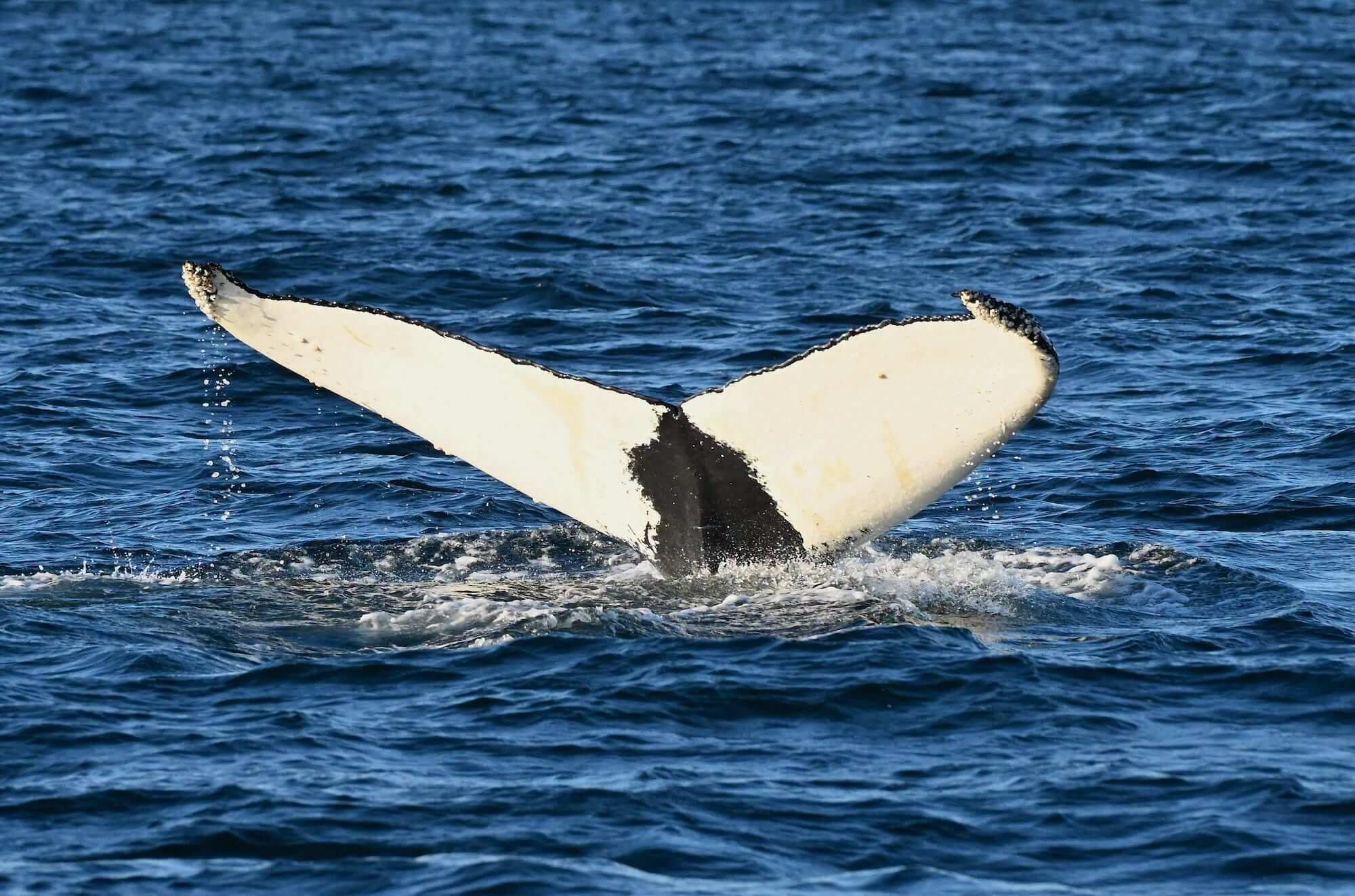
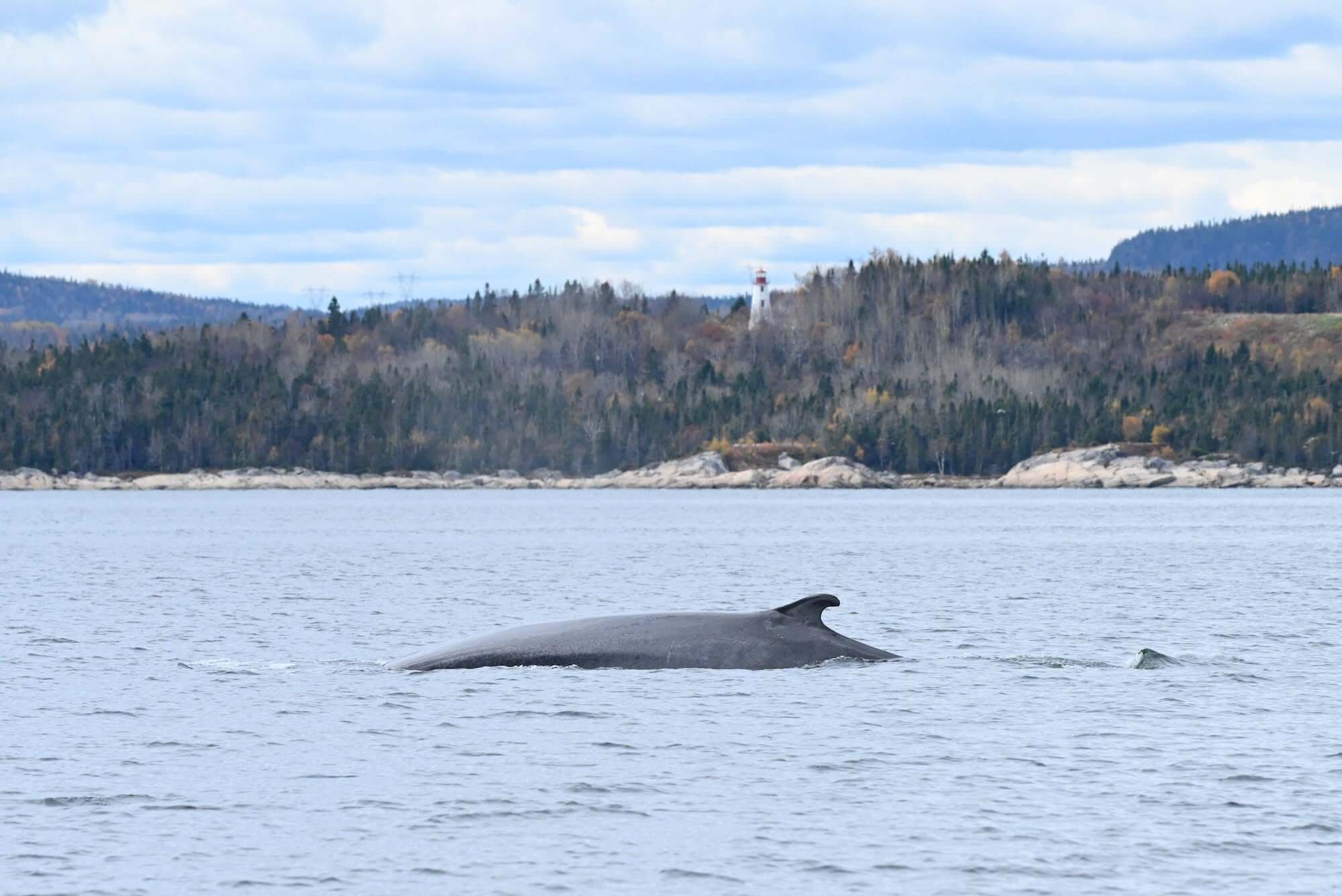
Near Les Bergeronnes and Les Escoumins, the impressive blows of fin whales were observed, as were the tail flukes of not one, not two, but three humpbacks! Several of these individuals were identified, including H929 and H919, as well as fin whales Ti-Croche, Trou and Zipper.
On a different note, we’ve gotten wind of some exciting news in recent weeks: Ti-Croche is a female! Until very recently, her sex was unknown; it was confirmed by scientists through the analysis of a small sample of skin and blubber called a biopsy, which was collected from the animal in the fall of 2025 by a team from Fisheries and Oceans Canada. Perhaps we’ll see her with a calf in the coming years? Fin whales typically reach sexual maturity between 8 and 12 years old. Calving takes place between November and January, followed by a nursing period of about 6-7 months. Since Ti-Croche is 17 years old, we’ll be keeping close watch! Ti-Croche herself was first spotted in the Estuary back in 2009, alongside her famous mother, Capitaine Crochet.
Near Cap Gaspé, large spouts were also noted by a seasoned observer: “They were too far away to identify the species with certainty, but the medium-sized, somewhat balloon-shaped blow looked typical for a humpback. Hopefully this marks the start of an exciting November.”
A frenzy of dolphins, porpoises, and belugas
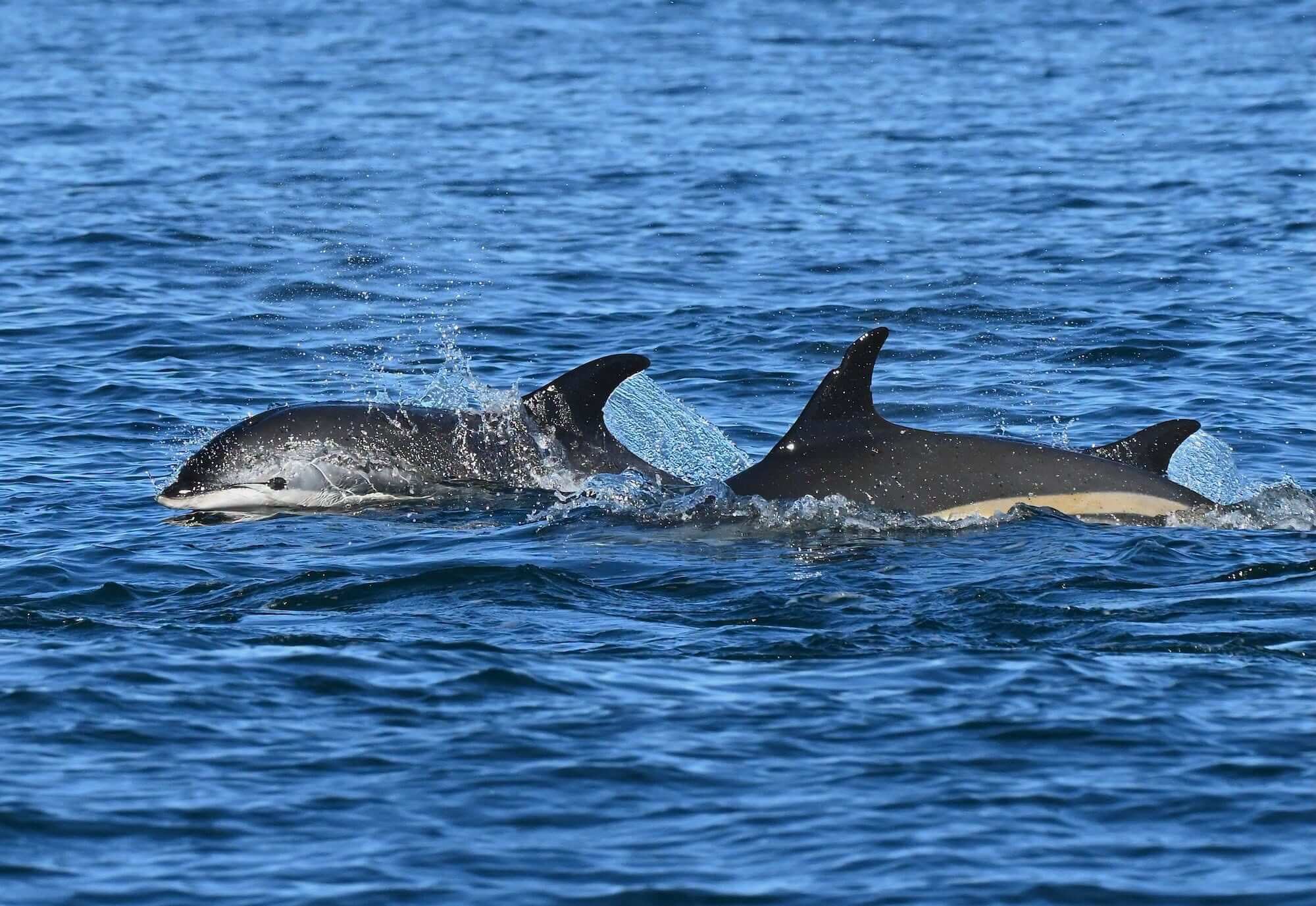
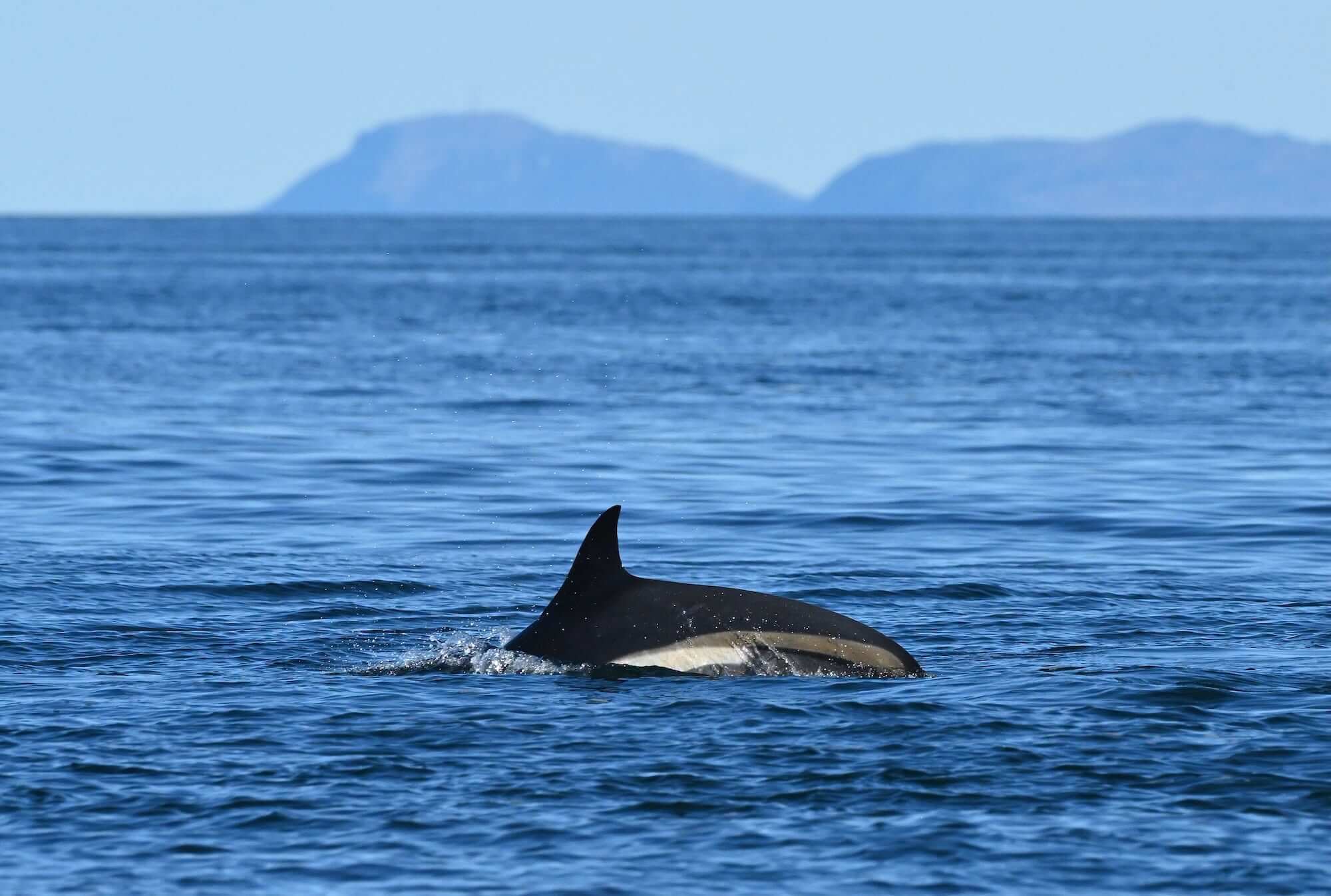
Belugas have been passing by the shores of Les Bergeronnes, while harbour porpoises were observed near Gaspé. Meanwhile, a dozen or so Atlantic white-sided dolphins have been spotted in the Saguenay–St. Lawrence Marine Park over the past few days. “Sometimes calm, sometimes foraging,” notes a naturalist and wildlife photographer. He even reports seeing the dolphins interacting with belugas! Atlantic white-sided dolphins—commonly seen in the St. Lawrence in the fall—can be distinguished from white-beaked dolphins primarily by the colour pattern of their flanks; despite their name, the flanks of the Atlantic white-sided dolphin are actually marked by a bold yellow stripe.
Whenever I’m on the road, I always cast a glance toward the St. Lawrence whenever I have the chance. This time of year, its waters are home to an astonishing diversity of marine mammals!
Where are the whales this week? Sightings map
These data were reported by our network of observers. They give an idea of the presence of whales and in no way represent the actual distribution of whales in the St. Lawrence. Just for fun!
Click on the whale or seal icons to discover the species, the number of individuals, additional information or photos of the sighting. To enlarge the map, click on the icon in the top right-hand corner. The map works well on Chrome and Firefox, but not so well on Safari.
To display the list of sightings, click on the icon in the top left-hand corner.
Thanks to all our collaborators!
Special thanks go out to all our observers who share their love for marine mammals with us.
Your encounters with cetaceans and pinnipeds are always a pleasure to read and discover. On the water or from shore, it is your eyes that give life to this column.
- Marie-Andrée Charlebois
- Thalia Cohen Bacry
- Laetitia Desbordes
- Diane Ostiguy
- Sandrine Papias
- Renaud Pintiaux
- Pascal Pitre
- Guillaume Savard
- Andréanne Sylvain
- Marielle Vanasse
And to all the others!
Additionally, we would like to acknowledge the following teams that also share their sightings:
Sept-Îles Research and Education Centre (CERSI)
Group for Research and Education on Marine Mammals (GREMM)
Marine Mammal Observation Network (MMON)
Quebec Marine Mammal Emergency Response Network (QMMERN)
Mingan Island Cetacean Study (MICS)
Mériscope
Would you also like to share your observations? Have you seen any marine mammals in the St. Lawrence? Whether it’s a spout offshore or just a couple of seals, drop us a line and send your photos to [email protected]!

Odélie Brouillette
Odélie Brouillette joined the GREMM team as a writer and naturalist in 2022, and has been a project manager in scientific communication since 2023. With a background in biology, she loves learning and sharing with others what's most important to her. She has always been fascinated by marine environments and whales, and hopes to contribute to their protection through awareness-raising and popularization.
Recommended articles
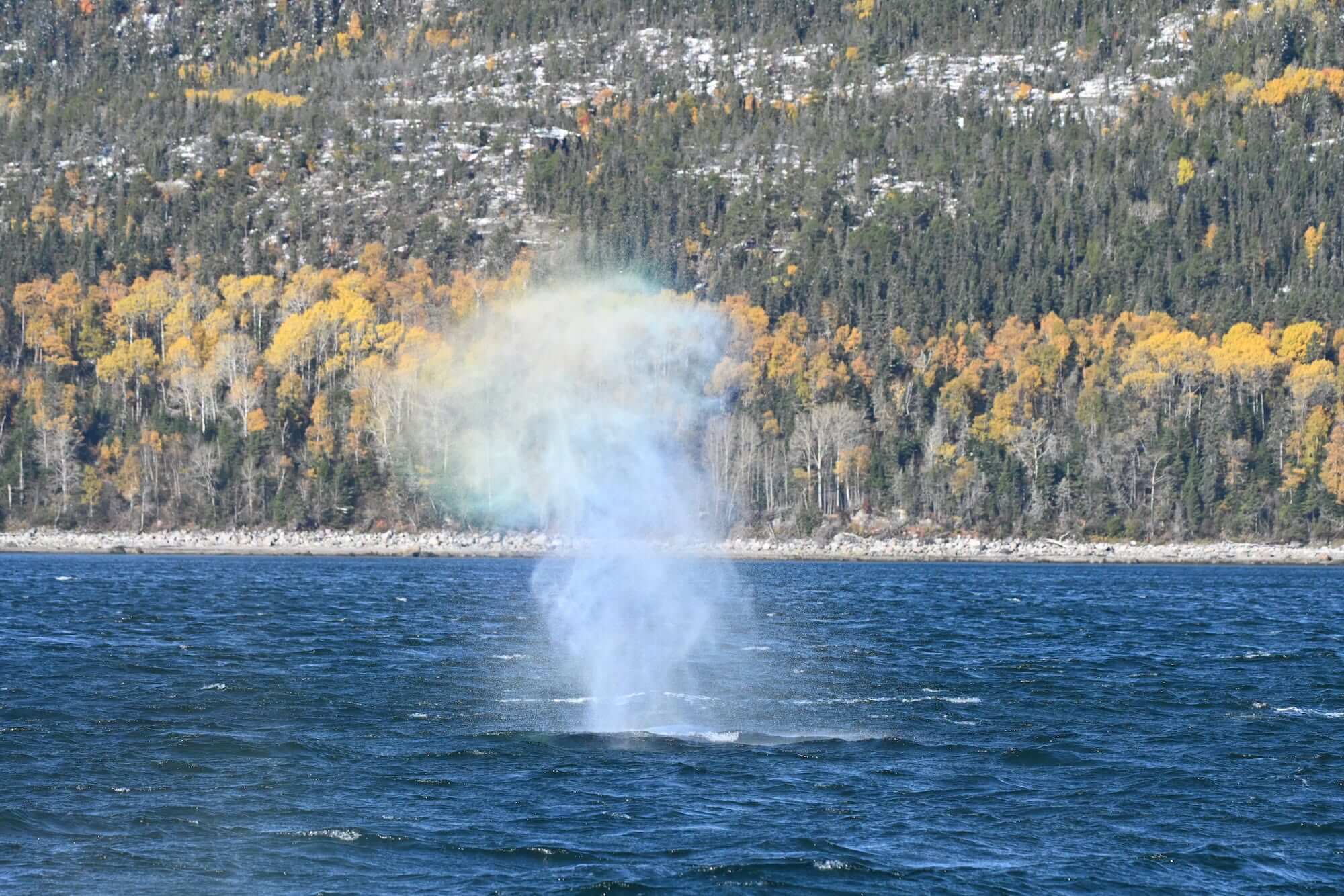
October Enchantment
Last Friday, the sky and the sea danced, as the misty breaths of whales mingled here and there with the…
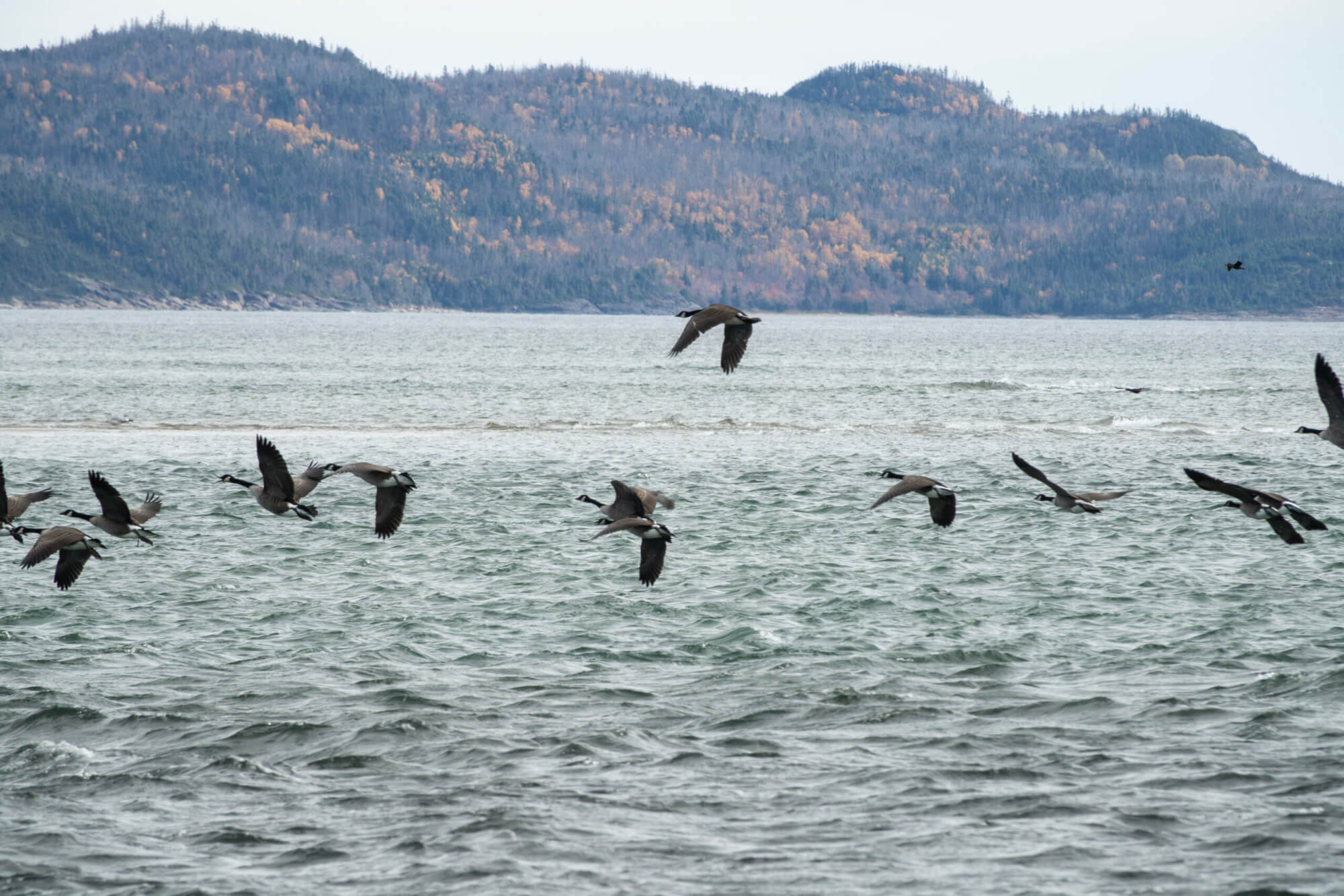
Wrapping Up the Season with Some Thanksgiving Weekend Action!
This year’s Thanksgiving weekend was alive with the activity of whales, seals, and birds! Marine mammals are still lingering in…
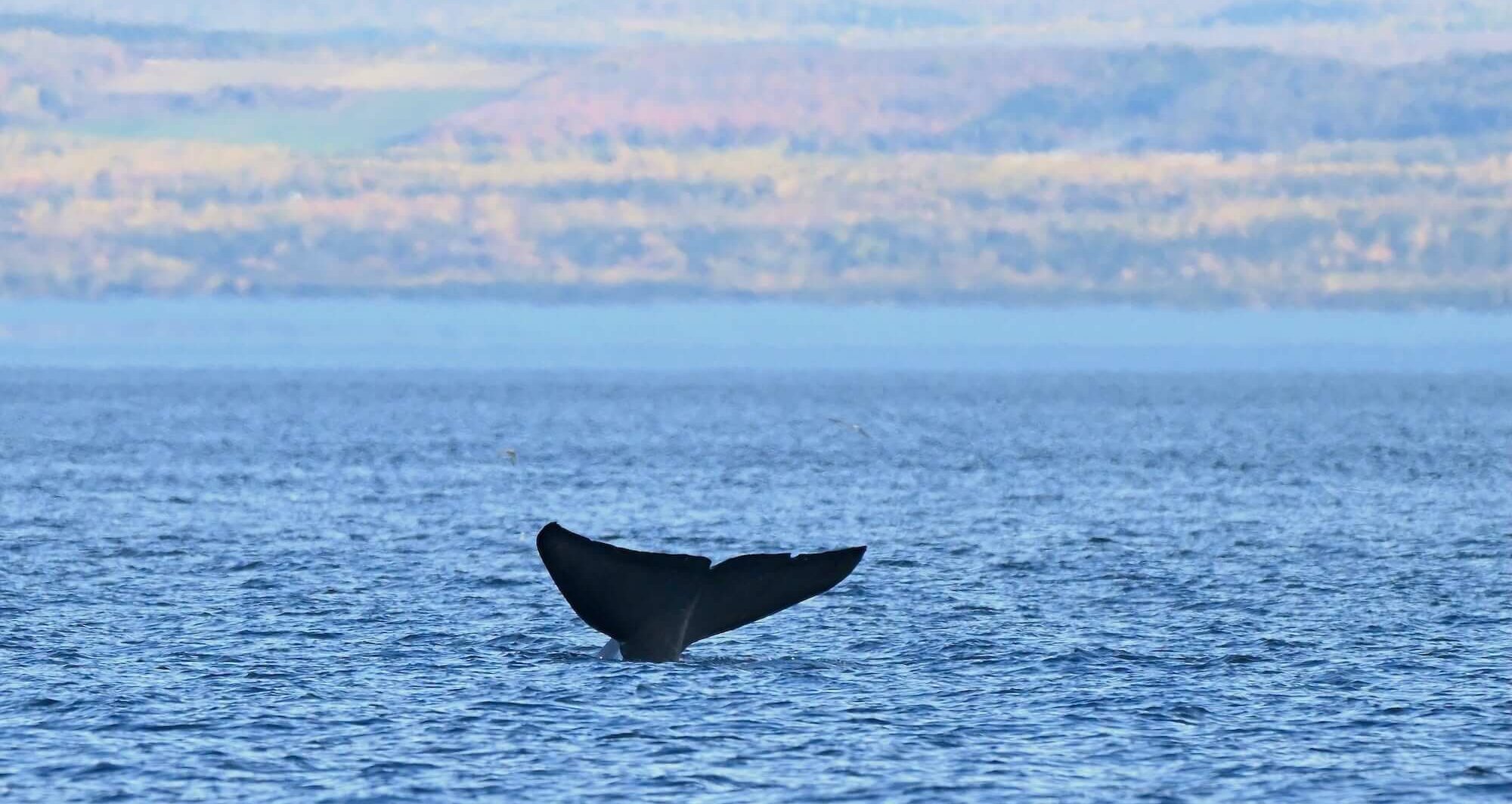
Between Bronze and Anthracite
Yellow-orange hues reaching toward the sky blend with the smooth, dark swirls emerging from the waves. Even if the strong…