
Between Bronze and Anthracite

Yellow-orange hues reaching toward the sky blend with the smooth, dark swirls emerging from the waves. Even if the strong winds of recent days have stripped the trees of much of their foliage, the backs of whales and the heads of seals can still be seen in a number of places! Amidst these bronze and anthracite tones, observers continue to marvel at the landscapes and the marine mammals taking advantage of the St. Lawrence to build up their energy reserves before embarking on their southbound migration.
A late season tinged with blue
Early October brought some spectacular sightings near Les Escoumins: “A big, plump harbour seal on its rock […], several grey seals […], and large rorquals scattered here and there,” rattles off a North Shore resident.
One of these individuals—humpback whale H1004—performed a few breaches visible from the shore. A young humpback of unknown identity, along with H944 (a.k.a. “Katana”) and H379 (“Leprechaun”), were also in the area. “It’s special for me to have seen this whale here today, having seen his sister earlier in June in Gaspé Bay,” says one naturalist, referring to Leprechaun. That sibling is none other than H692 (“Paloma”), who spent much of her summer in the Gaspé region!
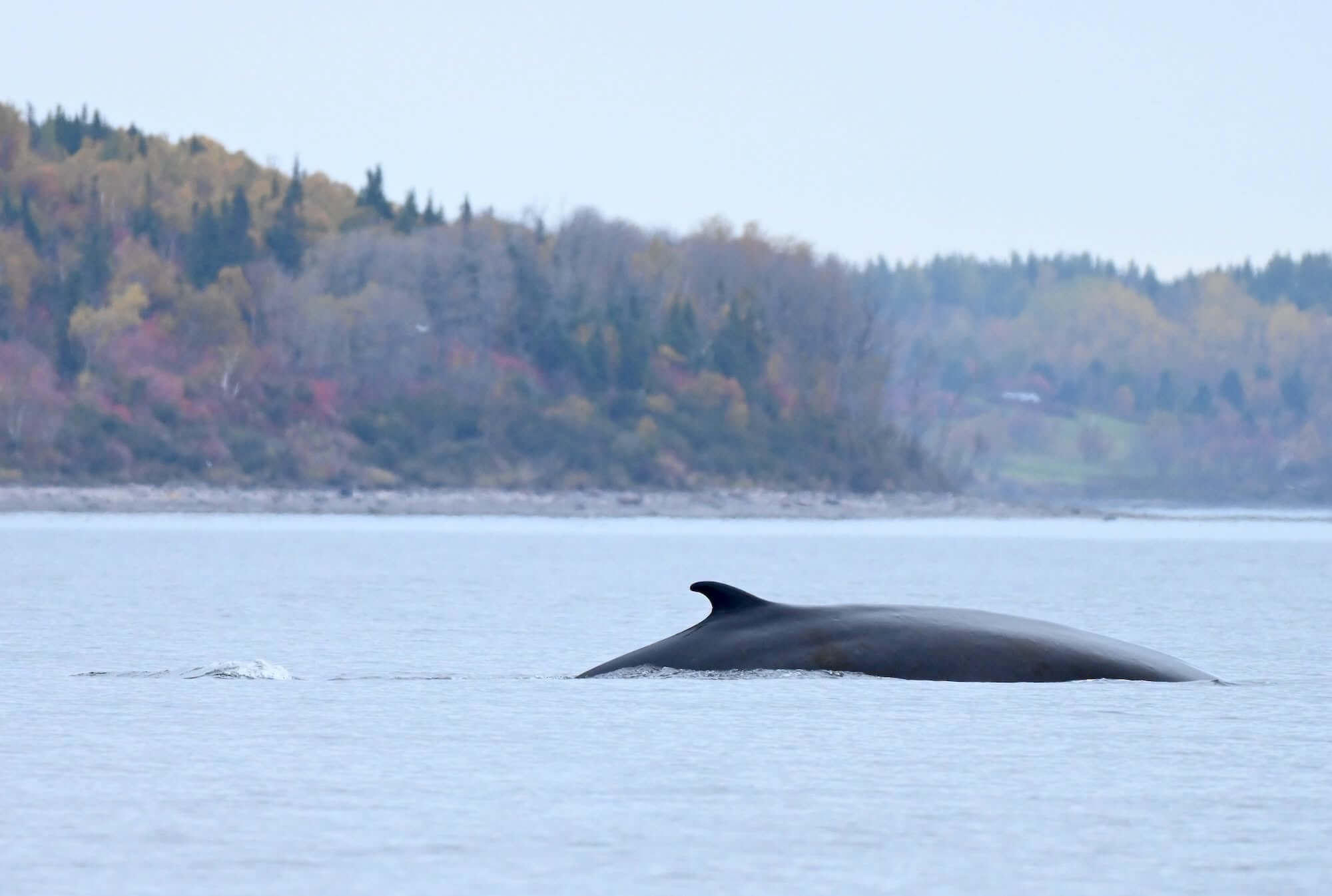
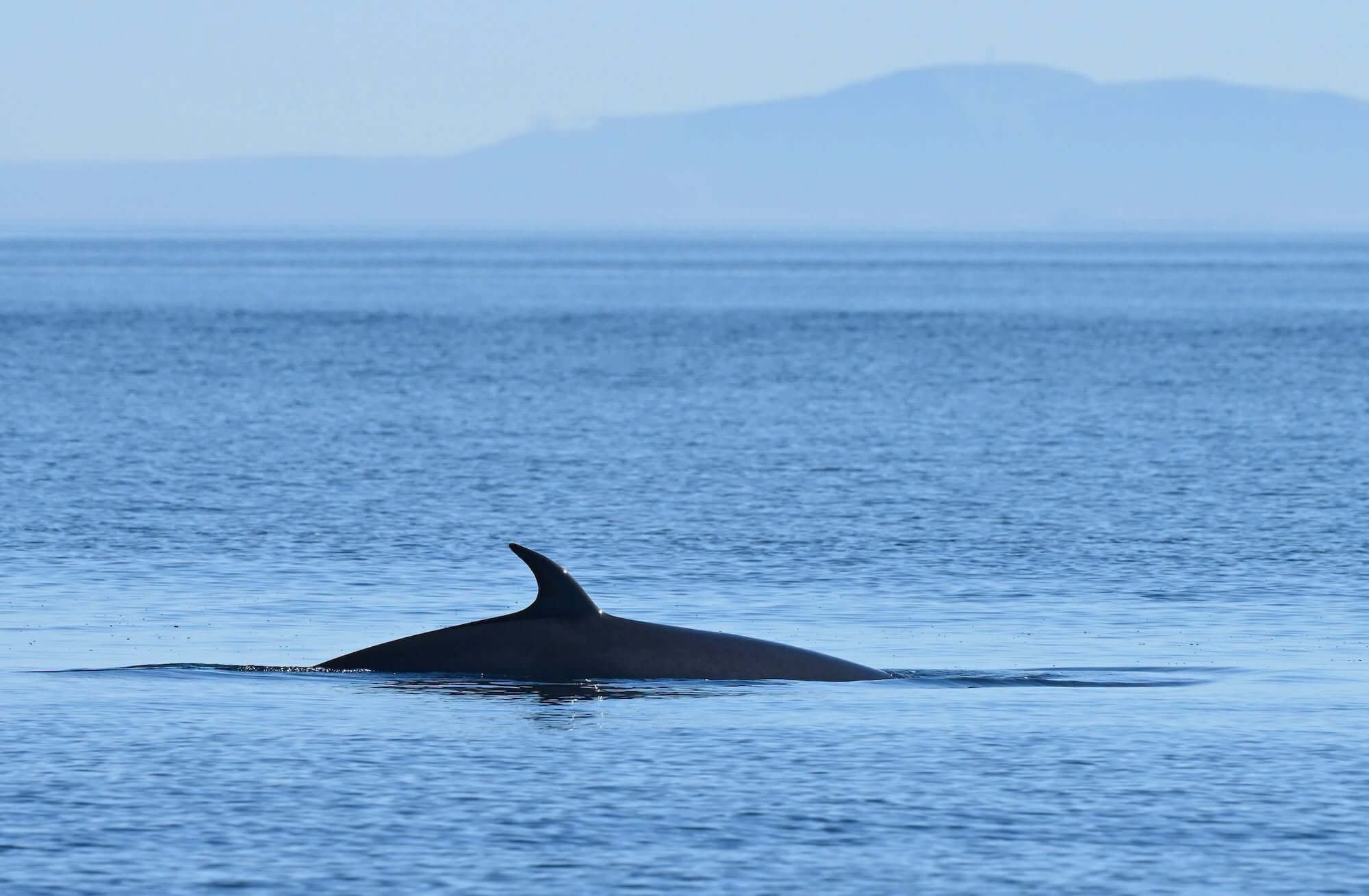
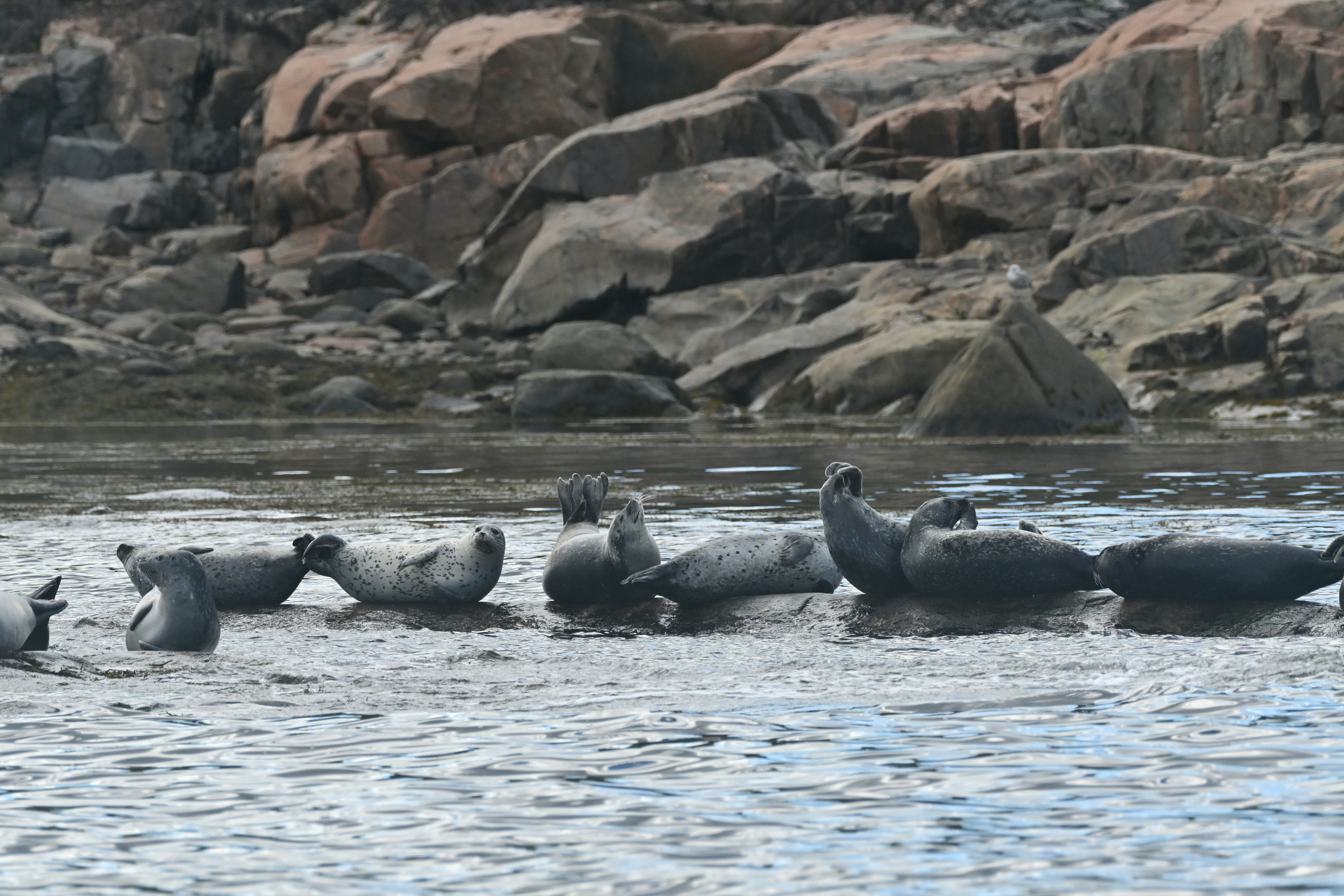
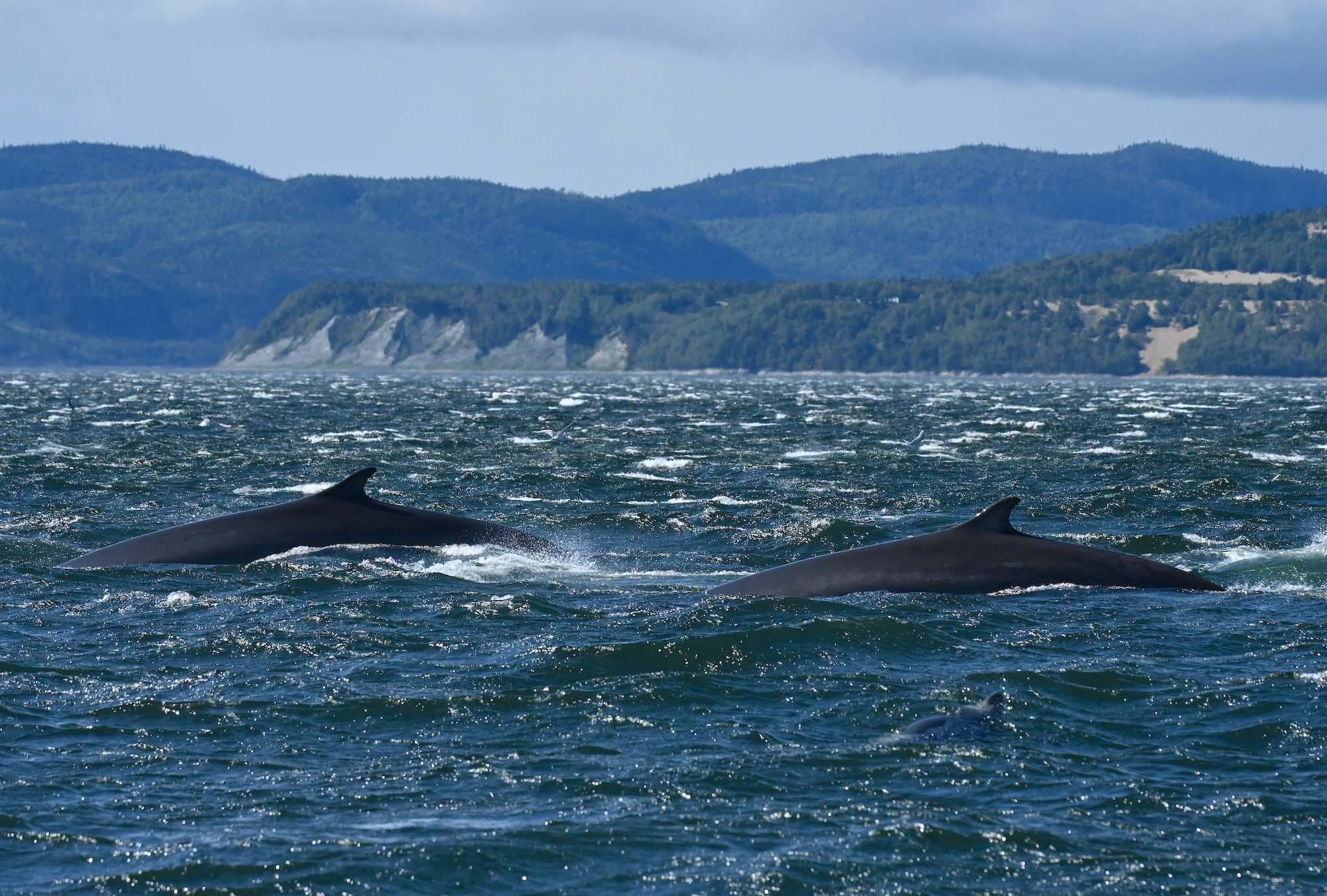
Just under ten fin whales were spotted in the area, including Bp059 (“Trou”), known since 1994, as well as Bp955 (“Ti-Croche”), known since 2009. A few minke whales were moving about nearby, while harbour seals were hauled out on rocks at several locations, their corpulent bodies visible from afar!
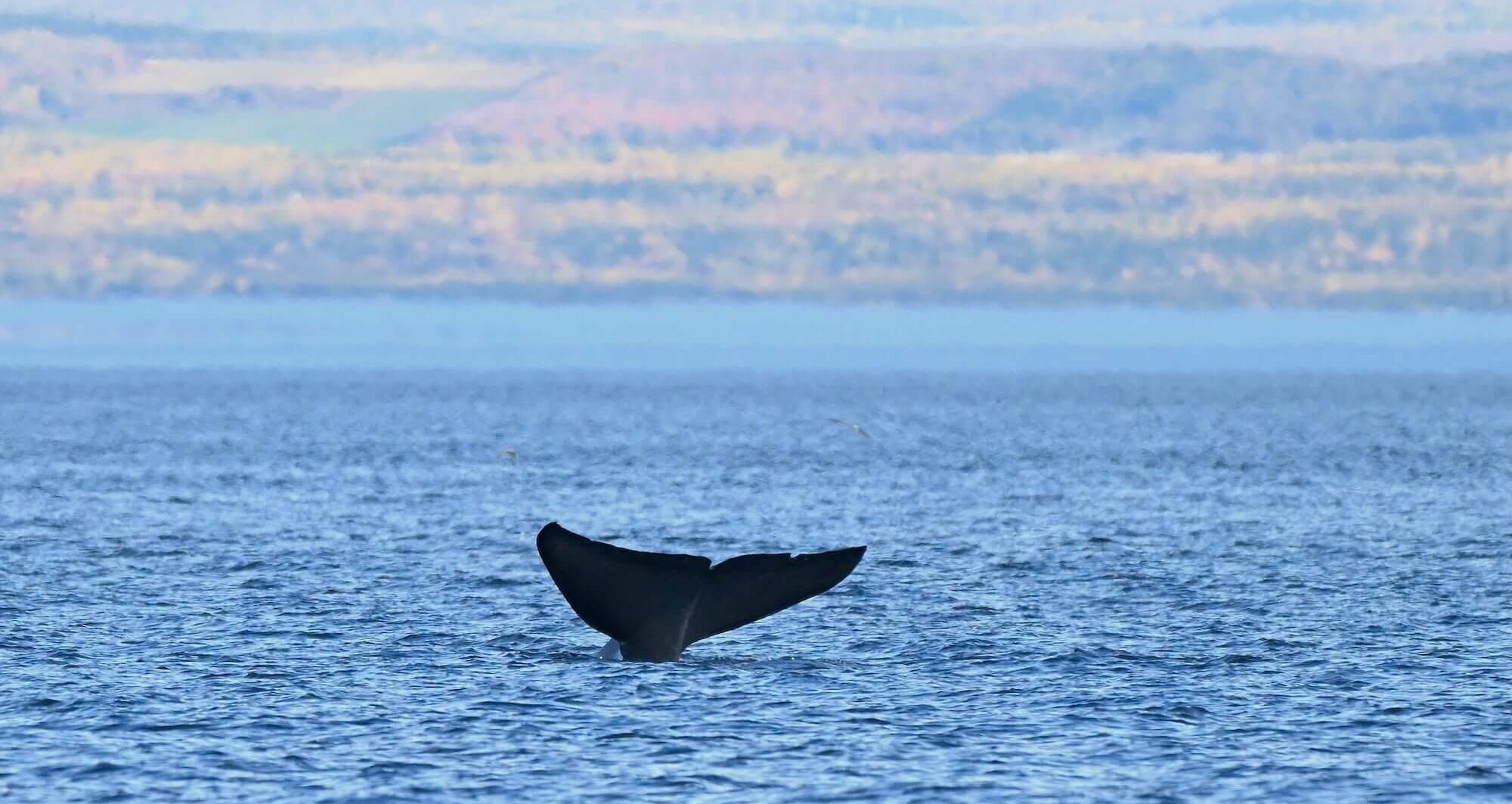
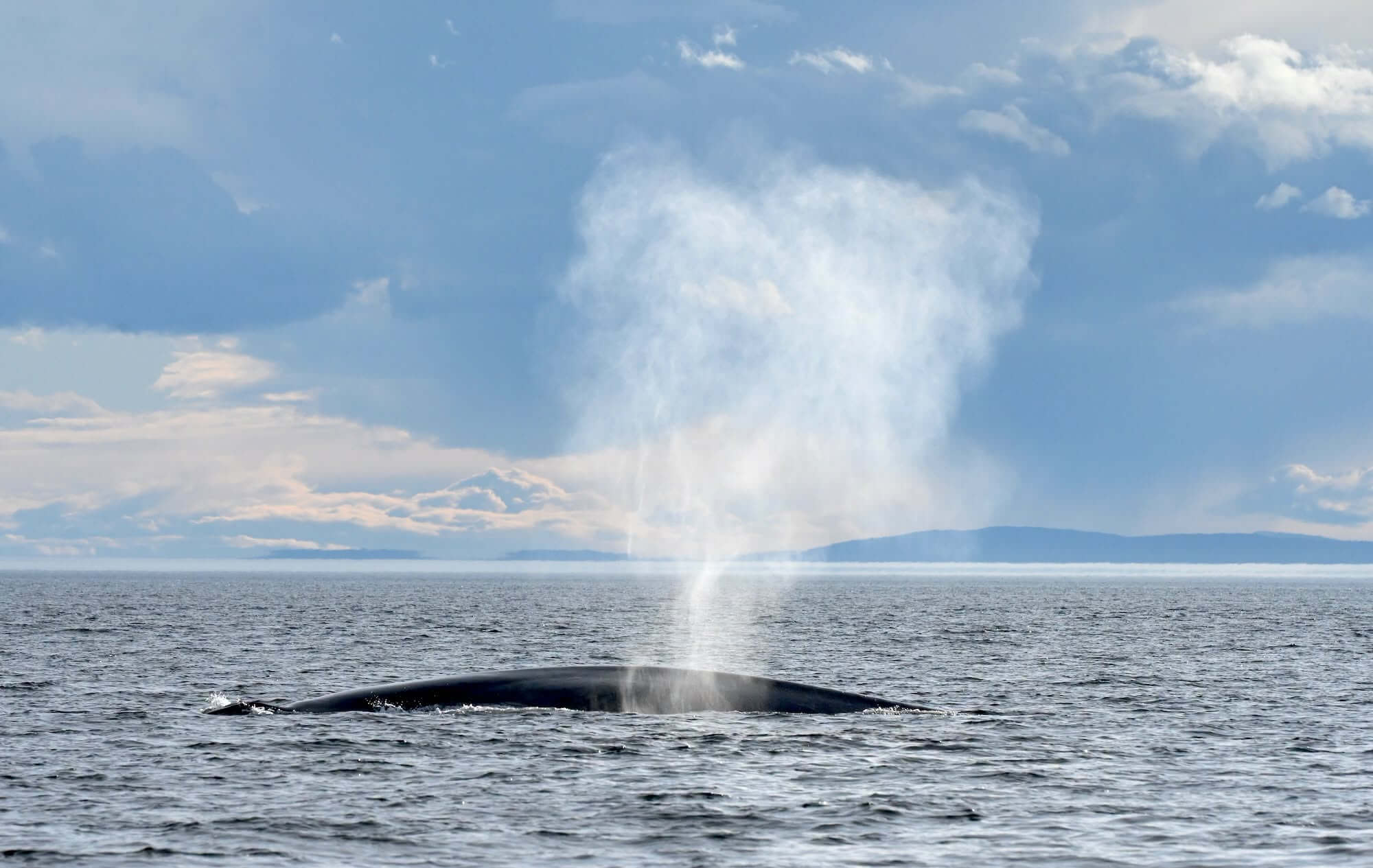
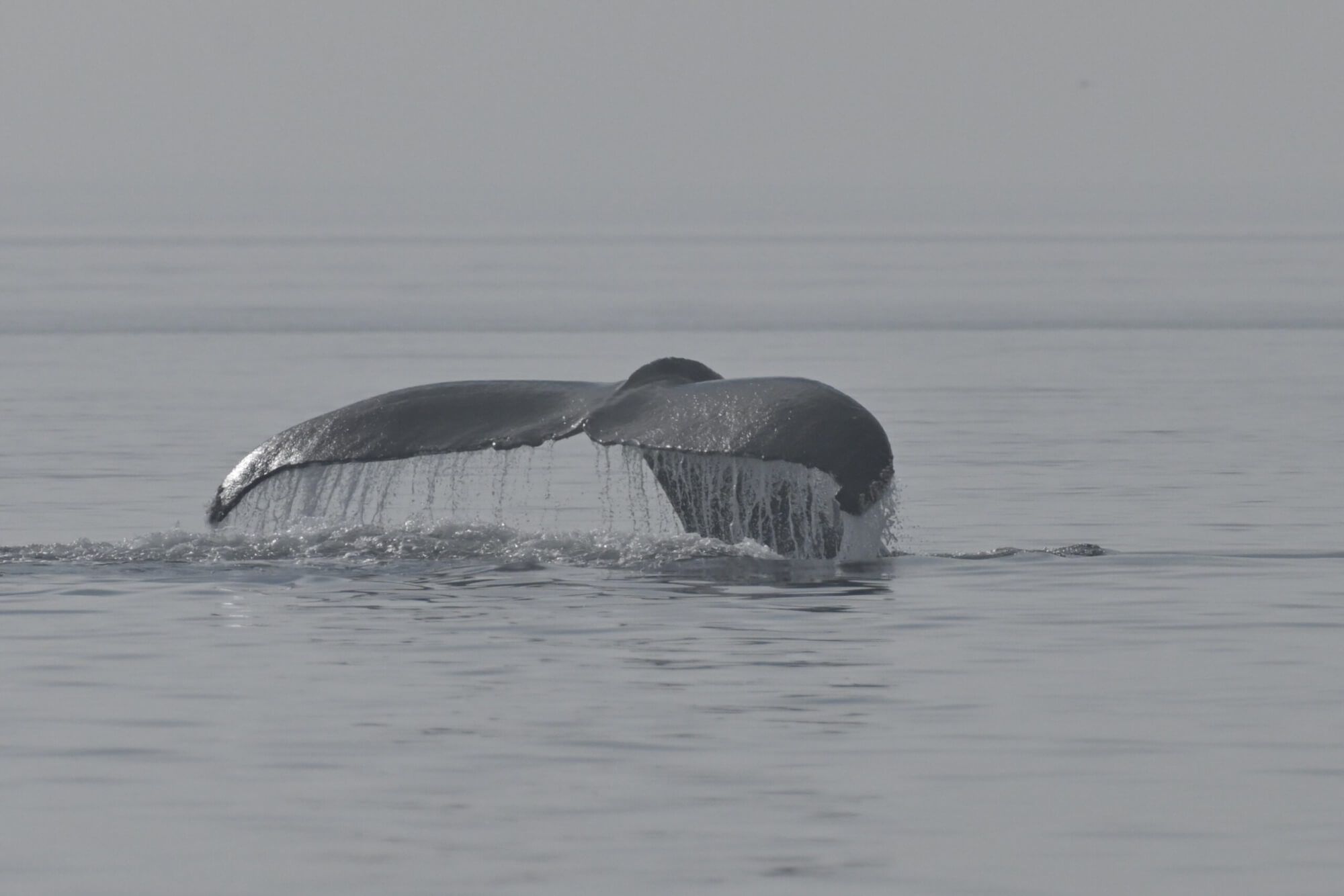
Blue whales B246 (“Jaw-Breaker”), B091, and another unidentified individual were also spotted swimming in the Saguenay–St. Lawrence Marine Park over the past week. One naturalist and wildlife photographer notes: “Of the three blue whales, two lifted their flukes when they dove!” Between 15% and 18% of blue whales in the Northwest Atlantic display their tail flukes when they dive. Why do some individuals raise their tails and others don’t? Hard to say! For humpbacks, fluke-lifting dives may provide the animals a sort of boost or thrust, as they are a less hydrodynamic species. In Tadoussac, a few belugas appeared at the mouth of the Saguenay Fjord. A minke whale was also spotted in the vicinity a few days earlier.
Autumn breeze under the pale golden sunlight
North Atlantic right whales were sighted by the Mingan Island Cetacean Study (MICS) north of Anticosti Island, as well as by the Sept-Îles Education and Research Centre (CERSI) near Sept-Îles. Two sperm whales and six humpbacks were added to the list of sightings in this region. Both teams will soon wrap up their field season, as the chilly October weather makes outings on the water more challenging.
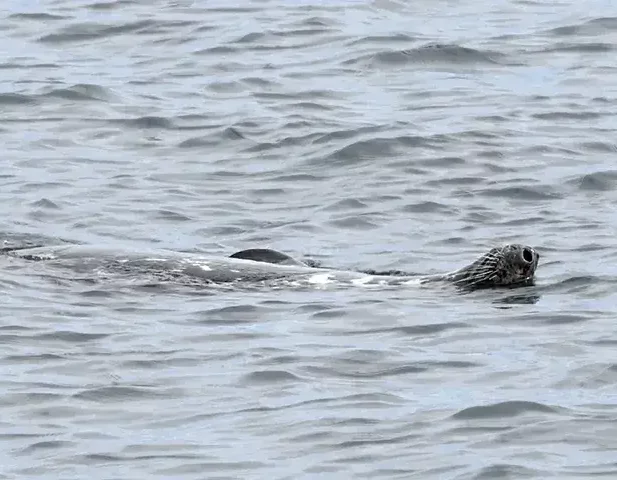
In Gallix, a local resident spent some time photographing grey seals; one individual was even swimming on its back. This swimming behaviour is frequently observed in harp seals… but less often in grey seals! Scientists hypothesize that swimming on their backs might enable harp seals to keep their eyes underwater to spot predators or prey.
Near Pointe-des-Monts, a local resident spotted a group of six belugas. Meanwhile, an enthusiast posted in Franquelin identified a few humpbacks and minke whales.
Autumn pinnipeds and a shark-bird interactions
“The seals continue, but no whales,” notes a dedicated observer from Cap-aux-Os. However, reports came in of two humpbacks near Cap Gaspé and two fin whales over the underwater rocky ridge known as Banc-des-Américains. A pod of about one hundred Atlantic white-sided dolphins was also seen leaping off the coast of L’Anse-aux-Amérindiens.
After spotting a minke whale, a hiker describes a rather unusual scene near the cliffs of Forillon National Park: “I heard the sound of wings beating against the water. I looked and saw a common eider frantically flapping its wings […]. And right behind it in hot pursuit: a shark fin! The bird was trying to escape the jaws of a shark.” Are sharks interested in birds? A 2019 study reports that feathers belonging to land birds were found in the digestive tracts of tiger sharks in the Gulf of Mexico. Migratory birds—either exhausted or affected by changing weather conditions—may have fallen into the water and been unable to take flight again. However, footage of tiger sharks directly attacking, young albatrosses has also been documented.
Where are the whales this week? Sightings map
These data were reported by our network of observers. They give an idea of the presence of whales and in no way represent the actual distribution of whales in the St. Lawrence. Just for fun!
Click on the whale or seal icons to discover the species, the number of individuals, additional information or photos of the sighting. To enlarge the map, click on the icon in the top right-hand corner. The map works well on Chrome and Firefox, but not so well on Safari.
To display the list of sightings, click on the icon in the top left-hand corner.
Thanks to all our collaborators!
Special thanks go out to all our observers who share their love for marine mammals with us.
Your encounters with cetaceans and pinnipeds are always a pleasure to read and discover. On the water or from shore, it is your eyes that give life to this column.
- Croisières Baie de Gaspé
- Kim Bourque
- Thalia Cohen Bacry
- Laetitia Desbordes
- Diane Ostiguy
- Sandrine Papias
- Renaud Pintiaux
- Pascal Pitre
- René Roy
- Guillaume Savard
- Andréanne Sylvain
- Marielle Vanasse
And to all the others!
Additionally, we would like to acknowledge the following teams that also share their sightings:
Sept-Îles Research and Education Centre (CERSI)
Group for Research and Education on Marine Mammals (GREMM)
Marine Mammal Observation Network (MMON)
Quebec Marine Mammal Emergency Response Network (QMMERN)
Mingan Island Cetacean Study (MICS)
Mériscope
Would you also like to share your observations? Have you seen any marine mammals in the St. Lawrence? Whether it’s a spout offshore or just a couple of seals, drop us a line and send your photos to [email protected]!

Odélie Brouillette
Odélie Brouillette joined the GREMM team as a writer and naturalist in 2022, and has been a project manager in scientific communication since 2023. With a background in biology, she loves learning and sharing with others what's most important to her. She has always been fascinated by marine environments and whales, and hopes to contribute to their protection through awareness-raising and popularization.
Recommended articles
Waters Stirred by Blowing Whales
The shores of the St. Lawrence are ablaze with orange and golden foliage. These multicoloured hues are reflected in the…
Côte-Nord: Prime Location for Autumn Whale Watching
Across Quebec, fall has truly arrived, as evidenced by the turning leaves and the arrival of certain marine mammal species…
Strong Winds, Big Whales
Despite the strong winds, fog, and plummeting air temperatures, marine animals of all kinds continue to roam the St. Lawrence.…