
Beneath the surface, with Élizabeth Melis

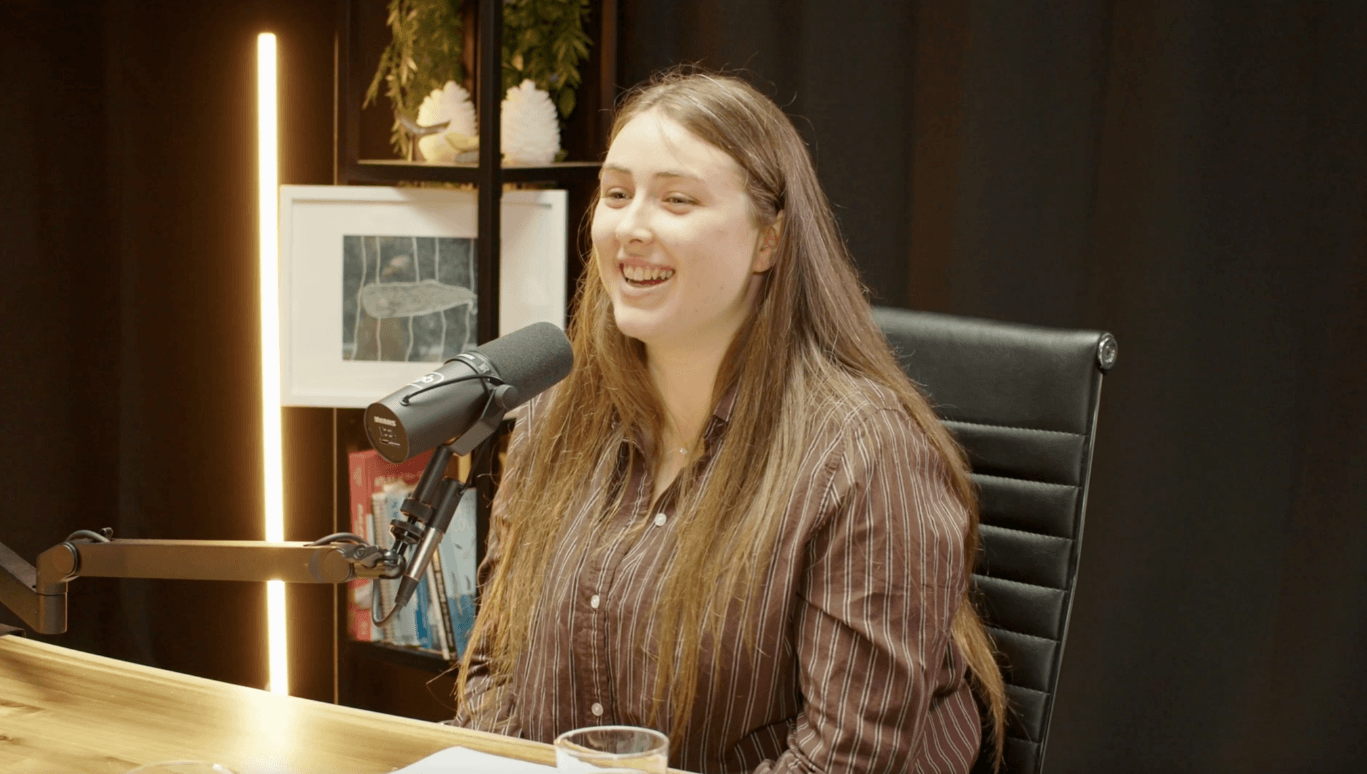
Élizabeth Melis is a whale research and rescue technician with the Campobello Whale Rescue Team, which is affiliated with the Canadian Whale Institute. After studying biological sciences at the Université de Montréal, she spent several summers in Quebec’s Haute-Côte-Nord region working with whales before later shifting her focus to the right whale research and disentanglement in the Gulf of St. Lawrence.
A few highlights:
- Whenever she’s out in the field, Élizabeth always carries with her water, sunscreen, food… and a personal knife to use in the event of an emergency!
- During a seasonal gig in 2020, Élizabeth once spotted a narwhal nicknamed “Nordet” in Baie Sainte-Marguerite in the Saguenay Fjord!
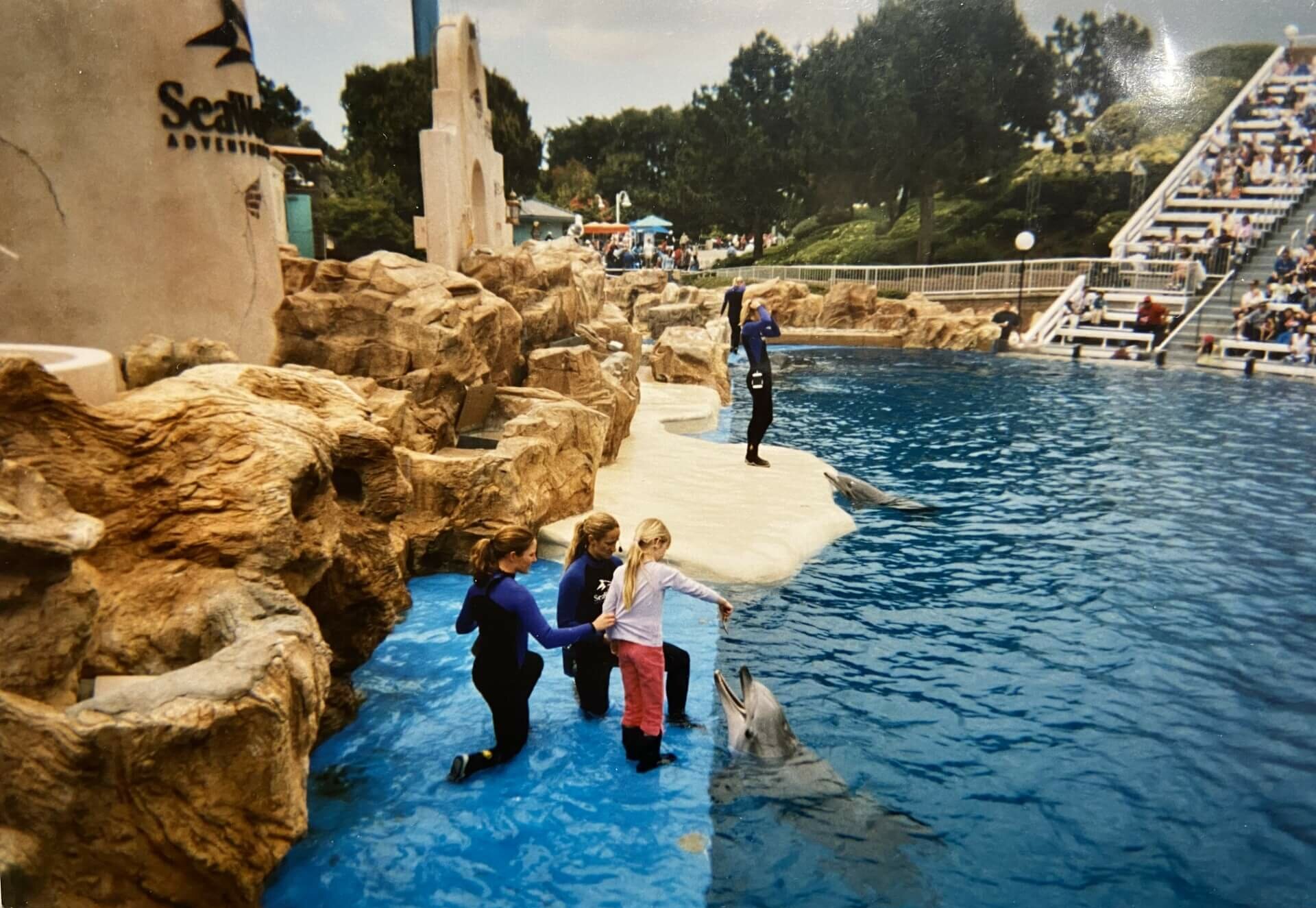
- When she was six, she attended a show at SeaWorld in San Diego and tried to jump into the water to “rescue” a beluga. A staff member managed to grab her by the shirt just in time!
- The role of women in science is a topic she cares about deeply. Her advice for young women who are eyeing a career in this field? Believe in yourself!
- Her favourite cetacean species is the blue whale.
What does your work involve?
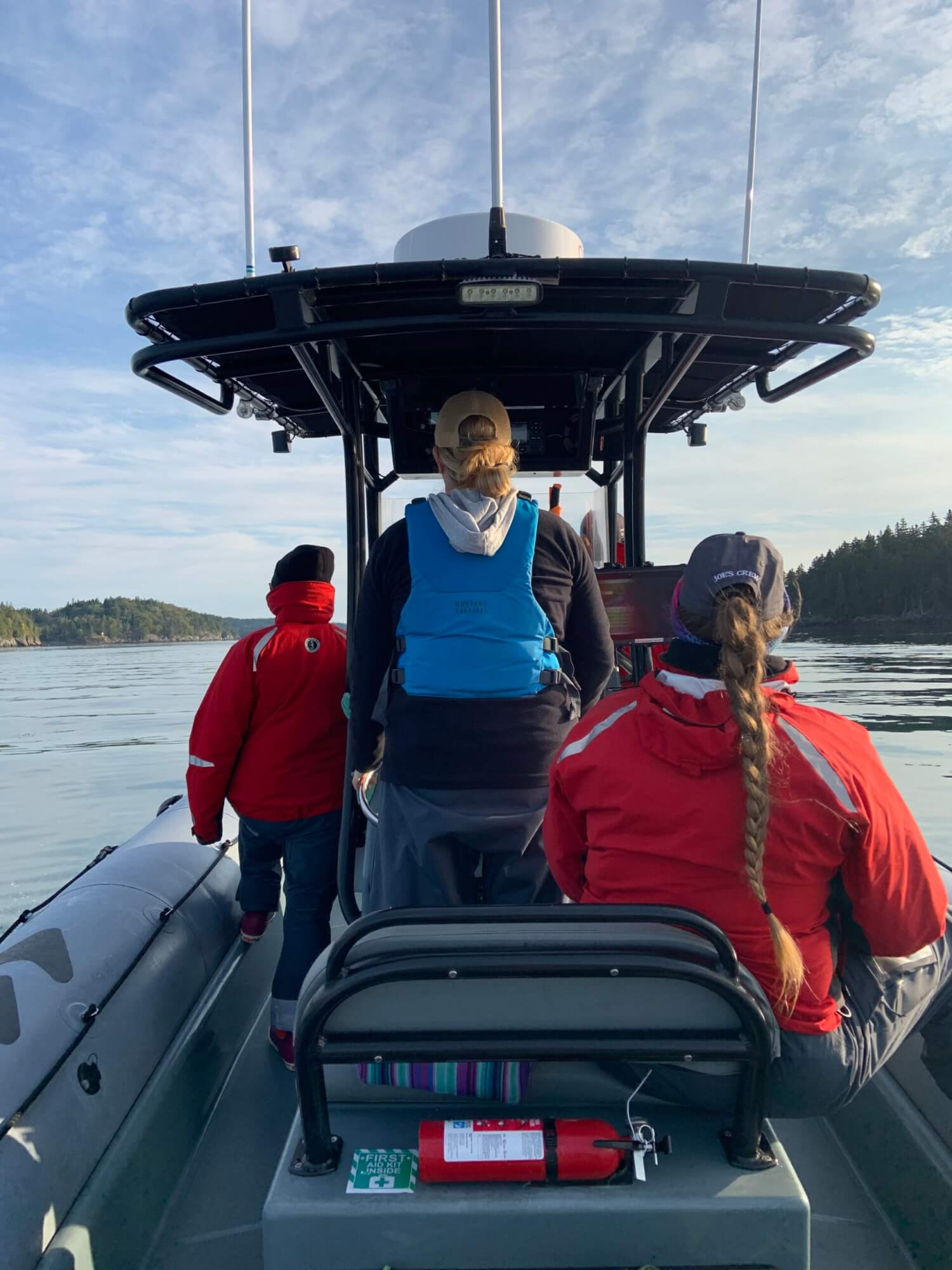
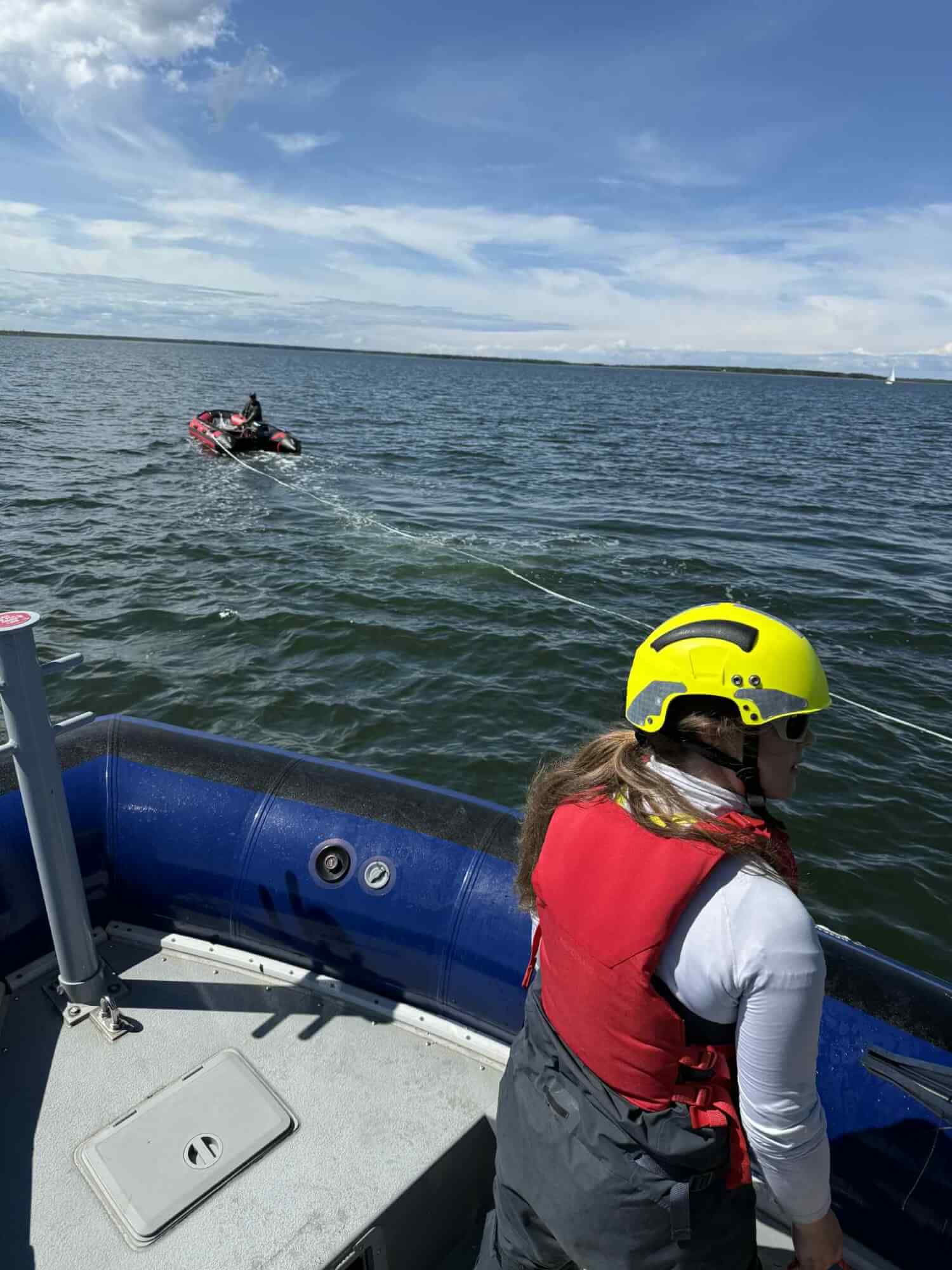
With regard to disentanglements, our Campobello-based team covers all of Eastern Canada, with the exception of Newfoundland and Labrador. We are authorized by Fisheries and Oceans Canada to carry out this work, which requires rigorous training. I only started in April 2025, so I won’t be the one cutting ropes just yet! There is a natural progression for crew members. We’re on call year-round, though our busiest period is the summer.
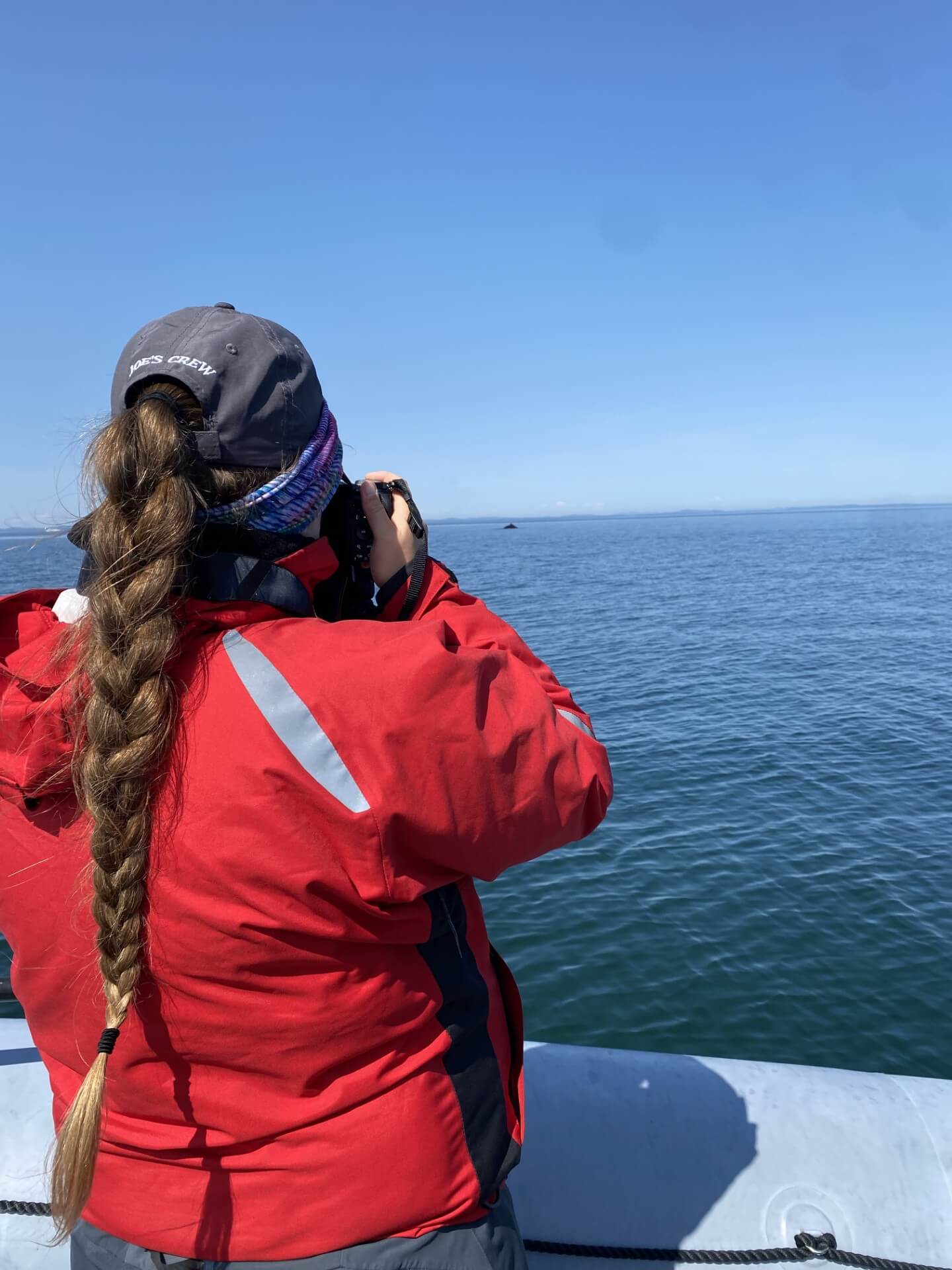
On the research side, through the Canadian Whale Institute, we conduct scientific monitoring, which is primarily focused on the North Atlantic right whale. During the summer months, we head to the Gulf of St. Lawrence and the Shediac Valley for this work, which lasts about eight weeks. In the fall, we also carry out monitoring in the Bay of Fundy; that requires a bit more effort, as it involves conducting censuses of all marine mammals.
What does a typical day look like for you?
There’s no such thing as a “typical” day!
Even if we’re not getting any calls, we still try to get out on the boat a few times a week to keep our skills sharp, whether it’s operating the boat, throwing the grappling hook, cutting ropes with specialized knives, or attaching satellite buoys. We also practise flying our drones. In winter, we write reports and plan for the year ahead. Our scientific work involves data entry and processing. We also participate in a lot of professional trade shows and conduct outreach activities with the general public, fishers, and Indigenous communities, with a specific focus on the North Atlantic right whale.
How does a disentanglement attempt unfold?
When we first arrive at a given site, we launch a drone to try and visualize the entanglement—how many ropes there are and their general configuration, and whether there appear to be any weights attached. This helps us better prepare our approach. We always try to work from the front of the whale toward the back. During an intervention, it’s important to maintain the element of surprise. Usually, we manage to do this the first two times we approach; after that, the whales start to catch on and start avoiding us! Because our knives are attached to a pole, our reach is somewhat limited, meaning we have to get quite close to the animal. These operations can last several hours, or even days or weeks, depending on the weather, whether we can actually locate the whale, and the availability of our crew members. It’s very complex!
Est-ce que tu t’imaginais faire ce métier quand tu étais jeune?
Did you imagine yourself doing this kind of work when you were younger?
If you mean disentanglements—definitely not! I’m not even sure I knew that entanglements were a cause of mortality in whales. Back then, I was leaning more toward marine mammal research; I think that’s the aspect people most often hear and read about in documentaries and books. I knew I wanted to work with animals ever since I was little, but my focus on whales came later.
I started out with a diploma in environmental sciences at Dawson College in Montréal. Unfortunately, I believe that program has been discontinued… We had an extra biology course, and we even had the opportunity to do a course in Costa Rica. We also had lectures on Thursdays. I really enjoyed it.
After that, I enrolled at the Université de Montréal to do a bachelor’s in biology. Once I graduated from there, I entered the workforce!
What does it take to do your job?
Initiative. You can’t just wait to be told what to do or to be assigned a task. You need to stay alert and be aware of your surroundings. Since we work on the boat as a team—often in unusual, high-pressure situations—you have to keep your eyes open at all times. Ideally, you shouldn’t be prone to seasickness! There’s also a great deal of collaboration, both in and over the water and on board the boat. You need to be able to communicate clearly and concisely. You also need a strong support network, because the days can be unpredictable. This isn’t a job you can do alone.
Any message for the young people reading this or listening to the podcast?
I would talk to them about “ecogrief”—the emotions we experience in light of the loss of habitats and biodiversity triggered by climate change. It’s not easy being young in this field, especially when you want to work not only with whales, but with the environment in general. It’s completely normal to feel this way. It’s worth trying to process these emotions, understand them, and use them as a source of motivation—all while being kind to yourself. There’s still hope as not all is lost. There’s no one single path to working with marine mammals, but rather many different ways to contribute to the cause!

Odélie Brouillette
Odélie Brouillette joined the GREMM team as a writer and naturalist in 2022, and has been a project manager in scientific communication since 2023. With a background in biology, she loves learning and sharing with others what's most important to her. She has always been fascinated by marine environments and whales, and hopes to contribute to their protection through awareness-raising and popularization.
Recommended articles
Beneath the surface, with Dre Anaïs Remili
Dre Anaïs Remili is a postdoctoral researcher in biological sciences at British Columbia’s Simon Fraser University, a scientific communicator, and…
Collisions in the Saguenay—St. Lawrence Marine Park (part 1/2)
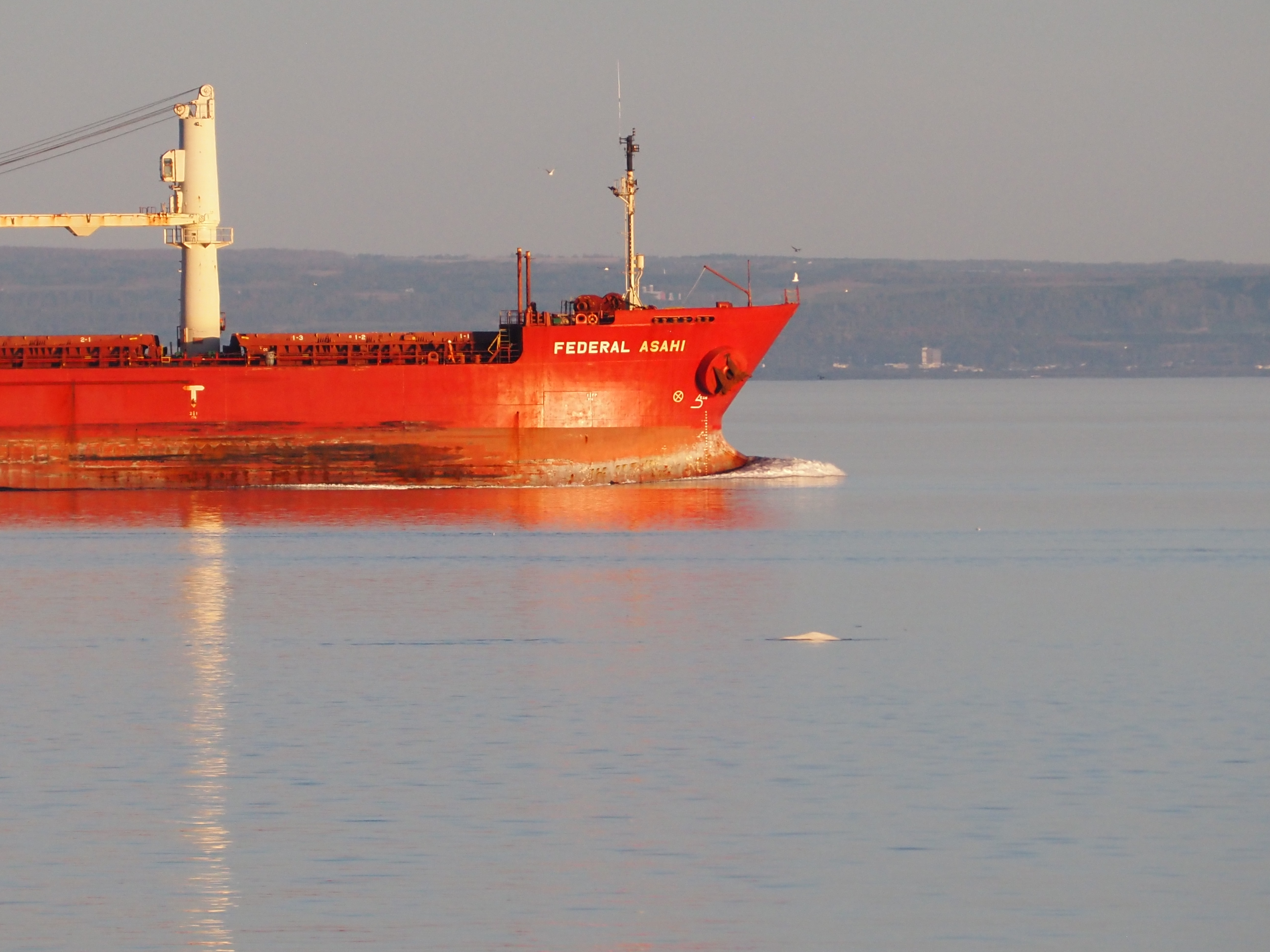
Collisions are a major challenge in the recovery and protection of cetacean populations around the world. In the Saguenay–St. Lawrence…

Beneath the surface, with Christophe Ronveaux
Christophe Ronveaux is a biologist with the Mingan Island Cetacean Study (MICS). MICS mainly studies five species of large cetaceans:…