
A Mother-Calf Duo and Sperm Whales in the Estuary

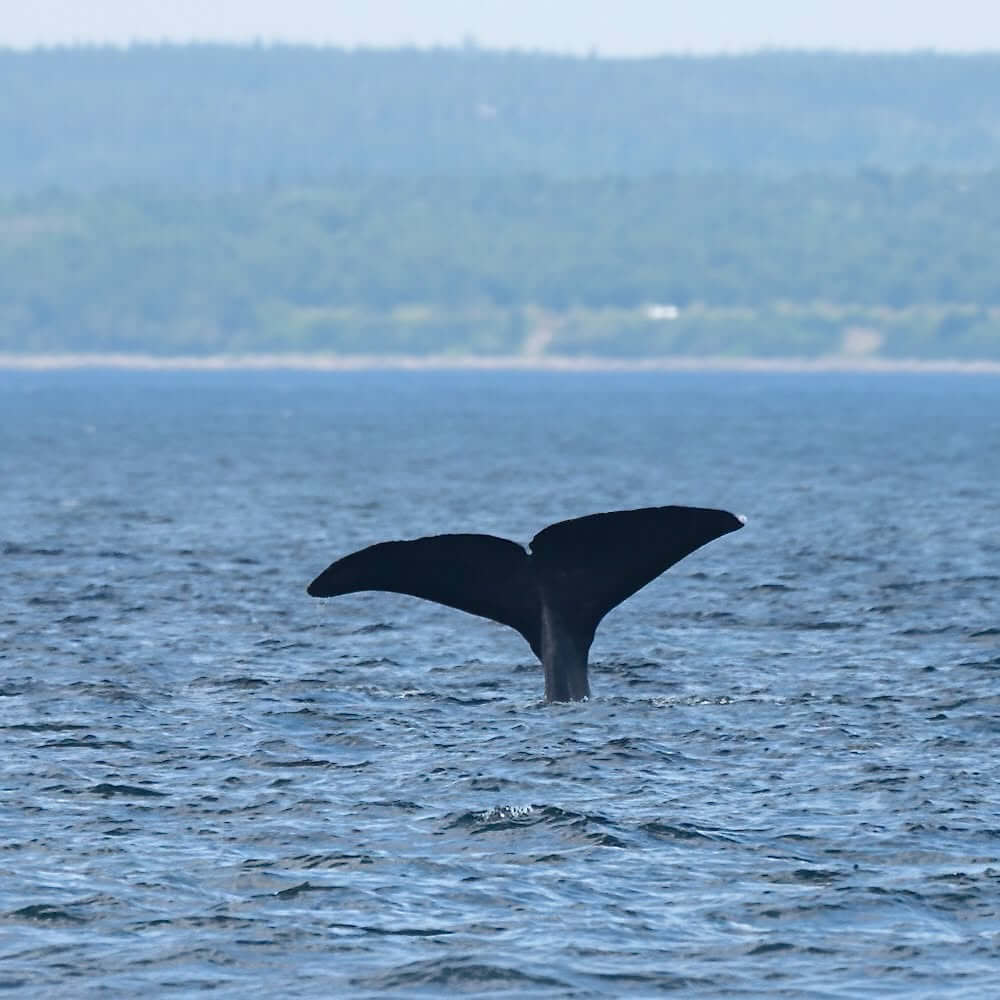
On July 15, not one, not two, but no fewer than three sperm whales were swimming in the Saguenay–St. Lawrence Marine Park area! Not far from there, a mother blue whale and her calf were observed a few days earlier. In the Gaspé Peninsula, a few cetaceans and pinnipeds were spotted, though observations were generally hampered by fog and smoke. In the Mingan Archipelago sector, a hundred or so minke whales and just as many (if not more) harbour porpoises were reported.
Champion divers are back
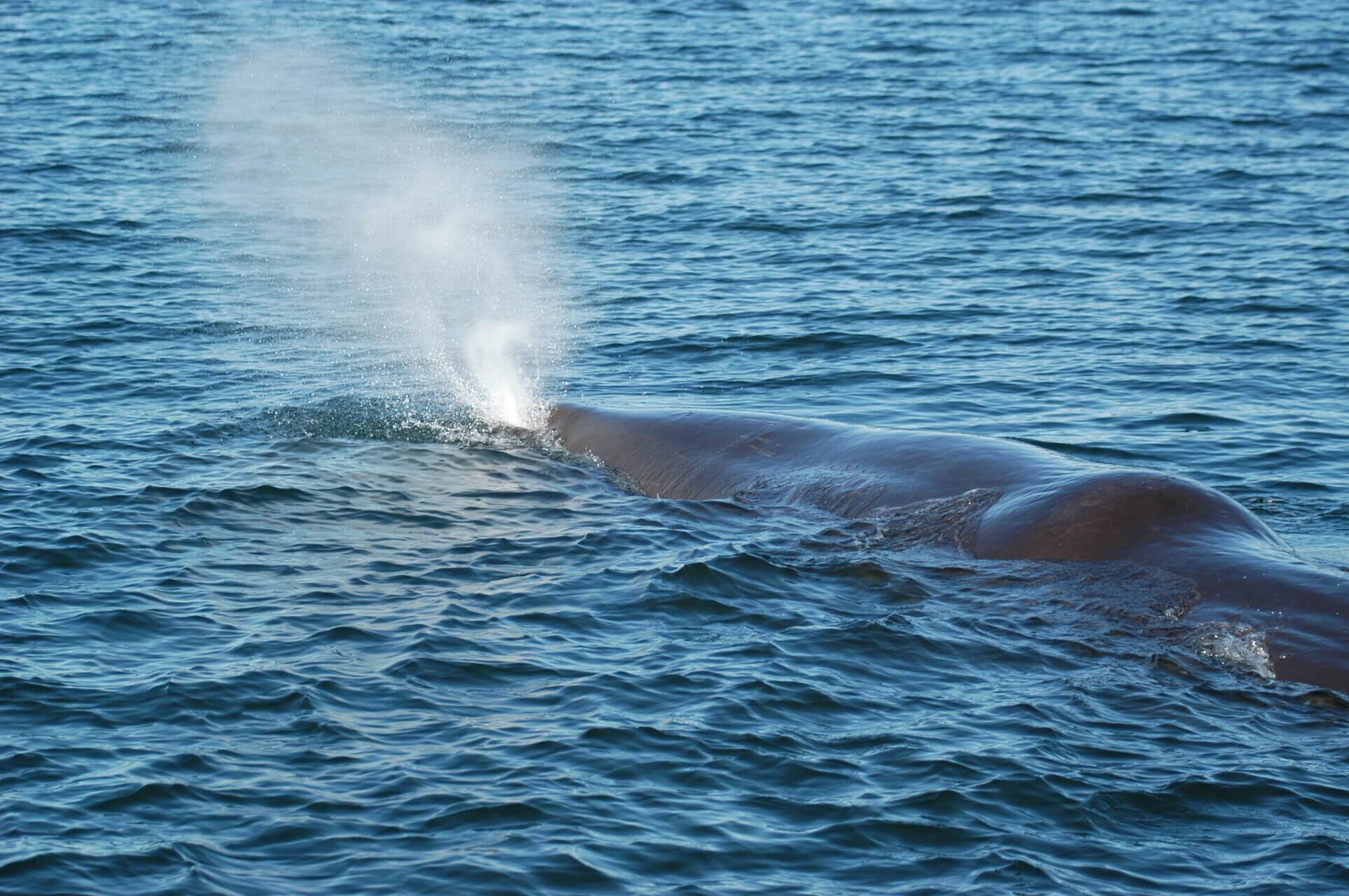
“Such a mysterious and fascinating creature,” describes a naturalist and wildlife photographer with regard to the sperm whales that ventured into the estuary last Wednesday. The last time this species was photographed in the vicinity of the Marine Park was in 2021. In 2023, two large males were spotted near Sept-Îles, but didn’t seem to have ventured any farther up the St. Lawrence. This year, the whales surfaced off the Tadoussac dunes, their dorsal humps sticking out of the water and their slanted blows spraying off to the side with each breath.
The sperm whale’s blowhole is located on the left side of its head, which means that the plumes of condensation that it blows are angled to the port side. Observing this species is challenging, however, as sperm whales can stay under water for anywhere between 15 and 90 minutes, or even up to two hours. Therefore, patience is an absolute must! Unfortunately, the most frequent visitor to the St. Lawrence, Tryphon, died in 2009 after getting himself entangled in fishing gear. His jawbones are on display at the Marine Mammal Interpretation Centre in Tadoussac. Ever since this individual died, sperm whale sightings in the estuary have become less frequent.
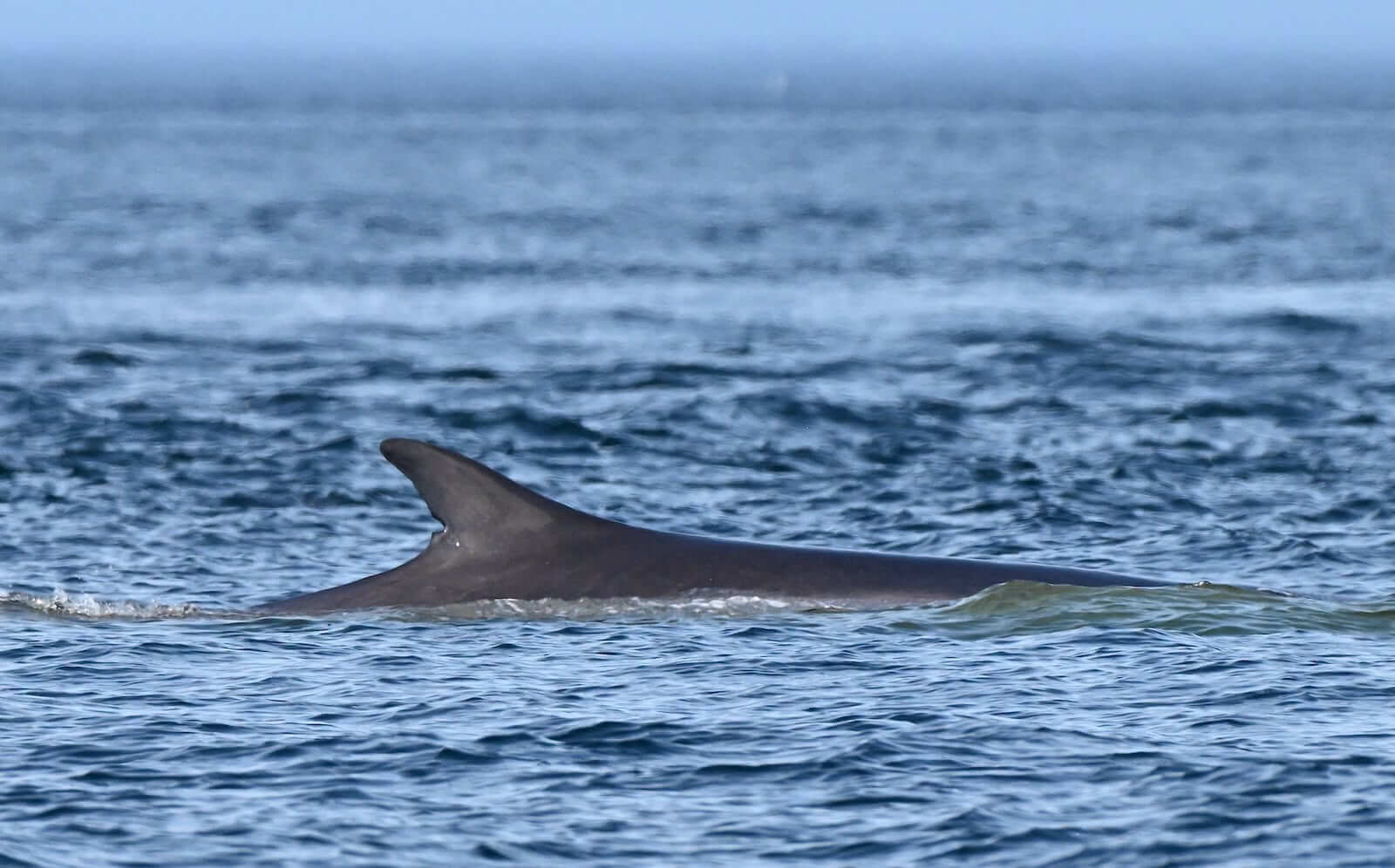
On July 11, the female blue whale B260, first documented by GREMM in 1992, was spotted with a calf off the small islands known as Islets Boisés. The last time a mother-calf pair was recorded in the estuary was in 2022, when Jaw-Breaker (B246) was spotted with a calf off Cap de Bon-Désir. The female blue whale Chameau (B103), known since 1991 and recognizable by her abnormally curved spine, was also observed recently.
Indeed, observers have enjoyed their share of unusual sightings this past week! Humpback whales H742 and H944 have joined the other individuals already present in the area for several days now, not to mention the fin and minke whales still lingering in the Marine Park sector. Belugas have been regularly observed in the mouth of the Saguenay Fjord and off Île-aux-Lièvres and Saint-Irénée, while grey and harbour seals were seen between Les Escoumins and Tadoussac.
“About a hundred minkes and thousands of porpoises”
After a big day on the water, the Mingan Island Cetacean Study (MICS) team reports having observed one humpback whale, 18 fin whales, and 13 North Atlantic right whales. On the same outing, the crew also reported seeing about a hundred minke whales and thousands of harbour porpoises in the Mingan sector. Off the coast of Sept-Îles, the Sept-Îles Education and Research Centre (CERSI) reported a blue whale mother-calf duo—Perhaps B260 and her offspring?—as well as several harbour porpoises and minke whales.
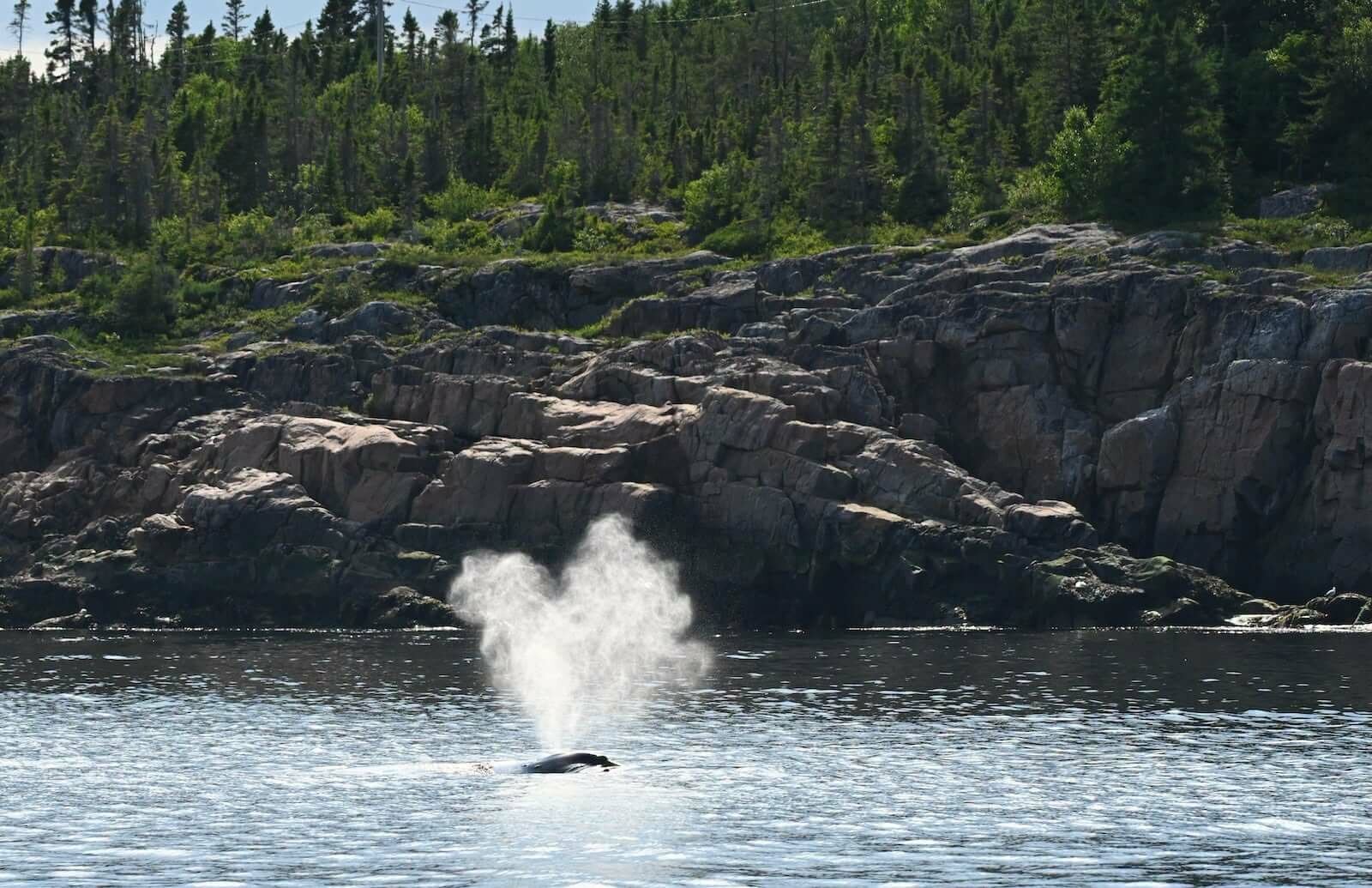
In Baie-Johan-Beetz, a marine mammal enthusiast shares one of her sightings: “I had to be patient, but I finally got to see some porpoises last Friday.” A river otter was also swimming nearby. Near Baie-Comeau, one resident spotted a few harbour porpoises and several minke whales. However, he notes that apart from these sightings, things have been “very quiet.” Perhaps the cetaceans have found other places to feed en route to our waters? From May to October, the whales that frequent the St. Lawrence River do so to feed. Depending on the species, they move in search of various fish and krill to sink their teeth—or baleen!—into.
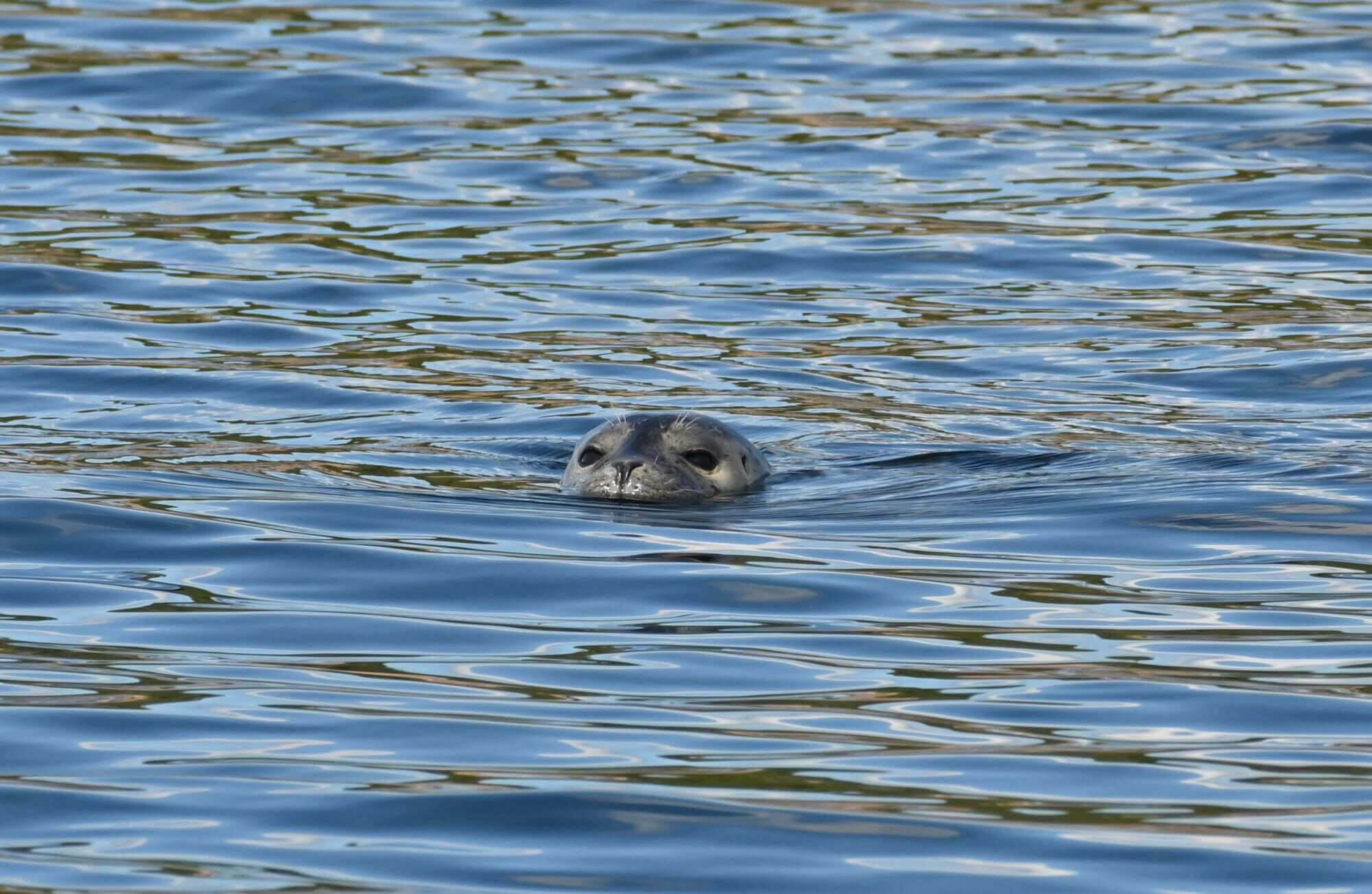
Small seals and large rorquals
In the cove known as Anse aux Cousins and at the Petit-Gaspé haul-out, harbour seals have been active along the shorelines. Grey seals have also been present. One kayaker recounts what she saw… and heard: “We saw scores of harbour seals at the Petit-Gaspé haul-out, including many pups. Several seals were even squabbling over the best rocks! We also observed a few grey seals howling, reminding us of their [French] nickname: ‘sea wolves.’”
Humpback whales were reported in Gaspé Bay, as were a few basking sharks. Among them were the humpbacks Paloma (H692) and H1032, both of which were identified by MICS. In Chaleur Bay, another humpback was reported: “We were able to observe a humpback whale accompanied by a minke whale,” points out one of the locals.
Where are the whales this week? Sightings map
These data were reported by our network of observers. They give an idea of the presence of whales and in no way represent the actual distribution of whales in the St. Lawrence. Just for fun!
Click on the whale or seal icons to discover the species, the number of individuals, additional information or photos of the sighting. To enlarge the map, click on the icon in the top right-hand corner. The map works well on Chrome and Firefox, but not so well on Safari.
To display the list of sightings, click on the icon in the top left-hand corner.
Thanks to all our collaborators!
Special thanks go out to all our observers who share their love for marine mammals with us.
Your encounters with cetaceans and pinnipeds are always a pleasure to read and discover. On the water or from shore, it is your eyes that give life to this column.
- Croisières Baie de Gaspé
- Marie-Ève Carignan
- Marie-Andrée Charlebois
- Nathalie Cliche
- Olivier Cloutier
- Thalia Cohen Bacry
- Guylaine Côté
- Laeticia Desbordes
- Pierre Harisson
- Jade-Audrey Lavergne
- Raynald Lavoie
- Jessica Michaud
- Camille Némond
- Diane Ostiguy
- Sandrine Papias
- Pascal Pitre
- Renaud Pintiaux
- René Roy
- Guillaume Savard
- Andréanne Sylvain
- Marielle Vanasse
And to all the others!
Additionally, we would like to acknowledge the following teams that also share their sightings:
Centre d’éducation et de recherche de Sept-Îles (CERSI)
Station de recherche des Îles Mingan (MICS)
Réseau d’observation des mammifères marins (ROMM)
Réseau québécois d’urgences pour les mammifères marins (RQUMM)
Groupe de recherche et d’éducation sur les mammifères marins (GREMM)
Mériscope
Would you also like to share your observations? Have you seen any marine mammals in the St. Lawrence? Whether it’s a spout offshore or just a couple of seals, drop us a line and send your photos to [email protected]!

Odélie Brouillette
Odélie Brouillette joined the GREMM team as a writer and naturalist in 2022, and has been a project manager in scientific communication since 2023. With a background in biology, she loves learning and sharing with others what's most important to her. She has always been fascinated by marine environments and whales, and hopes to contribute to their protection through awareness-raising and popularization.
Recommended articles
Strong Winds, Big Whales
Despite the strong winds, fog, and plummeting air temperatures, marine animals of all kinds continue to roam the St. Lawrence.…
Mama Whales and Their Calves Roam the St. Lawrence
It would hardly be an exaggeration to say that the St. Lawrence has been teeming with life these past few…
Chance Encounters in the Estuary
The undisputed stars this past week were white-beaked dolphins, which reminds us of the importance of being in the right…