
Coexistence in Troubled Waters: A Participatory, Multi-Criteria Approach to Beluga Protection

By Maud Thermes, Irène Abi-Zeid, Nathalie Niquil, Franck Taillandier and Arnaud Sentis
A majestic emblem of the Saguenay–St. Lawrence region, the beluga whale (Delphinapterus leucas) fascinates and draws thousands of visitors every summer. And yet, this population’s very survival is now threatened. In 2014, COSEWIC (Committee on the Status of Endangered Wildlife in Canada) classified it as “endangered.” Human activities play a central role in the species’ decline.
It is in this complex context that the joint action research project presented herein was born, a project that involves Université Laval, Université de Caen, and the French National Research Institute for Agriculture, Food and Environment (INRAE). The results presented in this article were taken from a PhD research project (dissertation available online [in French]) funded by the Institut France-Québec Maritime.
A complex context of coexistence
The idea emerged during the 2023 Beluga Symposium in Montréal, where multiple discussions between scientists and local players emphasized the challenges related to recreational boating. Indeed, rising boat traffic can cause various disruptions for this species.
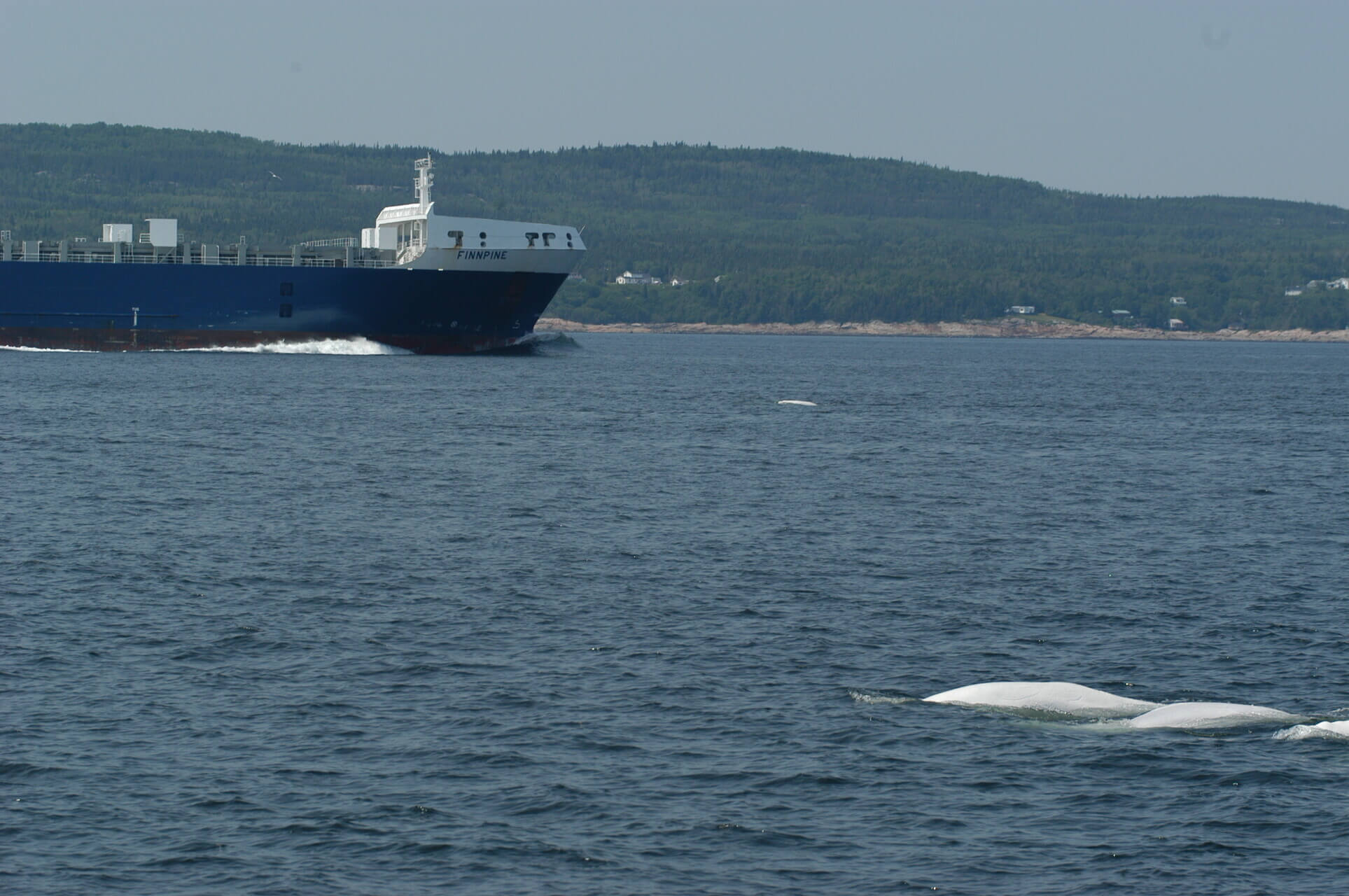
Belugas rely on echolocation to navigate, hunt, and communicate in the often turbid waters of the St. Lawrence. The noise generated by boats disrupts this essential sensory ability. However, this is not the only issue. The mere presence of watercraft, even quiet ones, can also alter the behaviour of these marine mammals.
This pressure is particularly critical during calving season. Belugas are a slow-breeding species, with females raising only a single calf approximately every three years. The loss of a single mother or calf can therefore have significant demographic consequences for this isolated population. However, during the summer months, this sensitive period coincides with high recreational boating traffic, which increases the risk of disturbance.
To mitigate the disturbance caused by the presence of boats and the noise they generate, measures have been implemented to reduce speeds and establish approach distances. Enforcing such measures is difficult, however. Violations are widespread, proving that the existence of rules does not guarantee compliance.
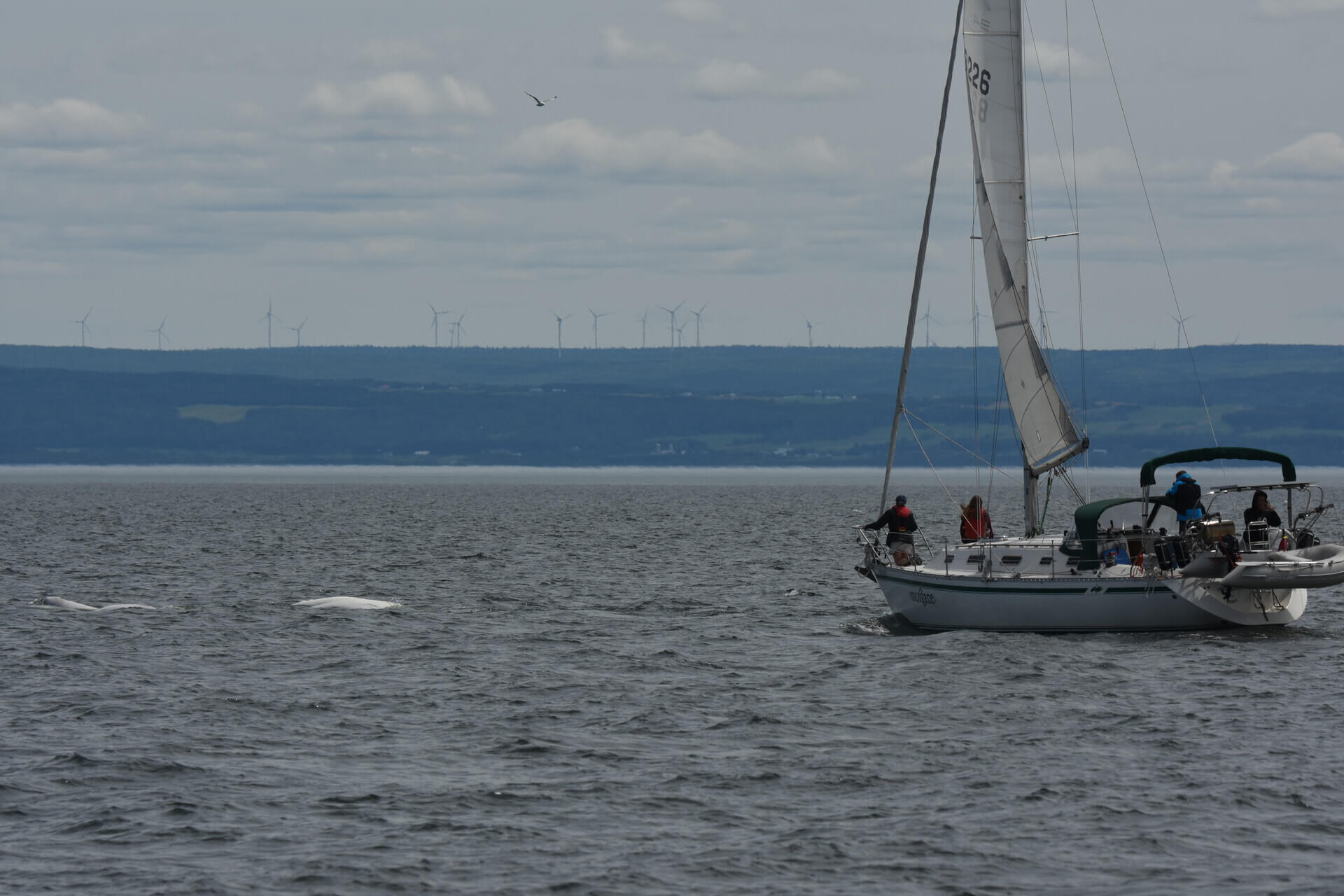
Faced with the limitations of traditional management approaches, the project presented herein explores another path: implementing a participatory socio-technical process that directly involves recreational boaters in developing solutions that promote compliance with boating rules and coexistence with belugas.
A participatory approach to navigating this coexistence
From March 2024 to July 2025, four semi-structured, two-hour facilitated workshops brought together a broad range of stakeholders, including scientists, managers, marina directors, port authorities, and recreational boaters.
Analysis of the discussions led to a clear consensus: recreational boating has an undeniable impact on belugas, and the main challenge lies in poor compliance with regulations. Participants emphasized that these violations rarely stem from malicious intent. They are more likely attributable to a lack of understanding of the regulations and their ecological basis, the difficulties of monitoring a vast territory, and certain conflicts of use.
Several solutions to facilitate coexistence were then collaboratively developed during the participatory workshops. These solutions fall into two main categories: educating recreational boaters and implementing stricter regulations on their activities. Among the options discussed were adding information to nautical charts, awareness quizzes, a boating permit, and the creation of an “ambassador network.”
A multi-criteria decision-making approach using software developed at Université Laval (MCDA_ULaval) combined participants’ evaluations of the scenarios based on the criteria while incorporating the preferences and experiences of the stakeholders involved.
A network for community involvement
The results of this evaluation show that the “ambassador network” scenario comes out on top. This approach proposes training volunteer boaters to act as information and awareness relays for their peers as well as for tourists less familiar with boating regulations. By placing greater emphasis on communication and community engagement than on surveillance alone, this solution has the potential to foster greater social acceptance of protection measures while at the same time encouraging compliance with regulations.
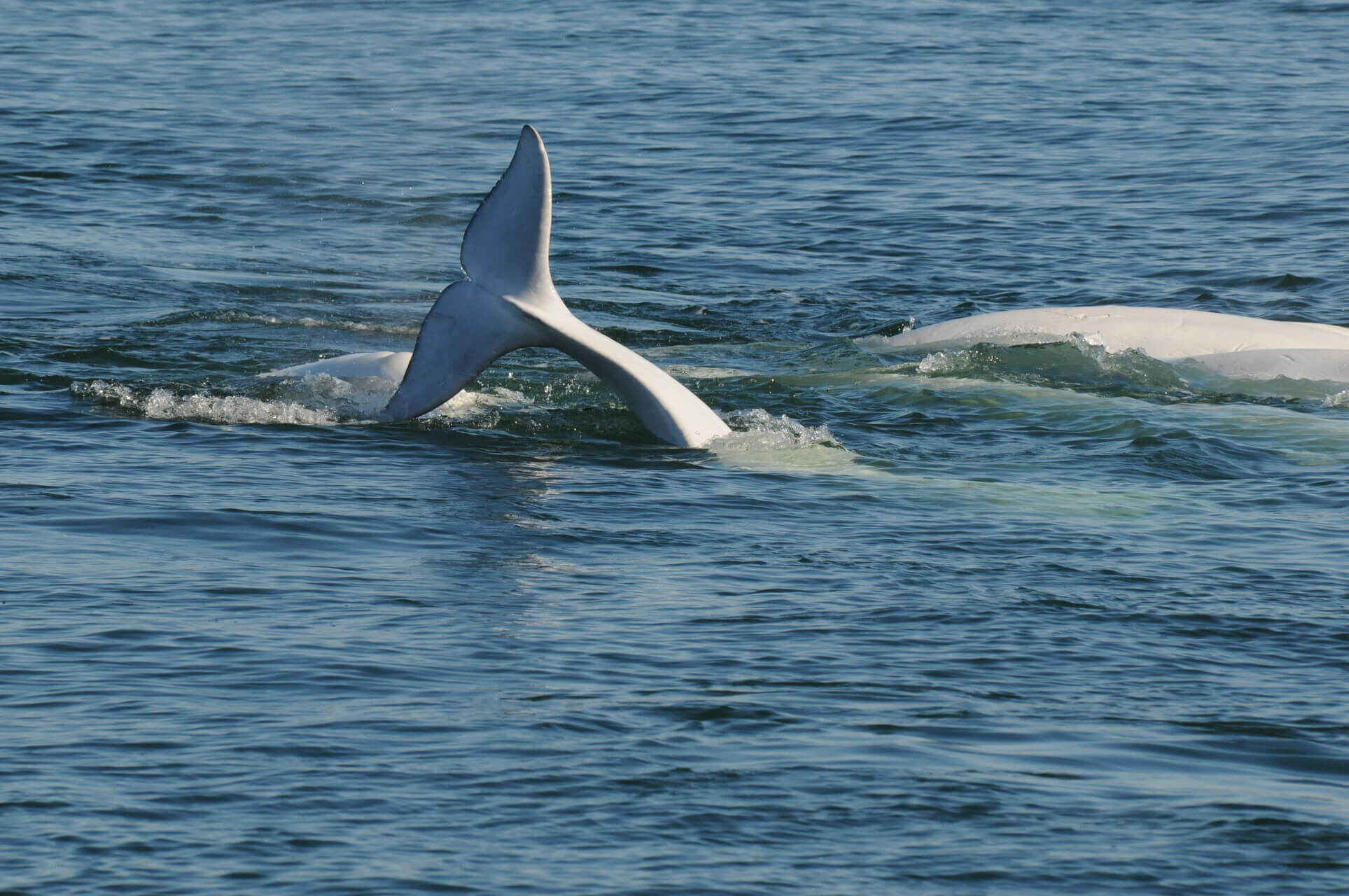
This action research project demonstrates the importance of involving local stakeholders in environmental decision-making. By giving a voice to those who share the waters with belugas, the project offers a promising avenue for easing human pressure and improving the survival prospects of this endangered population. Coexistence cannot be imposed; rather, it must be built through dialogue.
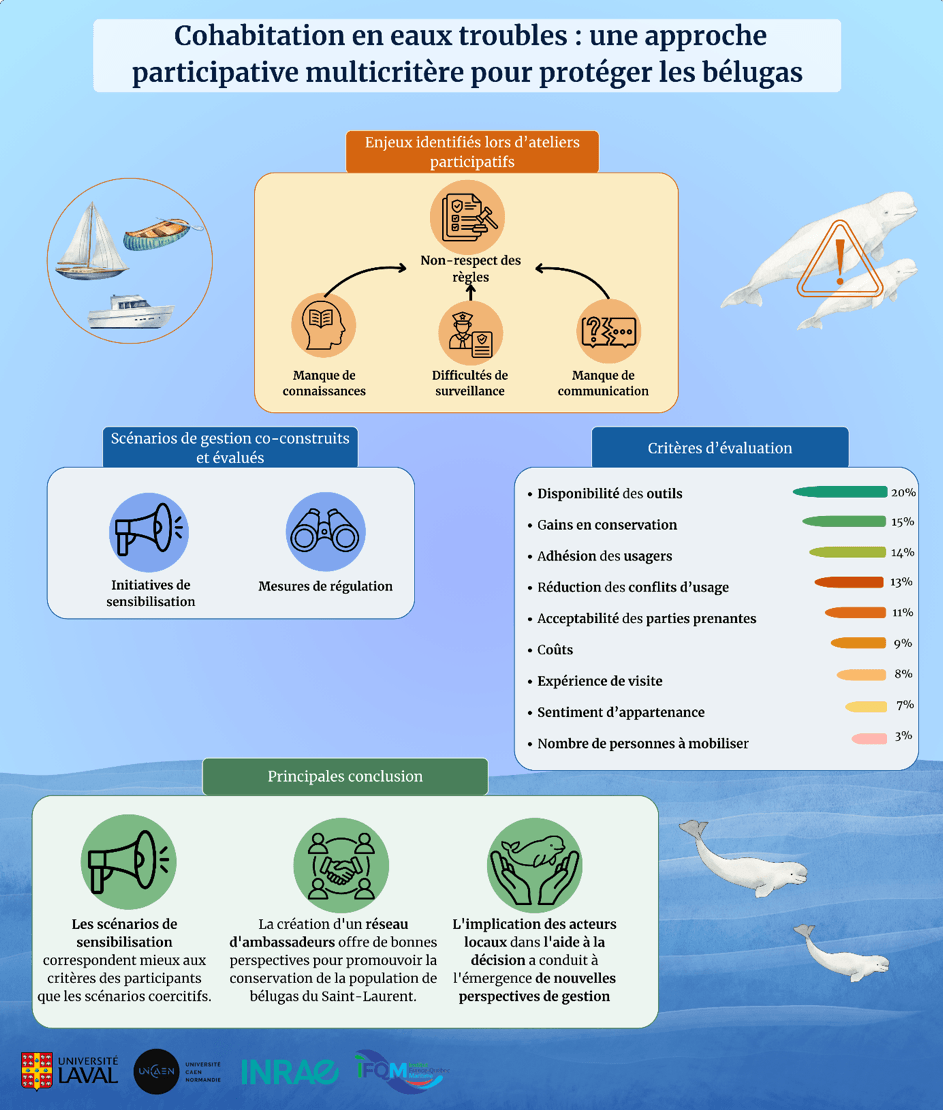
Computer graphic illustrating the main stages of the action research project.

Collaboration Spéciale
Recommended articles
Sous la surface, with Dre Anaïs Remili
Dre Anaïs Remili is a postdoctoral researcher in biological sciences at British Columbia’s Simon Fraser University, a scientific communicator, and…
Collisions in the Saguenay—St. Lawrence Marine Park (part 1/2)
Collisions are a major challenge in the recovery and protection of cetacean populations around the world. In the Saguenay–St. Lawrence…

Sous la surface, with Christophe Ronveaux
Christophe Ronveaux is a biologist with the Mingan Island Cetacean Study (MICS). MICS mainly studies five species of large cetaceans:…