
Fin Whales Back in the Estuary

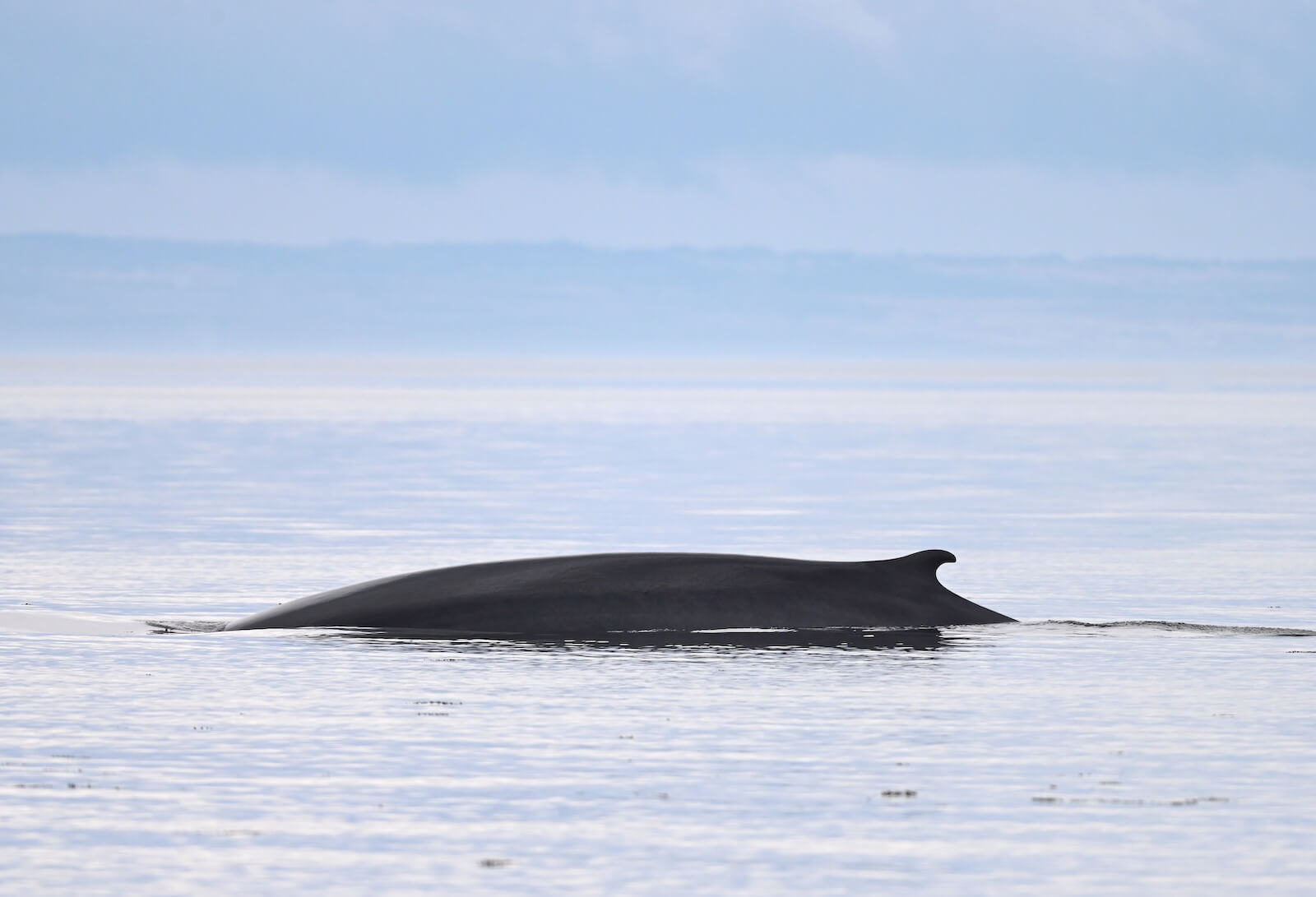
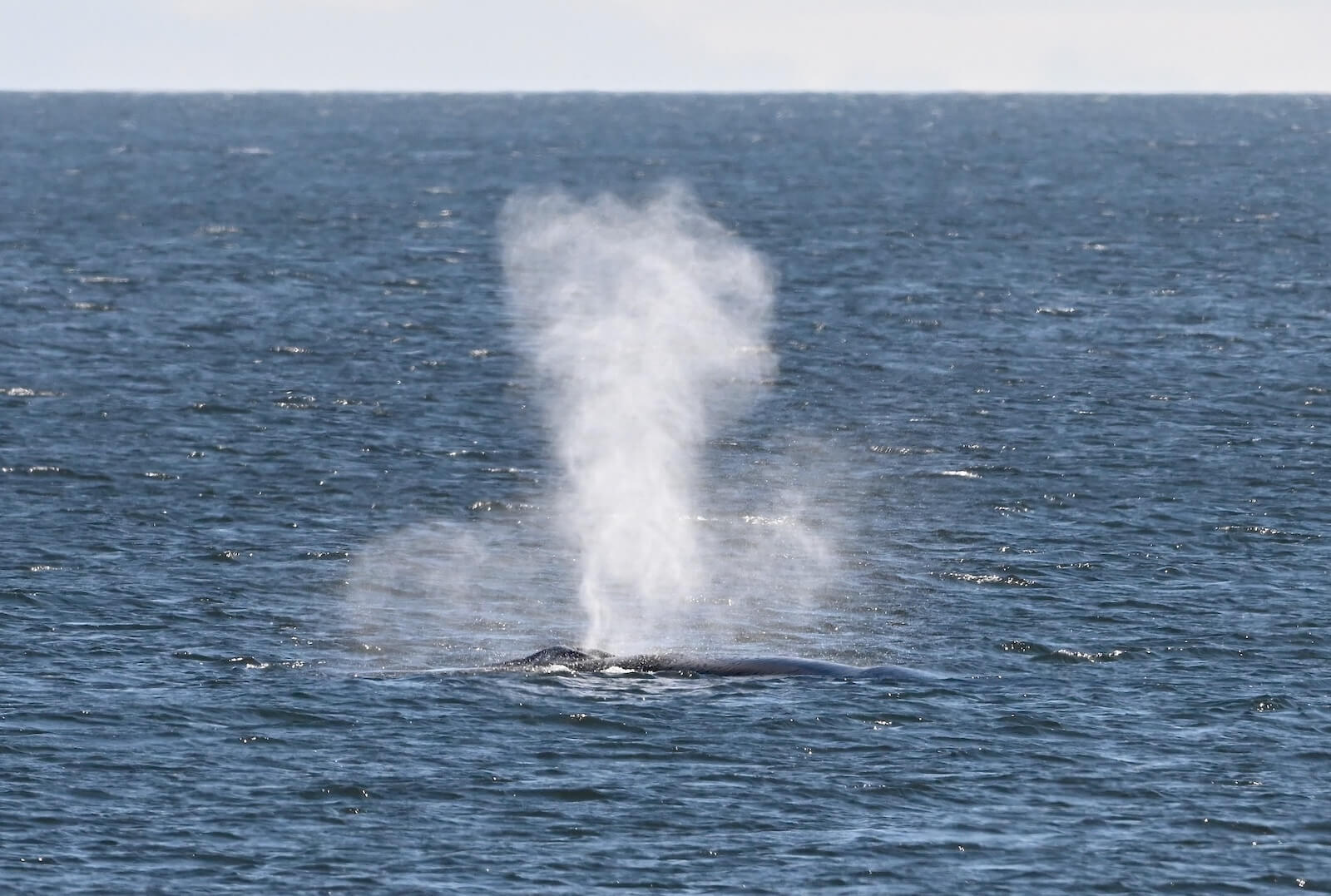
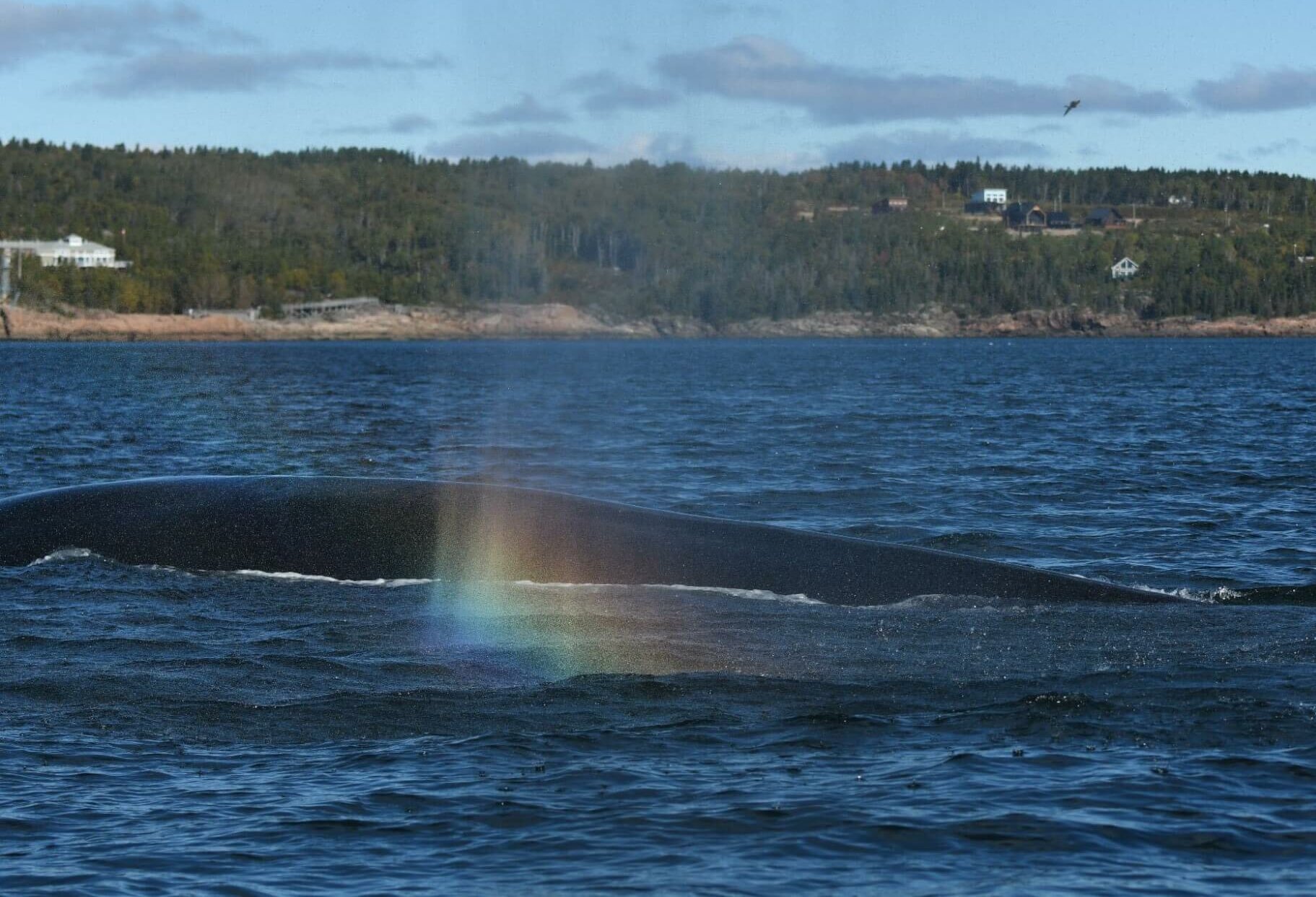
The month of May is synonymous with new greenery, soothing sunshine, and the majestic blows of fin whales! At least two different individuals were spotted from the north shore of the estuary, while minke whales and belugas have been reported from several locations in the St. Lawrence. A grey seal surfing the waves caught people’s attention near the south shore, whereas other observers were delighted by the presence of seabirds.
Return of a star!
In recent years, this individual is often the first to show the tip of its dorsal fin in the estuary. With a name recalling its late mother, Capitaine Crochet, it has a black back and a two-toned jaw. It’s the fin whale Ti-Croche! Also known as Bp955, Ti-Croche was seen near Les Bergeronnes by a naturalist and wildlife photographer earlier this month. “It swam right past me this morning while I was on the rocks by the river,” he exclaims. A few days later, it was near the ferry terminal in Les Escoumins.
In the same area, another enthusiast reports her sightings: “There were several groups of belugas off the Tadoussac dunes. This morning, a handful of minke whales were also noted.” Belugas were also reported off the Saint-Irénée wharf in Charlevoix. “It’s truly a pleasure to see; the season’s off to a great start!” comments the lucky observer who was at the end of the pier at just the right moment.
White backs, black backs
Observers in the eastern sectors of the St. Lawrence will tell you that many cetaceans have been swimming in these parts! According to one local, “Every day there have been 20 to 30 foraging belugas, and several minke whales have also arrived. I saw four or five feeding near Baie-Comeau and Franquelin.”
Do you know how to determine whether a whale is foraging? Minke whales generally feed near the suface, exposing their bellies, pectoral fins, and even part of their tail flukes. They take advantage of the presence of fish between water masses of different temperatures to trap them at the surface and gulp them down. For belugas, it’s a bit trickier. That’s because belugas can hunt both near the seabed and at the surface. When they’re in deeper waters, they use suction to draw their prey into their mouths. Near the surface, feeding belugas can be observed swimming or treading water. And, whatever they catch, they swallow whole!
“I can’t wait to see my first humpback; it’s always one of the highlights of my season,” adds this Baie-Comeau resident.
Calm in the Gaspé
In the waters off the Gaspé Peninsula, things seem to have quieted down the past few days. Nevertheless, the presence of a single pinniped was reported: “Yesterday I saw a grey seal surfing the waves in Baie Mont-Louis! A real pro. It definitely seemed to be enjoying the sun.” Grey seals usually leave the St. Lawrence in winter and head to Nova Scotia, where they breed and give birth. As summer approaches, they return to Quebec waters to feed. These opportunistic animals feed on whatever they can find in their environment.
Even though whale sightings in the Gaspé Peninsula were less frequent this week, that doesn’t mean that cetaceans were completely absent. Observers may simply have been distracted by the impressive passage of seabirds (including long-tailed and harlequin ducks) that have been present these past few weeks!
Thanks to all our collaborators!
Special thanks go out to all our observers who share their love for marine mammals with us.
Your encounters with cetaceans and pinnipeds are always a pleasure to read and discover. On the water or from shore, it is your eyes that give life to this column.
- Mélissa Briel
- Marie-Andrée Charlebois
- Laetitia Desbordes
- Jade-Audrey Lavergne
- Diane Ostiguy
- Renaud Pintiaux
- Pascal Pitre
- Andréanne Sylvain
- Ophélie Turgeon
- Marielle Vanasse
And to all the others!
Additionally, we would like to acknowledge the following teams that also share their sightings:
Centre d’éducation et de recherche de Sept-Îles (CERSI)
Station de recherche des Îles Mingan (MICS)
Réseau d’observation des mammifères marins (ROMM)
Réseau québécois d’urgences pour les mammifères marins (RQUMM)
Groupe de recherche et d’éducation sur les mammifères marins (GREMM)
Mériscope
Would you also like to share your observations? Have you seen any marine mammals in the St. Lawrence? Whether it’s a spout offshore or just a couple of seals, drop us a line and send your photos to [email protected]!

Odélie Brouillette
Odélie Brouillette joined the GREMM team as a writer and naturalist in 2022, and has been a project manager in scientific communication since 2023. With a background in biology, she loves learning and sharing with others what's most important to her. She has always been fascinated by marine environments and whales, and hopes to contribute to their protection through awareness-raising and popularization.
Recommended articles
Wrapping Up the Season with Some Thanksgiving Weekend Action!
This year’s Thanksgiving weekend was alive with the activity of whales, seals, and birds! Marine mammals are still lingering in…
Between Bronze and Anthracite
Yellow-orange hues reaching toward the sky blend with the smooth, dark swirls emerging from the waves. Even if the strong…
Waters Stirred by Blowing Whales
The shores of the St. Lawrence are ablaze with orange and golden foliage. These multicoloured hues are reflected in the…