
Magical First Sightings

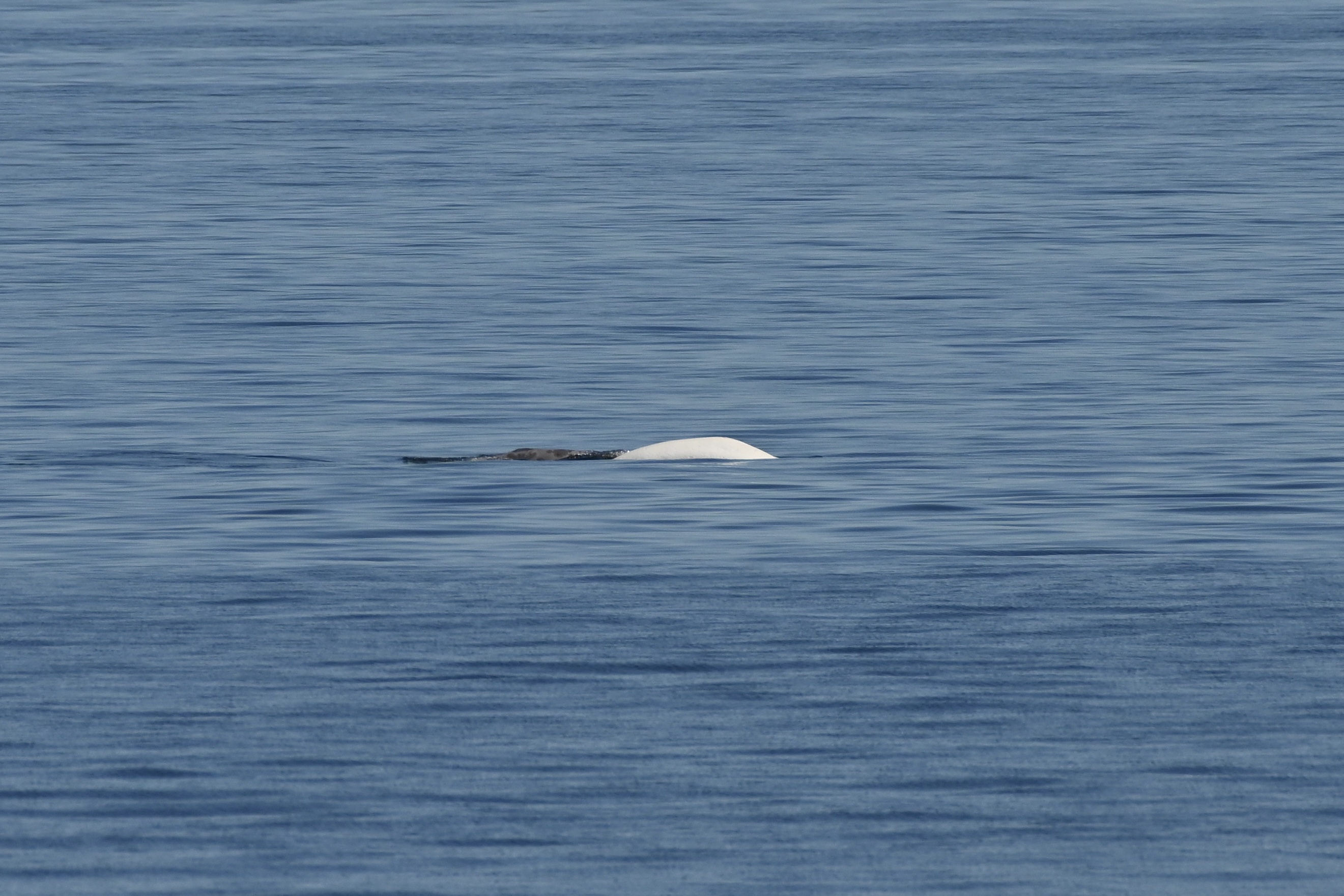
Many enthusiasts have had the chance to see their first whales of the season in recent days. For some folks, it was even more magical, as these observations were their first whale sightings ever! In Les Escoumins, I also had the opportunity to see my first belugas of the year. Dozens of individuals scattered across the calm, blue waters of the St. Lawrence, surfacing to breathe one after the other, their backs shimmering in the sun. This time of the year, there’s less and less doubt: The patch of white on the water surface is more likely to be a beluga’s back than a chunk of drifting ice!
An estuary full of life
“I’m blown away by what I’m seeing!” a passionate whale watcher tells me over the phone, who was observing up to eight belugas from her home in Saint-Irénée. These white whales were the very first she had seen thus far this year. At Cap de Bon-Désir, a group of friends shared an unforgettable moment while playing cards on the rocks. “[The belugas] were moving and heading downriver toward Les Escoumins. In total, I’d say there were between 10 and 15 of them,” reports one of the observers, who points out that these small cetaceans were also the first whales ever observed by some of her companions that day. Definitely an exciting moment!
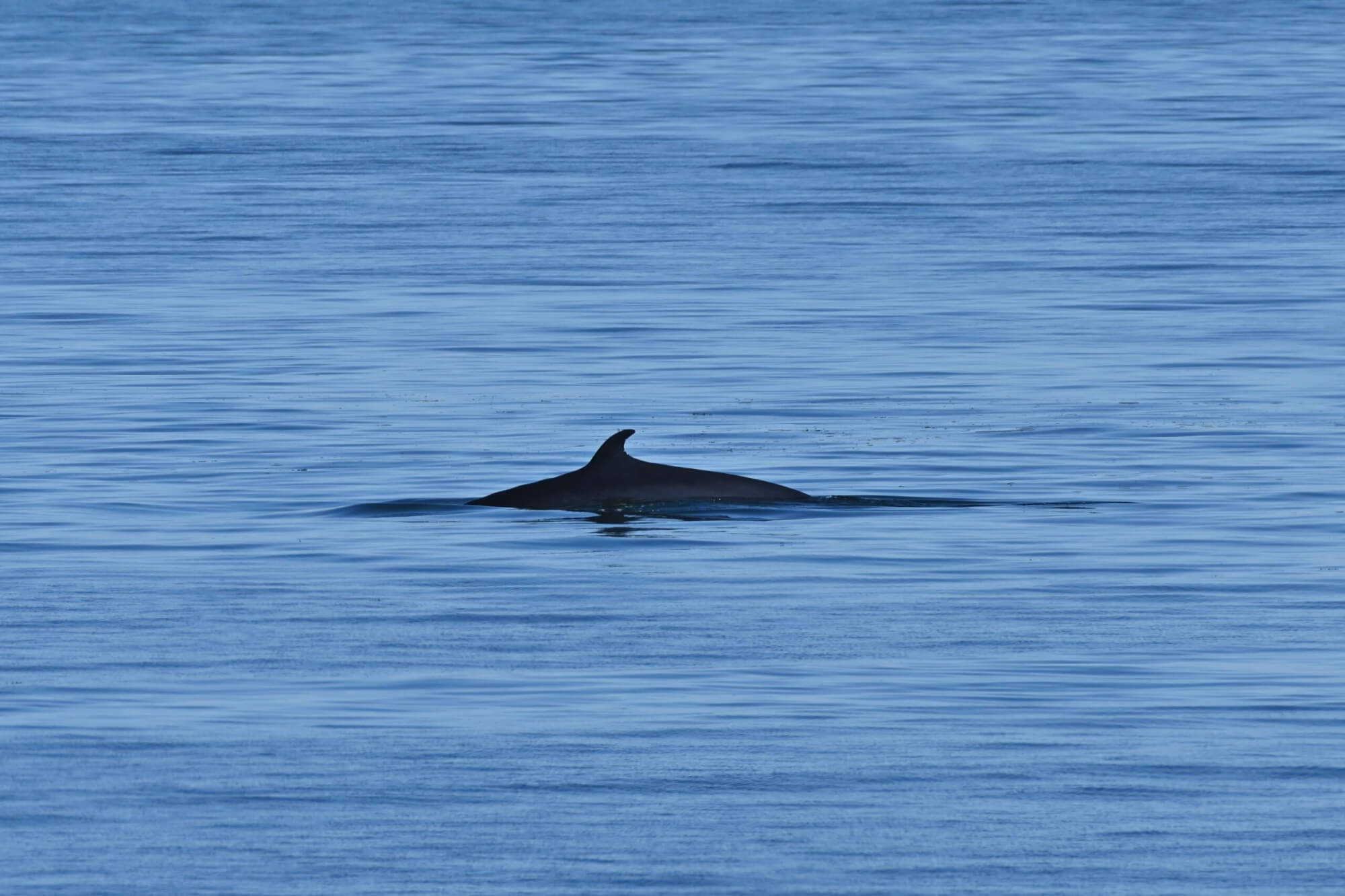
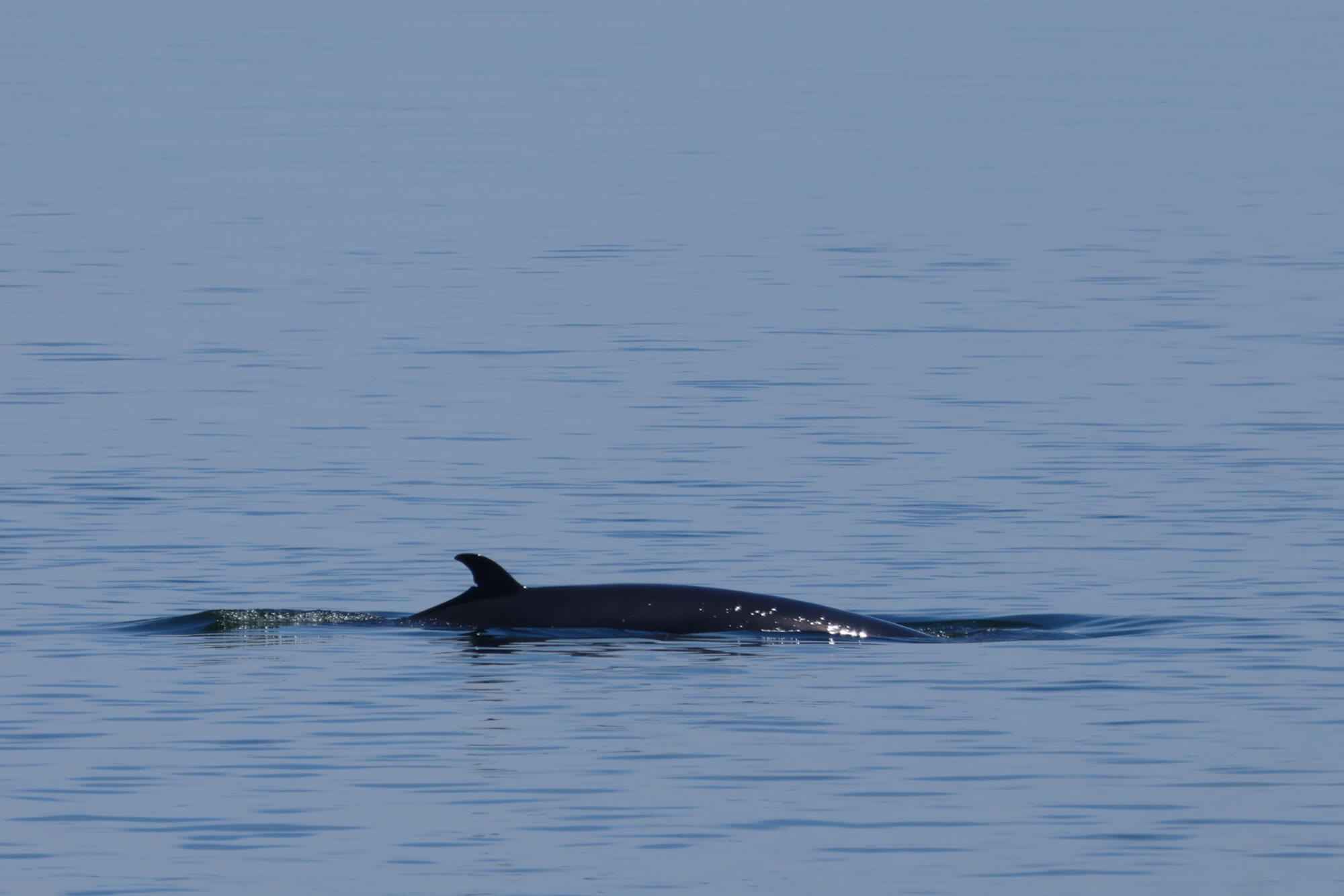
Not far from there, minke whales were also turning heads. One of them was even identified: “The ID’d individual has the code Ba232 and is nicknamed Diabola. It’s a minke whale that has been known since 2016, but hadn’t been documented seen since 2023,” explains a naturalist who collaborates with Mériscope, a research group based in Portneuf-sur-Mer that studies minke whales. Two fin whales also showed up near Les Escoumins, but their identities remain unknown. A river otter was even reportedly spotted near Pointe de l’Islet in Tadoussac.
Whales in sight from the north shore
A blue whale was seen swimming off Pointe-Paradis on April 26. Several large spouts had also been observed in the same area in the preceding days. “I saw two minke whales this week, but no large blows so far,” mentions a resident of Franquelin. Nearly fifty belugas were also seen off Baie-Comeau over the course of several consecutive days. He adds that a fin whale had been observed the previous days by others not far from the shores of Franquelin.
Fin whales are seasonal residents of the St. Lawrence and are generally present between May and November. One well-known individual nicknamed Ti-Croche has frequented the estuary every year since 2016. In 2021 and 2024, a Fisheries and Oceans Canada (DFO) team tagged its back with a satellite transmitter to learn more about the species’ migratory movements. This study revealed that, in 2024, Ti-Croche had travelled down the US coast at least as far as Delaware, at which point the tag stopped transmitting a signal. When will Ti-Croche make its first appearance in the St. Lawrence this year?
Large whales and small seals
Gaspé Bay was the playground of at least four different fin whales on April 17. Their breathing cycles lasted between four and six minutes, adds the scientifically minded local who shared his sighting with us.
In rorquals, dive time varies from one species to another, but on average rarely exceeds fifteen minutes. It is beaked whales as well as sperm whales that hold the records for the longest dives: up to two hours without taking a breath!
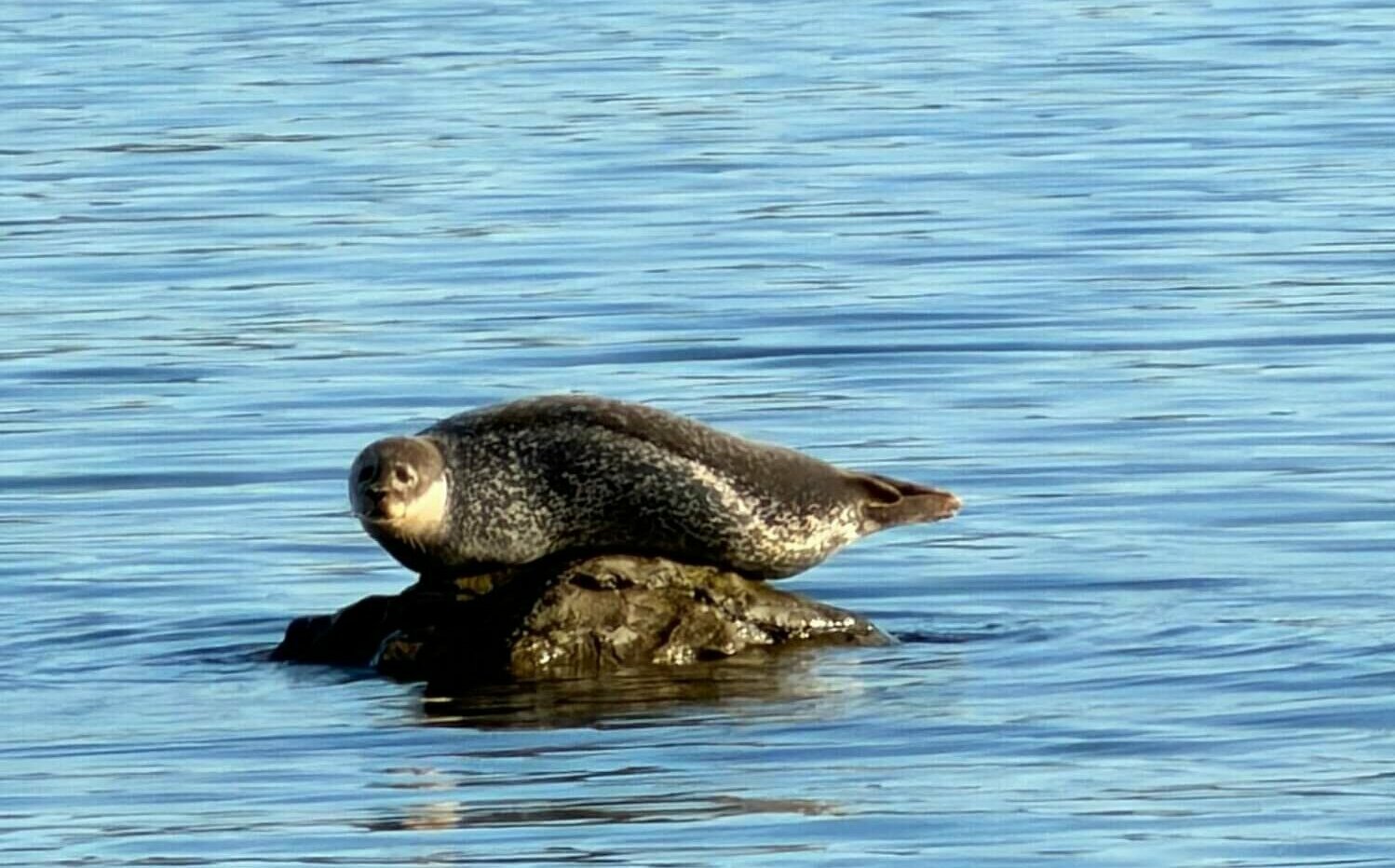
On Sunday, April 19, nearly 200 seals had taken up residence in Gaspé Bay. “And the next day, nothing, and they’ve been nowhere to be found ever since!” exclaims an observer from the region. She also notes the presence of about thirty seals near Pointe Saint-Pierre, as well as a solitary pinniped resting on an emergent rock at L’Anse-aux-Cousins.
Thanks to all our collaborators!
Special thanks go out to all our observers who share their love for marine mammals with us.
Your encounters with cetaceans and pinnipeds are always a pleasure to read and discover. On the water or from shore, it is your eyes that give life to this column.
- Marie-Andrée Charlebois
- Thalia Cohen Bacry
- Daniel Delair
- Laetitia Desbordes
- Hélène Guitton
- Camille Némond
- Diane Ostiguy
- Pascal Pitre
- Jean Rheault
- Guillaume Savard
- Andréanne Sylvain
Additionally, we would like to acknowledge the following teams that also share their sightings:
Centre d’éducation et de recherche de Sept-Îles (CERSI)
Station de recherche des Îles Mingan (MICS)
Réseau d’observation des mammifères marins (ROMM)
Réseau québécois d’urgence pour les mammifères marins (RQUMM)
Groupe de recherche et d’éducation sur les mammifères marins (GREMM)
Mériscope
Would you also like to share your observations? Have you seen any marine mammals in the St. Lawrence? Whether it’s a spout offshore or just a couple of seals, drop us a line and send your photos to [email protected]!

Odélie Brouillette
Odélie Brouillette joined the GREMM team as a writer and naturalist in 2022, and has been a project manager in scientific communication since 2023. With a background in biology, she loves learning and sharing with others what's most important to her. She has always been fascinated by marine environments and whales, and hopes to contribute to their protection through awareness-raising and popularization.
Recommended articles
Mama Whales and Their Calves Roam the St. Lawrence
It would hardly be an exaggeration to say that the St. Lawrence has been teeming with life these past few…
Chance Encounters in the Estuary
The undisputed stars this past week were white-beaked dolphins, which reminds us of the importance of being in the right…
Feeding Scenes, Chevrons and Pigmentation Patterns
As new arrivals continue to show up across the St. Lawrence, visitors flock to admire the landscapes and wildlife, while…