
Beluga Calving Season Off to a Bad Start


It is usually in mid-July that the first newborn beluga sightings are recorded, often initially by GREMM team members who study these animals in their habitat on a daily basis. That’s precisely what happened on July 9 off the coast of Cacouna in the St. Lawrence Estuary. While the Bleuvet team was getting ready to move to a different sector to join a group of belugas, the captain noticed a female exhibiting a strange behaviour which reminded him of a particular situation that he had already observed in the past. After a few minutes of observation, his suspicions are confirmed: he is witness to a female beluga keeping a dead newborn afloat. For almost three hours, the team observes and documents the behaviour of the beluga, presumably the mother of the calf. This behaviour has actually been observed a number of times in belugas of the St. Lawrence. It has also been documented in dolphins and chimpanzees, two species in which mother-offspring bonds are also very strong. In chimpanzees, the mother’s attachment to her dead young can last for several months! The function of this behaviour however is not always well understood and remains the object of speculation.
 The following day, two newborns were seen alive by the GREMM team. A week later, on July 17, Marine Mammal Emergencies receives a call for a floating beluga carcass. The witness initially believes that it is a male since a mass is seen protruding from the genital slit. As he approaches the fresh carcass to tow it back to shore, he discovers that it is actually the tail of a newborn. It is a case of labour dystocia, or calving complications. This is the fifth beluga carcass found this year.
 Veterinarian André Dallaire of the Université de Montréal’s faculty of veterinary medicine, who participated in the necropsy of the adult female, explains that its uterus tissues were torn and that the newborn, a good-sized male, was found in the abdominal cavity. Subsequent analyses of the calf’s lungs might confirm whether it had been dead for some time or if it was the parturition (labour) complications that led to its death.
Since 2008, a significant increase in mortality has been observed in beluga newborns, in addition to more frequent incidences of dystocia in females. These increases coincide with the newly documented decline in the St. Lawrence beluga population, an issue that is the focus of tests and analyses within the community of researchers and experts.

Josiane Cabana
Josiane Cabana served as Director for the Quebec Marine Mammal Emergency Response Network call centre from 2011 to 2018. When she’s not responding to cases of dead or vulnerable marine mammals, she likes to take the time to educate local residents on the threats faced by these animals. Biologist by training, she has been involved with the GREMM for more than 15 years, and always with the same undying passion!
Recommended articles

Beluga Mortality Report: 19 Carcasses Discovered in 2025
Between the start of 2026 and the release of this 2025 beluga mortality report, three carcasses have already been reported…
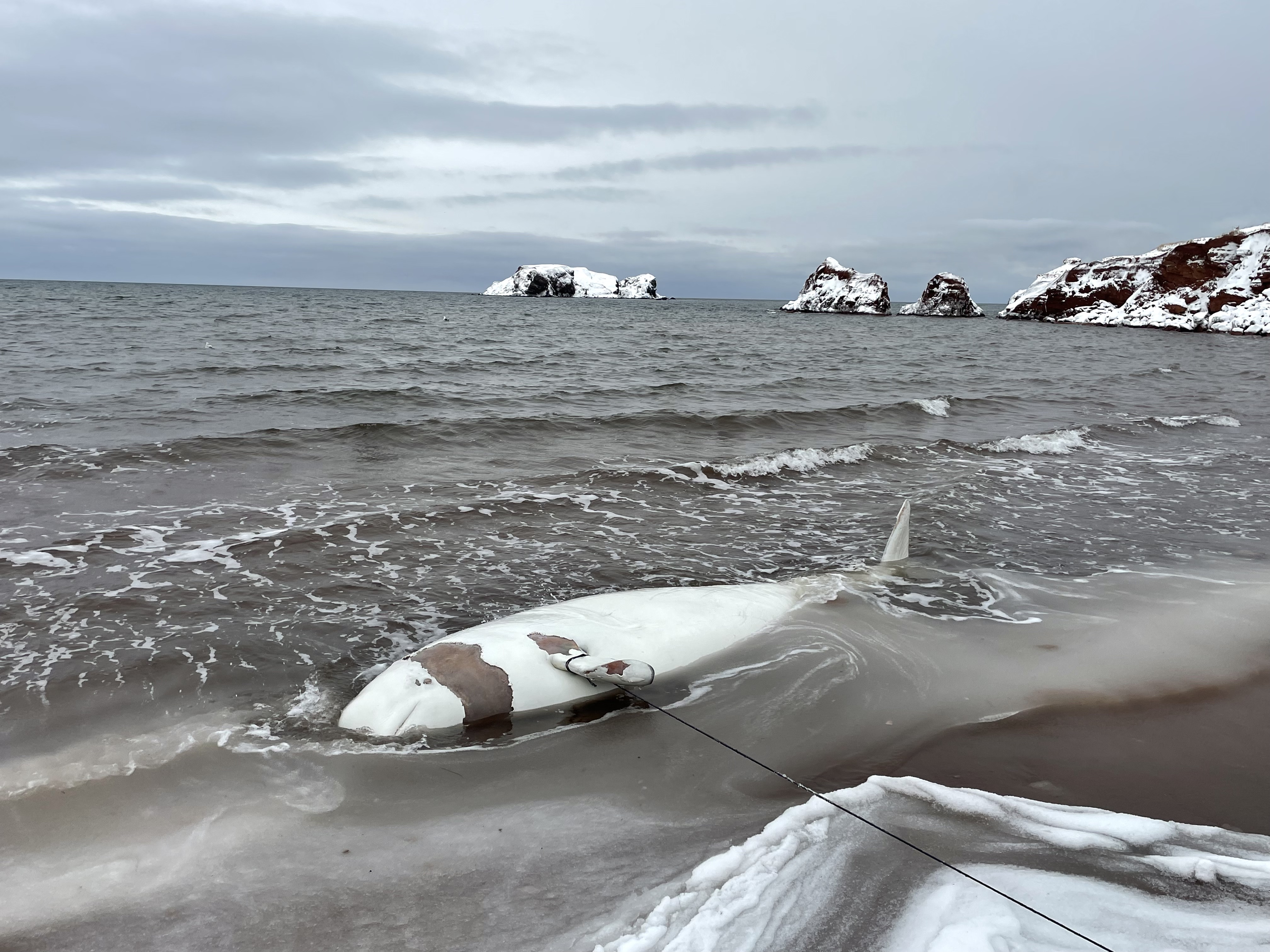
First Beluga Carcass of the Year Recovered in the Magdalen Islands
Sunday, January 18: The Marine Mammal Emergencies (UMM) telephone rings. Cédric Gascon, a technician and UMM responder for the past…
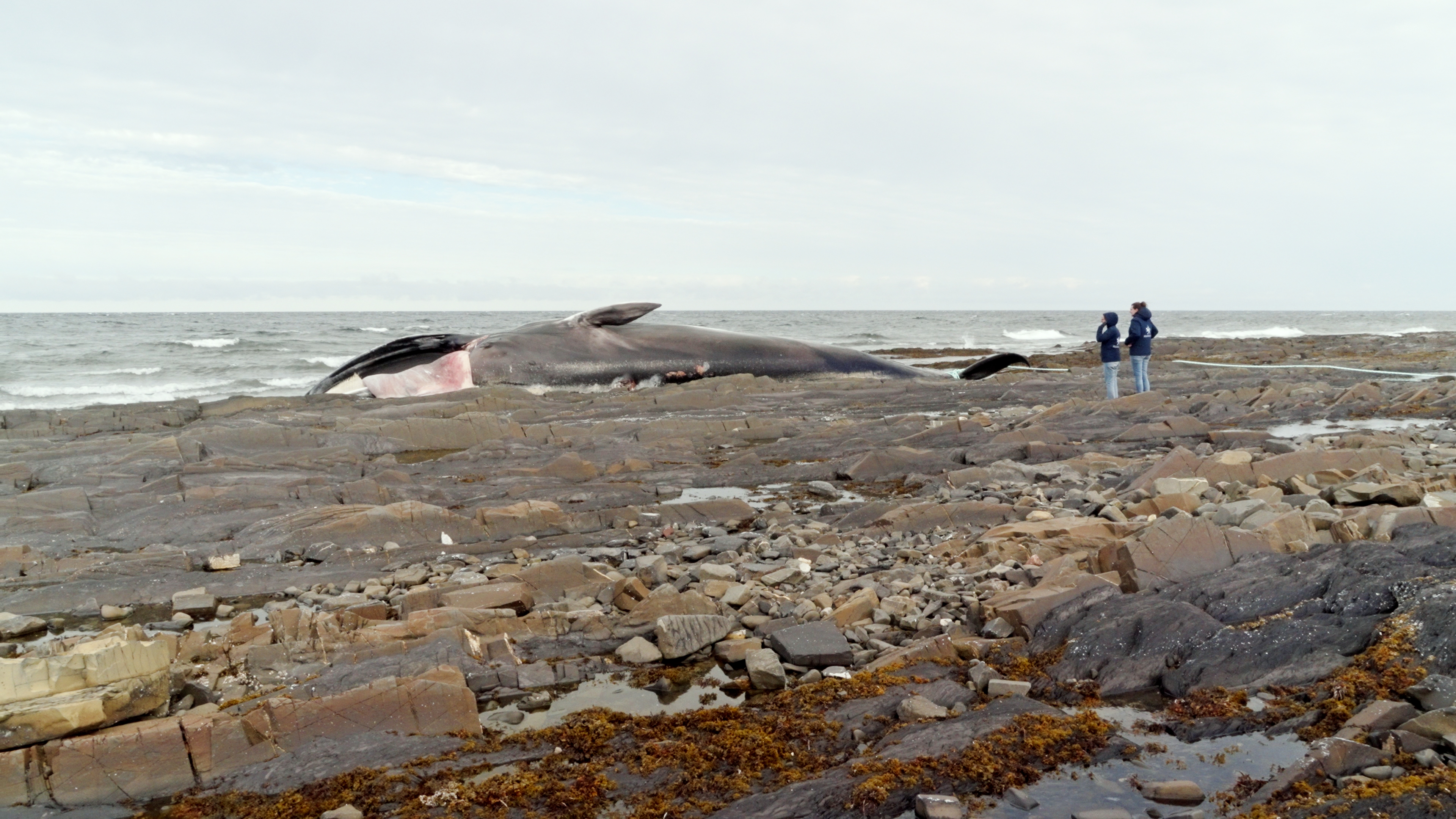
Beached Fin Whale: QMMERN Takes to the Field After Bp919 Found Stranded
On October 24, 2025, Marine Mammal Emergencies (UMM) received a call concerning a large dead whale stranded on the shores…