
Beneath the Surface, with Dr. Jory Cabrol

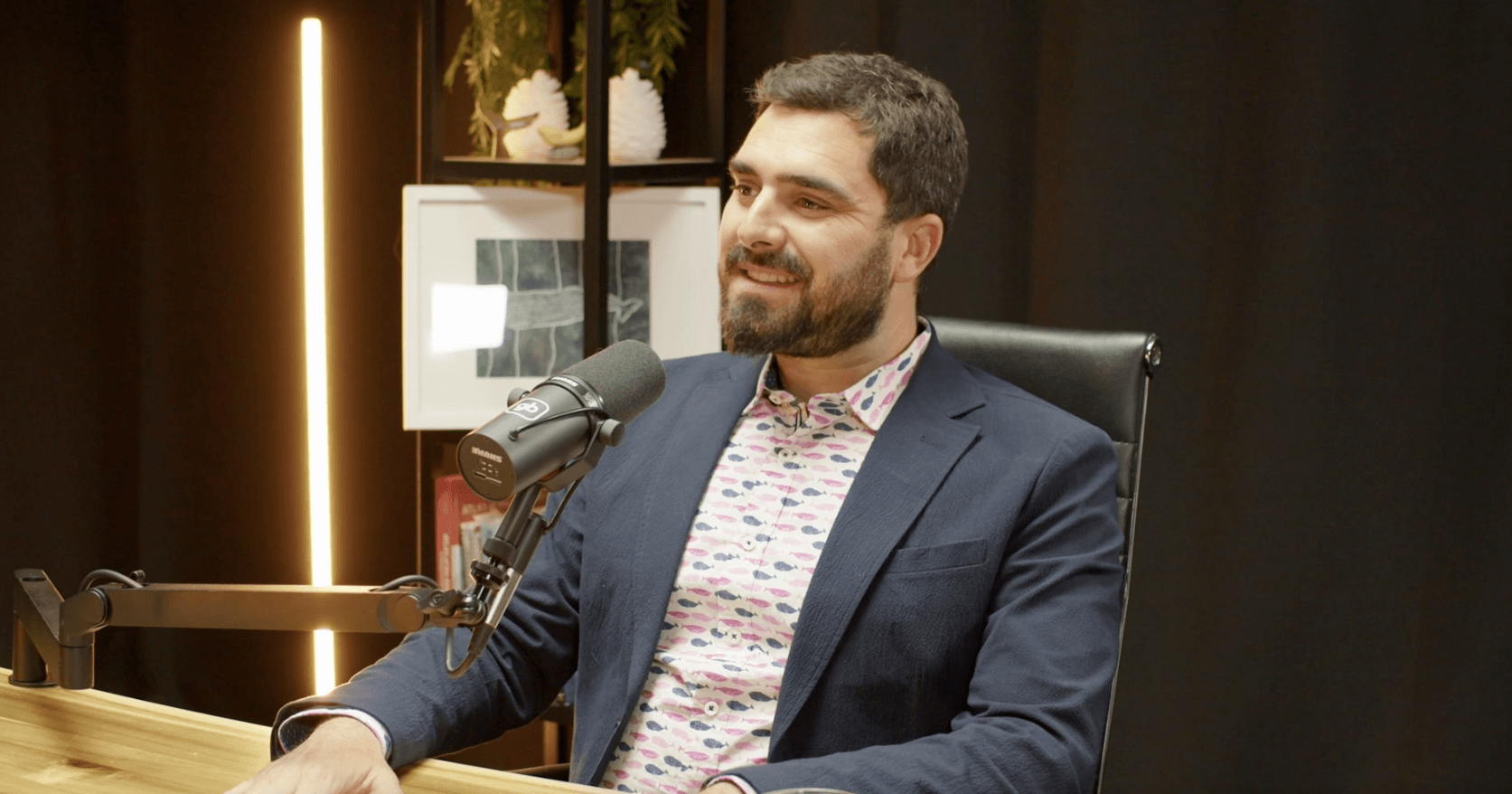
Dr. Jory Cabrol is a research scientist at the Maurice Lamontagne Institute, a research centre run by Fisheries and Oceans Canada. An expert in trophic ecology, he also co-supervises master’s projects for students at the Université du Québec à Rimouski (UQAR). Prior to studying belugas and large rorquals, Dr. Cabrol completed his PhD at UQAR, where he focused on the trophic ecology of krill.
A few highlights:
- If he could be any cetacean, Jory would be a sperm whale, as he has always dreamt of exploring the ocean depths and the abyss.
- He saw his first whale in the Mediterranean!
- What he enjoys most about his profession is working with a team with students, as well as collaborating with other scientists.
- The marine mammal species he most enjoys researching is the beluga due to the complexity of studying them.
- As the parent of a young daughter, Jory strives to maintain a balance between his personal and professional lives.
How did you end up in Quebec?
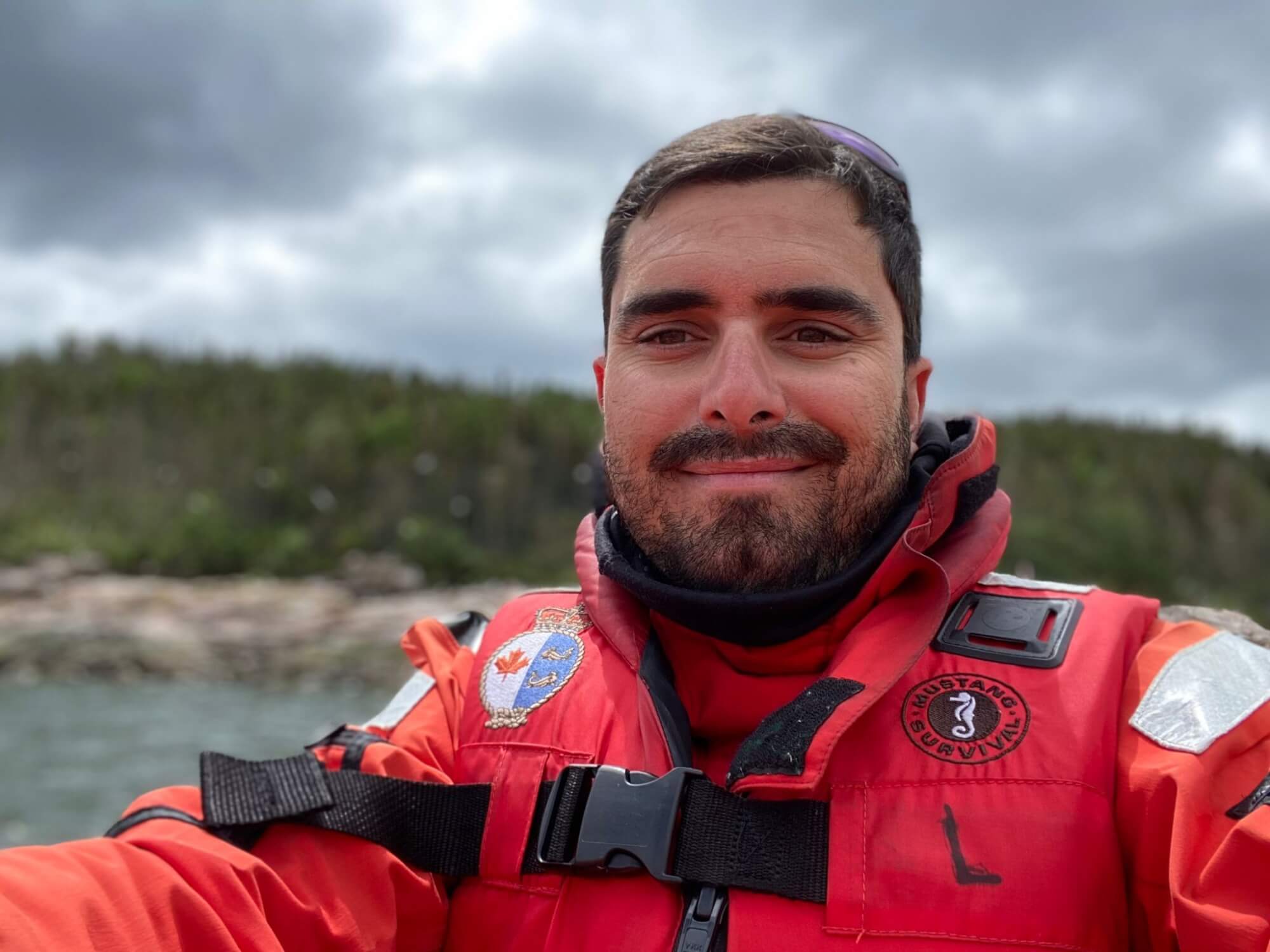
I grew up in a tiny village in southern France, not far from the beach. I completed a two-year technical degree called a DUT in biological engineering. After that, I pivoted toward marine sciences and completed both a bachelor’s and a master’s degree at Aix-Marseille University. I earned a scholarship, which brought me to the Institut des sciences de la mer de Rimouski (UQAR) for a year. When I went back to Aix-Marseille to pursue my PhD, they refused to grant me my grade equivalencies. So, I packed my bags and headed back to Quebec!
How did you get started studying marine mammals?
I met a truly extraordinary person at UQAR, Gesche Winkler (in French), who specializes in zooplankton. She said to me, “Jory, I have a master’s project for you.” Toward the end of my master’s, Gesche told me she had secured significant funding and gave me free rein to develop my own research project. That was in 2014. While completing my thesis in 2019-2020, I focused on the trophic ecology of krill. Later, I attended a conference organized for the anniversary of the Marine Park, which is where I met Véronique Lesage (in French). She mentioned that she had some data sets and asked if I’d like to get involved in her project. That’s how my path shifted toward marine mammals!
What does a typical day look like for you?
Being a researcher involves a wide variety of tasks: managing a team, writing, applying for funding, handling budgets, giving presentations… There isn’t really a “typical” day. There’s also the fieldwork component, though I’ve been doing less of that in recent years. Every day is different, which is what makes it so interesting. It’s not for everyone, as some people prefer a more structured, predictable routine. Personally, I find it highly motivating to wake up in the morning with such a diverse range of tasks on my agenda.
What do you do in the lab?
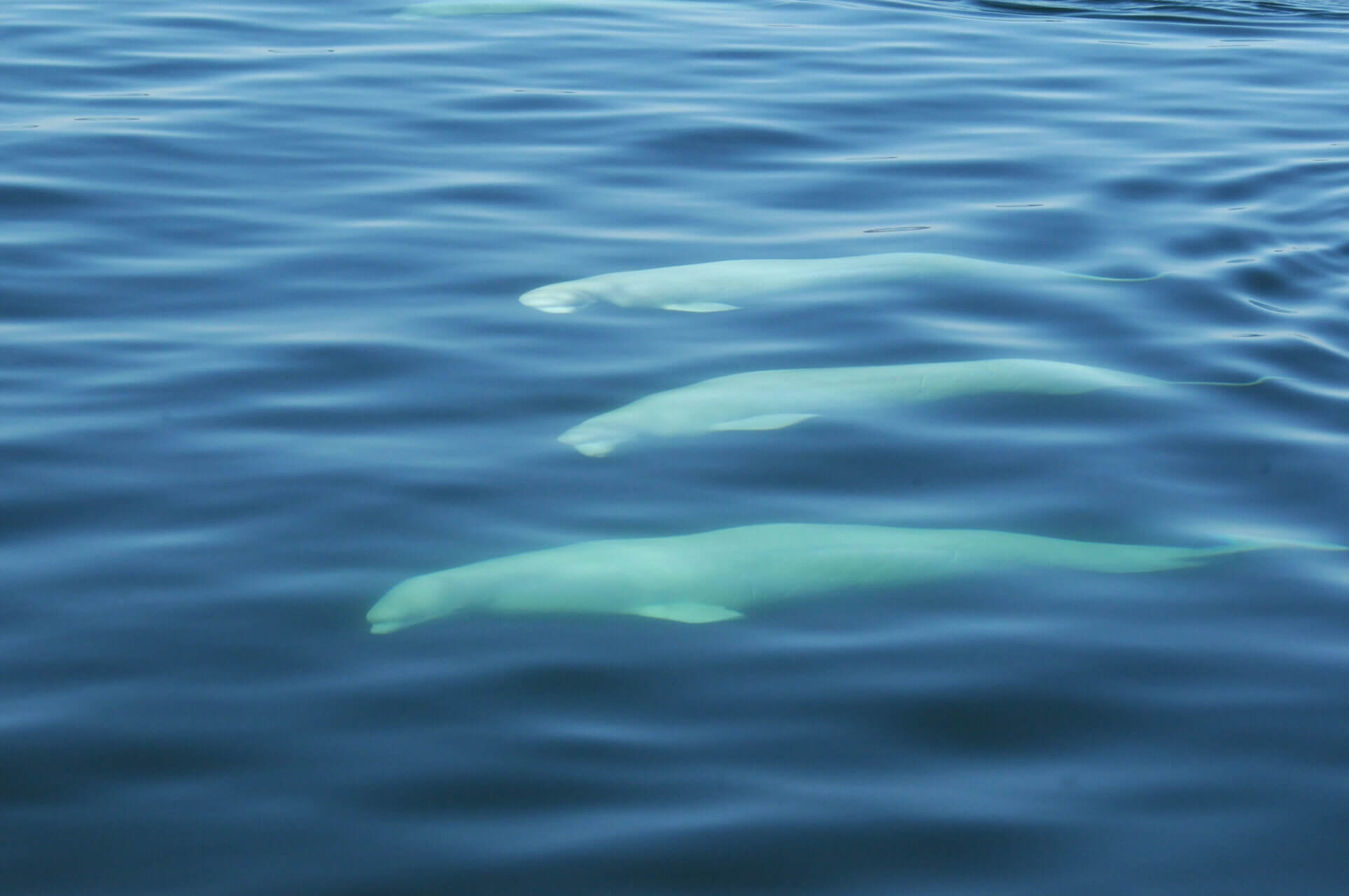
It depends on the project. I use a number of methods—primarily stable isotope analysis—which allow for a wide range of applications, such as quantifying diets. We cut open teeth and perform laser ablation analyses to examine specific elements and how they vary over time. We hope to go back as far as the 1940s and ‘50s. We aim to study the animals’ exposure to environmental conditions, as well as aspects of their diet and migration patterns.
How does one go about publishing a scientific paper?
It’s an extremely long process! Collecting and analyzing samples already takes a great deal of time. Then there’s the statistical work, the writing, and the publication process—all of which take time as well. The typical timeframe varies depending on the specific paper and the type of laboratory analysis that’s involved. If you want to study something, you can’t just tell yourself, “I’ll be ready to submit this in three months.” Sometimes, the lab analysis alone can take over a year! What I like to keep in mind is that the papers we produce will provide better information for people who work in management roles.
What does it take to be a good scientific researcher?
You need to have a broad skill set, as the role essentially combines a number of different professions! You need to be curious and enjoy digging deep and searching for information. You also need strong writing and synthesis skills, as well as ability to manage teams and budgets, work as a team, deliver presentations and share your findings. Some people excel at management, while others may be brilliant scientists but less effective at leading a team. It requires skills in many areas, but you can’t be good at everything.
Were there any people who inspired you or guided you along your path?
Emmanuelle Renard, who works on the molecular phylogeny of sponges at Aix-Marseille. I would show up to every one of her classes and ask whether she had any internships available. After six months, she finally said yes! I completed that internship and published my first scientific paper. Thanks to that, I met other people who helped me apply for grants, which eventually led me to Quebec. I met Gesche Winkler—a truly wonderful person, both scientifically and personally—who provided guidance and taught me just about everything I know today. More recently, during my PhD work, there was also Véronique Lesage.
Pour aller plus loin :

Odélie Brouillette
Odélie Brouillette joined the GREMM team as a writer and naturalist in 2022, and has been a project manager in scientific communication since 2023. With a background in biology, she loves learning and sharing with others what's most important to her. She has always been fascinated by marine environments and whales, and hopes to contribute to their protection through awareness-raising and popularization.
Recommended articles
Beneath the surface, with Élizabeth Melis
Élizabeth Melis is a whale research and rescue technician with the Campobello Whale Rescue Team, which is affiliated with the…
Beneath the surface, with Dre Anaïs Remili
Dre Anaïs Remili is a postdoctoral researcher in biological sciences at British Columbia’s Simon Fraser University, a scientific communicator, and…
Collisions in the Saguenay—St. Lawrence Marine Park (part 1/2)
Collisions are a major challenge in the recovery and protection of cetacean populations around the world. In the Saguenay–St. Lawrence…