
A Slew of Whales and a Legion of Seals

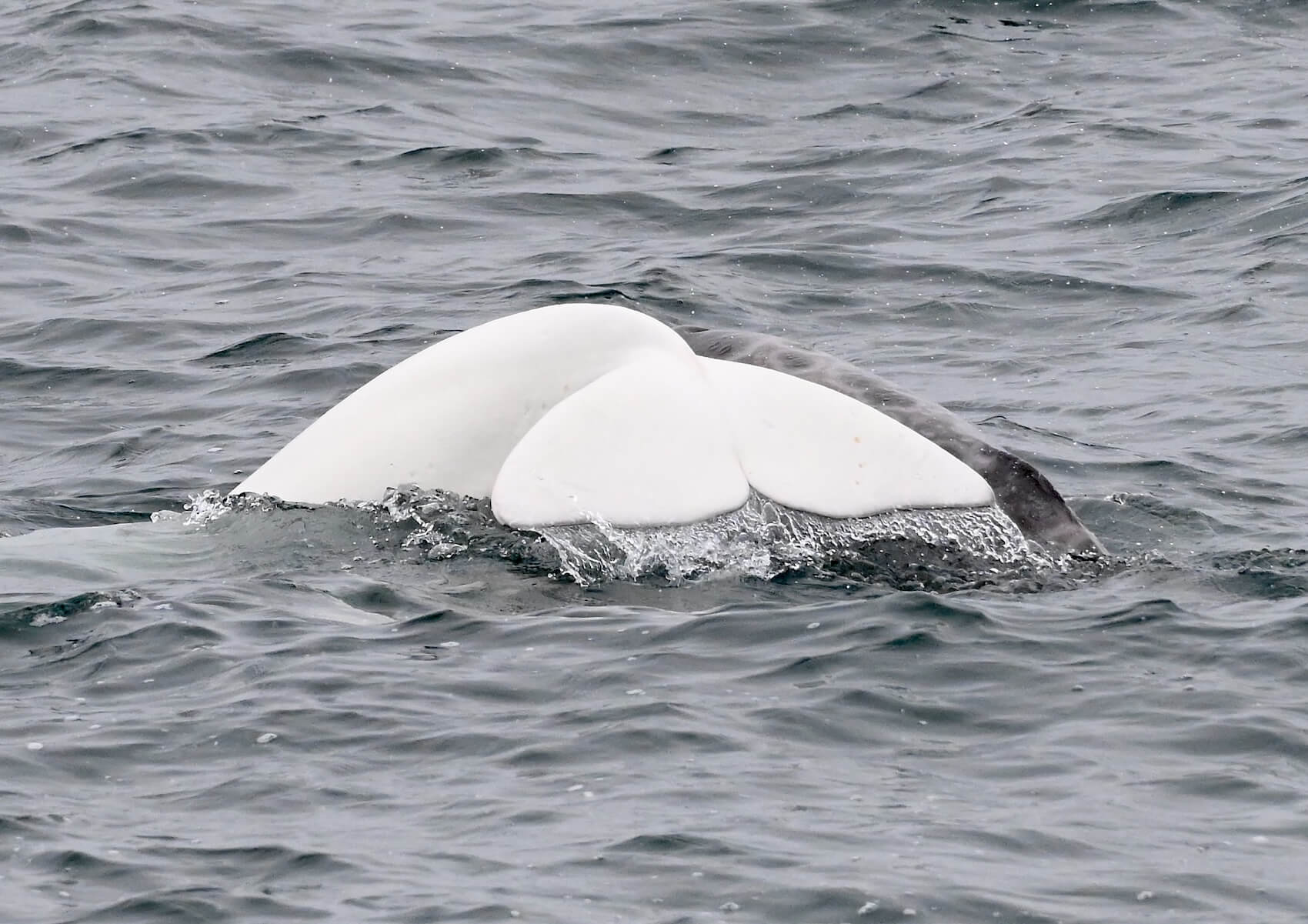
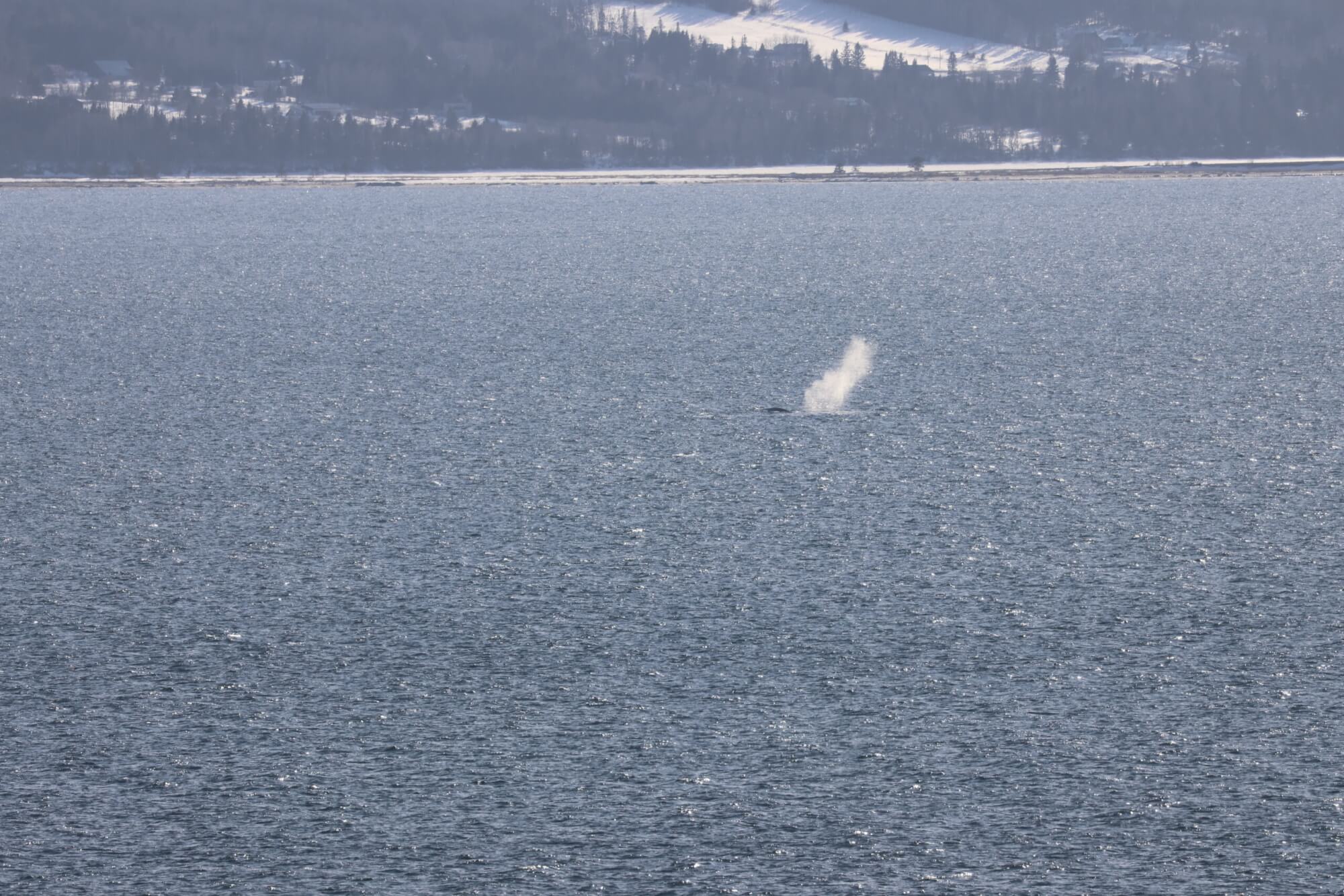
A minke whale was spotted in the estuary, blowing fin whales were reported in Gaspésie and near Godbout, while belugas have been surprising residents here and there among the seals. Icebreakers have also been passing through the Saguenay River in recent days, leaving a multitude of ice chunks to drift into the mouth of the fjord. Is spring officially around the corner?
Action in the Gaspé
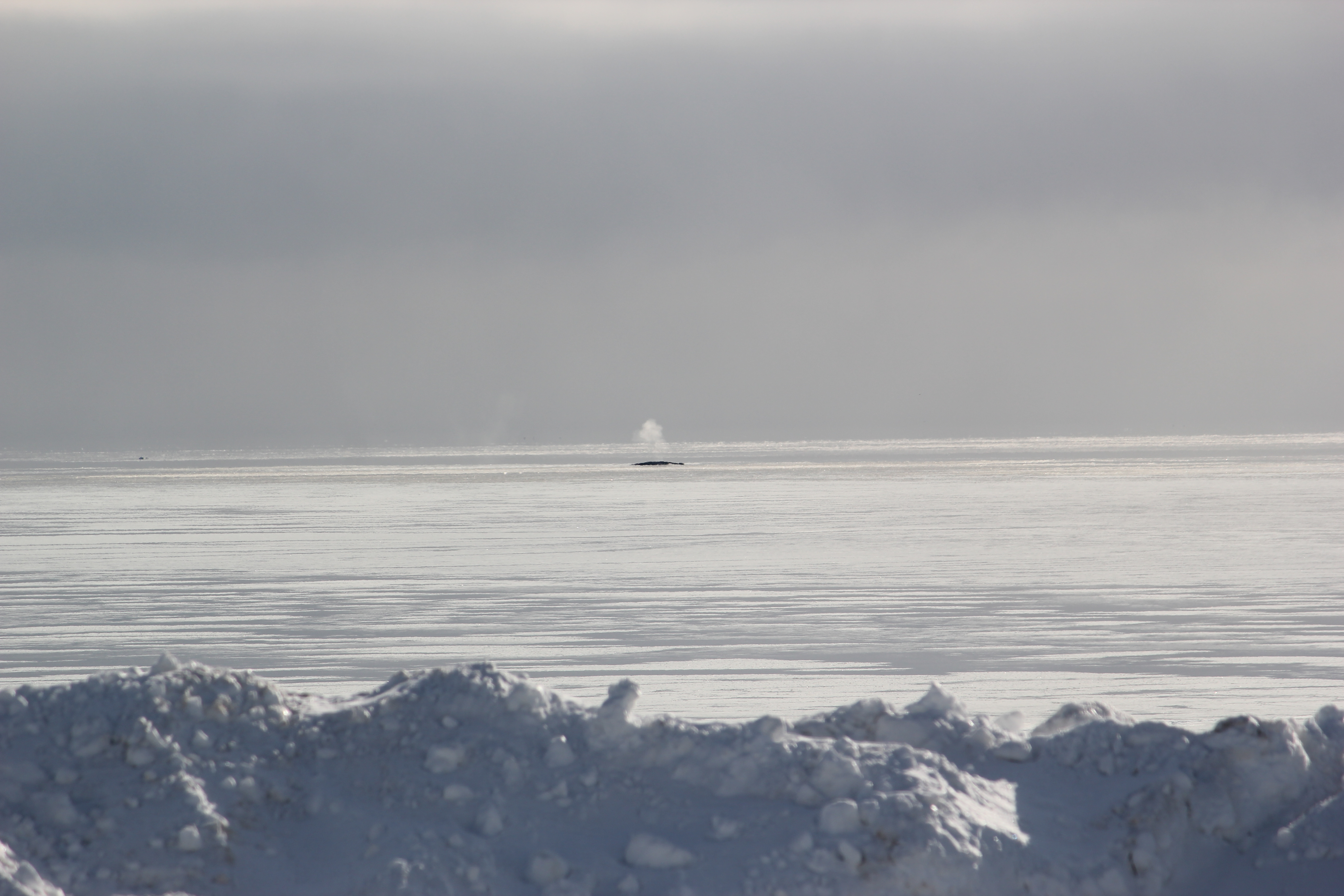
“It’s funny because every year for each of the past three years, somewhere around the 20th or 25th of March, we see a blue whale pretty much right in front of our house. Obviously, it’s impossible to prove, but we can’t help but wonder whether it’s the same individual returning to its favourite stomping grounds,” says an observer from Cap-aux-Os in Quebec’s Gaspé Peninsula.
The animal’s bluish colour, together with the height of its spout, generally makes it relatively easy to identify. To confirm whether it’s the same individual year after year, quality photos showing the mottled pattern on its back and its dorsal fin are essential: This research technique is known as photo-identification!
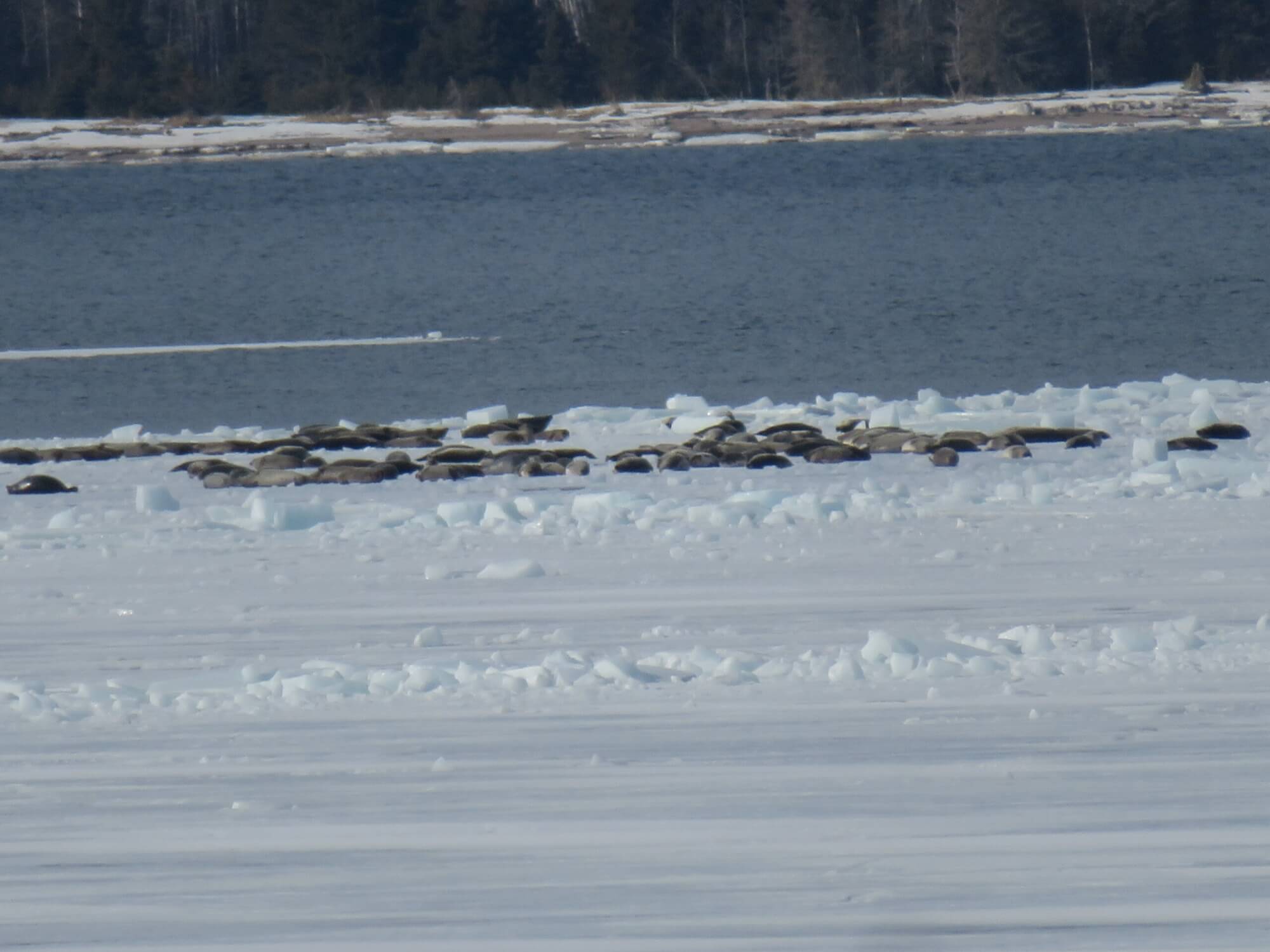
Not far away, near Gaspé Bay, about 400 seals were seen resting on the ice floes—most likely harp seals given the colour of their fur and the time of year. Several harbour seals were doing the same between Matane and Sainte-Anne-des-Monts.
Blue, white, and grey
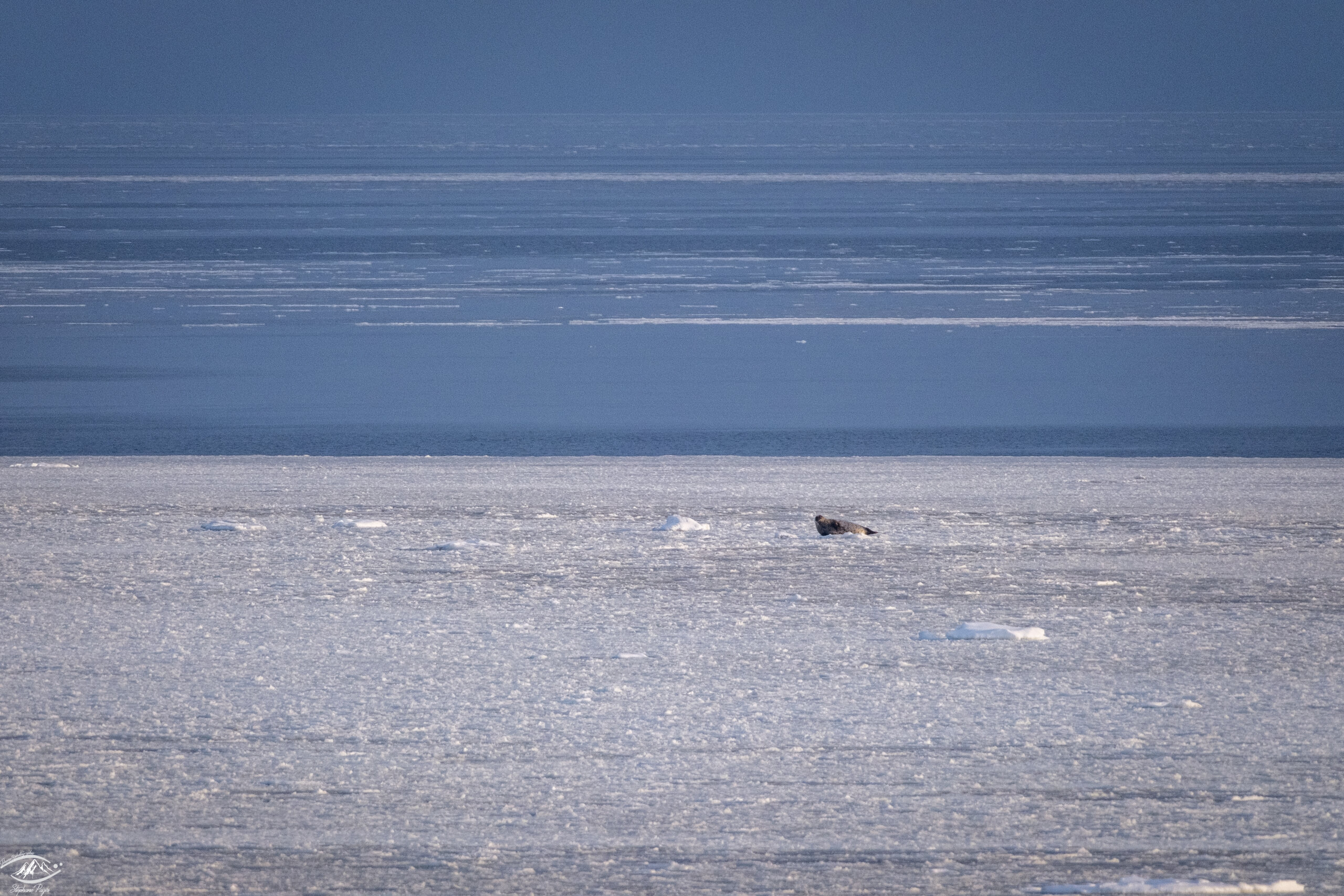
No, these aren’t the colours of a hockey team, but rather those of some of the marine mammals that have been spotted from the north shore of the St. Lawrence! While one enthusiast reported observing a seal on the ice in Sept-Îles, another one noted the presence of about fifty belugas near Franquelin. Two blue whales have also allegedly been spotted near Baie-Comeau.
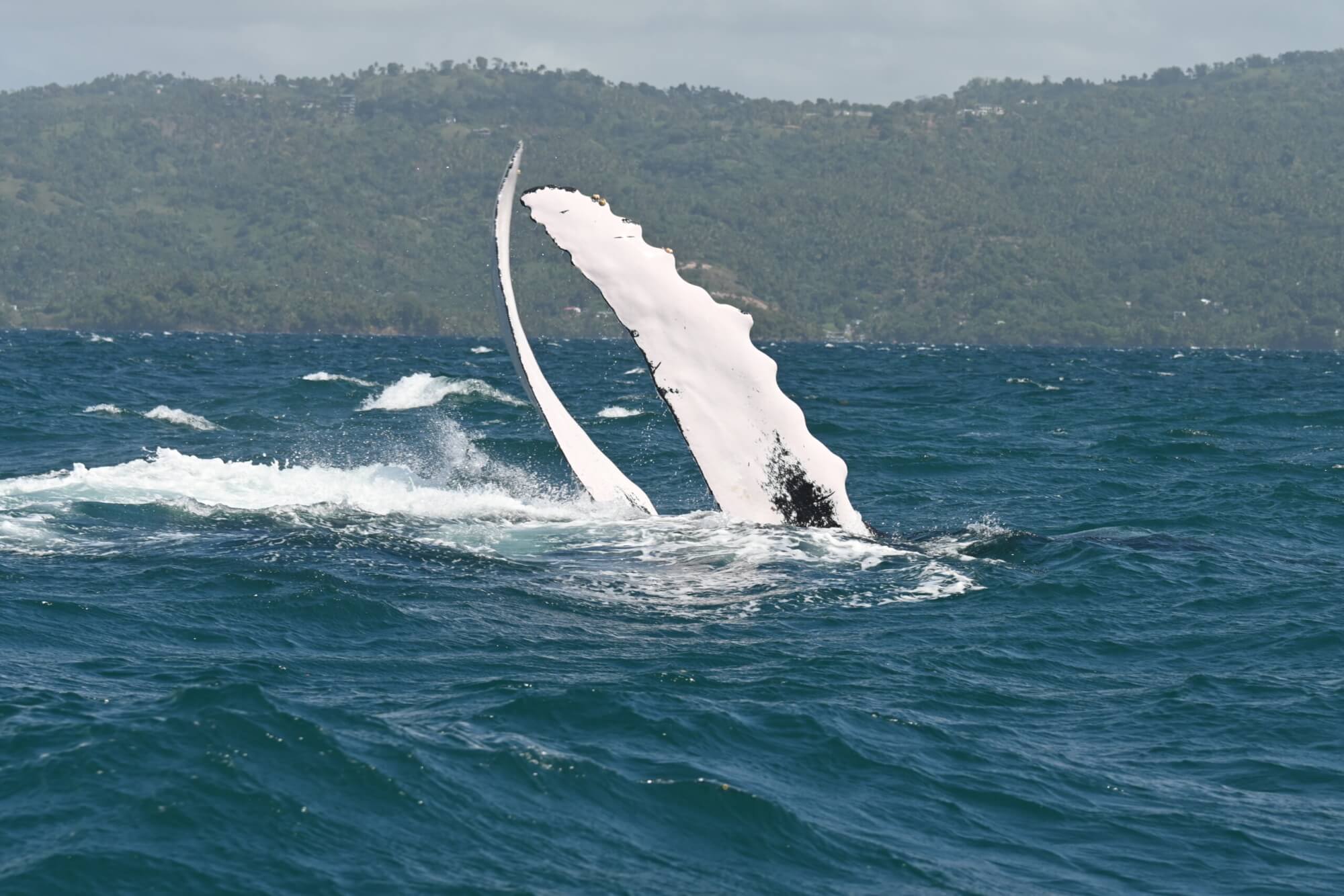
Blue is strangely reminiscent of the colour of the crystal-clear waters off the Dominican Republic. A naturalist who recently got back from a trip to this Caribbean country shared some images of the humpbacks he observed there. Enough to make us all a bit envious! This is where female humpbacks give birth to their calves. The passionate observer explains, “Calves need nearly ten weeks in these waters before they are ready to undertake migration with their mothers. For example, a mother that gives birth in early February will have to wait until about mid-April for her calf to be strong enough to begin the long journey to the species’ feeding grounds.”
Belugas steal the show
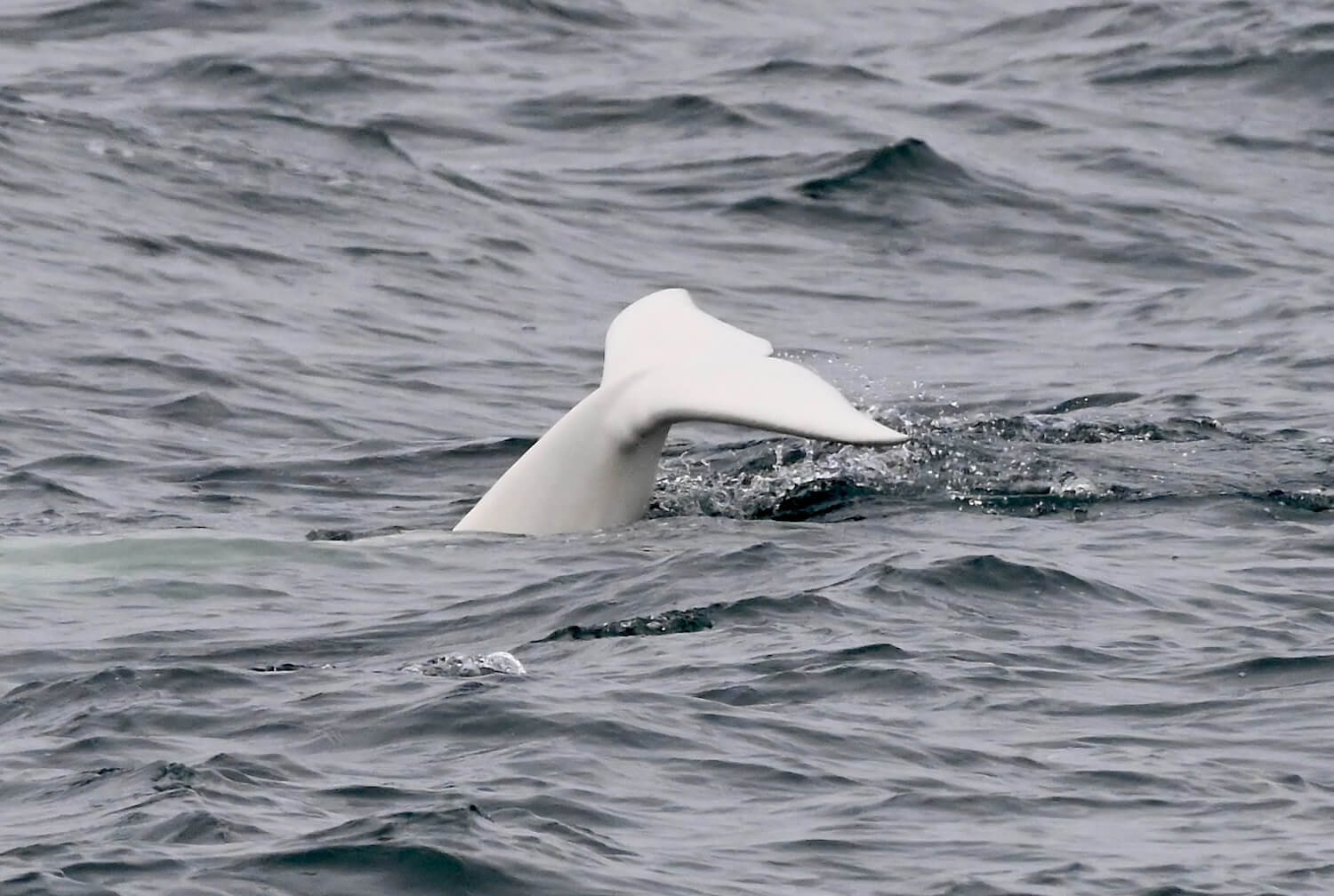
White backs and grey backs characterized a large group of belugas observed by a naturalist and wildlife photographer stationed in Les Bergeronnes for the occasion. “An extremely long line of individuals slowly parading from west to east, split into numerous groups of 2 to 5 individuals at variable distances from shore.” Recognizable by their grey colour, young belugas are generally seen in groups composed of adult females and calves. Bulls tend to form their own separate groups. A resident of Les Escoumins also had the chance to observe one of these white whales at the docks used by the ferry connecting Les Escoumins to Trois-Pistoles.
What appears to be the first minke whale of the season was also spotted in the Saguenay–St. Lawrence Marine Park. Note that at this time of year, all the sightings reported in this article were made from shore, which is testimony to the sharp eyes we have in our network of observers across Quebec!
Thanks to all our collaborators!
Special thanks go out to all our observers who share their love for marine mammals with us.
Your encounters with cetaceans and pinnipeds are always a pleasure to read and discover. On the water or from shore, it is your eyes that give life to this column.
- Camille Degaches
- Laetitia Desbordes
- Jade-Audrey Lavergne
- Diane Ostiguy
- Stéphane Pagès
- Sandrine Papias
- Renaud Pintiaux
- Pascal Pitre
- Guillaume Savard
- Andréanne Sylvain
- Marielle Vanasse
And all the others!
Additionally, we would like to acknowledge the following teams that also share their sightings:
Centre d’éducation et de recherche de Sept-Îles (CERSI)
Station de recherche des Îles Mingan (MICS)
Réseau d’observation des mammifères marins (ROMM)
Réseau québécois d’urgence pour les mammifères marins (RQUMM)
Groupe de recherche et d’éducation sur les mammifères marins (GREMM)
Mériscope
Would you also like to share your observations? Have you seen any marine mammals in the St. Lawrence? Whether it’s a spout offshore or just a couple of seals, drop us a line and send your photos to [email protected]!

Odélie Brouillette
Odélie Brouillette joined the GREMM team as a writer and naturalist in 2022, and has been a project manager in science popularization since 2023. With a background in biology, she loves learning and sharing with others what's most important to her. She has always been fascinated by marine environments and whales, and hopes to contribute to their protection through awareness-raising and popularization.
Recommended articles
The Calm Before the Whales
Despite the snow, the wind, and the bitter cold of the past few days, several belugas were spotted off the…
Marine Mammals, from the St. Lawrence to the Caribbean
Seals on the ice floes in the estuary, a blowing blue whale near Baie-Comeau, and a humpback identified in the…
Large Rorquals in Godbout
If you were pacing the shoreline in recent days in search of marine mammals, Godbout was the place to be!…