
Observing Harp Seals While Waiting for Blue Whales!

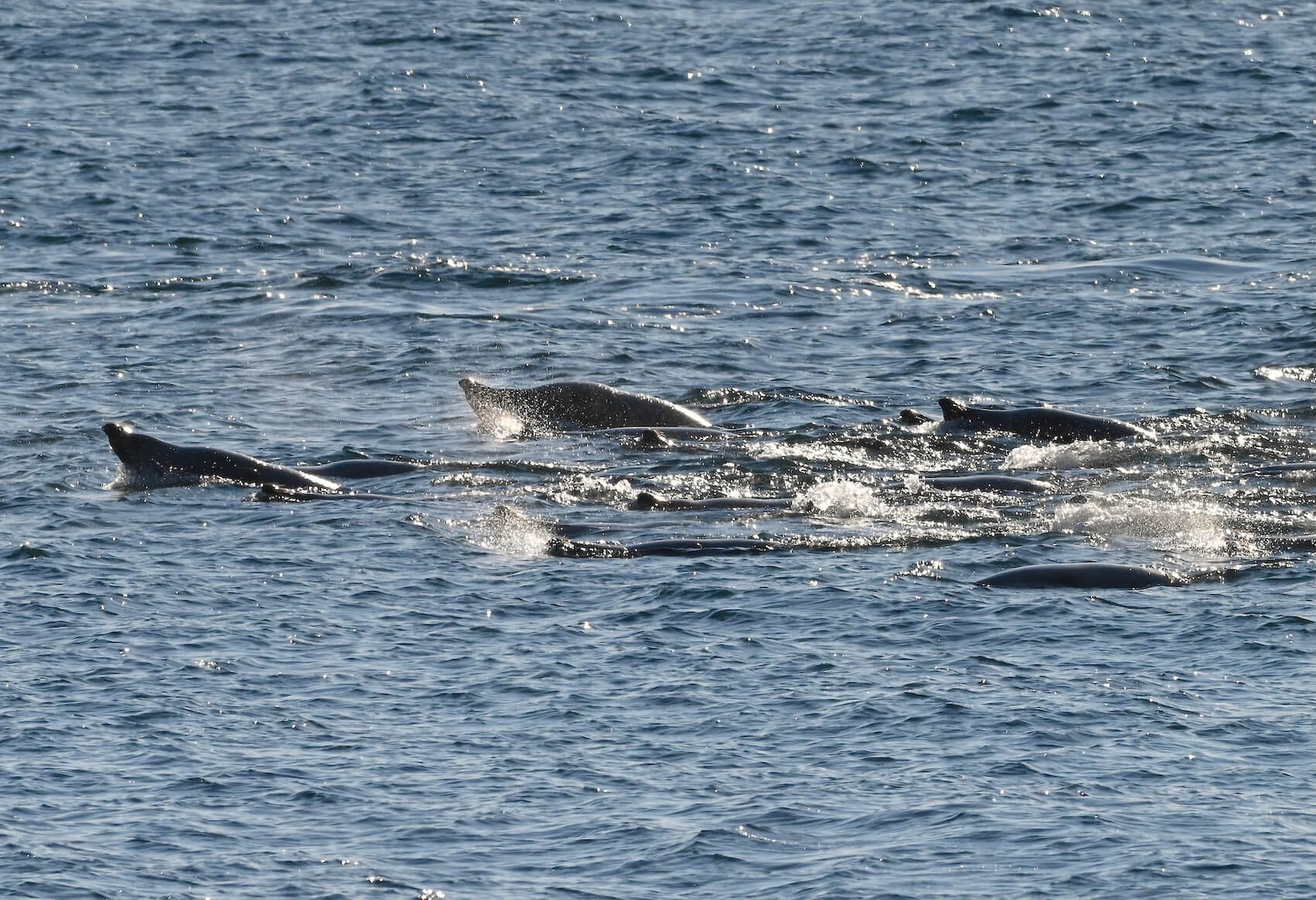
This week’s stars of the show were seals! Whether in Gaspé Bay, off the coast of Les Bergeronnes, or near the mouth of the Sainte-Marguerite River, these pinnipeds have been delighting observers with their unusual behaviour and curious gazes. With the holidays right around the corner, it’s the perfect time to get outside and enjoy some fantastic marine mammal sightings!
Pinnipeds in numbers
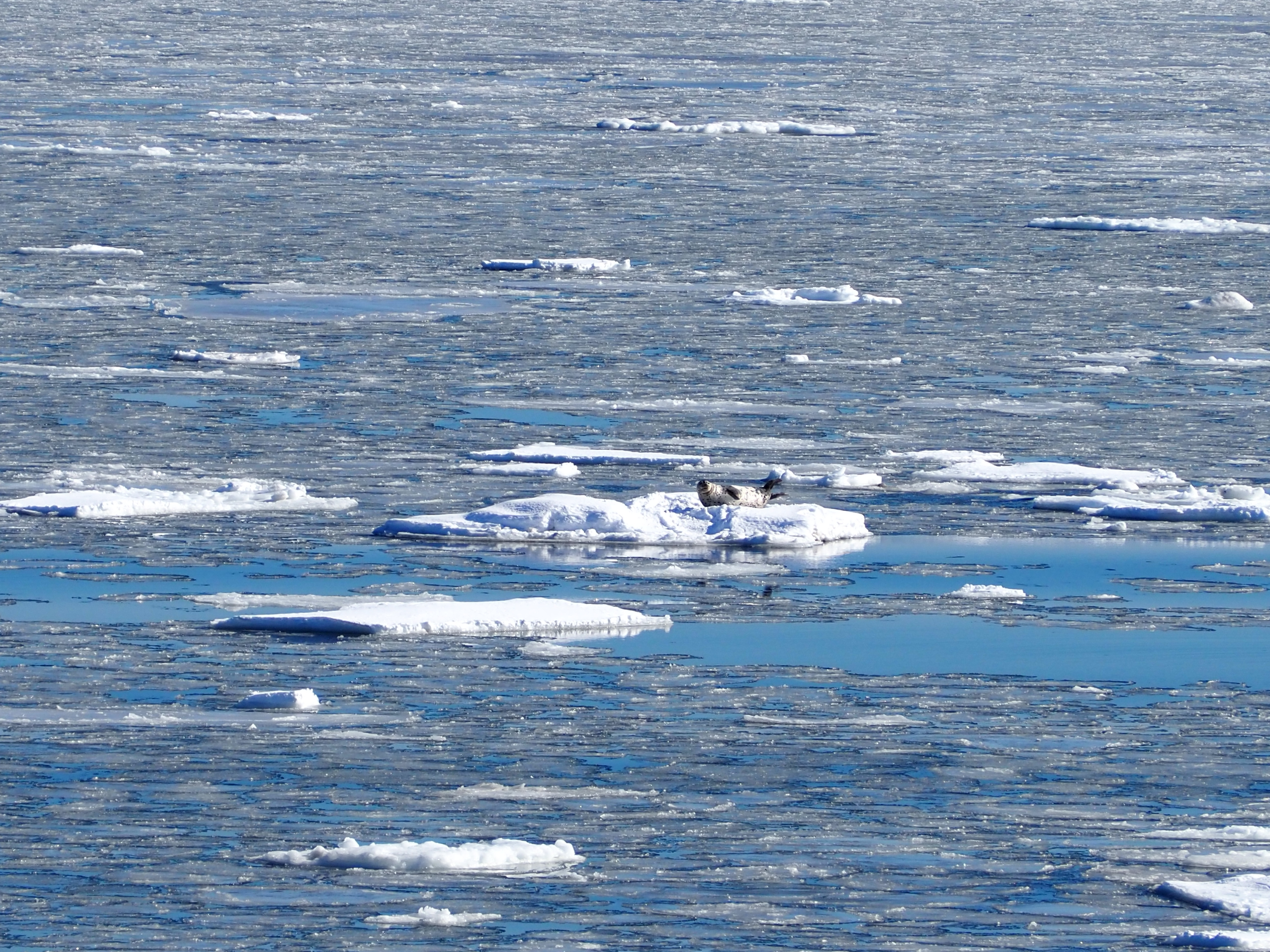
“It was truly a glorious, unforgettable day,” shares a naturalist and wildlife photographer from the Haute Côte-Nord region, his voice filled with emotion. “And… the biggest surprise of the day: two enormous, compact herds very close to each other, totalling at least 1,500 to 2,000 harp seals! “I’ve never seen so many in our area since I’ve been here.” It’s common to see harp seals swimming on their backs, their noses gracefully pointing skyward. In fact, they are one of the only pinnipeds to exhibit this unique behaviour! Groups of this size are generally observed during migration, when individuals travel thousands of kilometres.
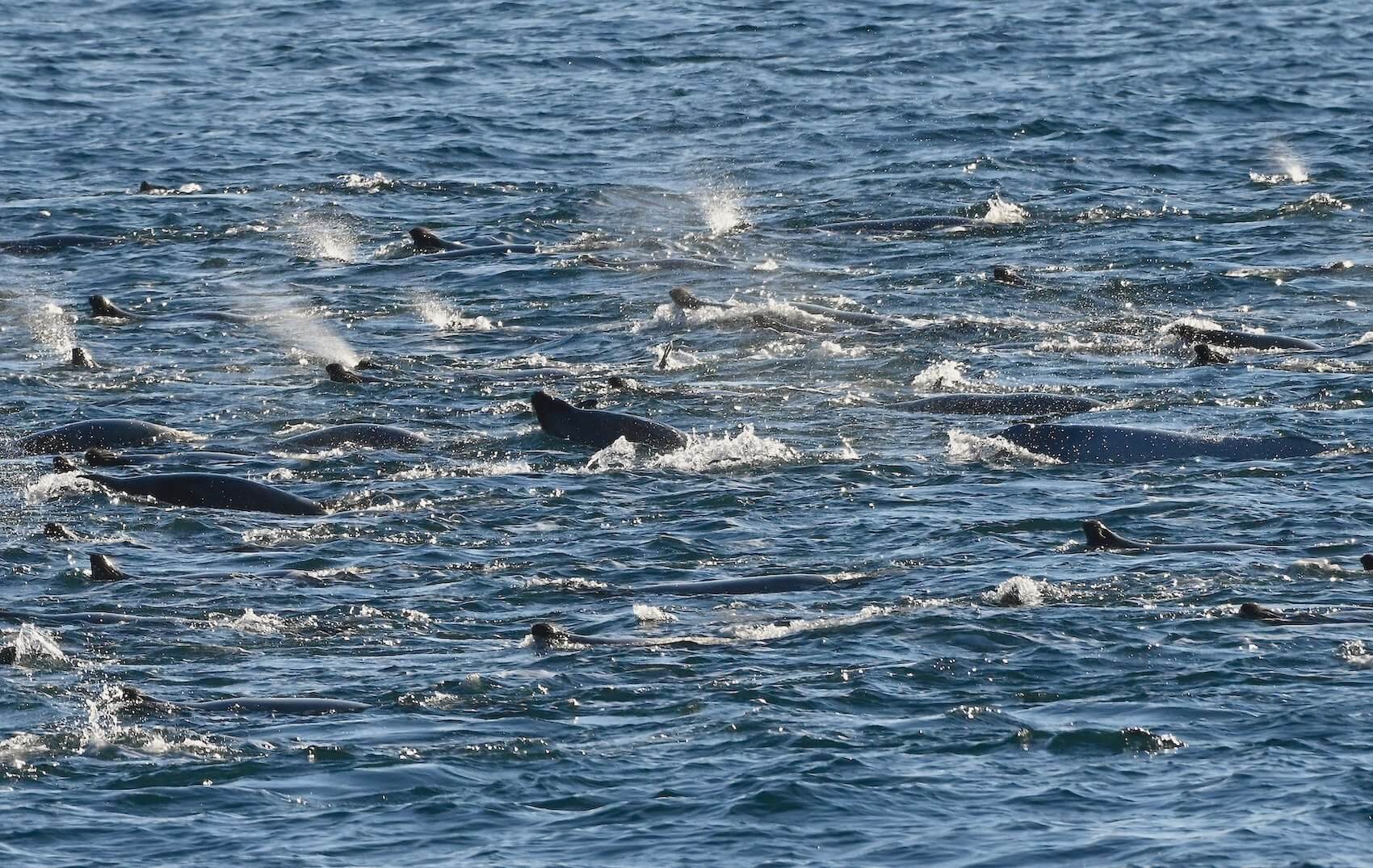
Harp seals frequent the St. Lawrence in winter, usually to give birth to their pups, moult, and breed on the ice. With its white fur and black spots, this pinniped is quite handsome, especially when accompanied by its young, commonly referred to as whitecoats. However, it is important, even crucial, to keep your distance from them, both for their safety and yours!
Alongside these impressive gatherings of seals, we’ve also gotten wind of belugas, harbour seals, and grey seals. Several types of seabirds, including gulls, have also been noted around the area, and a fin whale made an appearance nearby. A few days earlier, two minke whales were also spotted in the vicinity.
Ice and beaches
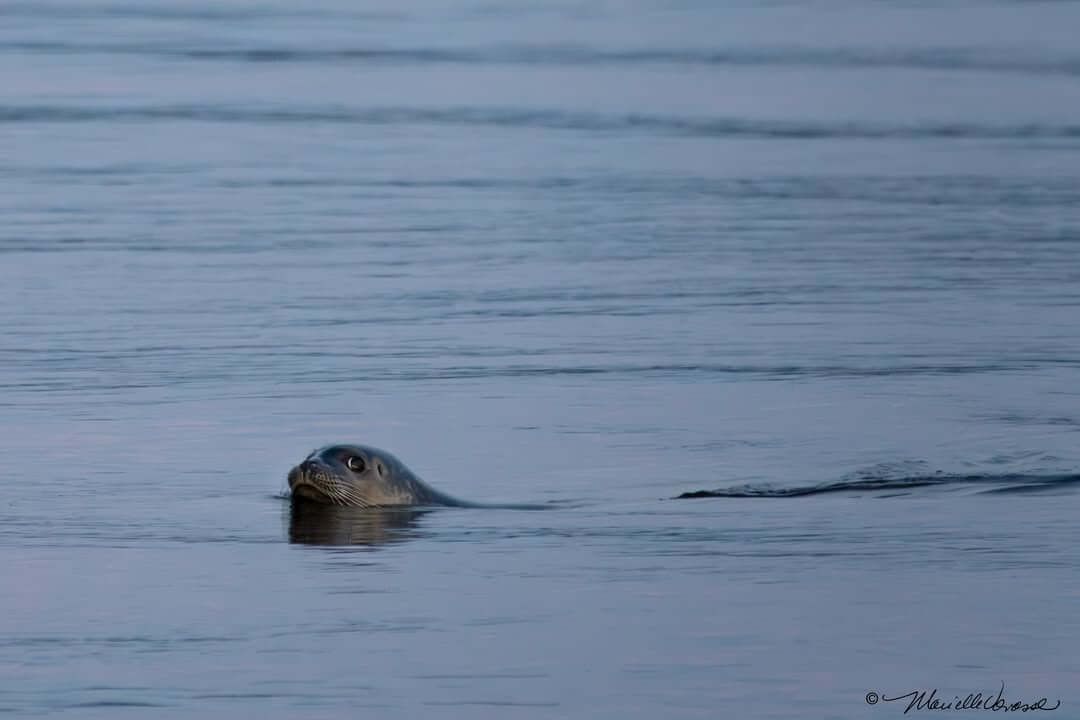
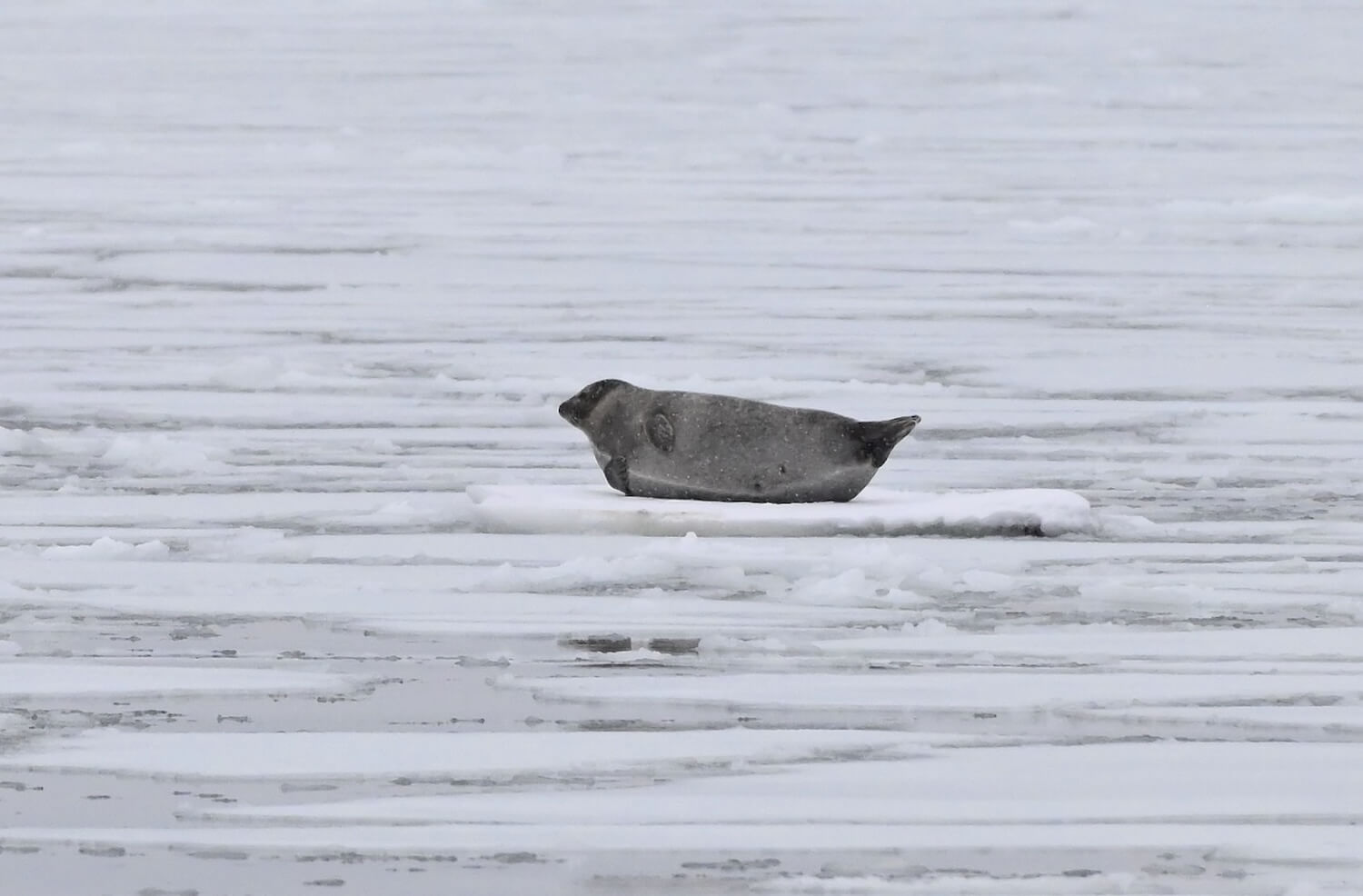
In Gaspé Bay, harbour seals have been resting on their usual rocks. A group of about fifteen individuals was observed on the nearby ice. On the north shore of the St. Lawrence, near Gallix, another wonderful encounter with pinnipeds was reported: “I was playing on the beach with my grandchildren when we saw at least four harbour seals. […] At one point, one of them, which seemed kind of curious, came quite close, watching us out of the corner of its eye, and I was able to capture a nice photo of it. It was gorgeous, the sea was calm, and there was a sublime sunset!” shared a clearly delighted resident of the village.
Where are all the blue whales?
“I haven’t had any cetaceans this week, but I’m looking forward to seeing some blue whales,” confides one enthusiast. “I’ll try to go whale watching more in the coming weeks, fingers crossed for the return of the blues!” announces another seasoned observer. For the past few years in the Baie-Comeau and Franquelin area, blue whales have been stealing the show during the cold winter months. Currently, scientists still know very little about the migration patterns of this species. It is therefore difficult to say whether these giants simply remain in the St. Lawrence after their feeding season, or if they briefly leave and then return. Let’s keep our eyes open for their powerful blows in the weeks to come!
Thanks to all our collaborators!
Special thanks go out to all our observers who share their love for marine mammals with us. Your encounters with cetaceans and pinnipeds are always a pleasure to read and discover.
On the water or from shore, it is your eyes that give life to this column.
- Diane Ostiguy
- Pascal Pitre
- Renaud Pintiaux
- Andréanne Sylvain
- Marielle Vanasse
And all the others!
Additionally, we would like to acknowledge the following teams that also share their sightings:
Centre d’éducation et de recherche de Sept-Îles (CERSI)
Station de recherche des Îles Mingan (MICS)
Réseau d’observation des mammifères marins (ROMM)
Réseau québécois d’urgence pour les mammifères marins (RQUMM)
Groupe de recherche et d’éducation sur les mammifères marins (GREMM)
Mériscope
Would you also like to share your observations?
Have you seen any marine mammals in the St. Lawrence? Whether it’s a spout offshore or just a couple of seals, drop us a line and send your photos to [email protected]!

Odélie Brouillette
Odélie Brouillette joined the GREMM team as a writer and naturalist in 2022, and has been a project manager in science popularization since 2023. With a background in biology, she loves learning and sharing with others what's most important to her. She has always been fascinated by marine environments and whales, and hopes to contribute to their protection through awareness-raising and popularization.
Recommended articles
The Calm Before the Whales
Despite the snow, the wind, and the bitter cold of the past few days, several belugas were spotted off the…
Marine Mammals, from the St. Lawrence to the Caribbean
Seals on the ice floes in the estuary, a blowing blue whale near Baie-Comeau, and a humpback identified in the…
Large Rorquals in Godbout
If you were pacing the shoreline in recent days in search of marine mammals, Godbout was the place to be!…