
Marine Mammals, from the St. Lawrence to the Caribbean

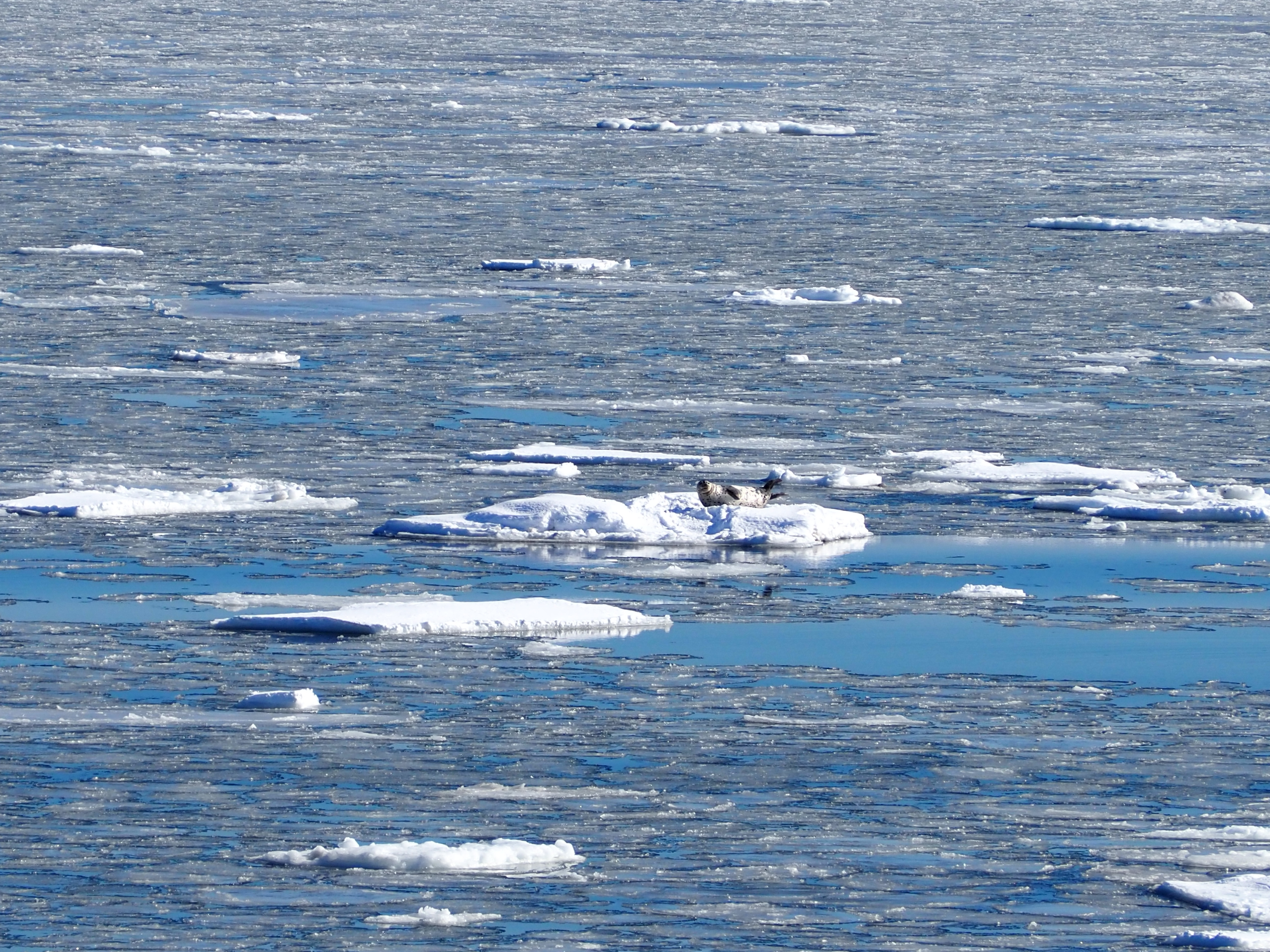
Seals on the ice floes in the estuary, a blowing blue whale near Baie-Comeau, and a humpback identified in the Caribbean… There’s something for everyone this week. It just goes to show that if you keep your eyes peeled, marine mammals are everywhere, regardless of the season!
Ice floes as far as the eye can see
“Several seals were basking on the drifting ice near Sept-Îles,” reports one seasoned observer. Photos confirm that the ice has taken a firm hold in this sector. A similar observation was reported near Gallix, where three seals lying on the ice floes were being gently rocked by the waves. In Tadoussac, a few folks present at GREMM’s offices spotted a plump little pinniped on a large ice floe floating down the Saguenay. Nearby, a naturalist also observed several seals drifting on the ice in the St. Lawrence. “On Friday, February 27, I saw my first harp seal on a distant boulder at low tide. It took me several minutes, a few photos, and another pair of trained eyes to confirm the species, but its black head quickly dispelled any doubts!” added a cross-country skier in Les Bergeronnes.
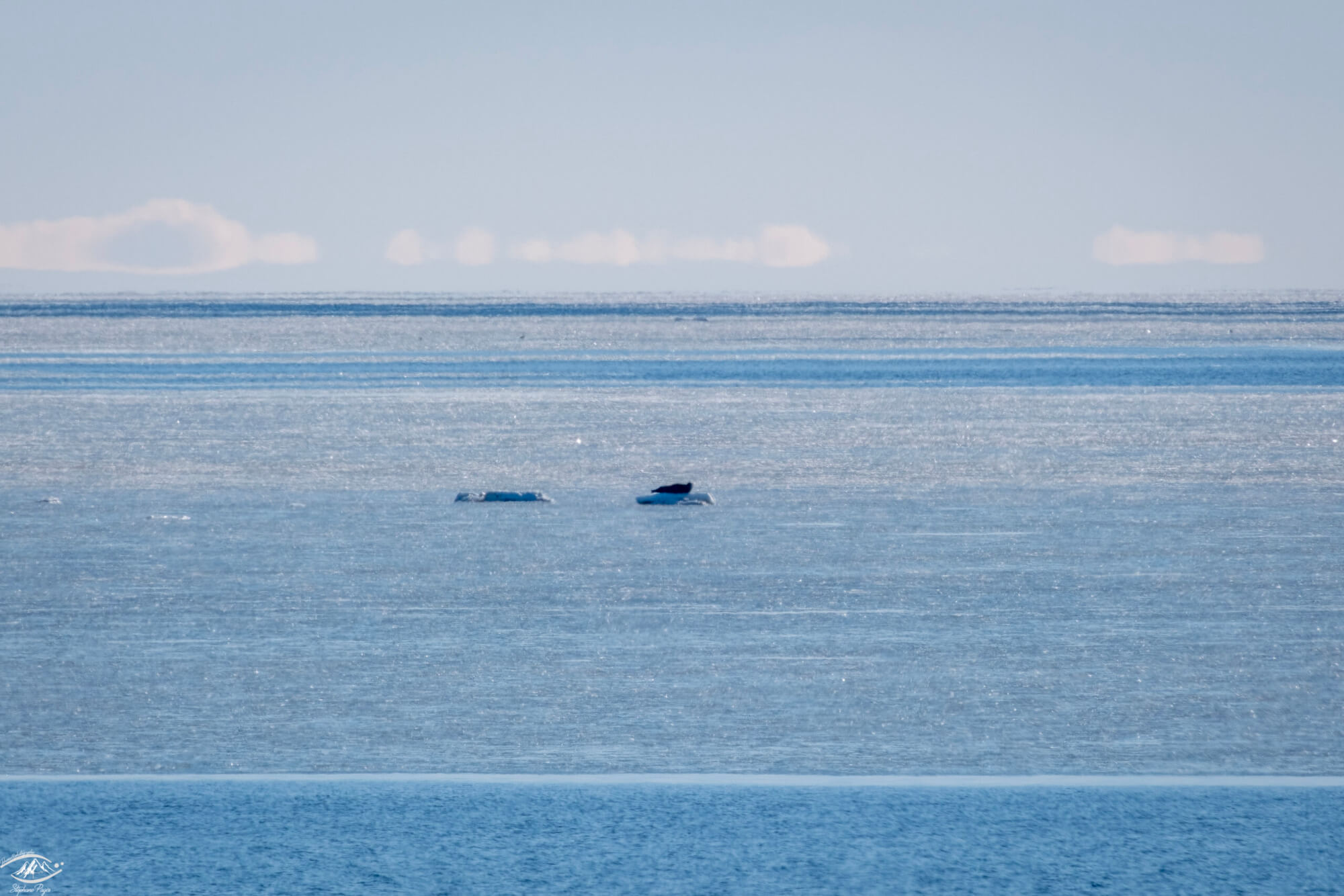
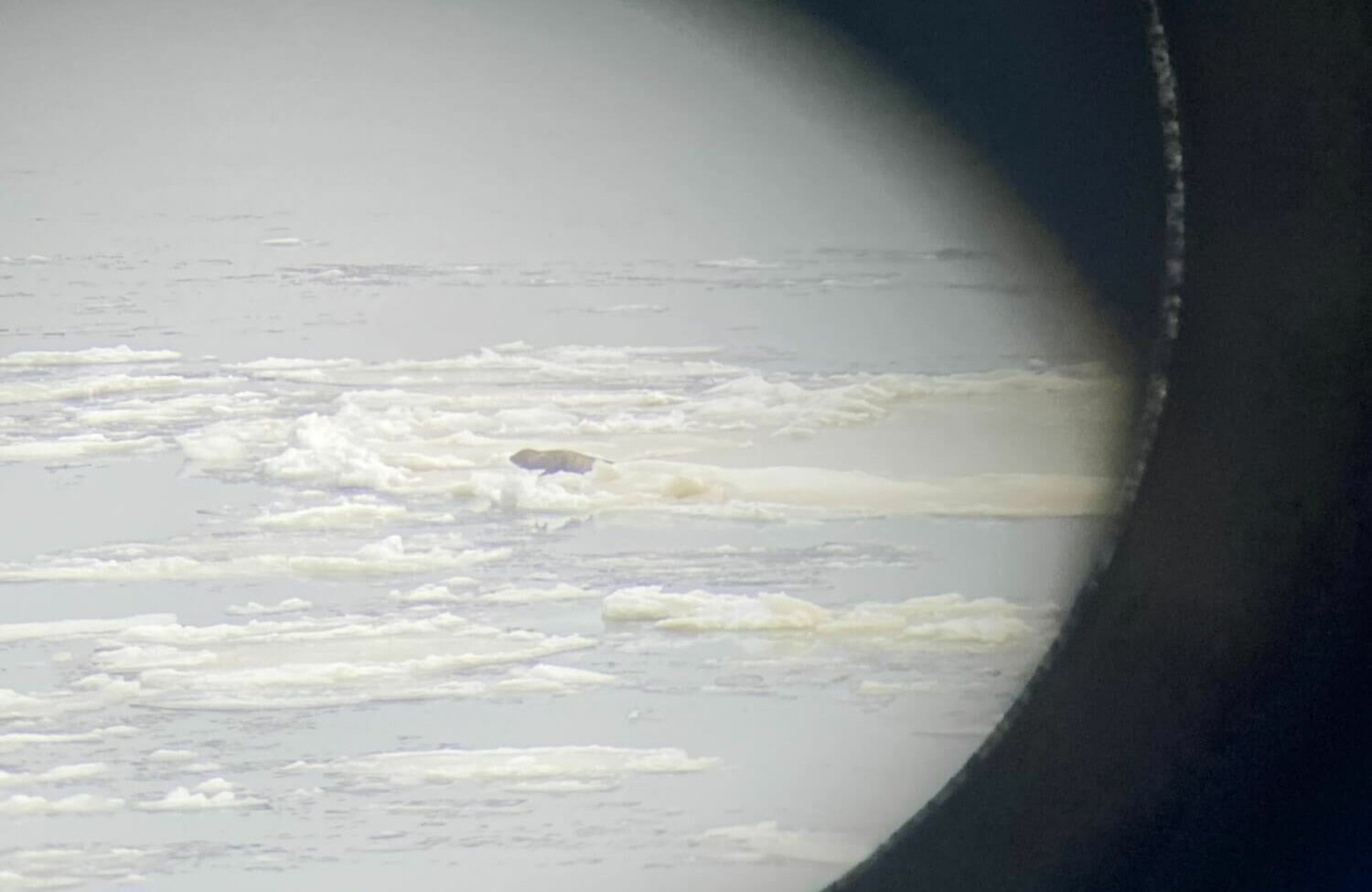
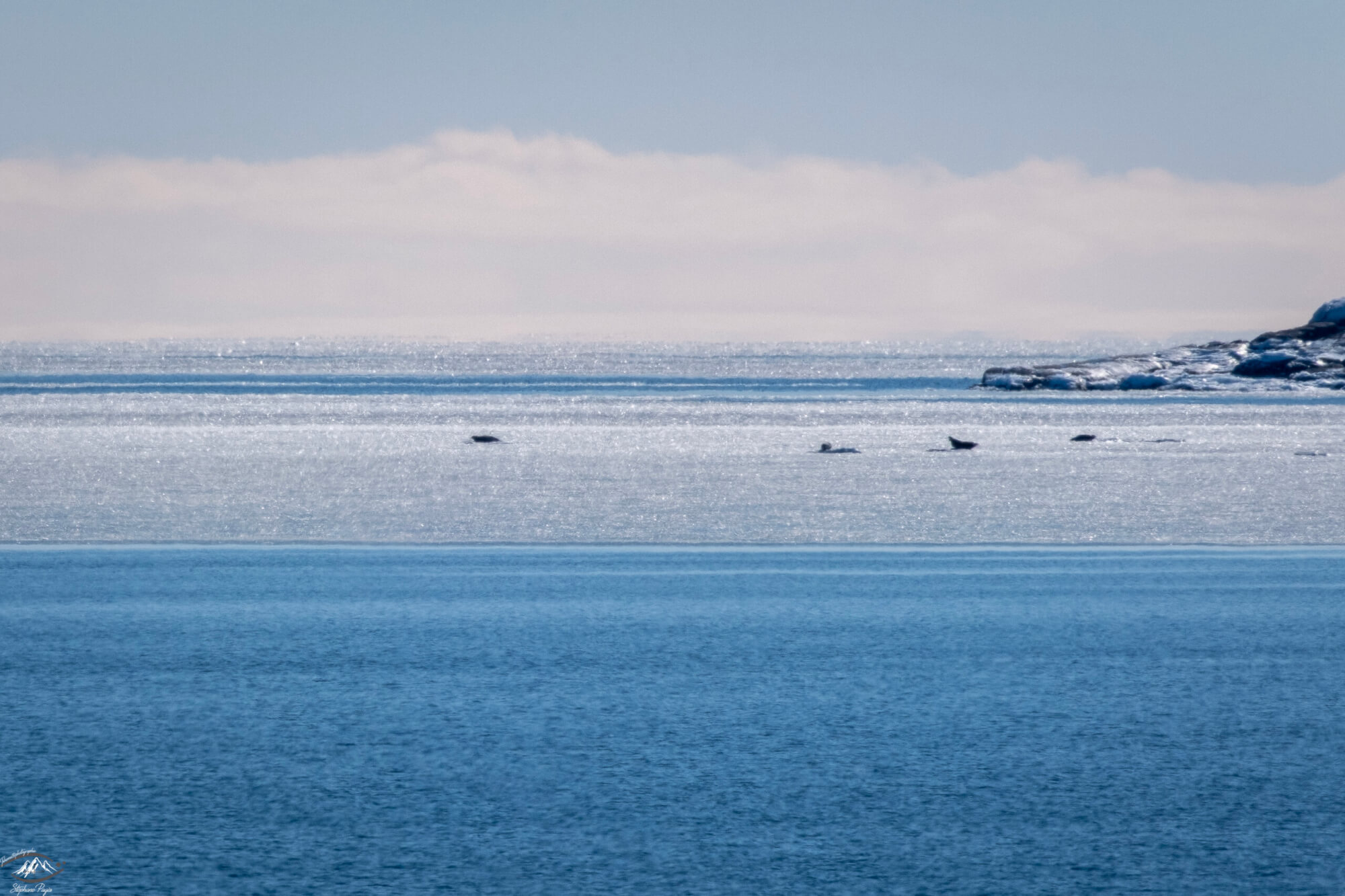
This year’s significant ice cover is good news for seals, which can use it to rest, give birth, and moult. For harp seals, pupping season generally takes place between mid-February and mid-March.
“I saw a blue whale spout offshore last weekend,” reports a resident of Baie-Comeau. Whales have been keeping a lower profile lately, with seals stealing the show on the ice pack that is firmly established in the St. Lawrence!
Humpback spotted in the Caribbean
When it comes to the impressive migrations that humpbacks undertake each year, it can be difficult to truly visualize their journey. Thanks to the eyes and ears of a number of passionate observers, however, we are able to get a little more insight into the migratory behaviour of these animals. Which brings us to a fabulous story that we would like to share with you this week!
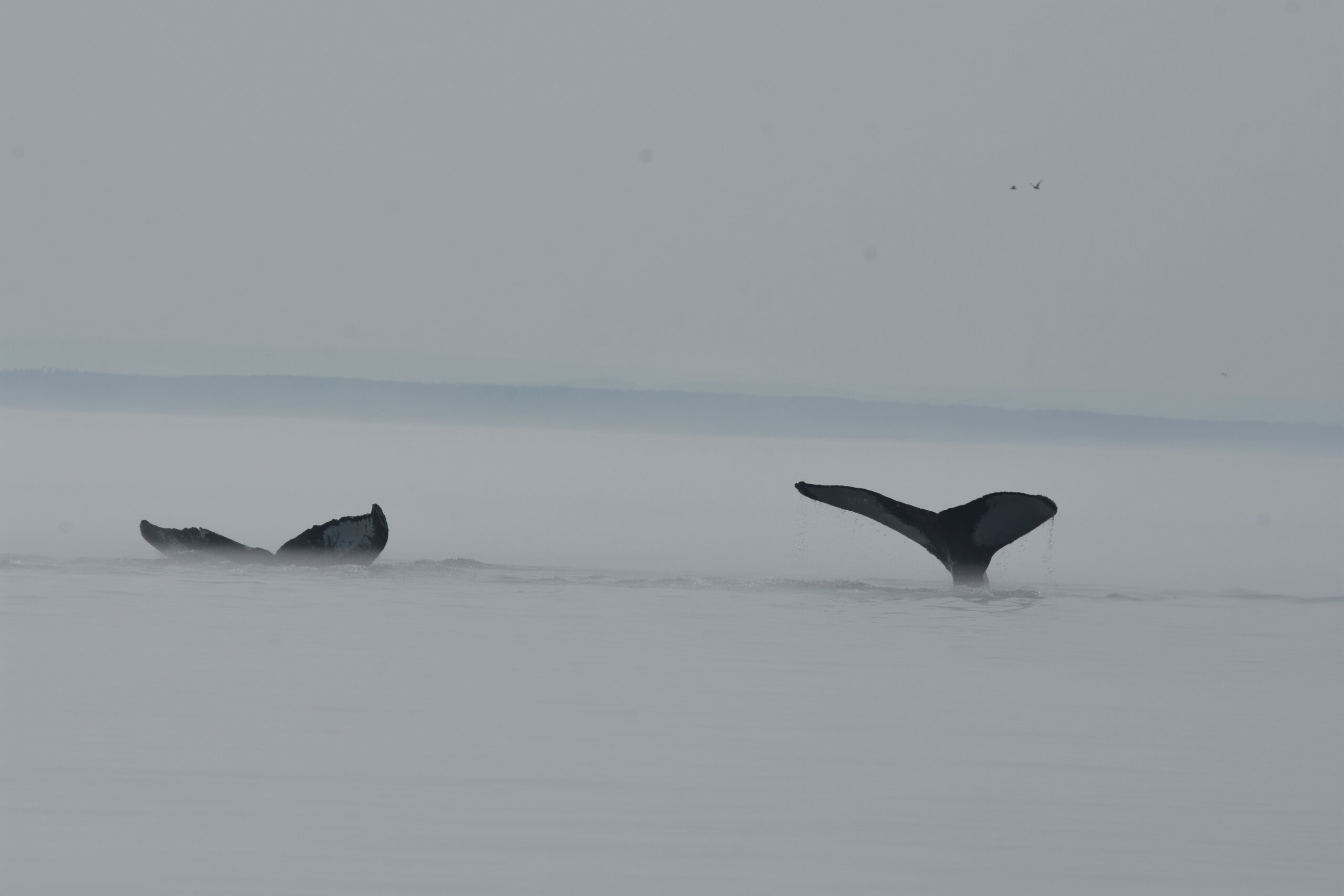
Identified in 2021 in the St. Lawrence Estuary by GREMM, humpback whale H682 was spotted last February in the Caribbean by the Turks and Caicos Islands Whale Project team. Even more fascinating was the underwater recording of the individual’s song, which testifies to the complexity of communication in this species.
Humpbacks—primarily males—sing during the breeding season to signal their presence to other bulls, establish dominance, and attract females for mating. The sounds produced by males during the breeding season are described as “songs” by scientists and are distinguished from other humpback vocalizations by their structure and the repetition of certain parts, much like the verses and refrain of a song! These melodies even vary between populations and from one breeding season to another.
Thanks to all our collaborators!
Special thanks go out to all our observers who share their love for marine mammals with us. Your encounters with cetaceans and pinnipeds are always a pleasure to read and discover. On the water or from shore, it is your eyes that give life to this column.
- Marie-Andrée Charlebois
- Thalia Cohen Bacry
- Laetitia Desbordes
- Hélène Guitton
- Diane Ostiguy
- Stéphane Pagès
- Pascal Pitre
- Andréanne Sylvain
- Marielle Vanasse
And all the others!
Additionally, we would like to acknowledge the following teams that also share their sightings:
Turks and Caicos Islands Whale Project
Centre d’éducation et de recherche de Sept-Îles (CERSI)
Station de recherche des Îles Mingan (MICS)
Réseau d’observation des mammifères marins (ROMM)
Réseau québécois d’urgences pour les mammifères marins (RQUMM)
Groupe de recherche et d’éducation sur les mammifères marins (GREMM)
Mériscope

Odélie Brouillette
Odélie Brouillette joined the GREMM team as a writer and naturalist in 2022, and has been a project manager in science popularization since 2023. With a background in biology, she loves learning and sharing with others what's most important to her. She has always been fascinated by marine environments and whales, and hopes to contribute to their protection through awareness-raising and popularization.
Recommended articles
The Calm Before the Whales
Despite the snow, the wind, and the bitter cold of the past few days, several belugas were spotted off the…
Large Rorquals in Godbout
If you were pacing the shoreline in recent days in search of marine mammals, Godbout was the place to be!…
Belugas in the Estuary and Pinnipeds Aplenty
It’s early February, and the sunlight pierces through the cloudless Tadoussac sky. From the windows of the Whales Online office,…