
Autonomous Hydrophones: Collecting Acoustic Data From the Depths

On July 8, I had the pleasure of joining the research team aboard the Antarès to document the annual deployment of autonomous hydrophones in the waters of the St. Lawrence and the Saguenay. What began as a typical day on the water turned into a discussion about the importance of the data that GREMM collects, as well as an introduction to the technical aspects of setting up these hydrophones.
Belugas in Baie Sainte-Marguerite
It’s 8:45 a.m., and I’m assisting Michel Moisan, Jade-Audrey Lavergne, Mathieu Marzelière, and Timothée Perrero with the final preparations for what is intended to be a quick jaunt into Baie Sainte-Marguerite. Having deployed around thirty hydrophones since 2020, the team now considers this task to be part of its annual routine. The process is expected to take up the better part of the morning, potentially leaving some time for an encounter with belugas—and for gathering data for the St. Lawrence Beluga Project—before returning to the marina.
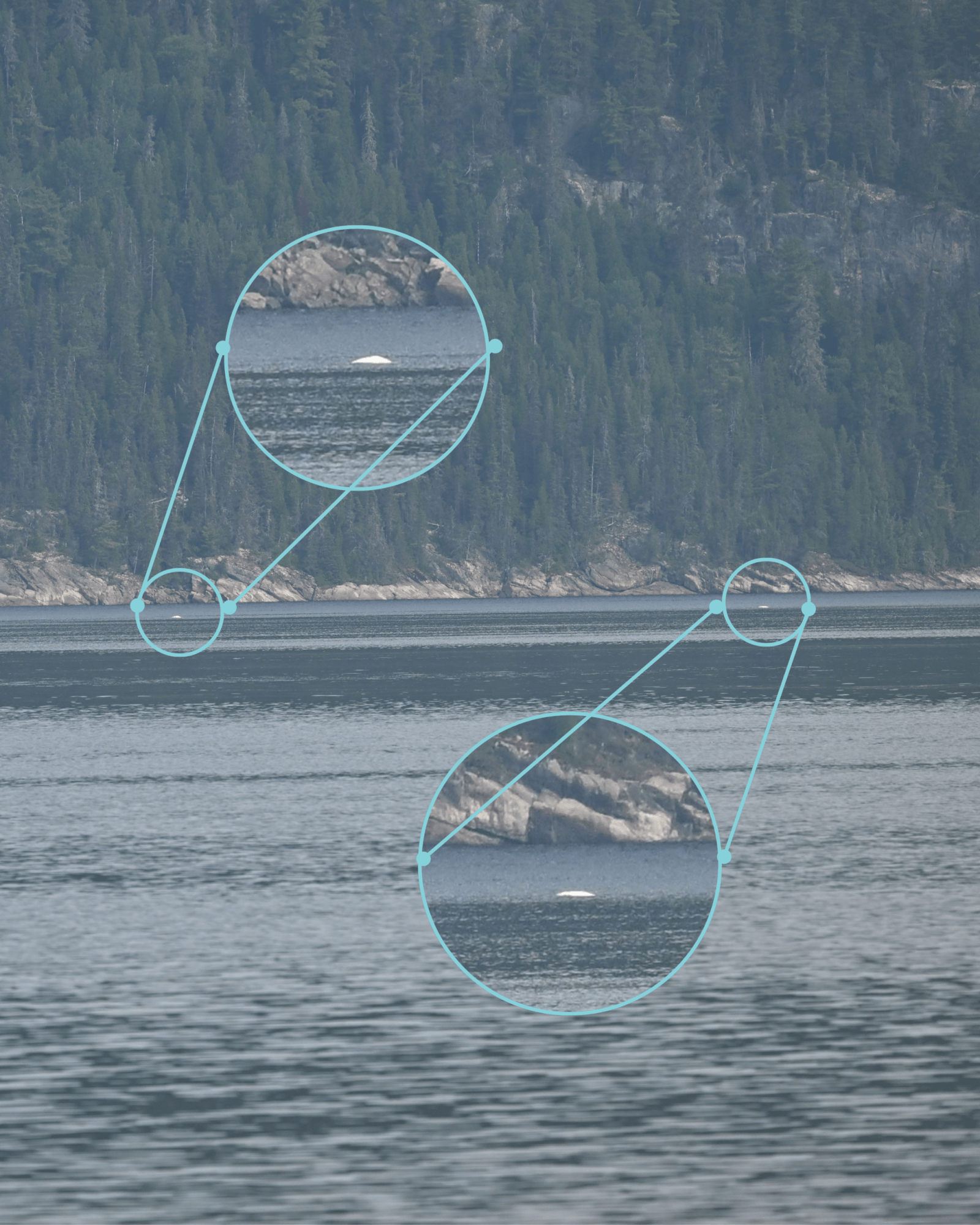
Along the way, the team points out that this is the one time of year they actually hope not to see any belugas in Baie Sainte-Marguerite. Like any other vessel frequenting the area, GREMM’s research boat must adhere to boating regulations whenever belugas are present; more specifically, a distance of 400 metres must be maintained between these white whales and the Antarès. Furthermore, the bay is closed to watercraft between June 21 and September 21, as it is a vital summer area for the species. However, thanks to a special permit granted by the Saguenay–St. Lawrence Marine Park, GREMM’s team can enter the bay, deploy a hydrophone, and depart without delay. If belugas are present, this privilege no longer applies.
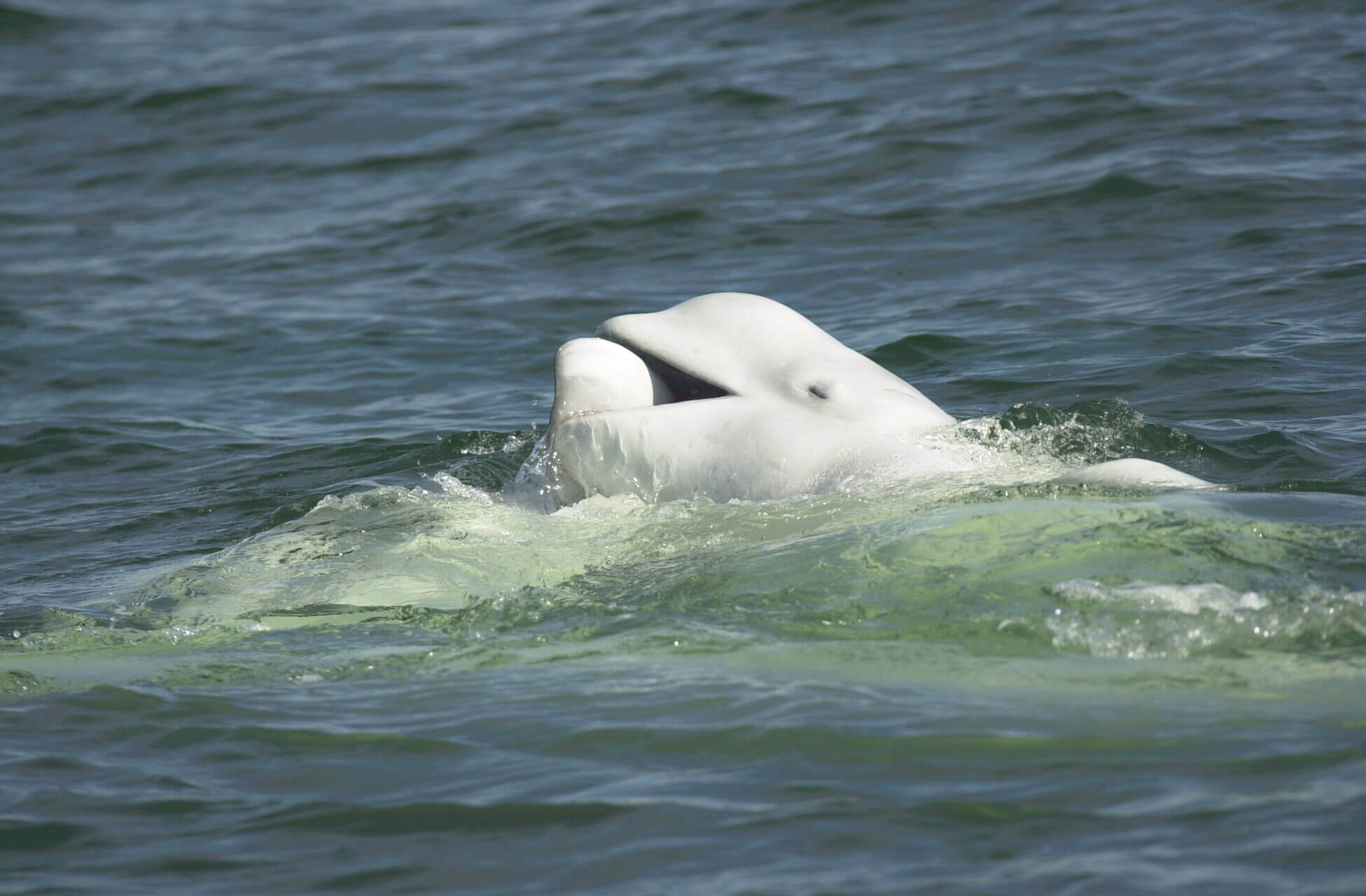
The team’s concern was justified: a small group of belugas was in the bay when they arrived. The wait began… Nearly an hour passed, yet these white cetaceans were in no hurry to move on. The team made use of this time to run tests, prepare equipment, and review protocols. But it soon became clear that the group was not going to leave the area where the hydrophone was due to be deployed. So, we turned back.
How does it work?
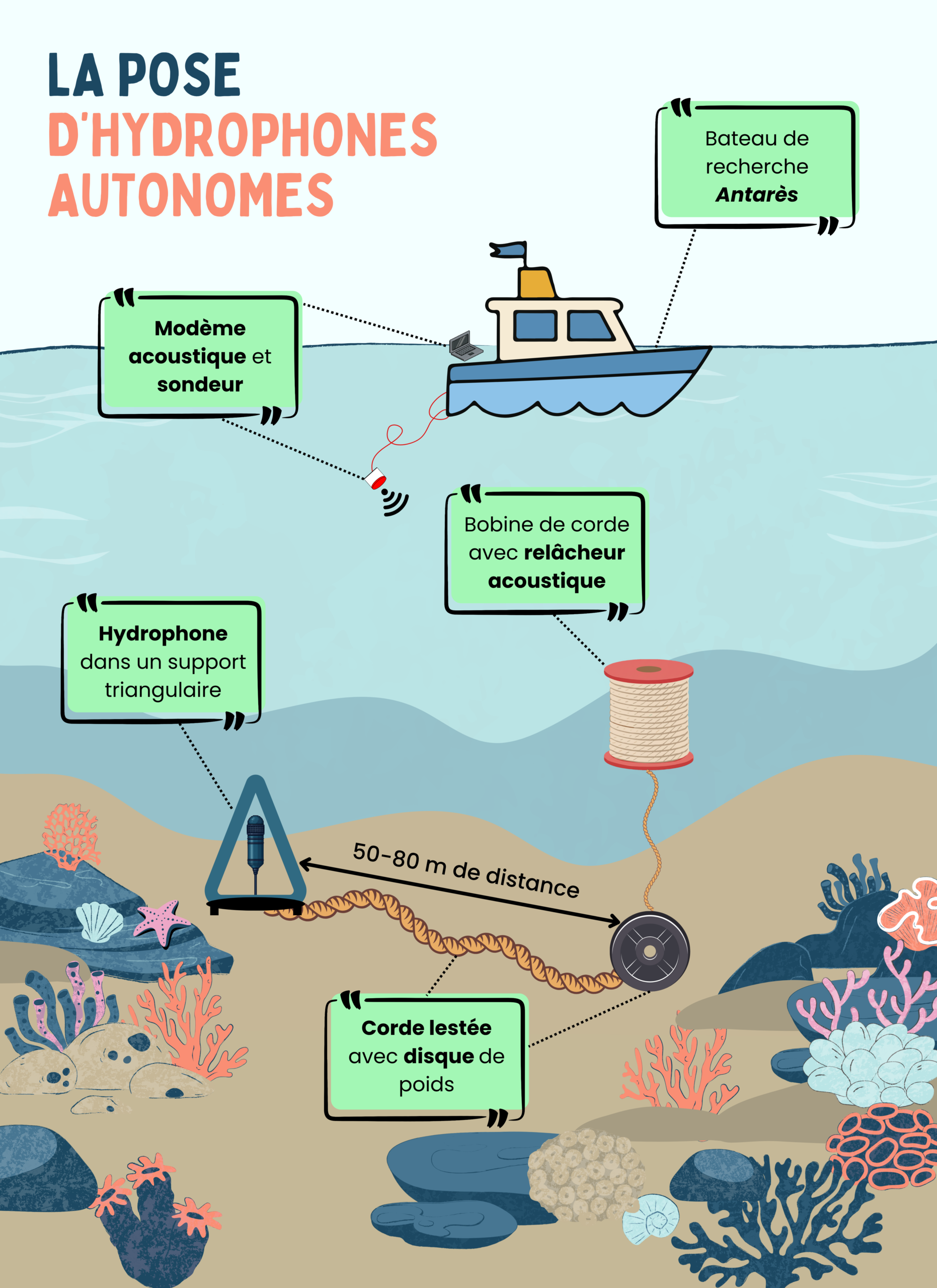
During our wait, I had the chance to ask the team about the device that we were supposed to install. In the simplest terms, a hydrophone is a piece of equipment used to collect acoustic data under water. Powered by 12 batteries, it can operate for approximately 95 days before it needs to be retrieved. During this period, it records 384,000 acoustic samples per second, accumulating up to 2 terabytes of data!
However, we had much more than just a hydrophone on board the Antarès!
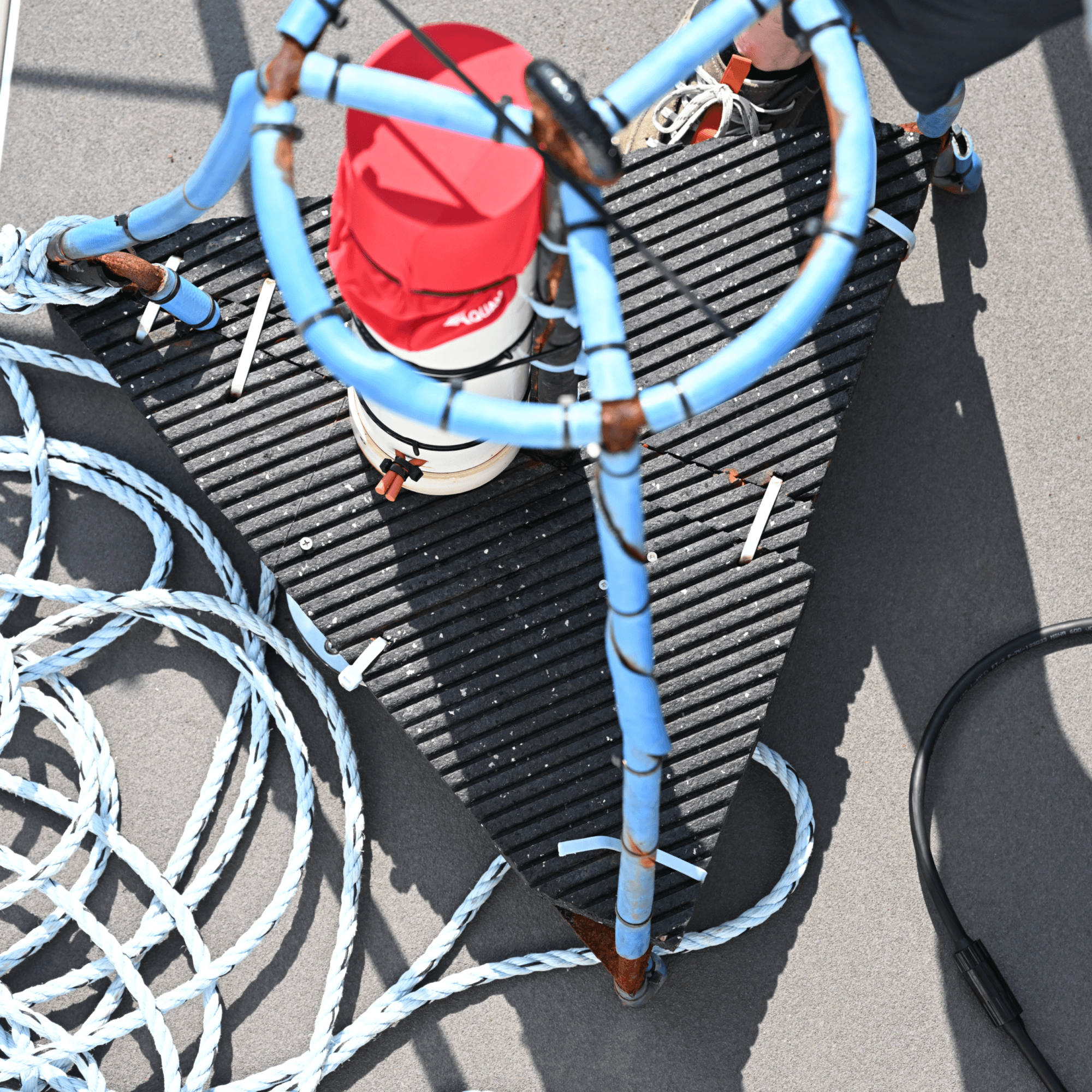
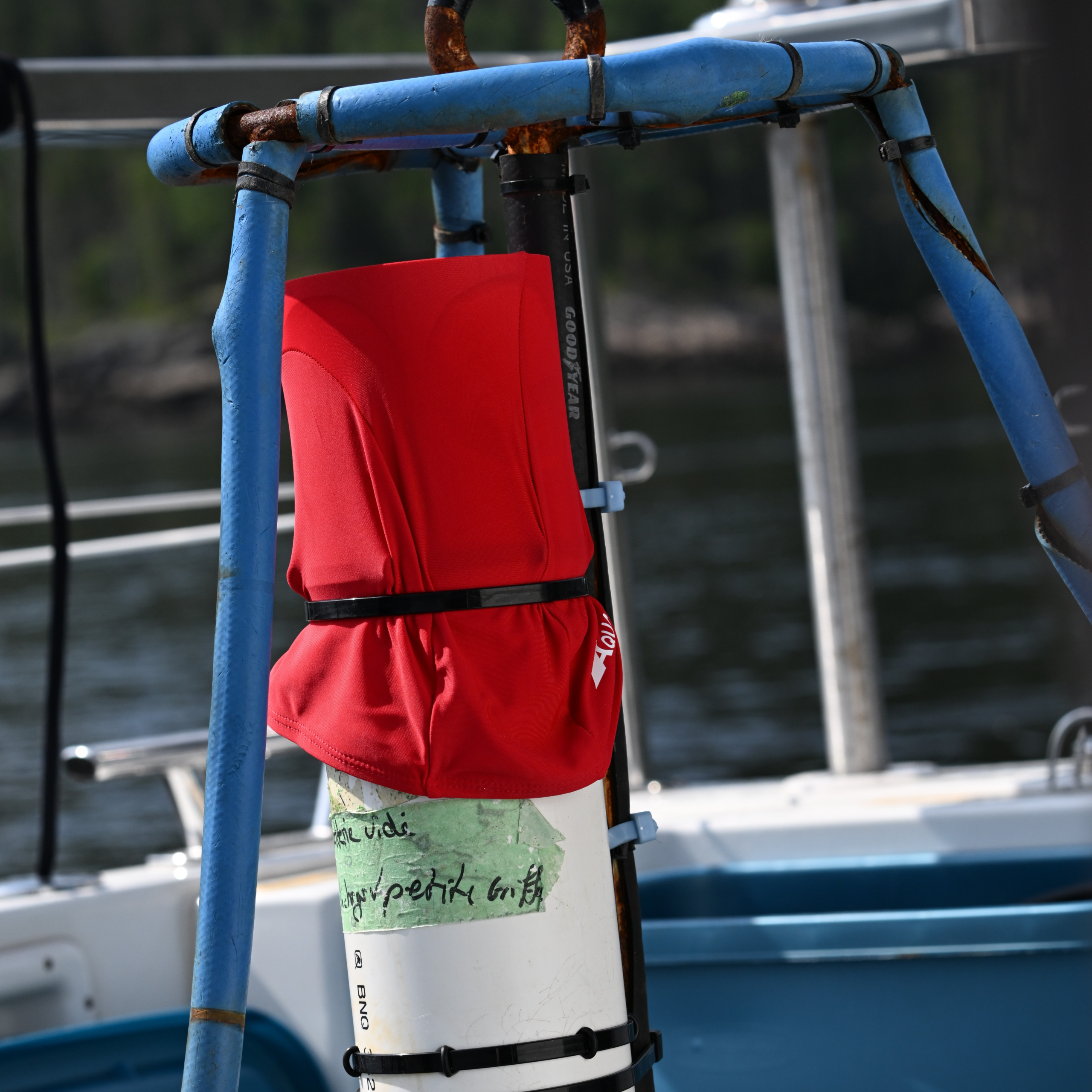
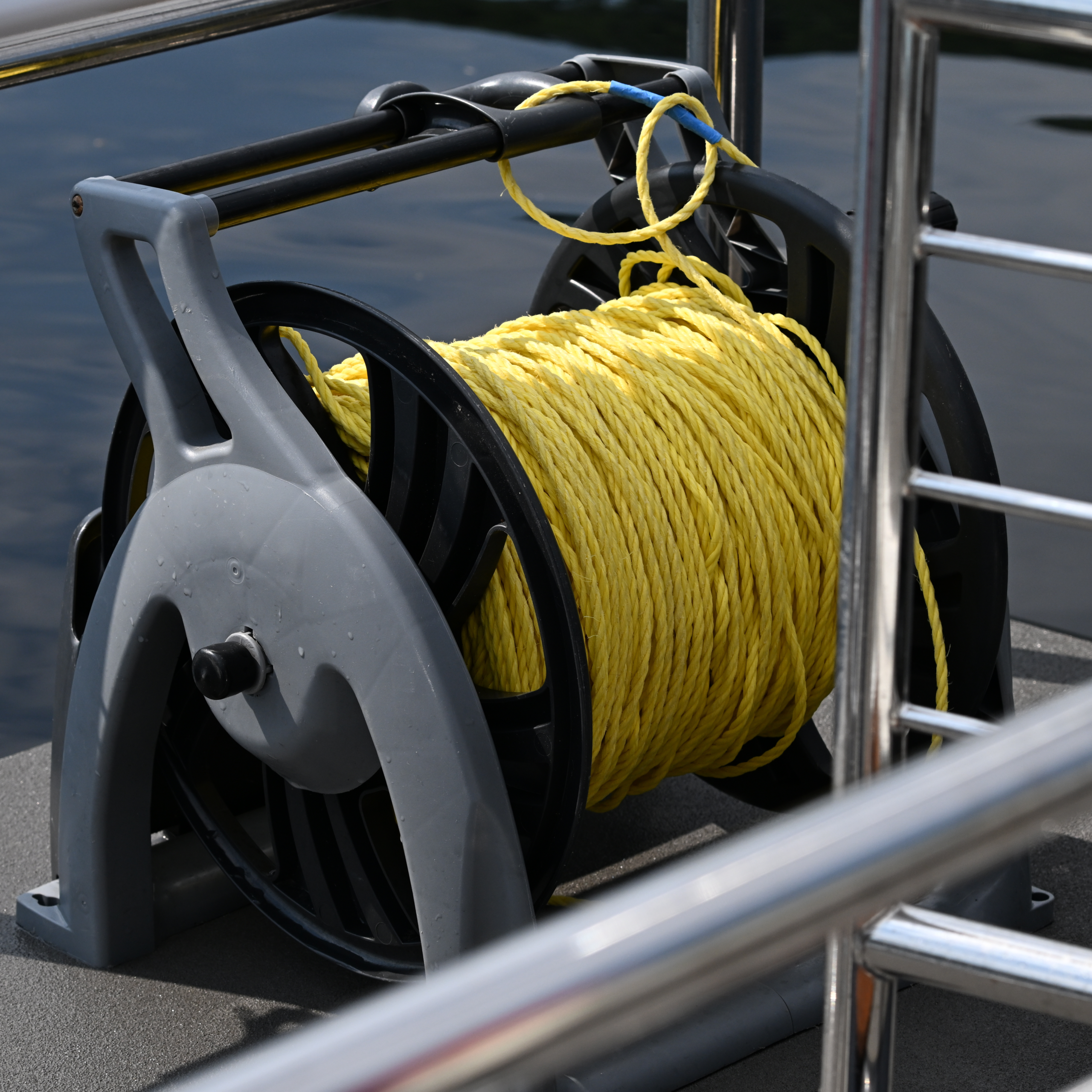
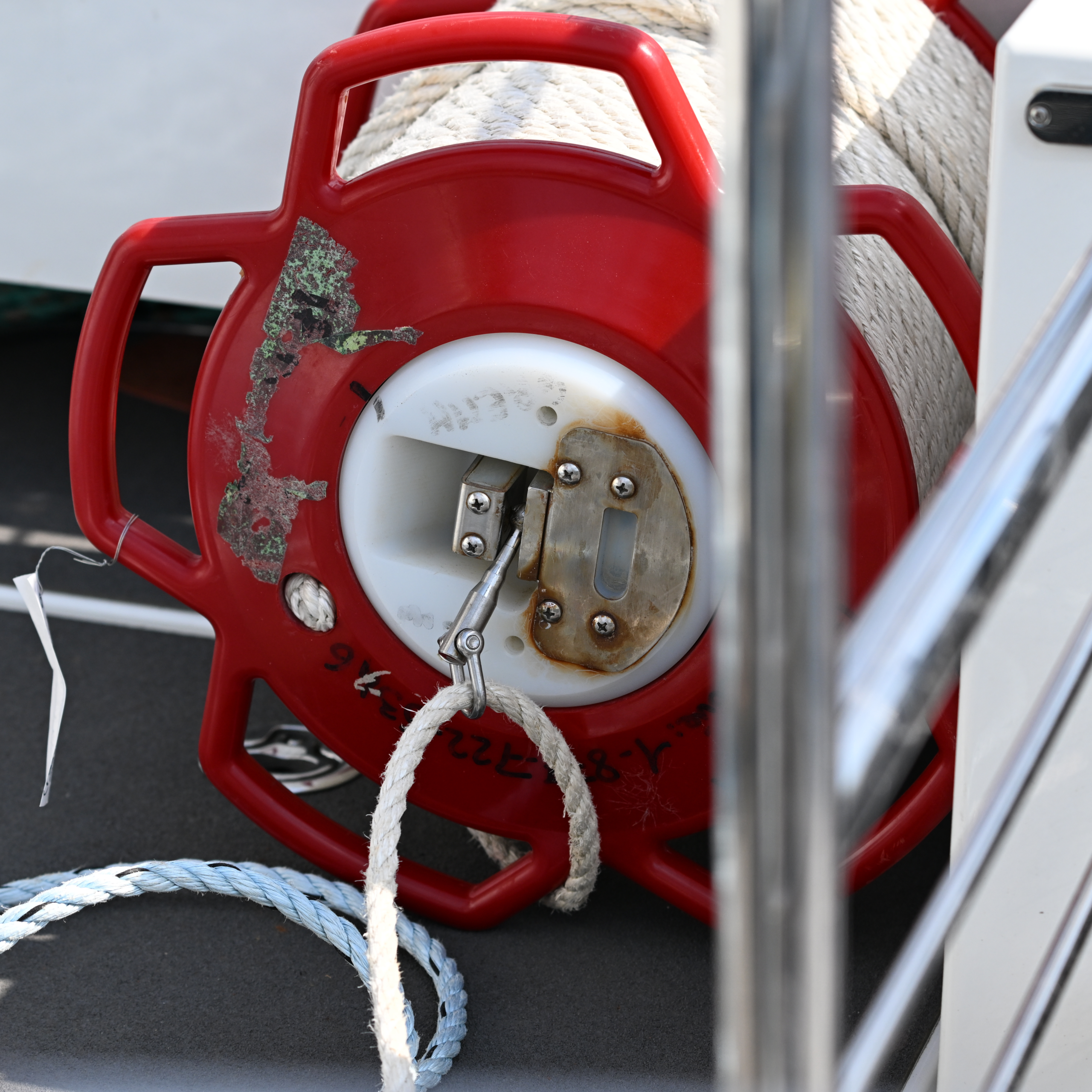
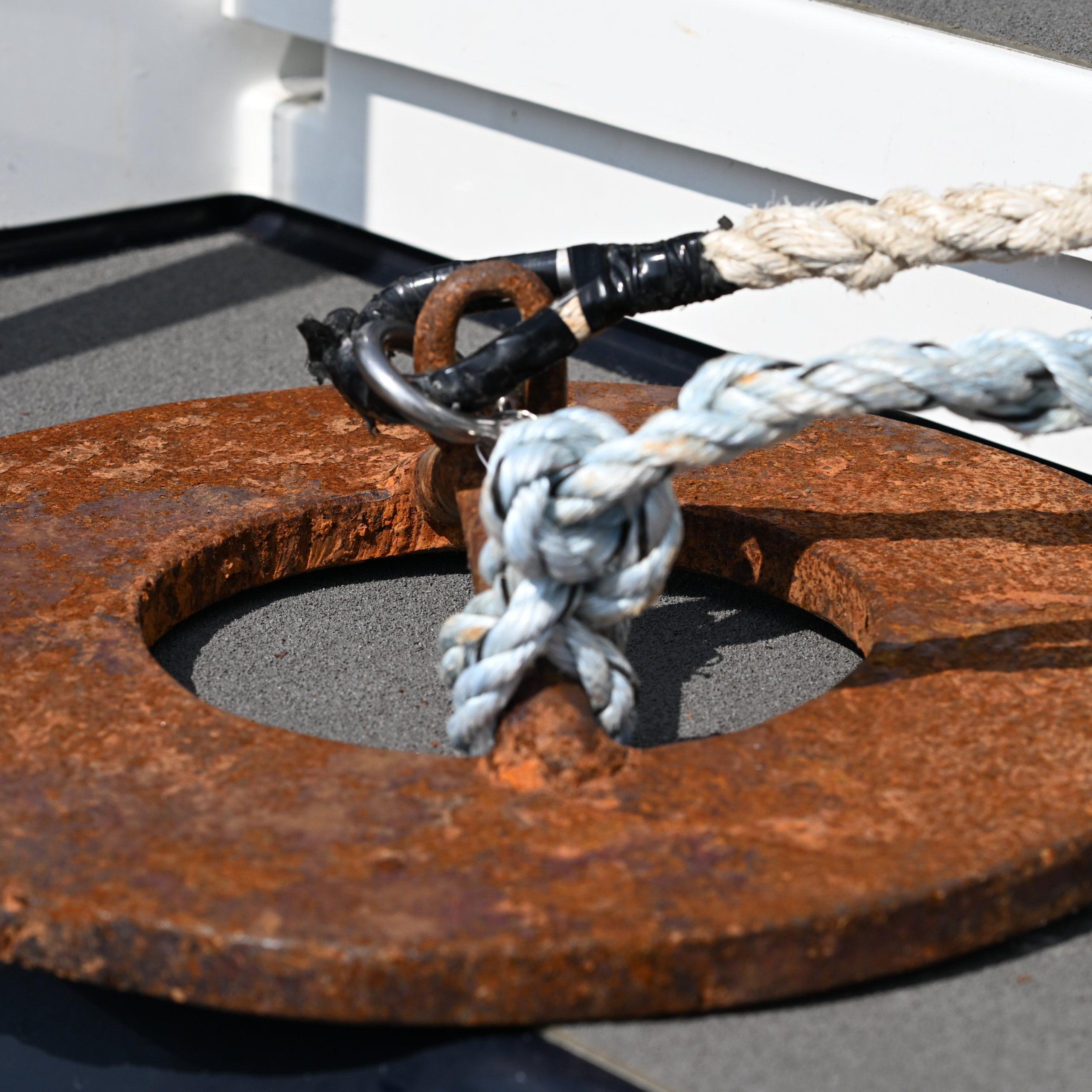
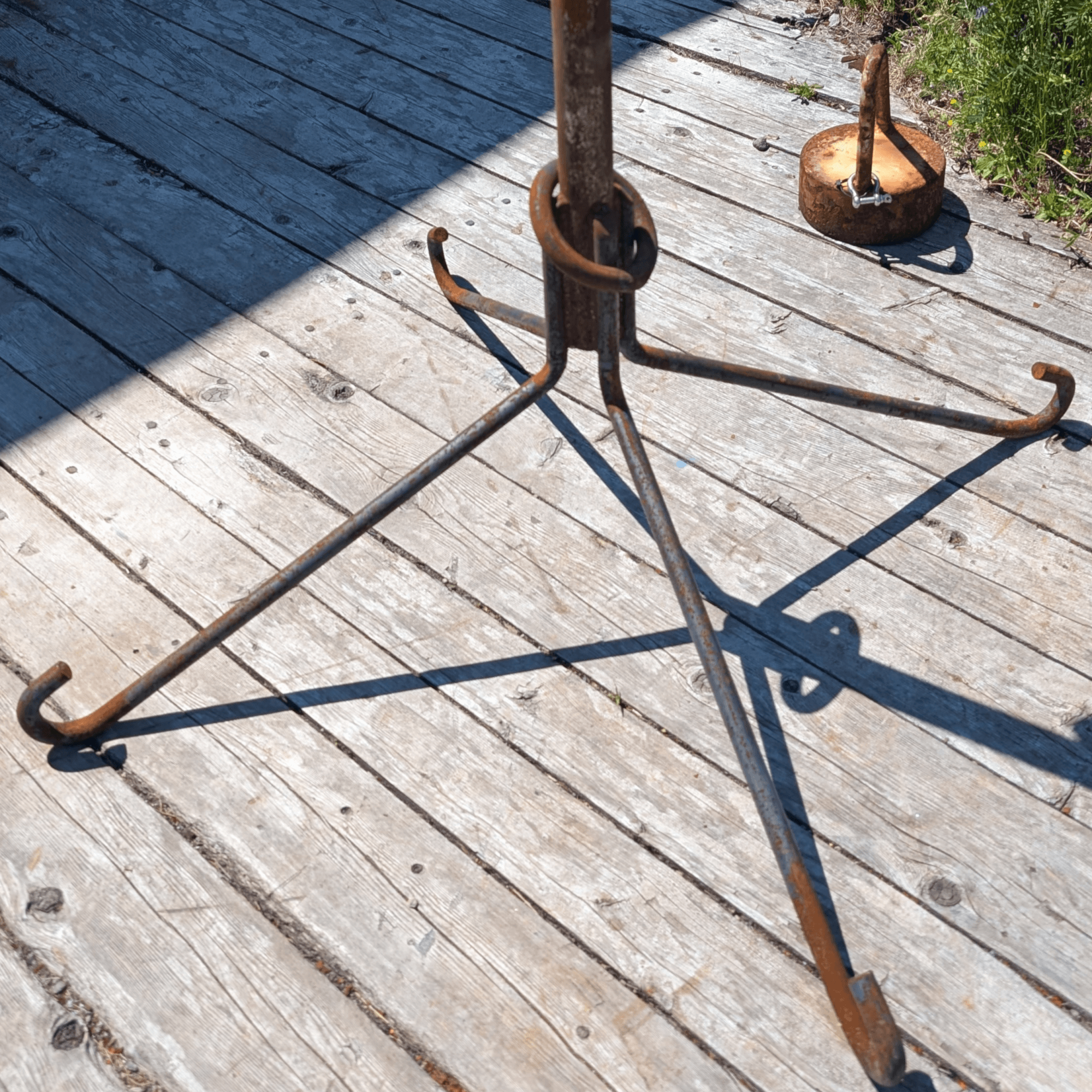
Deploying the equipment is only part of the process—sooner or later, everything must be retrieved! In theory, an acoustic release is an excellent solution, as it allows the equipment to be recovered while minimizing the amount of rope in which marine mammals could become entangled.
However, on a few occasions since 2020, the acoustic releases have failed—which is why using a weighted line and a weight disc is so valuable, as these items facilitate manual retrieval by means of a grappling hook. In fact, this alternative is so reliable that the crew sometimes relies solely on a grappling hook to recover hydrophones deployed in shallow waters.
Essential collaboration
GREMM has been collecting acoustic data from belugas since 2020. While the team uses these data for its own projects, it also makes them available to universities and research organizations. After all, science is a collaborative effort!
One notable partner is the Interdisciplinary Laboratory for Socio-Ecological Simulation (LISSÉ) at the Université du Québec en Outaouais (UQO), which has been working since 2017 to further our understanding of the acoustic environment of marine mammals in the St. Lawrence—specifically that of the beluga. As with many large-scale research initiatives, these data come from different teams, including GREMM!
The data collected by these hydrophones have led to a significant number of important scientific publications on topics such as the impact of vessel noise on beluga communication, the feasibility of real-time acoustic detection of belugas, or the acoustic repertoires of the various beluga communities in the St. Lawrence.
Once these acoustic data are digitized and stored, they are very easy to share with other research groups or with students.
By collecting the same data year after year, it is also possible to identify trends, changes, and developments. Cross-referencing these acoustic data with behavioural observations (as is done by the Window on Belugas project, for example) could significantly transform our understanding of how these marine mammals communicate and behave. The ultimate goal remains the same: to better understand them in order to better protect them.

Benjamin Gagné
Benjamin Gagne is in his second year with GREMM, having joined the editorial team during the summer of 2025. Passionate about environmental communication and raising awareness about climate change issues, he uses written and visual communication to share his love for natural environments and the life they sustain. With a bachelor’s degree in environmental studies under his belt, he will be expanding his knowledge this fall as he pursues a master’s degree in marketing.
Recommended articles

Protecting Whales, One Conversation at a Time
As the beluga calving season in the St. Lawrence enters into full swing, so too do public awareness efforts. For…
Listening to Belugas by Hydrophone in Baie-Sainte-Marguerite
After several months of preparations, the Window on Belugas project has just reached a new milestone in Baie-Sainte-Marguerite thanks to…
A Rigorous Protocol for Studying Large Rorquals
Aboard the BpJAM (one of GREMM’s research vessels) with the Large Rorqual Project team, I scan the horizon in the…