
Protecting Whales, One Conversation at a Time


As the beluga calving season in the St. Lawrence enters into full swing, so too do public awareness efforts. For the Parks Canada team, this initiative takes the form of visits to marinas and offshore patrols to meet with boaters from June to September. To better understand the rationale behind these essential exchanges with boaters and their impact, the Whales Online team went out into the field to observe firsthand how some of these patrols unfold.
The all-important first contact
“Hello [boat name], how’re we doing today?” asks Parks Canada public education officer Valérie Busque to a couple enjoying dinner on the deck of their boat on this gorgeous July afternoon. Dressed in her work uniform and a personal flotation device, Valérie patrols the docks, looking for newly moored pleasure craft at the Tadoussac marina. When new faces—and new boats—are spotted, she introduces herself and gets straight to the point: “Are you familiar with the regulations here in the Marine Park?”
The aim of this public outreach is to raise people’s awareness of the impact they have whenever they find themselves in whale habitat. It’s also an opportunity to explain to boaters the role they can play in protecting marine mammals. These awareness patrols also serve to remind people of regulatory distances and speeds as well as those parts of the Saguenay–St. Lawrence Marine Park warranting extra caution.
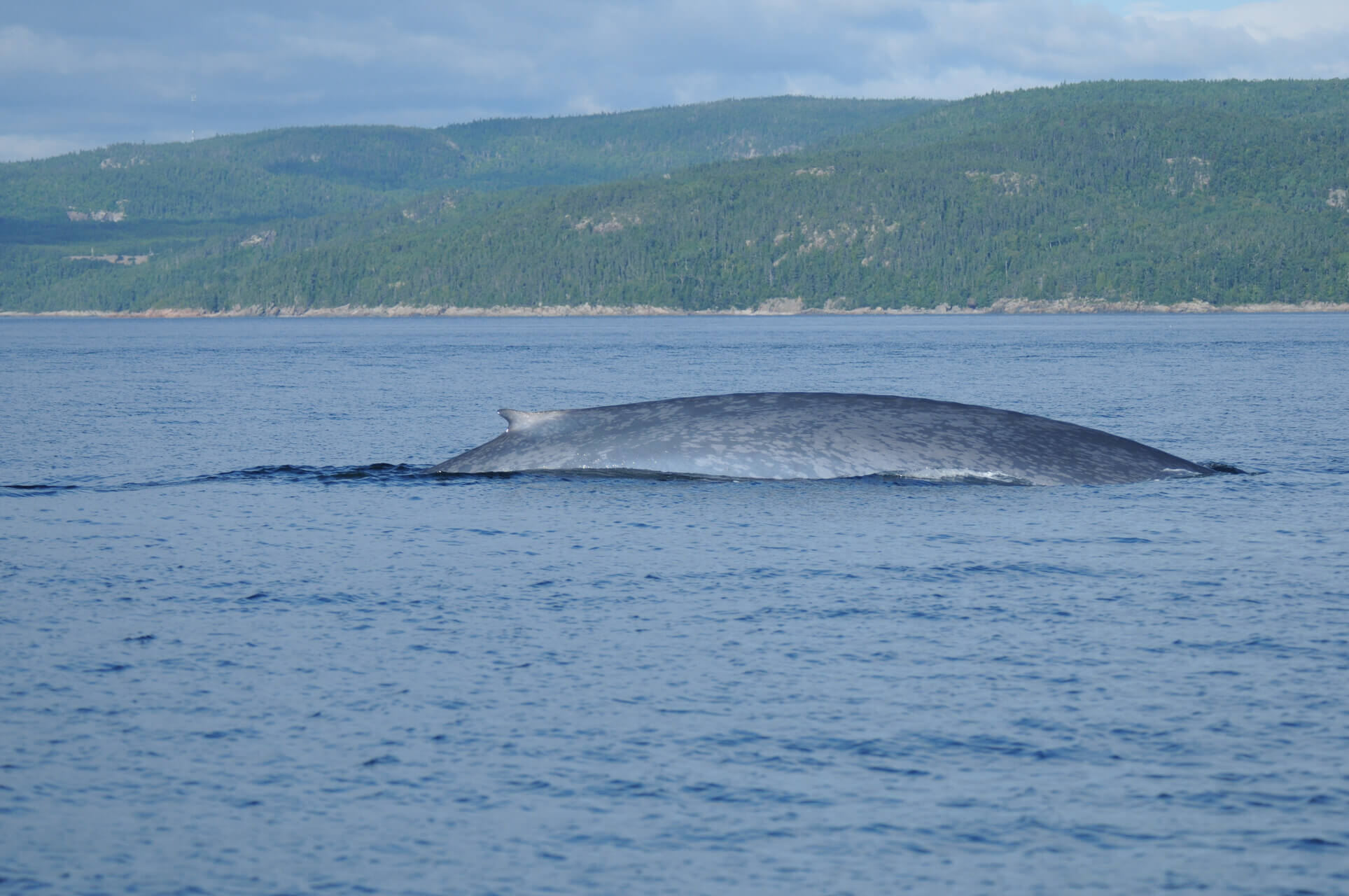
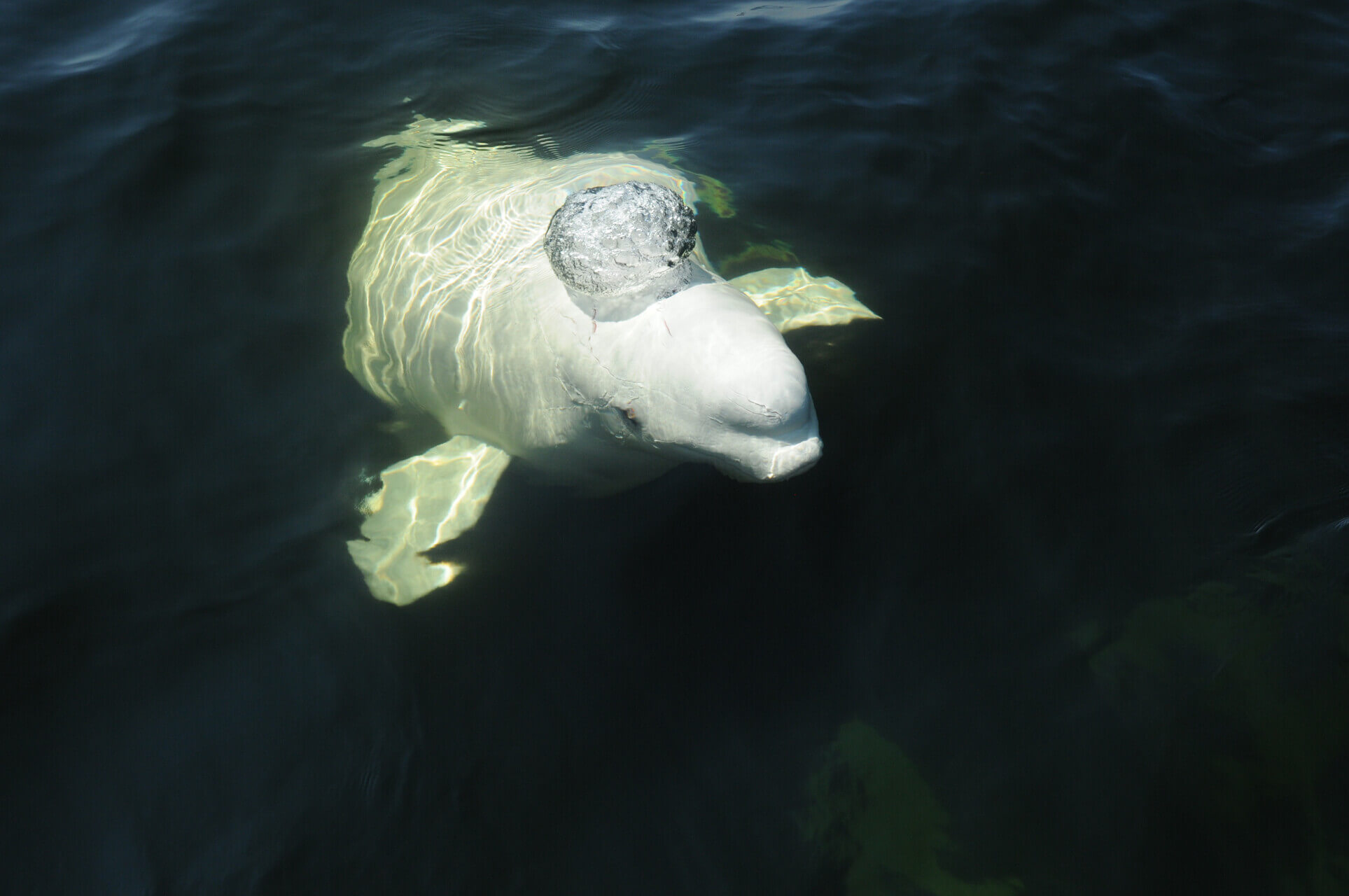
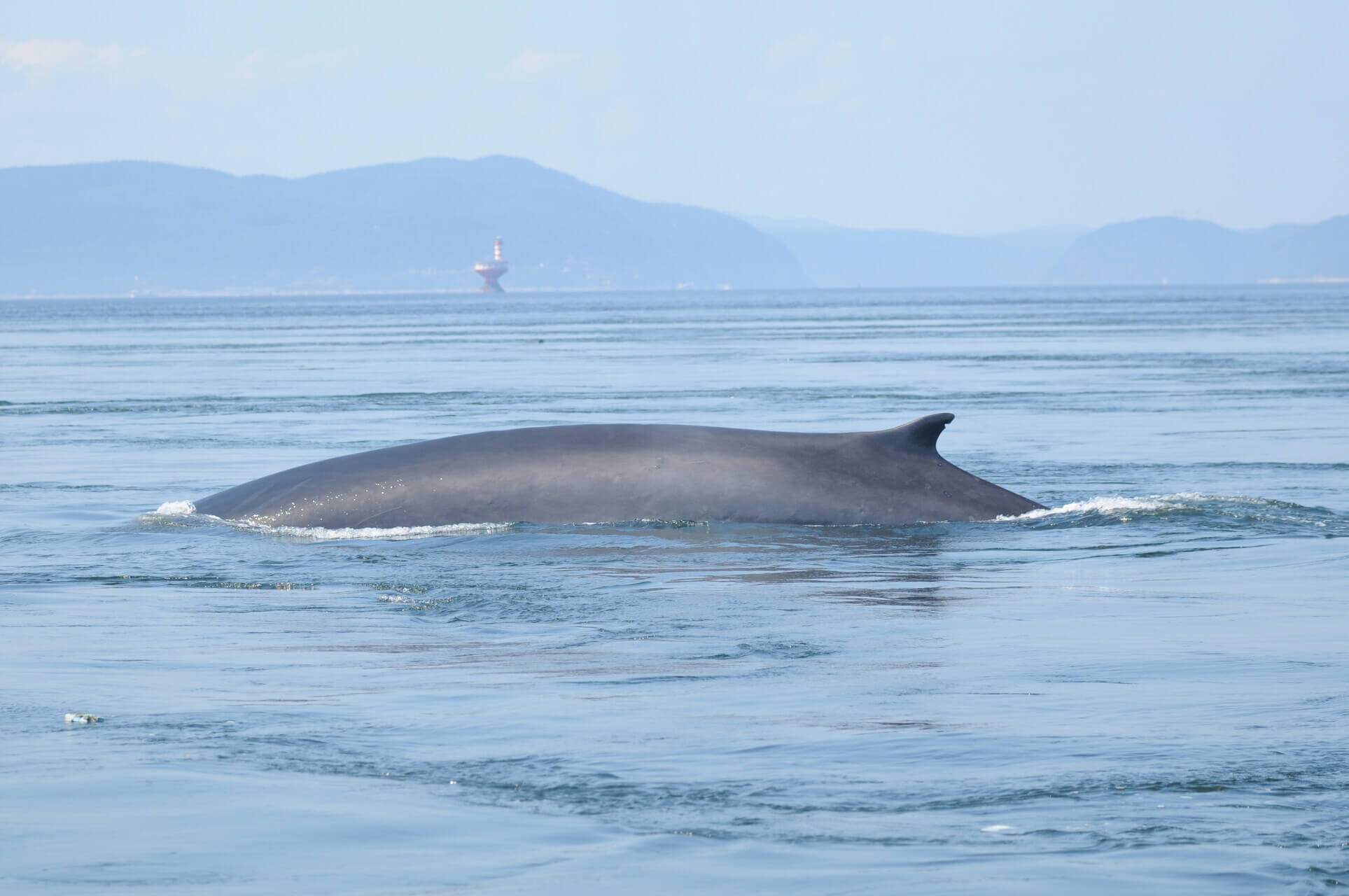
In addition to the beluga, which is considered endangered, other at-risk marine mammal species such as the blue whale and the fin whale also frequent these waters. From kayaks to paddleboards, sailboat to motorboats, all types of recreational craft are subject to regulations of various types.

In 2017, the Marine Activities in the Saguenay-St. Lawrence Marine Park Regulations were amended. Valérie and her team base their awareness patrols on these regulations. In the summer months, she also has a team of park wardens at her disposal to carry out preventive work at sea.
Sometimes, the individuals encountered are regular boaters in the area, or they may have already crossed paths with one of Valérie’s colleague’s earlier in the day. In these cases, the conversation unfolds a little differently. The main goal is to clarify any aspects of the regulations that might not be entirely clear—in other words, to let people ask questions and provide explanations afterwards! If it’s their first time in the waters of the Marine Park, more detailed information will be provided about speed limits, separation distances, and areas that are off-limits to watercraft so that everyone is comfortable continuing their journey while respecting the species that frequent this marine protected area.
Collaboration and awareness campaigns
For several years now, Parks Canada, the Group for Research and Education on Marine Mammals (GREMM), the Marine Mammal Observation Network (MMON) and Fisheries and Oceans Canada (DFO) have been partnering on an awareness campaign for the St. Lawrence beluga. The objective? To share a consistent message with regard to belugas, especially during the calving season, in order to promote the species’ conservation and protection.
While information booths are set up at a few locations throughout the summer, other messages about belugas and applicable regulations when they are present are posted on social media. Patrols such as those performed by Valérie are also conducted in the field to directly engage with the public. In short, when it comes to protecting endangered species, collaboration is essential!

Protection measures for vulnerable species
Of all the marine mammal species that frequent the Saguenay–St. Lawrence Marine Park, three of them have special statuses: the beluga, the blue whale, and the fin whale. The first two are endangered, while the fin whale is of “special concern.” This is the kind of information Valérie explains to other boaters she meets that afternoon. She also reminds them of the distances to maintain and how to proceed if they cross paths with these animals. Did you know that it is forbidden to stop in the presence of a beluga and that a minimum distance of 400 metres between the observer and the animal(s) must be maintained at all times? And that Baie Sainte-Marguerite is off-limits to boaters between June 21 and September 21?
Valérie also mentions the bans on personal watercraft and on flying drones within the Marine Park. Using maps, she takes the opportunity to explain that the current Marine Park is being expanded with the goal of ensuring enhanced protection for the endangered species that frequent it.
After discussing the “Navigating Whale Habitat,” training program—which aims to educate people on how to conduct themselves in the presence of whales, whether they’re in a kayak, paddleboard, sailboat, or motorboat—Valérie concludes by entering a few notes about the craft she has encountered. Then it’s off to another chat with other boaters! Mission: To contribute to whale protection, one conversation at a time.

Odélie Brouillette
Odélie Brouillette joined the GREMM team as a writer and naturalist in 2022, and has been a project manager in scientific communication since 2023. With a background in biology, she loves learning and sharing with others what's most important to her. She has always been fascinated by marine environments and whales, and hopes to contribute to their protection through awareness-raising and popularization.
Recommended articles
Listening to Belugas by Hydrophone in Baie-Sainte-Marguerite
After several months of preparations, the Window on Belugas project has just reached a new milestone in Baie-Sainte-Marguerite thanks to…
A Rigorous Protocol for Studying Large Rorquals
Aboard the BpJAM (one of GREMM’s research vessels) with the Large Rorqual Project team, I scan the horizon in the…
Over the years…
July 7, 2025: It’s early in the morning, and I'm waiting for news from the research team. Will weather conditions…