
Amidst the Hum of the Engines

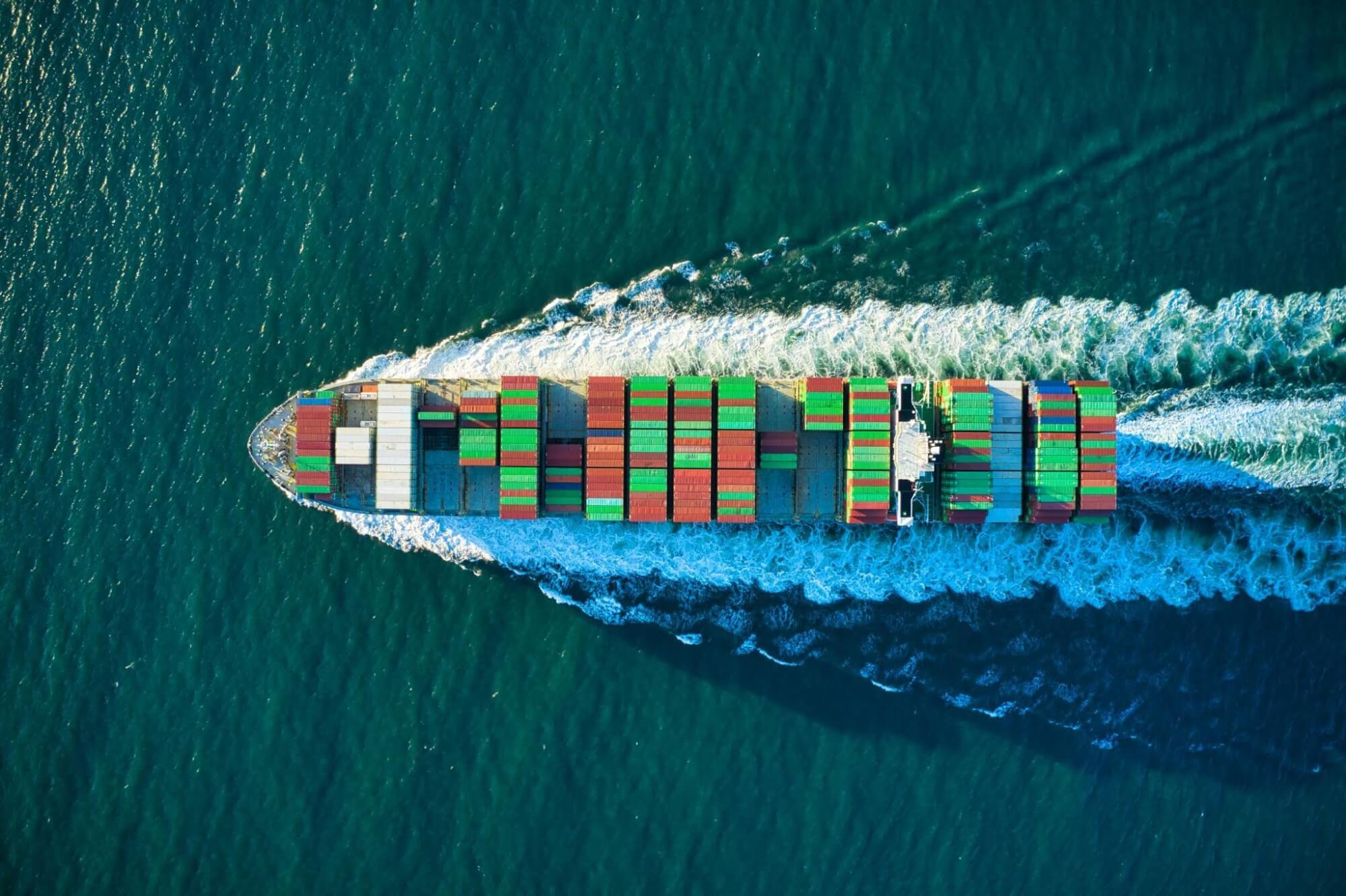
Around the clock, aquatic environments are naturally filled with a slew of different sounds: rain, waves, wind, swimming fish, stones moving in the current. In the distance, a singing humpback whale can be heard; close by, a crayfish feeding… It’s a genuine orchestra of the natural world, a symphony to which wildlife has become accustomed over the course of evolution.
Human activities also produce noise in the water, but in a disproportionate and largely uncontrolled manner. Drawing from recent data, scientists have been able to assess the extent of human impacts on the acoustic environment of the St. Lawrence.
A growing pandemonium
Human presence generates noises that exceed the natural acoustic landscape of the marine environment: drilling and pumping, blasting and construction, installation of submarine cables, infrastructure maintenance, etc. The sporadic sound levels from these activities are very high but are short in duration. Ships also generate noise, but their impact is continuous. The two main sources of noise in this regard are propeller cavitation and the engine room, both of which can be deafening.
Naturally, the waves, the wind, and the movement of the tides fill the soundscape beneath the surface.
Sound clip : Hell To Heaven – Shallow sea – ocean surface, underwater © BBC
If you listen closely—or use a hydrophone—you can quickly hear the sounds caused by human activity.
[MP3 of belugas with engines] © Sami Jai Wagner Beaulieu
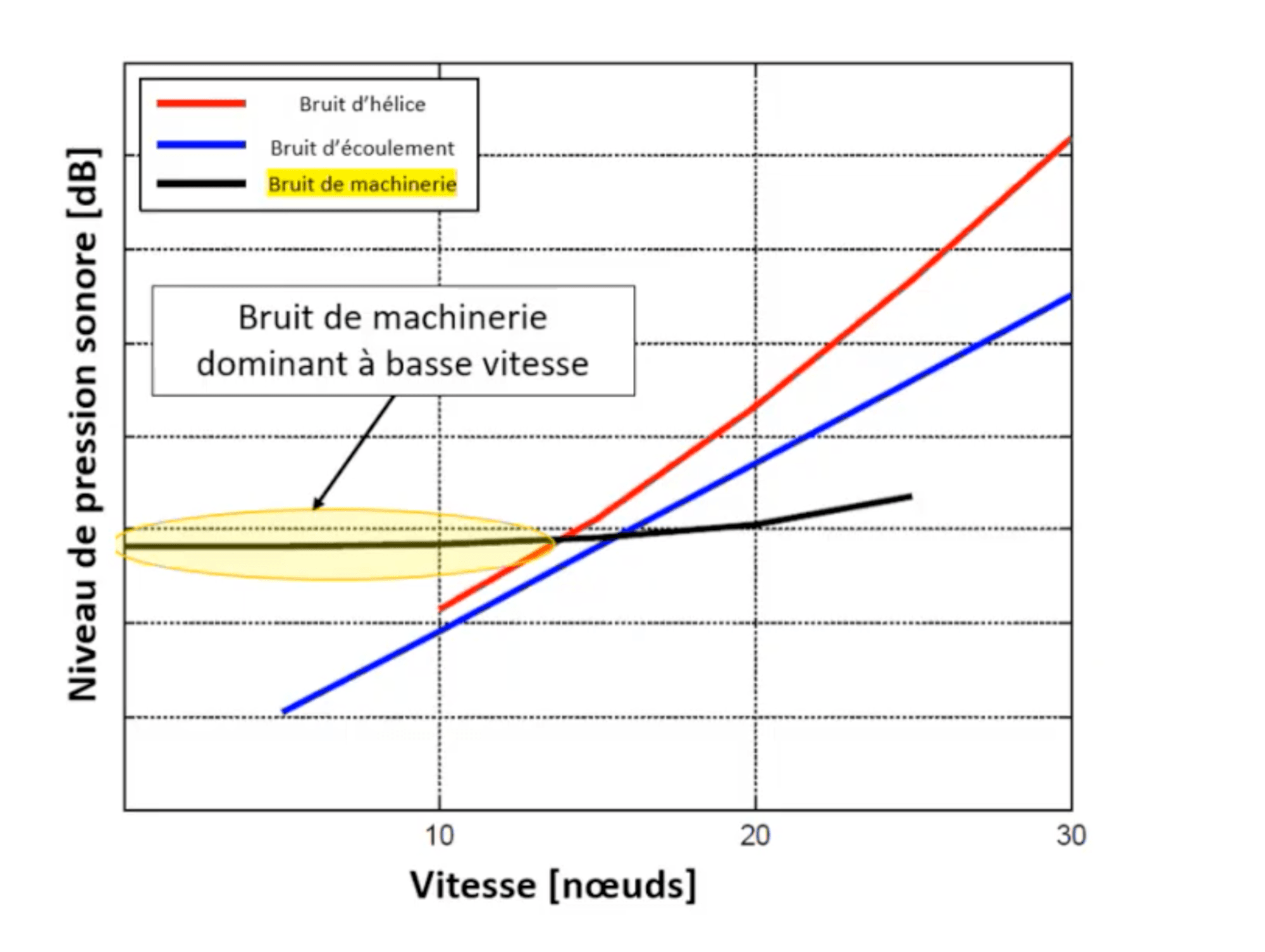
Since 2020, the Marine Acoustic Research Station (MARS) has been studying the acoustics of the St. Lawrence by quantifying the noise levels emitted by ships and proposing relevant mitigation methods. In its most recent article, the team presents results that are reshaping our perception of the River’s acoustic landscape.
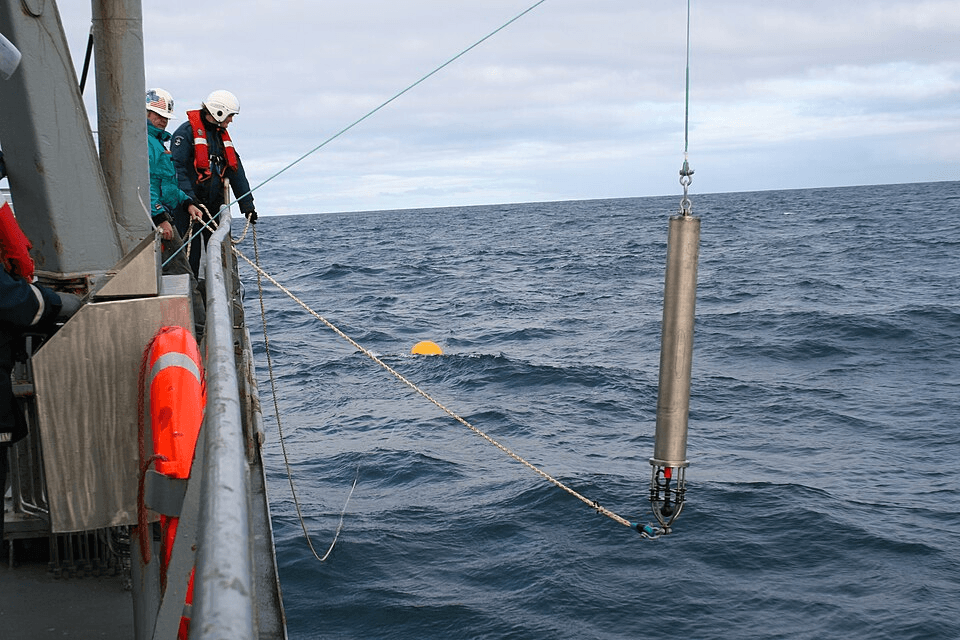
Using hydrophones placed on the seabed, the MARS team records sounds and then separates them into different frequency bands represented by one-third octaves. This way, the frequencies that matter for certain species in the St. Lawrence Estuary are isolated: 50 Hz for blue and fin whales, 300 Hz for humpbacks and 6,300 Hz for belugas. Each species shows a variety of profiles.
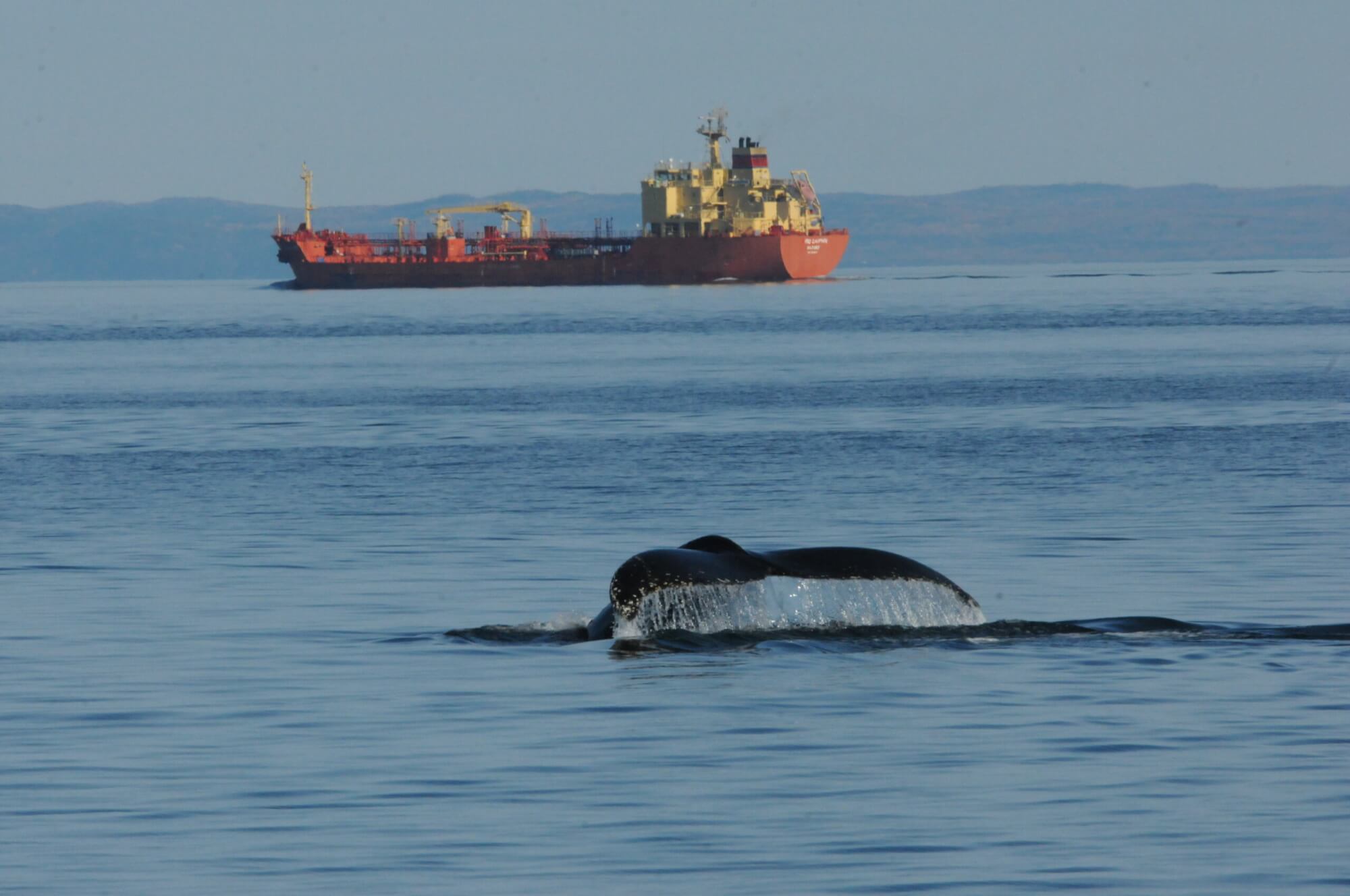
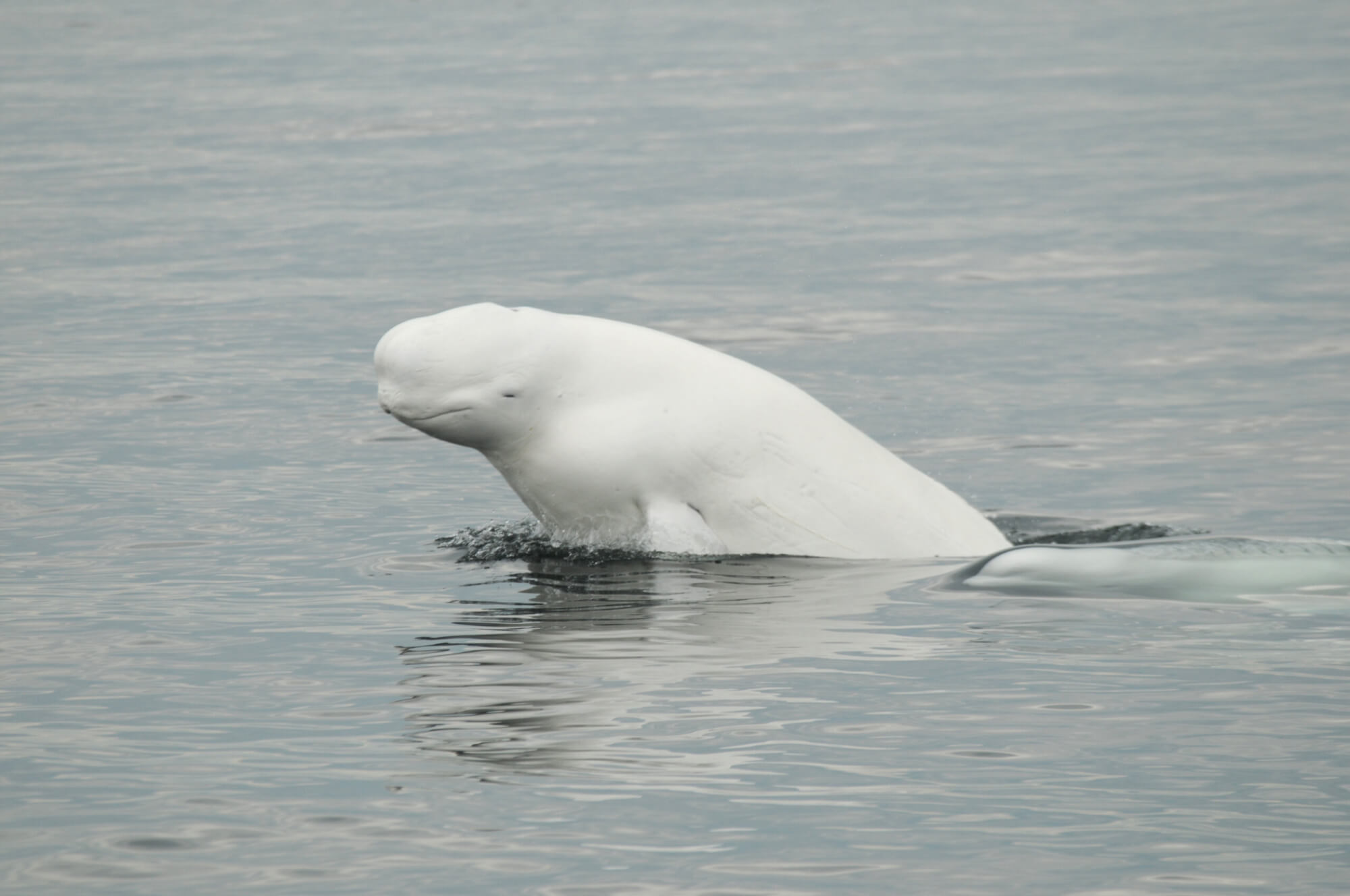
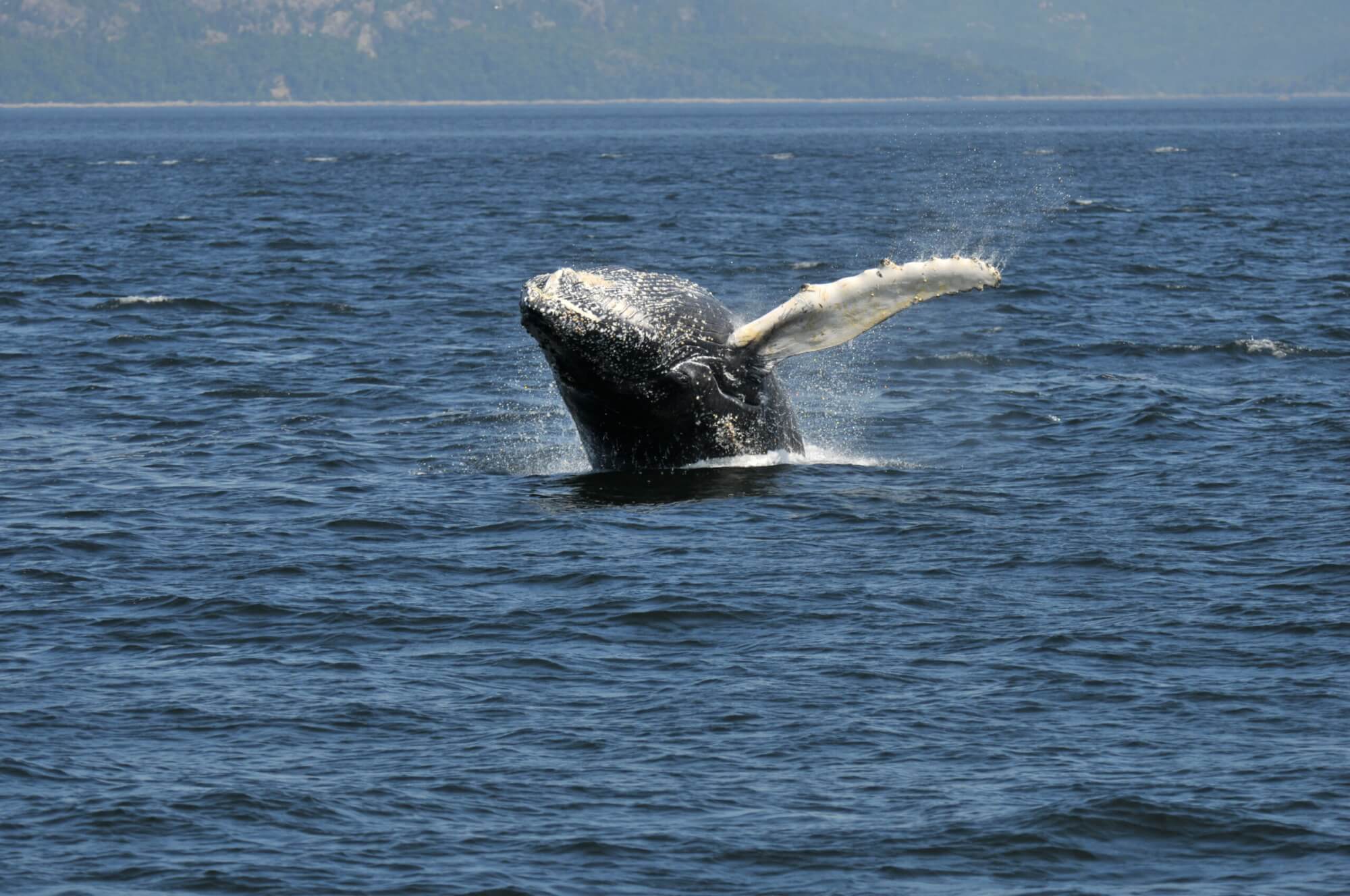
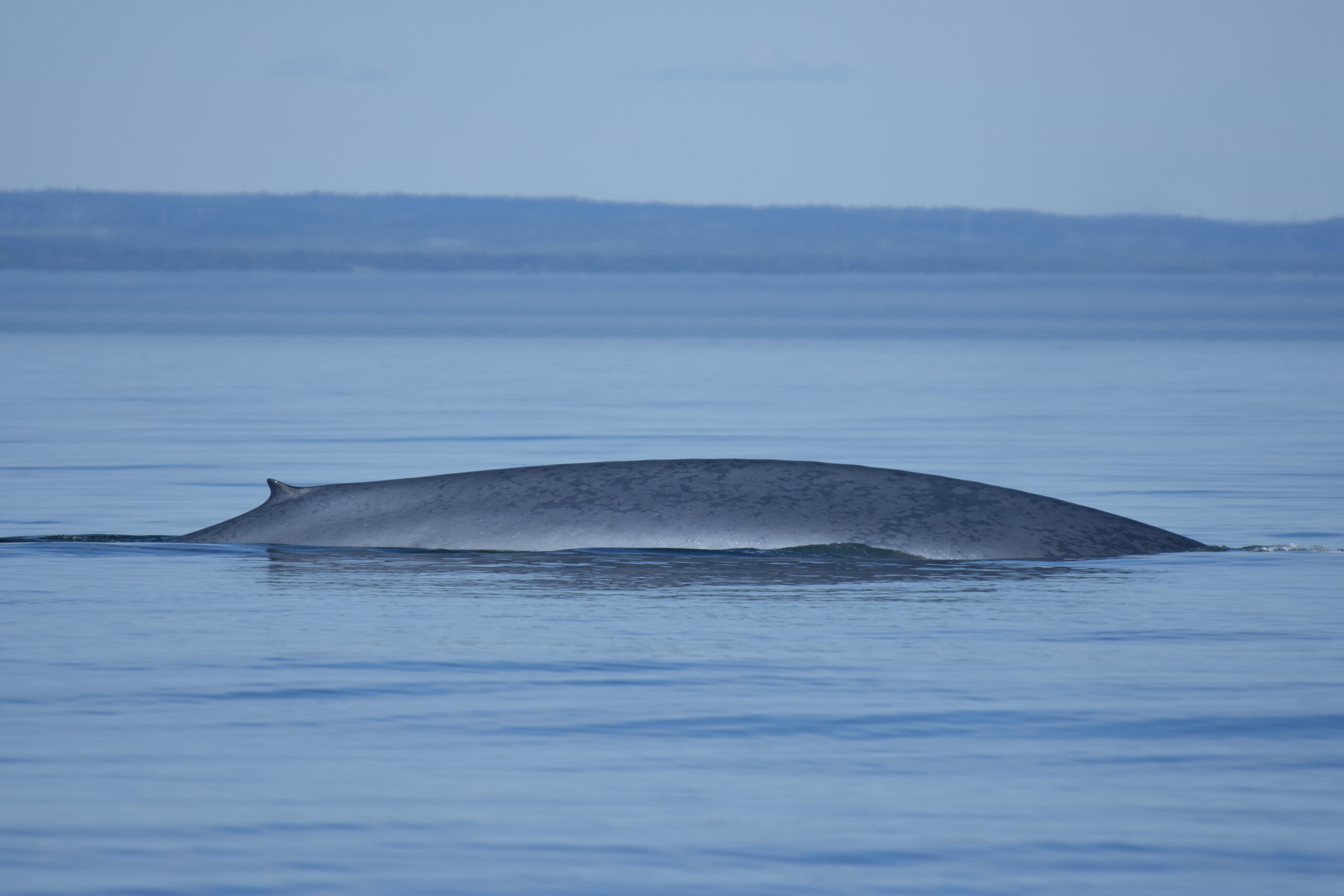
As a result, the larger whales of the St. Lawrence have trouble hearing each other. Under normal circumstances, a blue whale could communicate with another individual several kilometres away, but in the cacophony created by various low-frequency anthropogenic sources, higher-decibel noises almost always mask the animal’s songs.
An overly attentive audience
The impacts of anthropogenic noise on cetaceans can be divided into five main categories depending on the amplitude of the sound. Sometimes, the impact is clearly measurable, but establishing a cause-and-effect relationship between a noise and potential impacts on marine mammals is often complex.
1 — Disturbance
Even the most benign acoustic impacts on aquatic species should not be overlooked. Changes in dive time, a group moving outside its usual range, cessation of hunting behaviour or presence at a particular site… If these occur repeatedly, the population risks experiencing major changes in its energy expenditure and in turn its reproductive capacity.
2 — Acoustic masking
Acoustic masking occurs anytime there is a sound of the same frequency as that used by a marine mammal species to communicate and its intensity (i.e. “volume”) is too high. The sounds and songs of marine mammals then become inaudible to members of the same species.
3 — Chronic stress
As is the case in humans, repeated noise exposure can lead to chronic stress. During lulls in shipping and boating traffic (e.g. during the COVID-19 pandemic), scientists have observed a reduction in stress hormones in whales. A stressed individual is more likely to develop diseases or even hormonal changes or malnutrition.
4 — Damage to auditory tissues
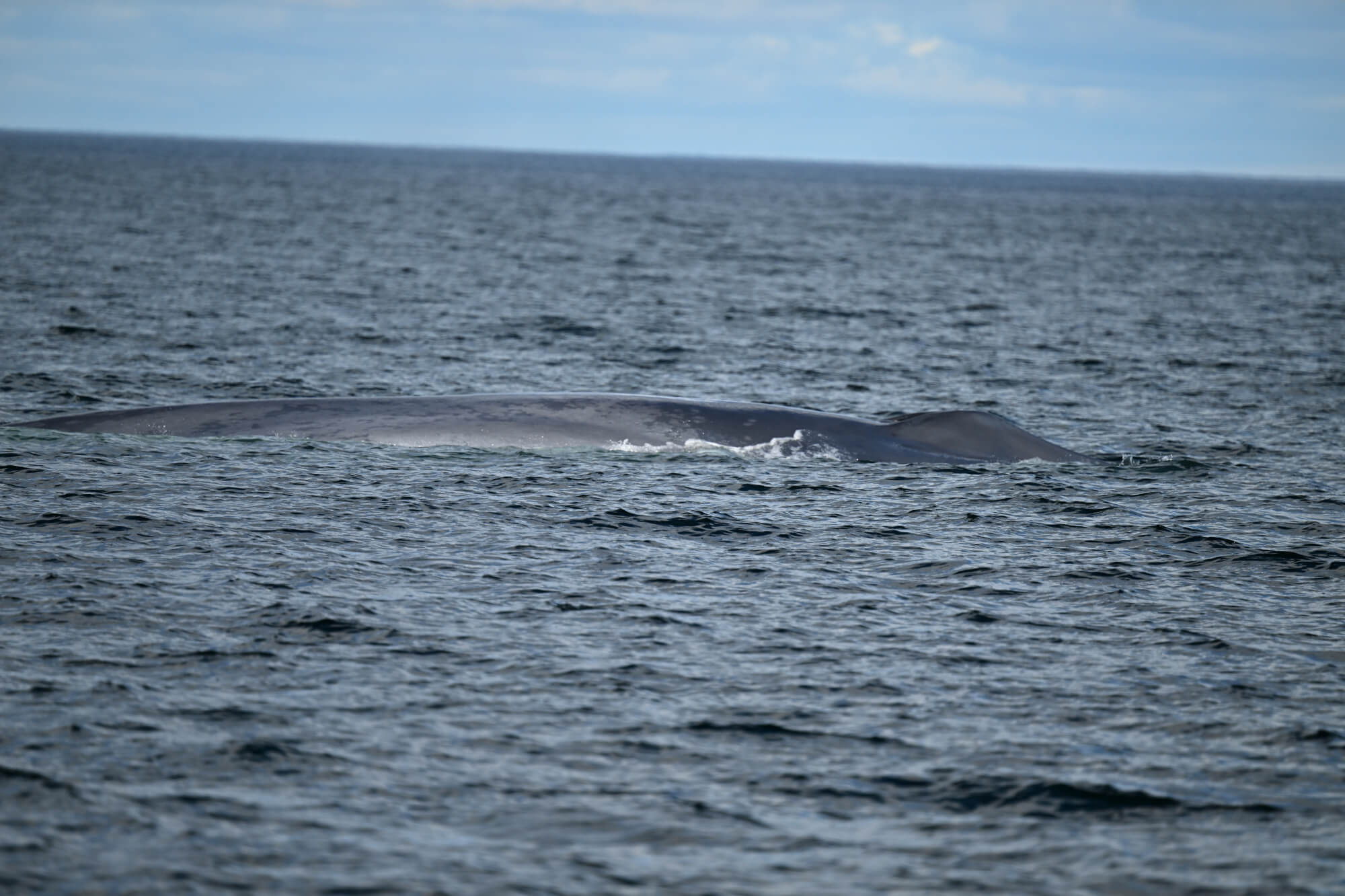
When decibels are particularly high such as during seismic surveys (where sound waves are used to detect minerals and hydrocarbons), maritime work, or underwater blasting, marine animals can suffer direct damage to their ears and auditory canals. This can lead to partial or total hearing loss, or—in the case of toothed whales—impairment of their echolocation abilities.
5 — Mortality
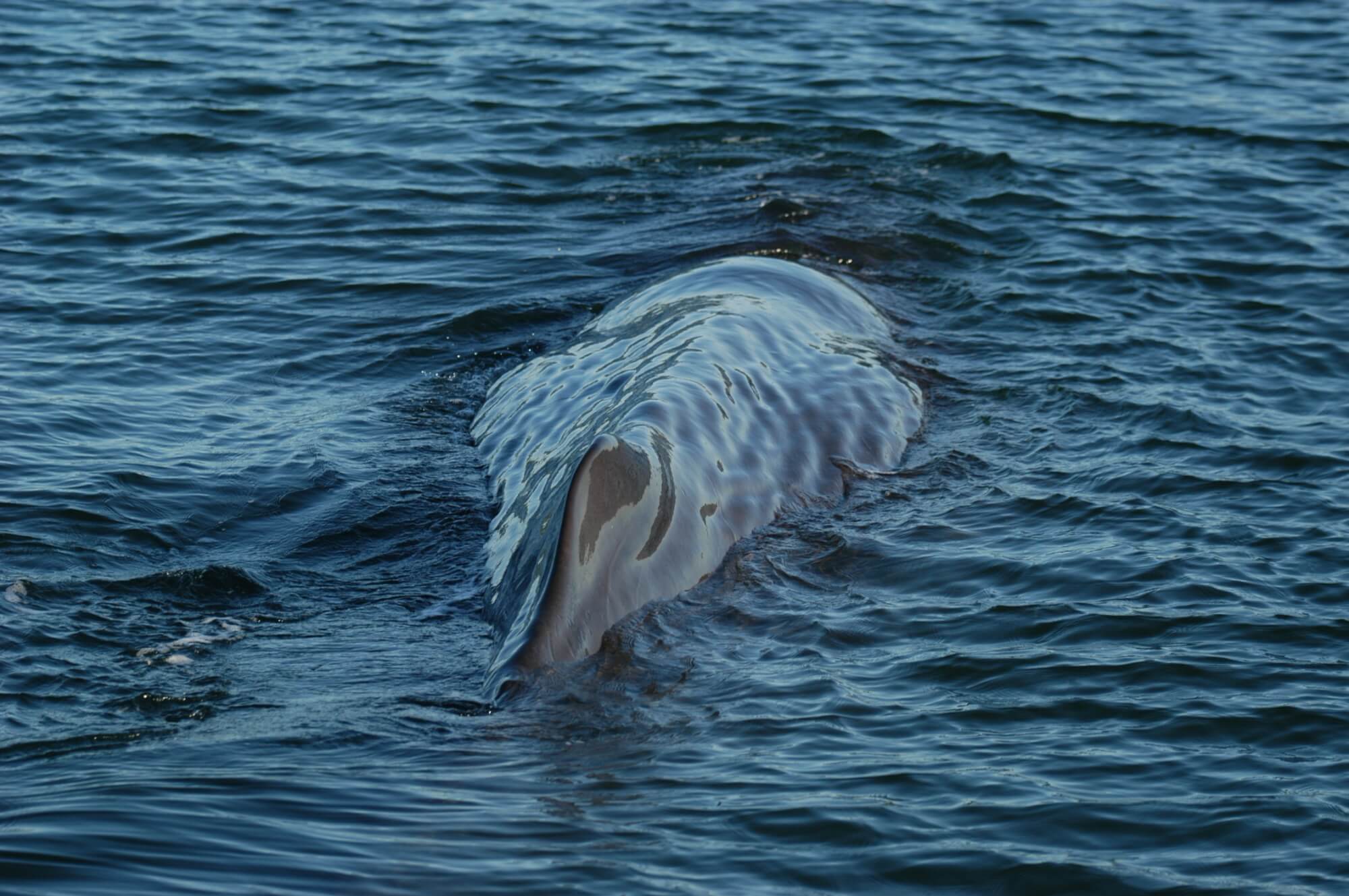
Lastly, certain isolated events can lead to mortality. A recent example is the new skeleton that has been on display at CIMM since 2025. Listuguj, a common beaked whale, is believed to have died following sonar tests off the coast of Nova Scotia, which, according to the most likely hypothesis set out in the necropsy report, disoriented her and caused her to become stranded. Decompression sickness, confusion, isolation of a group, mother-calf separation… The list of possible deaths linked to marine acoustics is long.
A quiet reminder:
How can we better coexist with marine mammals? This is a question that many research groups are asking, including , a non-profit organization affiliated with Université du Québec à Trois-Rivières. In an interview with GREMM, team member Julien St-Jacques presented two types of concrete noise mitigation measures currently being developed in the St. Lawrence River: operational measures and material-based measures.
Operational measures are easier to implement, as they only pertain to navigational practices. They are therefore less costly and quicker to implement. At Innovation Maritime, the Underwater Radiated Noise (URN) project is a good example. This project aims to estimate the vessel’s external noise in real time, allowing captains to modify their conduct on the water, especially in environmentally sensitive areas.
Material-based measures, such as Marine Innovation’s Metaman I and II projects, influence the sound levels emitted by ships without requiring them to alter the way they sail. Using metamaterials—materials whose geometry attenuates specific frequencies—the team can target frequencies that are harmful to wildlife and reduce the amplitude of the sound waves emanating from the hull. These are veritable “acoustic sponges.”
In practice, a combination of these two measures, together with best practices such as speed reductions, significantly reduces the acoustic impact of humans on marine mammals.
By better understanding this great aquatic symphony, it will be possible to filter out some of the noise that is so harmful to the St. Lawrence’s biodiversity. As both spectators and musicians in their own right, the whales will greatly benefit from this respite.

Benjamin Gagné
Benjamin Gagne is in his second year with GREMM, having joined the editorial team during the summer of 2025. Passionate about environmental communication and raising awareness about climate change issues, he uses written and visual communication to share his love for natural environments and the life they sustain. With a bachelor’s degree in environmental studies under his belt, he will be expanding his knowledge this fall as he pursues a master’s degree in marketing.
Recommended articles
Collisions in the Saguenay—St. Lawrence Marine Park (part 1/2)
Collisions are a major challenge in the recovery and protection of cetacean populations around the world. In the Saguenay–St. Lawrence…

Episode 5 Summary: Christophe Ronveaux
Christophe Ronveaux is a biologist with the Mingan Island Cetacean Study (MICS). MICS mainly studies five species of large cetaceans:…
Coexistence in Troubled Waters: A Participatory, Multi-Criteria Approach to Beluga Protection
By Maud Thermes, Irène Abi-Zeid, Nathalie Niquil, Franck Taillandier and Arnaud Sentis A majestic emblem of the Saguenay–St. Lawrence region,…