
Swirling Foam in the Estuary

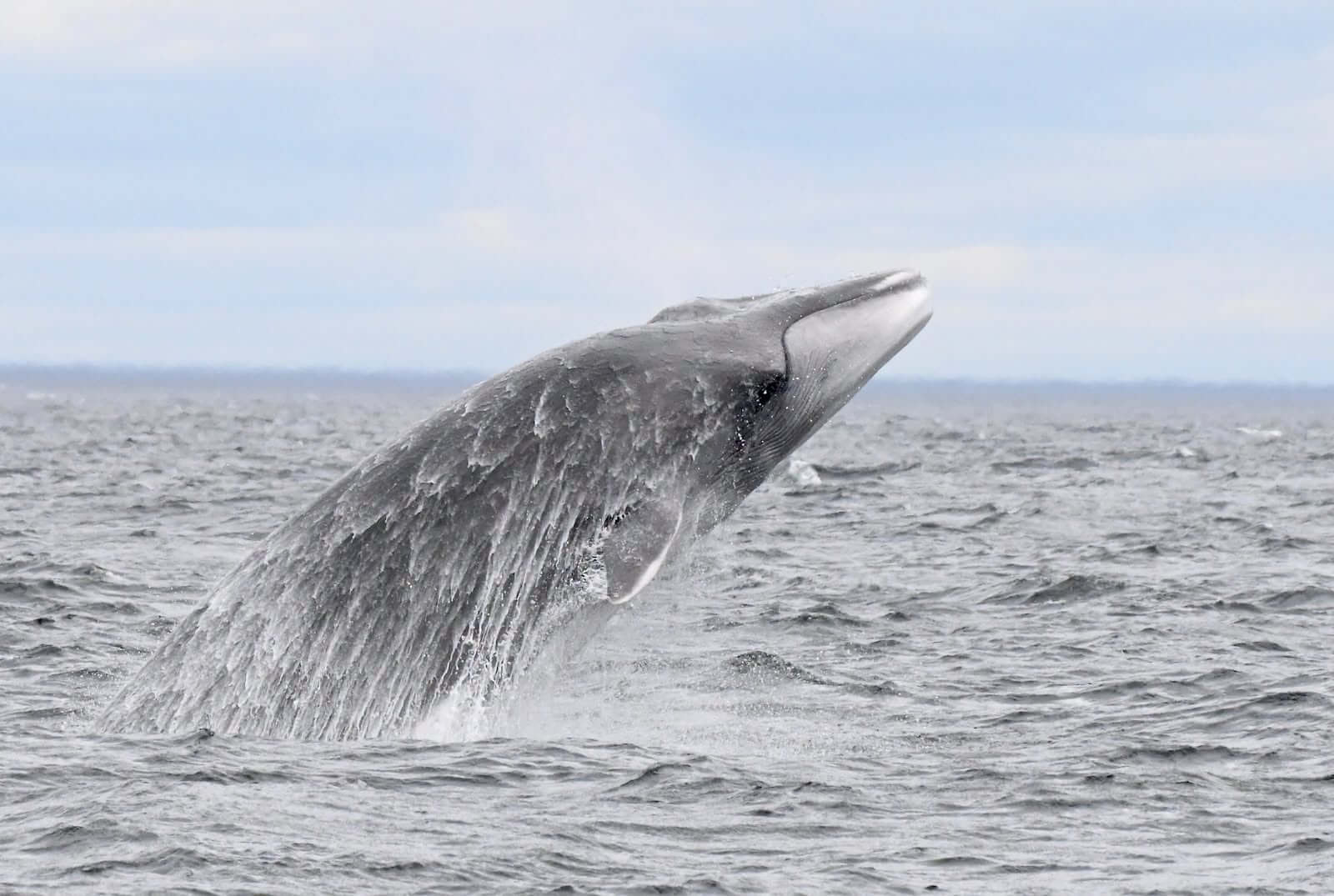
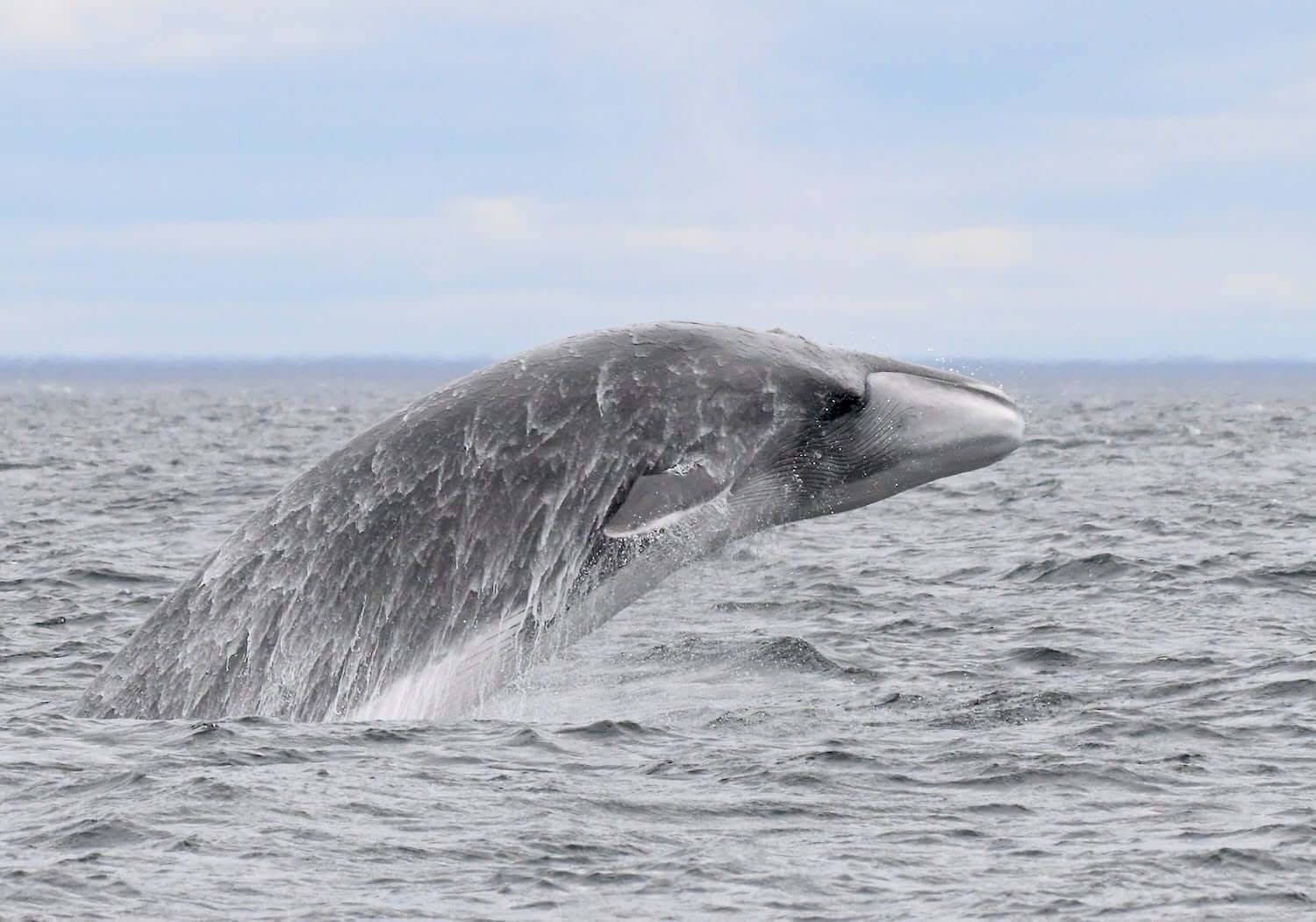
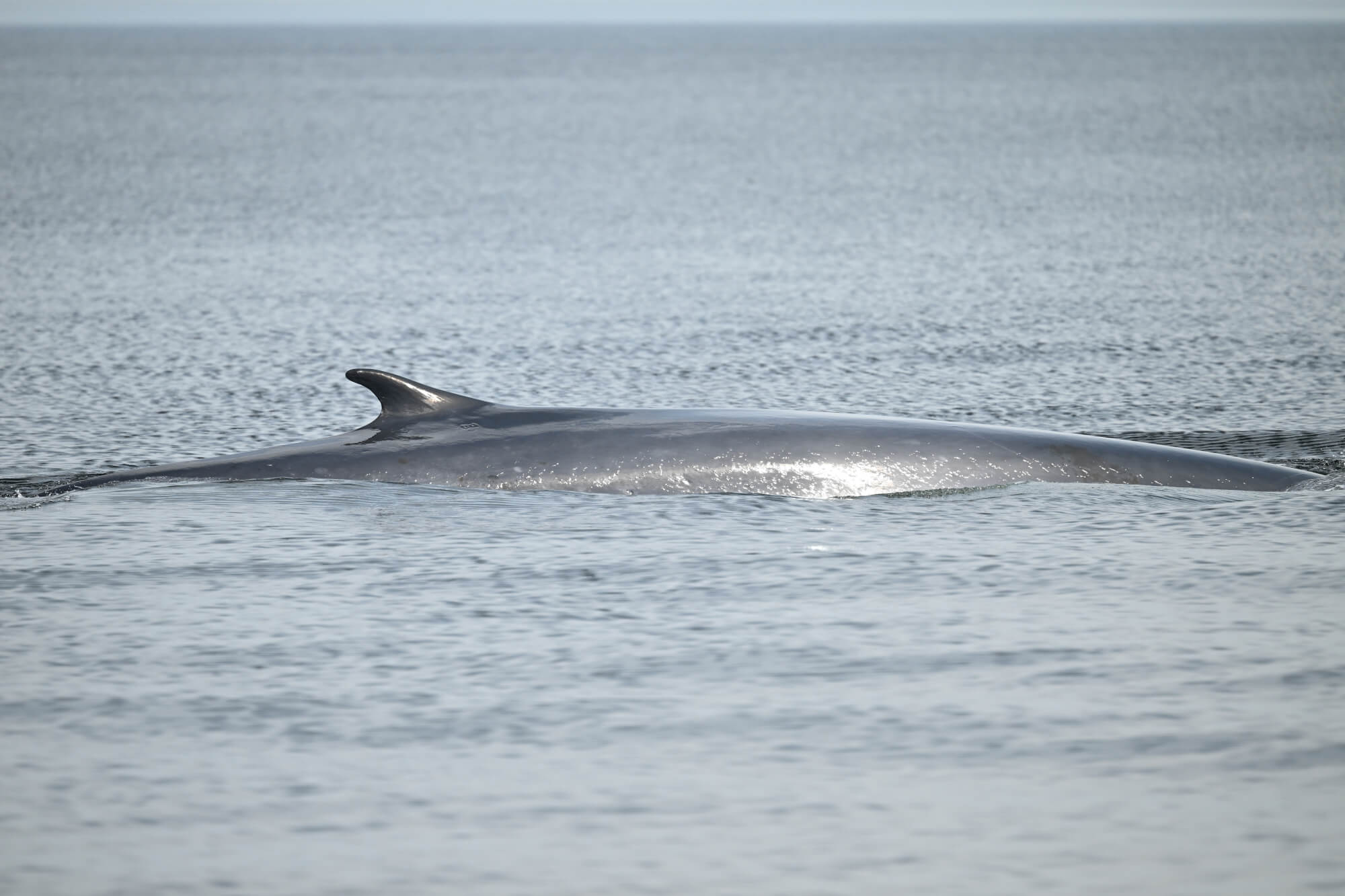
This week has been marked by fin whales showing off some impressive acrobatics, including breaches—a bold but rare behaviour for the second-largest whale in the world. Furthermore, harbour porpoises, seals, and minke whales have been making appearances from the gulf to the estuary. Blue and humpback whales are still in the area, while belugas have been parading along the shores.
Columns of water vapour in the rain
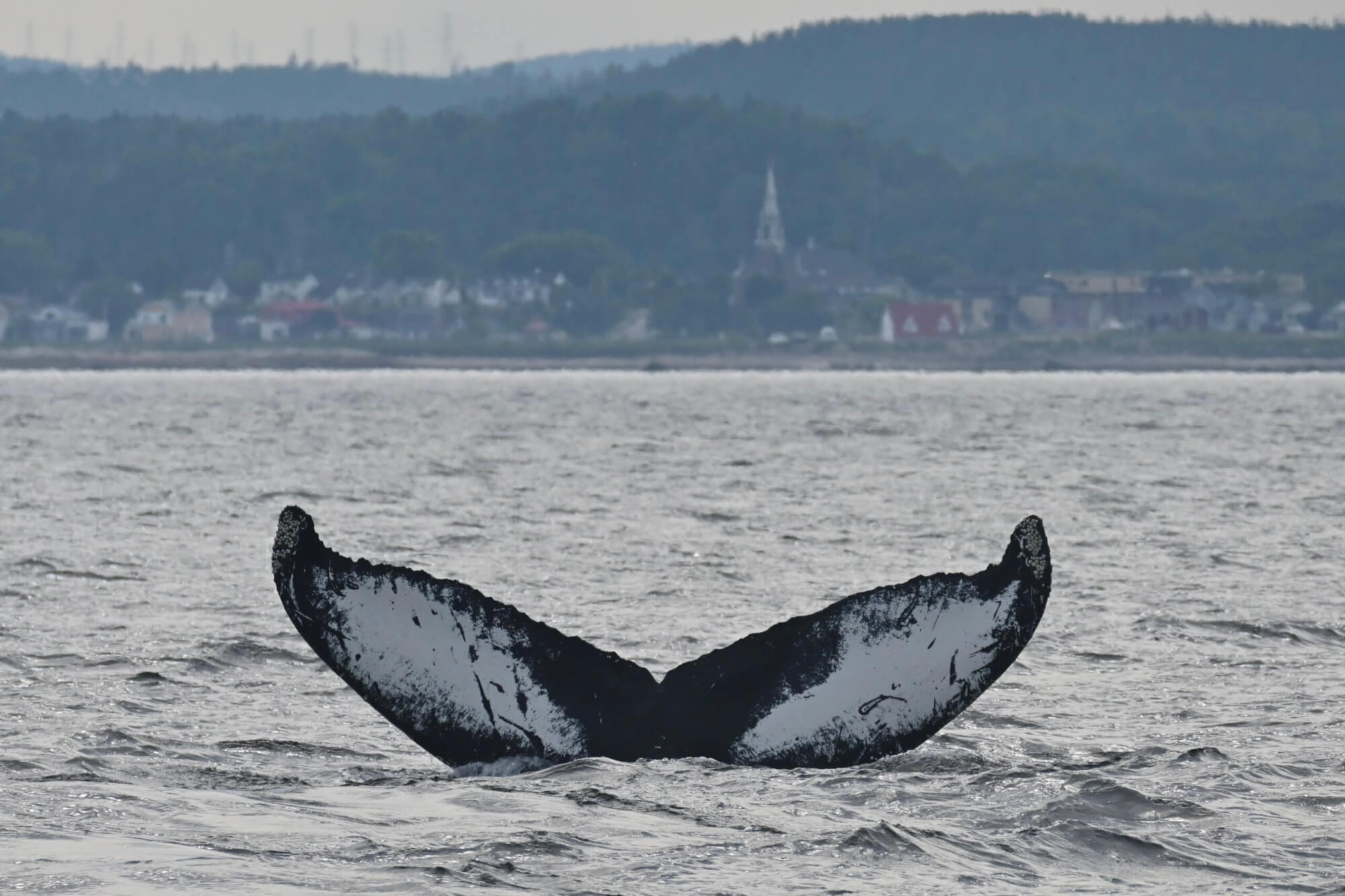
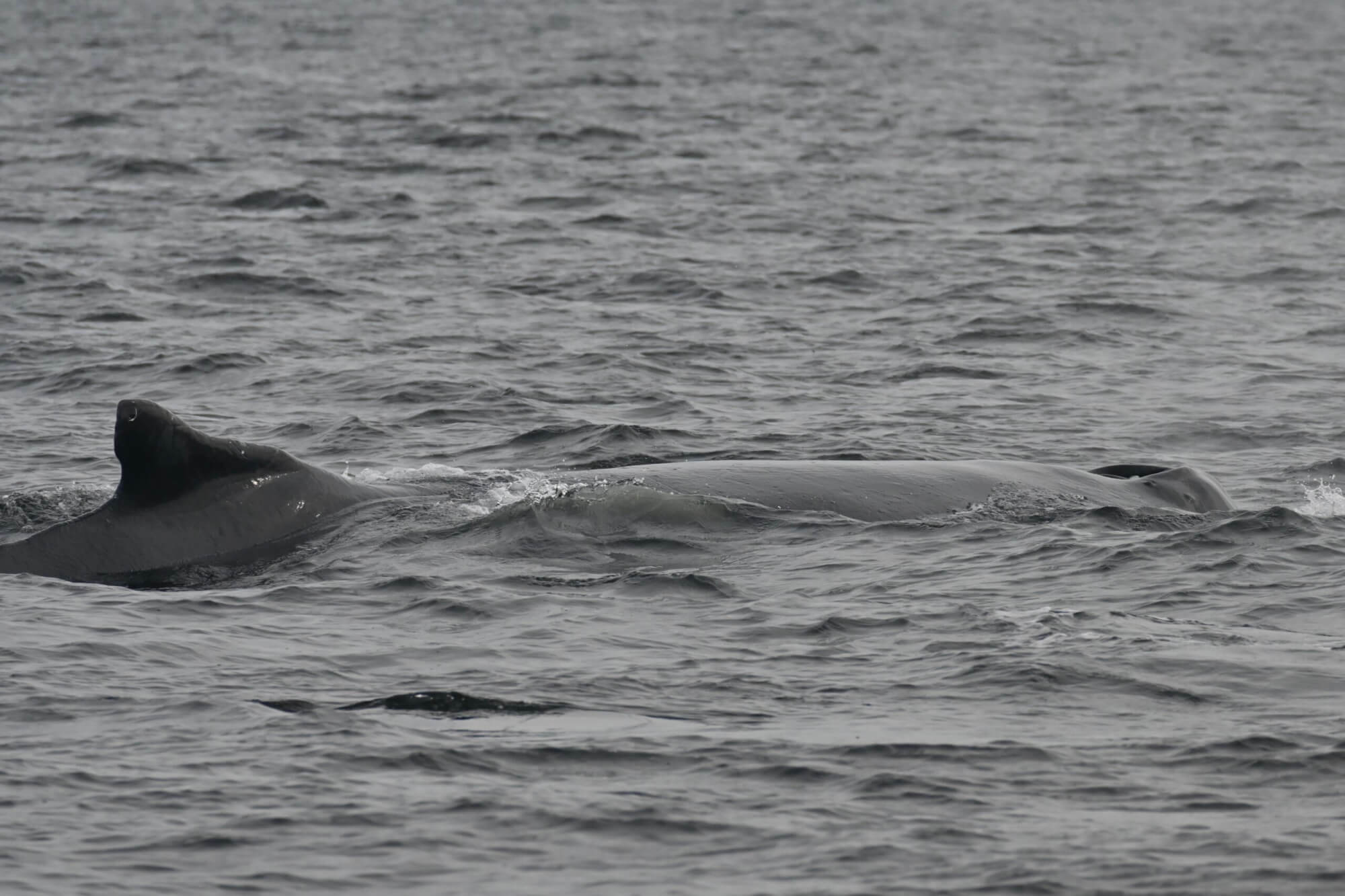
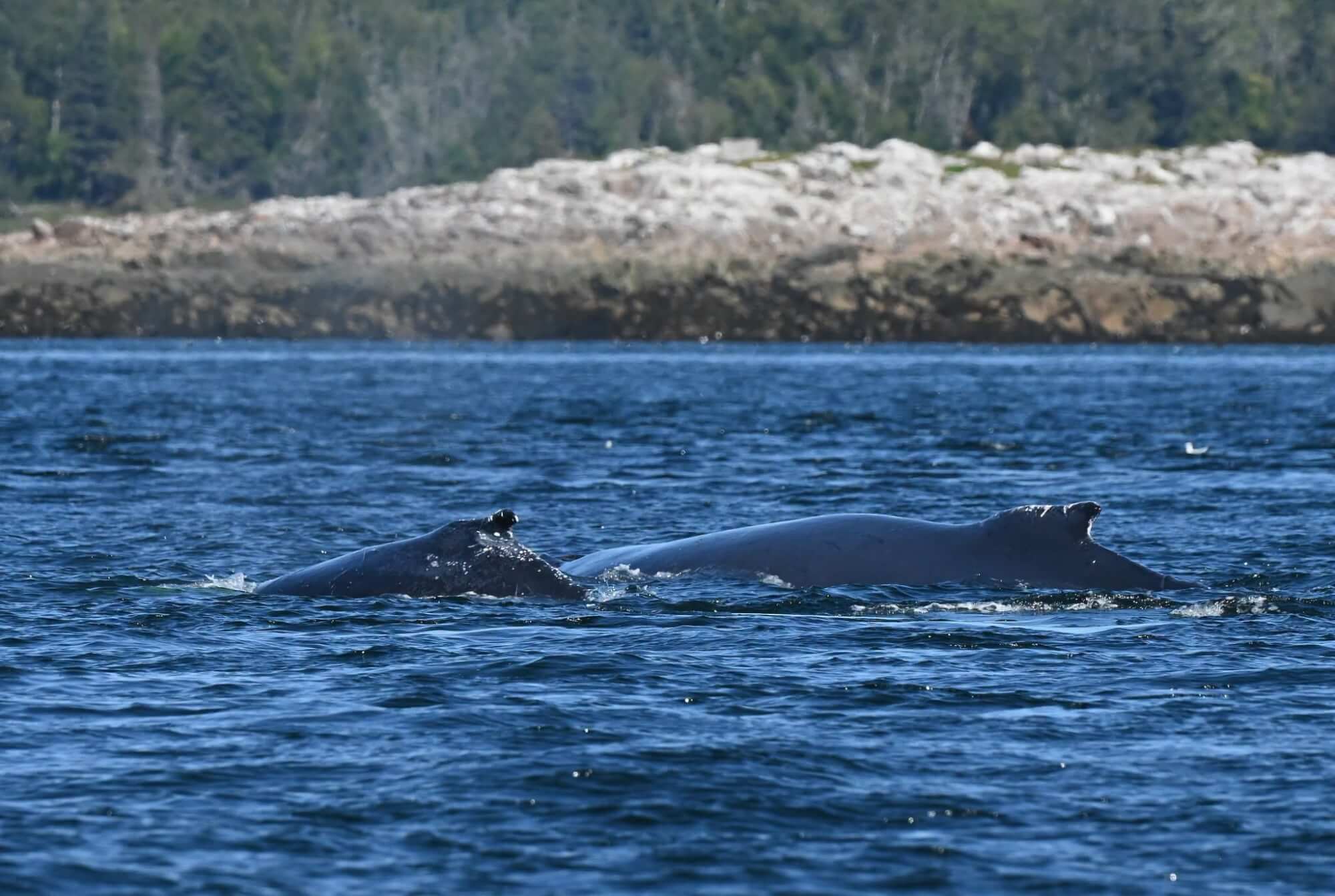
Large rorquals continue to frequent the Saguenay–St. Lawrence Marine Park. First, several humpback whales continue to wow observers, including H626—known as Gaspar or BBR (“Boom Boom River”) depending on the region—which made a lasting impression by performing breaches by the dozen on July 21.
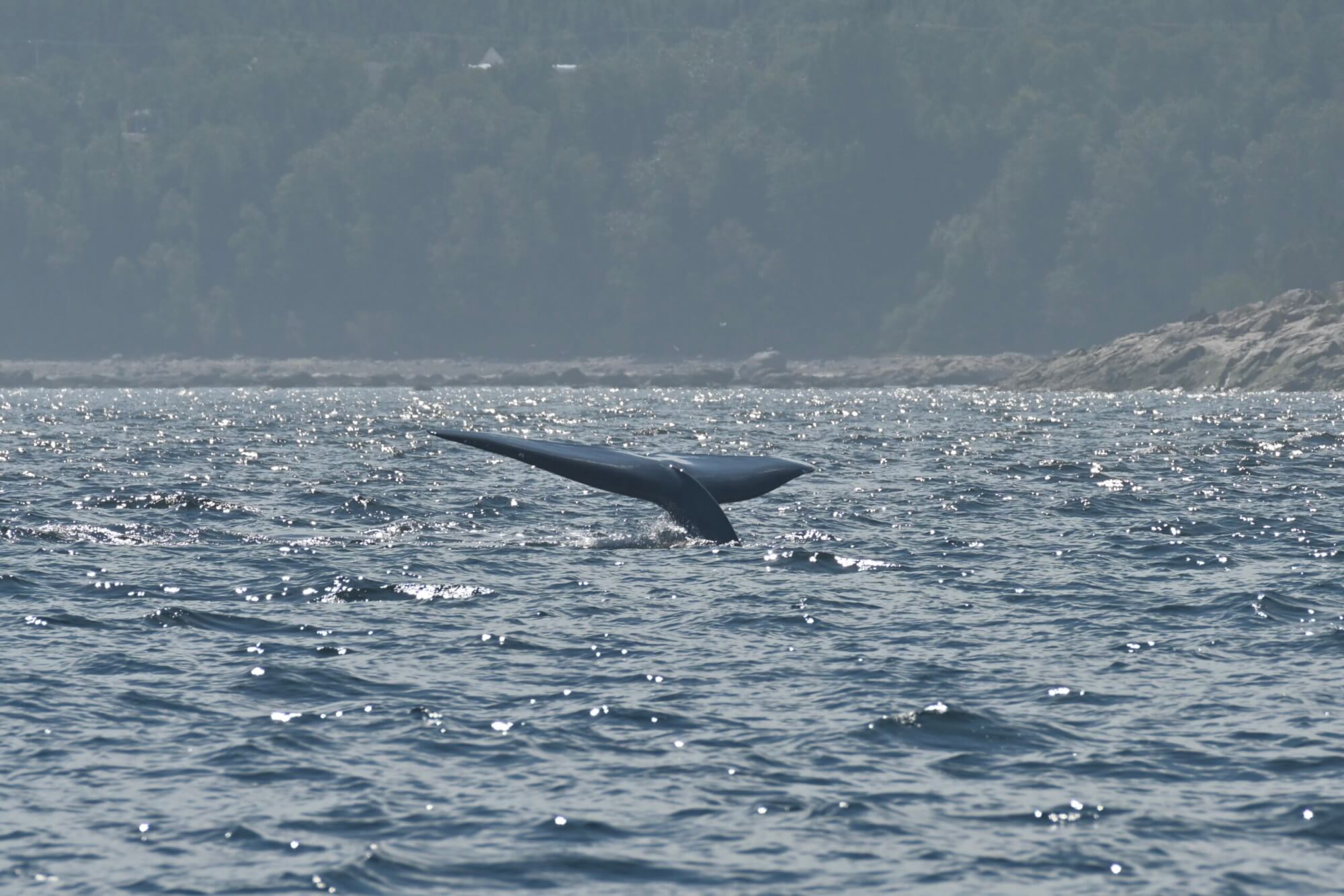
Five blue whales also ventured into the estuary, including B489 and the famous female B246 (“Jaw-Breaker”). The latter gracefully displayed her large tail fluke in the middle of a misty river. A mother-calf pair of blue whales is also believed to be present; could it be B260 and her calf that were spotted earlier this month?
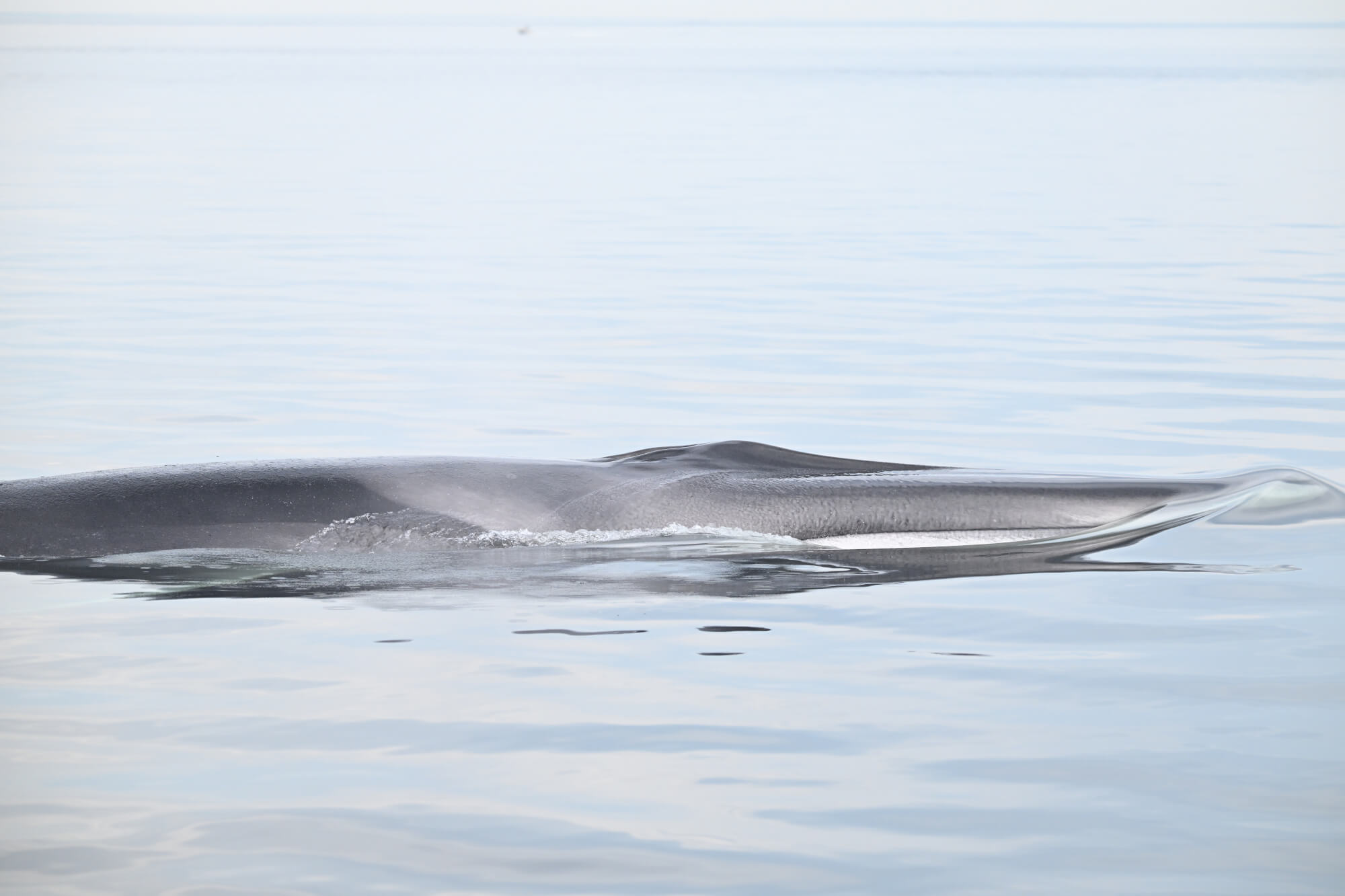
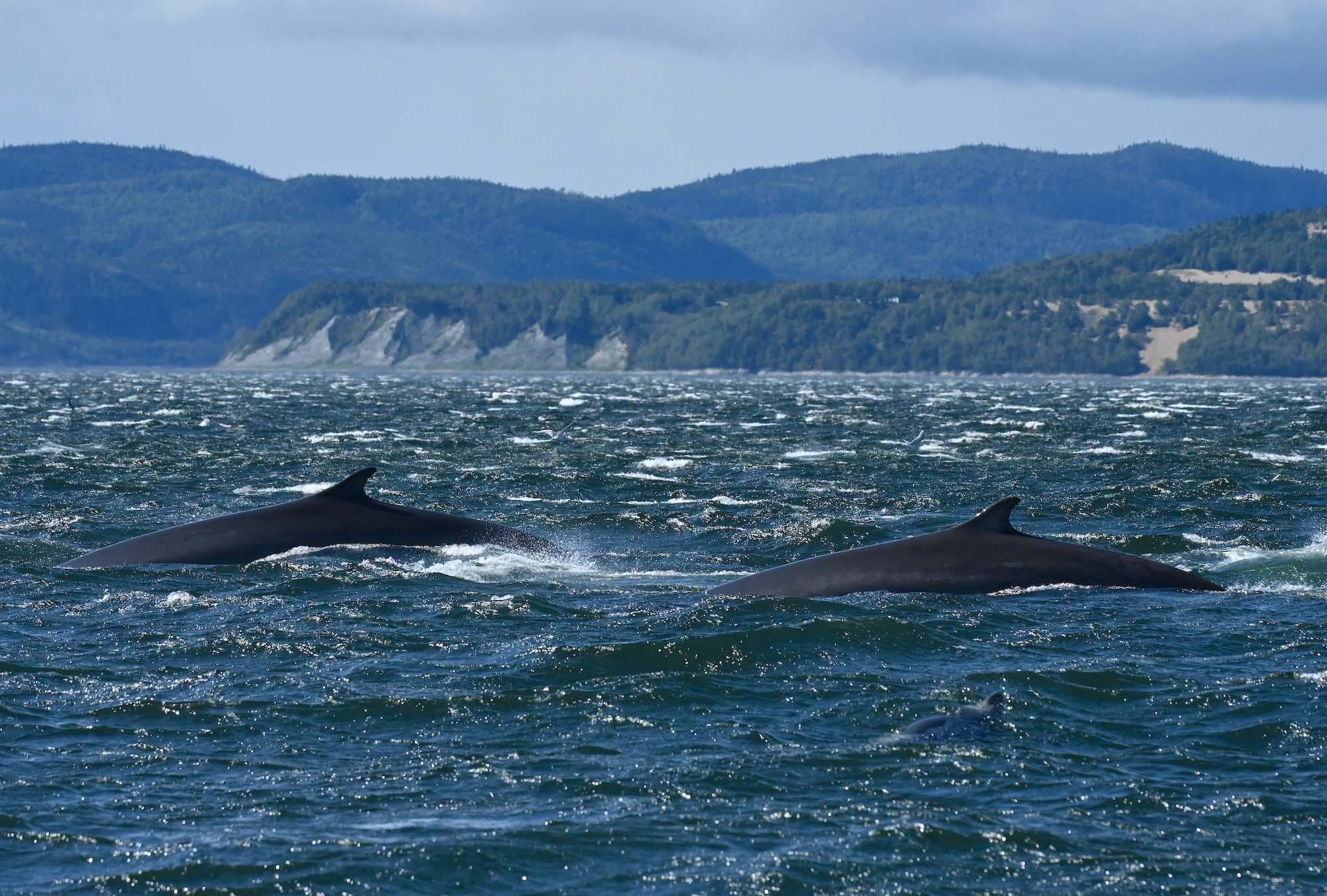
Despite the poor visibility, a handful of determined Tadoussac residents managed to spot the powerful blows of four or five different whales in a single grouping off the coast of Les Bergeronnes. “I can’t see any tail flukes, but the conditions are poor. Given the column-shaped spouts, I’m leaning toward fin whales,” one of them points out.
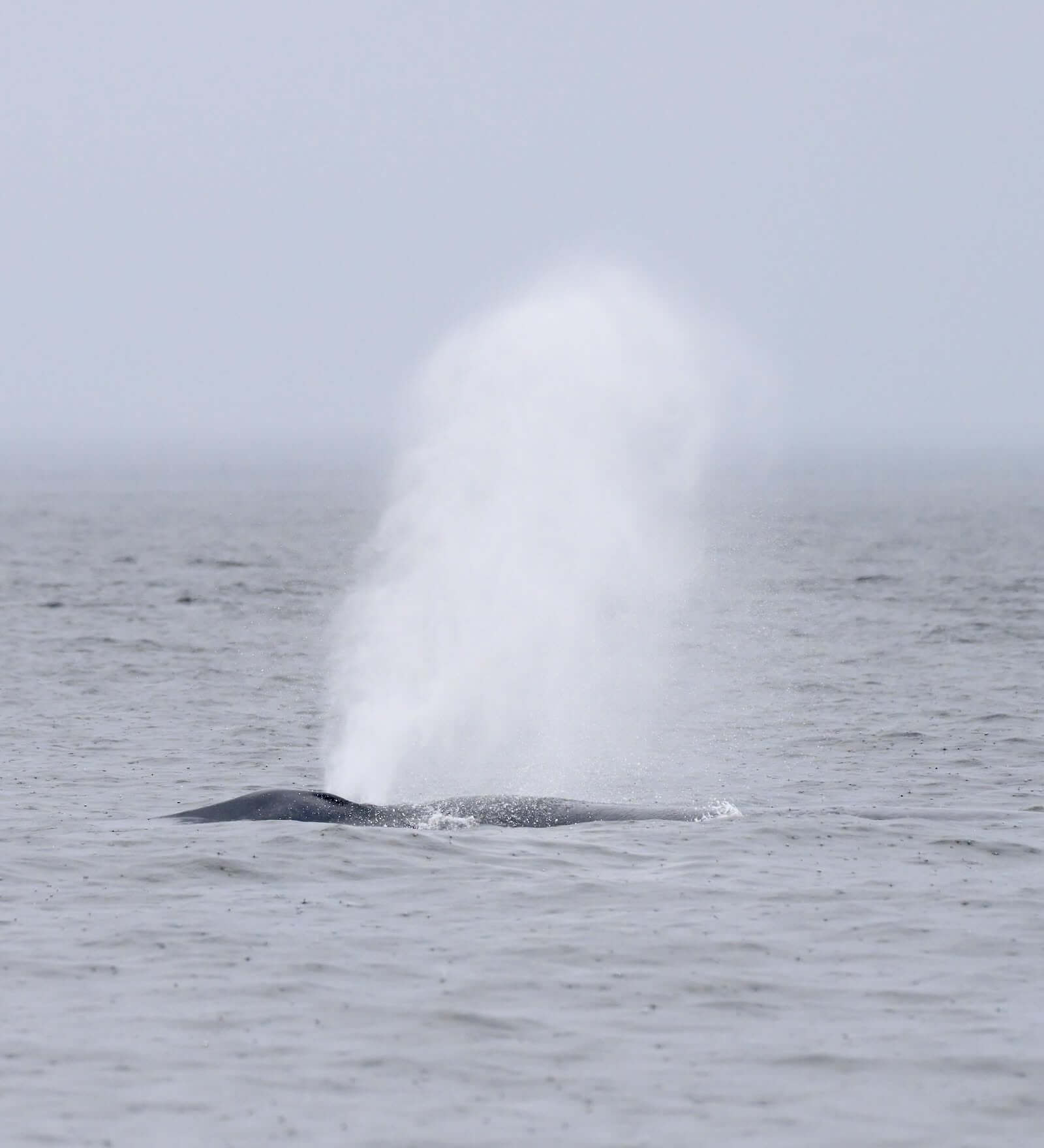
Two days later, five fin whales were observed in the estuary off the coast of Les Bergeronnes! One of these large whales even surfaced, rolled onto its side and revealed part of its tail fluke! Was it hunting?
When it feeds, this species sometimes performs circular or semi-circular manoeuvres during which it rolls its body sideways. This group of four or five individuals was probably chasing schools of prey. Furthermore, GREMM identified four out of the five individuals: Bp935, Bp918, Bp955, and Bp2805.
A few days earlier, a local wildlife photographer experienced a very special moment when he observed two fin whales breaching! Another observer witnessed five or six different breaches. Although this behaviour is unusual for this species, it is probably more frequent in feeding areas and may even be suppressed when boats are too close, according to a study on the resident fin whale population of the Mediterranean.
“The canteen looked delicious"
A woman from Charlevoix marvelled at her magnificent “bouquet” of belugas last Sunday. At least a dozen adults accompanied by juveniles filed past the village of Saint-Irénée in what she described as “three hours of celebration on a dreamy late afternoon.” Harbour porpoises were also present a little farther offshore.
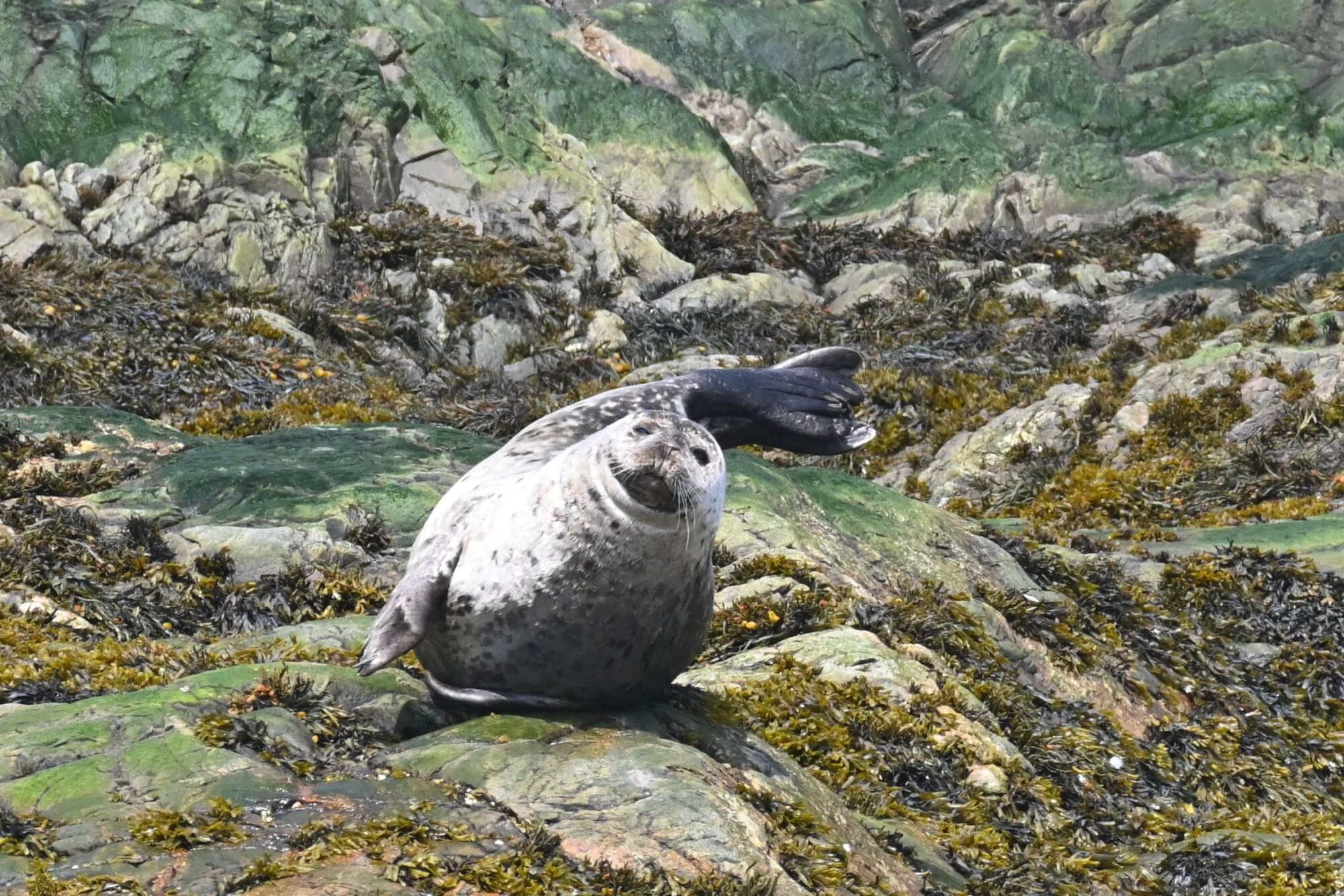
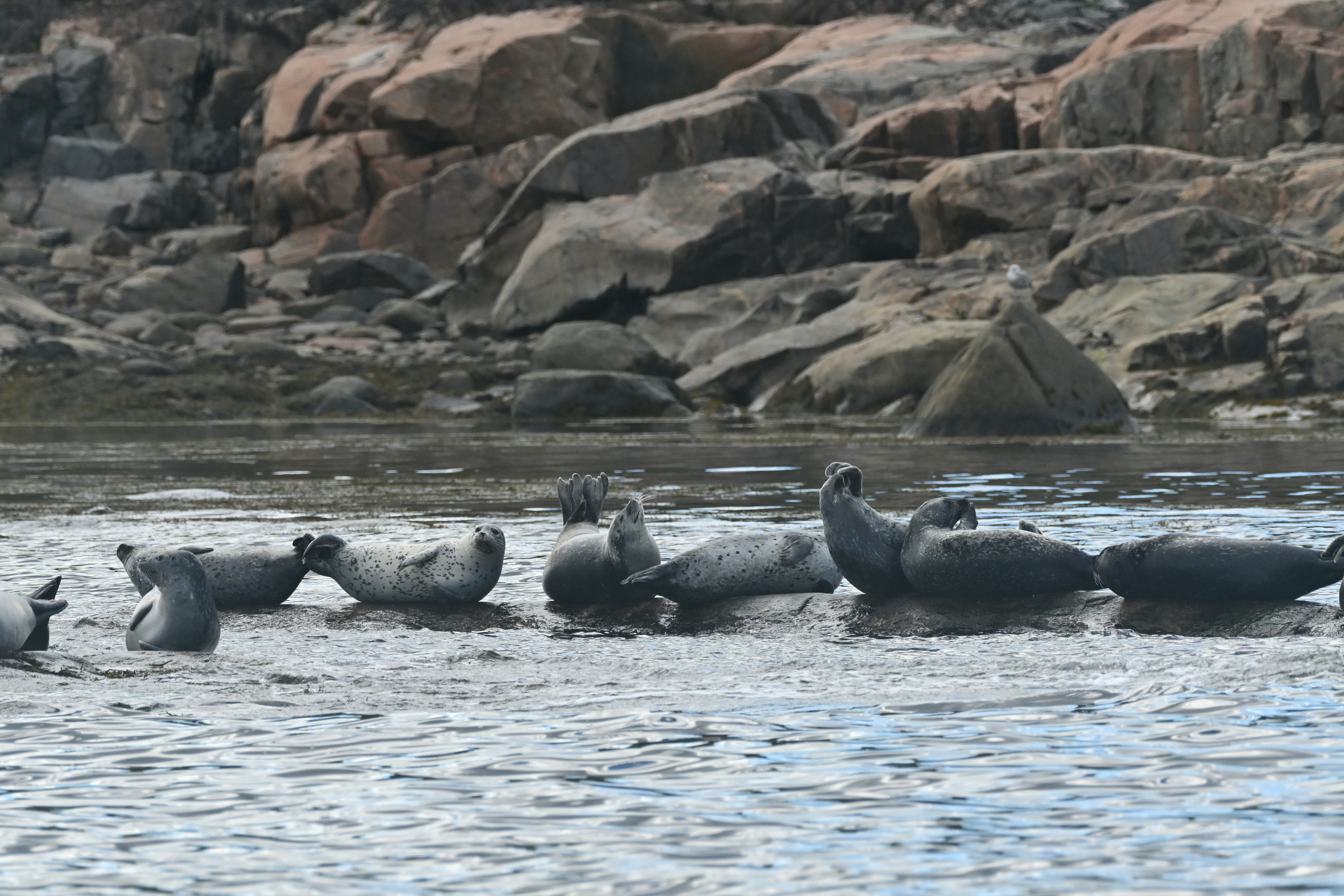
In Tadoussac, on an intermittently gusty day, two kayakers spotted a large harbour seal curled up on a rock at low tide and basking in the sun, as well as several seals poking their heads out of the water and into the mist. A group of grey seals was also seen in the area. In Les Bergeronnes, a naturalist was treated to a display of bioluminescence while a few women paddlers were able to hear the soft breaths of harbour porpoises during a nighttime sea kayaking trip. Several enthusiasts also noted a “huge herd” of belugas off Tadoussac, as well as five or six minke whales off Cap de Granite. Surface feeding behaviour was also reported!
Ecstasy in the Manicouagan region
In the Manicouagan area, a resident of Baie-Comeau reported the presence of two humpback whales, including H929 (a.k.a. “Éline”), which had been observed a few days earlier near Les Bergeronnes. In his words, “They kept breaching, over and over. It was so loud, it was mind-blowing.” Indeed, if you get close enough, thirty tonnes crashing down onto the water can sound like an explosion!
In Gallix, in addition to a harbour seal near the mouth of the Sainte-Marguerite River, one observer saw up to 80 northern gannets feeding up and down the shoreline: “For the ten plus years I’ve lived here, I’ve observed them every season, but this is the first time I’ve ever seen so many, and so close.”
Also reported between Baie-Comeau and Franquelin were fin whales, harbour seals, minke whales, grey seals, belugas, and harbour porpoises!
Minganie
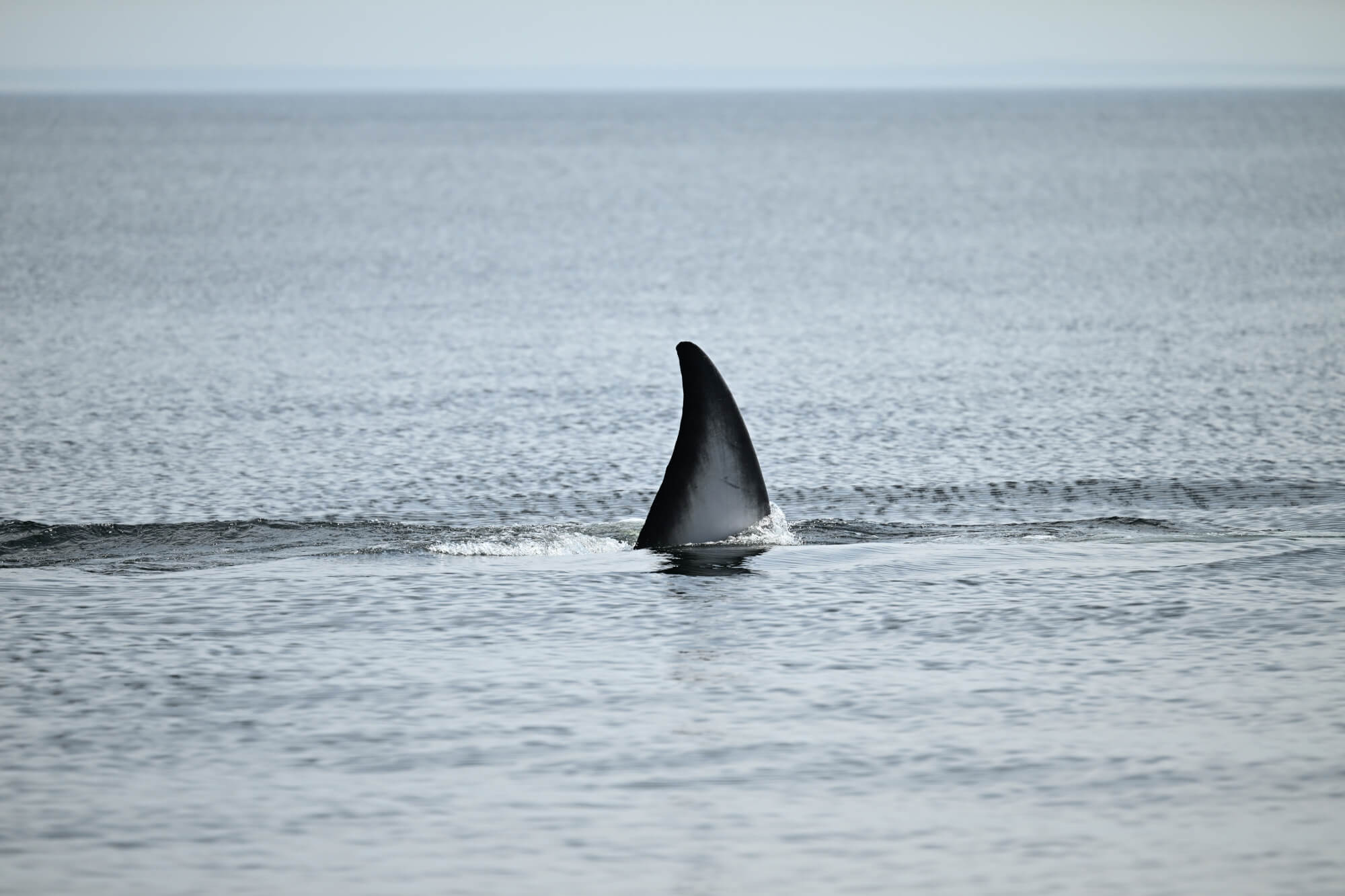
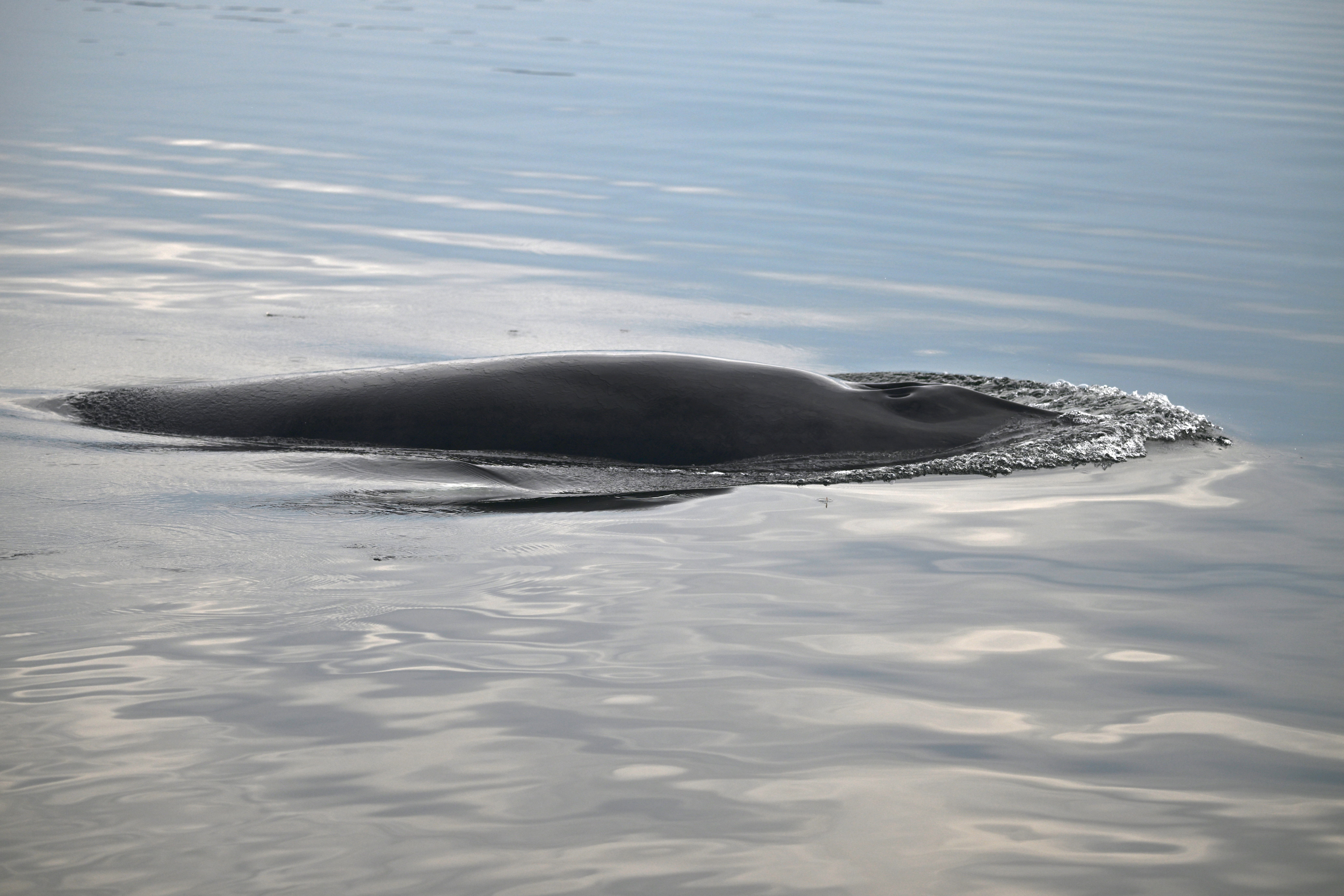
In the Mingan Archipelago, small groups of harbour porpoises and minke whales have been surfacing in between the islands. One keen observer also heard the howling of grey seals and spotted about 35 pinnipeds—possibly harbour seals—near the reefs.
The Mingan Island Cetacean Study has encountered numerous species since July 18: “a few dozen minke whales, hundreds of harbour porpoises, and seven fin whales,” as well as five North Atlantic right whales already known to the research centre. Conversely, none of the fin whales observed that day had been seen earlier in the season. The team also reported a blue whale off Sept-Îles.
The waters of the Gaspé Peninsula seem calmer, but nevertheless have been harbouring large rorquals, with humpbacks, fin whales and blue whales all having been sighted in recent days.
Where are the whales this week? Sightings map
These data were reported by our network of observers. They give an idea of the presence of whales and in no way represent the actual distribution of whales in the St. Lawrence. Just for fun!
Click on the whale or seal icons to discover the species, the number of individuals, additional information or photos of the sighting. To enlarge the map, click on the icon in the top right-hand corner. The map works well on Chrome and Firefox, but not so well on Safari.
To display the list of sightings, click on the icon in the top left-hand corner.
Thanks to all our collaborators!
Special thanks go out to all our observers who share their love for marine mammals with us.
Your encounters with cetaceans and pinnipeds are always a pleasure to read and discover. On the water or from shore, it is your eyes that give life to this column.
- Croisières Baie de Gaspé
- Odélie Brouillette
- Marie-Andrée Charlebois
- Thalia Cohen Bacry
- Laetitia Desbordes
- Camille Desgaches
- Sarah Filbotte
- Benjamin Gagné
- Hélène Guitton
- Stéphanie Houde
- Sidric Jasmin
- Antonin Leclere
- Guylaine Marchand
- Diane Ostiguy
- Sandrine Papias
- Karina Pegiel
- Renaud Pintiaux
- Pascal Pitre
- Guillaume Savard
- Andréanne Sylvain
- Marielle Vanasse
And to all the others!
Additionally, we would like to acknowledge the following teams that also share their sightings:
Centre d’éducation et de recherche de Sept-Îles (CERSI)
Station de recherche des Îles Mingan (MICS)
Réseau d’observation des mammifères marins (ROMM)
Réseau québécois d’urgences pour les mammifères marins (RQUMM)
Groupe de recherche et d’éducation sur les mammifères marins (GREMM)
Mériscope
Would you also like to share your observations? Have you seen any marine mammals in the St. Lawrence? Whether it’s a spout offshore or just a couple of seals, drop us a line and send your photos to [email protected]!

Thalia Cohen Bacry
Thalia Cohen Bacry is a science writer for the GREMM, having previously worked as a naturalist in 2023. A UBC graduate, she completed a master's degree in international studies at the Université Laval and is continuing her learning in several fields, including geography, political science and animal behavior. Passionate about environmental protection, she grew up in Savoie, surrounded by lakes and mountains, before immigrating to Canada and discovering even bigger and wilder spaces. Intrepid, curious and persevering, she loves to learn, observe and analyze in order to raise awareness about protecting our oceans.
Recommended articles
Côte-Nord: Prime Location for Autumn Whale Watching
Across Quebec, fall has truly arrived, as evidenced by the turning leaves and the arrival of certain marine mammal species…
Strong Winds, Big Whales
Despite the strong winds, fog, and plummeting air temperatures, marine animals of all kinds continue to roam the St. Lawrence.…
Mama Whales and Their Calves Roam the St. Lawrence
It would hardly be an exaggeration to say that the St. Lawrence has been teeming with life these past few…