
Whale Season Around the Corner!

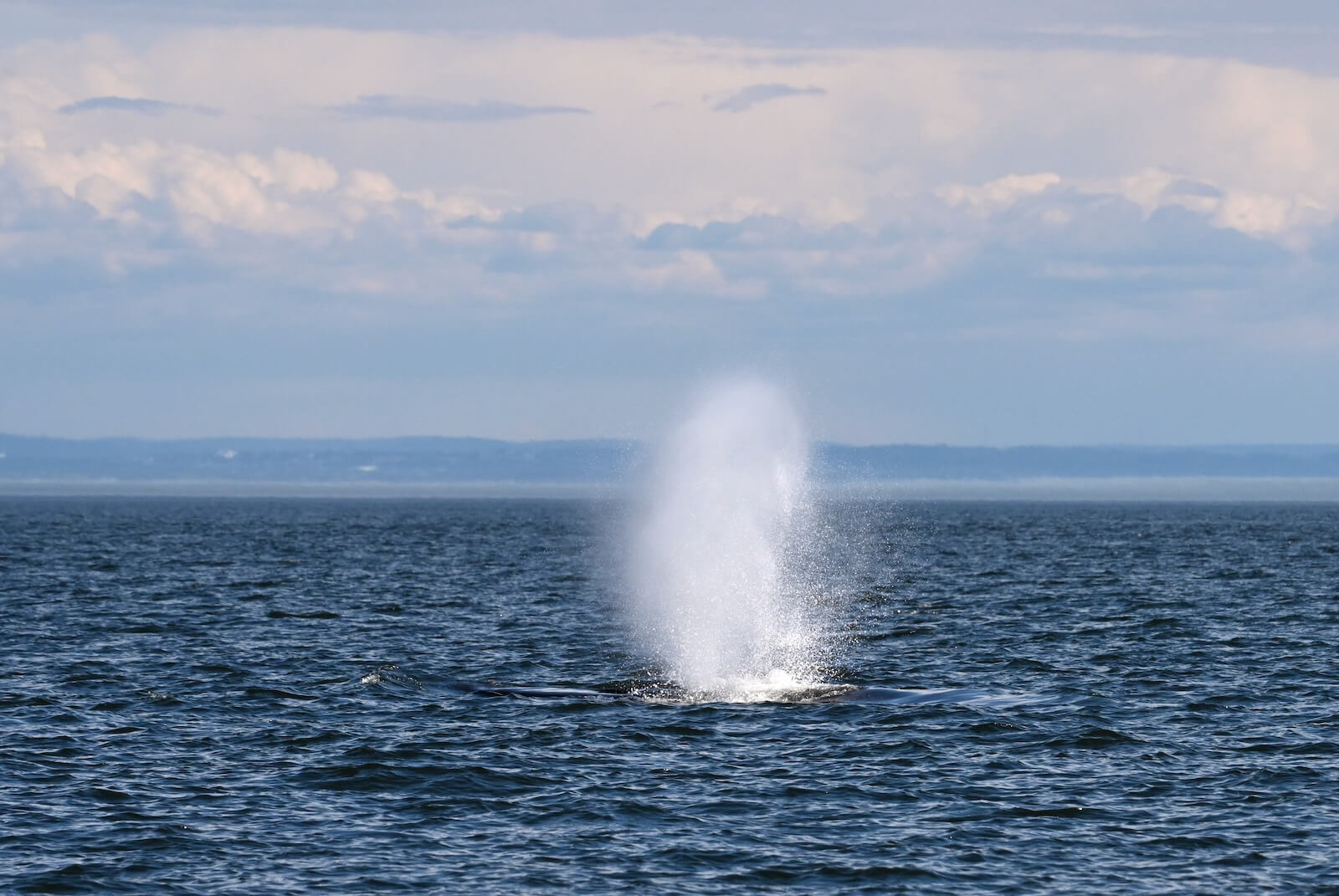
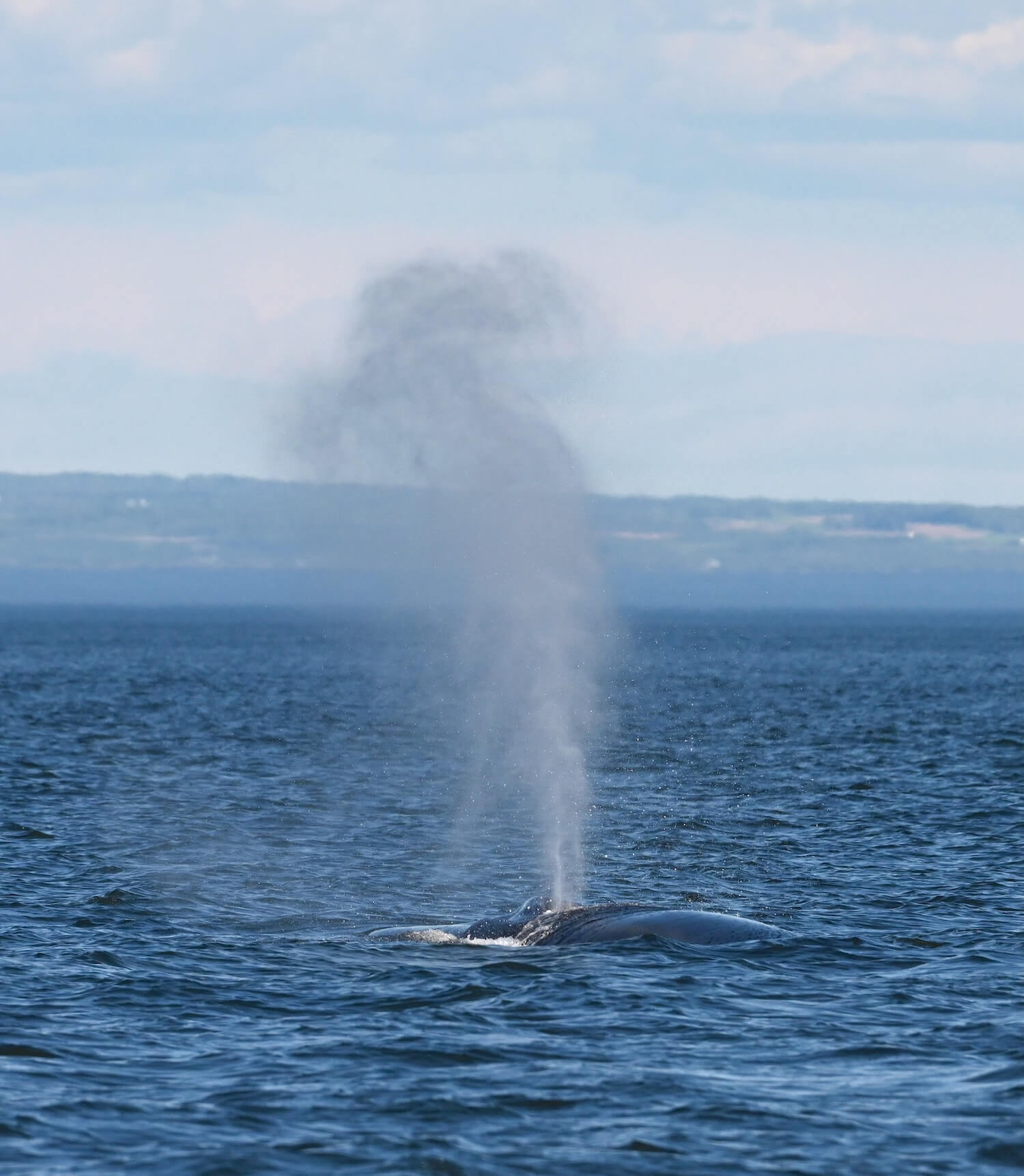
Under the June sun, glistening backs and rising plumes of condensation reward whale enthusiasts watching patiently from shore. Among these cetaceans, belugas are being reported in large numbers, not to mention about ten minke whales and a few humpback and fin whales… including one that’s known far and wide! For those who can, the milder temps are an incentive to stand watch at the water’s edge and scan the horizon in the hope of spotting a spout or a fin.
Ti-Croche returns to the estuary
The fin whale Ti-Croche (Bp955) has been the star of the past few days in the Saguenay–St. Lawrence Marine Park area. One of the sightings of this large rorqual even revealed the unique colour pattern of this species’ jaw: white on the right, black on the left! This two-toned pattern is believed to give hunting fin whales an extra edge, though some theories suggest it might also serve as a sort of camouflage. Ti-Croche has been known since 2009 and owes its moniker to its hook-shaped dorsal fin. This individual made an appearance in the estuary earlier in May but hadn’t been seen until these most recent sightings.
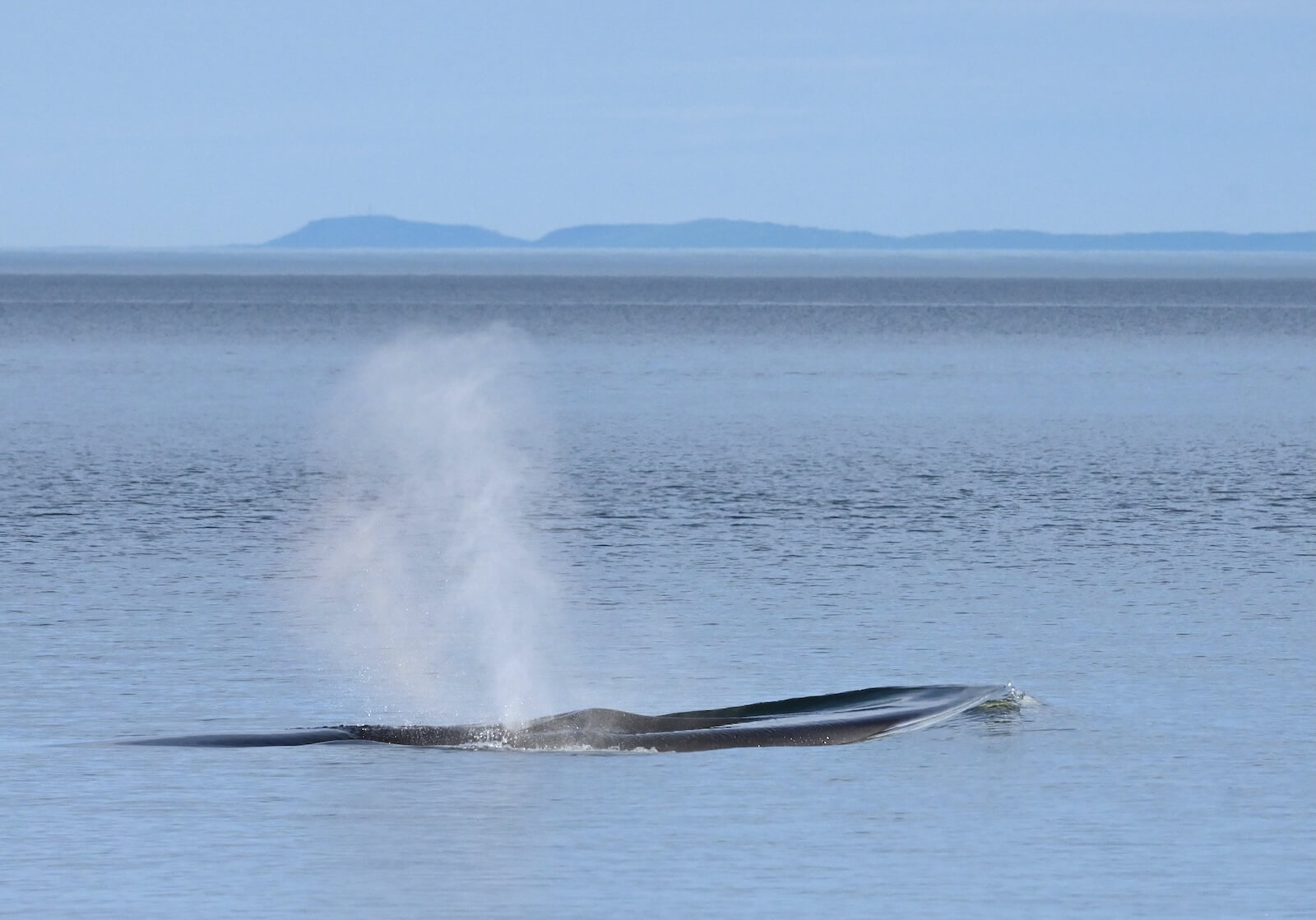
“A minke whale on Monday, another one on Tuesday, another one on Wednesday…” says a Tadoussac resident. A second observer also reports a daily presence of these small rorquals in the area. It’s safe to say that minkes have definitely arrived in the estuary!
“On Saturday afternoon, I was with two observers who had recently arrived in the Côte-Nord region, and we were lucky enough to see a good dozen belugas off Pointe Noire heading toward Pointe aux Alouettes!” shares one enthusiast. Ten or so belugas have also been reported in the Charlevoix region in recent days, more precisely in Saint-Siméon, Saint-Irénée, and Cap-aux-Oies.
Belugas in the Gaspé Peninsula
A few observers reported seeing belugas in Carleton-sur-Mer last week. A solitary beluga was also spotted by a kayaker in Petit Gaspé.
In summer, belugas are known to frequent the St. Lawrence Estuary and the Saguenay Fjord. In an interview with Radio-Canada in the summer of 2025 regarding the occasional presence of these small white whales in the Gaspé Peninsula, GREMM Scientific Director Robert Michaud explained, “We know that climate change has resulted in considerable impacts habitat-wise, particularly due to rising temperatures, and that’s quite spectacular. So we can imagine different mechanisms that could lead to changes in the belugas’ habits.”
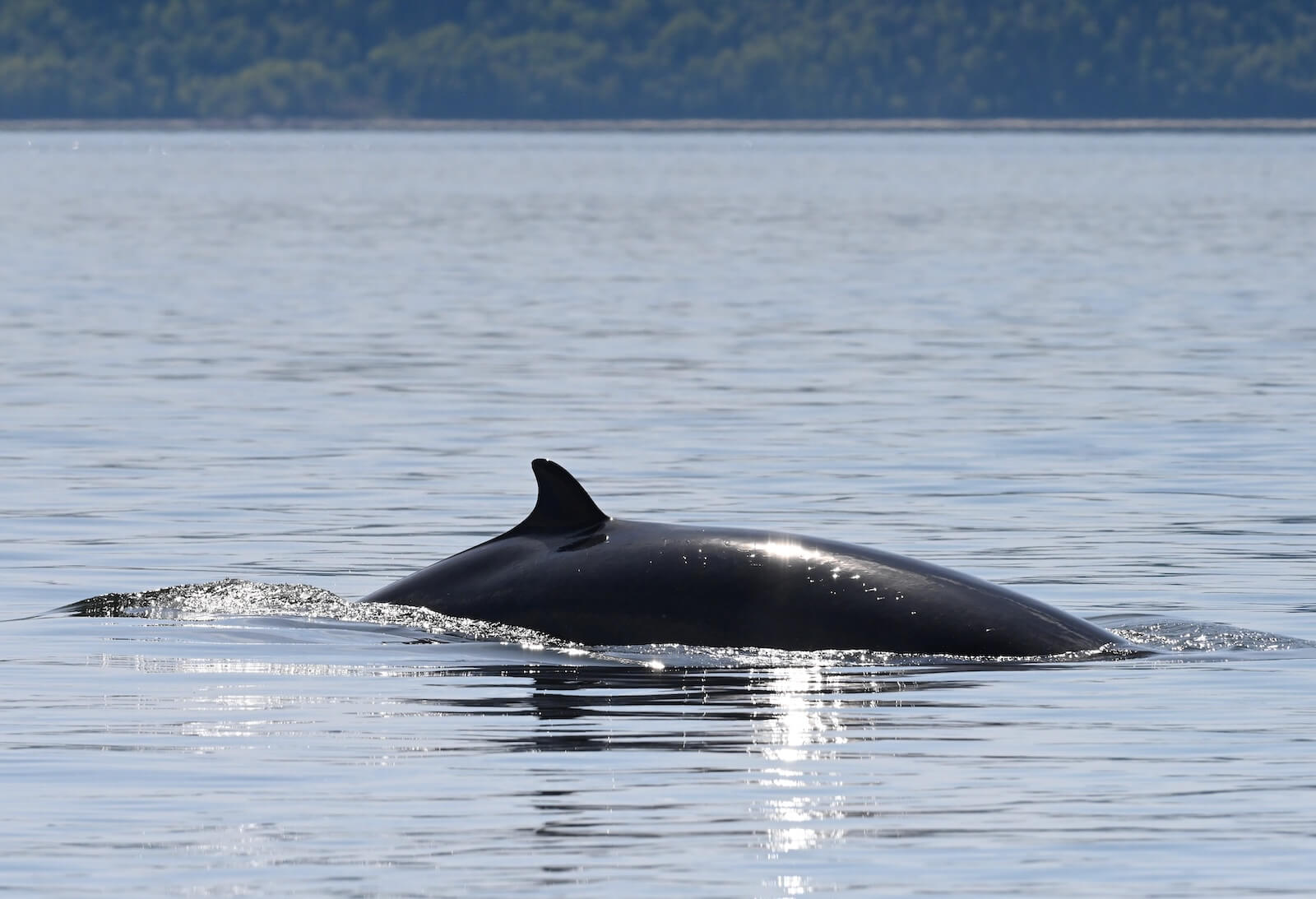
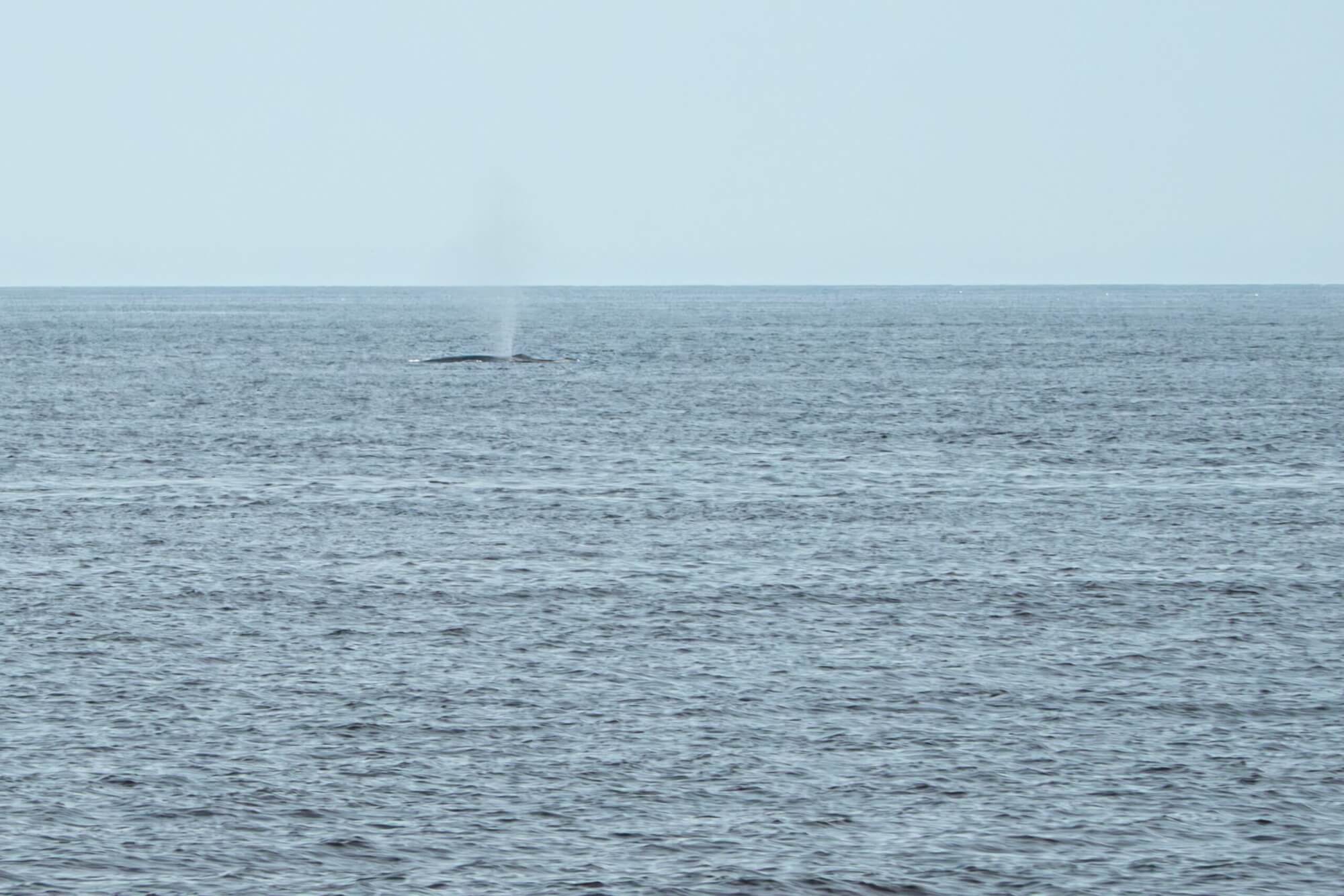
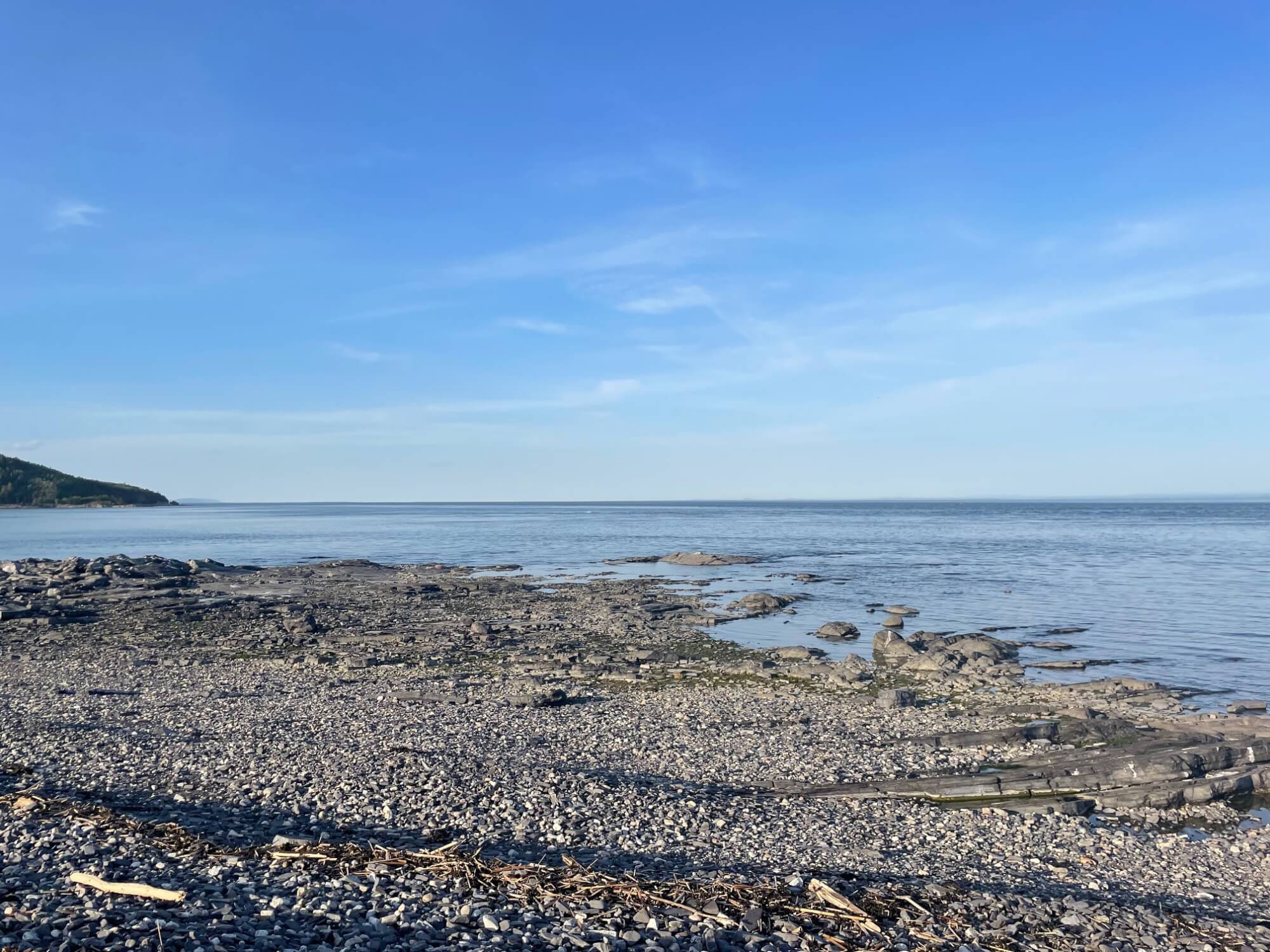
Three humpbacks were swimming in Gaspé Bay on June 3, much to the delight of the lucky few who spotted them. Minke whales were also seen there the day after that.
“It was crazy in Franquelin!”
And not just in Franquelin! Two minke whales were reported in Sept-Îles, as were about ten individuals of the same species in the Mingan Archipelago. “Once again this week, there were several belugas, minke whales, grey seals, harbour porpoises, and six fin whales. Feeding fin whales super close to shore,” shares a whale enthusiast stationed in Franquelin. Two individuals strongly resembling fin whales were spotted by a local resident in Gallix. Judging by their powerful blows, they were definitely not minke whales!
From June 1 to 8 this year, Ocean Week is being celebrated across Canada. This is an opportunity to recognize the importance of the oceans and raise awareness about their protection. In Quebec, the St. Lawrence River, even if it is not an ocean, is of vital importance to a wide diversity of fauna and flora. For whales, it’s first and foremost their food source and an area where they can rest and carry out their essential activities. All the more reason to protect it and learn about it!
Thanks to all our collaborators!
Special thanks go out to all our observers who share their love for marine mammals with us.
Your encounters with cetaceans and pinnipeds are always a pleasure to read and discover. On the water or from shore, it is your eyes that give life to this column.
- Marie-Andrée Charlebois
- Guylaine Côté
- Camille Degache
- Laetitia Desbordes
- Benjamin Gagné
- Hélène Guitton
- Hélène Lahaie
- Jade-Audrey Lavergne
- Diane Ostiguy
- Stéphane Pagès
- Sandrine Papias
- Gaetan Paradis
- Élisabeth Perreault
- Renaud Pintiaux
- Pascal Pitre
- Luc Savard
- Lisa Schirch
- Andréanne Sylvain
- Marielle Vanasse
And to all the others!
Additionally, we would like to acknowledge the following teams that also share their sightings:
Centre d’éducation et de recherche de Sept-Îles (CERSI)
Station de recherche des Îles Mingan (MICS)
Réseau d’observation des mammifères marins (ROMM)
Réseau québécois d’urgences pour les mammifères marins (RQUMM)
Groupe de recherche et d’éducation sur les mammifères marins (GREMM)
Mériscope
Would you also like to share your observations? Have you seen any marine mammals in the St. Lawrence? Whether it’s a spout offshore or just a couple of seals, drop us a line and send your photos to [email protected]!

Odélie Brouillette
Odélie Brouillette joined the GREMM team as a writer and naturalist in 2022, and has been a project manager in scientific communication since 2023. With a background in biology, she loves learning and sharing with others what's most important to her. She has always been fascinated by marine environments and whales, and hopes to contribute to their protection through awareness-raising and popularization.
Recommended articles
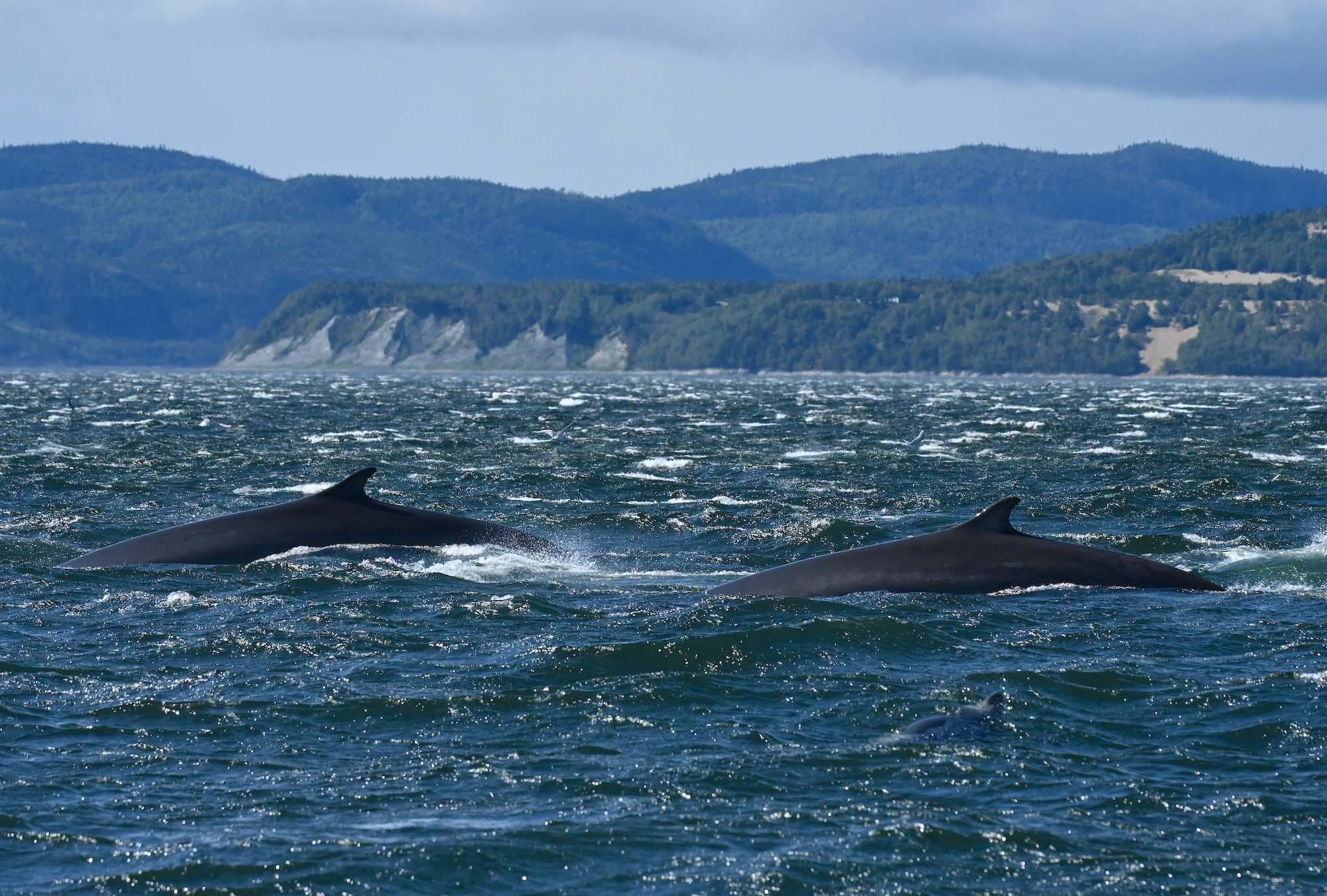
Strong Winds, Big Whales
Despite the strong winds, fog, and plummeting air temperatures, marine animals of all kinds continue to roam the St. Lawrence.…
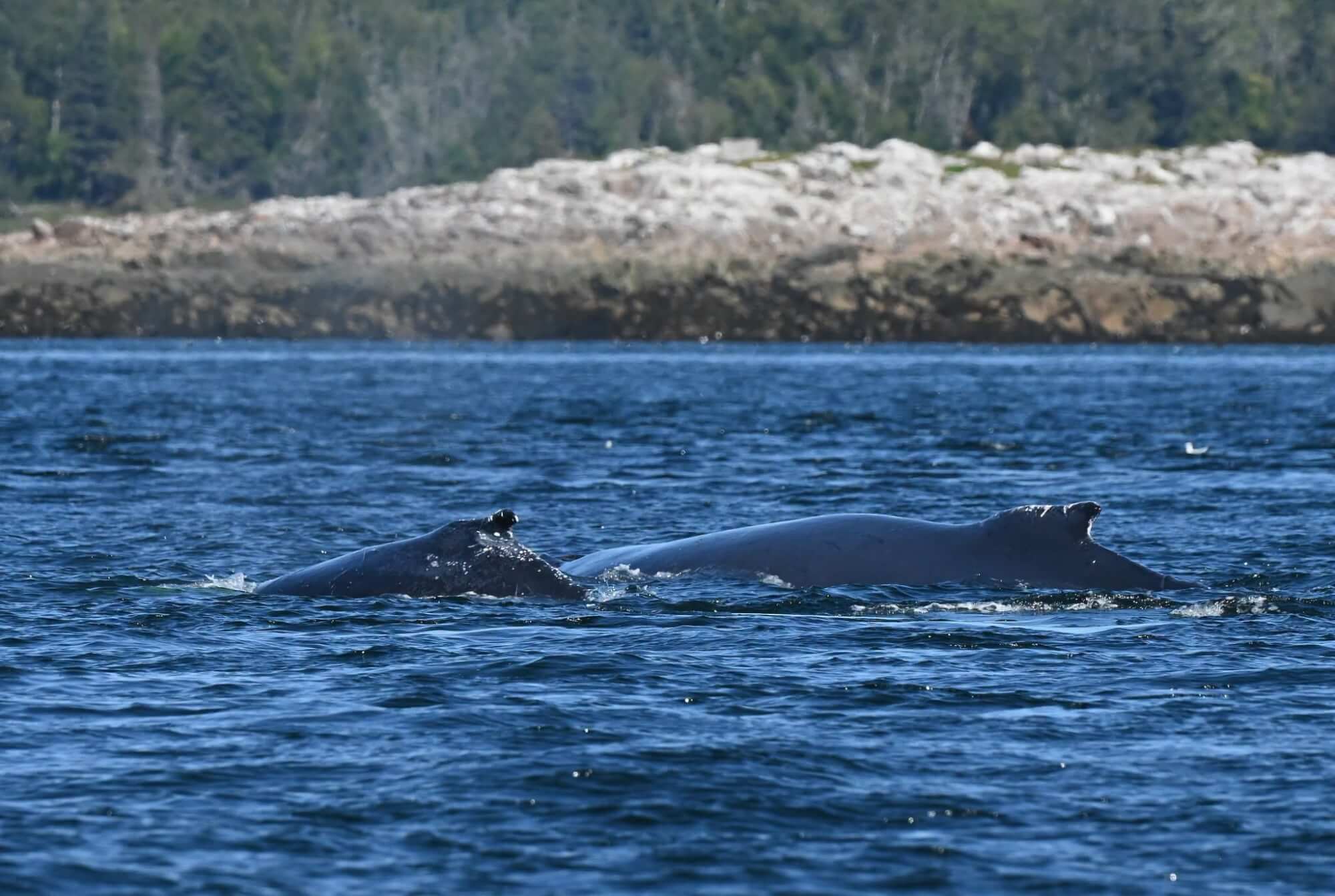
Mama Whales and Their Calves Roam the St. Lawrence
It would hardly be an exaggeration to say that the St. Lawrence has been teeming with life these past few…
Chance Encounters in the Estuary
The undisputed stars this past week were white-beaked dolphins, which reminds us of the importance of being in the right…