
Mesmerized by Minkes

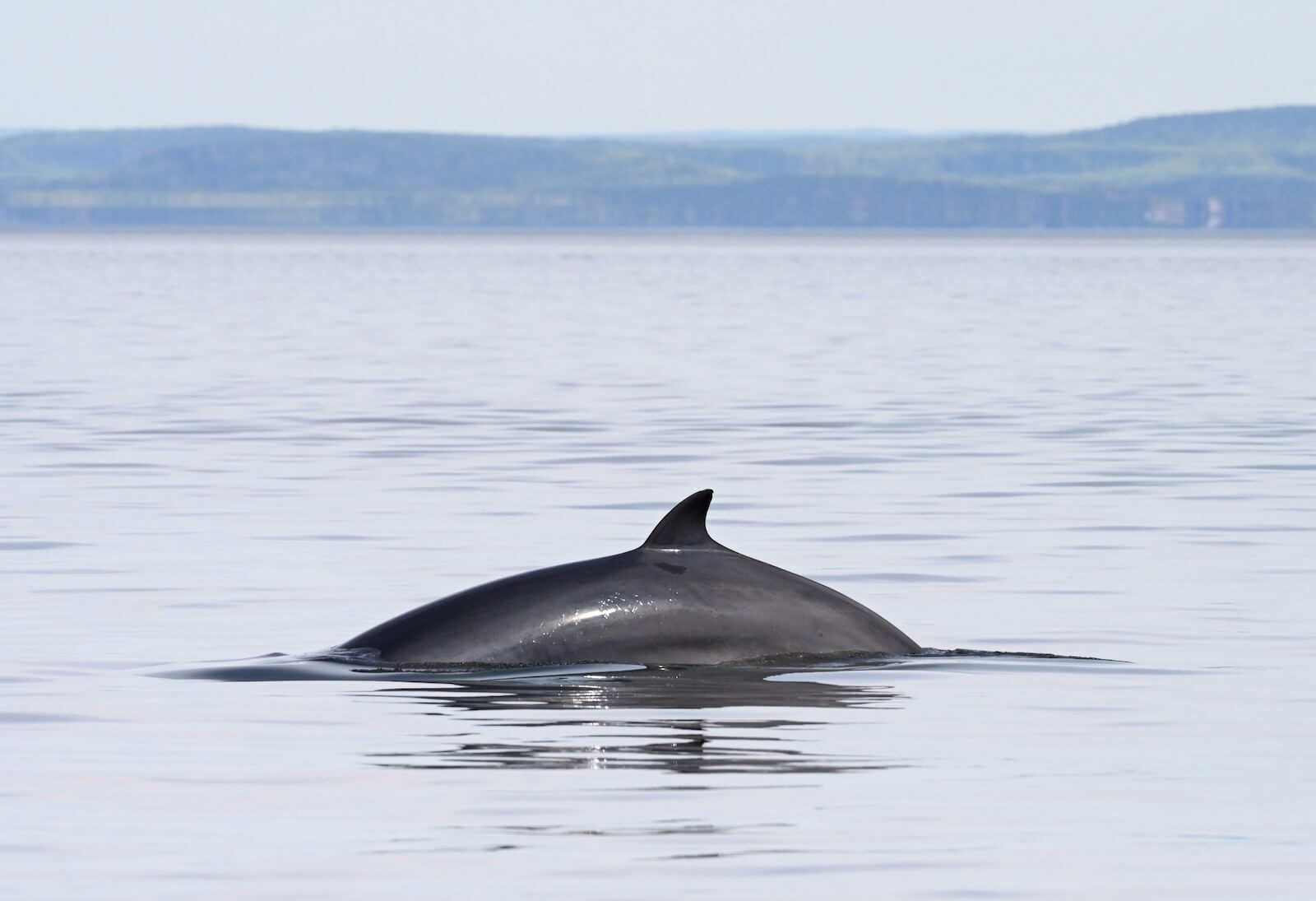
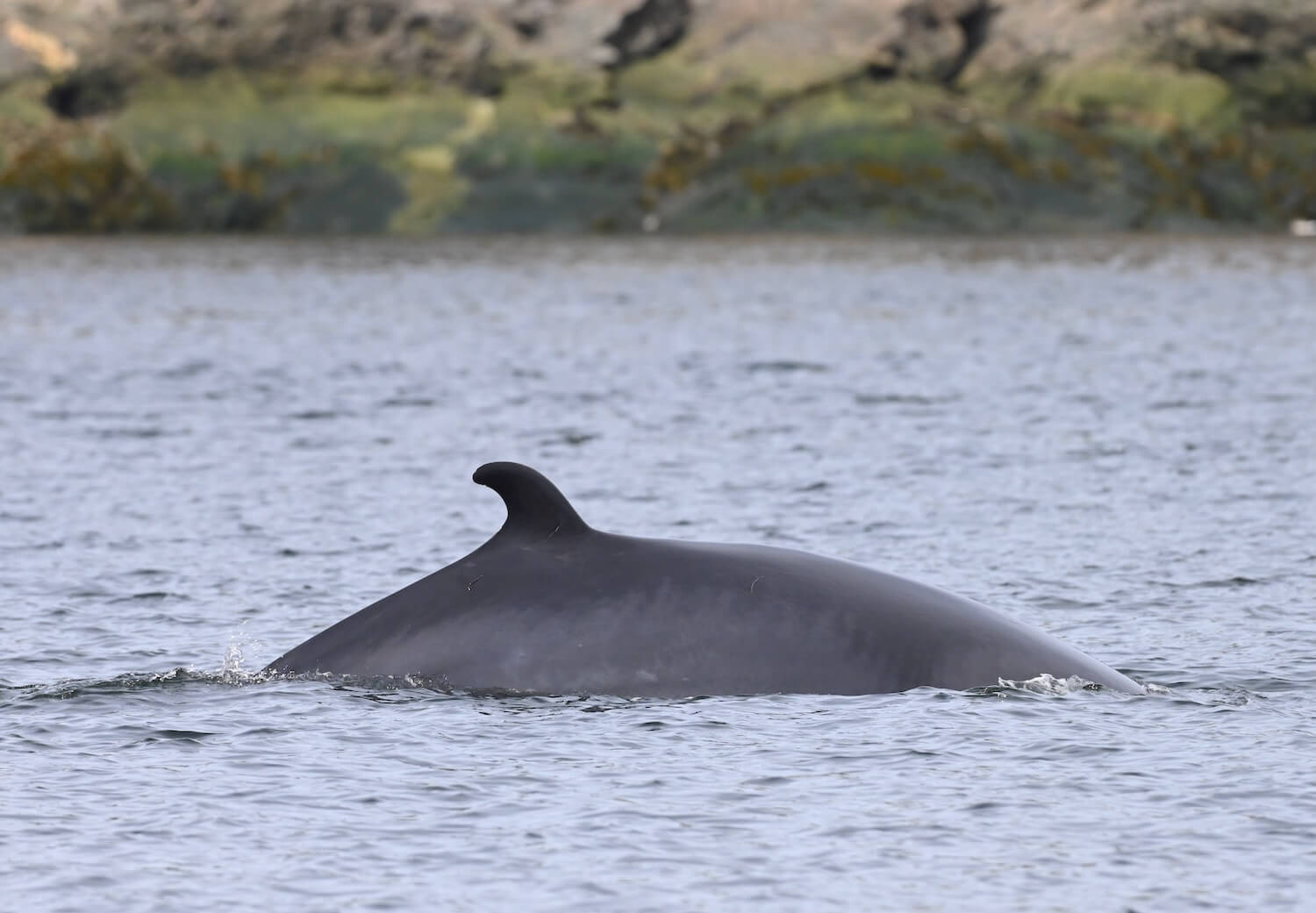
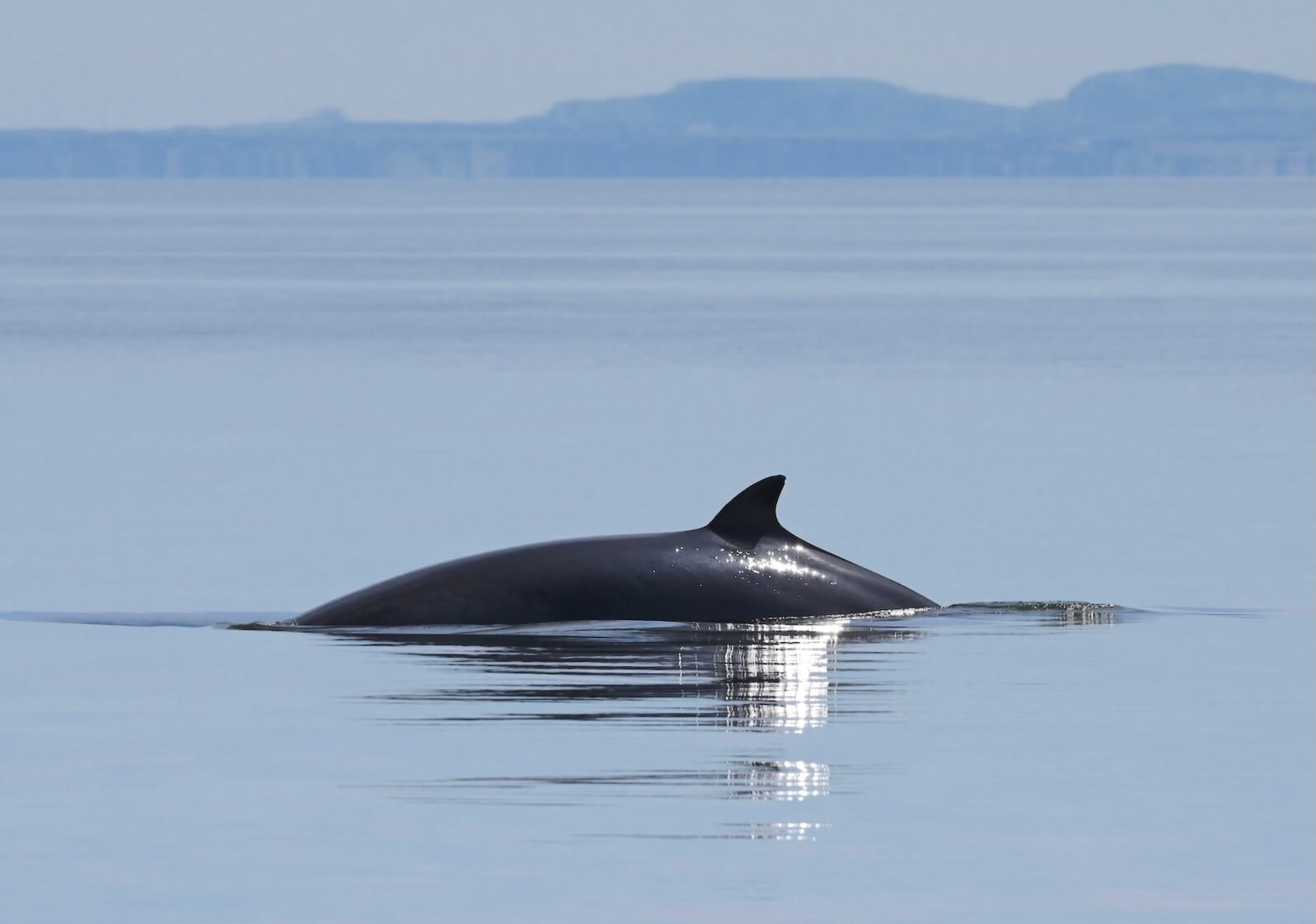
Just because they’re small doesn’t mean they go under the radar… au contraire! Minke whales have energy to spare, and their surface behaviour is as astonishing as it is captivating. Their pointy dorsal fins pierced the waters of the St. Lawrence in several locations this week, from the estuary to the gulf. Meanwhile, the white backs of belugas glistened in the sun in a number of areas. Fin whales were spotted near Franquelin, while a humpback was reported off Rivière-au-Tonnerre, not to mention a few seals here and there.
Small cetaceans in the spotlight
Opposite the Marine Mammal Interpretation Centre (CIMM), the gaping mouth of a minke whale wowed visitors on May 27. Using the nearby rocks to trap their prey, minke whales are regularly observed in this area throughout the summer. They feed on small schooling fish, notably herring, capelin and sand lance.
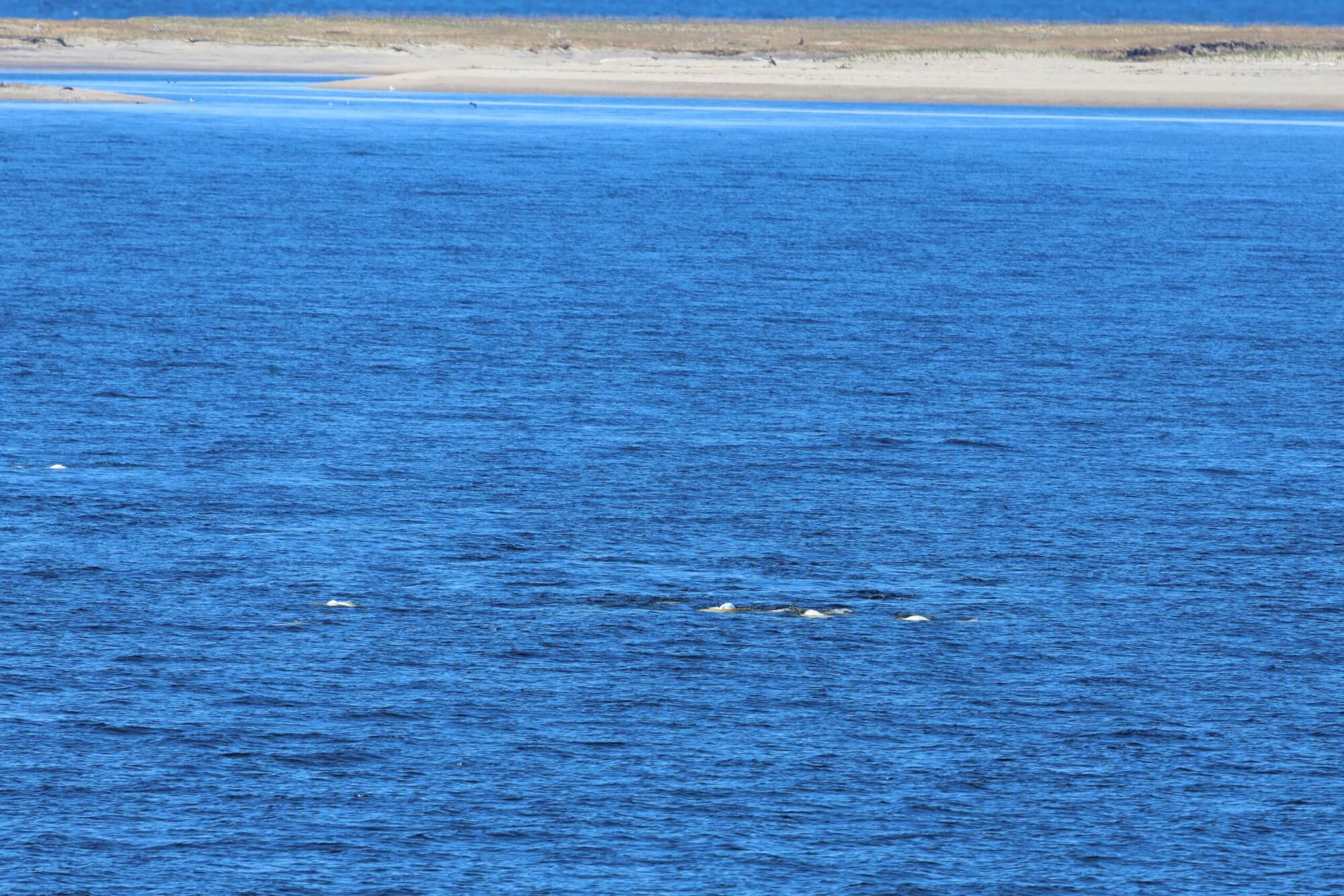
Other sightings of the smallest of the rorquals were also reported in Tadoussac, in Les Bergeronnes, as well as off Les Escoumins by no fewer than seven different individuals! Several belugas have also been seen swimming in the Saguenay–St. Lawrence Marine Park area in recent days. A few individuals were also spotted near Cap-aux-Oies in the Charlevoix region.
“We’re constantly getting belugas and minke whales, but no fin whales,” adds a naturalist based in Tadoussac. A few brief incursions of fin whales were reported in early May, but things have quieted down since then for large whales in the Haute-Côte-Nord region. The arrival dates of these individuals in the St. Lawrence Estuary vary from year to year and depend on a number of factors, including the distance they have to travel, food availability en route, etc.
Large rorquals on the horizon
“Three fin whales—including one that was smaller than the others—several minke whales, belugas. I also saw a few porpoises and a couple of grey seals,” reports a resident of Franquelin. Was the smaller fin whale a juvenile? In fin whales, the female is generally larger than the male. Therefore, size alone is not enough to confirm whether this fin whale was indeed a juvenile. In the same area, other people purportedly spotted this trio of fin whales, which apparently became a sextet in the days that followed. Six individuals swimming in a tight cluster: That’s quite a sight!
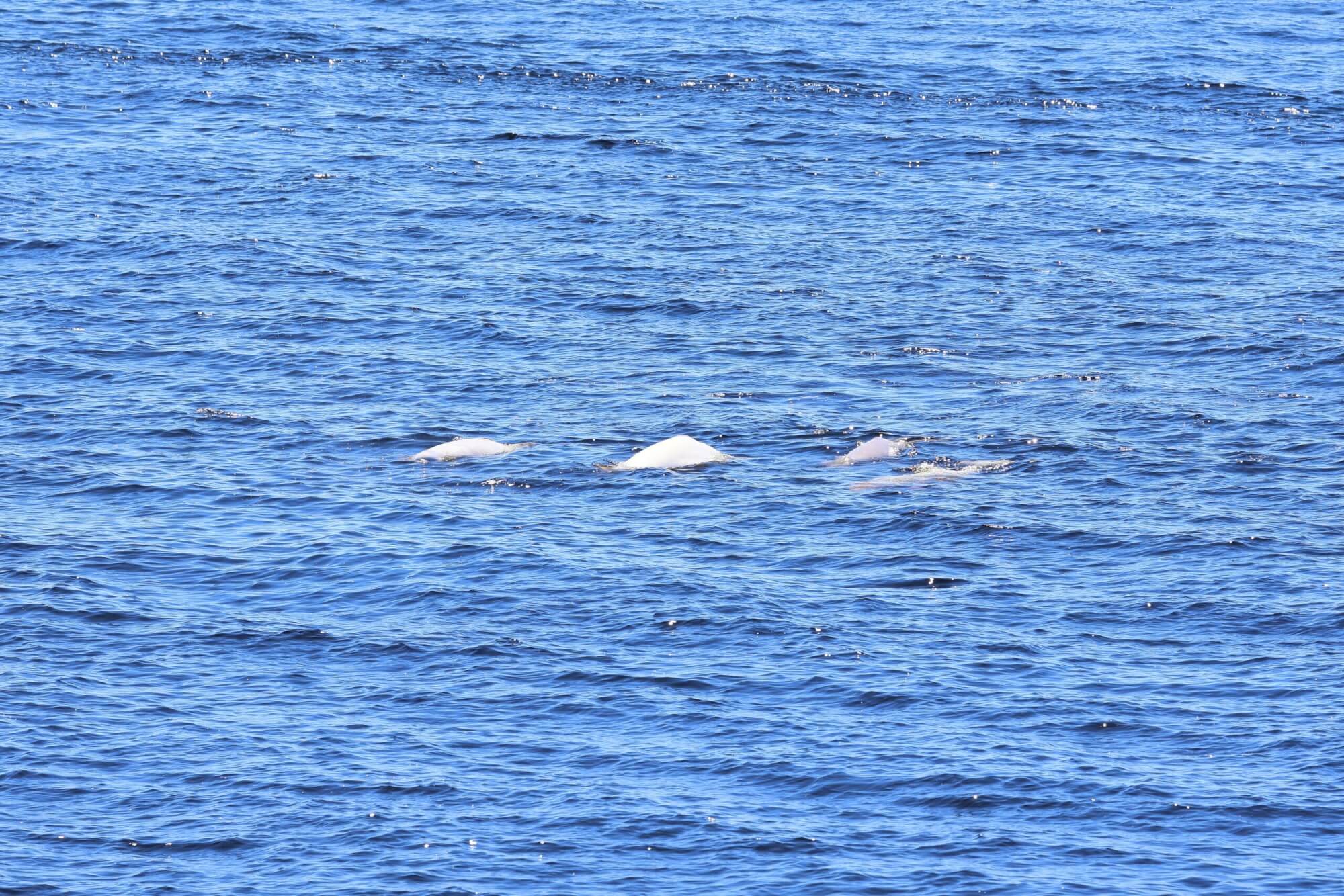
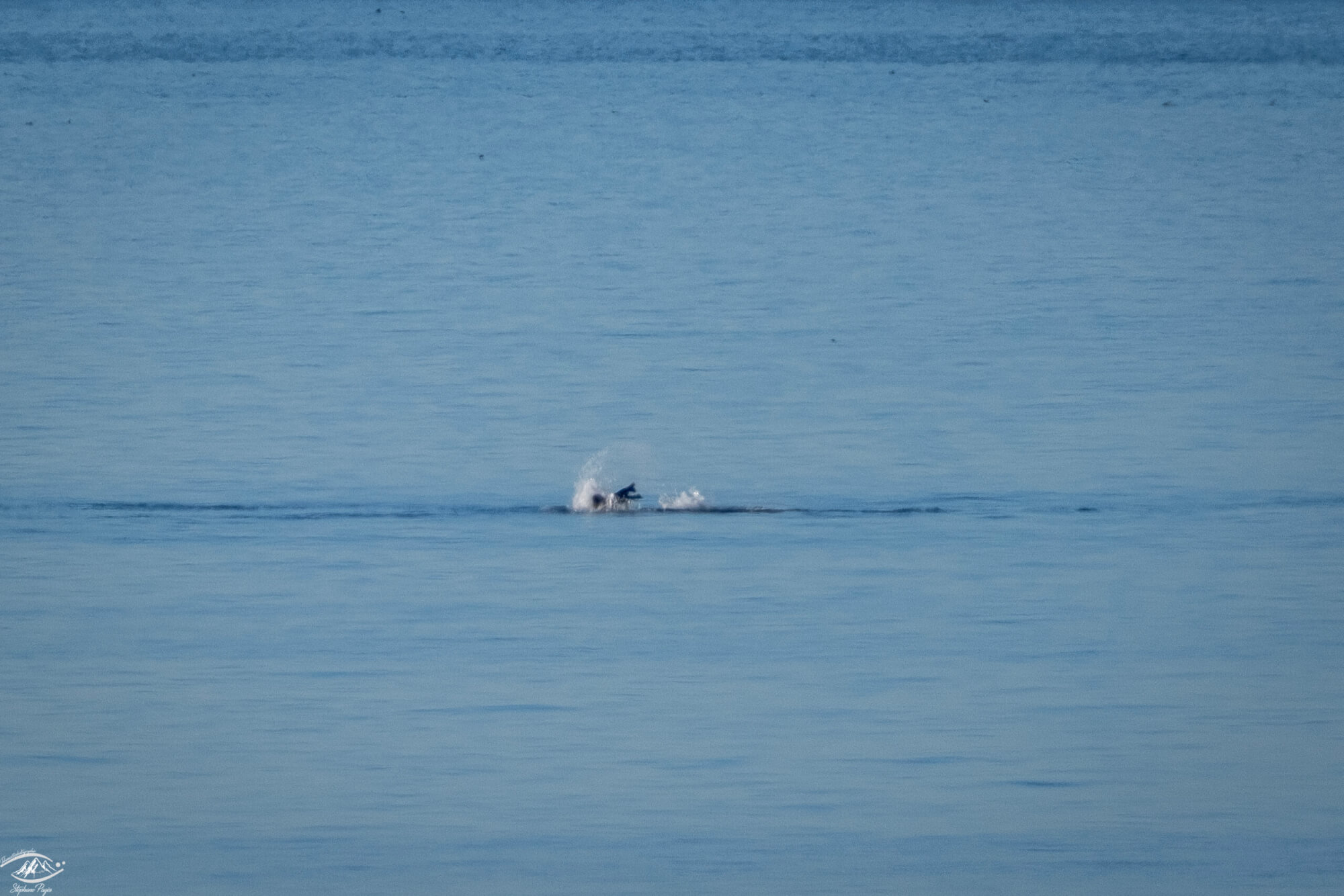
Farther east, a passenger aboard the ferry between Godbout and Matane was thrilled to observe a large group of belugas. At least 26 individuals swimming together, including four that looked like juveniles accompanied by an adult. Meanwhile, a few seals were making a ruckus off the coast of Sept-Îles: “Two seals (too far away to identify the species) were fighting (or perhaps playing, but given the intensity and all the splashing…) for a good 10 minutes,” writes in an enthusiastic local who even managed to photograph the animals.
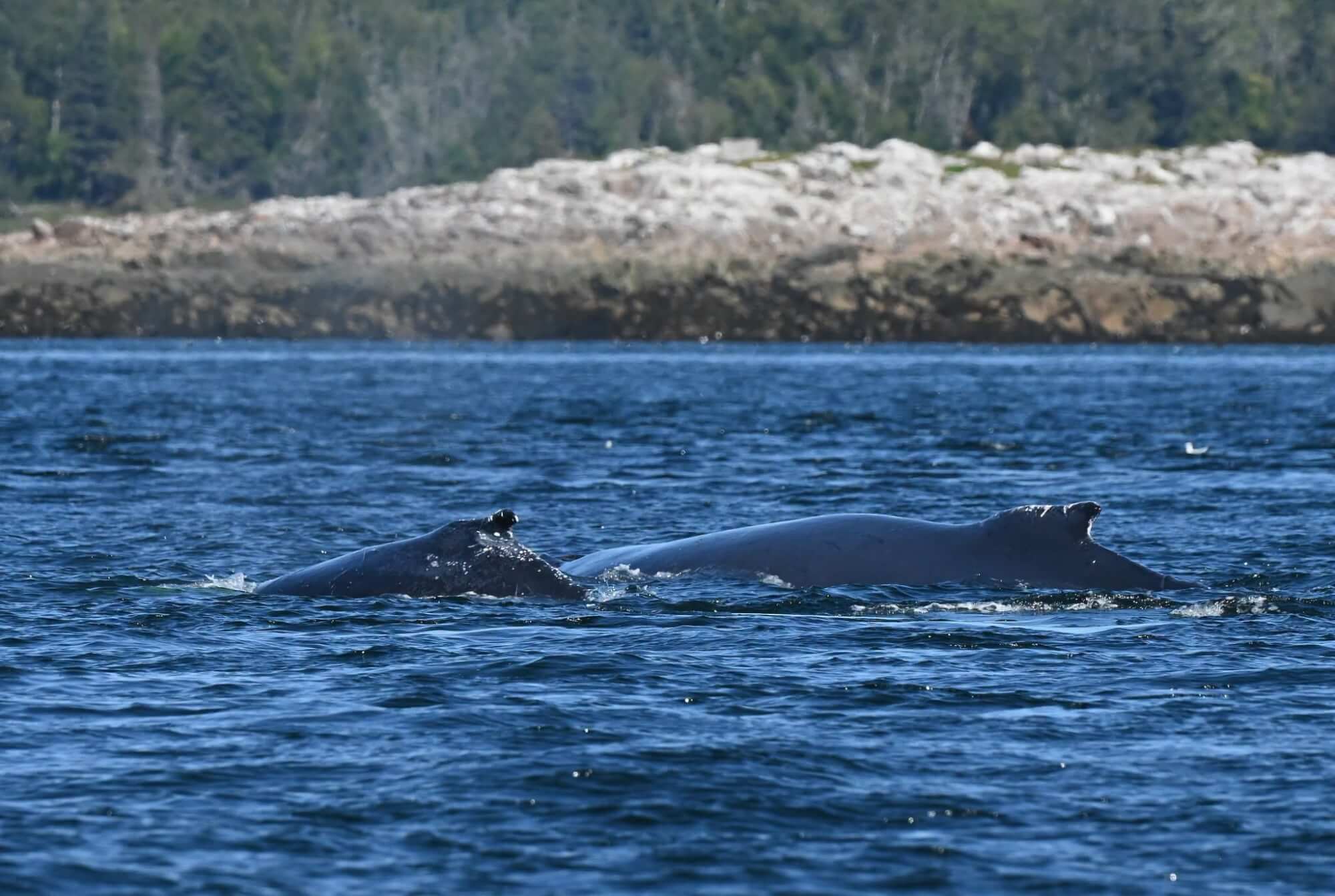
The humpback whale Gaspar (H626) continues to be a topic of conversation, as she was apparently observed off the coast of Rivière-au-Tonnerre. Did you know that Gaspar also has another name? Her other moniker is “Boom Boom River,” in honour of the place where she was first observed in 2005, the same year she was born. That place is Rivière-au-Tonnerre, which translates as “Thunder River,” hence “Boom Boom”! She was reported in this sector last week. Where is she now?
Challenging conditions for whale watching
A woman from the Gaspé Peninsula shared her observations from the past few days: “Harbour seals on the rocks at Anse aux Cousins, and some biologist friends of mine reported minke whales in Gaspé Bay.” Observers in this area are not reporting much else in terms of marine mammals. “The weather hasn’t been on our side either, as we’ve been getting a lot of rain, which means fog, and wind, which creates whitecaps…” points out a resident of Cap-aux-Os.
Thanks to all our collaborators!
Special thanks go out to all our observers who share their love for marine mammals with us.
Your encounters with cetaceans and pinnipeds are always a pleasure to read and discover. On the water or from shore, it is your eyes that give life to this column.
- Marie-Andrée Charlebois
- Thalia Cohen Bacry
- Clara Comeau
- Guylaine Côté
- Camille Degache
- Laetitia Desbordes
- Véronique Gélinas
- Geoffroy Ingret
- Hélène Lahaie
- Jade-Audrey Lavergne
- Diane Ostiguy
- Sandrine Papias
- Renaud Pintiaux
- Pascal Pitre
- Andréanne Sylvain
- Marielle Vanasse
And to all the others!
Additionally, we would like to acknowledge the following teams that also share their sightings:
Centre d’éducation et de recherche de Sept-Îles (CERSI)
Station de recherche des Îles Mingan (MICS)
Réseau d’observation des mammifères marins (ROMM)
Réseau québécois d’urgences pour les mammifères marins (RQUMM)
Groupe de recherche et d’éducation sur les mammifères marins (GREMM)
Mériscope
Would you also like to share your observations? Have you seen any marine mammals in the St. Lawrence? Whether it’s a spout offshore or just a couple of seals, drop us a line and send your photos to [email protected]!

Odélie Brouillette
Odélie Brouillette joined the GREMM team as a writer and naturalist in 2022, and has been a project manager in scientific communication since 2023. With a background in biology, she loves learning and sharing with others what's most important to her. She has always been fascinated by marine environments and whales, and hopes to contribute to their protection through awareness-raising and popularization.
Recommended articles
Côte-Nord: Prime Location for Autumn Whale Watching
Across Quebec, fall has truly arrived, as evidenced by the turning leaves and the arrival of certain marine mammal species…
Strong Winds, Big Whales
Despite the strong winds, fog, and plummeting air temperatures, marine animals of all kinds continue to roam the St. Lawrence.…
Mama Whales and Their Calves Roam the St. Lawrence
It would hardly be an exaggeration to say that the St. Lawrence has been teeming with life these past few…