
Belugas in the Estuary and Pinnipeds Aplenty

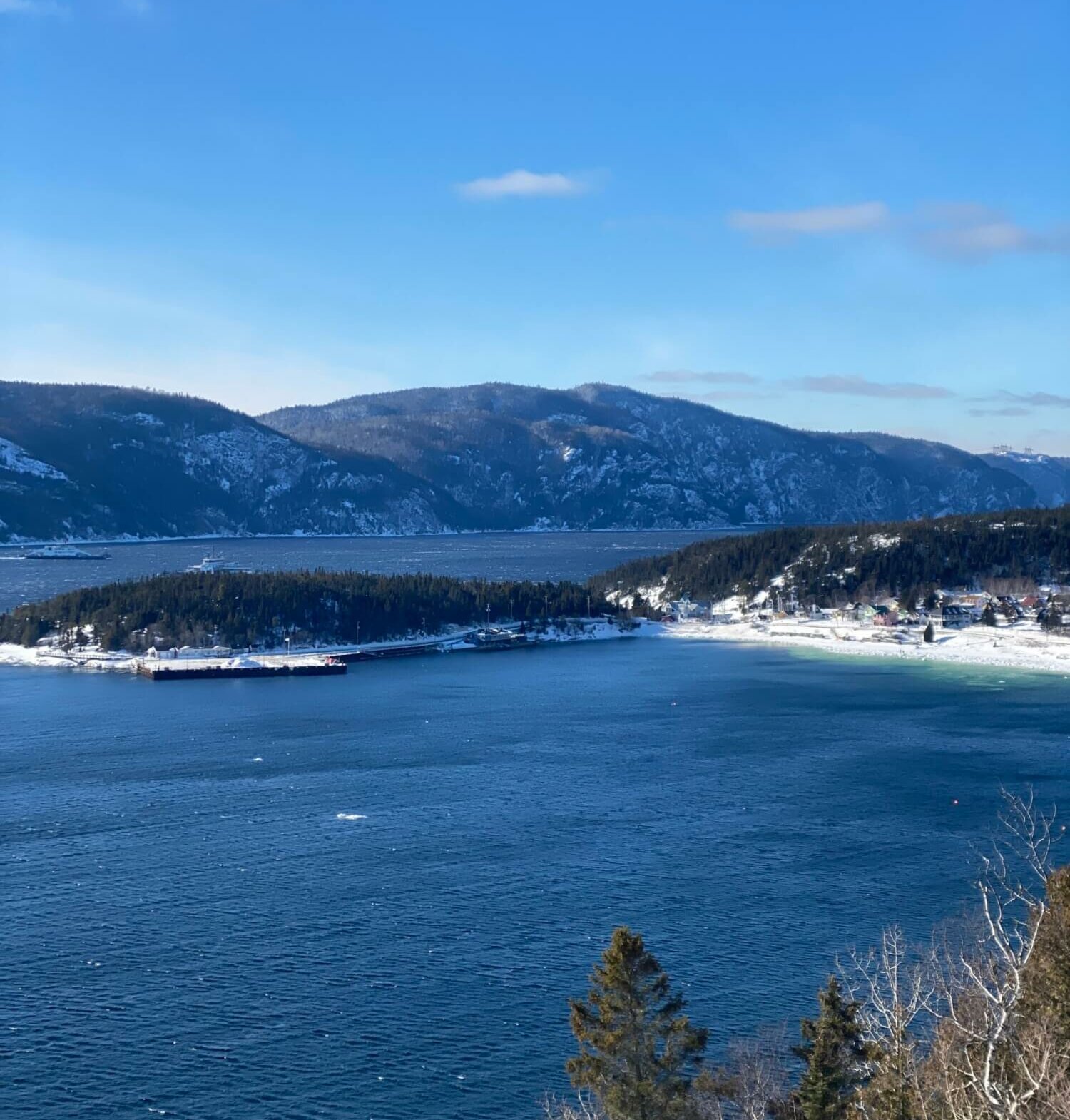
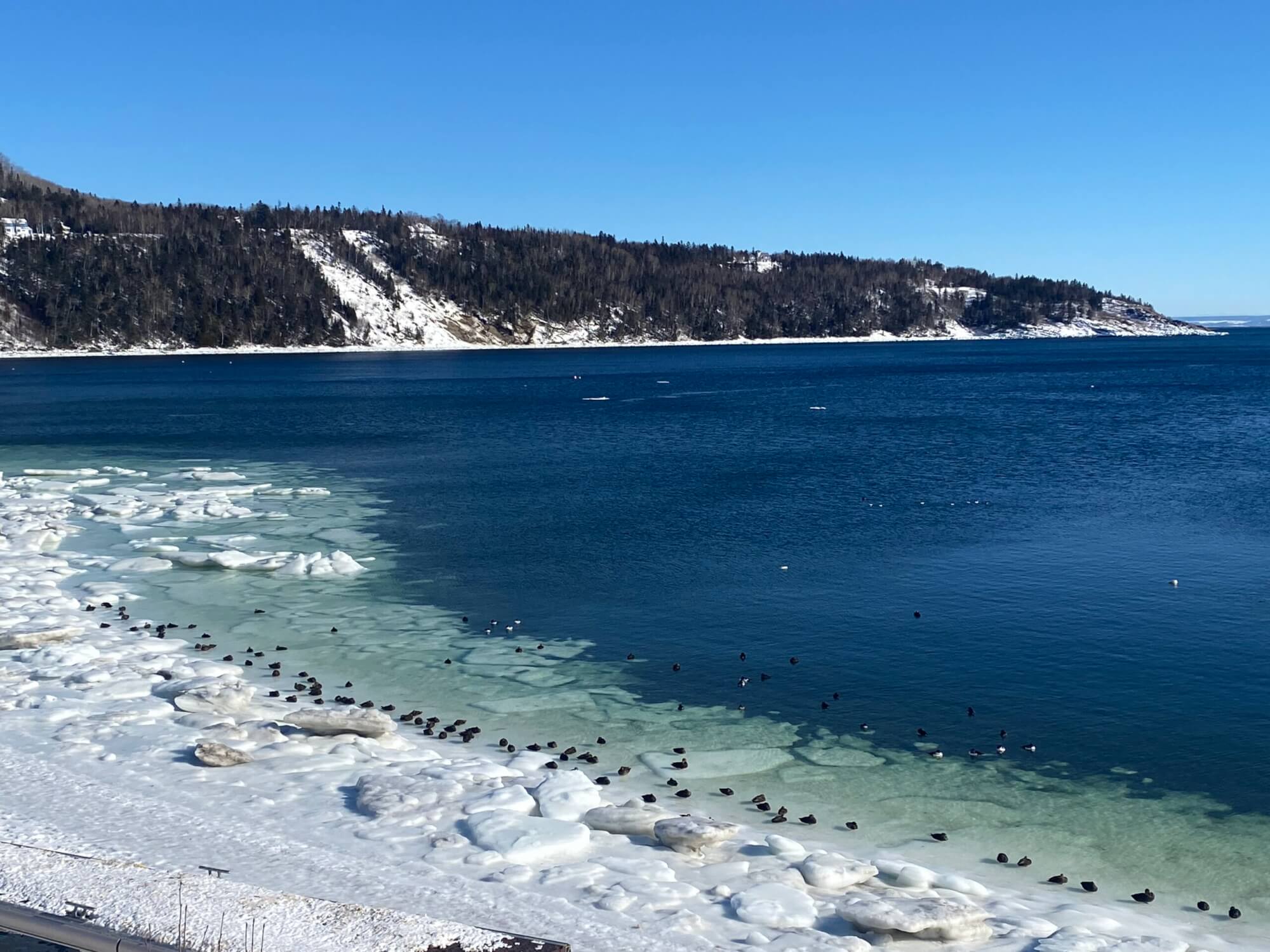
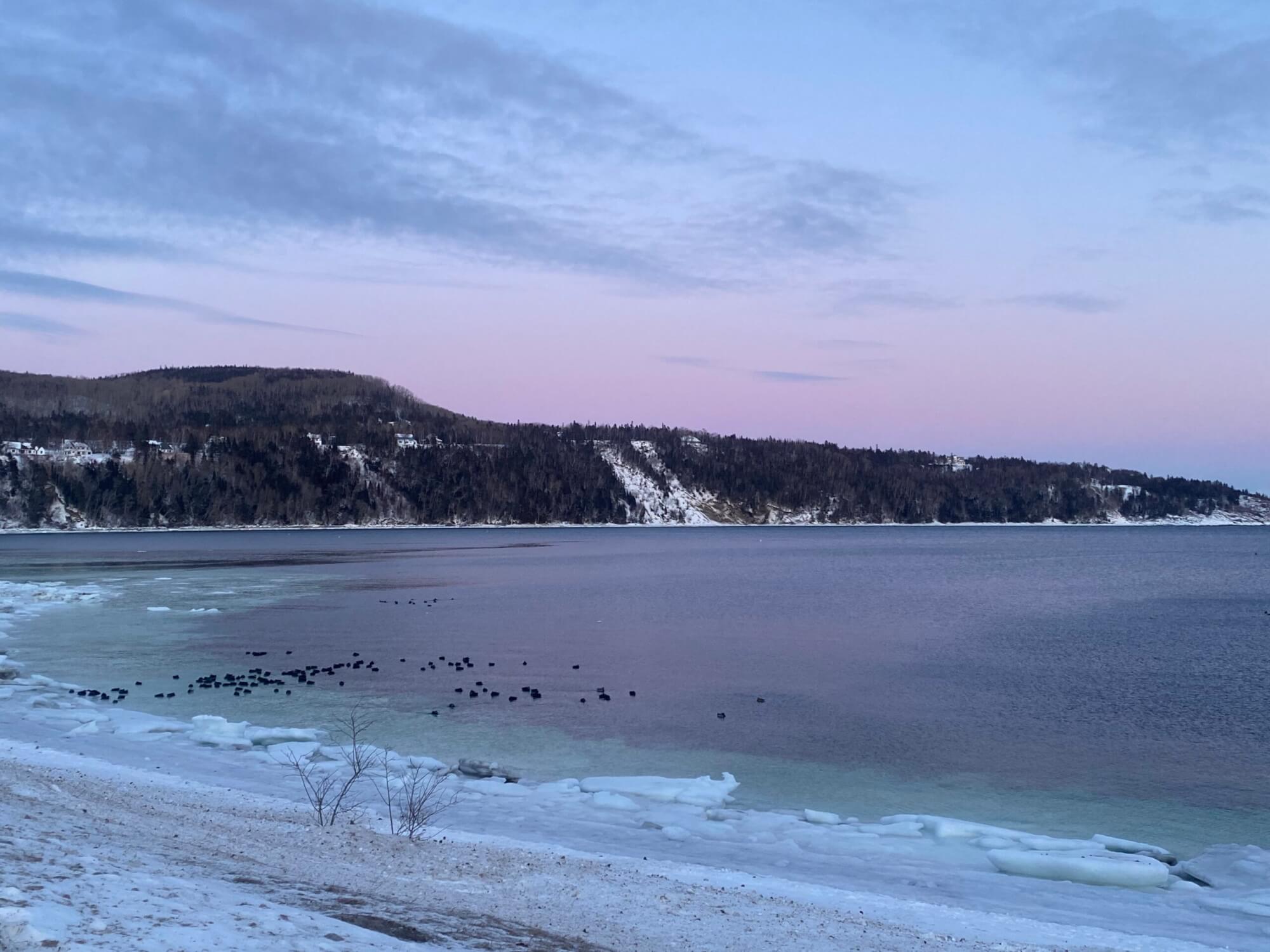
It’s early February, and the sunlight pierces through the cloudless Tadoussac sky. From the windows of the Whales Online office, the members of the editorial team can see the glimmering ice floes drifting down the Saguenay, as well as those forming on the St. Lawrence a little farther downstream. Unsurprisingly, seals on ice floes have been reported from several locations! As for whales, several belugas were allegedly spotted in the estuary, while a mysterious spout was seen erupting from the waters off the Gaspé Peninsula.
Banana seals
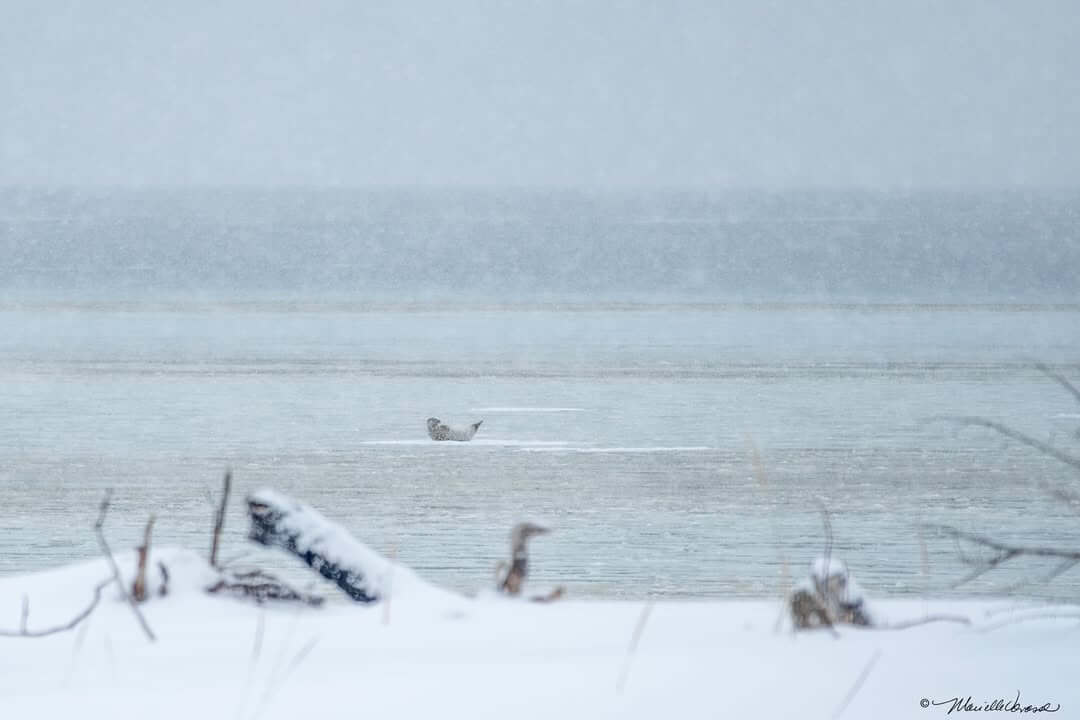
“On January 26, at the water’s edge and across from my neighbour’s house, I saw a beautiful seal that I believe was a harp seal basking on a chunk of ice,” shares a Gallix-based observer. “It was awesome to see with all that pretty snow falling!” she added. When seals out of the water stretch and arch their backs, French speakers like to say they are “doing the banana”! Harp seals were also reported near Baie-Comeau. A few days later, harbour seals were basking in Port-Cartier. There were at least five, maybe more, but it’s difficult to say with certainty due to the distance.
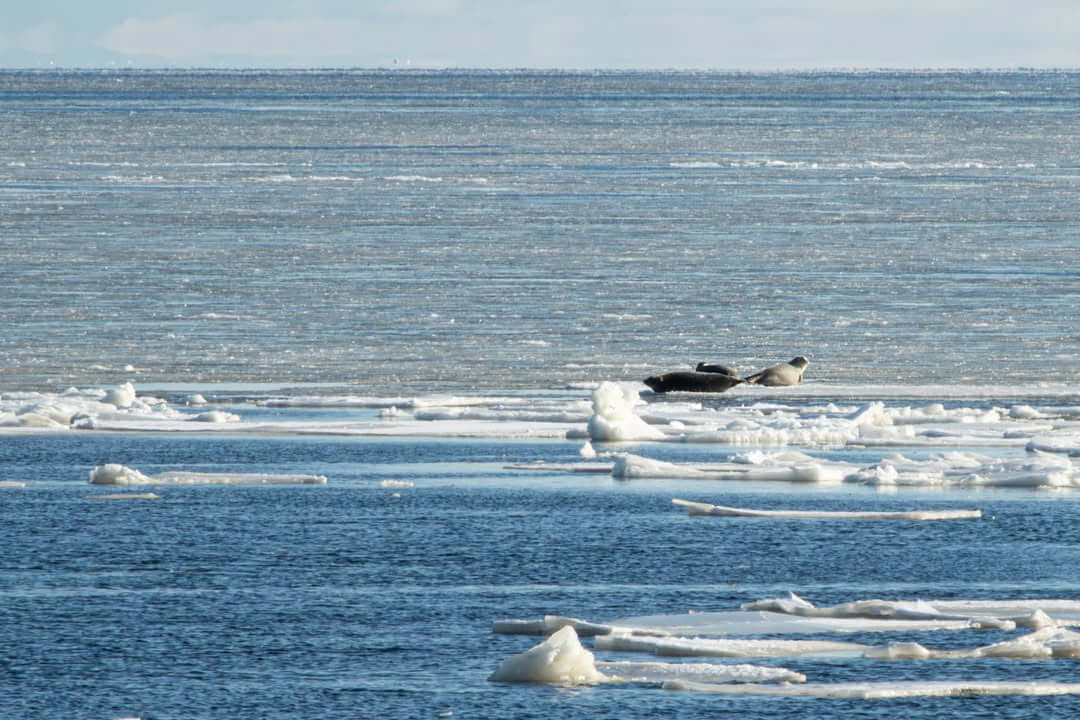
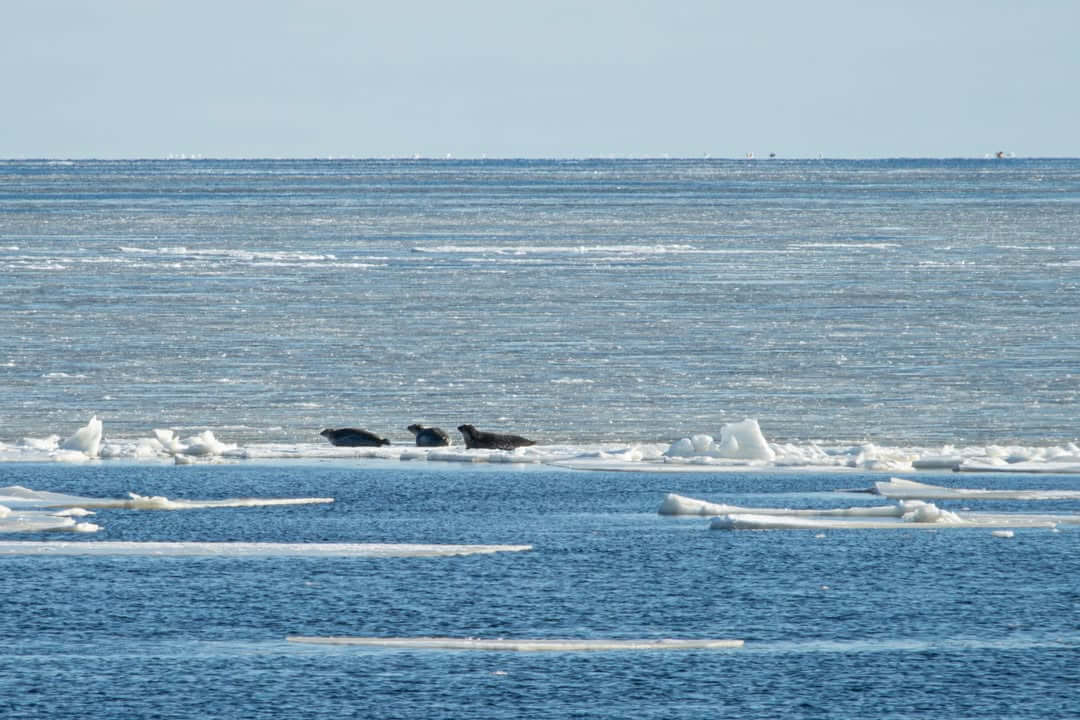
Harp seals can be distinguished from harbour seals on the basis of several criteria, notably the colouration of adults. Harbour seals have a mottled greyish coat, while male harp seals develop a black harp-shaped patch on their backs, a pattern that females do not always show. The head of a harp seal, which is more slender than that of a harbour seal, is also generally black. In terms of size, the two species are quite similar. It is therefore difficult to make a definitive ID based solely on this variable!
Large unidentified blow
One reader wrote to us from the Gaspé Peninsula on January 24 to share her observation: a large spout off the coast of Pabos! Without any photos or other details to go by, it’s impossible to determine at this time which species this plume of mist belonged to. Perhaps other sightings of this mysterious cetacean will be reported in the weeks to come?
Off the coast of Tadoussac, several belugas were purportedly spotted by a few courageous individuals who braved the frigid February weather–though the sun’s rays may have offered a small consolation! The beluga’s winter range is still poorly understood, though researchers from Fisheries and Oceans Canada (DFO) are currently looking into this question. A recent report on the French-language program La semaine verte presents the latest discoveries in this realm.
It has long been known that these white whales remained in the St. Lawrence River year-round, but the extent of their seasonal movements is still somewhat enigmatic. Scientists suggest these movements might be linked to ice cover as well as the presence of prey. Analysis of data collected by DFO and presented in a Radio-Canada report reveals that one-third of belugas spend the winter in the Gulf of St. Lawrence, with some of them arriving to the waters off Anticosti Island as early as November!
Thanks to all our collaborators!
Special thanks go out to all our observers who share their love for marine mammals with us.
Your encounters with cetaceans and pinnipeds are always a pleasure to read and discover. On the water or from shore, it is your eyes that give life to this column.
- Johanne Blais
- Laetitia Desbordes
- Pascal Pitre
- Marielle Vanasse
And all the others!
Additionally, we would like to acknowledge the following teams that also share their sightings:
Centre d’éducation et de recherche de Sept-Îles (CERSI)
Station de recherche des Îles Mingan (MICS)
Réseau d’observation des mammifères marins (ROMM)
Réseau québécois d’urgence pour les mammifères marins (RQUMM)
Groupe de recherche et d’éducation sur les mammifères marins (GREMM)
Mériscope
Would you also like to share your observations? Have you seen any marine mammals in the St. Lawrence? Whether it’s a spout offshore or just a couple of seals, drop us a line and send your photos to [email protected]!

Odélie Brouillette
Odélie Brouillette joined the GREMM team as a writer and naturalist in 2022, and has been a project manager in scientific communication since 2023. With a background in biology, she loves learning and sharing with others what's most important to her. She has always been fascinated by marine environments and whales, and hopes to contribute to their protection through awareness-raising and popularization.
Recommended articles
Wrapping Up the Season with Some Thanksgiving Weekend Action!
This year’s Thanksgiving weekend was alive with the activity of whales, seals, and birds! Marine mammals are still lingering in…
Between Bronze and Anthracite
Yellow-orange hues reaching toward the sky blend with the smooth, dark swirls emerging from the waves. Even if the strong…
Waters Stirred by Blowing Whales
The shores of the St. Lawrence are ablaze with orange and golden foliage. These multicoloured hues are reflected in the…