
Listening to the Waters of Our Backyard

Written by Emily Fortin
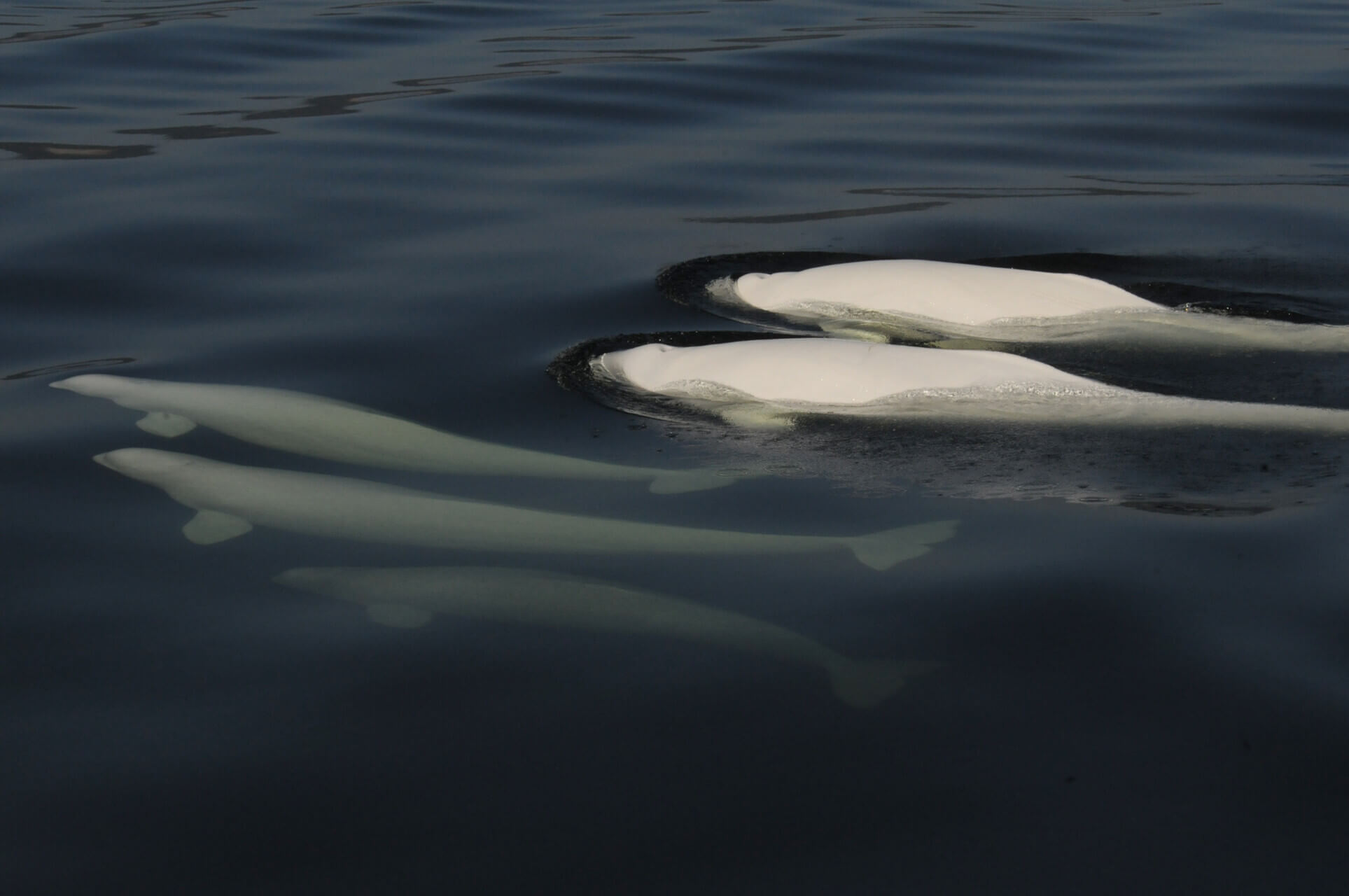
I was three years old the first time I visited Tadoussac. While I can’t claim to remember the village itself or the long journey to get there from Sherbrooke, I can certainly attribute part of my passion for marine environments to the giants I encountered there.
Drawn to the sea
Over the years, I’ve had the opportunity to travel the world studying marine animals while honing my skills as a researcher. As much as I owe my knowledge of marine life to the dolphins of Sardinia, the right whales of Maine, and the turtles of Mexico, my heart has always been in the St. Lawrence.
At university, whenever I had the chance to write independent research projects, I always tended to gravitate toward a topic in Canadian waters. A paper on a marine species in polar regions? Perfect, let’s focus on the beluga. A project on an issue faced by the fishing community with regard to North Atlantic right whales? No problem, I’m eager to see what our fishermen in New Brunswick have to say. A presentation about a marine mammal affected by pollution? The choice is vast, but did you know that the Canadian Arctic is home to more polar bears than anywhere else? I’ve never been short on passion, but the day I had to put these conservation principles into practice, my childhood dream started to look more and more like a real challenge.

Silence sets sail
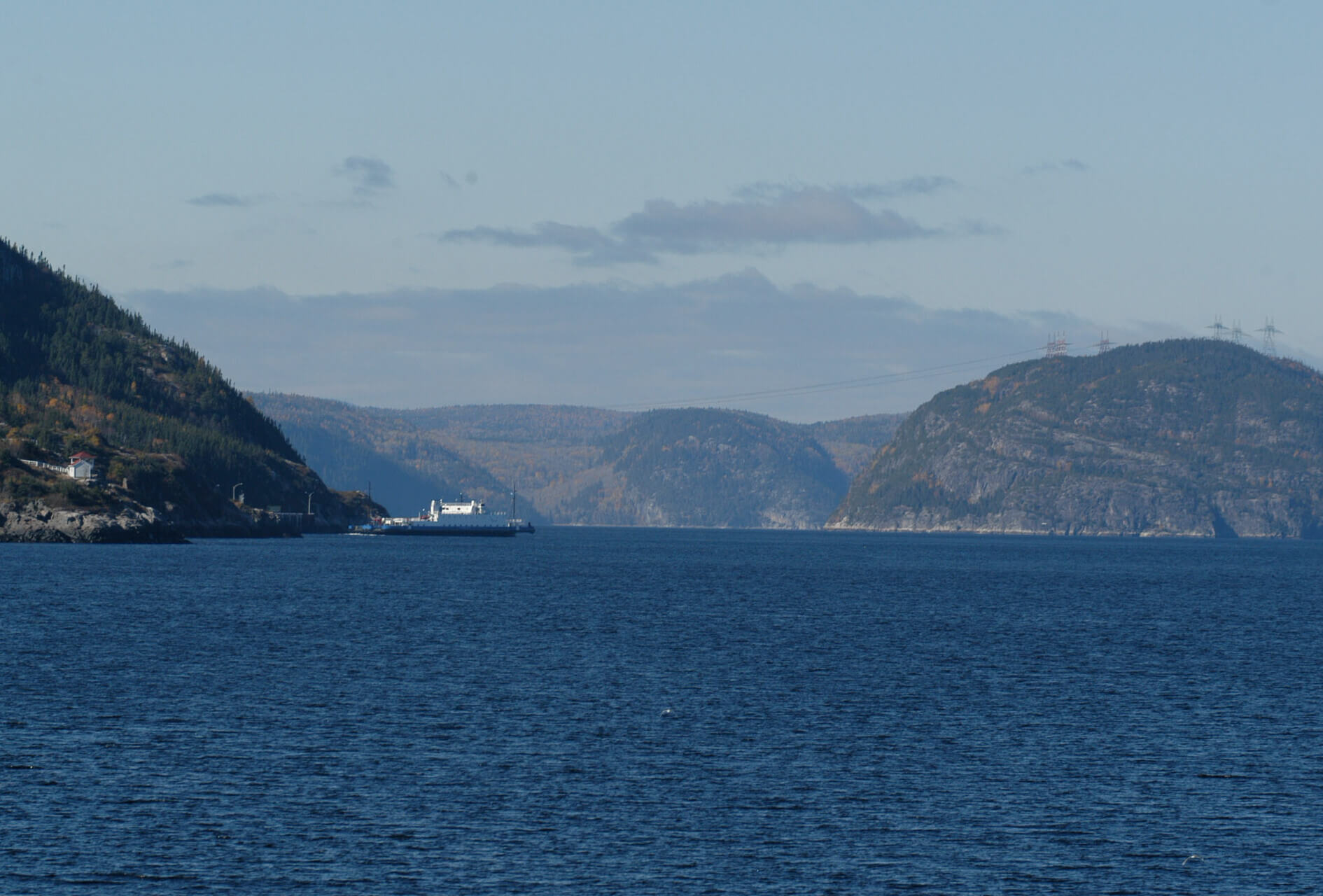
It’s the summer of 2026. I’m heading to Tadoussac to collect data for my master’s degree at Université du Québec en Outaouais. The mouth of the Saguenay, which is regularly frequented by belugas and minke whales, has been the scene of upgrade work on the Tadoussac and Baie-Sainte-Catherine ferry docks for several months now. Human-generated noise is nothing new in these parts. Between the noise of ferries, whale-watching vessels and pleasure boats, the gateway to the Saguenay is not a quiet place. The unusual thing this summer is that, over the course of a 24-hour period, acoustic respites are practically non-existent. There was a time when the only anthropogenic noise after sunset came from a single hourly ferry, but this is now augmented by nighttime diving work. With the addition of daytime coastal operations, noise levels end up increasing around the clock.
Articles on the effects of human-generated noise on whales are fairly unanimous: It’s disturbing. There is a unique aspect to this location, however: Since the distance between the wharves is only about two kilometres, cetaceans must navigate a complex avoidance maze in the mouth of the river. The whales have no choice but to stay close to the construction sites if they want to use the fjord, which contains several important feeding and socialization areas for belugas, including Baie Sainte-Marguerite. Between the rare moments when sound levels subside and the limited space to move away from noisy areas, it is difficult to predict how belugas and minke whales will react.
Binoculars, a baseball cap, and patience
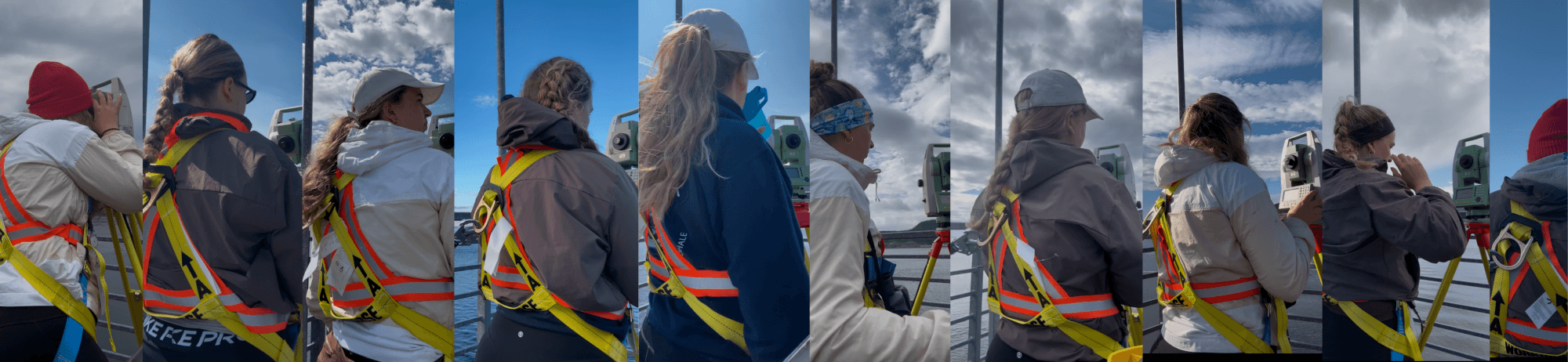
This is where my observation work comes in. I’m dedicating my summer to collecting data from the footbridge that spans the ferry dock in Tadoussac. Using a total station theodolite, a tool that allows me to pinpoint a location and obtain its precise geographic coordinates, I measure the distance between the whales and the ferry docks. Forced to become an early riser, I take advantage of every possible hour of daylight to observe the mouth of the Fjord and how the whales are using it. I gather data such as the time spent in the study area (between the ferry docks and Pointe-Noire), group composition (the presence and number of grey belugas), their direction of travel, the time (to coordinate with the tides), and their surface behaviours to understand whether they are using these waters for feeding, resting, socializing, or simply passing through. I also note the presence of boats. Thanks to GREMM and the hydrophones deployed by its team, I’ll be able to hear and better understand the noise levels produced by the construction site.
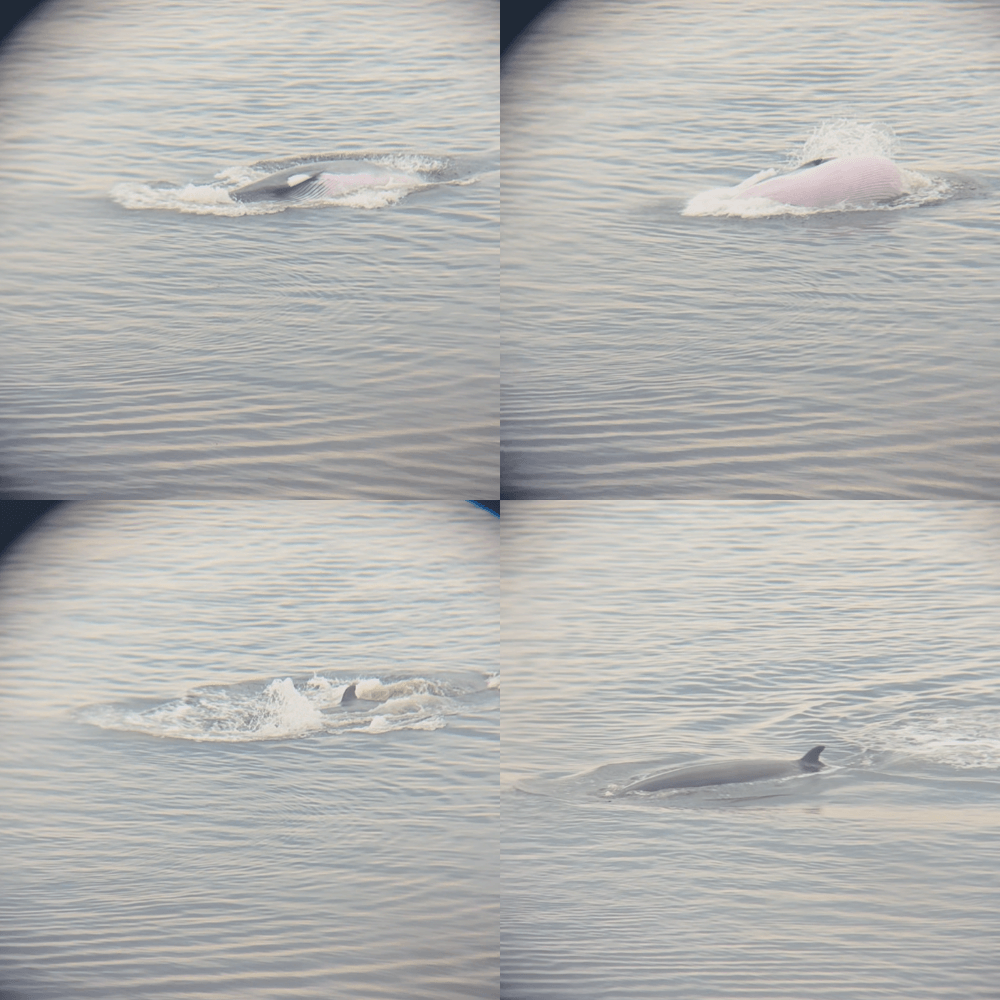
The good news is that the whales are still there. While it’s still premature to make any definitive conclusions, it’s clear that the mouth of the Saguenay is still being used by belugas and minke whales despite the current acoustic situation. Numerous much-needed conservation initiatives are underway to protect these species and the habitats they depend on. The expansion of the Marine Park is a significant step in this direction. I consider myself extremely fortunate to be part of the initiatives to ensure that protection measures keep pace with the pressures on these environments.
With that in mind, I urge you to look up the next time you find yourself riding the ferry to Tadoussac. If you see a surveyor perched atop the footbridge with her face glued to her binoculars, don’t hesitate to say hello. And know that if I don’t wave back, it’s probably a good sign… because that means there’s a beluga nearby!


Collaboration Spéciale
Recommended articles
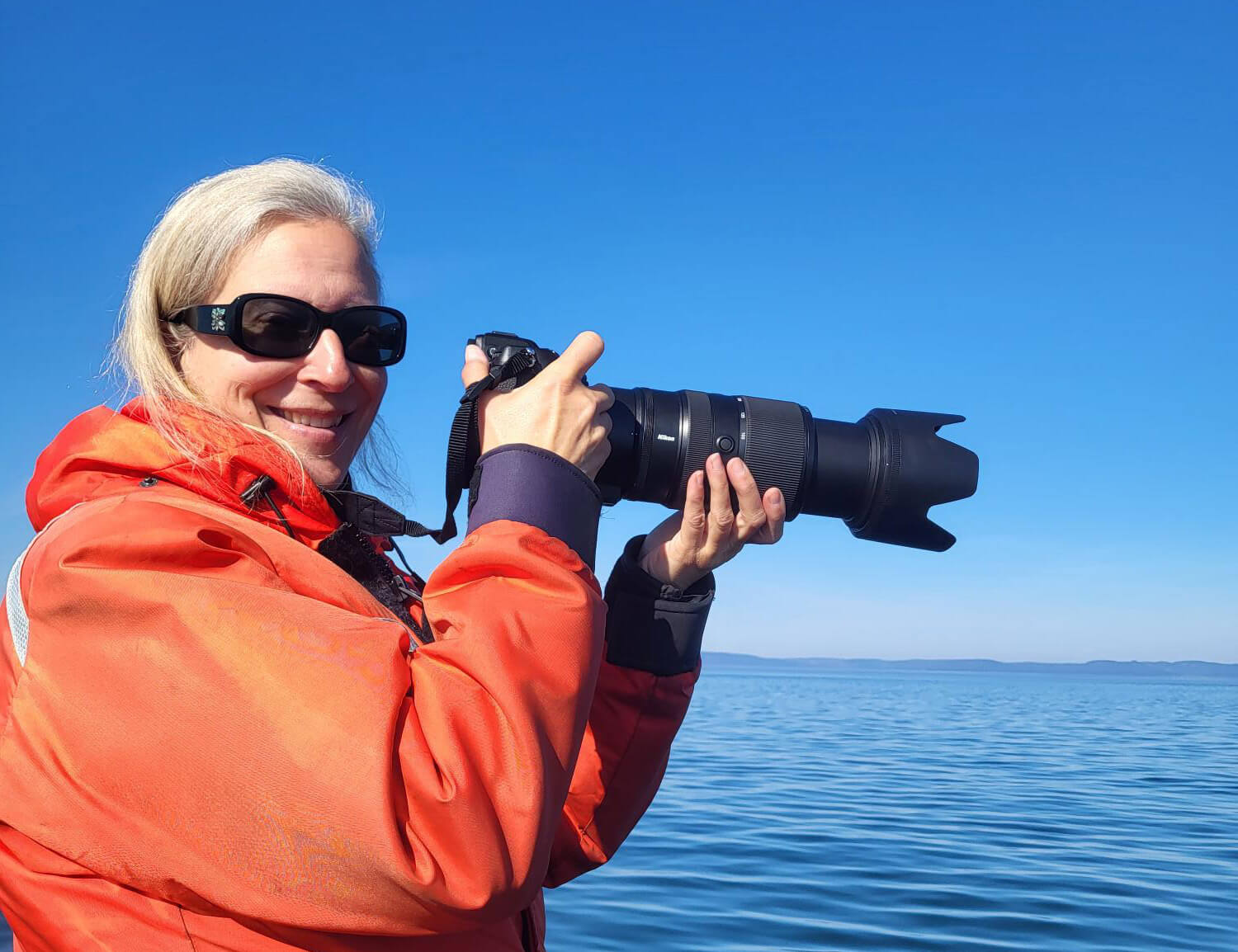
25 Years of Evolution and Passion in the Field
It was 1999, and my life was about to change. I had just completed my studies in biology and was…

On board the Bella Desgagnés, sighting of a North Atlantic right whale
By: Valérie Filion head of the interpreting department aboard the Bella Desgagnés for the Marine Mammal Observation Network (MMON) My…
Japan’s Ogasawara Islands: Expedition to Collect Cetacean Sounds and Images
There are many places around the world that lend themselves to watching whales, but some of them are unique. Last…