
Feeding Scenes, Chevrons and Pigmentation Patterns

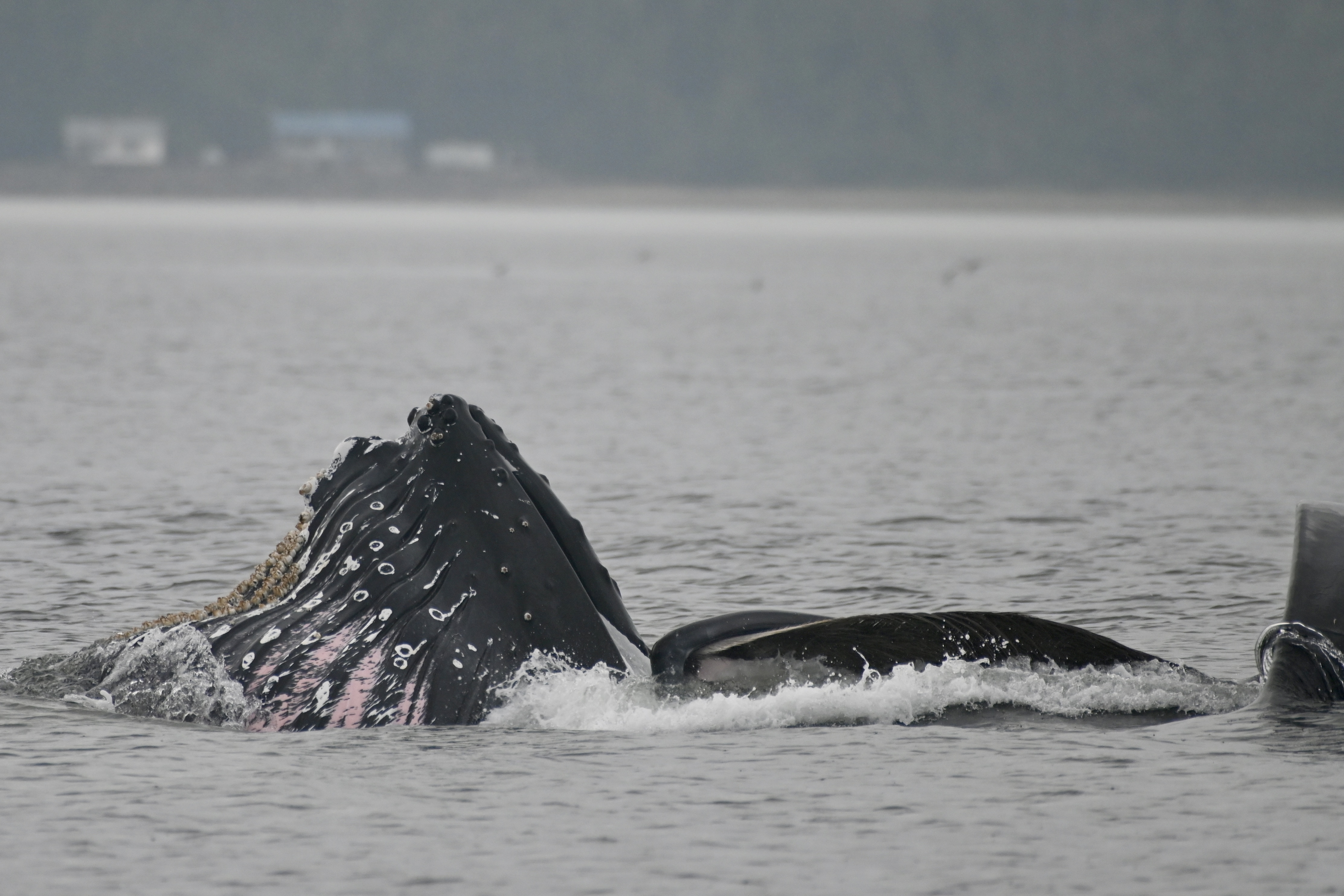
As new arrivals continue to show up across the St. Lawrence, visitors flock to admire the landscapes and wildlife, while the list of identified whales has been growing by the day. A spotted colour pattern in the Gaspé Peninsula, gaping mouths not far from Les Escoumins, subtle variations in the grey flanks of certain whales in the Minganie sector…
Action offshore
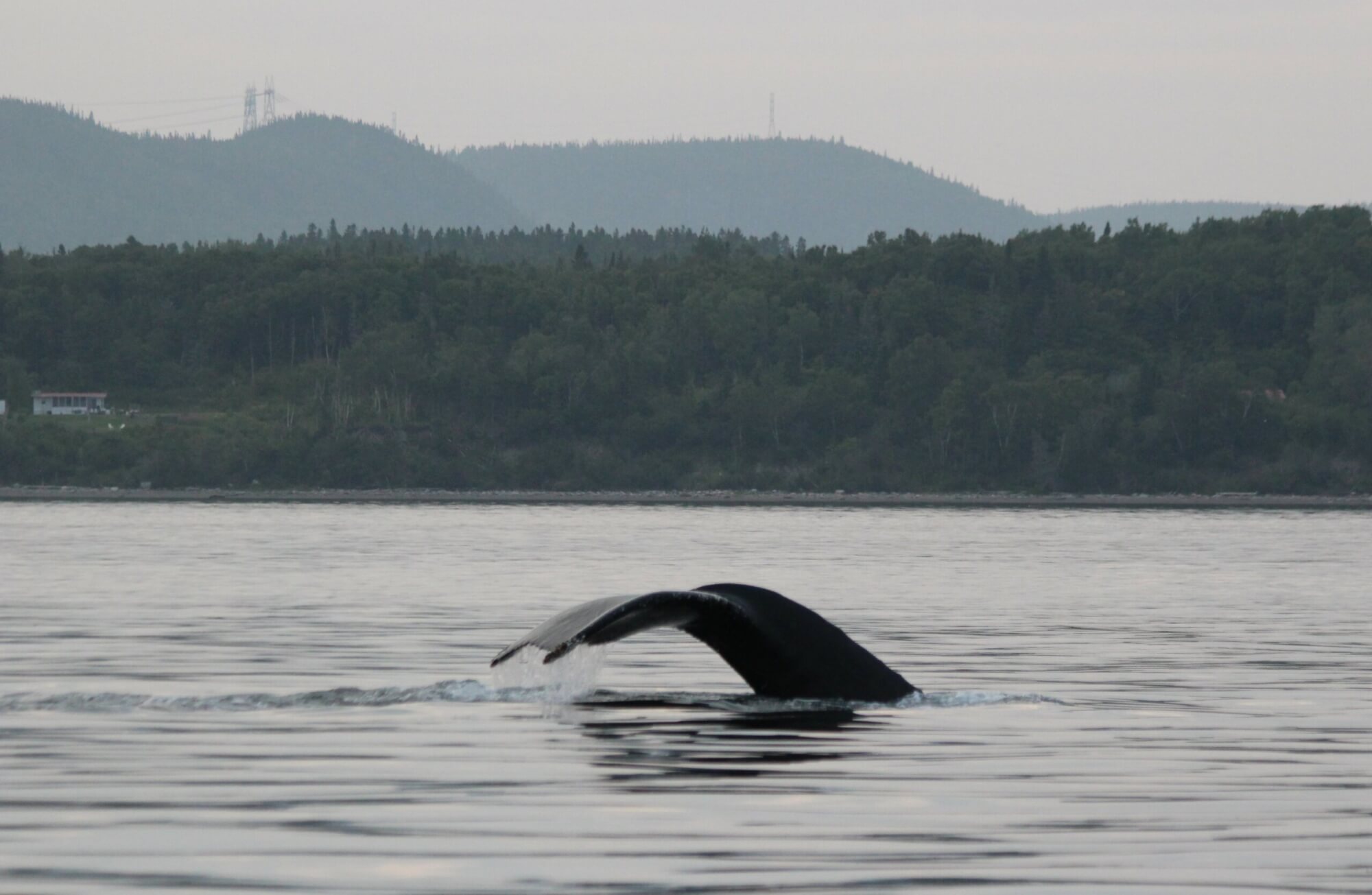
“A basking shark at the wharf in Baie-Comeau, several humpbacks breaching […], two fins, several minkes, porpoises, seals… Life is good,” muses one enthusiast when describing the marine animals he has spotted in the area. Shortly before that, another basking shark was filmed in Baie du Garde-Feu. Was it the same individual? While not a single whale was identified by its assigned code number, the species observed were easy to distinguish: fin whales by the distinctive chevron pattern extending from the top of their heads to their flanks and black, not to mention their hook-shaped dorsal fin, and humpback whales by their acrobatics and the fact that they show their tail flukes when they dive.
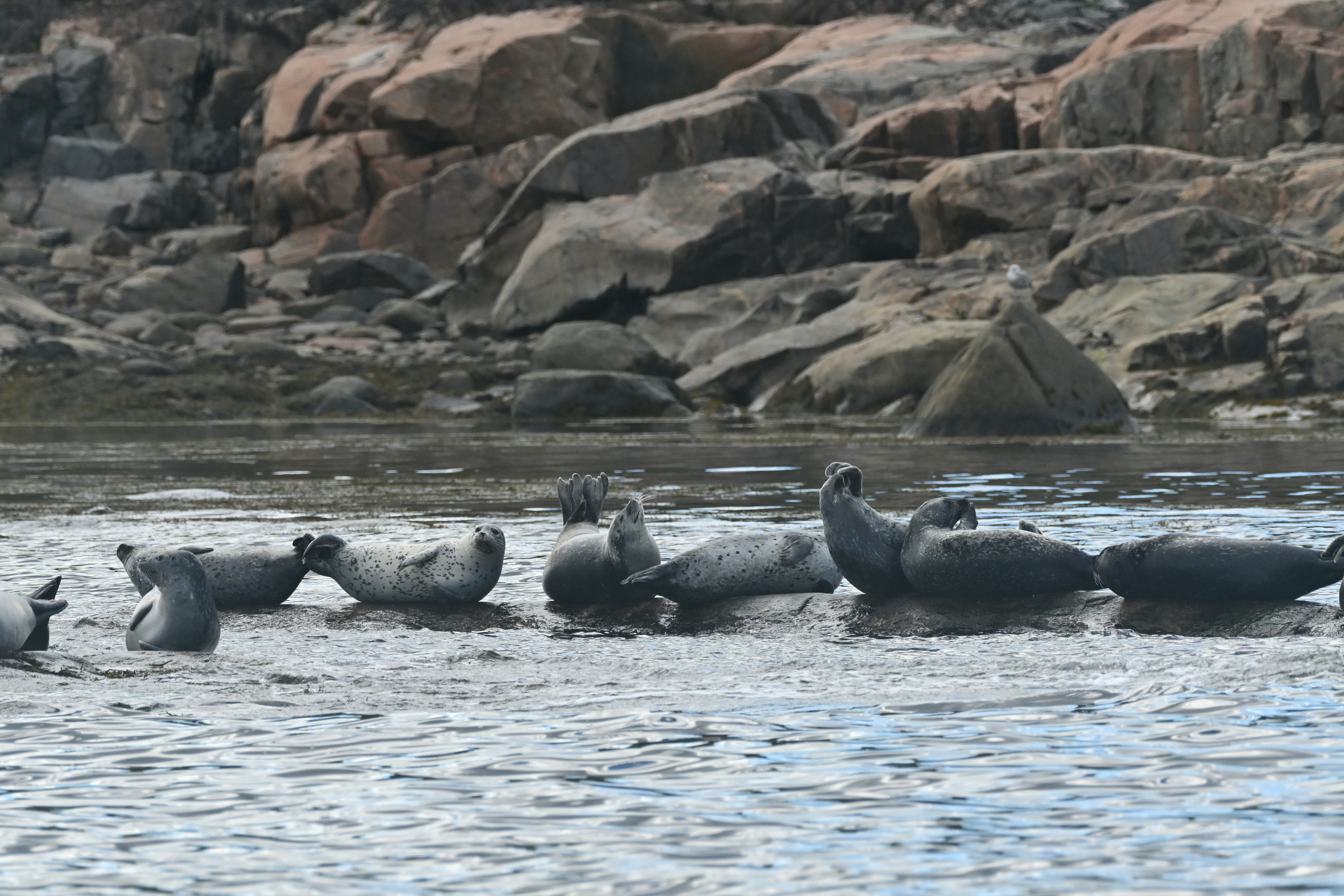
Not far from Pointe-aux-Anglais, one observer notes: “Three humpbacks were showing very intense breaching and tail-slapping behaviour. Between the three of them, I counted at least seven full breaches in under a minute—it was incredible!” “In the Mingan Archipelago, the highlights have been small marine mammals such as harbour porpoises, minke whales, harbour seals, and grey seals,” describes a fisherwoman in the area.
For the research teams, fieldwork was hampered by fog over the past week. Nevertheless, the Mingan Island Cetacean Study (MICS) managed to spot 10 blue whales off Sept-Îles, including B458 (Sterenn), B298 and B596, as well as 5 fin whales. Two basking sharks and nearly a dozen minke whales were also spotted by the research team in the waters west of the Mingan sector.
Prime feeding grounds
Not far from Les Escoumins, ten or so blue whales were spotted, some of them opening their several-metre-long jaws wide to fill them with water and especially krill! The Group for Research and Education on Marine Mammals (GREMM) witnessed the scene through the lenses of their cameras and drones. In addition to capturing some truly spectacular imagery, the team will use them to study and better understand these endangered giants of the St. Lawrence.
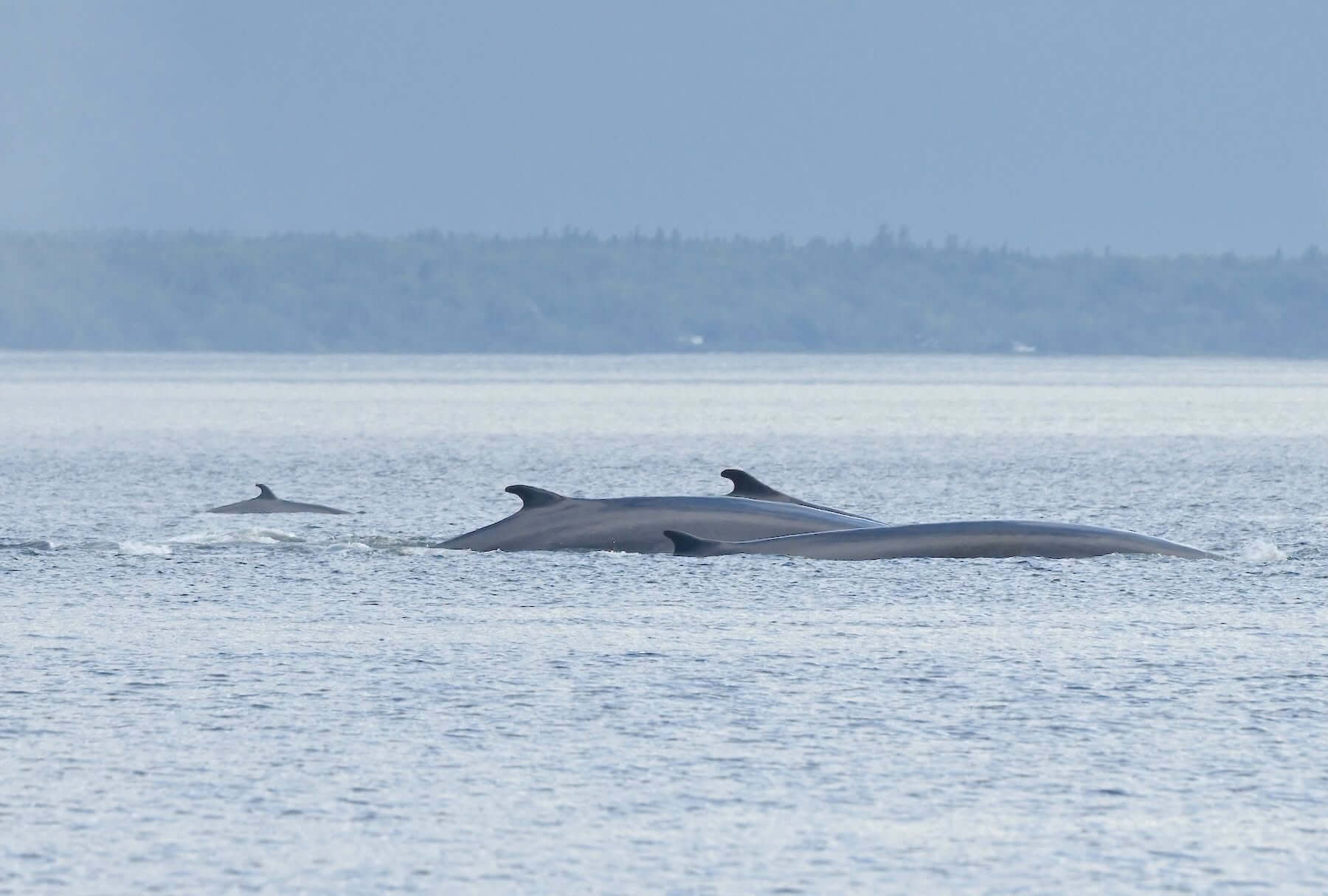
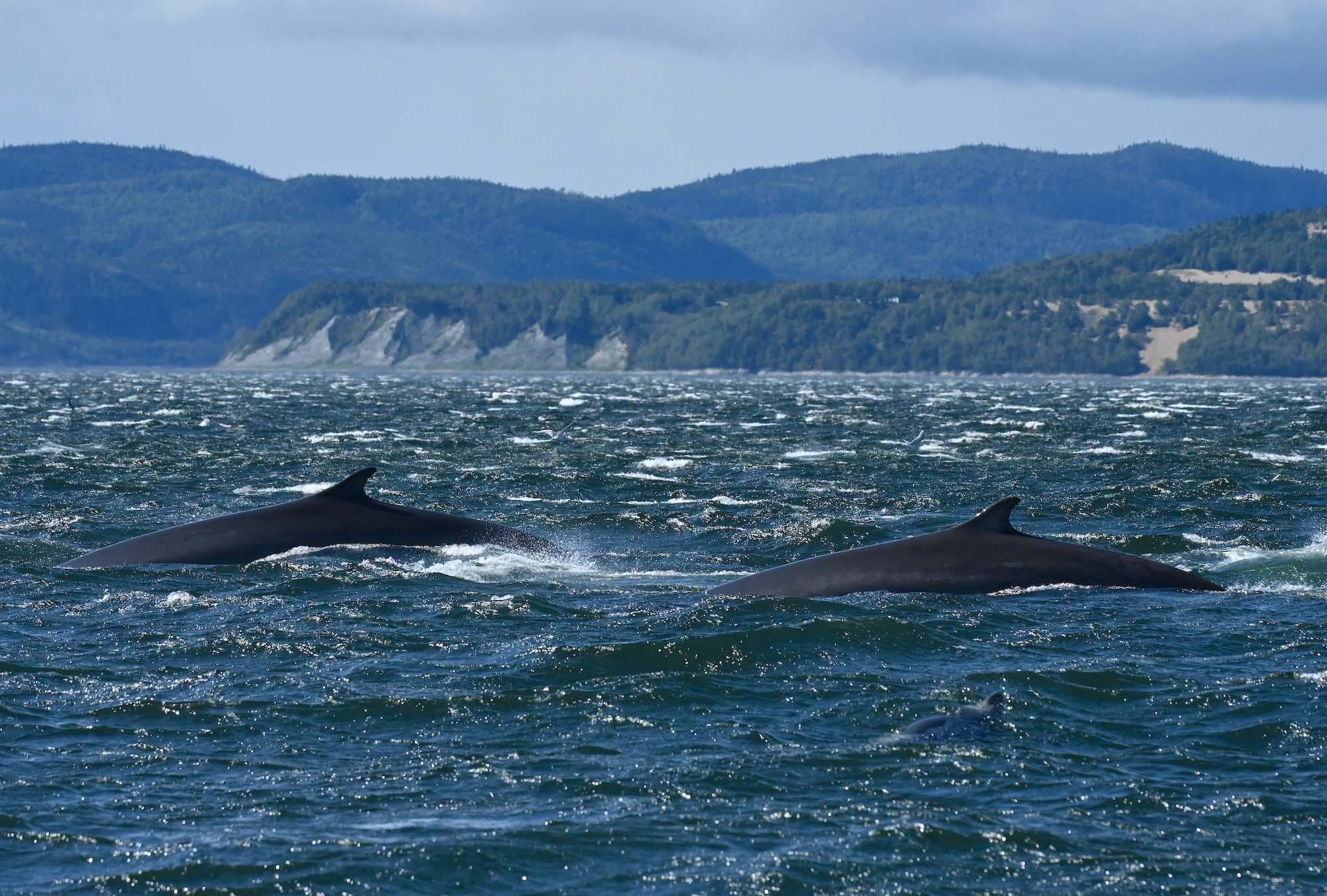
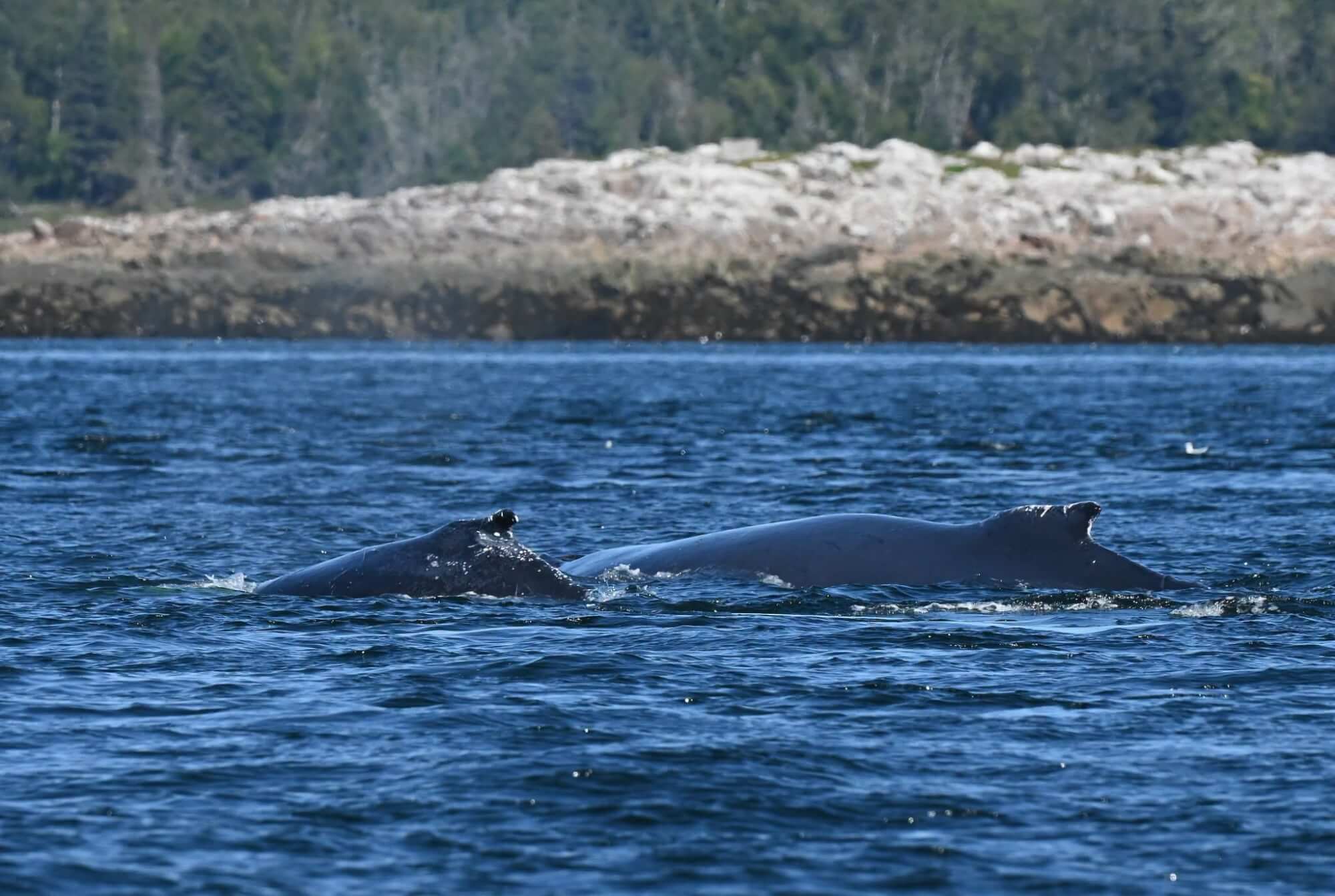
“On August 19, four humpbacks, including H859, were surface feeding for at least five hours. The whales were hunting in pairs and frequently changing course,” describes a whale enthusiast who witnessed the scene. It would appear that food in the area is plentiful! The second largest whale in the world, the fin whale is often seen in groups of three to eight individuals, particularly off the coast of Les Bergeronnes.
In certain situations, fin whales can be observed in groups engaging in a poorly studied behaviour that scientists call “collective navigation.” A rare observation of this behaviour was documented in the summer of 2021 by the Sept-Îles Education and Research Centre (CERSI). In this phenomenon, individuals on the go follow the micro-movements of those around them. Flocks of birds frequently form such gatherings, flying along the same trajectory and appearing to behave as a single entity.
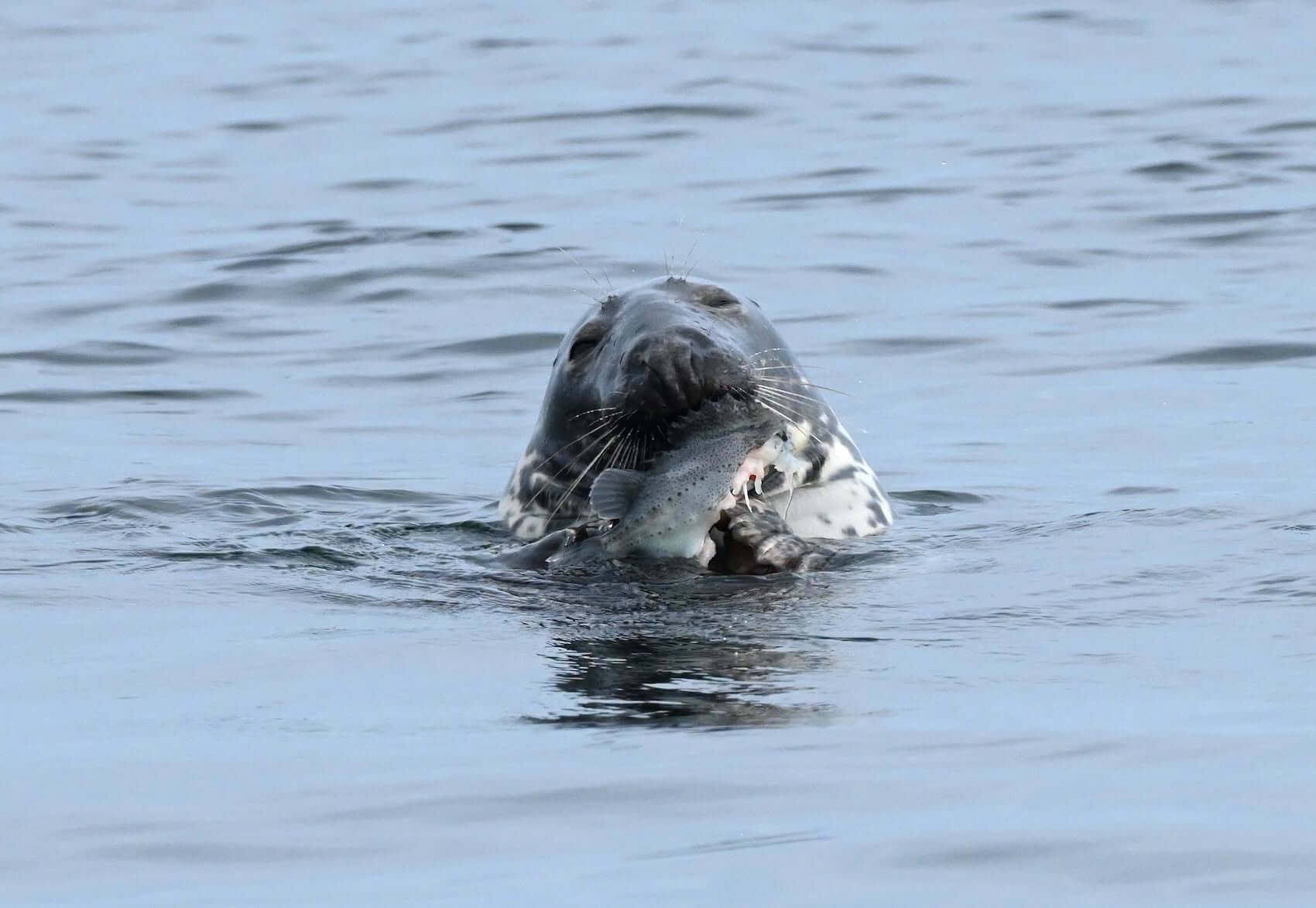
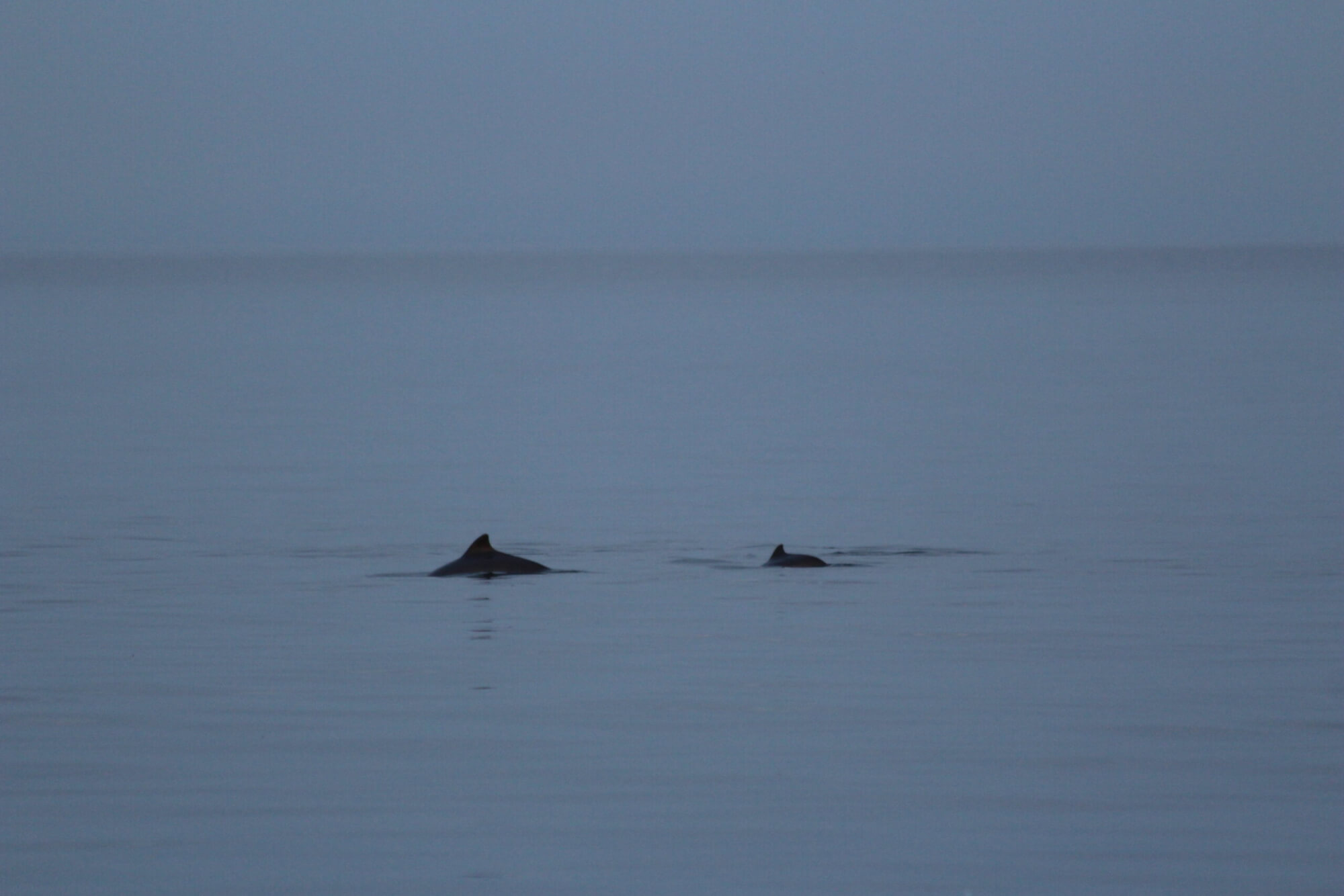
Between Pointe Noire and the tiny islands known as Islets Boisés, two experienced observers chalk up between them several species of small marine mammals such as minke whales, belugas, harbour porpoises, and grey seals. Meanwhile, belugas and harbour porpoises were reported off the coast of Saint-Irénée and Les Éboulements.
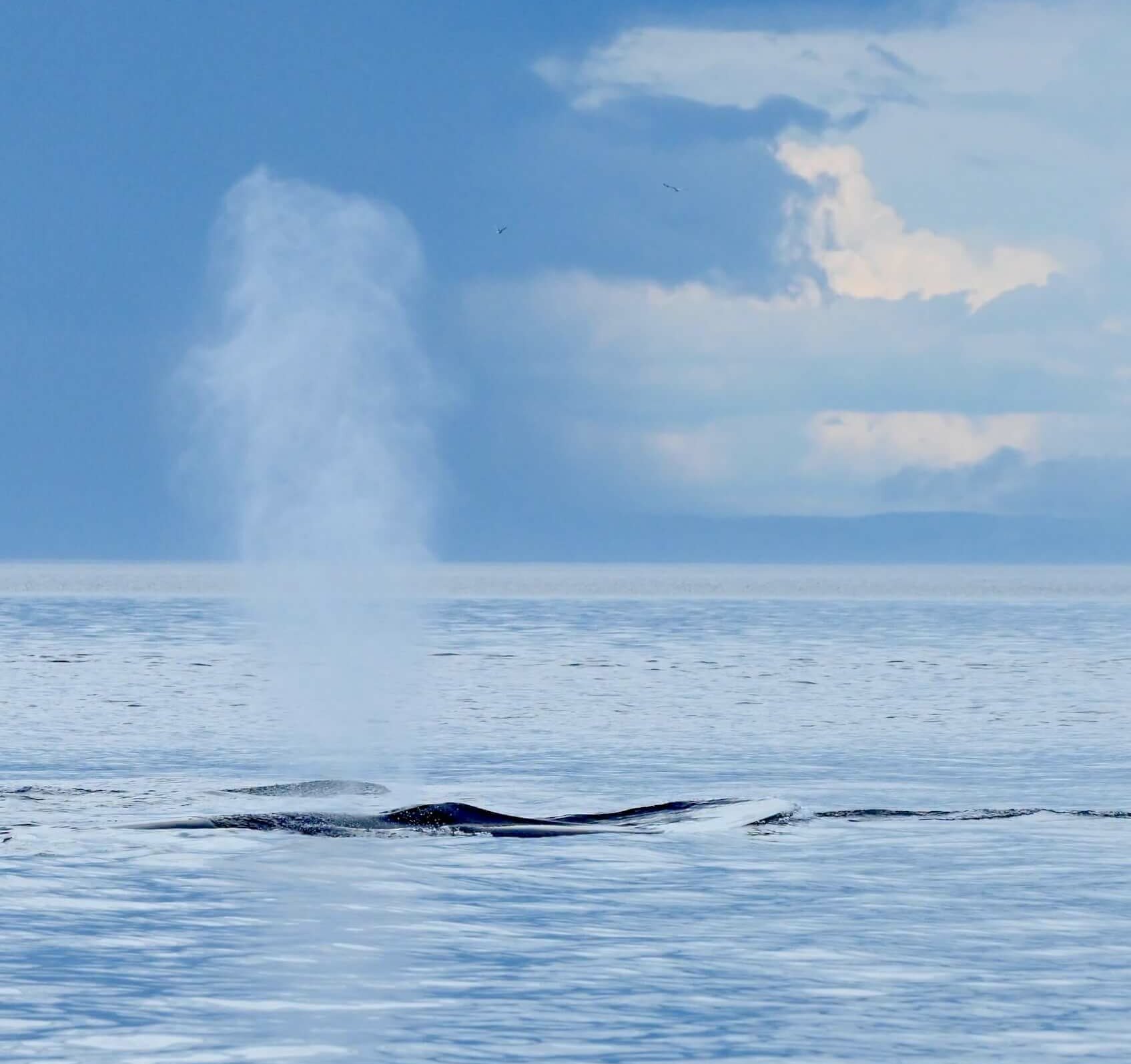
Inconspicuous exhalations
From Gaspé Bay to Chaleur Bay, horizon scans from the Gaspé shoreline have revealed several faithful species to these summer grounds, including North Atlantic right whales, fin whales, humpbacks, a blue whale, and Atlantic white-sided dolphins. Off Mont-Louis, the white backs of about fifteen belugas were observed. From her home in Cloridorme, one observer photographed a fin whale swimming… alongside a basking shark!
With sharks having been reported from several locations in the St. Lawrence this week, it’s a good time to remember that sharks are fish! Unlike whales, which are mammals and have lungs like humans, sharks have gills and can stay underwater indefinitely. Their skeleton is made of cartilage, which is lighter and prevents them from sinking. Whales, on the other hand, have bones, but they are lighter than those of land mammals, which is an adaptation to their aquatic lifestyle. These are just a few differences to bear in mind when observing these fascinating animals!
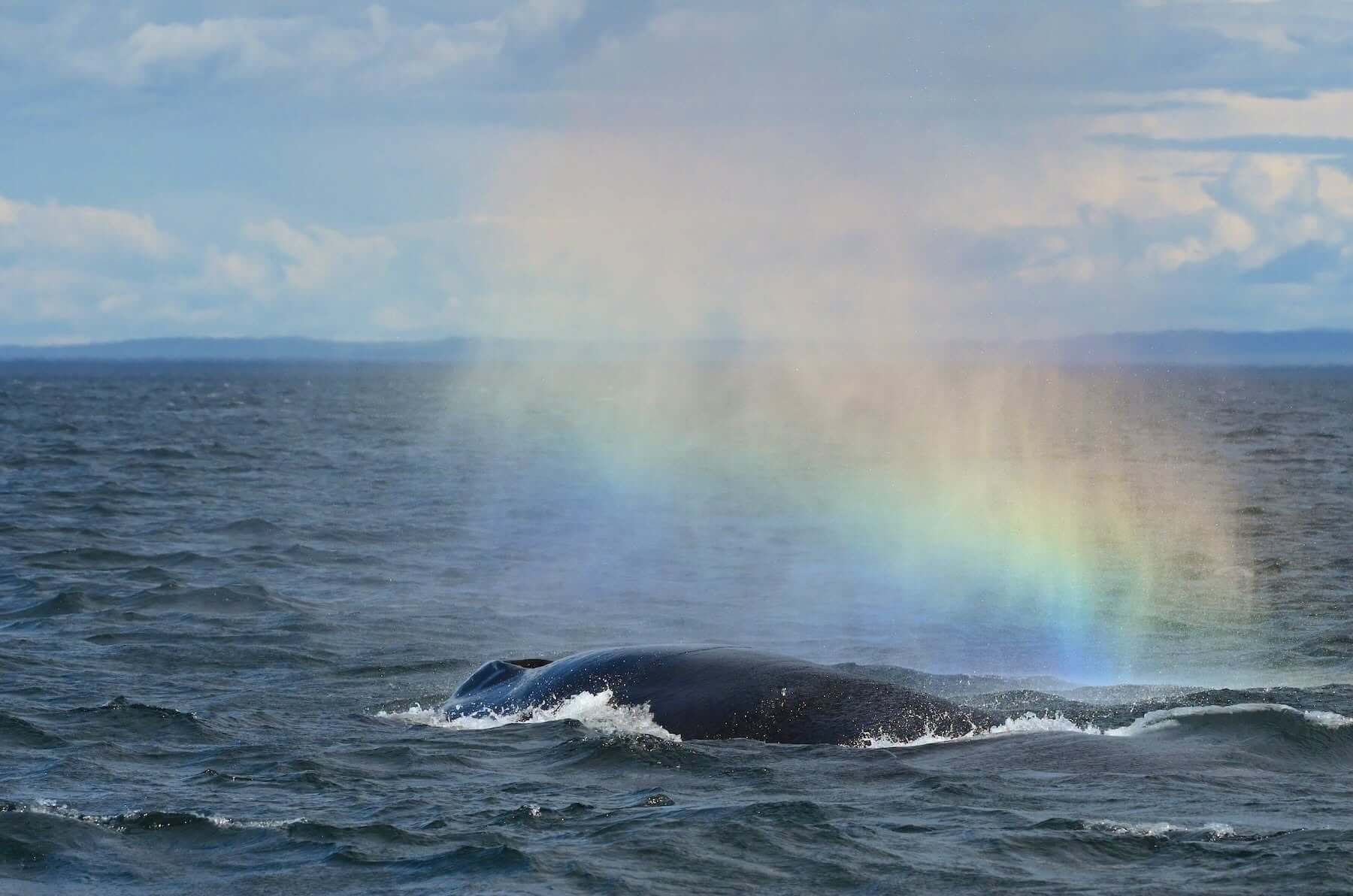
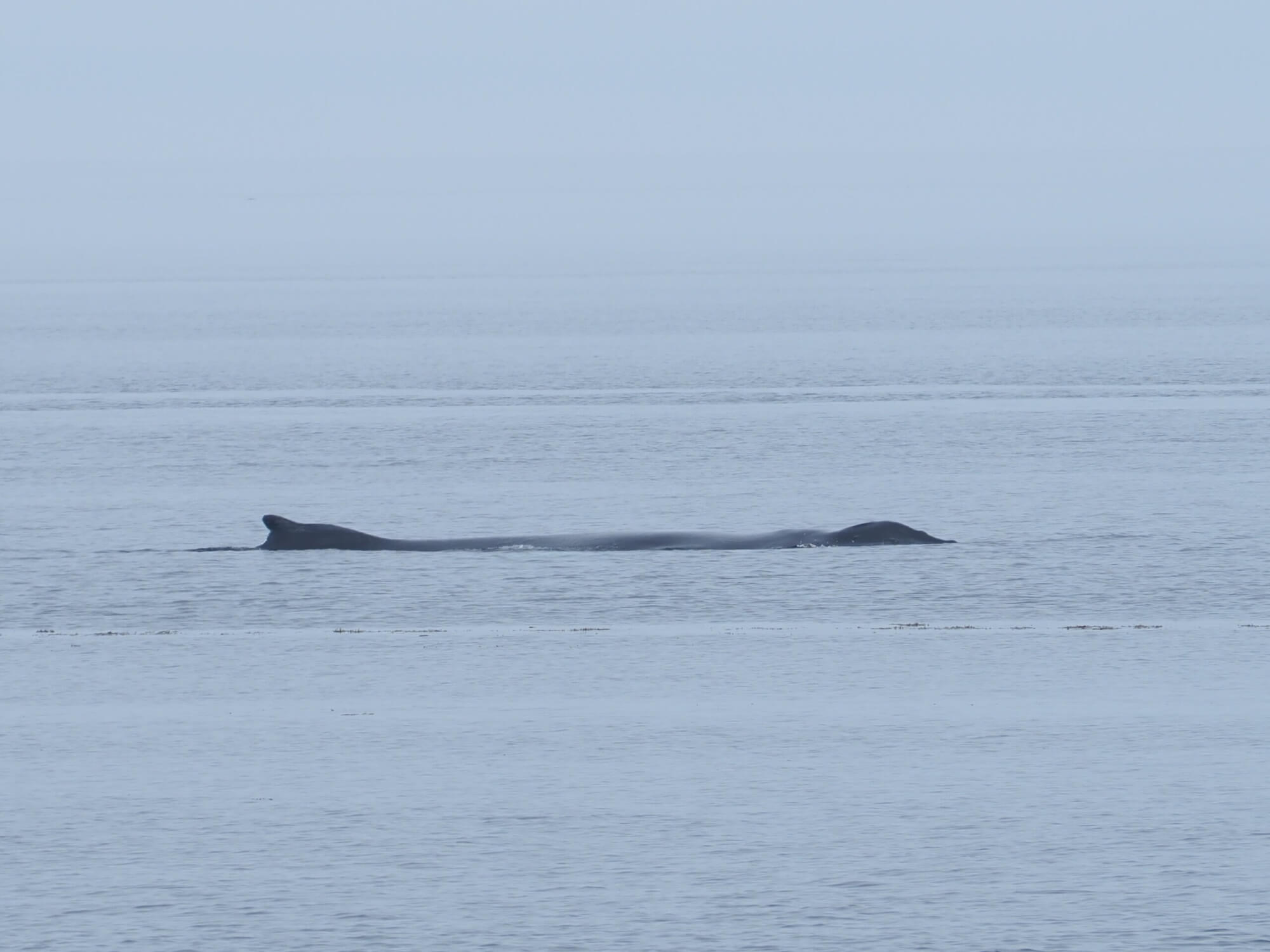
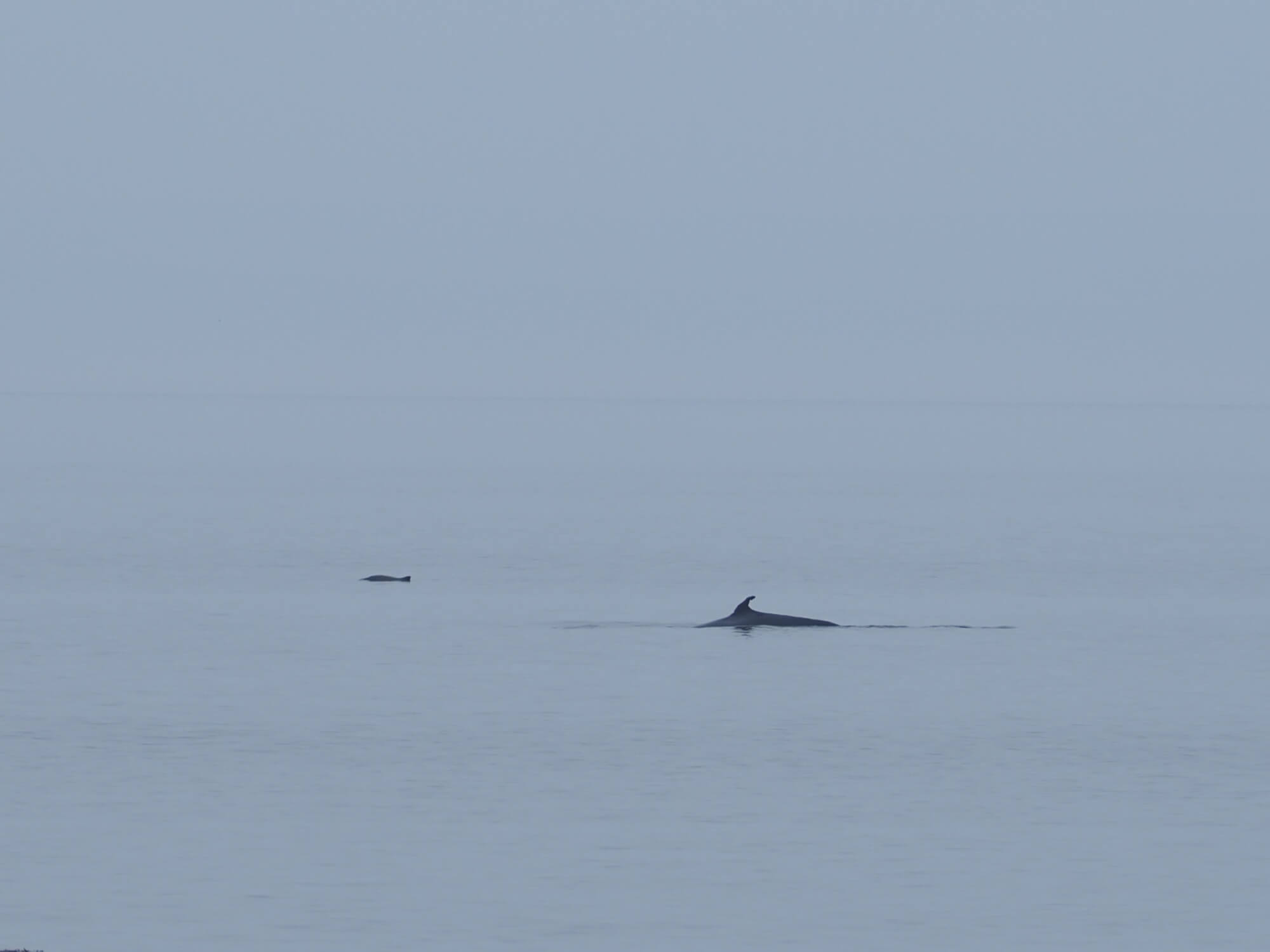
Where are the whales this week? Sightings map
These data were reported by our network of observers. They give an idea of the presence of whales and in no way represent the actual distribution of whales in the St. Lawrence. Just for fun!
Click on the whale or seal icons to discover the species, the number of individuals, additional information or photos of the sighting. To enlarge the map, click on the icon in the top right-hand corner. The map works well on Chrome and Firefox, but not so well on Safari.
To display the list of sightings, click on the icon in the top left-hand corner.
Thanks to all our collaborators!
Special thanks go out to all our observers who share their love for marine mammals with us.
Your encounters with cetaceans and pinnipeds are always a pleasure to read and discover. On the water or from shore, it is your eyes that give life to this column.
- Thalia Cohen Bacry
- Guylaine Côté
- Camille Degache
- Sarah Flibotte
- Hélène Guitton
- Marie Lévesque
- Johanne Masse
- Diane Ostiguy
- Sandrine Papias
- Renaud Pintiaux
- Pascal Pitre
- Justine Quirion
- Guillaume Savard
- Andréanne Sylvain
- Marielle Vanasse
And to all the others!
Additionally, we would like to acknowledge the following teams that also share their sightings:
Centre d’éducation et de recherche de Sept-Îles (CERSI)
Station de recherche des Îles Mingan (MICS)
Réseau d’observation des mammifères marins (ROMM)
Réseau québécois d’urgences pour les mammifères marins (RQUMM)
Groupe de recherche et d’éducation sur les mammifères marins (GREMM)
Mériscope
Would you also like to share your observations? Have you seen any marine mammals in the St. Lawrence? Whether it’s a spout offshore or just a couple of seals, drop us a line and send your photos to [email protected]!

Odélie Brouillette
Odélie Brouillette joined the GREMM team as a writer and naturalist in 2022, and has been a project manager in scientific communication since 2023. With a background in biology, she loves learning and sharing with others what's most important to her. She has always been fascinated by marine environments and whales, and hopes to contribute to their protection through awareness-raising and popularization.
Recommended articles
Côte-Nord: Prime Location for Autumn Whale Watching
Across Quebec, fall has truly arrived, as evidenced by the turning leaves and the arrival of certain marine mammal species…
Strong Winds, Big Whales
Despite the strong winds, fog, and plummeting air temperatures, marine animals of all kinds continue to roam the St. Lawrence.…
Mama Whales and Their Calves Roam the St. Lawrence
It would hardly be an exaggeration to say that the St. Lawrence has been teeming with life these past few…