
Chance Encounters in the Estuary

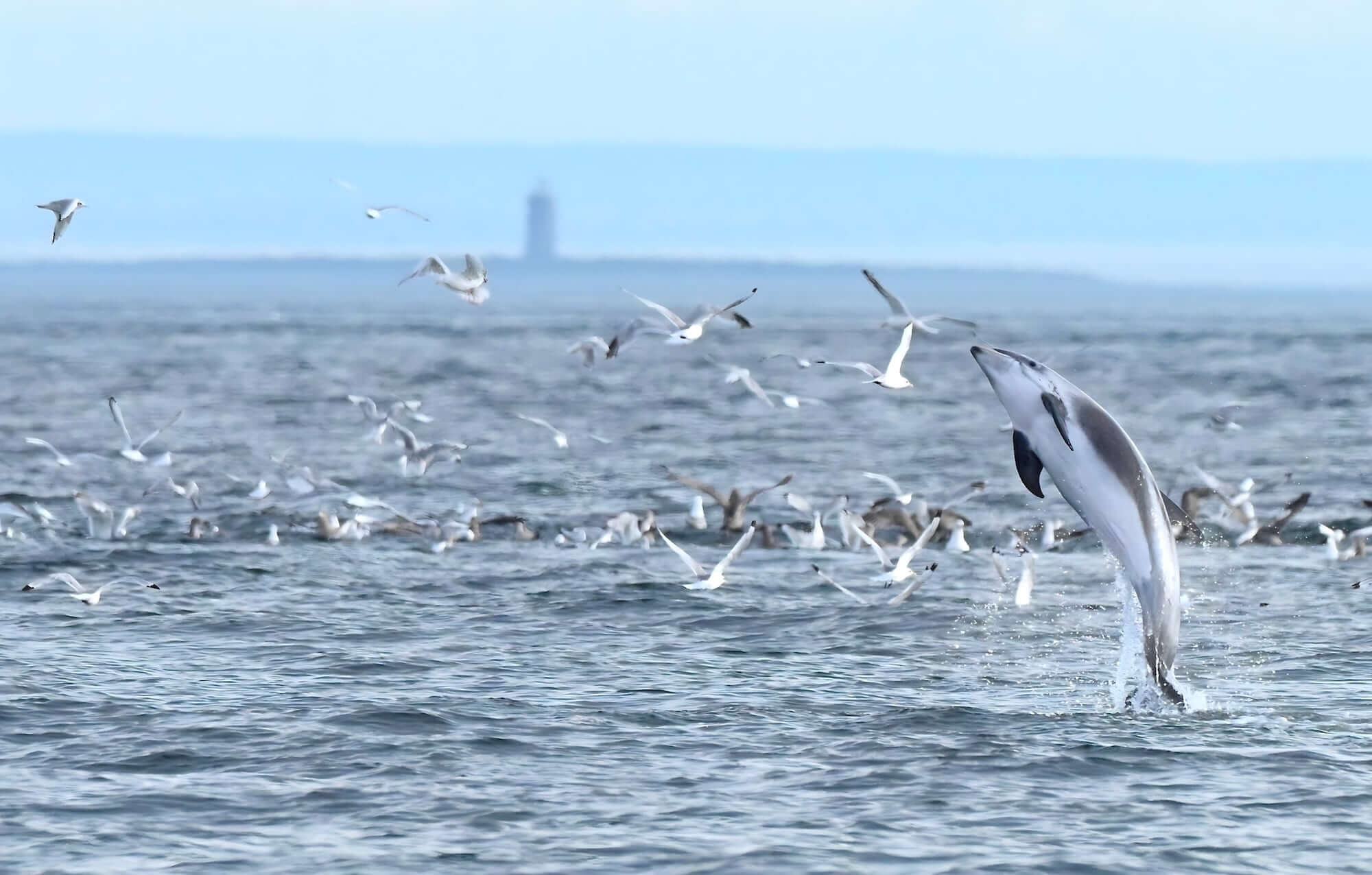
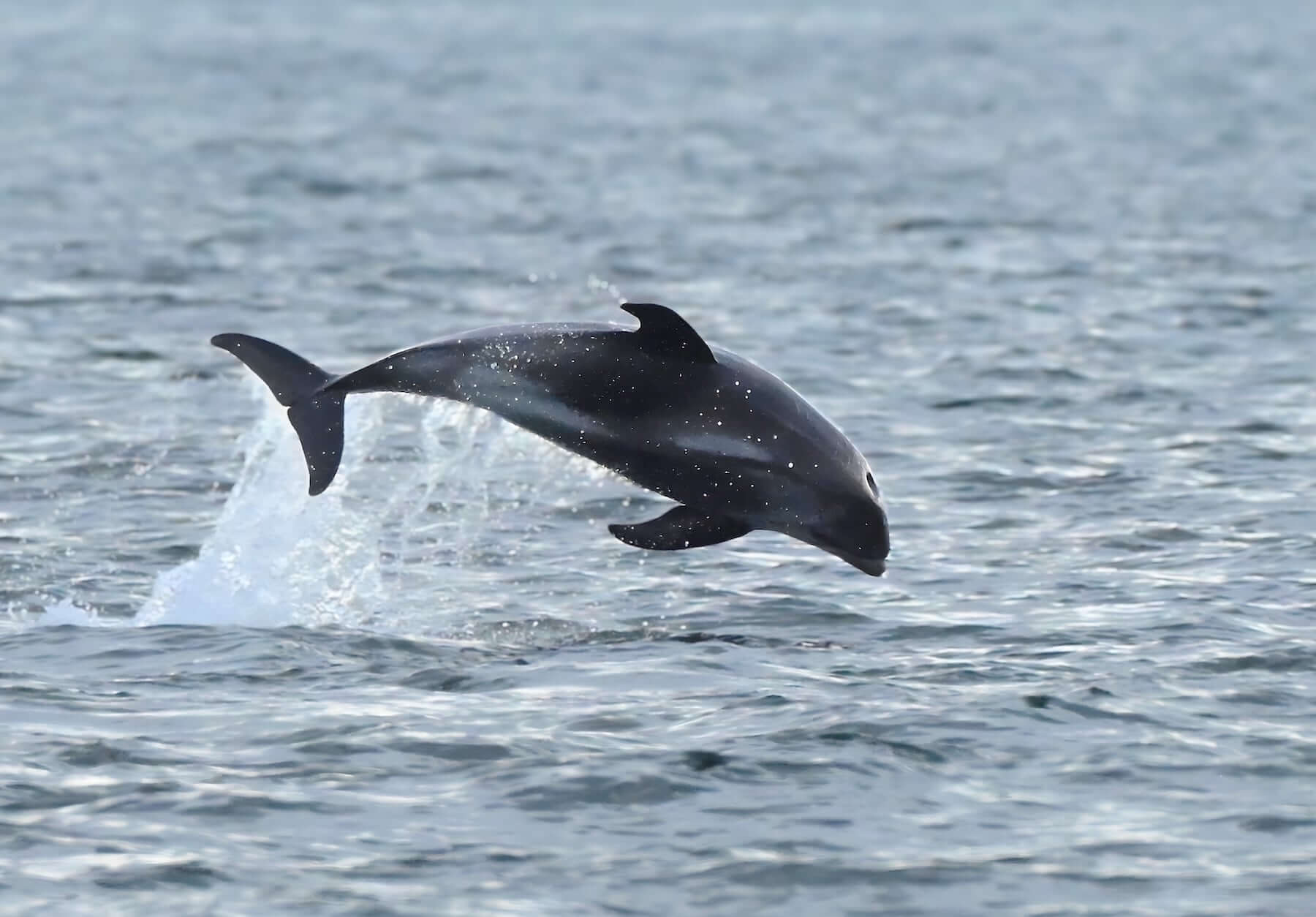
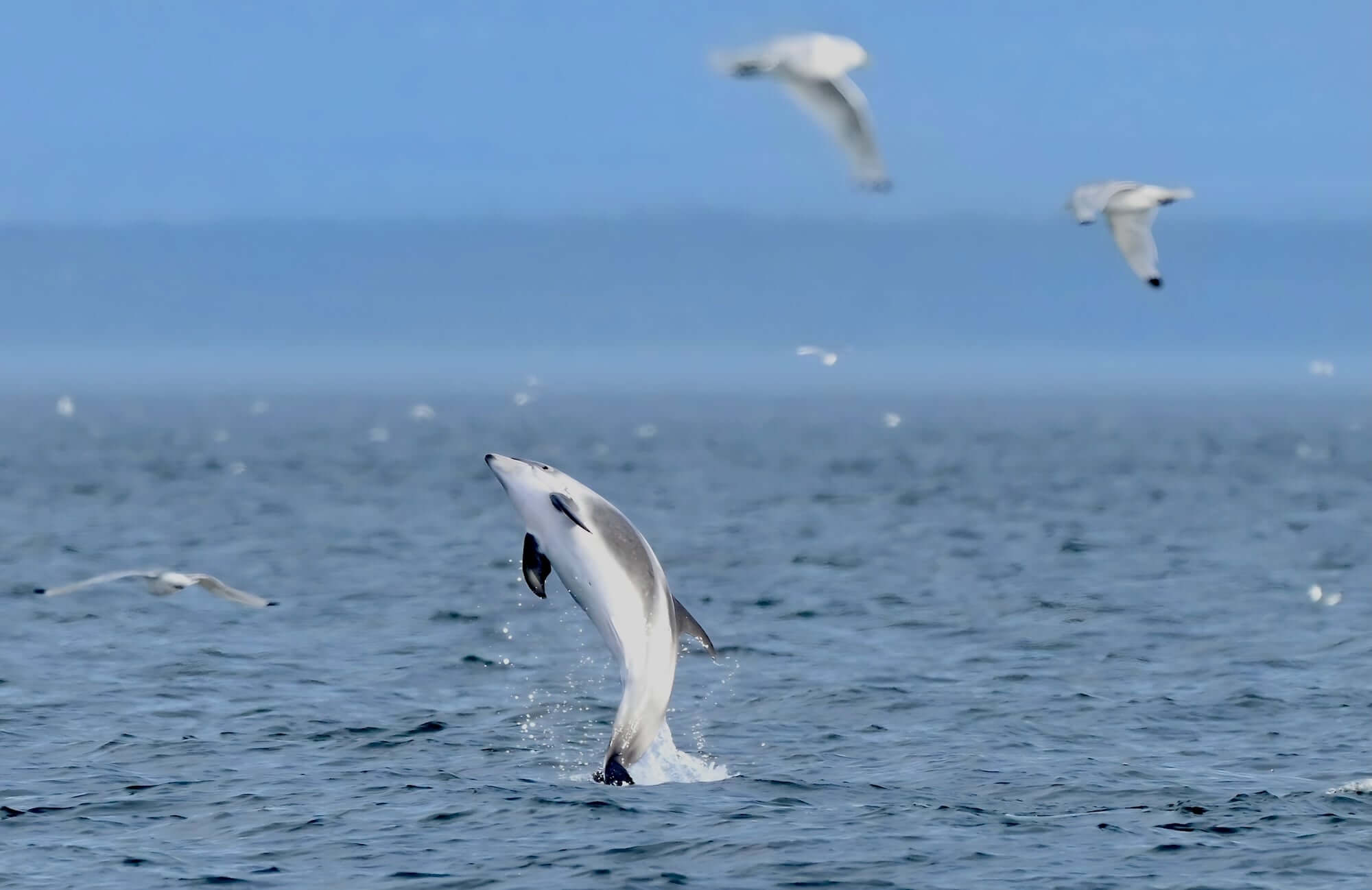
The undisputed stars this past week were white-beaked dolphins, which reminds us of the importance of being in the right place at the right time. Whale watching is often a matter of chance… and patience! Measuring between two and three metres long, these small dolphins left many observers gawking in and around the estuary. Beyond the acrobatics of these small cetaceans, sightings of several other marine species were reported, from belugas to humpbacks and harbour porpoises.
Science and good fortune
“We had the immense pleasure of being able to admire and follow over a dozen white-beaked dolphins between Tadoussac and Les Bergeronnes last Tuesday [August 25]. It was an awesome and unforgettable experience,” shares one naturalist and wildlife photographer. Spotted by one of his colleagues, it was the shape of the dorsal fin—longer and more tapered than that of the harbour porpoise—that led them to second-guess which species it might be. The last time white-beaked dolphins were identified in the Marine Park was in 2022, when GREMM’s research team spotted the sickle-shaped fins of eight individuals surfing the waves. Given how exception this species is in the Estuary, it’s easy to understand the joy they bring to young and old observers alike!
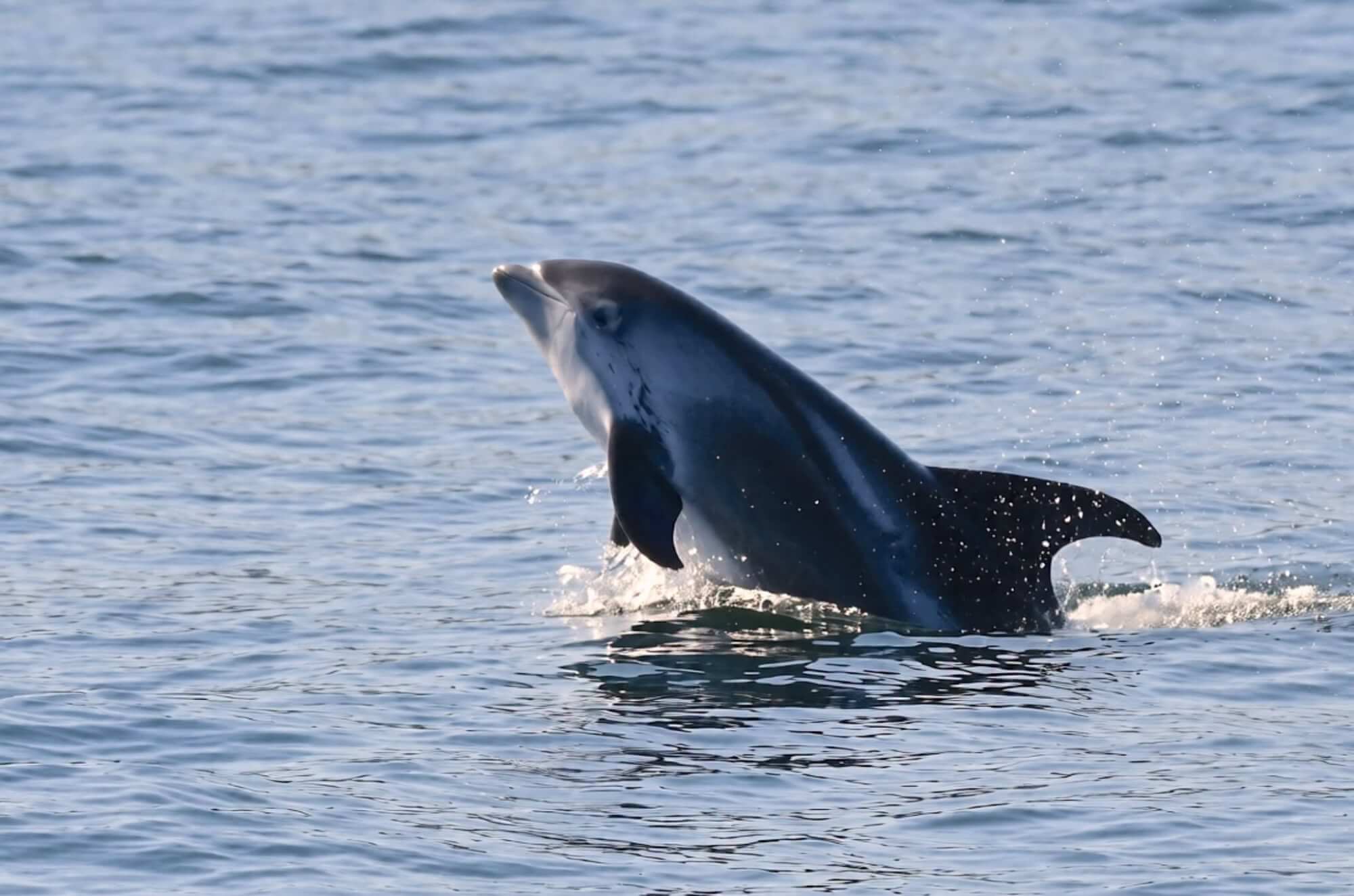
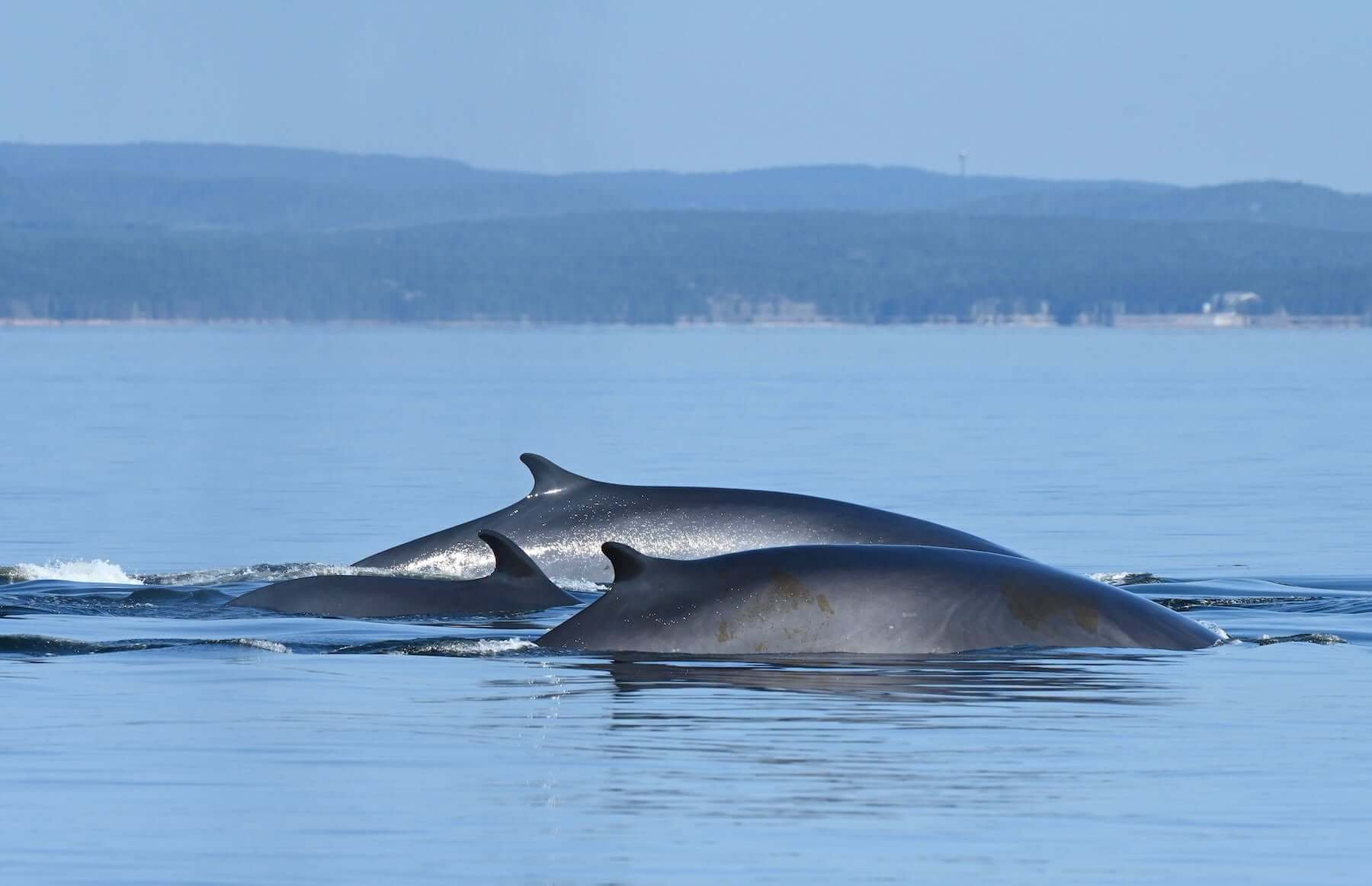
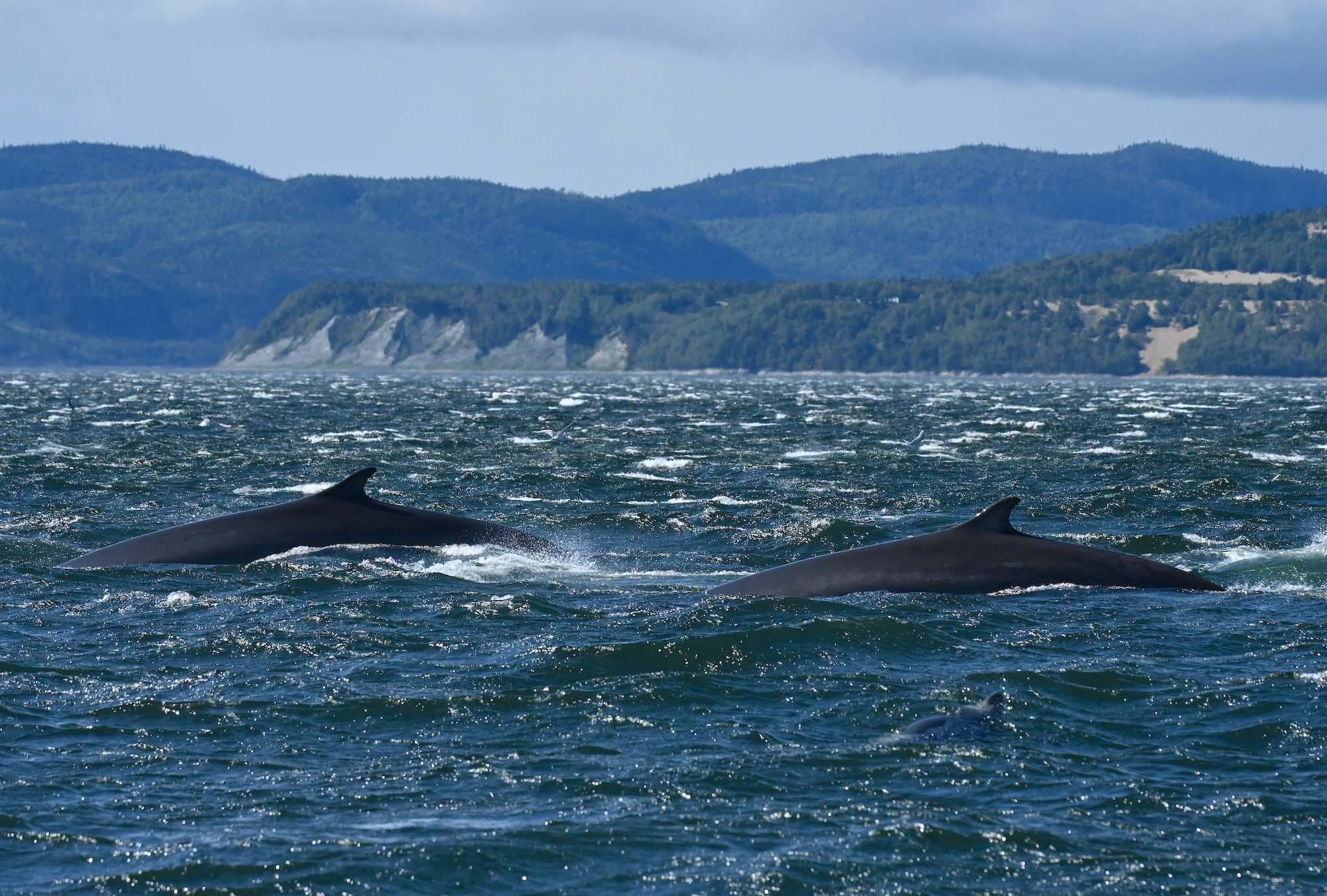
Meanwhile, research teams are busy on the water, notably Mériscope, which specializes in studying minke whales. One individual that has already been identified is Ba188, also known by the nickname “Laurence.” GREMM’s team, on the other hand, has photographed two humpbacks, two fin whales, and the blue whale B197 (Pleiades), a female that has been known since 1988. Also reported was H875, a newly arrived humpback that was accompanied by a smaller individual. Could it be her calf? All indicators point to “yes”!
The white backs of belugas were spotted off the coast of Les Bergeronnes and as far upstream as Saint-Irénée: “I’ve been seeing them! Two or three every day while I’m eating lunch. Five days ago, I spotted a mother with her calf, and I have to say I was very moved,” exclaims an observer from Charlevoix regarding her encounter from shore with this endangered cetacean.
Sharks, fish, and whales
Large whale sightings are on the rise in Gaspé Bay after a relatively calm spell last week. Fin and humpback whales have been spotted, not to mention minke whales and harbour porpoises. A few as-yet unidentified dolphins were seen on August 21. The main differences between Atlantic white-sided dolphins and white-beaked dolphins, the two main species found in the St. Lawrence, lie primarily in their physical characteristics: the former have a yellow stripe on their flanks, while the latter has a white rostrum (beak). White-beaked dolphins are also known for their spirited aerial displays.
A basking shark was also seen in the area the following day. A resident of Cap-des-Rosiers reported the presence of a porbeagle. Measuring approximately 2.5 metres long, this endangered shark is often mistaken for a great white. Other exceptional sightings that surprised the crowds included a sunfish and several bluefin tuna. In this area, diversity was the buzzword!
Whales in the fog
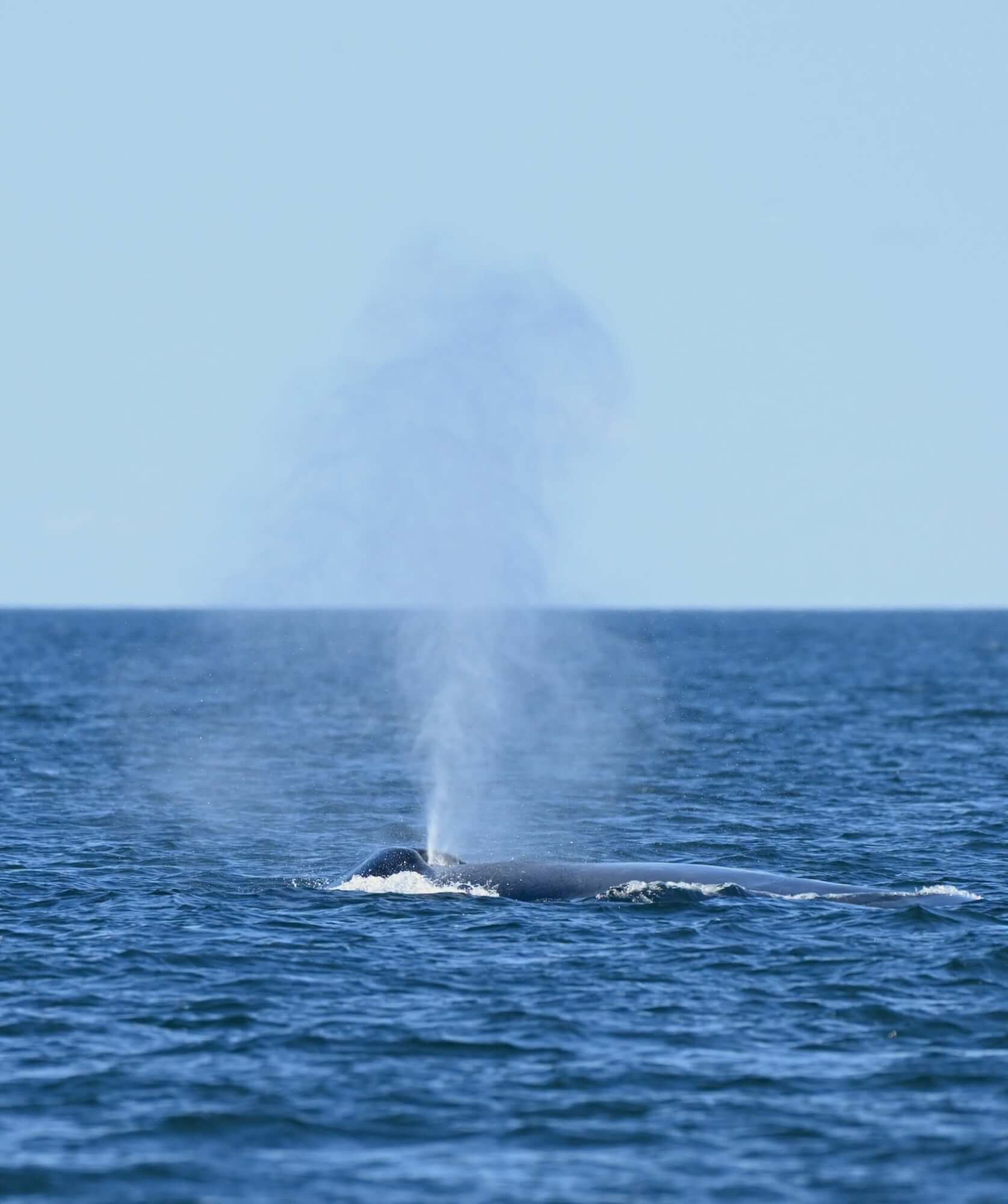
“This week has been rather quiet, with just two blue whales, four fin whales, and a lot of fog,” reports the Sept-Îles Education and Research Centre. In the same vicinity, an observer had the privilege of spotting three fin whales off Val-Marguerite on August 22: “Their blows were clearly visible, as were their dorsal fins […], and on top of that there were also a lot of gannets feeding.”
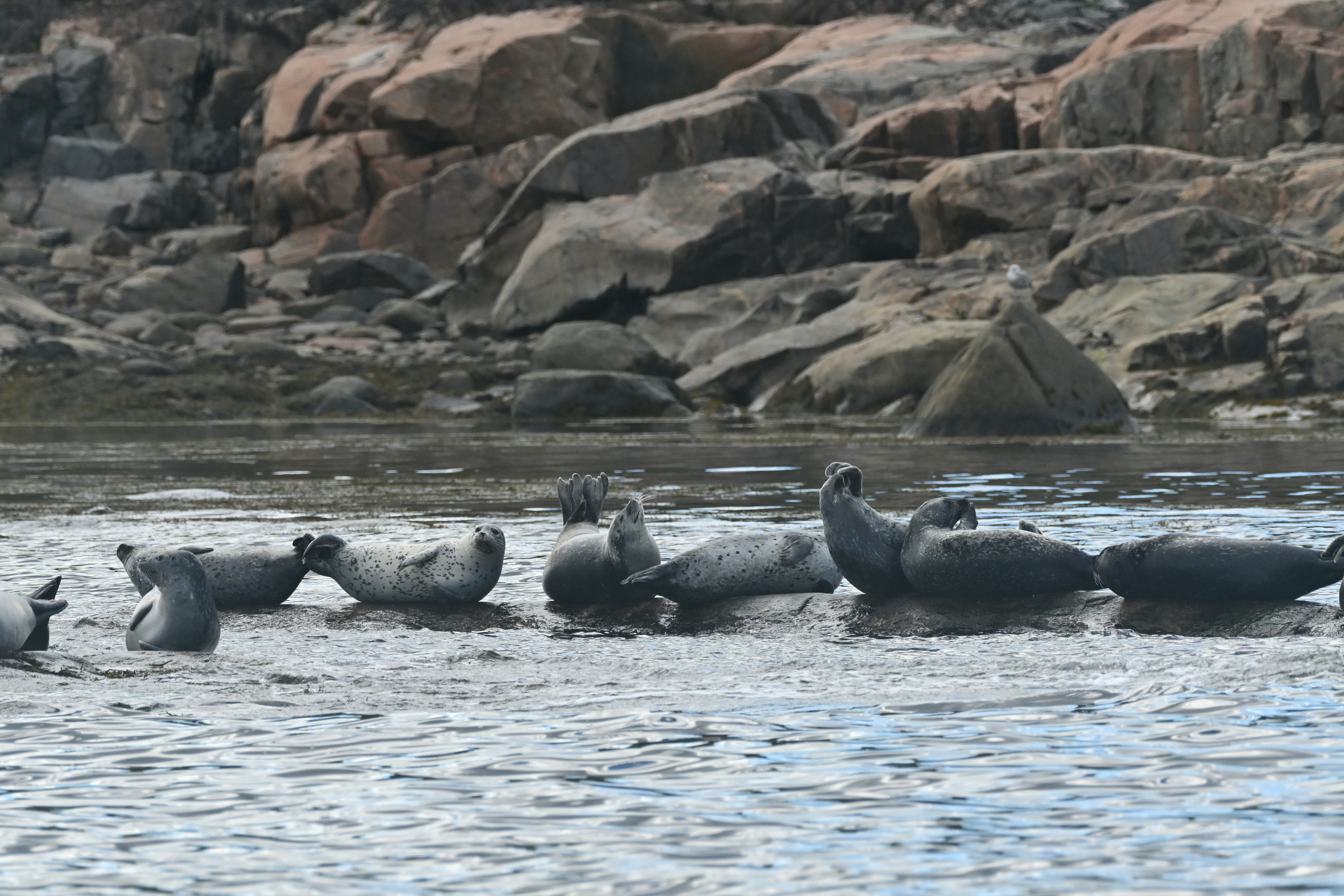
For the past three days, at least six humpbacks have been plying the waters between Franquelin and Baie-Comeau, explains a local resident. In between various aerial behaviours such as breaching and tail slapping, the whales have also been seen feeding, which is good news given that this is precisely the reason the species frequents the St. Lawrence! In Gallix, a harbour seal was spotted near the shoreline, while not far from there, numerous grey seals were observed in small groups of two or three individuals.
Where are the whales this week? Sightings map
These data were reported by our network of observers. They give an idea of the presence of whales and in no way represent the actual distribution of whales in the St. Lawrence. Just for fun!
Click on the whale or seal icons to discover the species, the number of individuals, additional information or photos of the sighting. To enlarge the map, click on the icon in the top right-hand corner. The map works well on Chrome and Firefox, but not so well on Safari.
To display the list of sightings, click on the icon in the top left-hand corner.
Thanks to all our collaborators!
Special thanks go out to all our observers who share their love for marine mammals with us.
Your encounters with cetaceans and pinnipeds are always a pleasure to read and discover. On the water or from shore, it is your eyes that give life to this column.
- Croisières Baie de Gaspé
- Marie-Andrée Charlebois
- Thalia Cohen Bacry
- Patrice Corbeil
- Hélène Guitton
- Diane Ostiguy
- Stéphane Pagès
- Sandrine Papias
- Renaud Pintiaux
- Pascal Pitre
- René Roy
- Guillaume Savard
- Andréanne Sylvain
- Marielle Vanasse
And to all the others!
Additionally, we would like to acknowledge the following teams that also share their sightings:
Sept-Îles Research and Education Centre (CERSI)
Group for Research and Education on Marine Mammals (GREMM)
Marine Mammal Observation Network (MMON)
Quebec Marine Mammal Emergency Response Network (QMMERN)
Mingan Island Cetacean Study (MICS)
Mériscope
Would you also like to share your observations? Have you seen any marine mammals in the St. Lawrence? Whether it’s a spout offshore or just a couple of seals, drop us a line and send your photos to [email protected]!

Odélie Brouillette
Odélie Brouillette joined the GREMM team as a writer and naturalist in 2022, and has been a project manager in scientific communication since 2023. With a background in biology, she loves learning and sharing with others what's most important to her. She has always been fascinated by marine environments and whales, and hopes to contribute to their protection through awareness-raising and popularization.
Recommended articles
Waters Stirred by Blowing Whales
The shores of the St. Lawrence are ablaze with orange and golden foliage. These multicoloured hues are reflected in the…
Côte-Nord: Prime Location for Autumn Whale Watching
Across Quebec, fall has truly arrived, as evidenced by the turning leaves and the arrival of certain marine mammal species…
Strong Winds, Big Whales
Despite the strong winds, fog, and plummeting air temperatures, marine animals of all kinds continue to roam the St. Lawrence.…