
Little Porpoises, Large Spouts

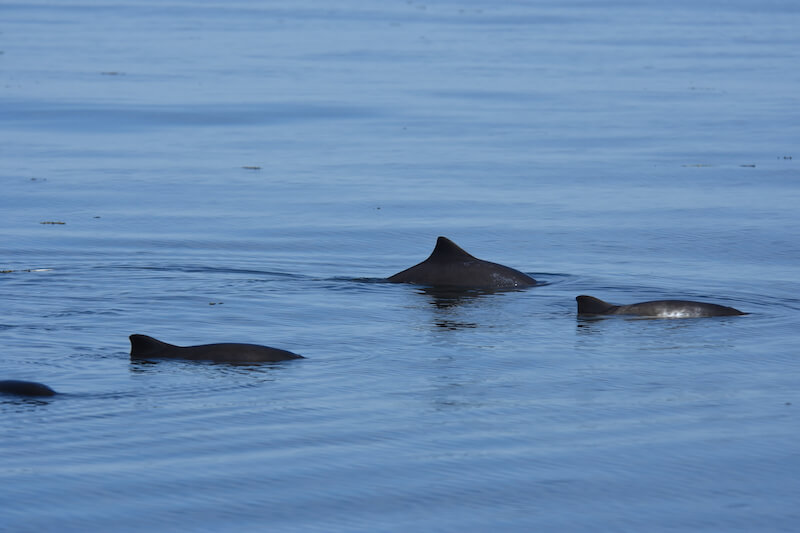
Swimming in proximity to both a blue whale and a fin whale, the first harbour porpoises of the season made a remarkable appearance. And while minke whales are taking their time returning, with just two individuals seen this past week, the beluga herds are growing by the day!
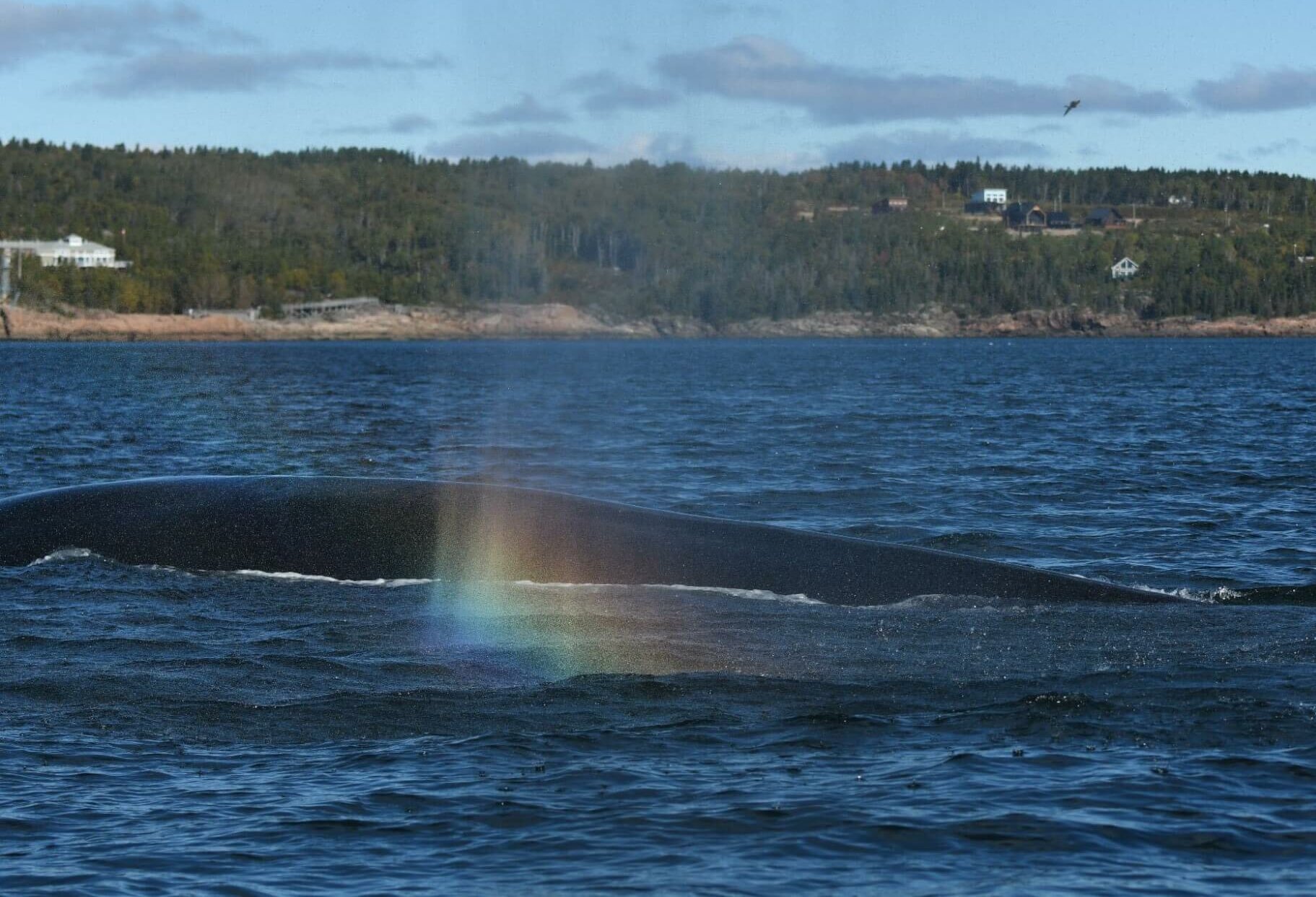
In Sept-Îles, more specifically in Sainte-Marguerite Bay, four harbour porpoises were observed. The winter habitat of this species is not well known, but individuals are believed to move farther offshore to avoid the ice. A common denizen of coastal waters across the Northern Hemisphere, this species travels in groups of 5 to 10 individuals. For this particular observation, the smallest cetaceans in the St. Lawrence were in the company of the largest ones, as a blue whale was blowing not far away, not to mention a fin whale. The latter even approached to within about 1 kilometre of the shore. The same day, a minke whale was also seen.
In Franquelin, the first whale of the season is spotted swimming near the shore. One fascinated local resident had the chance to see the animal’s back, followed by its dorsal fin, from his usual observation site: “I saw a minke whale pass very close to the shoreline!” This species is believed to winter in the Caribbean and then migrate northward along the US east coast en route to its summer feeding grounds, but without ever gathering in numbers.

Belugas by the dozen
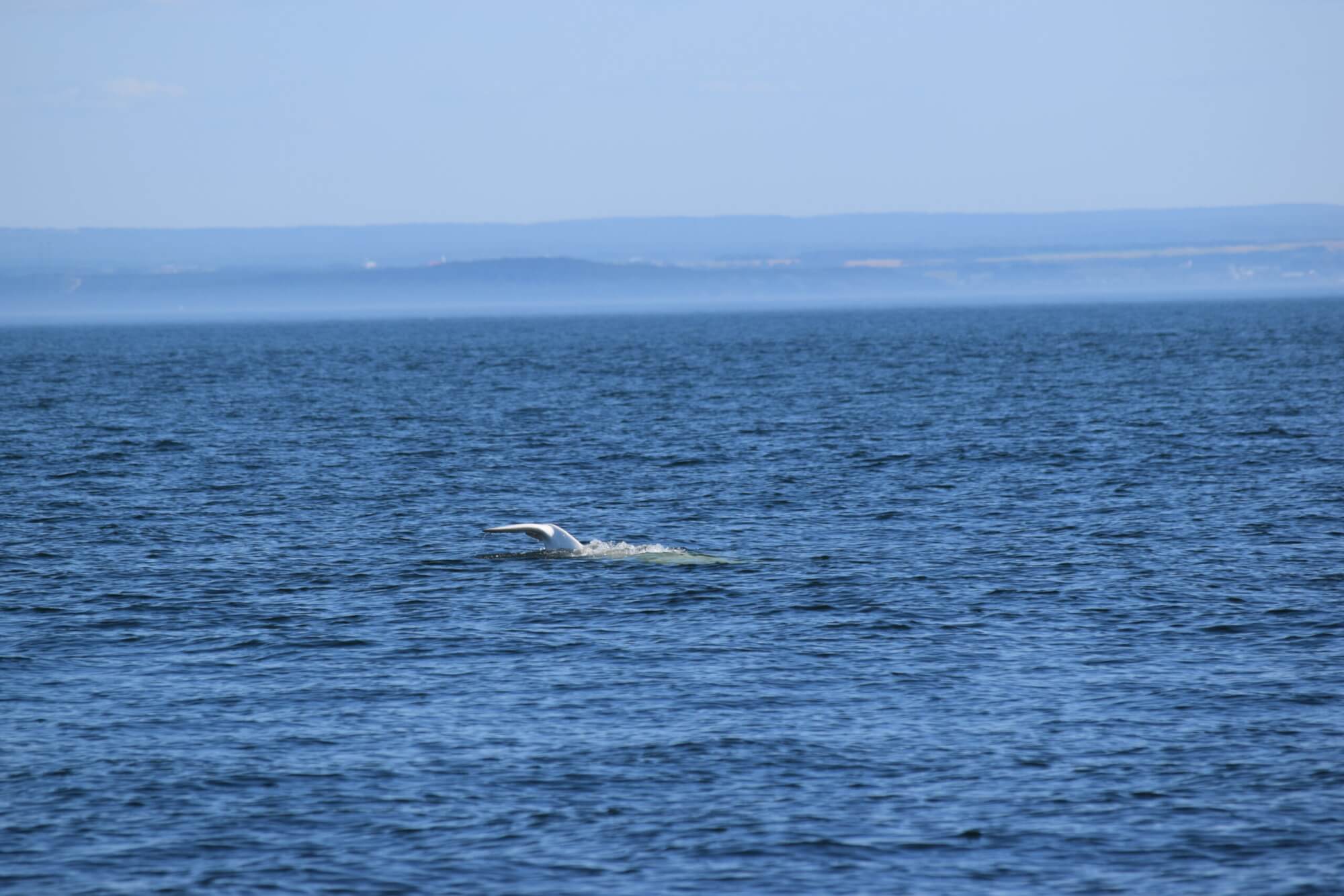
Over the weekend, a beluga was spotted off Cap-aux-Oies. On Wednesday, belugas were swimming down the Saguenay Fjord. Many folks hurried to see the famous white backs from the shores of Tadoussac. “Belugas coming down the Saguenay,” says one regular, who sounded the alert to his coworkers. “The conditions are ideal with no wind; there are [at least] four, but certainly more.” The next day, Thursday, a group of 15 bulls paraded across the lens of a wildlife photographer at Cap de Bon-Désir in Les Bergeronnes.
Pinnipeds… singletons or by the hundreds!
Lone individuals poke their heads out of the water here and there. In both Gallix and in Tadoussac, harbour seals were observed from shore. On the other side of the St. Lawrence, a hundred or so grey seals frolic in Gaspé Bay, more precisely off the beach in Penouille. This species is often observed in shallow waters near the coast.
Weather-wise, every day on the St. Lawrence is a little different… There’s been sun, fog, rain and even a little hail in some places. One day there is calm as far as the eye can see, while the next day one observes the return of a new species, a 100-odd pinnipeds or pods of belugas! Do the exciting observations of the last few weeks in the region foreshadow a summer chock full of cetaceans? We sure hope so!

Andréanne Forest
Andréanne Forest is the editor-in-chief of Whales Online since may 2022. After studying in environment and biology, she turned to science communication with the goal of making science both accessible and fun. Andréanne wishes to highlight the process of acquiring knowledge while transmitting the desire to learn.
Recommended articles
Wrapping Up the Season with Some Thanksgiving Weekend Action!
This year’s Thanksgiving weekend was alive with the activity of whales, seals, and birds! Marine mammals are still lingering in…
Between Bronze and Anthracite
Yellow-orange hues reaching toward the sky blend with the smooth, dark swirls emerging from the waves. Even if the strong…
Waters Stirred by Blowing Whales
The shores of the St. Lawrence are ablaze with orange and golden foliage. These multicoloured hues are reflected in the…