
A Whirlwind of Observations Amidst the Snowflakes

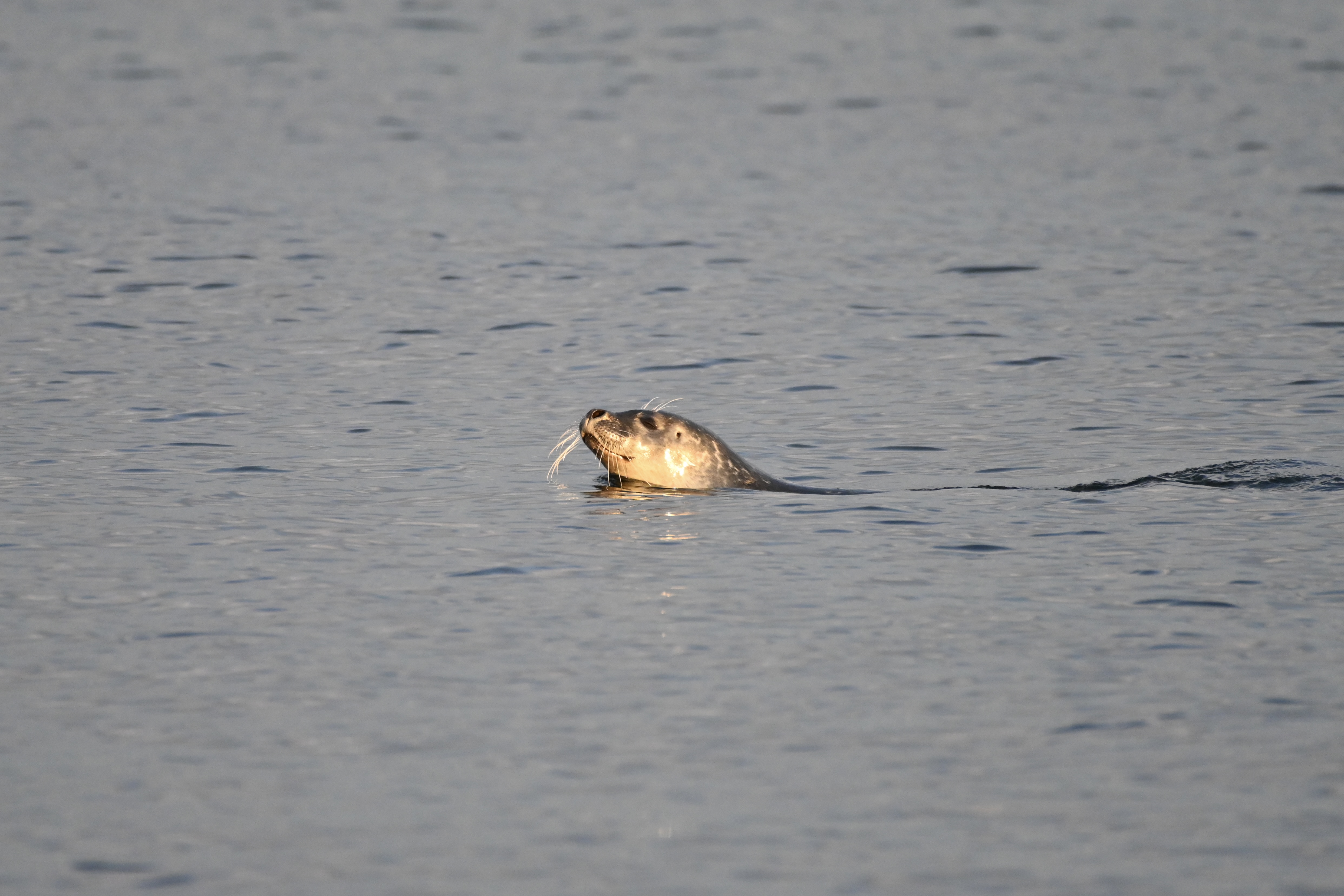
Between snowfalls, a diverse array of cetaceans has making appearances in these first days of December: harbour porpoises, belugas, minke whales, fin whales, and even blue whales! An iconic bird, not to mention a few seals, adds to the beauty of the surroundings.
Trio of small marine mammals in the Gaspé
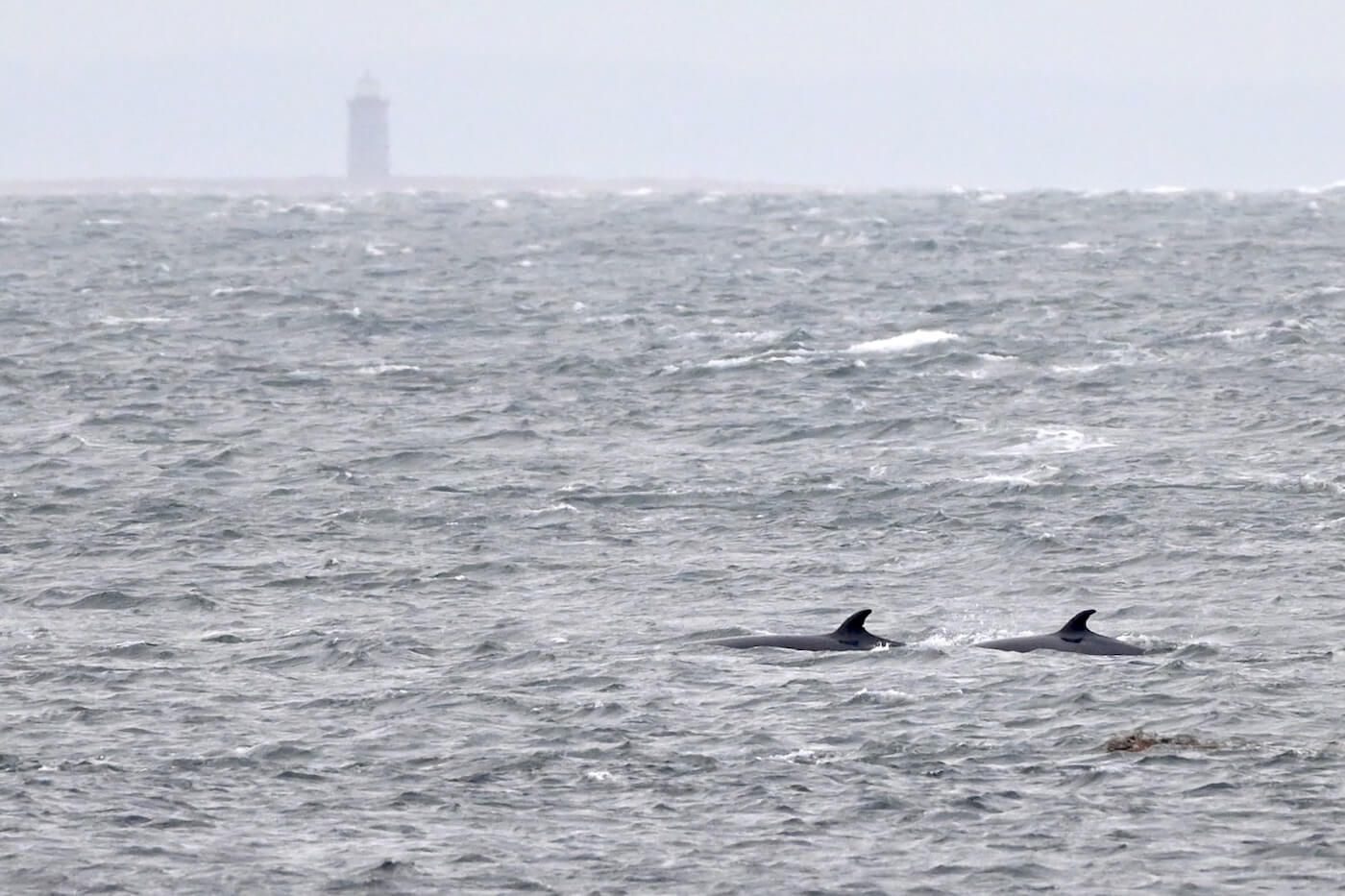
“Yesterday, Tuesday, November 25, I observed two minke whales and a handful of harbour porpoises,” reports one observer following her hike in Forillon National Park. Although these two species are similar in colour, they can be distinguished by the size and shape of their dorsal fins. That of the minke whale is more sickle-shaped, while the harbour porpoise’s dorsal is smaller and triangular.
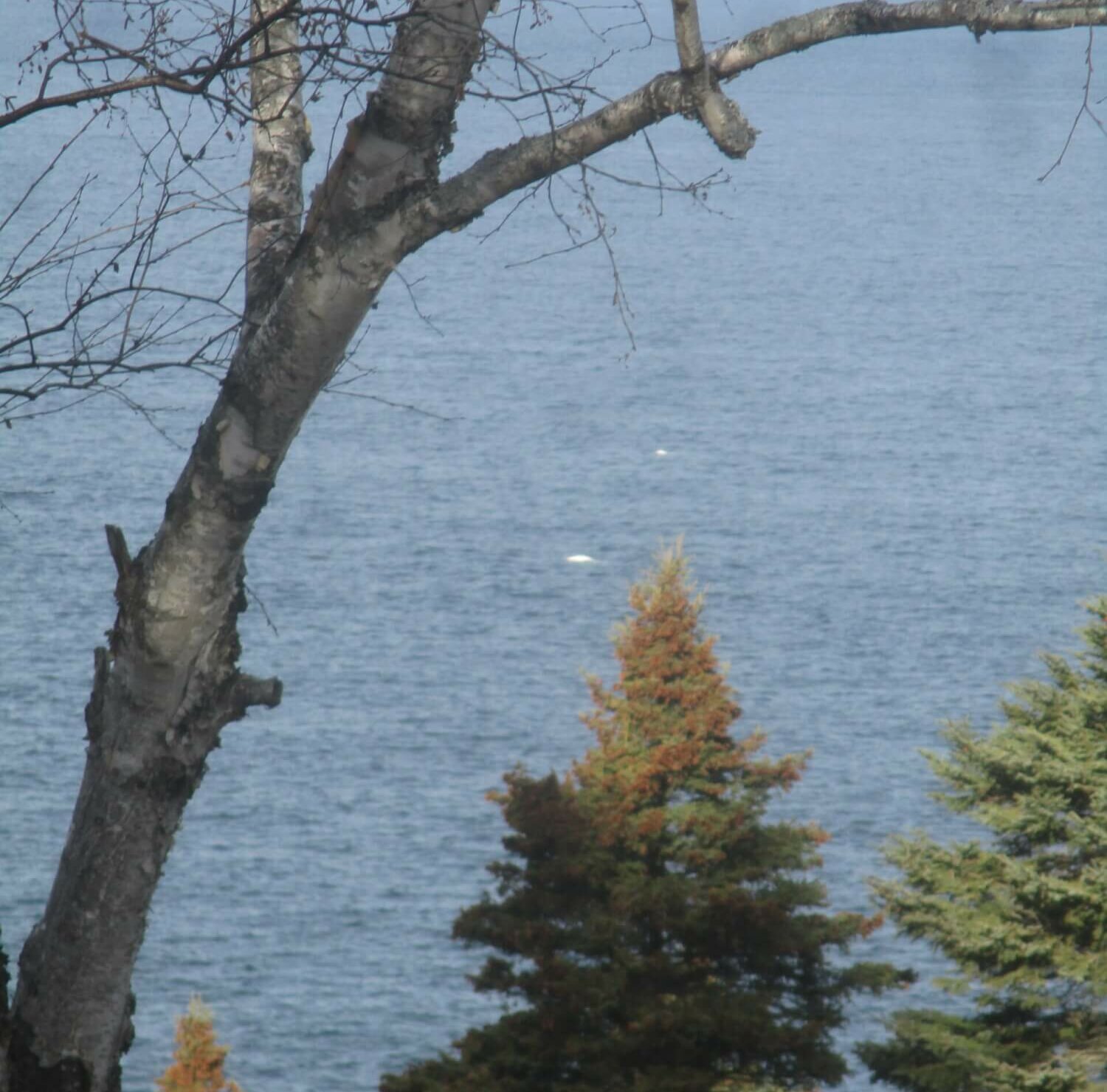
Belugas have been passing through the Haute-Gaspésie region in recent days, reports a resident from Sainte-Marthe. “They’ve been here since last May […], which is the first time in 20 years that we’ve observed them so long and so often.” Belugas generally frequent the estuary in summer and the Gulf of St. Lawrence in winter. Their sustained presence off the Gaspé coast seems to have been (article in French). Further sightings of the species in the region might reveal a great deal about the animals’ habits! Belugas have also been observed near Les Escoumins, as well as near Les Bergeronnes, Tadoussac, and Saint-Irénée. “That’s part of the joy!” exclaims one woman from Charlevoix.
Walking is good for your health!
It’s during strolls along the coast that the most exciting—and most unexpected—observations sometimes occur! While hiking with friends along the shores of the Haute Côte-Nord region, one naturalist had the privilege of stumbling upon a large white bird. “As we approached our first observation site, I saw a large bird take flight. I quickly shouted out, ‘Snowy owl!’” Quebec’s national bird, the snowy owl was classified “Threatened” earlier this year by COSEWIC, with human activity being cited as the primary cause of its decline. To avoid disturbing the animal, we keep our distance!
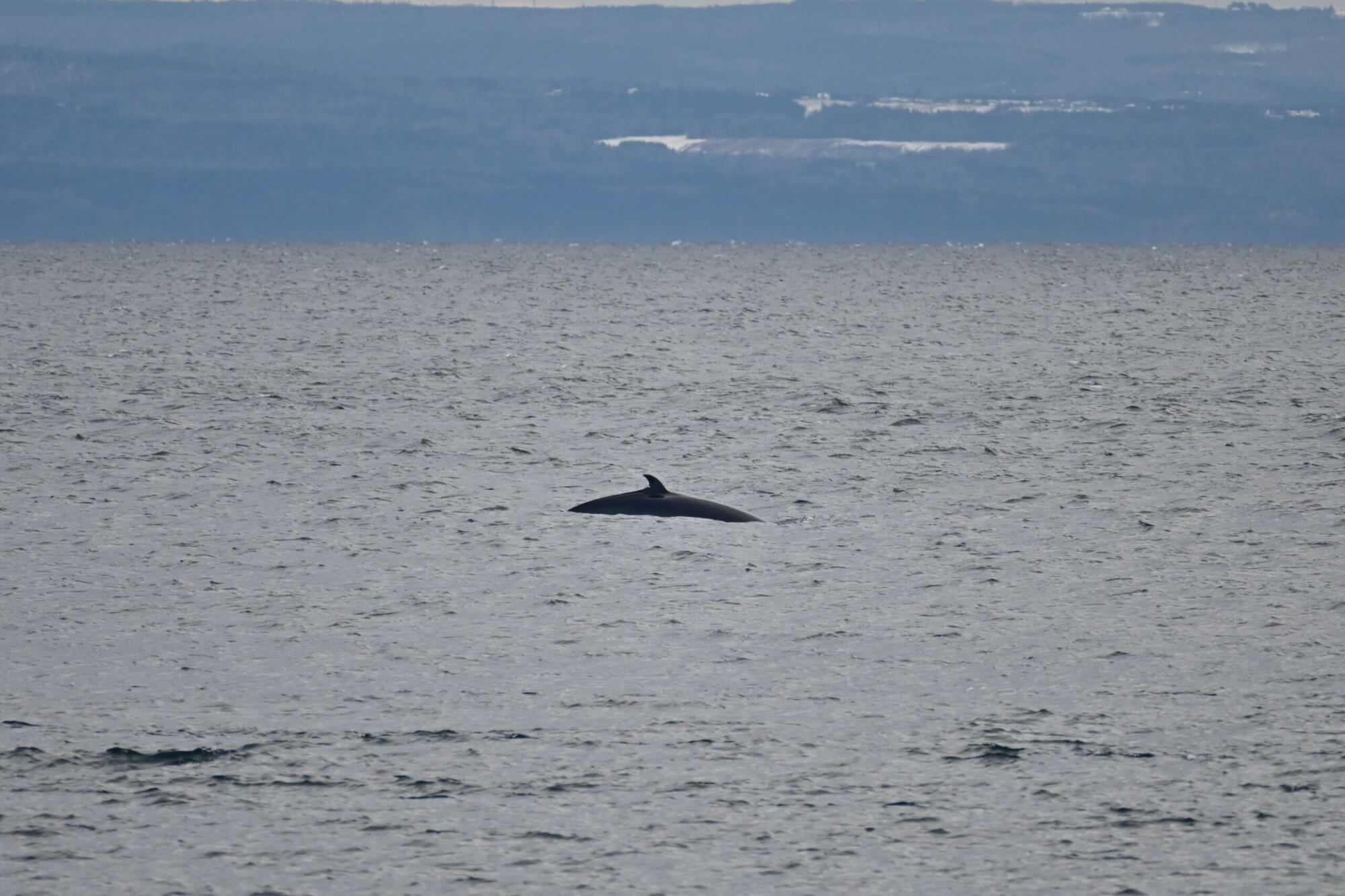
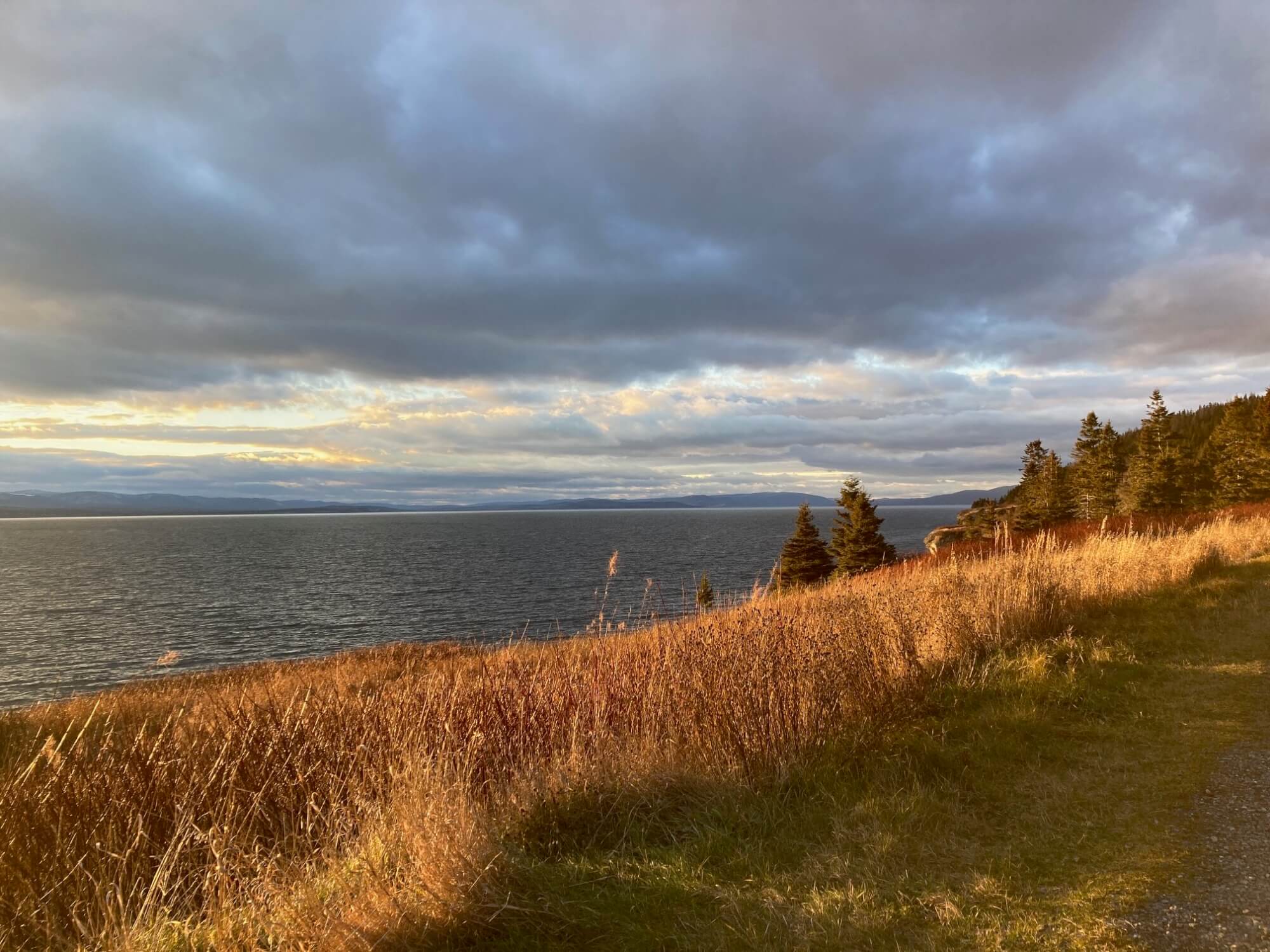

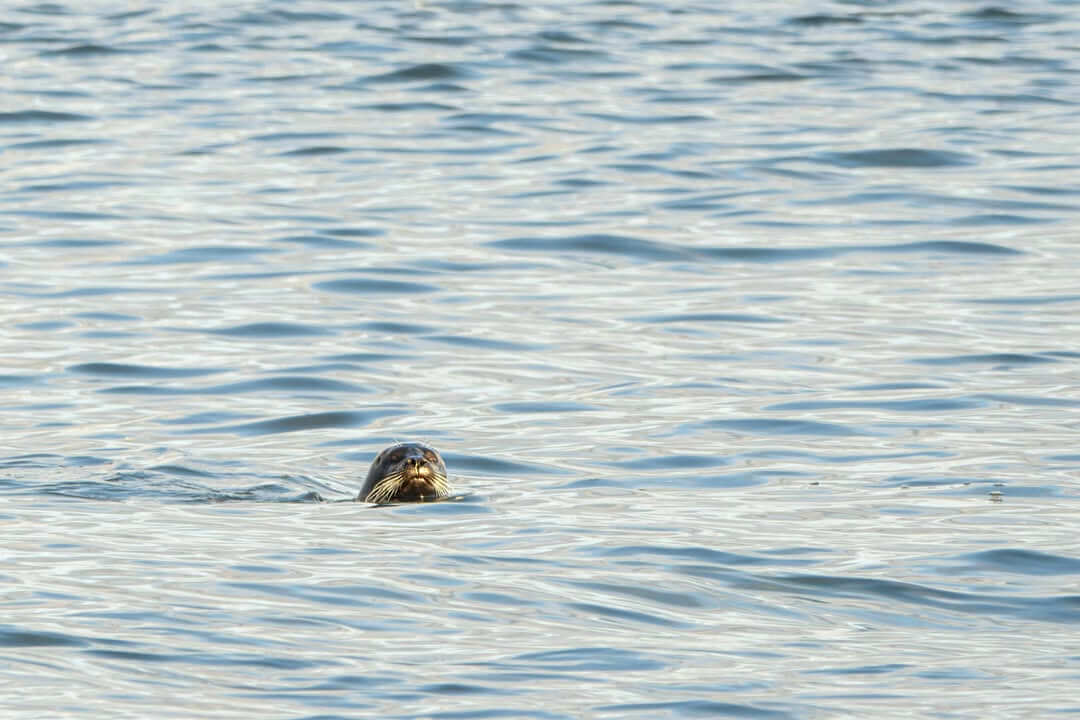
The group was also surprised to see a minke whale and a harbour seal during their walk. “Any not just any minke whale: It was Ba004 a.k.a. Fidèle. The first minke whale I saw in 2025, on April 5, was the same individual as the last one I spotted, on November 23,” the naturalist points out. This minke whale is part of the catalogue maintained by Mériscope, a research station based in Portneuf-sur-Mer.
Spouts on the horizon
A little farther east of Tadoussac, a wildlife photographer and naturalist reports a pair of minke whales, as well as the powerful blows of two fin whales and a group of harp seals. “Seeing large spouts in late November, whether up close or from afar, is not particularly unusual, but it is awesome!” Powerful blows were also spotted between Franquelin and Baie-Comeau. The first ones were identified as three blue whales, but those sighted a few days later were attributed to a different species: “I think they were fin whales this time, because the intervals between breaths were really too short to be blue whales,” suggests the seasoned observer.
One quiet Wednesday afternoon at GREMM’s offices in Tadoussac, the doorbell rings, distracting us from our work. A delivery? A lost tourist? Actually, it was a local villager who came to tell us that he had just spotted two minke whales close to the docks! We greatly appreciate his efforts, especially considering the howling winds outside. After all, it is thanks to dedicated observers that we have enough material to write this column week after week!
Thanks to all our collaborators!
Special thanks go out to all our observers who share their love for marine mammals with us. Your encounters with cetaceans and pinnipeds are always a pleasure to read and discover.
On the water or from shore, it is your eyes that give life to this column.
- Maxime Esther Bouchard
- Marie-Andrée Charlebois
- Hélène Guitton
- Jade-Audrey Lavergne
- Diane Ostiguy
- Pascal Pitre
- Renaud Pintiaux
- Guillaume Savard
- Marielle Vanasse
And all the others!
Additionally, we would like to acknowledge the following teams that also share their sightings:
Centre d’éducation et de recherche de Sept-Îles (CERSI)
Station de recherche des Îles Mingan (MICS)
Réseau d’observation des mammifères marins (ROMM)
Réseau québécois d’urgence pour les mammifères marins (RQUMM)
Groupe de recherche et d’éducation sur les mammifères marins (GREMM)
Mériscope
Would you also like to share your observations?
Have you seen any marine mammals in the St. Lawrence? Whether it’s a spout offshore or just a couple of seals, drop us a line and send your photos to [email protected]!

Odélie Brouillette
Odélie Brouillette joined the GREMM team as a writer and naturalist in 2022, and has been a project manager in science popularization since 2023. With a background in biology, she loves learning and sharing with others what's most important to her. She has always been fascinated by marine environments and whales, and hopes to contribute to their protection through awareness-raising and popularization.
Recommended articles
A Slew of Whales and a Legion of Seals
A minke whale was spotted in the estuary, blowing fin whales were reported in Gaspésie and near Godbout, while belugas…
The Calm Before the Whales
Despite the snow, the wind, and the bitter cold of the past few days, several belugas were spotted off the…
Marine Mammals, from the St. Lawrence to the Caribbean
Seals on the ice floes in the estuary, a blowing blue whale near Baie-Comeau, and a humpback identified in the…