
Waters Stirred by Blowing Whales

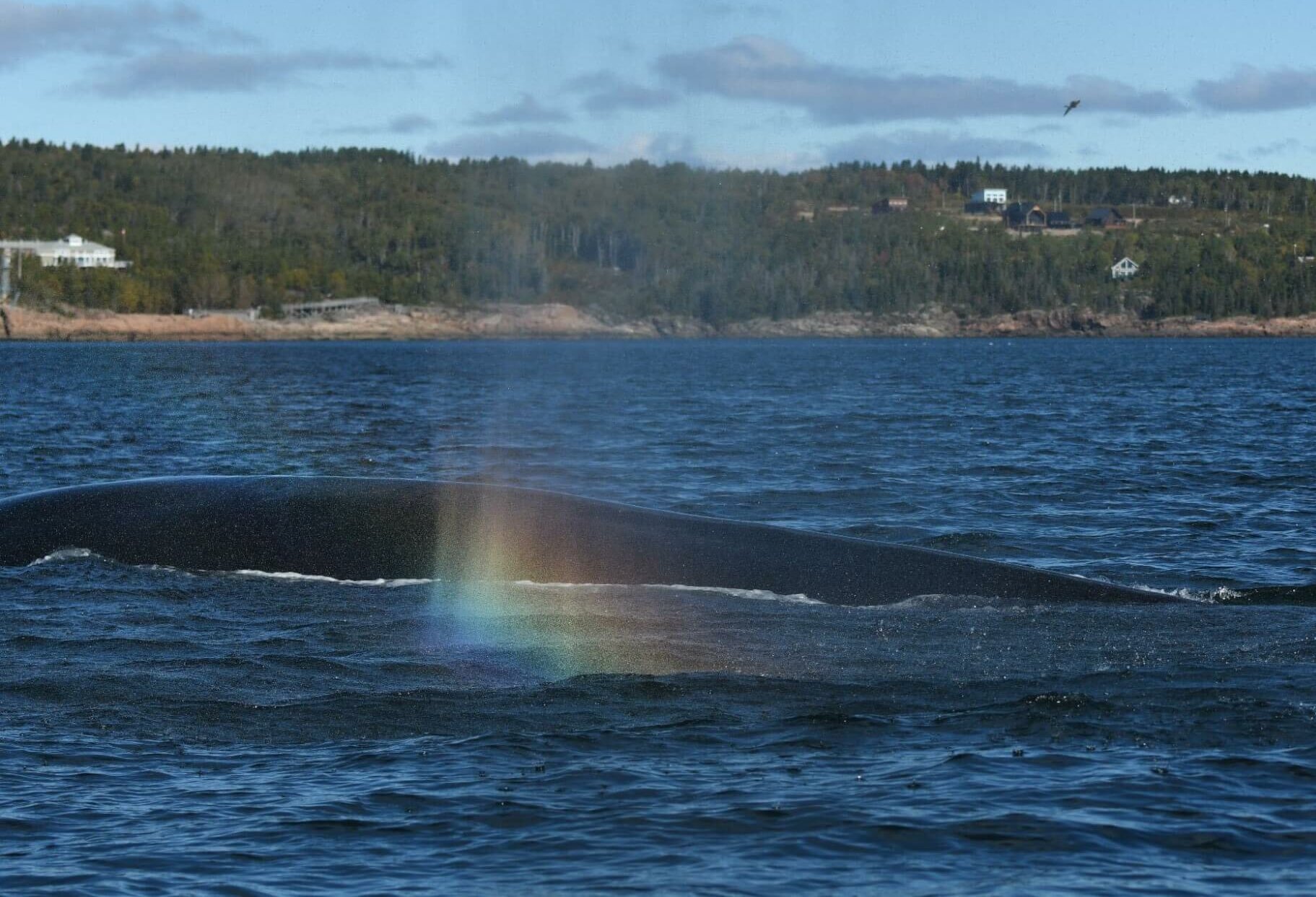
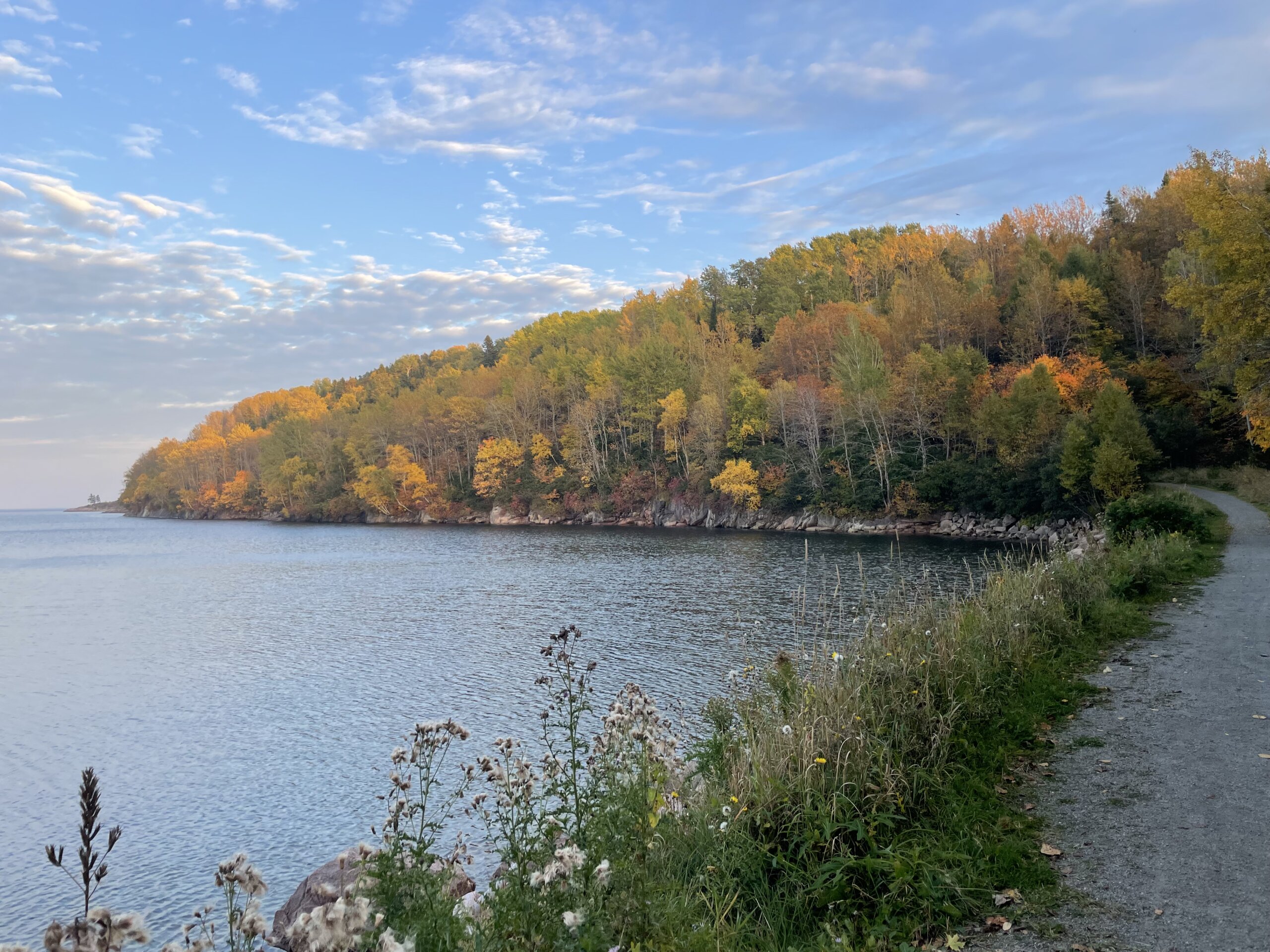
The shores of the St. Lawrence are ablaze with orange and golden foliage. These multicoloured hues are reflected in the sometimes-calm, sometimes-choppy waters of our region. Autumn is quietly setting in, and with it, stiff winds and the start of the migration of multiple species of whales and birds alike! Enigmatic visitors slip through the Jacques-Cartier and Belle-Isle straits, while large pods of belugas have been roaming the estuary.
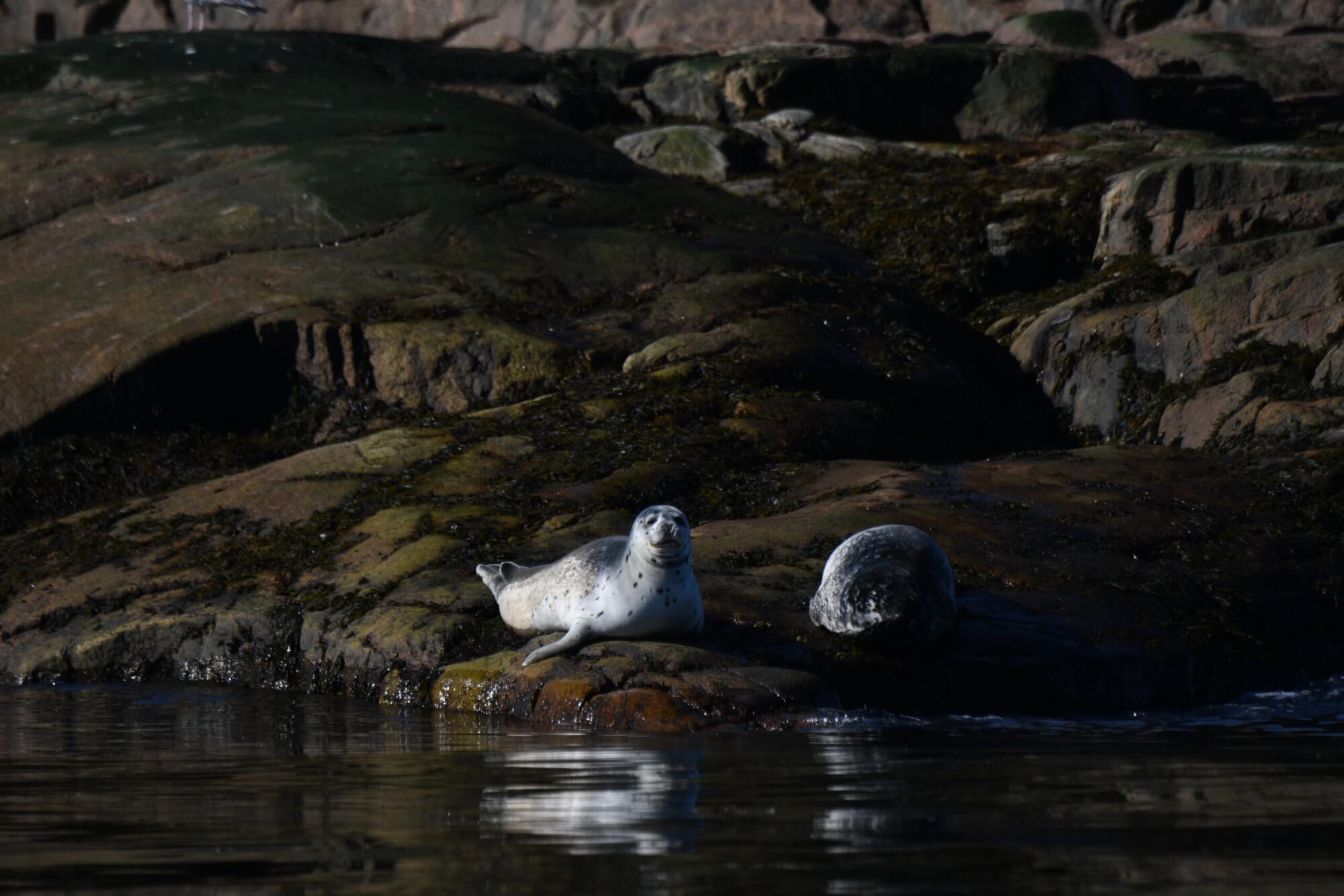
The Gaspé forests are beginning to metamorphose... and so are the seals!
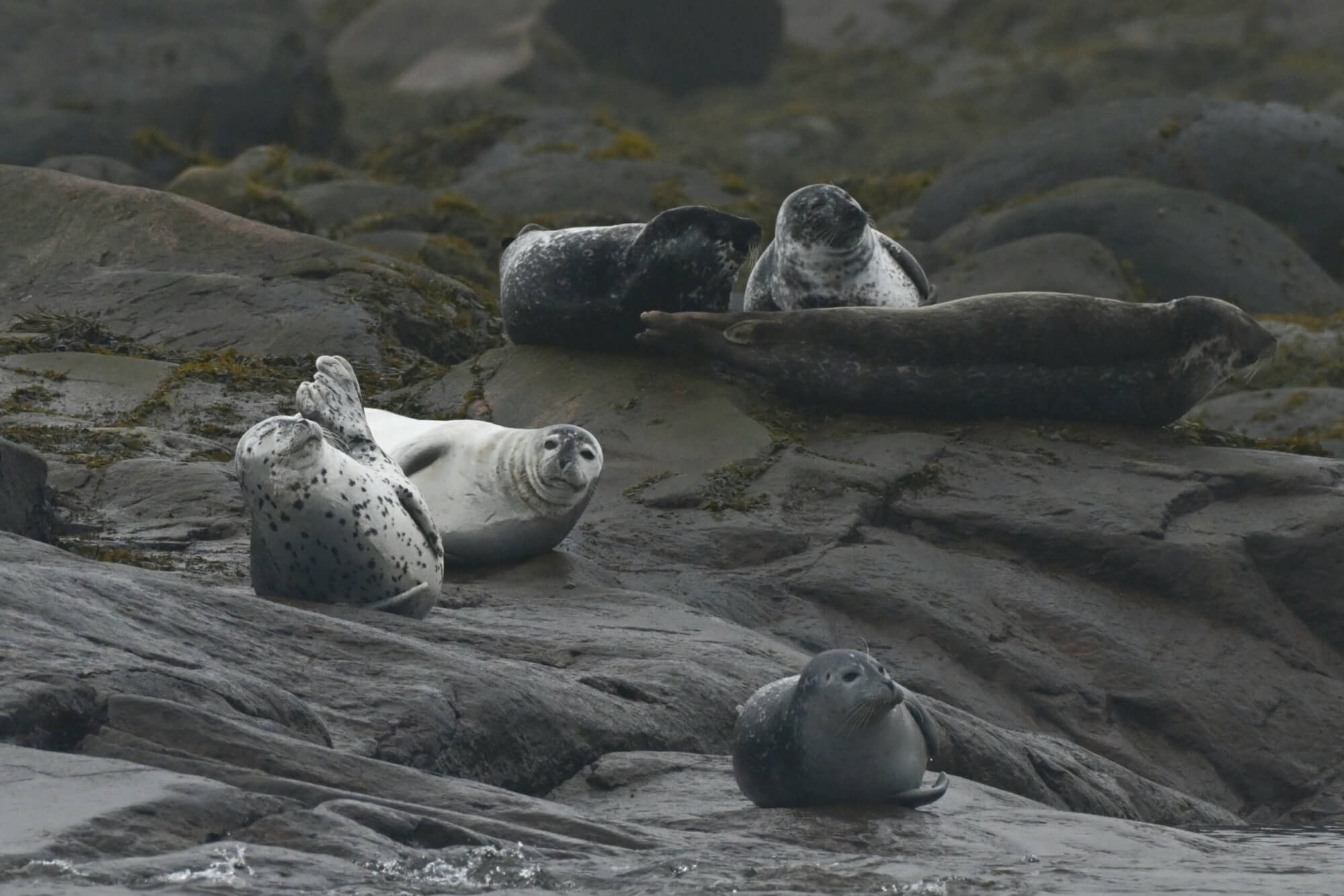
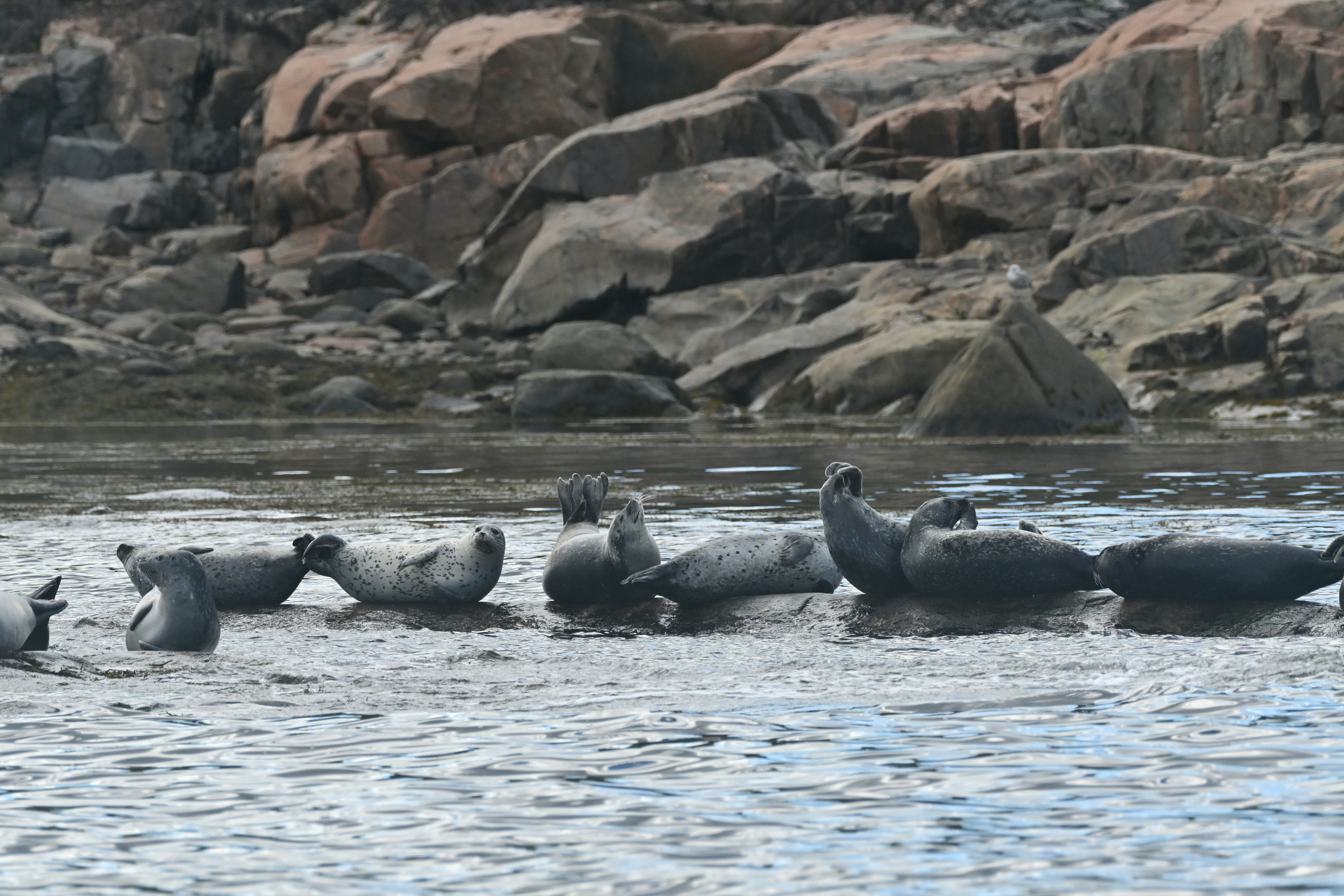
For the past few weeks, the waters off the Gaspé Peninsula have been rather calm. Continuing their daily routines in Gaspé Bay, grey and harbour seals can be seen stretching their necks out of the water or waddling onto the rocks, depending on the tide. This time of the year, harbour seals spend more time out of the water to help their coats grow back faster following their moult. This diminutive pinniped will spend the winter in our polar waters and needs a coat suited to its environment. Meanwhile, the grey seal pupping season is underway, which peaks in January and can extend into March.
Farther south, in the Matanie area, a MICS collaborator reports sightings of two fin whales, the blue whale B194, and the humpback whale H994, not to mention numerous Atlantic white-sided dolphins—a cetacean that signals the change of seasons in the Estuary.
Slew of whales in Manicouagan and Minganie
The MICS research team had a busy week in Sept-Îles, with 6 blue whales, 2 fin whales, 11 humpback whales, three North Atlantic right whales, and even a sperm whale! According to the , an online visualization map maintained by the Marine Mammal Observation Network (MMON), a sperm whale was also spotted farther north in the Strait of Belle Isle this past week—could it be the same individual?
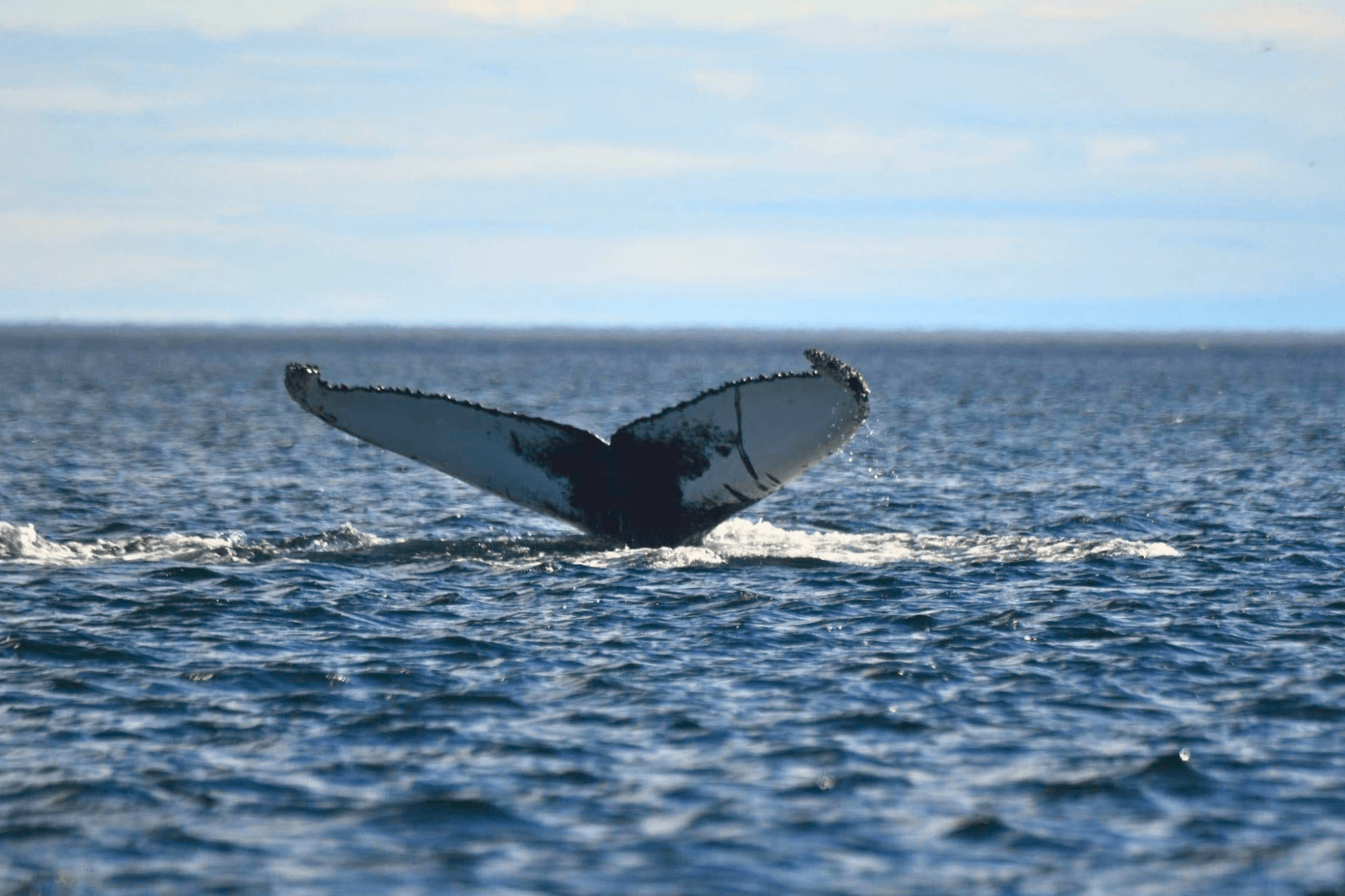
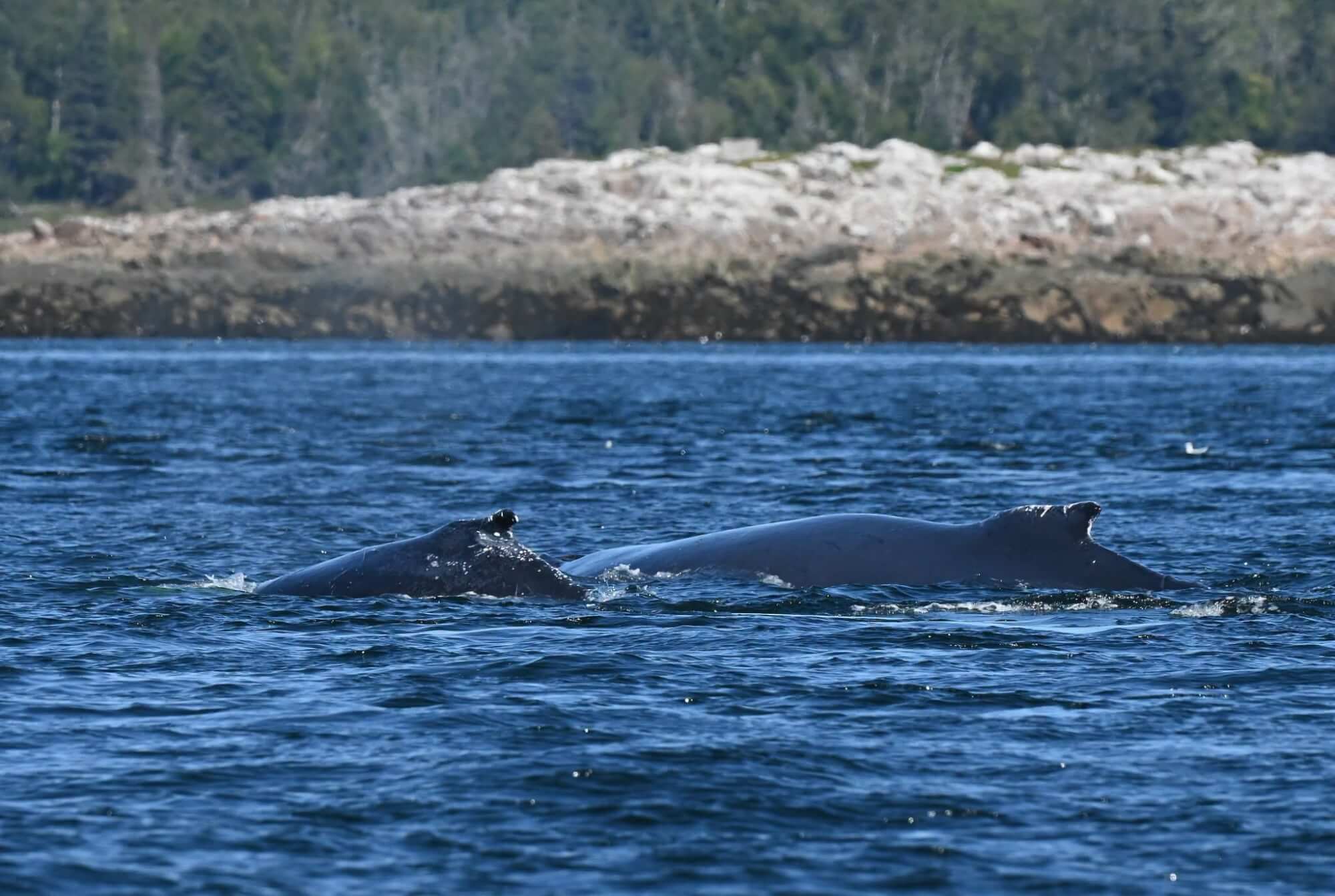
A harbour seal that frequents the area keeps popping up in Gallix. Farther southwest, an observer reports harbour porpoises and minke whales, as well as three humpbacks plying the waters between Baie-Comeau and Franquelin. He was even able to identify H590 (“Piranha”). The daughter of the humpback Tingley, she was born in 2003, making her 23 years old! Piranha had previously been seen with a calf of her own in early September near Les Escoumins.
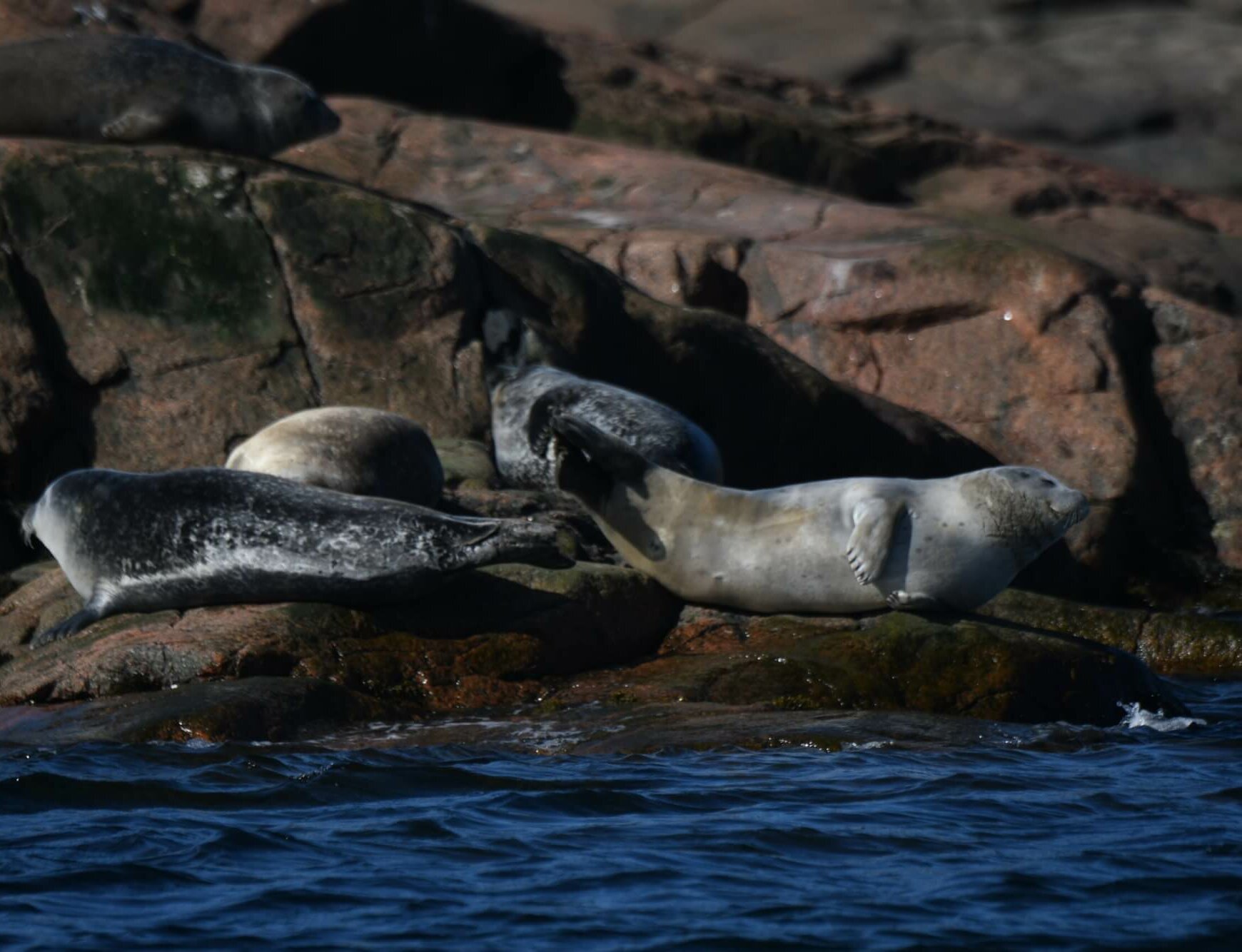
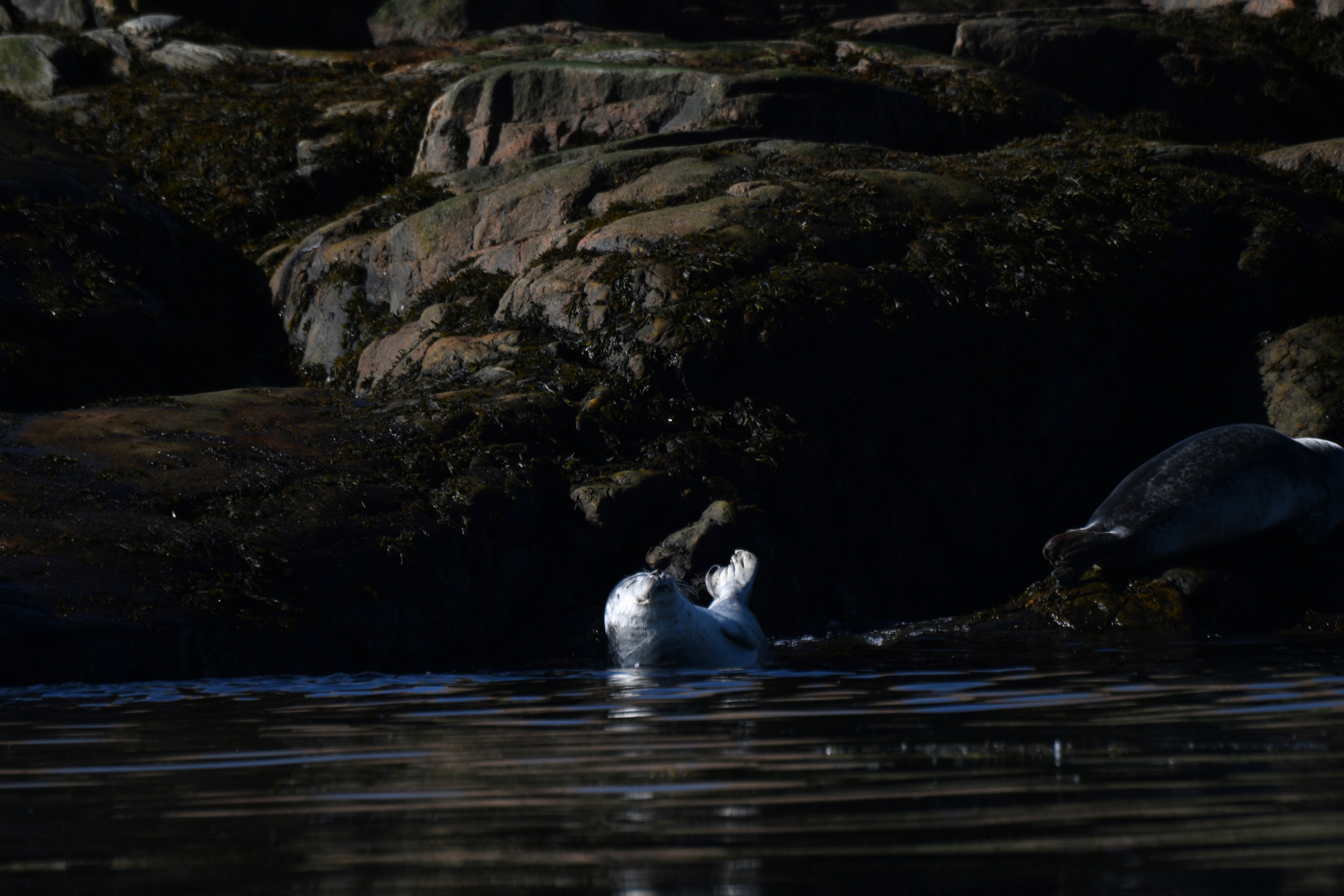
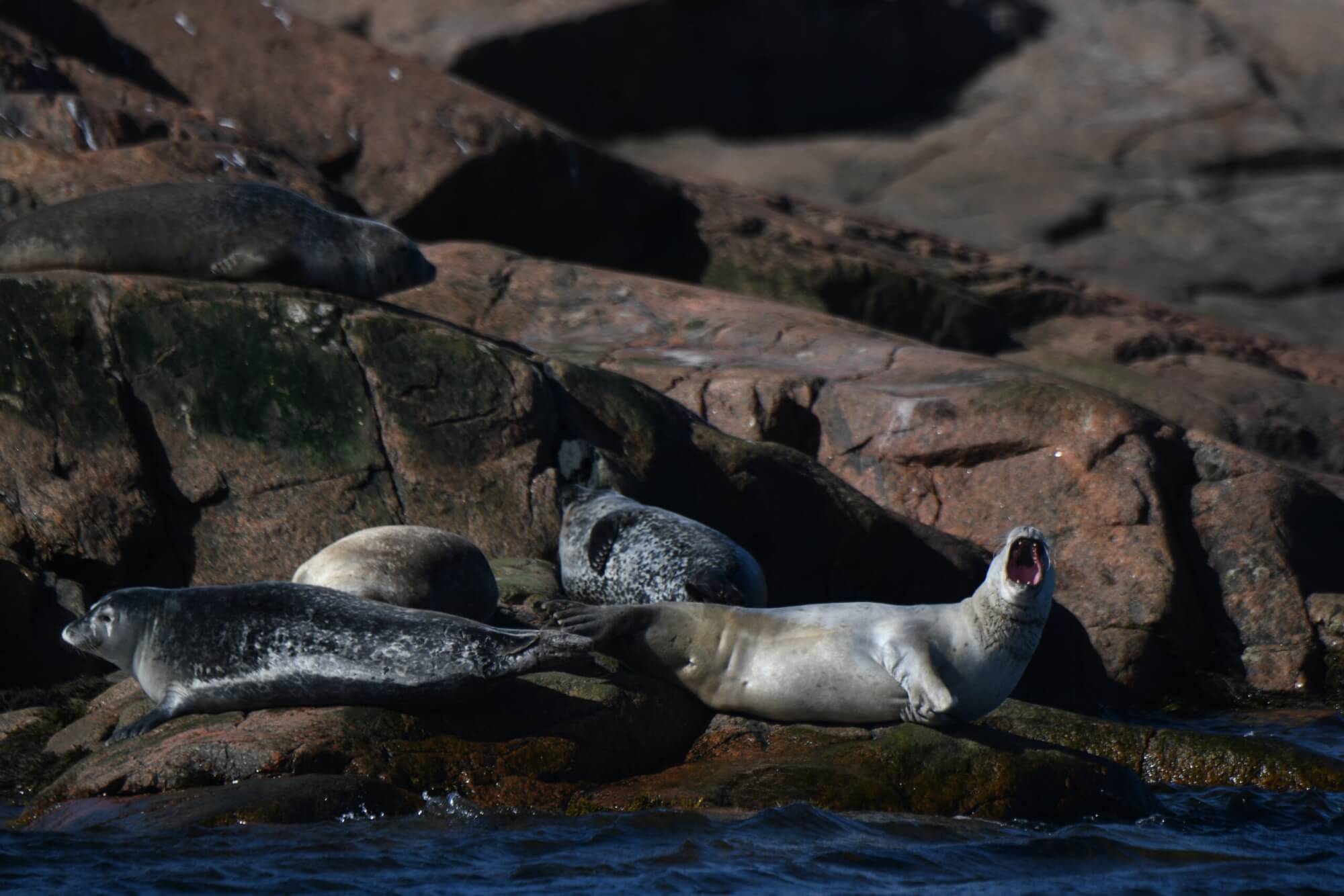
“In some parts of Manicouagan, howling seals can be heard right from shore!” shares one dedicated observer, describing how two pinniped species were heard: first, an “ensemble” of grey seals in Ragueneau, followed by a “chorus” of harbour seals on their rocks in Baie-Comeau!
Marine mammal medley in Minganie
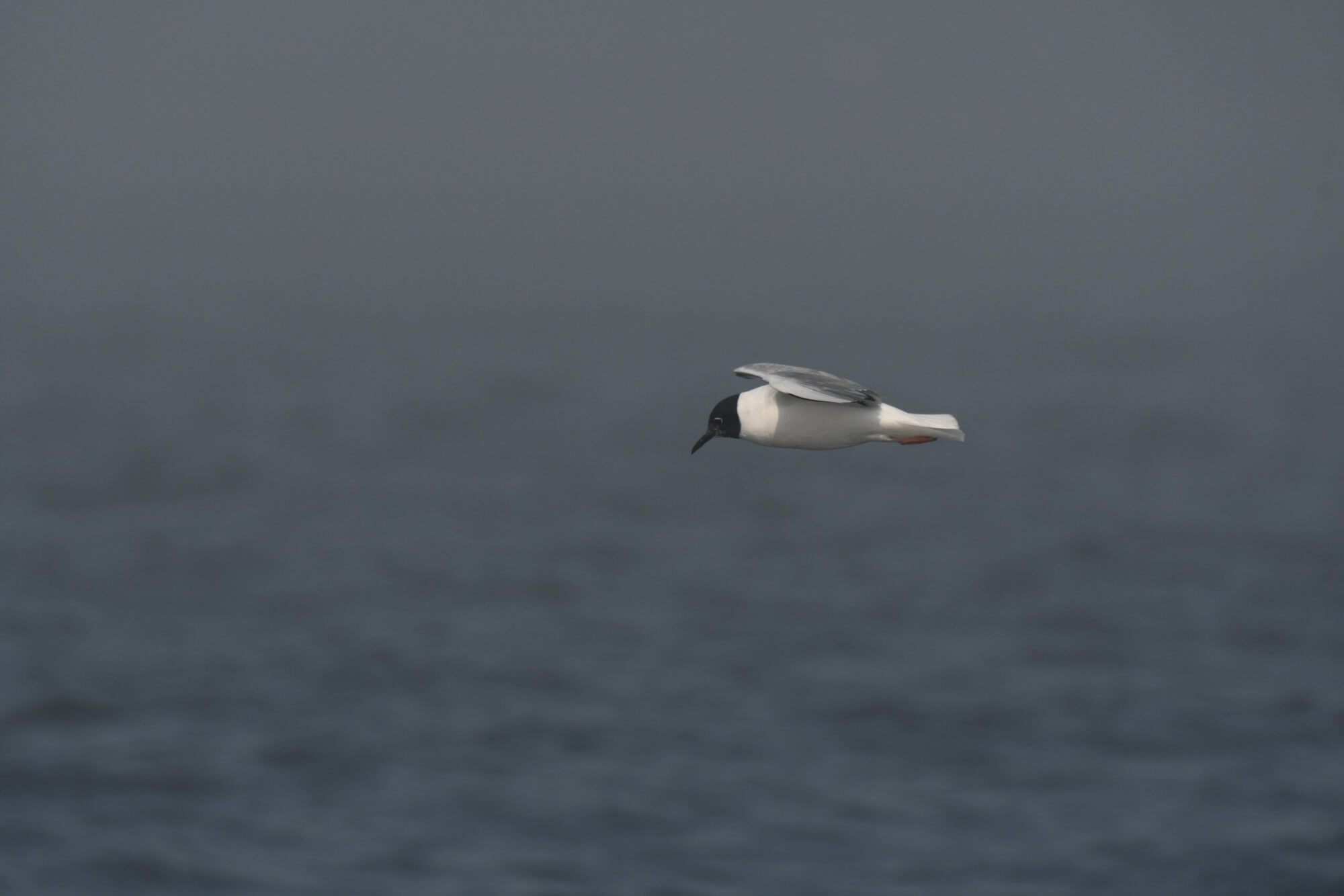
In the Mingan sector, MICS observed six North Atlantic right whales, along with fin whales, a humpback whale, and a basking shark! One hot afternoon, a minke whale and a few harbour porpoises wove their way between the rocky islands of the Mingan Archipelago while under the watchful gaze of basking harbour seals.
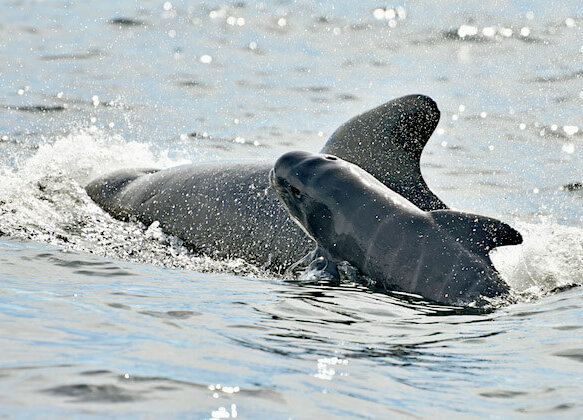
According to , three long-finned pilot whales were also spotted off the coast of Anticosti Island and the Mingan Archipelago. A few interesting factoids about this species:
-
- Globicephala melas can reach 6 metres in length, with colours ranging from black to dark grey.
- Pilot whales are polygynous—a rare social structure among mammals in which the male remains within his group of females, but leaves the group to mate.
- The species shows pronounced sexual dimorphism whereby males have a larger melon and dorsal fin than females, in addition to being longer.
- Nursing in young pilot whales can last up to three years!
- The species feeds primarily on cephalopods, especially squid.
Marine Park dressed in its autumn colours
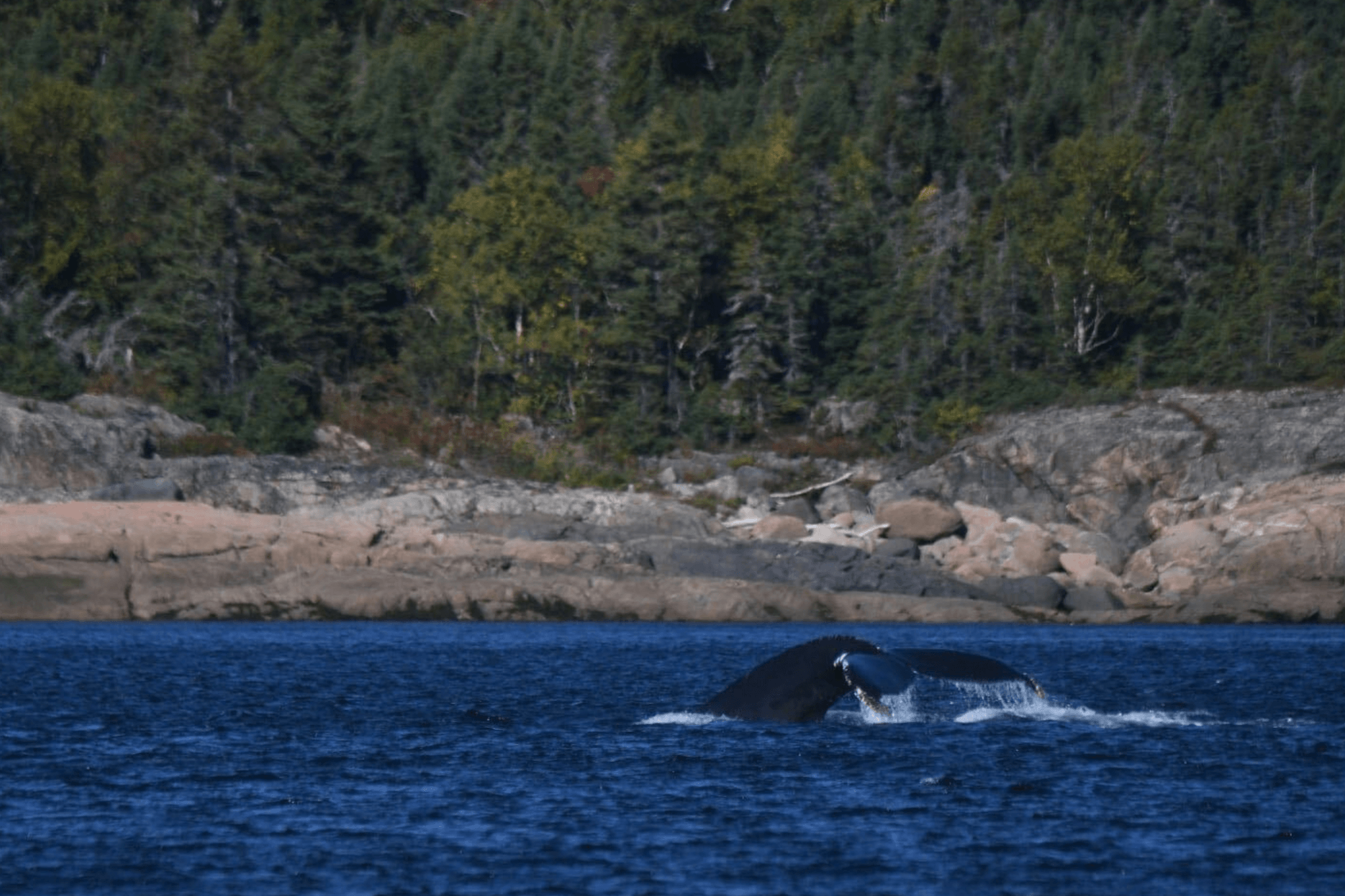
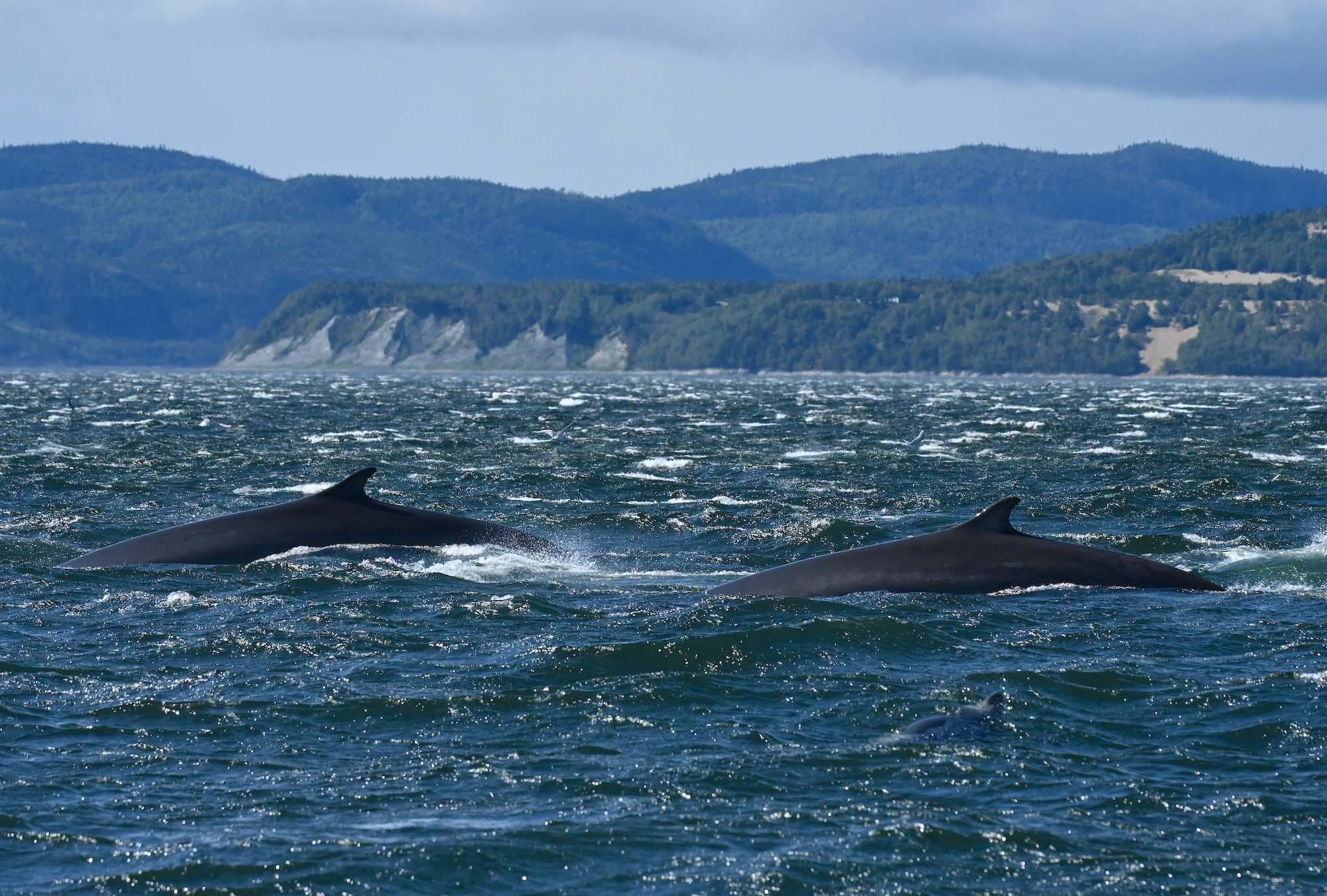
The area between Les Escoumins and Tadoussac is still hosting a few humpbacks and nearly a dozen fin whales—a great opportunity for learning to differentiate chevron patterns! With this influx of Balaenoptera physalus, many observers are reminded of past years in the Marine Park, when twenty to forty individuals could be observed. Over 35 fin whales have passed through the Marine Park this season, and we’re still counting! This strong, sustained presence of cetaceans suggests that food levels have been high.
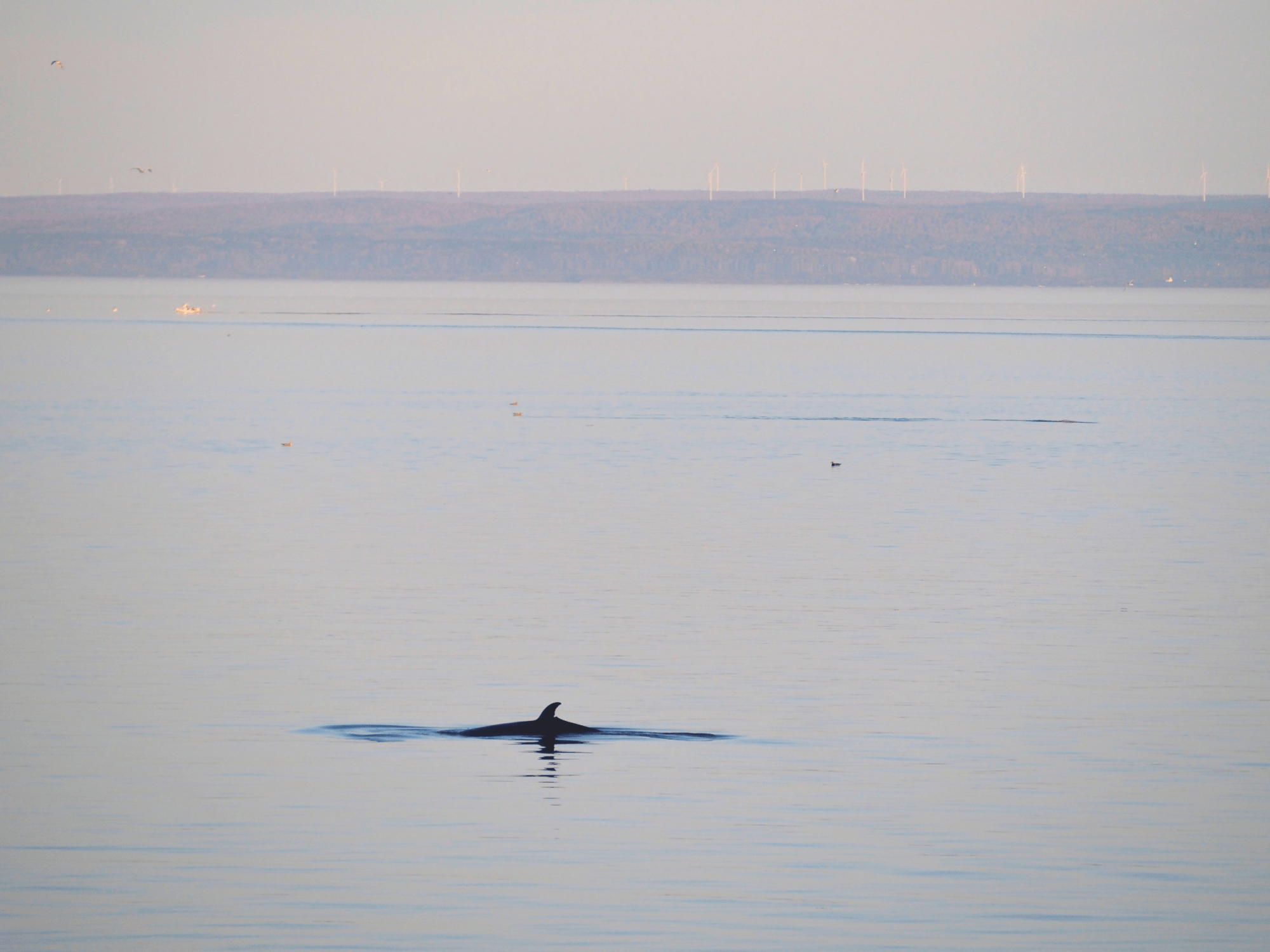
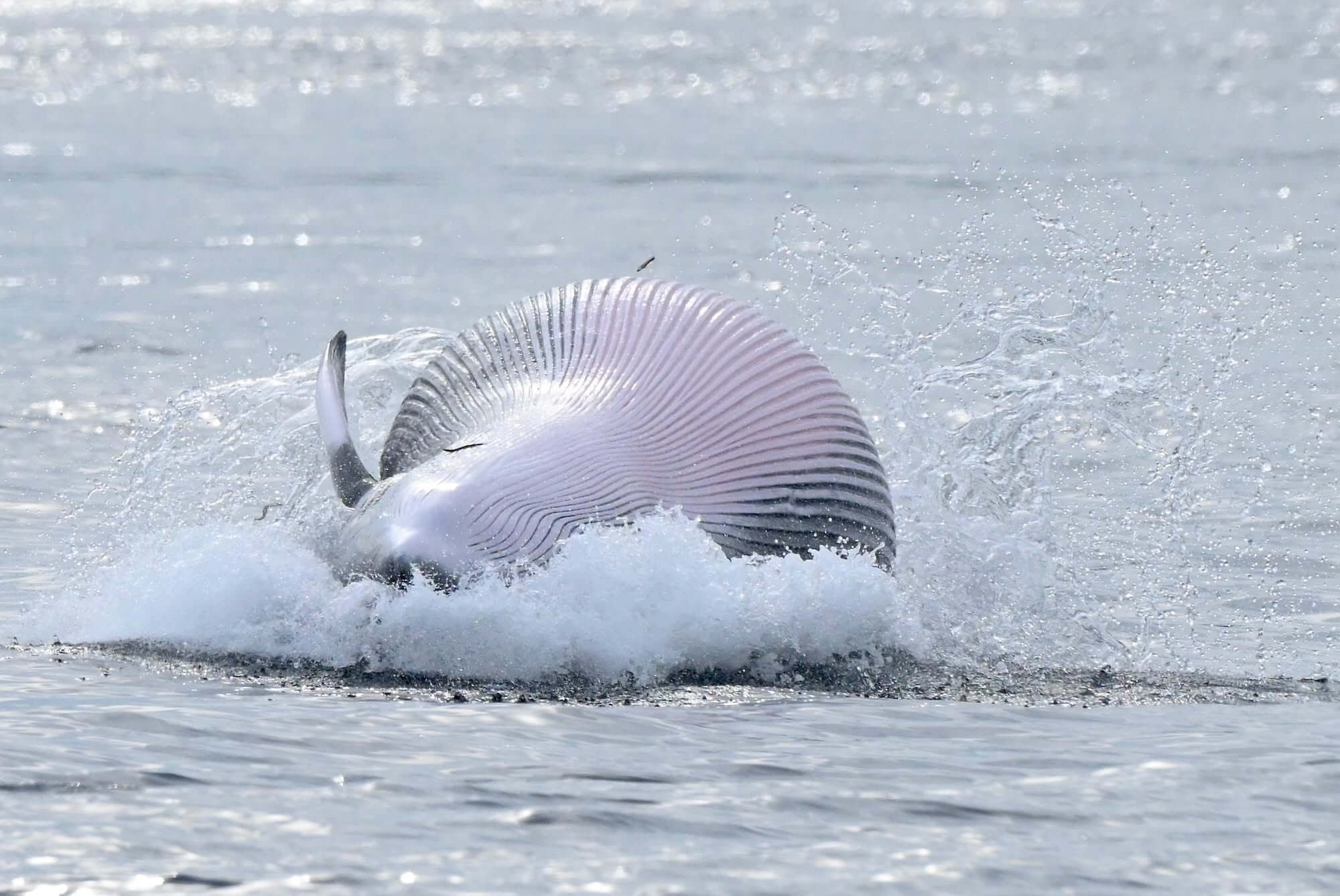
A wildlife photographer and naturalist shares his encounter with the smallest of the St. Lawrence giants: the minke whale. He describes a “spectacle of minke whales surface feeding in the mouth of the Saguenay.” This parade was even topped off with a sort of “confetti” of little fish!
Vocalizations and blows in the moonlight
Bathed in the glow of the moon rising over the St. Lawrence, a Côte-Nord resident witnesses a “hotspot of biodiversity.” Offshore, several fin whales pass through the mirror-like waters, their powerful blows carrying all the way to shore. At the same time, a dozen or so scattered grey and harbour seals appear to be patrolling the area. Two minke whales splash about in the otherwise calm water, which soon begins to churn as up to a hundred belugas emerge from all around, where they linger for hours.
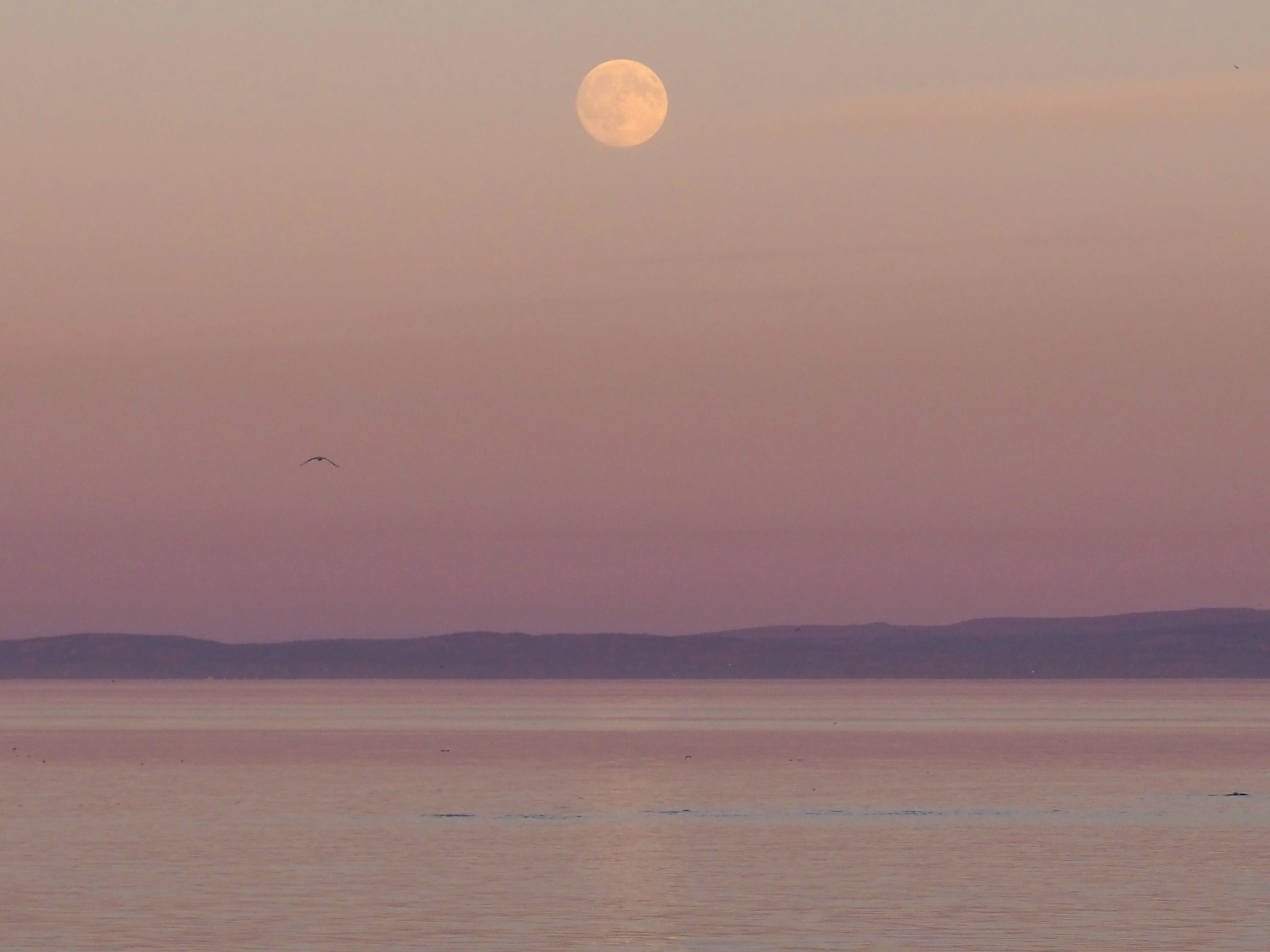
The frequent breathing of this large gathering means that the sound resembles the low roar of an engine: “It was like a marine mammal highway,” she reports, adding, “I could also hear vocalizations that sounded like underwater farts, car horns, and bird calls. All this in the pinkish evening light contrasting with the pastel-blue water—pure bliss!”
Belugas have also been frequently passing by the watchful eyes of a Charlevoix local. These groups of three or four individuals “bring […] great joy.” With so much beauty all around, what more could one ask for?
Where are the whales this week? Sightings map
These data were reported by our network of observers. They give an idea of the presence of whales and in no way represent the actual distribution of whales in the St. Lawrence. Just for fun!
Click on the whale or seal icons to discover the species, the number of individuals, additional information or photos of the sighting. To enlarge the map, click on the icon in the top right-hand corner. The map works well on Chrome and Firefox, but not so well on Safari.
To display the list of sightings, click on the icon in the top left-hand corner.
Thanks to all our collaborators!
Special thanks go out to all our observers who share their love for marine mammals with us.
Your encounters with cetaceans and pinnipeds are always a pleasure to read and discover. On the water or from shore, it is your eyes that give life to this column.
- Odélie Brouillette
- Marie-Andrée Charlebois
- Thalia Cohen Bacry
- Guylaine Côté
- Laetitia Desbordes
- Hélène Guitton
- Stéphanie Houde
- Jade-Audrey Lavergne
- Diane Ostiguy
- Renaud Pintiaux
- Pascal Pitre
- René Roy
- Guillaume Savard
- Andréanne Sylvain
- Marielle Vanasse
And to all the others!
Additionally, we would like to acknowledge the following teams that also share their sightings:
Sept-Îles Research and Education Centre (CERSI)
Group for Research and Education on Marine Mammals (GREMM)
Marine Mammal Observation Network (MMON)
Quebec Marine Mammal Emergency Response Network (QMMERN)
Mingan Island Cetacean Study (MICS)
Mériscope
Would you also like to share your observations? Have you seen any marine mammals in the St. Lawrence? Whether it’s a spout offshore or just a couple of seals, drop us a line and send your photos to [email protected]!

Thalia Cohen Bacry
Thalia Cohen Bacry is a science writer for the GREMM, having previously worked as a naturalist in 2023. A UBC graduate, she completed a master's degree in international studies at the Université Laval and is continuing her learning in several fields, including geography, political science and animal behavior. Passionate about environmental protection, she grew up in Savoie, surrounded by lakes and mountains, before immigrating to Canada and discovering even bigger and wilder spaces. Intrepid, curious and persevering, she loves to learn, observe and analyze in order to raise awareness about protecting our oceans.
Recommended articles
Côte-Nord: Prime Location for Autumn Whale Watching
Across Quebec, fall has truly arrived, as evidenced by the turning leaves and the arrival of certain marine mammal species…
Strong Winds, Big Whales
Despite the strong winds, fog, and plummeting air temperatures, marine animals of all kinds continue to roam the St. Lawrence.…
Mama Whales and Their Calves Roam the St. Lawrence
It would hardly be an exaggeration to say that the St. Lawrence has been teeming with life these past few…