Quebec Institutions Offering Biology Programs in French

On this page we’ve compiled a list of French-language universities in Quebec that offer programs in biology [Translator’s note: The majority of hyperlinked websites are available in French only].

Université du Québec à Montréal (UQAM):

Bachelor’s in Biology (problem-based learning)
Master’s in Biology

PhD in Biology

Université du Québec en Outaouais (UQO):

Bachelor’s in Ecology and Environment

Master’s in Biology

Université du Québec à Rimouski (UQAR):

DESS (1-year post-graduate degree) in Oceanography with one of three concentrations: Marine Resources; Marine Physics; Marine Geology and Geochemistry.

Bachelor’s in Biology

Master’s in Biology

PhD in Biology

PhD in Oceanography with one of four concentrations: Chemical Oceanography, Biological Oceanography, Geological Oceanography, or Physical Oceanography.
 

Université du Québec à Trois-Rivières (UQTR):

Bachelor’s in Biological and Ecological Sciences (DCS-BAC) with concentration on freshwater rather than marine sectors

Université de Sherbrooke:

Bachelor’s in Biology

Master’s in Biology

PhD in Biology

Université du Québec à Chicoutimi (UQAC):

Bachelor’s in Biology

PhD in Biology

Voici d’autres suggestions de programmes :

National Institute of Scientific Research (INRS):

PhD in Water Sciences

Professional Master’s in Water Sciences

Master’s in Water Sciences


Cégep Saint-Félicien :

Natural Environment Technology with a concentration in wildlife management or environmental protection

Any natural science program provides a good foundation for studies in biology. Check out the Fédération des Cégeps website for programs near you!

Consult the Directory of Environmental Training Programs for a list of other possible programs for your career path.

A few things to keep in mind:

  • Skill sets worth honing:
    • Data collection: Prioritize courses that include field trips.
    • Data processing: Prioritize courses with labs or field trips.
    • Statistical analysis: Prioritize courses with a project that includes statistical analysis.
    • Spatial analysis: Perform statistical analysis with spatial data and plot these data on a map.
    • Conservation;
    • Planning: How to use data and analyses to inform legislative recommendations and decisions.
    • Modelling;
    • Scientific reporting: A number of courses provide practical experience in drafting reports.
    • Artificial intelligence: A rapidly growing field.

  • Frequently used software:
    • Statistical analysis: R and RStudio programs, MATLAB, SPSS (Statistical Package for the Social Sciences);
    • Spatial analysis: QGIS, ArcMaps, ArcGIS ((Arc)GIS (geographical information systems), R and RStudio, etc.
  • Examples of electives to take based on your interests:
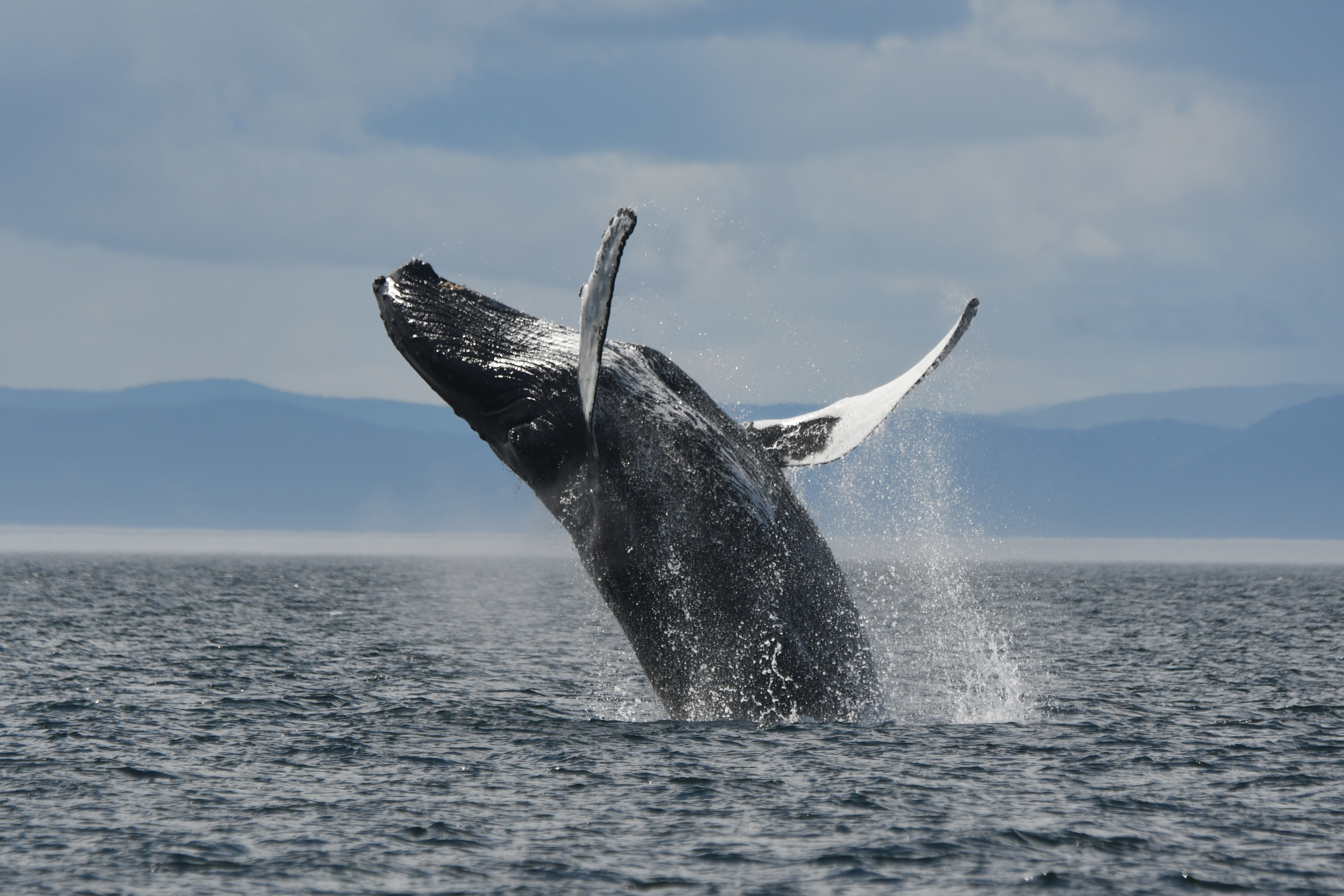
    • Population dynamics: projecting the future state of a population based on historical and current abundance data. For example, krill abundance can be studied to understand how it will influence humpback whales in the coming years in the context of climate change.
    • Oceanography: understanding the different variables that influence the food web. This knowledge is essential for any scientist studying marine mammals!
    • Ecology debates: Help understand that humans cannot be isolated from ecosystems. To protect a species, a multitude of aspects must be considered in decision-making for conservation purposes. This allows you to develop your critical thinking skills and explore grey areas!
    • Ecosystem ecology;
    • Population genetics: for math wizzes, this course takes the basic genetics course one step further.
    • Animal behaviour;
    • Ecotoxicology;
    • Geomatics;
    • Histology;
    • Environmental chemistry.

Additional relevant training:

Interested in learning how to build distribution models for marine species or sharpening your skills? Available training courses in modelling, statistics, etc. can be found here: PRStats