
Over the years…

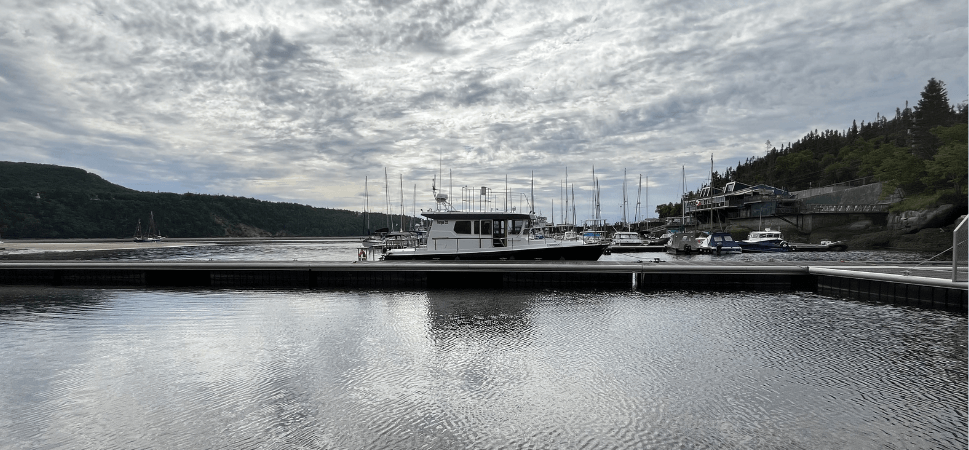
July 7, 2025: It’s early in the morning, and I’m waiting for news from the research team. Will weather conditions be favourable for going out on the water today? Wind, fog, and rain are all factors that can complicate research on the water, or even make it downright impossible. At 8:45 in the morning, I receive a text from Michel Moisan, chief technician for the Group for Research and Education on Marine Mammals (GREMM). The wind has shifted, which means we can head out onto the water!
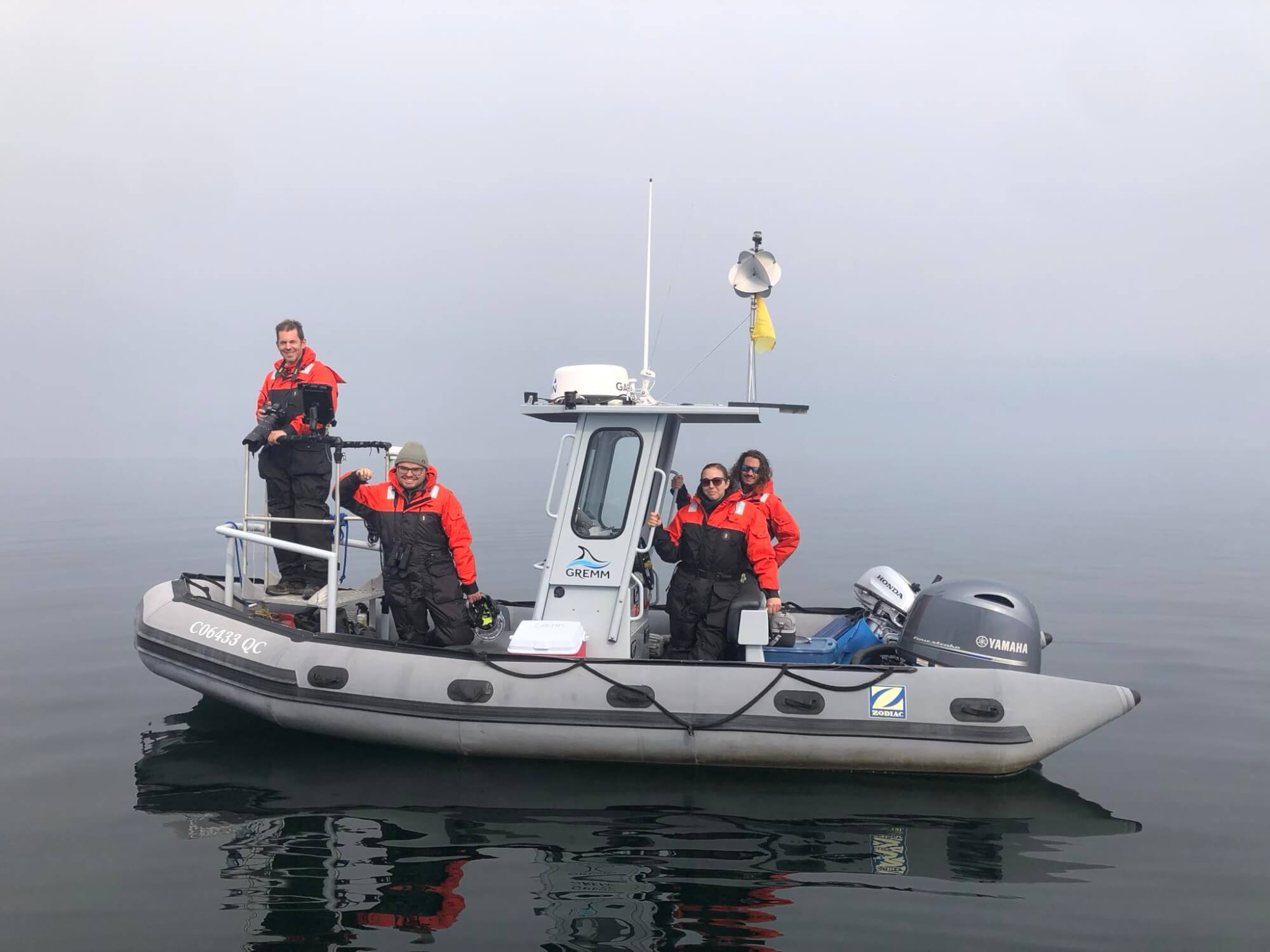
I’m due to meet them at the docks to board Antarès, GREMM’s dedicated beluga research vessel. I put on my coat and boots, grab my binoculars and notepad, and set off with a determined stride toward the marina. Come join me aboard Antarès as we search for these white whales in these times of questions and uncertainties…
The constantly evolving world of beluga research
Founded in 1985, GREMM has proudly carried out its mission for 40 years. The organization is dedicated to scientific research on the cetaceans of the St. Lawrence and education for marine conservation purposes. From the very beginning, belugas have sparked the curiosity of the organization’s team, ever fascinated by the animals’ behaviour and social structure. They have become one of the flagship species of GREMM’s research efforts.
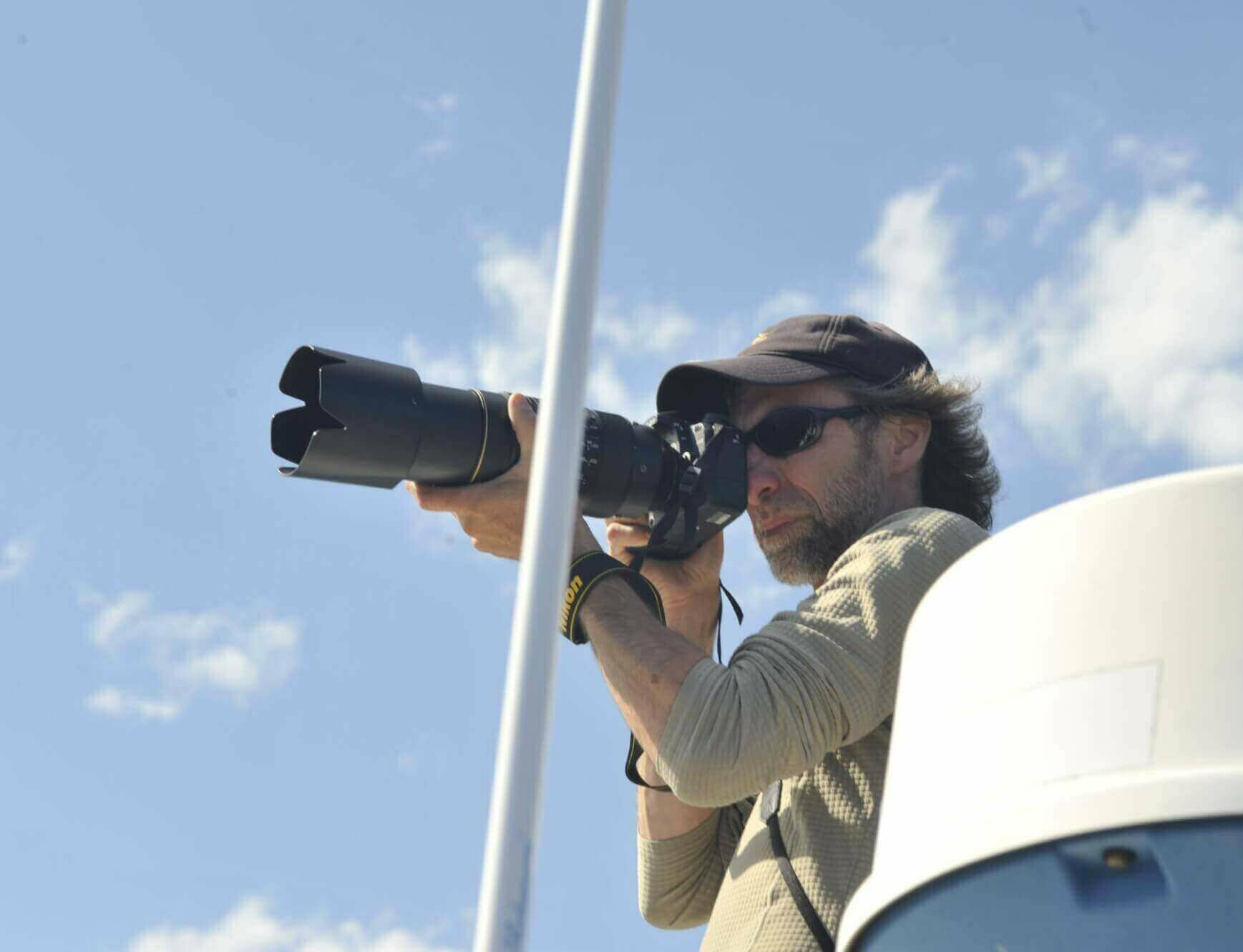
Michel Moisan, who is piloting the vessel on this expedition, has witnessed GREMM grow and its research techniques evolve. When he first joined the organization in 1995, the team was still using film cameras and had to develop photos in makeshift darkrooms. To facilitate identification, the images then had to be catalogued manually, without any electronic platform. The following year, the team began conducting biopsies (i.e. skin and blubber samples), which provide a wealth of information about sex, hormonal status, diet, and contaminant levels. It wasn’t until 2001 that digital cameras began to be used for photo-ID work. Years later, in 2017, drones were integrated into the protocols, adding a new dimension to the research.
Belugas’ habits are changing too!
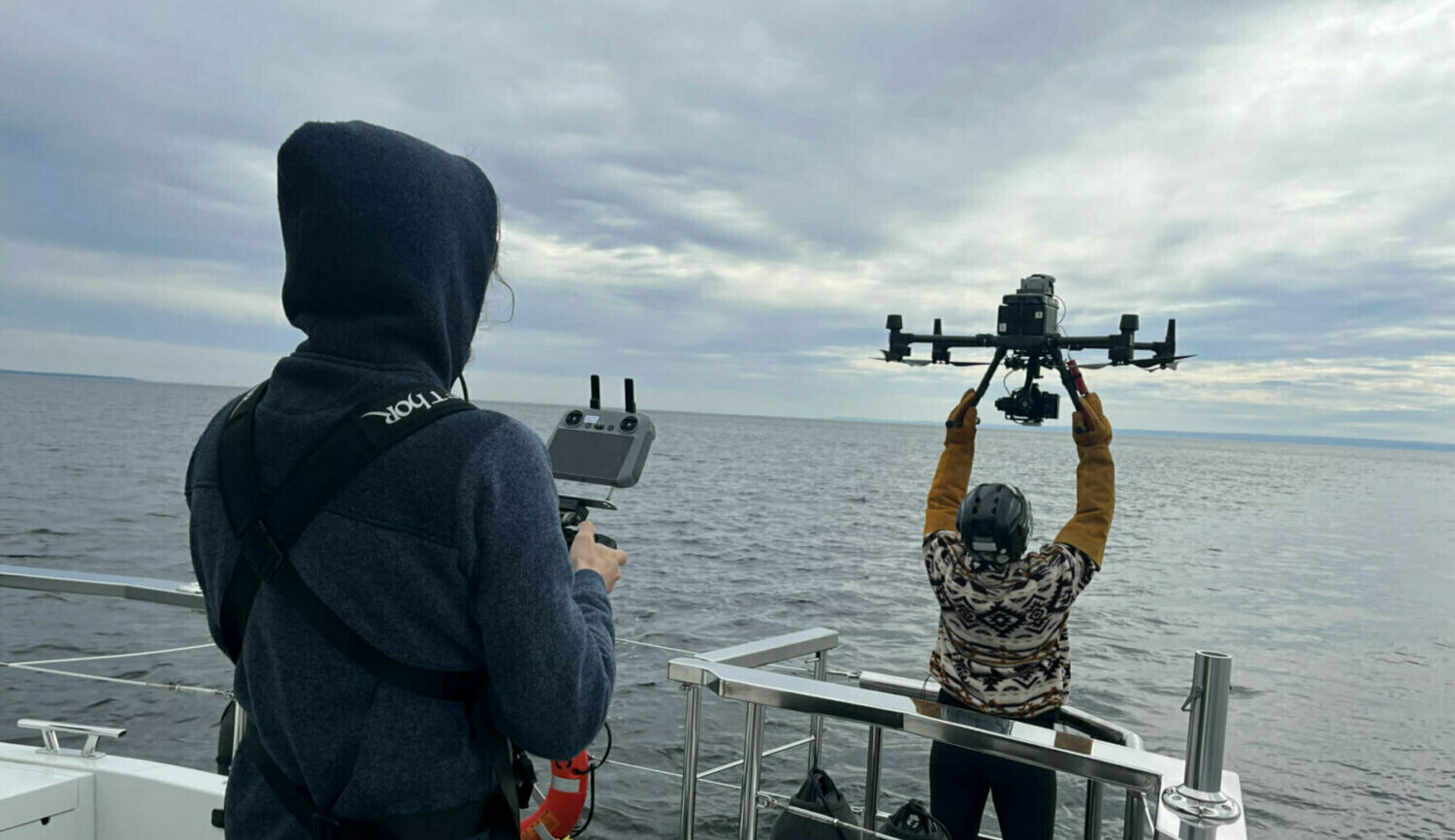
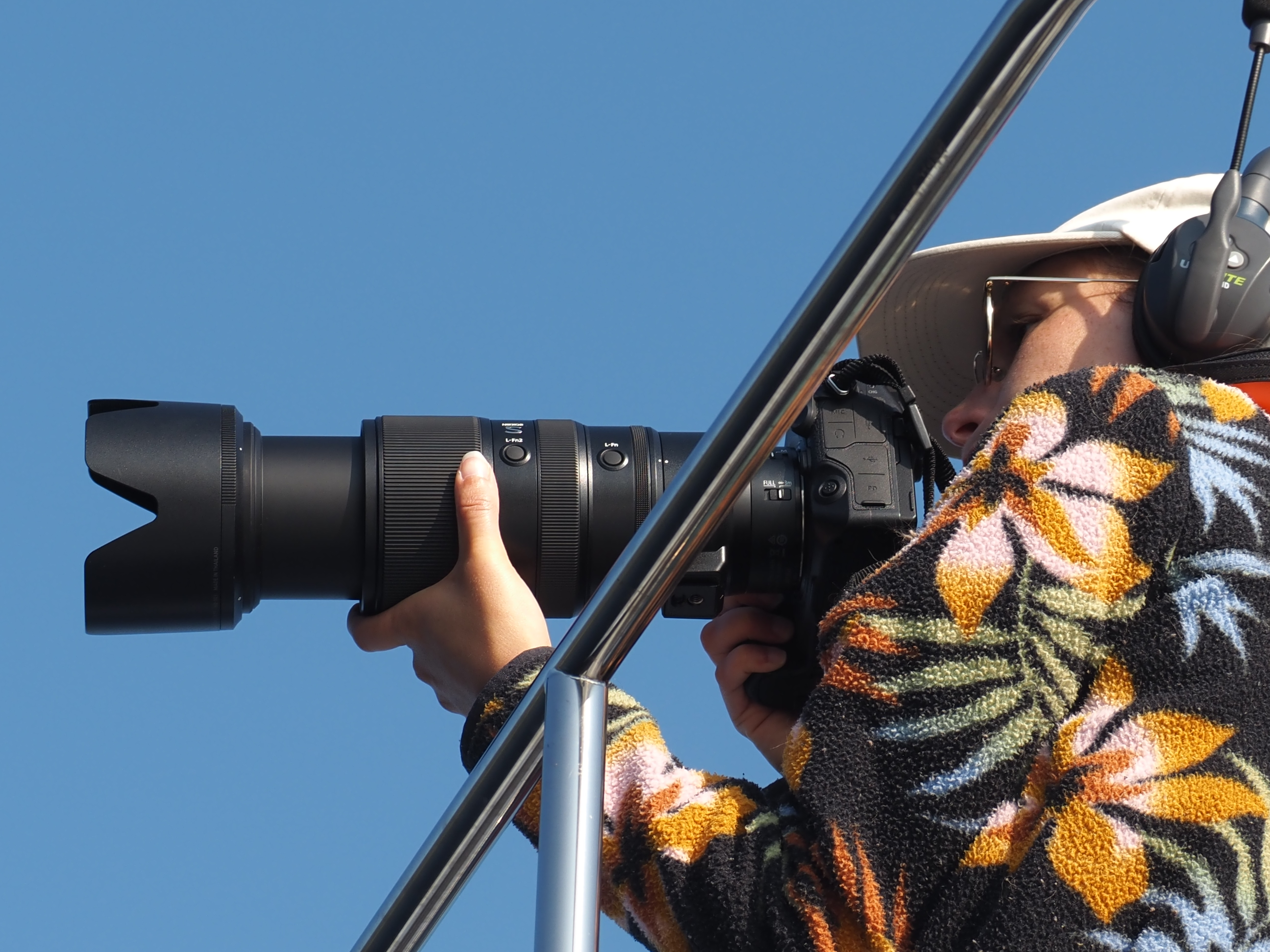
The crew consists of Jade-Audrey, responsible for describing the groups and photo-identifying them; Estelle, in charge of launching the drone and documenting the approaches; Mathieu, responsible for manoeuvring the drone; Michel, at the helm; and, finally, me, with my pencil. At 9:30, the eagle-eyed crew spots white backs in the distance, well before I do. The team springs into action. Estelle and Mathieu leave the cockpit and go onto the deck, Estelle with the drone and Mathieu with the handset: Takeoff is imminent. Jade-Audrey describes the herd and takes a series of photos.
The herd numbers about fifty individuals. Sightings of groups of this size used to be a common occurrence; last summer, however, such observations were quite rare. This is probably the largest herd observed by the research team since the start of the season. “These past few years, it’s been more difficult than it used to be. We have to patrol for longer periods before we’re able to find them,” Michel tells me.
A very different reality from what he experienced over the course of his career. For several years, both the hotspots and the groups that frequented them were stable: “When I arrived, there were groups of hefty bulls, adult males that were quite imposing,” Michel explains. Thanks to photo-identification, the research team was able to distinguish three large, tightly-knit networks of males, each composed of between 40 and 60 individuals. In other words, the males had their preferred social groups, and the team systematically observed the same individuals together, some downstream, some upstream, others in the Saguenay River. With the disappearance or death of several of these males (which have been known since the very start of the research project), it appears that these networks have dissolved.

This summer, groups of belugas were sighted in the Gaspé Peninsula and on the North Shore with greater regularity and in higher numbers than before. “What’s going on? Is their range beginning to shift?” ponders Michel.
The composition and distribution of the herds are no longer the same; Michel wonders if the size of the animals has also changed. “They seem thinner and smaller… less plump,” he worries. With photogrammetry data currently being analyzed, the research will be able to confirm or infirm the research teams’ hunches in the coming years.
Following the St. Lawrence Current
These observations raise a number of questions for the research team. Are these exceptional years or the beginning of a profound change for the St. Lawrence beluga population? It is still too early to say. GREMM Scientific Director Robert Michaud nevertheless points out that these transformations “coincide with more profound changes taking place in the ecosystem.” According to Fisheries and Oceans Canada’s most recent report (2025) on the oceanographic conditions of the St. Lawrence River, the St. Lawrence is no longer the same: It is warming at an alarming rate, acidifying, and losing oxygen. A recent publication also reveals that the beluga whale’s diet has changed over the past two decades: With their favourite prey in decline, they have no choice but to adopt a more generalist diet. At the same time, the St. Lawrence beluga population continues to face significant pressures from human activities—noise pollution, contamination, disturbance—all further compounded by climate change. Now more than ever, it is critical to continue our research to better understand belugas and their environment so that we can better protect them. In my eyes, this is where GREMM’s mission becomes truly meaningful.
A report that transcends science
Just shy of 11:30, a cloud cell settles over the Marine Park, bringing our sea excursion to an end. While Mathieu prepares to land the drone, Estelle stretches out her arms to receive it, and Jade-Audrey climbs down from the upper deck. Now that we’ve completed our task, we can step back and observe the belugas not through a scientific lens, but simply enjoy them for who they are. “Without this part, something would be missing,” points out Michel.
Day after day, year after year, the research team monitors and documents the evolution of the St. Lawrence beluga population and the individuals within it. By spending so much time with them, the researchers have come to recognize certain animals by their scars, and sometimes even develop a special bond with them. There’s something unique about witnessing the life of one of these belugas, discovering their character, and watching their story unfold before our eyes. A prime example is Miss Frontenac (a.k.a. Scarvo or Dl2286), who has been known since 2004. Practically ever since she was born, Michel has been able to recognize her by the large scar she has on her back. Over the years, he has been able to get occasional glimpses into her life. These animals are dynamic, curious, and resilient, which makes it a real privilege to work with them.”


Lilly de Cotret
Lilly de Cotret joined the team in 2025 as a naturalist and editor. Passionate about biology and the environment, they seek to become an agent of change to build a sensitive, caring and educated society towards humans and non-humans. They are pursuing their goal with GREMM to raise public awareness about the beauties of the marine world and the threats it faces.
Recommended articles
BpJAM in Action: A Preparation as Massive as the Animals Being Studied!
Several weeks ago, when I was asked to author a report about an outing on the BpJAM, one of GREMM’s…
Beluga Monitoring Aboard Antarès
At the Tadoussac marina, the Group for Research and Education on Marine Mammals (GREMM) research team boards the boat at…
Cleaning skeletons: an expertise unlike any other!
June 11: The day didn’t begin aboard the Antarès or any of GREMM’s other boats, but rather in Michel Martin’s…