
Tadou
Beluga

Adopted by Road Scholar (previously Tadoussac Elderhostel) - Benny Beattie
-
ID number
DL1529
-
Sex
Male
-
Year of birth
Around 1985
-
Known Since
2000
Distinctive traits
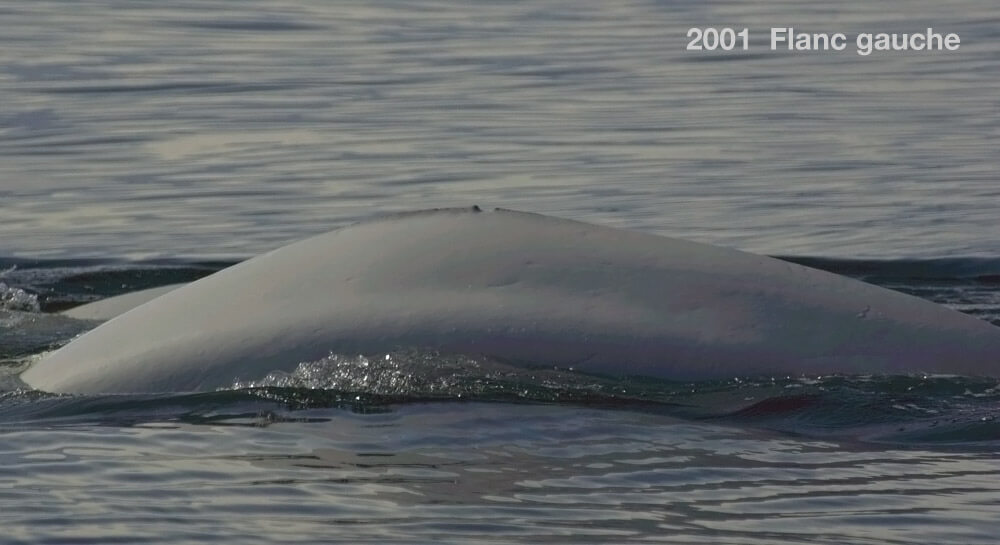
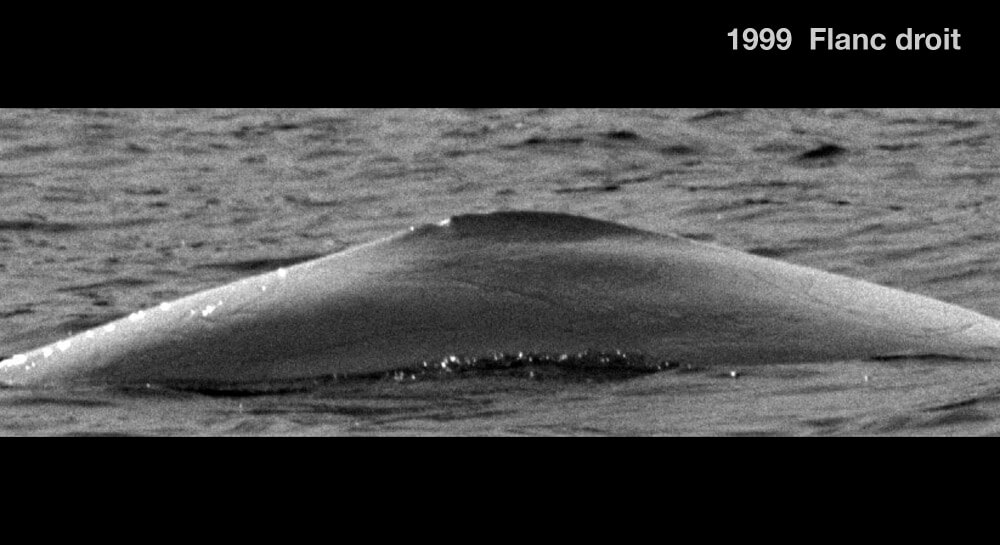
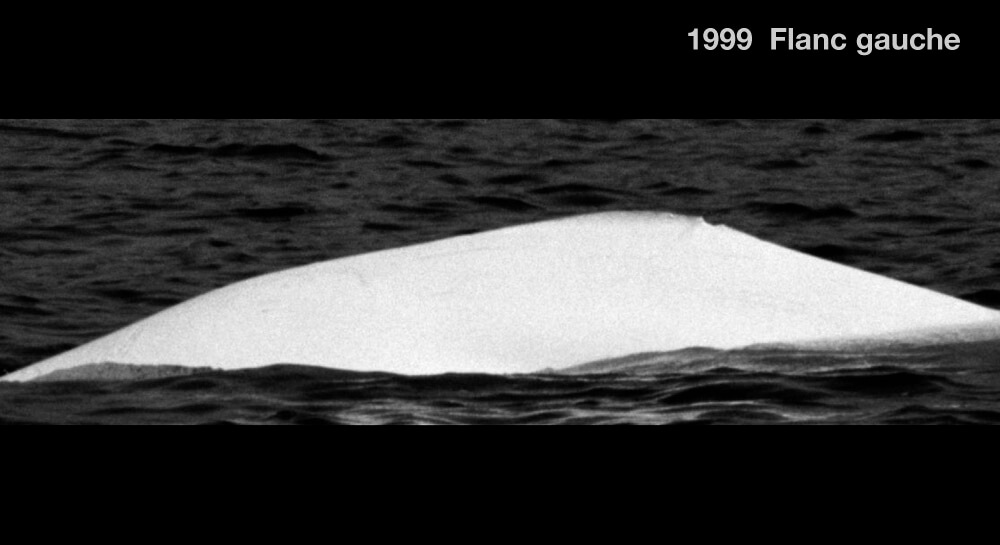
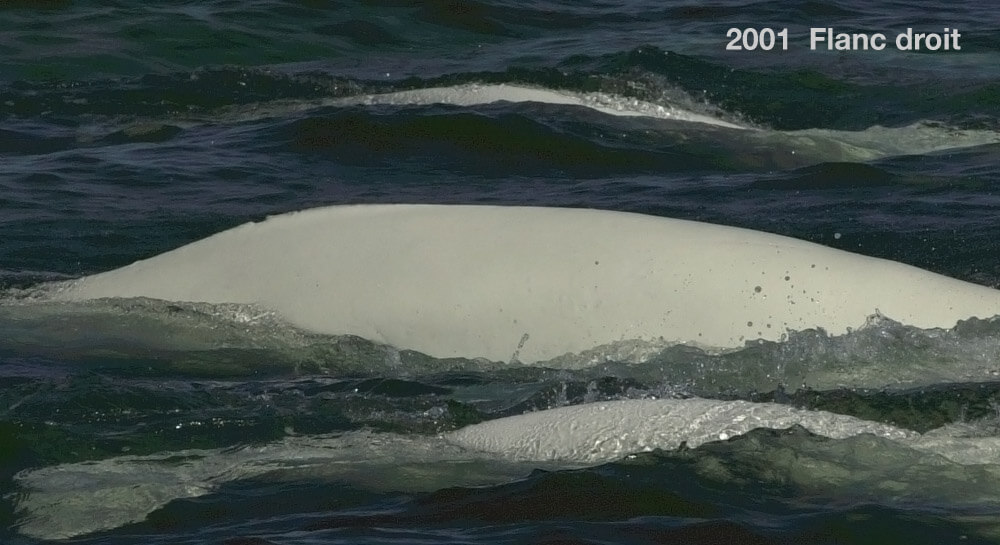
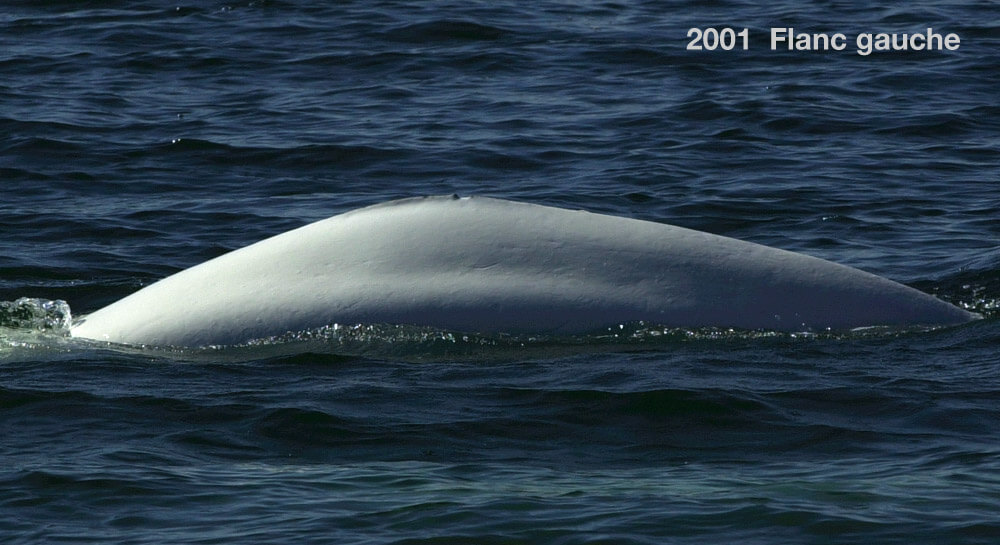
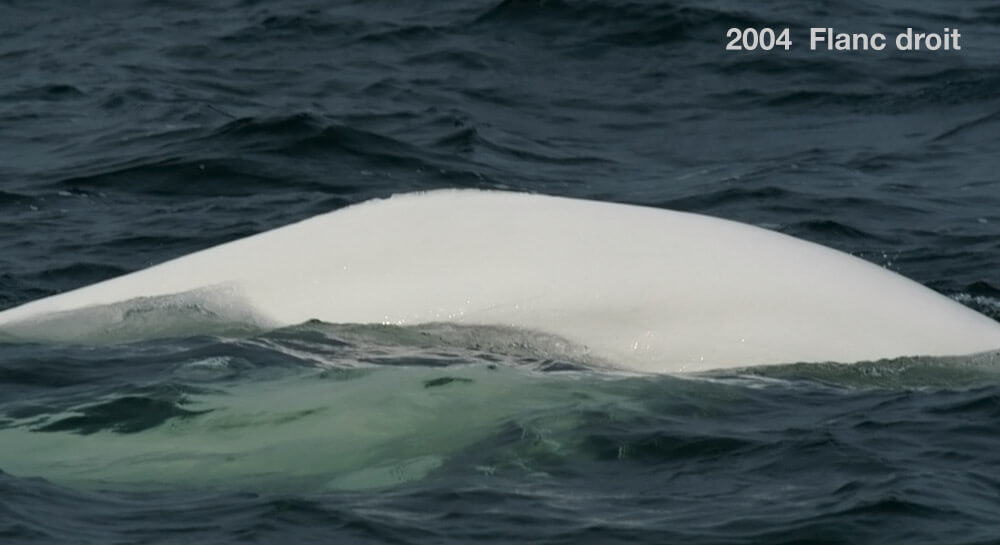
Left or right side, Tadou can be recognized by the particular shape of his wide notch at the end of the dorsal crest and the other small details it contains.
Life history
Tadou was first photographed in 2000. At the time, he was pale grey, almost white. From 2001 onwards, he was always recorded as “white”. He would therefore have been born around 1985.
Tadou’s habits and associations lead us to believe that he is a male. A biopsy carried out on the animal in 2000 confirmed that it is indeed a male.
Future encounters with Tadou may enable us to determine which of the three male networks Tadou has joined. In summer, there is segregation between males and females. Two networks of males frequent the head of the Laurentian Channel and the Saguenay Fjord. Another network of males, known as the “Downstream Boys”, also uses the head of the Laurentian Channel sector and the downriver portion of the Estuary. Even if their territories overlap, individuals from one network seldom rub fins with males of other networks. Within these networks, there are bands – small groups of males seen together on a regular basis.
Tadou is one of the belugas frequently seen in the Saguenay fjord and its mouth. Belugas often use currents and tides to move around and save energy. Although they have physical characteristics that enable them to move easily through the water (hydrodynamic body, powerful tail, smooth skin and stabilizing pectoral fins), belugas remain, at 7 km/h, the slowest of the odontocetes.
Observations history in the Estuary
Years in which the animal was not observed Years in which the animal was observed
Latest news
In the early afternoon, we are at Île aux Lièvres, where a large number of animals have gathered. They likely arrived from the lower section or the northern side. It is possible that they are part of a herd observed earlier in the day. These individuals, displaying distinctive markings, are moving in mixed groups of adults and juveniles, with a few calves present. At 2:53 p.m., we photograph Tadou. Several known individuals are also in the area, including Coquine Blanche, DL0263, and DL0314.
The last sighting of Tadou goes back to 2012, which brings up several questions: what has become of him since then? Has he changed his home range, or has he simply remained out of sight? In any case, his story is a valuable source of information for better understanding this fragile population.
Sponsor
Road Scholar (previously Tadoussac Elderhostel) – Benny Beattie has adopted Eldy (2000), Canusa (2001), Tadou (2004), Amalena (2014) and Nomi (2015).
I have been coming to Tadoussac since the age of 8 months (i.e. since 1938) and I, my wife, daughters, son-in-law and grandchildren love this country. We were raised with these whales, and belugas in particular, and participants in my Elderhostel groups were also touched by these wonderful whales, so we decided to help protect and preserve them by contributing funds to the adoption program. To learn more about Tadoussac Elderhostel, you can visit Tadalac.com.
Thank you,
Benny Beattie