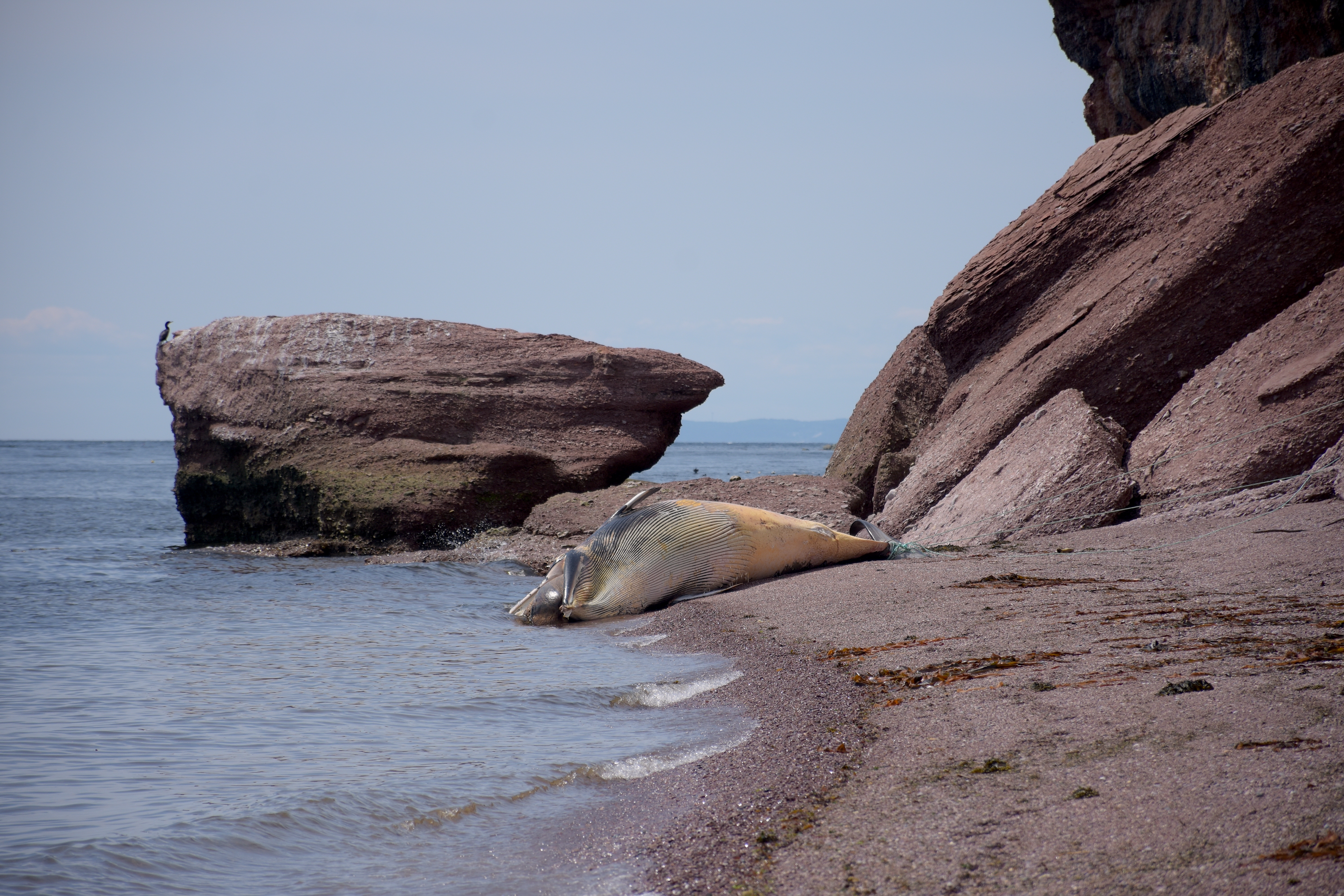
First Beluga Carcass of the Year Recovered in the Magdalen Islands

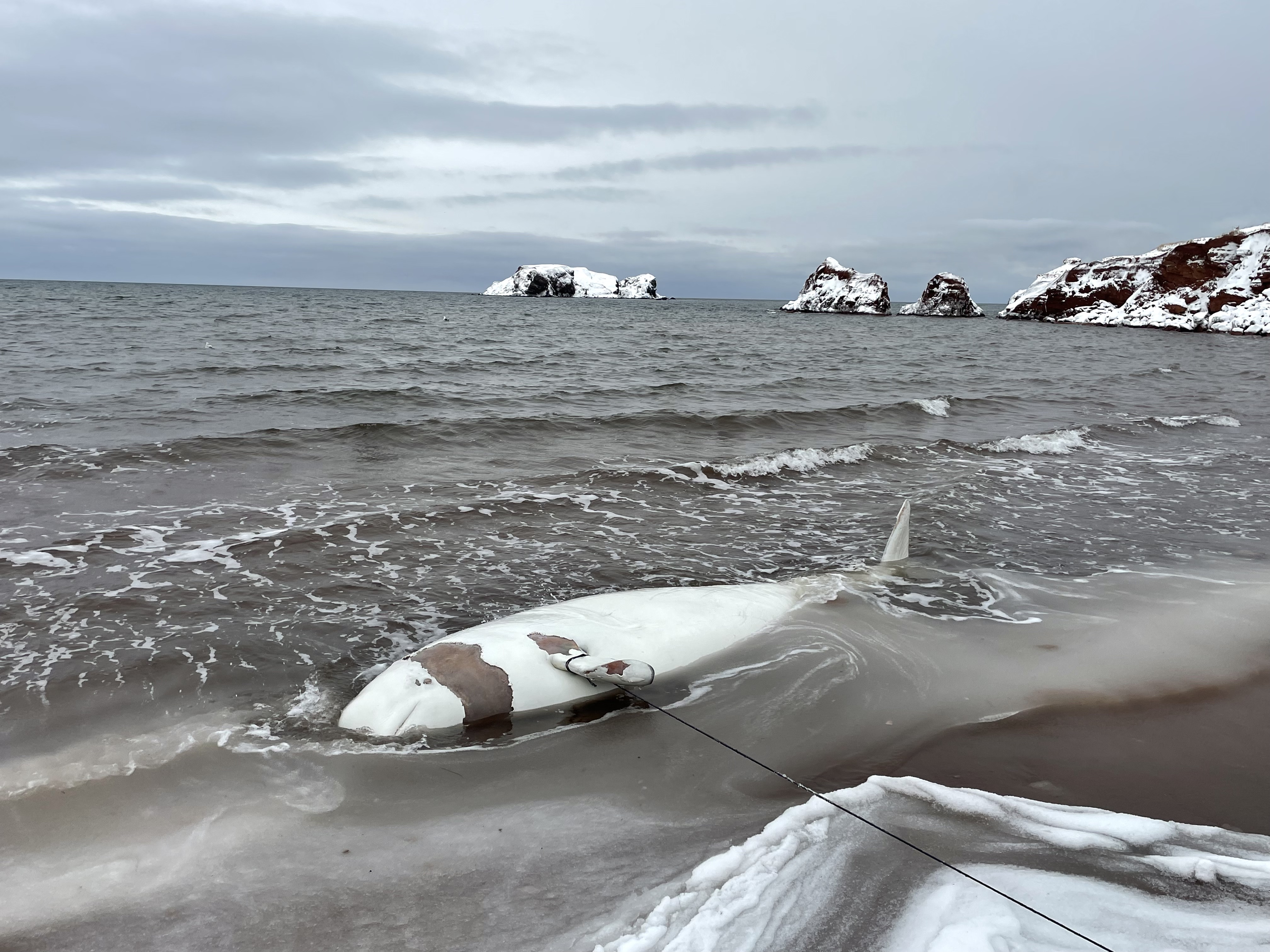
Sunday, January 18: The Marine Mammal Emergencies (UMM) telephone rings. Cédric Gascon, a technician and UMM responder for the past five years, hadn’t even answered the call when he knew that an urgent situation awaited.
Indeed, on winter weekends, calls are pre-screened by employees of the Maurice Lamontagne Institute. This time of year, only the most urgent cases are referred to off-duty responders.
He was right: the first beluga carcass of 2026 had just been reported! Aside from live animals in distress, only the carcasses of endangered species are considered priority. These species, listed under the Species at Risk Act (SARA), are particularly valuable for scientific research, and waiting until Monday morning to get started is out of the question! The risk of the carcass being washed away by the tide is too high, and the loss to science would be considerable.
So Cédric begins following the usual protocol: confirming the situation with the witness and contacting the QMMERN volunteers closest to the location where the carcass was reported.
While speaking with the individual who reported the stranding, Cédric realizes that this situation is all the more unusual in that the animal washed ashore in the Magdalen Islands! While belugas are known to frequent the waters of the gulf, particularly in winter, it is quite rare to find one stranded in this archipelago. The phenomenon is not completely unheard of, but it is uncommon enough to warrant our attention.
QMMERN’s volunteers are always the first responders on the ground. From Montréal to the Magdalen Islands, 220 volunteers are on call up and down the shores of the St. Lawrence River. These volunteers are trained and equipped to assess and document situations, secure carcasses and sites, collect preliminary data, and sometimes even gather samples. Without them, nothing would be possible!
The countdown begins
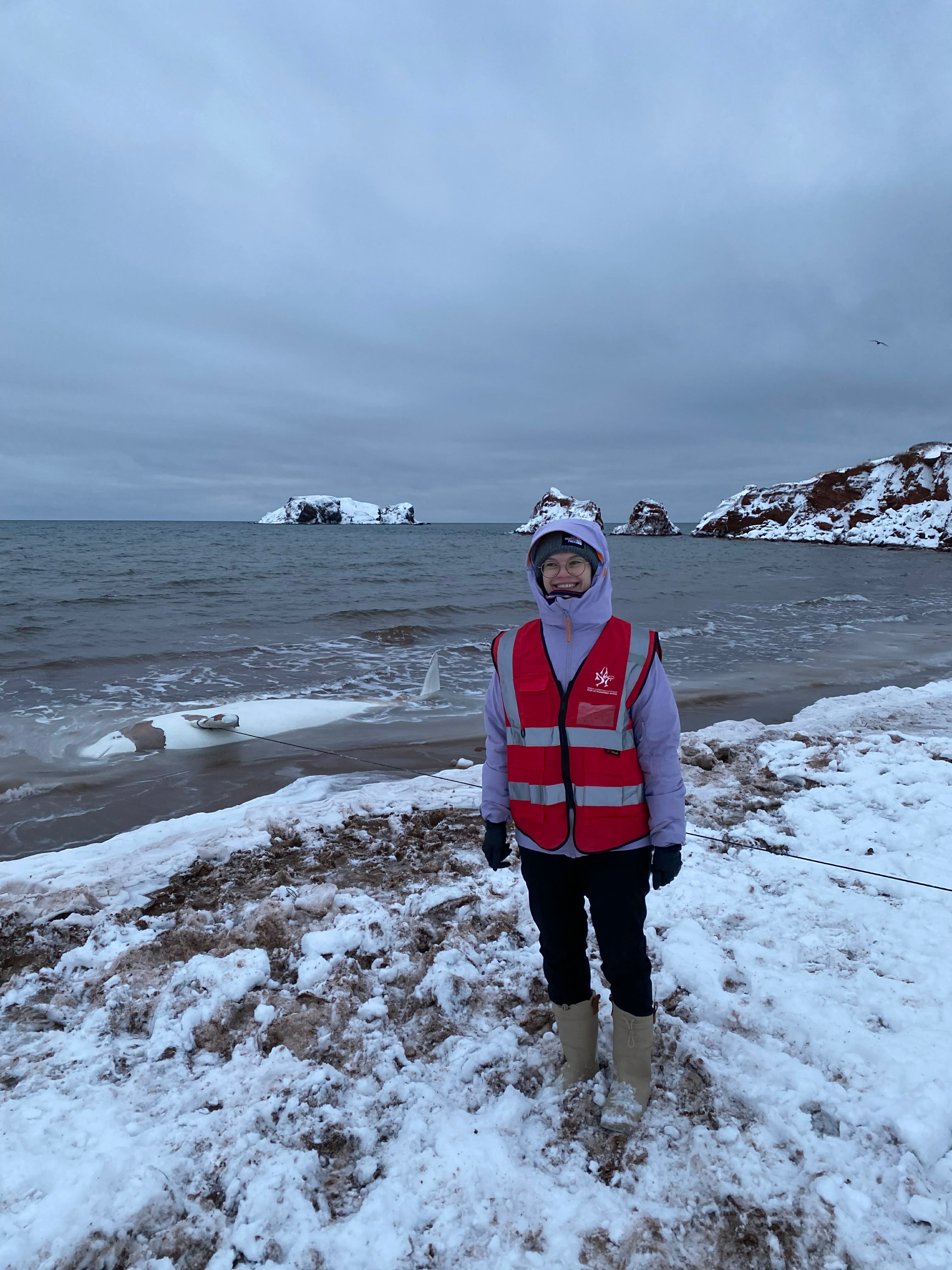
With the rising tide and blowing winds, this individual will soon be heading back out to sea, so we have to act quickly! This time, volunteer Catherine Blanchette is on duty. Intervention kit in hand, she quickly sets off in search of the animal, accompanied by Îles-de-la-Madeleine (IDLM) ZIP Committee members Noémie Pelletier and Jean-Philippe Lepage.
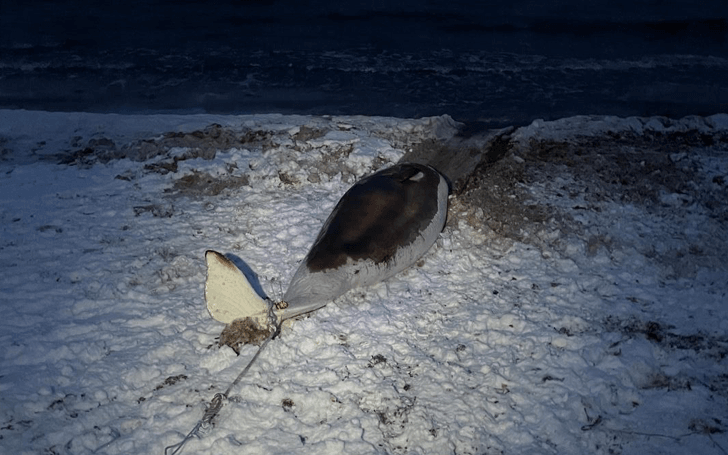
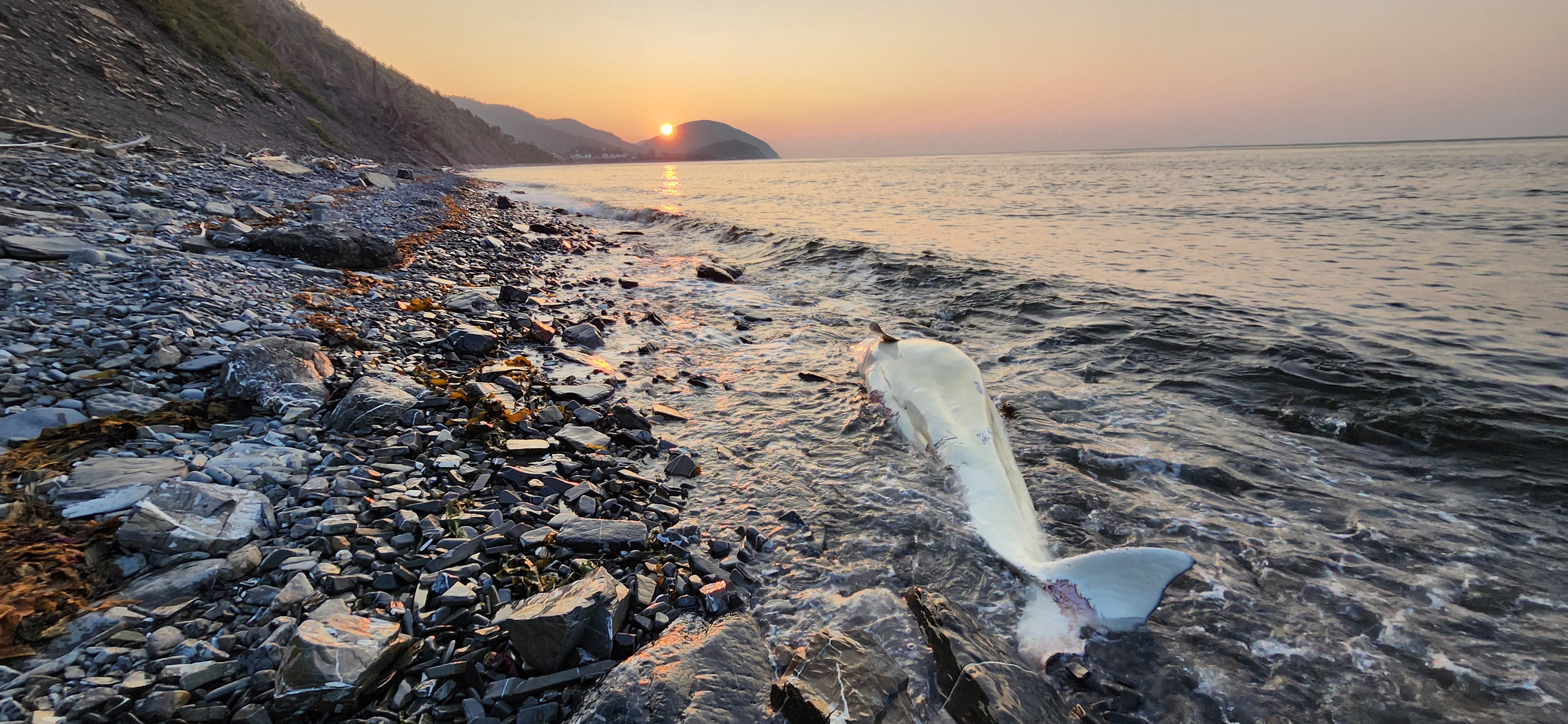
When she reaches the site, the beluga is half-submerged. At the last minute, the carcass was able to be secured, then hauled up onto the beach and firmly tied down. She snaps a few photos and measures the animal’s total length. This will help the UMM team develop an action plan: the length allows them to estimate the animal’s weight and determine the appropriate moving equipment, while the photos will help them assess the carcass’s state of decomposition. If the latter is overly advanced, samples will need to be taken in situ. If on the other hand it is in good condition and logistically feasible to move, it can be transported to a necropsy room (necropsies are the animal equivalent of autopsies).
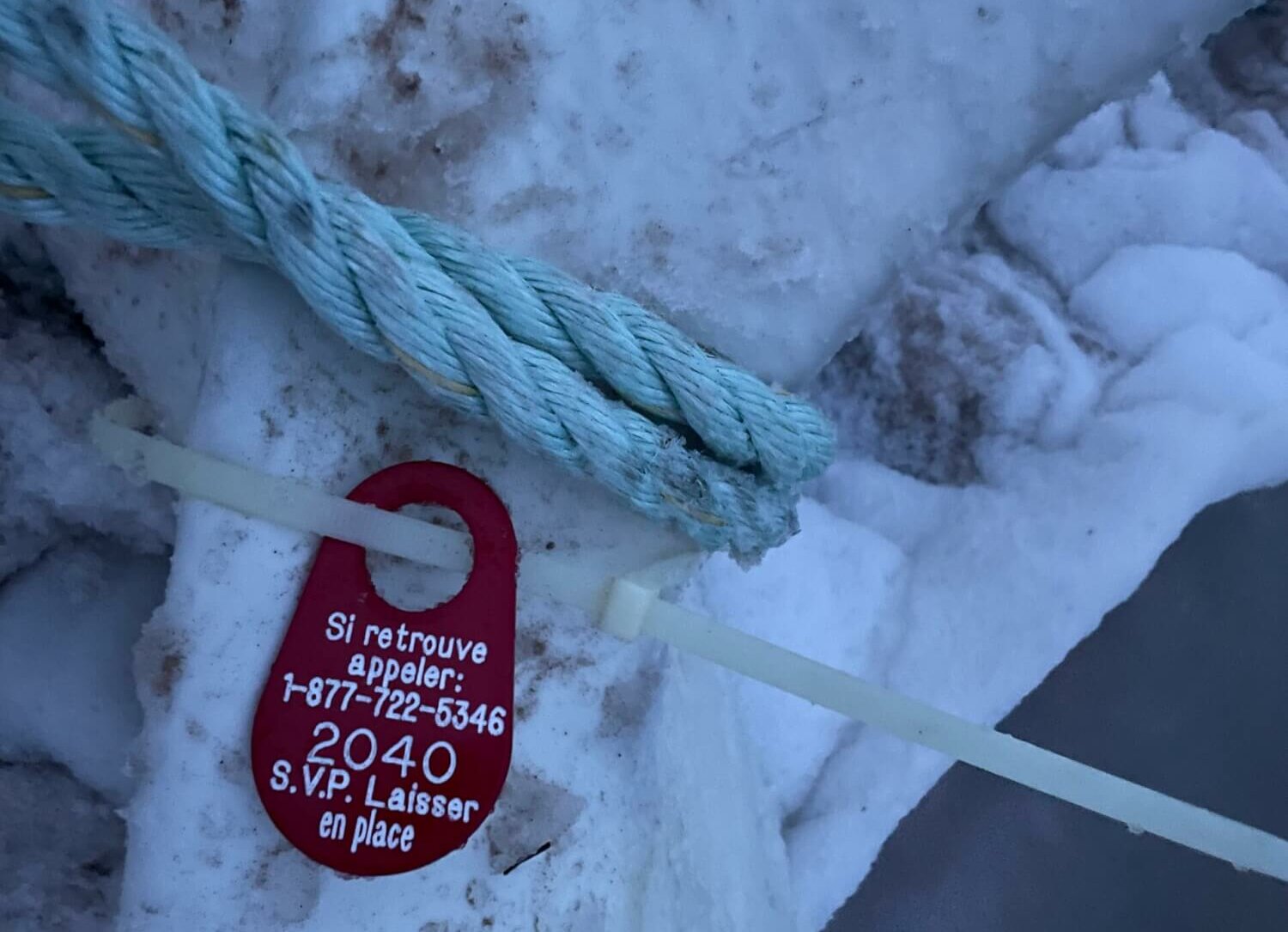
A red tag was also attached to the beluga’s tail. It bears a unique number and UMM’s phone number. This way, should a beachgoer happen upon the animal, they will know whom to call, and the unique number will enable our team to properly identify the individual.
Night is beginning to fall. The most urgent tasks have been completed; the carcass is not going anywhere. The team can resume its work in the morning.
The IDLM ZIP Committee (website in French) is a well-established environmental consultation organization in the region. Thanks to its expertise and dedication to the ecosystems of the St. Lawrence, the IDLM ZIP Committee became a satellite team of the QMMERN in 2022. Its members have been trained and geared to carry out various interventions involving dead or distressed marine mammals. These operations require specialized expertise and the right equipment. Since the Magdalen Archipelago is difficult for our regular teams to access, the presence of the satellite team is of critical importance. The introduction of satellite teams has significantly bolstered QMMERN’s field response capabilities.
Monday, January 19
Today will be a day of logistics! Based on the images and information gathered by the volunteer the previous day, the UMM, Fisheries and Oceans Canada (DFO), and Quebec’s wildlife health centre (CQSAS) teams determine that the carcass is fresh enough to undergo a necropsy. Everything must be done to ensure that veterinarians can examine this individual. This is no small task, as the carcass is located in L’Étang-du-Nord, while Université de Montréal’s Faculty of Veterinary Medicine (FMV) is in Saint-Hyacinthe, more than 850 km away as the crow flies!
Several action plans are being considered:
1 – Transfer the carcass to a Maritimes-based team of veterinarians who collaborate with the CQSAS and are members of the Canadian Wildlife Health Cooperative, which works out of the University of Prince Edward Island in Charlottetown. Even if this site is closer, the university facilities are not equipped to accommodate an animal of this size! This option is therefore rejected.
2 – Bring in a team of CQSAS veterinarians to the carcass. This option would require a multi-person team for several days and would generate significant costs. Furthermore, if the necropsy were to be performed in the archipelago, it would have to be carried out on the beach, since, to our knowledge, there are no local facilities that can accommodate such an operation. While an on-site necropsy is a must for extremely large animals like fin whales, it does not provide an ideal working environment. Furthermore, performing a necropsy outdoors in winter, in sub-zero temperatures, is hardly feasible. The procedures require time and dexterity. It would also be necessary to properly dispose of the carcass afterward, which presents an additional logistical challenge. For all these reasons, this option is ruled out.
3 – Forgo the necropsy and perform only superficial sampling. This option is by far the most straightforward, but scientists don’t like when things are easy! This option will therefore be chosen as a last resort if no other action is possible.
4 – Transport the carcass to the FMV facilities in Saint-Hyacinthe. This option is logistically feasible, but requires a rapid response. Indeed, the next ferry to Souris is scheduled for the crack of dawn on Thursday, January 22. An incoming storm will prevent any on-site intervention on Tuesday the 20th and Wednesday the 21st. The carcass must therefore be hoisted onto a suitable trailer today! Fortunately, in the middle of winter, the carcass will keep quite well. Had it been summertime, it would have been unthinkable to wait this long.
It is this last option that is ultimately retained; now we need to take the necessary steps to make it happen!
After several attempts and invaluable help from the ZIP Committee, a trailer and a backhoe were found for this afternoon!
After first picking up equipment provided by QMMERN, the satellite team heads to the site of the stranding. Their gear includes a carcass net specifically designed to lift animals of this size, a transport sled to slide the carcass across the beach without damaging it, as well as ropes and chains for transport.
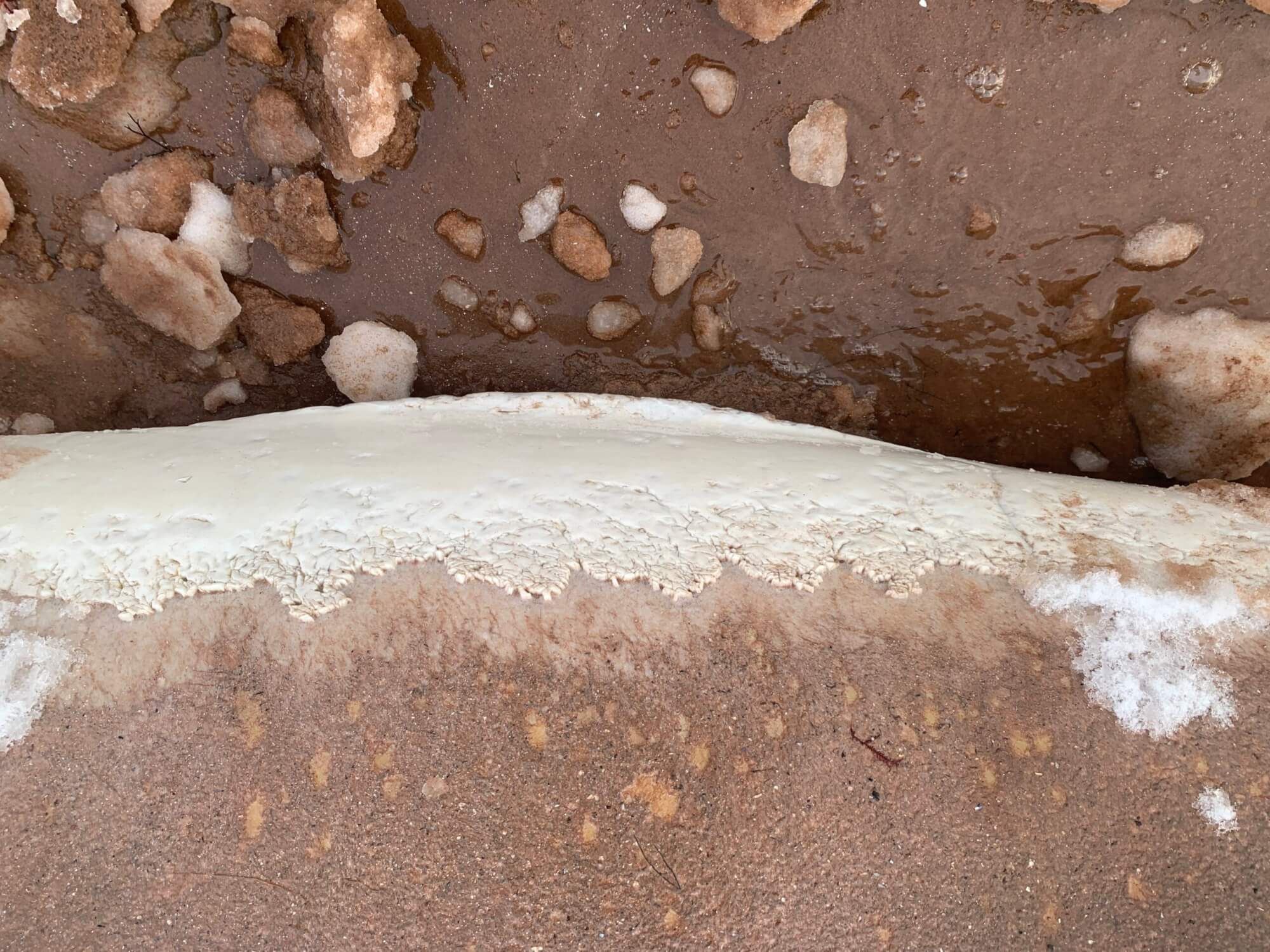
The team members will take this opportunity to finish documenting the animal, which they were unable to do the day before. Indeed, before moving the animal and potentially causing post-mortem lesions, it is essential to ensure that quality images are taken, especially of the dorsal ridge. Belugas do not show unique colour patterns like narwhals or fin whales, nor do they have uniquely shaped, easy-to recognize dorsal or caudal fins like humpbacks. Rather, the best way to identify a beluga is by the small notches lining its dorsal ridge. However, this ridge can be easily damaged during transport, especially by the net used to lift the animal and due to the superficial layer of skin that naturally detaches during decomposition.
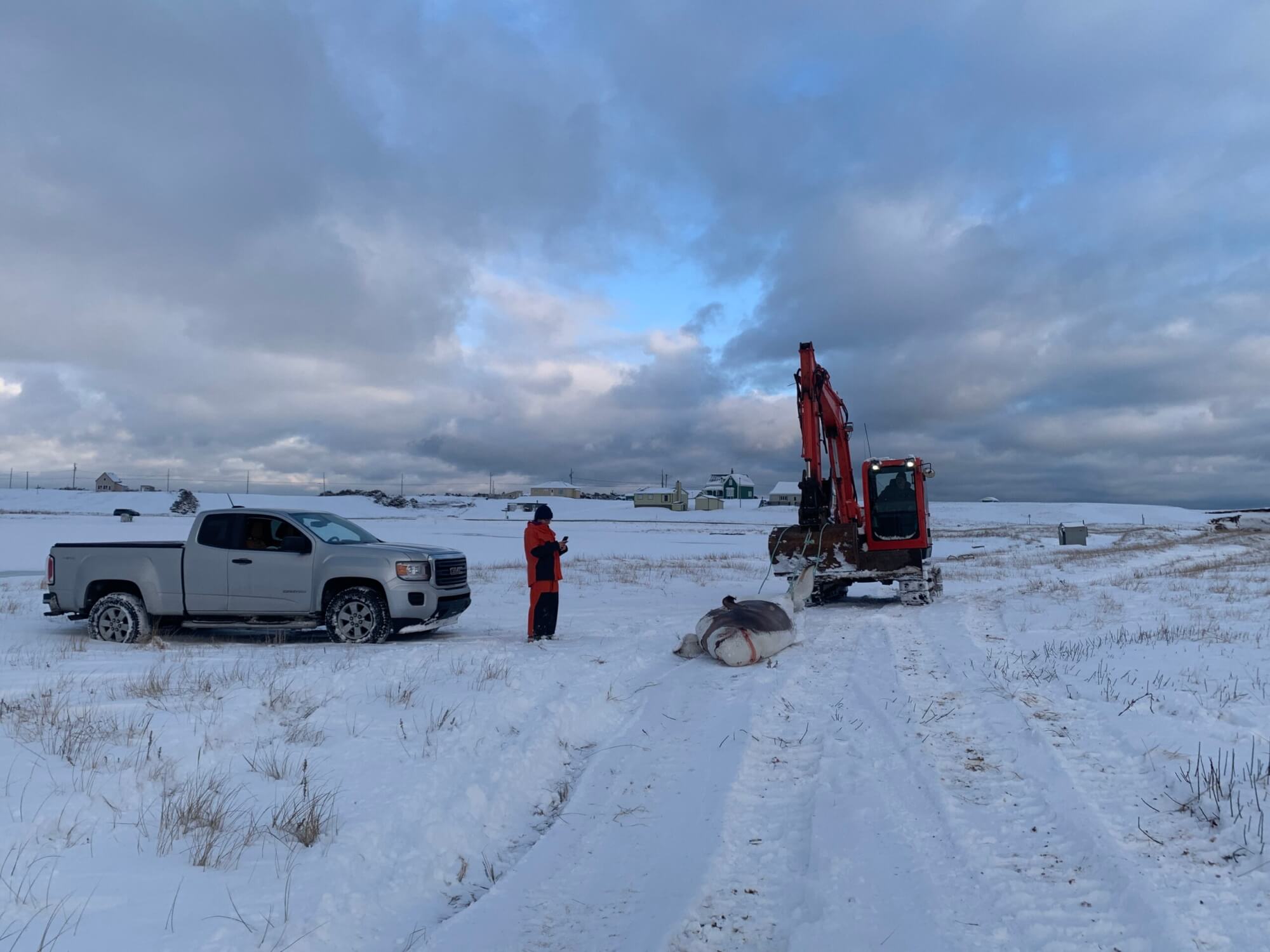
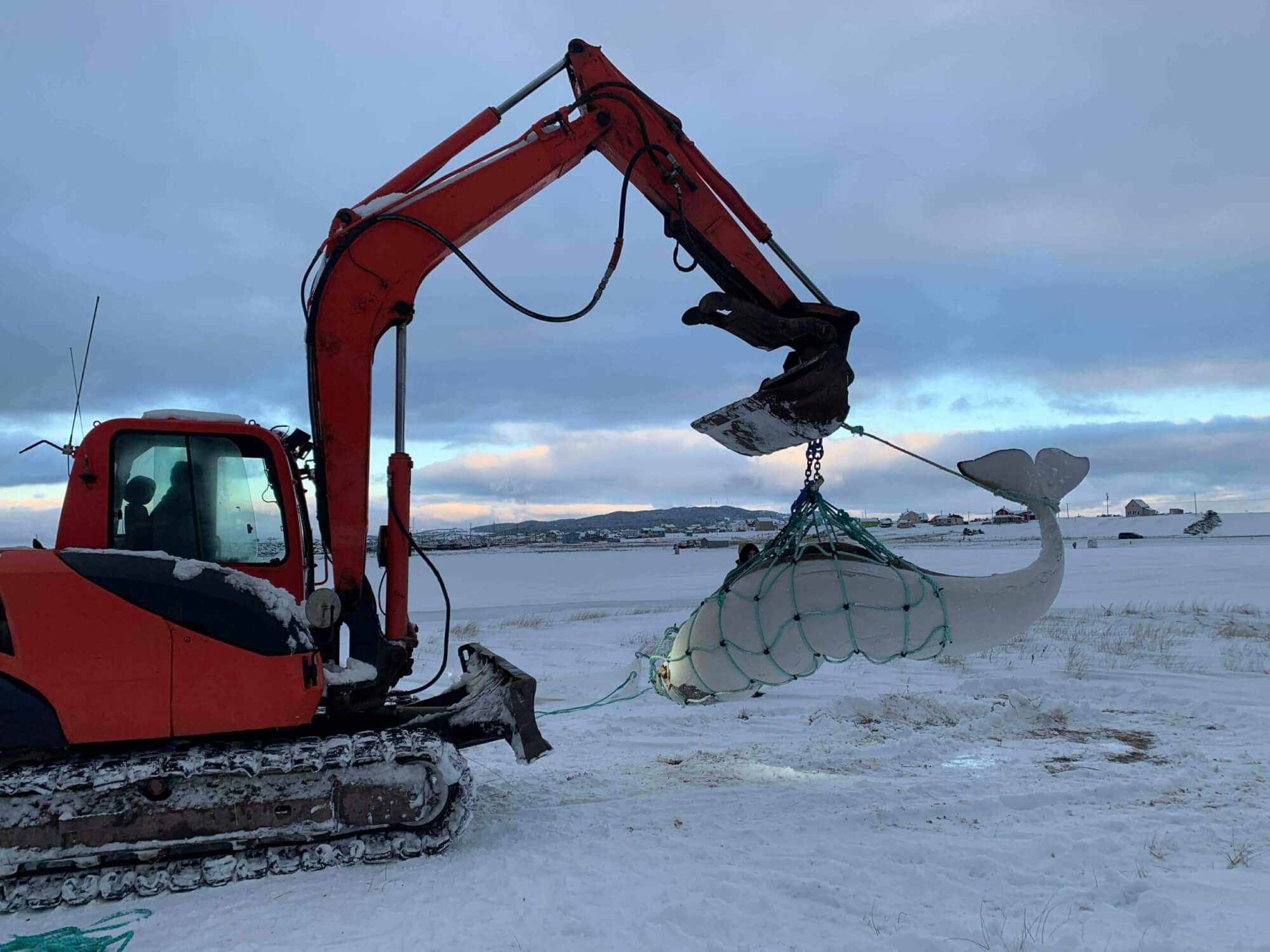
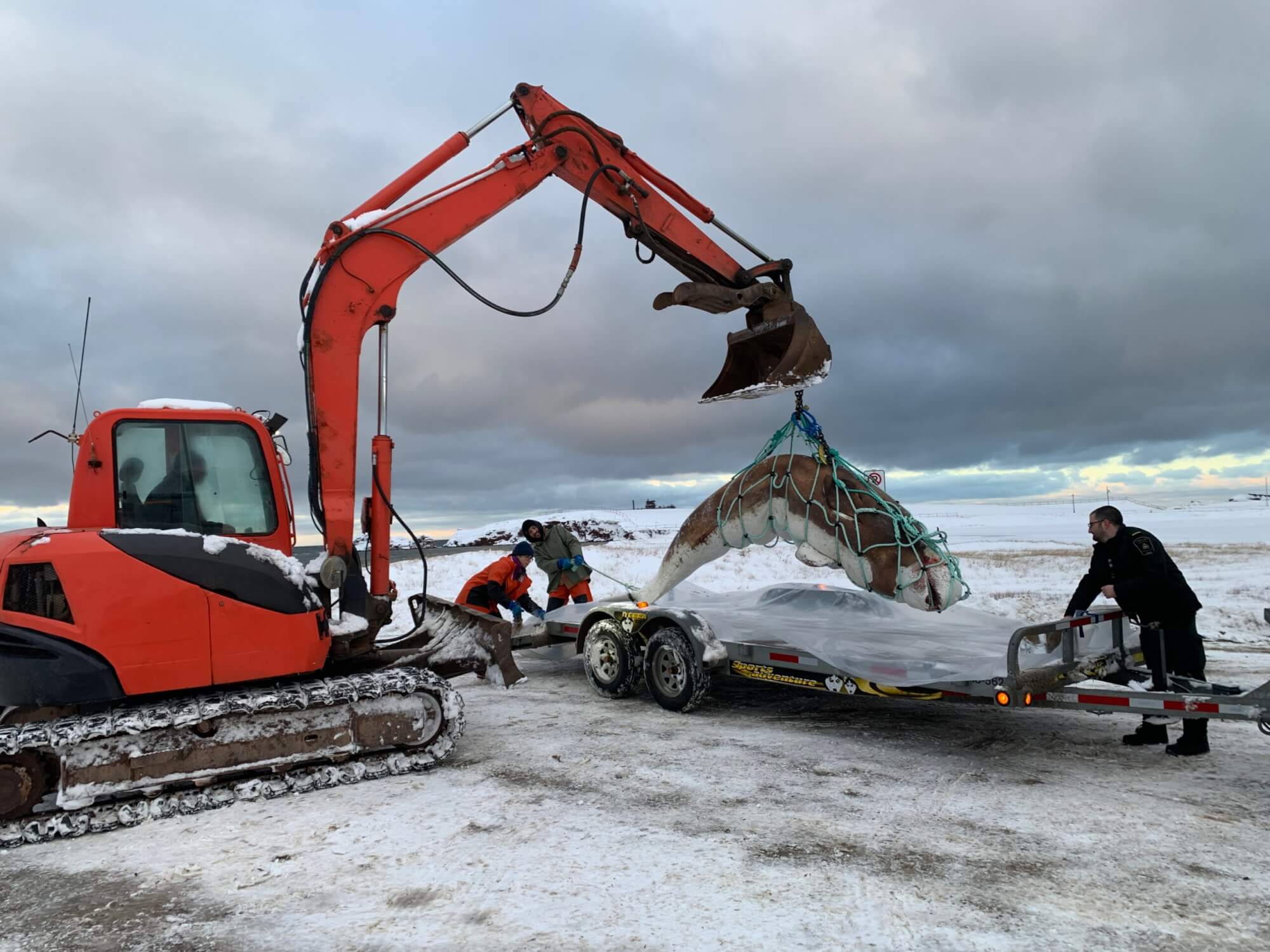
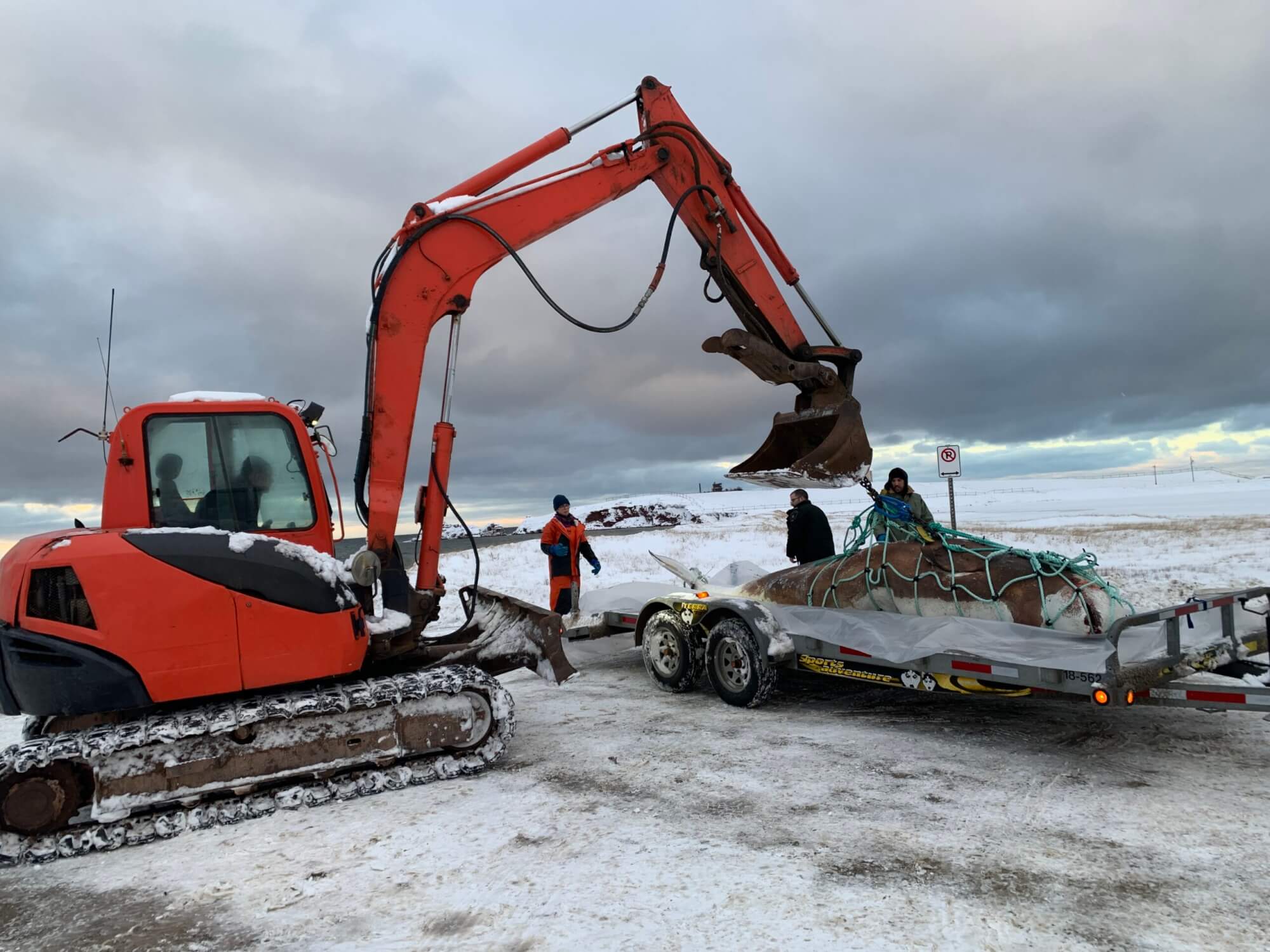
Once the images have been captured, the on-site team is able to transport the beluga to the trailer. The animal is then covered with a tarp to ensure that no scavengers can tear or peck at the carcass. The trailer will have to wait until Thursday morning before it is transported to Souris. In the meantime, it will remain under the watchful eye of fisheries officers.
The on-site recovery operation was completed in record time. Just a few hours were needed to assess the situation, develop an intervention plan, and execute it. It should be noted that, for the ZIP Committee, this was the first time it ever recovered an animal of this size. Well done!
Thursday, January 22
The QMMERN intervention team, also known as the mobile team, travelled from Rimouski to Souris to retrieve the beluga delivered by the ZIP Committee. The two teams had a mere 20 minutes on the dock to transfer the whale from one trailer to the other, as the ZIP Committee had to take the next ferry back to the Magdalen Islands. Quite a challenge! The trailer-to-trailer transfer was completed without incident, and the whale was subsequently transported to the FMV in Saint-Hyacinthe the following day for its necropsy.
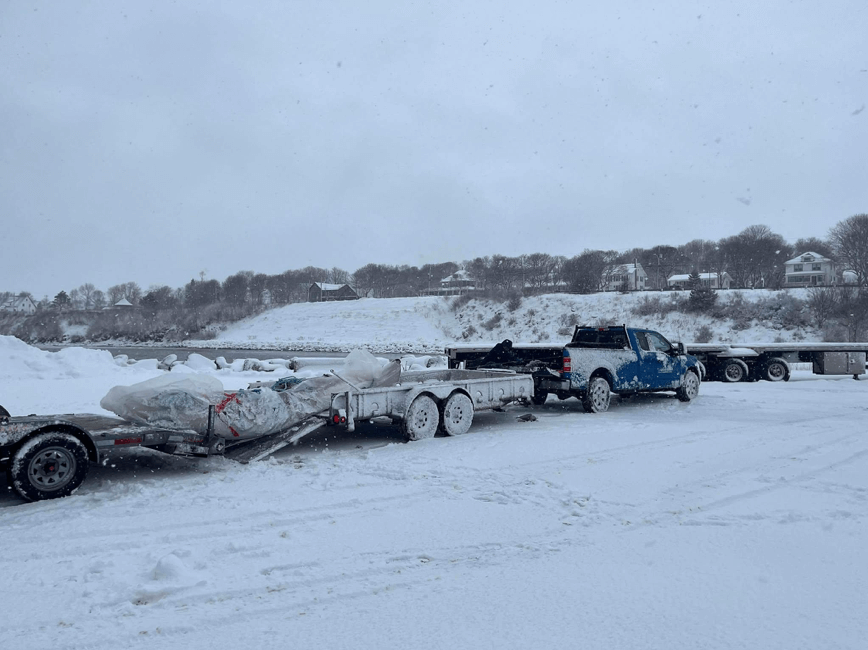
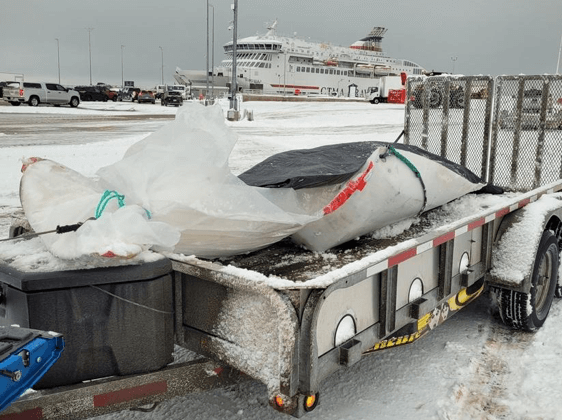
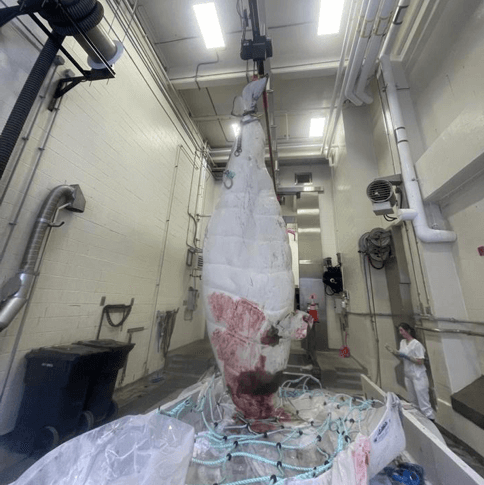
Once it arrives at the Faculty of Veterinary Medicine, the carcass is lifted with a winch to be weighed and taken to the site of the necropsy. The animal tipped the scales at approximately 850 kg! However, the veterinarians realized that the carcass was too frozen to be analyzed immediately. It would have to thaw, which would take several days! Indeed, this beluga still had its thick layer of blubber, which protects it from the icy waters of the St. Lawrence. But this blubber was now having the opposite effect, meaning the internal organs were nowhere near thawed out! It wasn’t until Tuesday, January 27, that CQSAS Director Stéphane Lair determined that the beluga was ready to be necropsied.
Tuesday, January 27
For the occasion, Ophélie Turgeon, the latest recruit to the Marine Mammal Emergency Response team, will assist in the necropsy to further her knowledge of anatomy and sampling techniques. This training opportunity in a controlled environment is an invaluable step toward becoming fully autonomous in the field when she is tasked with collecting samples from carcasses in poor condition.
It is expected that this intervention will provide more information about the St. Lawrence beluga, an endangered population and iconic emblem of the river, which warrants the full attention and dedication of QMMERN and the public alike. Without the calls of ordinary citizens to the emergency line (1-877-722-5346), acquiring knowledge about species at risk and protecting marine mammals would simply be impossible!

Méduline Chailloux
Méduline Chailloux s’est jointe au GREMM en 2018 comme naturaliste puis cheffe-naturaliste au Centre d’interprétation des mammifères marins. En parallèle, elle répond à la Centrale d’appels d’Urgences Mammifères Marins (UMM) pour finalement prendre le poste de responsable par intérim du Centre d’appels. Technicienne du milieu naturel de formation, sa connaissance et son appétit du travail de terrain a amenée Méduline à devenir technicienne séniore et responsable des interventions d'UMM depuis 2020. Sa polyvalence lui permet également d'assister l'équipe de recherche du GREMM à l'occasion.
Recommended articles
Beluga Mortality Report: 19 Carcasses Discovered in 2025
Between the start of 2026 and the release of this 2025 beluga mortality report, three carcasses have already been reported…
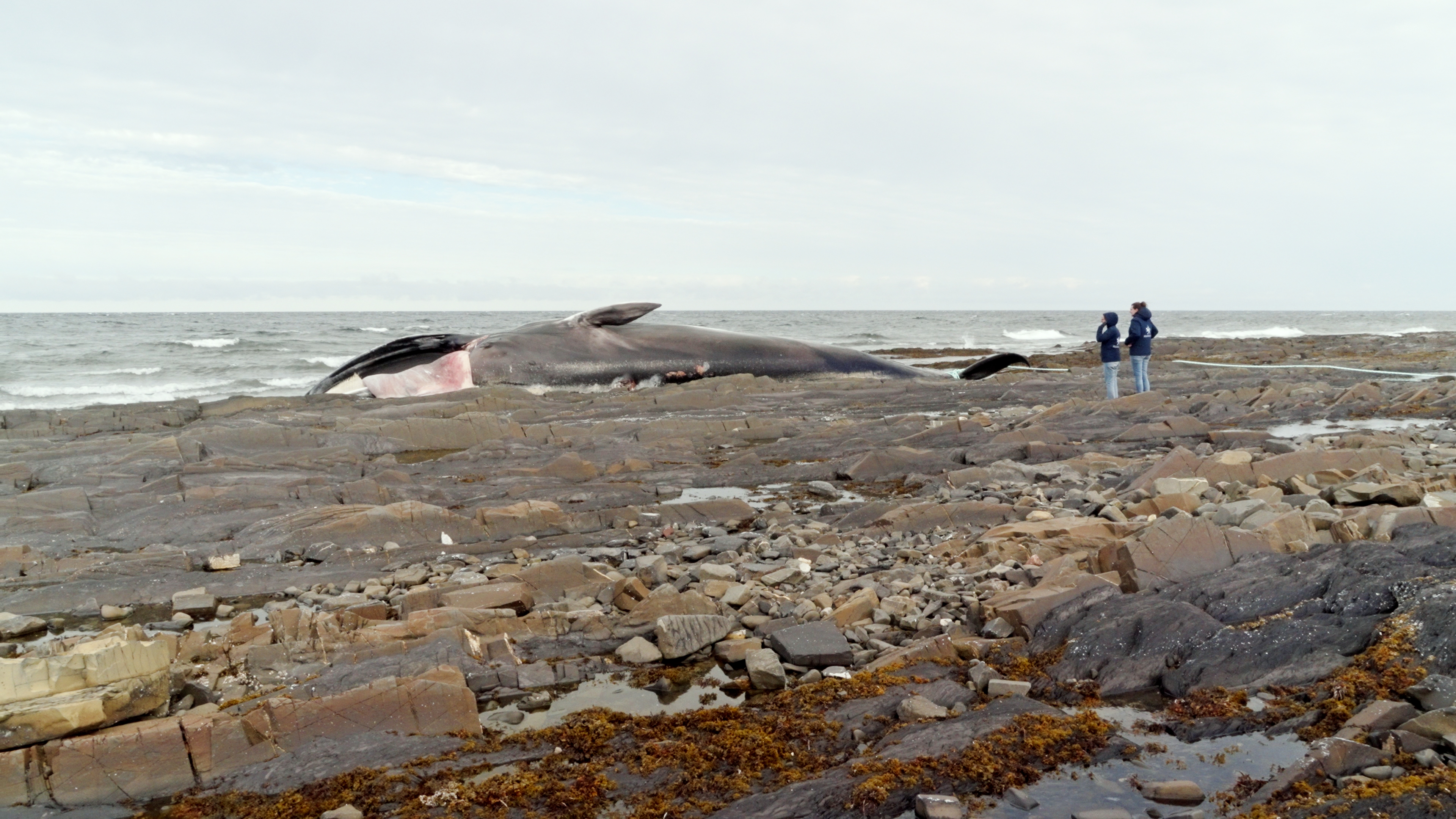
Beached Fin Whale: QMMERN Takes to the Field After Bp919 Found Stranded
On October 24, 2025, Marine Mammal Emergencies (UMM) received a call concerning a large dead whale stranded on the shores…